

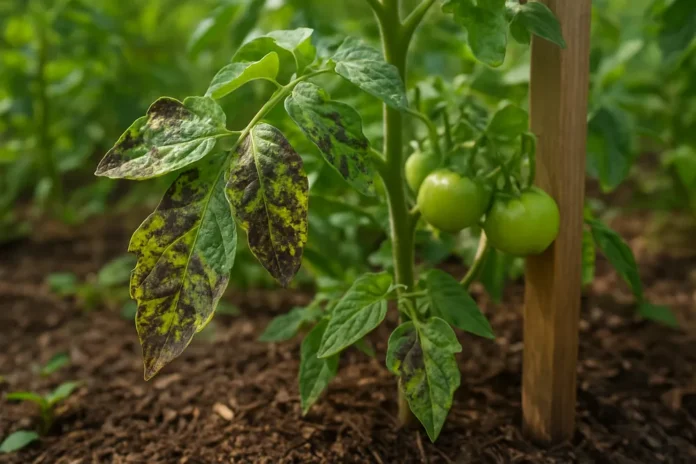
Tomato leaves usually turn black because of fungal or bacterial disease, cold damage, or severe watering stress. Black tissue means the leaf has been badly injured and is often already dying.
When tomato leaves are turning black, it usually means the plant has suffered more than minor stress. Blackened tissue is often a sign of disease, frost injury, rot, or leaf tissue that has died after long periods of moisture, poor airflow, or root trouble.
The good news is that black leaves do not always mean the whole plant is lost. On tomato plants, the exact pattern matters. Spots, edges, entire leaflets, stems, and fruit damage all point to different problems. Once you know what the blackening looks like and when it started, it becomes much easier to narrow down the cause.
In most home gardens, black leaves come from a short list of issues: early or late blight, bacterial diseases, cold nights, overwatering, sun-scalded tissue that later collapses, or stress around the roots. The sections below will help you sort out what is most likely happening and what to do next.
What Black Tomato Leaves Usually Mean
Green leaf tissue contains chlorophyll and active cells. When tomato leaves darken to brown-black or fully black, those cells have usually been destroyed. Sometimes the damage starts as dark spots, water-soaked patches, or crispy margins. In other cases, the leaf collapses quickly after a cold snap or disease outbreak.
Blackening is different from simple yellowing. Yellow leaves often suggest nutrient imbalance, age, or mild stress. Black leaves point to more severe injury. The main question is whether the problem began on the leaf surface, in the roots, or from weather exposure.
- If the leaf has dark circular spots with yellow halos, fungal disease is a strong possibility.
- If the leaf looks water-soaked, limp, and suddenly blackened after a cold night, frost or chilling injury is likely.
- If lower leaves blacken after staying wet and crowded, poor airflow and splash-borne disease are common triggers.
- If blackening follows wilting, soggy soil, or stem decline, root stress or rot may be involved.
Common Causes of Tomato Leaves Turning Black
Early Blight
Early blight is one of the most common tomato diseases in home gardens. It usually starts on older, lower leaves as dark brown to black spots that may show target-like rings. The surrounding tissue often turns yellow before the leaf dries up and drops.
This disease spreads faster in warm, humid weather, especially when soil splashes onto foliage during rain or overhead watering. Plants under stress from inconsistent watering or low fertility are often hit harder.
Late Blight
Late blight causes large, dark, greasy-looking lesions that can quickly turn leaves and stems black. In humid conditions, you may see pale or whitish fungal growth on the undersides of infected leaves. This disease can move very fast and may wipe out a planting in a short time.
Late blight is more likely during cool, wet weather than during hot, dry conditions. It can also affect fruit, causing firm dark patches.
Bacterial Spot and Bacterial Speck
Bacterial diseases often create small dark lesions on leaves, sometimes with yellow halos. As spots multiply, leaves can look scorched or blackened in patches. Warm temperatures, leaf wetness, splashing water, and handling plants when wet can all help bacteria spread.
Septoria and Severe Leaf Collapse
Septoria leaf spot usually begins as many small leaf spots rather than large black patches, but badly infected leaves may eventually brown, shrivel, and appear blackened from a distance. It often starts low on the plant and climbs upward over time.
Frost or Chilling Injury
Tomatoes are warm-season plants and can be damaged even when temperatures stay slightly above freezing. A cold night may leave leaves dark, limp, and nearly black by morning. Tender new growth is especially vulnerable.
Cold injury is often sudden and widespread on exposed parts of the plant. Unlike many leaf diseases, it usually appears all at once after a weather event.
Overwatering and Root Stress
Roots need oxygen as well as moisture. When soil stays waterlogged, roots struggle, decay can begin, and foliage may wilt, yellow, then darken or blacken as tissue dies. Container tomatoes are especially prone to this if drainage holes are blocked or potting mix stays saturated.
Stem or Root Rot Problems
If black leaves are paired with a darkening stem base, mushy roots, or sudden collapse, a rot disease may be involved. These problems are more common in poorly drained soils, crowded containers, or gardens with repeated tomato planting in the same space.
Chemical Injury
Herbicide drift, overly strong sprays, or fertilizer burn can damage leaves enough to make tissue darken after it first looks scorched or water-soaked. This is more likely if symptoms appear soon after spraying nearby weeds or applying a foliar treatment in hot sun.
How to Tell Which Problem You Have
Look at where the damage started, how fast it spread, and what the weather has been doing. Tomato problems often leave clues in their timing and pattern.
- Lower leaves first usually points to soil-borne splash diseases such as early blight or Septoria.
- Sudden damage after a cold night strongly suggests frost or chilling injury.
- Greasy, rapidly enlarging dark blotches raise concern for late blight.
- Tiny dark specks with yellow halos often fit bacterial spot or bacterial speck.
- Wilting plus soggy soil suggests overwatering or root trouble.
- Blackened leaf edges after a spray may indicate chemical burn.
Also inspect stems and fruit. If stems are developing dark lesions and fruit is spotting or rotting along with the leaves, disease becomes more likely than a simple watering issue. If only the top growth is affected after a weather swing, cold or spray damage becomes more likely.
A single black leaf is less alarming than a whole plant changing within days. Fast-moving, widespread blackening deserves immediate attention because infectious diseases can spread to nearby tomatoes and potatoes.
What to Do Right Now
The best response depends on the cause, but a few immediate steps help in most cases. The goal is to reduce stress, limit spread, and protect healthy growth.
- Remove badly blackened leaves with clean pruners, especially if they are diseased, collapsed, or touching the soil.
- Bag and discard infected foliage rather than composting it if you suspect blight or bacterial disease.
- Water at the base of the plant, not over the leaves.
- Improve airflow by spacing plants well and pruning crowded lower growth.
- Add mulch if bare soil is splashing onto leaves during rain or irrigation.
- Check drainage in beds and containers so roots are not sitting in soggy soil.
If Disease Is the Likely Cause
Remove affected leaves promptly and keep foliage dry as much as possible. In some gardens, a labeled fungicide can help slow early blight or Septoria when used early and consistently, but it will not restore blackened tissue. Late blight is more serious. If it is moving quickly through leaves, stems, and fruit, removing the plant may be the safest choice to protect the rest of your garden.
If Cold Damage Is the Likely Cause
Wait a day or two before pruning lightly damaged foliage because some tissue may recover. Remove fully black, mushy leaves once the extent of the injury is clear. If the main stem remains firm and new growth stays healthy, the plant can often rebound.
If Overwatering Is the Likely Cause
Let the soil dry slightly before watering again. Then shift to deep, less frequent watering rather than daily shallow watering. For containers, make sure excess water drains freely and never leaves the root ball standing in a saucer of water for long periods.
If Chemical Damage Is the Likely Cause
Rinse foliage only if exposure was very recent and the product label allows it. Otherwise, remove the most damaged leaves and focus on stable care. Avoid spraying tomatoes during the hottest part of the day and keep weed killer far from edible beds.
Can Black Tomato Leaves Recover?
Black leaf tissue itself will not turn green again. Once that part of the leaf has died, it is permanently damaged. What can recover is the plant overall, if the roots, main stem, and growing points are still healthy.
Tomatoes are fairly resilient when the problem is caught early. A plant with a few diseased lower leaves or light cold damage can continue producing well after cleanup. A plant with extensive black stems, black fruit lesions, severe wilt, or blackening across most of the canopy has a much poorer outlook.
- Recovery is more likely when blackening is limited to a few leaves.
- Recovery is less likely when the main stem is affected.
- New green growth within a week is a good sign.
- Continued spread despite better care usually means disease pressure remains high.
How to Prevent Tomato Leaves From Turning Black
Prevention comes down to keeping foliage dry, roots healthy, and disease pressure low. Tomatoes do best when their leaves dry quickly after rain, their soil drains well, and old plant debris is not left nearby to harbor pathogens.
- Space plants generously so air can move through the foliage.
- Water early in the day at the soil line instead of overhead.
- Mulch around plants to reduce soil splash onto lower leaves.
- Prune lower leaves once plants are established to keep foliage off the soil.
- Rotate tomatoes and other nightshades so they are not planted in the same spot every year.
- Use cages or stakes to keep plants upright and drier.
- Choose disease-resistant varieties when possible.
- Cover plants during unexpected cold snaps with frost cloth or row cover.
Clean garden sanitation matters more than many gardeners realize. At the end of the season, remove old tomato debris, especially if plants had blight or bacterial issues. Diseased leaves left in or near the bed can help restart the problem next year.
When to Remove the Plant Entirely
Sometimes the best choice is to pull and discard the plant. This is especially true when a disease is spreading quickly and threatens nearby tomatoes.
- Most of the foliage has blackened and the plant is rapidly declining.
- Dark lesions are present on leaves, stems, and fruit at the same time.
- You suspect late blight and symptoms are advancing quickly in cool, wet weather.
- The stem base is rotting and the whole plant is collapsing.
- There is little healthy new growth left to save.
Do not compost heavily diseased plants unless your compost system gets reliably hot. For many home gardeners, bagging and disposing of badly infected material is the safer route.
FAQ
Should I Cut Off Black Tomato Leaves?
Yes, in most cases you should remove badly blackened leaves, especially if they are diseased, mushy, or touching the soil. Use clean pruners and avoid removing more foliage than necessary at one time.
Can Overwatering Make Tomato Leaves Turn Black?
Yes. Constantly soggy soil can stress or rot roots, which may lead to wilting, yellowing, and eventual darkening or blackening of leaves as tissue dies.
Do Black Tomato Leaves Mean Blight?
Not always. Blight is a common cause, but frost injury, bacterial disease, root rot, and chemical damage can also blacken leaves. The pattern and speed of spread help separate them.
Will Black Tomato Leaves Turn Green Again?
No. Blackened leaf tissue is dead and will not recover. The plant may still produce new healthy growth if the damage is limited and the main stem and roots remain healthy.
Can Cold Weather Turn Tomato Leaves Black?
Yes. Tomatoes are sensitive to chilly nights, and frost or near-frost conditions can make leaves dark, limp, and blackened very quickly.
Is It Safe to Eat Tomatoes From a Plant with Black Leaves?
Often yes if the fruit itself is healthy, ripe, and free of spots or rot, but fruit from badly diseased plants should be inspected carefully. Discard fruit with dark lesions, soft areas, or signs of decay.
How Do I Stop Tomato Leaf Diseases From Spreading?
Keep leaves dry, remove infected foliage, water at the base, improve spacing, mulch to reduce soil splash, and clean up plant debris promptly. Avoid handling plants when they are wet.
Need the right fix fast? Read our tomato disease treatment guide and compare the best fungicides, pruning tools, and mulch options to protect your plants and save your harvest.
