

Note: This article contains affiliate links. If you click on these links and make a purchase, I may earn a small commission at no extra cost to you. This helps support my research and content. Read my full affiliate disclosure here.
Aloe vera thrives when roots stay dry between waterings and the medium resists compaction. Choosing the right potting mix for aloe vera plant matters because ordinary houseplant soil often retains too much water and invites root rot. In this guide we shortlisted seven top-performing mixes suited to the needs of potted aloe, focusing on drainage, aeration, and a nutrient profile that supports slow, steady growth without encouraging excessive moisture demand. Below you will find clear evaluation points used to compare each mix and practical notes to help you match a blend to your pot size, climate, and watering habits.
Top Picks at a Glance
| Best Overall The best all-around choice for most situations | Bonsai Jack Jack's Gritty Mix #111 Succulent & Cactus Soil, 2 Quart |  |
| Best Quality Built to a higher standard if you want something more solid | Rosy Soil Cactus & Succulent Potting Mix, 4 Quart |  |
| Best Value The sweet spot between price and what you get | Miracle-Gro Indoor Potting Mix for Cactus & Succulent, 8 qt. (2-Pack) |  |
| Best Budget The cheapest option that still gets the job done reliably | Doter Aloe Vera Potting Soil Mix, 1 qt |  |
| Highest Rated A top-rated pick with lots of positive feedback | rePotme Aloe Vera & Succulent Potting Soil Mix (2 qt) |  |
| Most Popular A crowd favorite that many people choose with confidence | Miracle-Gro Succulent Potting Mix, 4 qt. |  |
| Best Seller A high-volume bestseller chosen again and again | Back to the Roots Organic Succulent & Cacti Mix, 6 Quart |  |
Bonsai Jack Jack's Gritty Mix #111 Succulent & Cactus Soil, 2 Quart

| Unit Count | 64 Ounce |
|---|---|
| Item Type Name | Gritty Mix #111 – Fast Draining – Zero Root Rot – Optimized pH |
| Manufacturer | Bonsai Jack |
| Volume | 0.47 liters |
This ready-to-use gritty mix is designed to give succulents and cacti the airy, fast-draining medium they need to avoid overwatering and root rot. It combines Bonsai Block, Monto Clay and pine coir fines to create a coarse, well-washed blend that holds minimal moisture between waterings. Typical use is repotting or top-dressing aloe, echeveria, haworthia and similar plants where quick drainage and grit are preferred; the product instructions recommend keeping fines in the mix and watering thoroughly only when the medium is dry. Practical benefits include fewer watering mistakes, improved root aeration and a pH tuned toward acid-loving succulents. Limitations are that this is not suitable for standard houseplants or moisture-loving succulents and it comes in small volumes per bag, so larger collections will require multiple bags or larger sizes. Also the coarse nature means it will not retain much water, so plants that need more consistent moisture will require different mixes or amendments.
Best for: Aloe and other succulent owners who want a reliable, quick-draining medium that minimizes overwatering and supports healthy, airy roots.
Less Ideal for: Gardeners who grow moisture-loving houseplants, string-type succulents that prefer finer mixes, or anyone who wants a water-retentive potting soil.
- Ultra-fast draining formula reduces risk of root rot for drought-tolerant plants
- Made from washed inorganic components and pine coir fines for consistent particle size
- pH optimized for succulents and cacti to support nutrient uptake
- Ready to use out of the bag with clear repotting instructions
- Small package volume means you may need multiple bags for several plants
- Not suitable for standard houseplants or succulents that prefer higher moisture
Verdict: Choose this gritty mix if you want a proven, ultra-draining potting medium that helps aloe and other succulents avoid root rot and stay healthy between waterings.
Rosy Soil Cactus & Succulent Potting Mix, 4 Quart

| Unit Count | 64 Ounce |
|---|---|
| Item Type Name | Soil |
| Item Highlight | Organic Succulent Potting Soil, Chunky Fast Draining, Peat-Free |
| Ingredients | Biochar,Pumice,Mycorrhizae,Sand,Pine Bark Fines,Compost |
This Rosy Soil cactus and succulent mix is built for plants that need gritty, fast-draining media rather than moisture-retentive potting soil. The formula combines biochar, pumice, sand, pine bark fines and compost with mycorrhizae and worm castings to create an airy, chunky texture that resists compaction and helps excess water move away from roots. Typical use is repotting or top-dressing aloe vera, jade, lithops and other drought-tolerant houseplants; a resealable 4 quart bag covers a few small pots and includes planting guidance on the bag. The included microbes and organic amendments support root health without synthetic fertilizers, so you can expect steadier establishment after repotting and reduced risk of rot from overwatering. Important limitations are the small bag size for larger collections and the safety note about potential skin or inhalation irritation, so use a mask and gloves while handling. For growers focused on performance, it provides the gritty structure and biological activity aloe plants prefer, but serious collectors may want larger quantities or to blend with extra coarse grit for oversized pots.
Best for: Growers who prioritize plant performance and root health and want a ready-made, gritty mix for repotting aloe vera and other drought-tolerant houseplants.
Less Ideal for: People who need large volumes for many plants or those seeking an all-purpose, moisture-retentive houseplant mix should look elsewhere.
- Chunky, fast-draining texture that prevents compaction and soggy pots
- Peat-free blend with biochar, pumice and sand for improved aeration
- Pre-loaded beneficial microbes and worm castings to support root health
- Resealable 4 quart bag with planting guidance for easy use
- Small 4 quart volume may not be sufficient for multiple or large repots
- May cause skin or respiratory irritation if handled without protection
Verdict: Choose this mix when you want a ready-made, gritty, peat-free soil that promotes fast drainage and strong root establishment for aloe and other succulents.
Miracle-Gro Indoor Potting Mix for Cactus & Succulent, 8 qt. (2-Pack)

| Item Highlight | Fast-Draining Cactus and Succulent Potting Mix with Plant Food |
|---|---|
| Number of Packs | 2 |
| Included Components | 2 bags |
| Item Type Name | Soil |
This Miracle-Gro mix is formulated for succulents and cacti with a blend of sphagnum peat moss, sand, perlite and added plant food to promote drainage and provide initial nutrients. You use it straight from the bag to repot indoor succulents like aloe vera and other drought-tolerant plants by choosing a pot with drainage, filling around the root ball, watering thoroughly and allowing the soil to dry between waterings. The coarse components help prevent waterlogging that leads to root rot while the included plant food gives young or recently repotted plants a nutrient boost for the first weeks. Practical benefits include the convenience of a ready mix sized to fill several small pots and a texture that supports quick drying in warm, sunny windowsills. Important limitations are that the bags are relatively small for larger repots or many plants and the peat-based formula will compress over time, so repotting or amendment every couple of years is recommended.
Best for: Buyers who want a convenient, low-fuss soil that helps prevent overwatering problems and gives newly potted aloe and other succulents an immediate nutrient boost.
Less Ideal for: Gardeners seeking large volumes for many plants or those who prefer peat-free or custom-blended soils should consider other options.
- Fast-draining blend suited to succulents and cacti
- Includes plant food to feed newly potted plants
- Ready-to-use mix requires no additional amendments
- Coarse ingredients (sand, perlite) reduce risk of overwatering damage
- 8‑quart bag size limits how many or how large pots you can fill
- Peat-based mix can compact and benefit from repotting or amendment over time
Verdict: A convenient, fast-draining ready mix that makes repotting aloe and other succulents quick and low-risk while giving plants an initial nutrient boost.
Doter Aloe Vera Potting Soil Mix, 1 qt
| Brand | Doter |
|---|---|
| Item Type Name | Garden soil |
| Volume | 1 quarts |
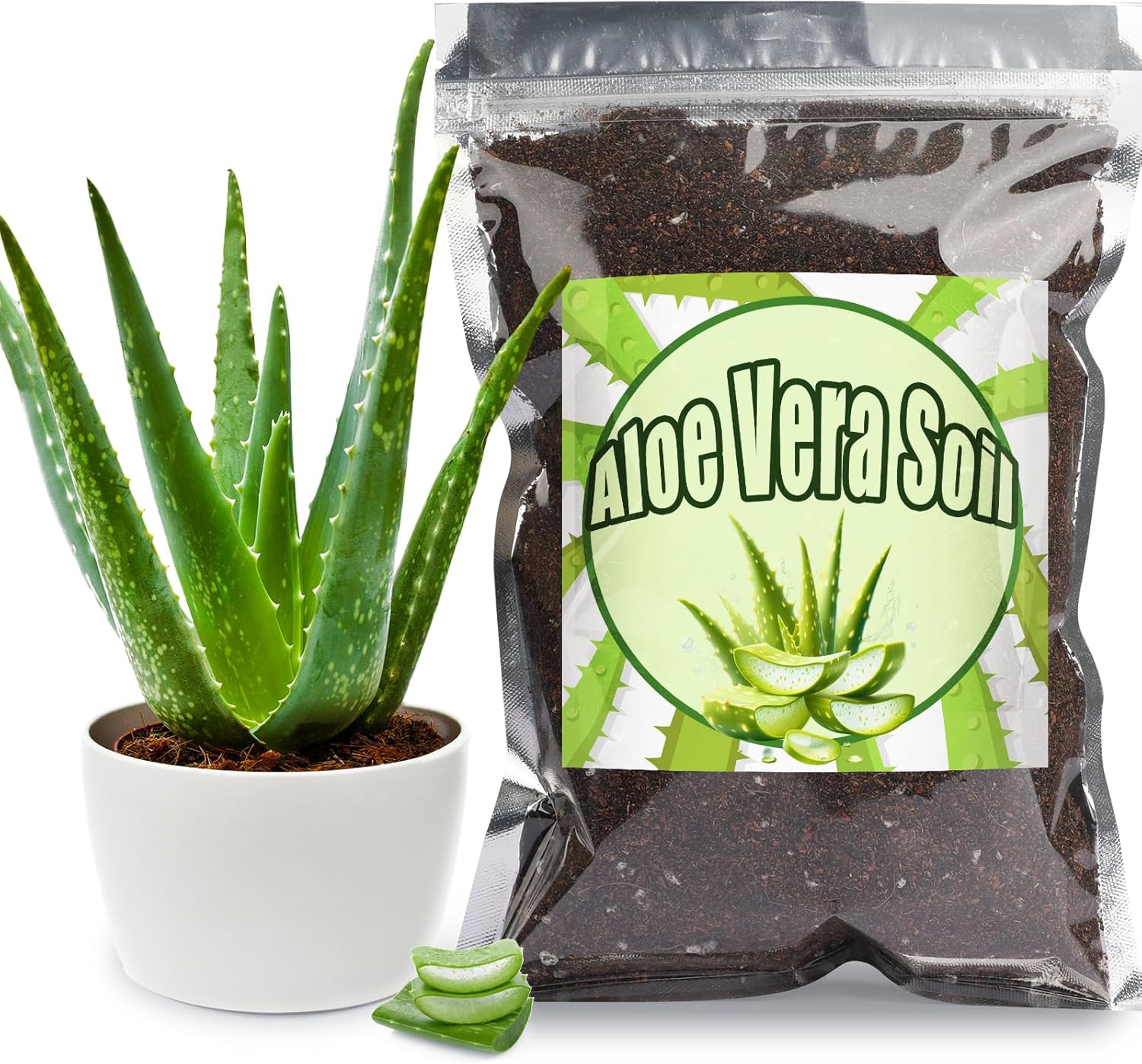
This 1 quart Doter potting mix is formulated specifically for aloe vera and other succulents, combining well-draining components and nutrients to support healthy, plump leaves. It is sold ready to use straight from the bag, which makes it convenient for repotting small plants, topping up container soil, or starting seedlings. The mix highlights good drainage and aeration so you are less likely to overwater and cause root rot, and its balanced pH and nutrient content help young plants establish quickly. Practical benefits include ease of use, portability for small pots, and suitability for both indoor and outdoor containers. The main limitation is the small volume: a single quart covers only one or two small repots, so you will need multiple bags for larger collections or bigger pots. Also, because specific ingredient proportions are not listed, serious growers who want a custom blend or to amend for larger specimens may prefer to mix pumice or perlite in themselves.
Best for: A budget-minded indoor gardener who needs a convenient, plant-specific potting mix for repotting one or two small aloe vera plants or topping up containers.
Less Ideal for: Gardeners with many plants, large pots, or those who prefer to custom-blend soils and control exact ingredient ratios should look for bulk or specialty mixes instead.
- Designed for aloe vera with emphasis on drainage to reduce risk of root rot
- Ready-to-use mix convenient for repotting seedlings and small containers
- Balanced pH and added nutrients to support early root and foliage growth
- Good aeration properties that help roots breathe and establish
- Only 1 quart volume, so not economical for larger collections or big pots
- Ingredient proportions are not detailed, limiting customization for advanced growers
Verdict: An affordable, ready-to-use small-bag potting mix that makes repotting or starting a single aloe vera plant quick and worry-free.
rePotme Aloe Vera & Succulent Potting Soil Mix (2 qt)

| Brand Name | rePotme |
|---|---|
| Volume | 2 quarts |
| Style Name | Modern |
This rePotme succulent potting mix is designed to give aloe vera and other succulents a fast-draining, low-retention medium straight from the bag. Made in small batches and hand-blended in the USA, the mix is intended for use with jade plants, echeveria, Christmas cactus and especially aloe vera where root aeration and quick drainage matter. It comes in a resealable 2 quart bag so you can pot a few small plants and keep the rest fresh. Practical benefits include good drainage to reduce overwatering risks and a consistent blend that eliminates the guesswork of mixing sand, perlite, and compost. Limitations are the small bag size, which makes it better suited to repotting individual plants rather than filling many large containers, and the warning to handle with care to avoid fine dust when potting indoors. For a reliability-focused buyer, the hand-blended sourcing and resealable packaging give confidence that you are using a consistently formulated medium for aloe vera that supports healthy roots and reduces common watering mistakes.
Best for: Buyers who want a dependable, ready-made succulent mix for repotting or top-ups of aloe vera and similar house succulents and who value consistent, small-batch quality.
Less Ideal for: Those needing large volumes for garden beds or many containers should choose bulk mixes or create custom blends to save cost and quantity.
- Formulated for succulents and aloe vera with free-draining composition
- Hand-blended in small batches for consistent quality
- Resealable 2 quart bag keeps unused mix fresh
- Ready-to-use pre-mixed blend removes need to mix components yourself
- Small 2 quart volume is limited for multiple or large repots
- May produce fine dust when handling indoors so care is needed
Verdict: A dependable, hand-blended succulent mix that delivers the quick drainage aloe vera needs in a convenient resealable 2 quart bag.
Miracle-Gro Succulent Potting Mix, 4 qt.

| Brand Name | Miracle-Gro |
|---|---|
| Unit Count | 128 Ounce |
| Volume | 4 quarts |
| Style Name | Succulent |
This 4 qt. Miracle-Gro Succulent Potting Mix is a ready-to-use soil blend designed for indoor succulents such as aloe vera and small cacti. It contains sphagnum peat moss and processed forest products to provide a light, airy medium that encourages fast drainage, and it is enriched with Miracle-Gro plant food for an initial nutrient boost. Typical use is repotting small succulents into containers with drainage holes: fill the pot about one third, set the plant, add mix, press lightly and water to let drain. The bag is sized to fill roughly one 8-inch container, so it is convenient for single repotting jobs or small collections. Practical benefits include ease of use for beginners, a formulation that helps avoid waterlogged roots, and guidance to follow up with cactus-specific feedings after 30 days. Important limitations are the small 4 qt volume which may not suit larger collections, and the presence of peat and fertilizer which some growers avoid if they prefer perlite-heavy, inorganic mixes or fully organic ingredients.
Best for: Buyers who want an easy, reliable potting medium to repot indoor succulents like aloe vera with minimal fuss and clear guidance.
Less Ideal for: Collectors with many or larger succulents who need bulk soil, or growers who prefer custom mixes heavy on inorganic components like pumice or perlite.
- Formulated specifically for succulents and cacti for appropriate drainage and texture
- Includes plant food for an immediate nutrient boost after potting
- Convenient 4 qt size ideal for repotting one small to medium plant
- Simple step-by-step usage guidance for beginners
- Small bag size limits how many plants it will cover
- Contains peat moss and plant fertilizer which may not match preferences for inorganic or fully organic mixes
Verdict: A quick, beginner-friendly succulent potting mix that makes repotting aloe vera and other small indoor succulents simple and dependable.
Back to the Roots Organic Succulent & Cacti Mix, 6 Quart

| Volume | 6 quarts |
|---|---|
| Item Highlight | Fast-draining cactus and succulent soil; peat-free |
| Ingredients | Dolomitic Limestone, Perlite, Horticultural Sand, Aged Bark, Plant Food |
| Made in | USA |
This 6-quart Succulent & Cacti Mix from Back to the Roots is a ready-to-use soil blend made for plants that need excellent drainage and air around their roots. The formula combines aged bark, perlite and horticultural sand with dolomitic limestone and plant food to create a light, porous medium that helps prevent overwatering and root rot—key for aloe vera and other succulents. It is peat-free and made in the USA, so it appeals to gardeners looking for organic ingredients and a predictable, consistent mix. Use it straight from the bag for repotting or top-dressing; for new transplants add a light organic fertilizer after a few weeks as recommended. Limitations are the small 6-quart volume, which means frequent repurchasing for multiple plants or larger pots, and it does not replace specialized slow-release fertilization schedules if you want long-term feeding. For a cautious buyer this mix delivers consistent drainage and a beginner-friendly, low-risk medium for aloe and similar plants.
Best for: Buyers who want a low-risk, ready-made soil that reliably drains and supports aloe vera and other succulents without complex mixing or peat-based ingredients.
Less Ideal for: Gardeners who need bulk quantities for many plants or those seeking an all-in-one long-release fertilized soil for multi-year container use should consider larger or fertilizer-rich alternatives.
- Fast-draining composition with perlite and horticultural sand to reduce risk of root rot
- Aged bark improves aeration and root development
- Peat-free organic formula made in the USA
- Includes basic plant food to support initial growth
- Small 6-quart volume may require multiple bags for several or larger pots
- Not a long-term fertilizer solution so periodic feeding is still needed
Verdict: A dependable, peat-free, fast-draining potting mix that makes repotting aloe vera simple and low risk.
Choosing the Right Potting Mix for Aloe Vera Plant: Key Factors to Consider
Drainage Rate
How quickly water moves through the mix affects whether an aloe's roots sit in moisture or dry between waterings. A fast drainage rate reduces the chance of root rot in indoor pots and shallow containers. Drainage is influenced by the proportion of coarse ingredients such as pumice, coarse sand, or grit versus fine peat or coir. When assessing mixes, look for visible particles that create channels for water; very fine-textured mixes will perform poorly for succulents.
For gardeners in humid or low-light homes, favor mixes with higher drainage to compensate for slower evaporation. In hot, arid conditions you can accept slightly more water-retentive components if you plan to water more frequently.
Aeration and Structure
Aloe roots need oxygen as much as moisture control. Aeration refers to how many voids or air pockets remain in the potting medium after watering. Ingredients like pumice, perlite, and coarse sand maintain structure and prevent compaction, which preserves aerobic root zones. A mix that collapses after a few waterings will reduce root health and promote fungal issues.
Consider the intended pot: narrow, deep pots require a stable structure that does not slough or pack around roots, while shallow trays benefit from a looser top layer. Also think about long-term maintenance; mixes that hold structure let you repot less often.
Water Retention Balance
The ideal mix balances quick drainage with enough moisture retention to keep plants healthy between sparse waterings. Pure fast-draining grit may force you to water too often, while peat-heavy mixes hold too much water and cause rot. Components like coarse vermiculite or a small percentage of coconut coir can moderate retention without making the mix soggy.
Your local climate and indoor humidity affect the right balance. If you travel often, choose a mix with slightly higher retention; if you live in a humid bathroom or basement, lean toward drier blends.
Nutrient Profile
Aloe vera is a slow grower and benefits from a modest, well-balanced nutrient supply. A potting mix with light, slow-release nutrients reduces the need for frequent feeding and avoids pushing rapid, weak growth. Avoid mixes loaded with high-N instant fertilizers that can stress succulents and cause salt buildup in containers.
Look for mixes that advertise a low-to-moderate nutrient level or that are described as suitable for cacti and succulents. If a mix has no nutrient content, plan a gentle feeding schedule after plants are established.
Particle Stability and Longevity
Over time, organic components break down and the mix compacts, which reduces drainage and aeration. Particle stability refers to how well the medium resists decomposition and maintains pore space. Inert components like crushed lava rock and pumice keep structure longer than fine compost or peat.
A stable mix means less frequent repotting and lower maintenance. For planters exposed to heavy watering or outdoor temperature swings, prioritize stability to avoid repeated soil refreshes.
Choosing the Right Container for Aloe
Container choice interacts closely with potting mix performance. Terracotta and unglazed ceramic pots wick moisture and thus pair well with mixes that are only moderately fast-draining, while plastic pots retain more moisture and require an especially gritty blend. Ensure any container has at least one drainage hole; without it even the best mix cannot prevent waterlogging.
Pot size also matters. A pot that is too large relative to the plant will hold excess moisture and invite rot. For mature aloe, pick a pot only one to two inches wider than the root ball. For young plants, start in a snug nursery pot to minimize excess substrate around the small root system.
- Unglazed terracotta helps dry the mix faster through evaporation.
- Choose pot depth according to root mass; aloes prefer shallow to moderately deep pots.
- Always use a pot with drainage; add a coarse layer at the bottom only if the pot lacks a hole and you can remove excess water after watering.
How to Amend a General Potting Mix
If you only have a standard houseplant mix, you can create a suitable aloe blend by adding coarse materials. A good starting point is to mix one part potting soil with one part coarse mineral (pumice, grit, or coarse sand) and a small portion of organic matter such as coconut coir for minimal water retention. This increases drainage and aeration while keeping some nutrient and moisture-holding capacity.
Avoid using fine builder's sand or heavy garden loam, which can compact. Work the amended mix thoroughly so components are evenly distributed and test drainage by watering a small sample in a pot to observe how quickly water passes through.
- Common amendment ratio: 1 part potting mix, 1 part coarse mineral, 0.25 part coir.
- Use horticultural pumice over perlite if you want longer-lasting structure.
- Let newly mixed substrate settle for a day before potting to allow dust to dissipate.
Watering Practices with Fast-Draining Mixes
Fast-draining mixes dry out more quickly and require a different watering rhythm than moisture-retentive soils. Water thoroughly but infrequently, allowing the top one to two inches to dry before the next soak. In winter, reduce watering significantly because lower light and cooler temperatures slow plant water use.
Observe the plant for signs of over- or underwatering. Wrinkled or thin leaves usually indicate under-watering, while soft, translucent leaves point to over-watering. Adjust your routine rather than changing mixes unless the substrate continually misbehaves.
- Water deeply until excess runs from drainage holes, then let the pot drain completely.
- Use a moisture meter or finger test to check the upper inch of substrate before rewatering.
- Reduce watering frequency in cooler months and in low-light indoor conditions.
Repotting and Refreshing Soil
Aloe plants do not need frequent repotting. Refresh the top inch of soil annually or repot every two to three years to restore drainage and reduce salt buildup. When repotting, inspect roots for rot and trim away any soft or blackened tissue.
Choose a fresh fast-draining mix when repotting and avoid burying the plant too deep. Keep the base of the leaves slightly above the soil line to reduce stem rot risk. Reuse some of the original root ball if it is healthy and mix with fresh substrate to maintain established microbial communities.
- Repot during active growth in spring or early summer for quicker recovery.
- Loosen compacted root balls gently to encourage outward root growth.
- Top-dress with fresh gritty mix rather than full repot when only surface renewal is needed.
Adapting Mixes for Different Climates
Your local humidity and seasonal temperature swings determine the best water retention balance. In arid, high-heat climates, a mix with a bit more organic content helps prevent rapid desiccation. In humid or cool areas, prioritize the driest, most open blends to offset slow evaporation and reduce fungal pressure.
Container placement matters too. Indoor aloes in bathrooms or kitchens with higher humidity should be potted in a grittier mix than the same plant sitting in a bright, dry living room.
- Increase pumice or lava rock percentage in humid regions.
- Add a small fraction of water-retaining material if you travel often.
- Adjust watering rhythm seasonally rather than constantly switching mixes.
How We Chose the Best Potting Mix for Aloe Vera Plant
We evaluated mixes specifically for aloe and other succulent species using measures that matter in everyday container growing. Primary selection criteria were drainage rate, which determines how quickly excess water moves away from roots; aeration and structure, which influence oxygen delivery and root health; water retention balance, to ensure the mix holds enough moisture for infrequent watering without staying soggy; and nutrient profile, meaning whether the mix supplies mild, slow-release feeding appropriate for slow-growing succulents. We also considered particle stability so the mix resists compaction over time, and repotting friendliness for gardeners who prefer to refresh or top-dress periodically. Exclusions included blends marketed for high-water plants, mixes with peat-heavy formulas that retain too much moisture, and potting soils lacking any coarse components like grit or pumice. The final shortlist includes only mixes that meet a practical balance of quick drainage, stable aeration, modest nutrient content, and ease of use in containers.
FAQ
Can I use cactus mix for aloe vera plants?
Often yes. Cactus mixes are formulated for succulents and usually provide good drainage and aeration. Check the ingredient list and, if it seems too fine-textured or peat-heavy, amend with pumice or coarse sand to improve structure.
How can I tell if my potting mix is holding too much moisture?
If the topsoil stays damp several days after watering, or if leaves become soft and translucent, the mix may be retaining excess water. A quick test is to water thoroughly and time how long it takes to drain; slow drainage and persistent wetness indicate poor suitability for aloe.
What coarse components work best in an aloe potting mix?
Pumice, crushed lava rock, coarse builder's sand, and grit all improve drainage and aeration. Pumice and lava rock also resist breakdown better than perlite, which can help the mix stay open longer.
Do I need to add fertilizer to a succulent potting mix?
Usually a light, occasional feed is sufficient. Many succulent mixes include low levels of nutrients; if yours is inert, apply a dilute balanced fertilizer during the growing season to avoid pushing weak, rapid growth.
How often should I repot an aloe planted in a gritty mix?
Typically every two to three years, or when the plant becomes root-bound. Top-dressing the surface once a year can refresh the medium without full repotting. Repot sooner if you detect root rot or severe compaction.
Final Verdict
Prioritize a potting mix that promotes fast drainage and stable aeration while offering a modest nutrient supply for slow, steady aloe growth. Match the blend to your container material, local climate, and watering habits to avoid the common pitfalls of overwatering and compaction. Focus on mixes that keep roots dry between waterings and maintain pore space over time. That approach will reduce maintenance and give you a durable, low-risk environment for healthy aloe plants.
