

Note: This article contains affiliate links. If you click on these links and make a purchase, I may earn a small commission at no extra cost to you. This helps support my research and content. Read my full affiliate disclosure here.
Removing rocks from a lawn is one of those chores that looks simple until you bruise the turf or strain your back. Choosing the right garden rake for rocks in grass changes how quickly you can collect stones, how much surface damage you cause, and how much effort you expend at the end of a long day outside. This guide covers seven top picks suited to pulling rocks from turf, whether you have a small patch or several front-yard beds. We shortlisted options that balance effective rock collection, gentle interaction with grass, and durable construction. Below you will find what we evaluated and why those attributes matter for real-world lawn work, plus practical buying guidance to match rake features to your yard and physical needs.
Top Picks at a Glance
| Best Overall The best all-around choice for most situations | DIIG 63" Bow Rake with 17-Tine Metal Head and Stainless Steel Handle |  |
| Best Quality Built to a higher standard if you want something more solid | Jardineer Heavy-Duty Bow Rake with 18 Steel Tines (Long Handle) |  |
| Best Value The sweet spot between price and what you get | BlumeTrec 68" Adjustable Bow Rake with 17 Manganese-Steel Tines |  |
| Best Budget The cheapest option that still gets the job done reliably | HRADHOL 60-Inch Adjustable Steel Bow Rake with 14 Tines |  |
| Highest Rated A top-rated pick with lots of positive feedback | Bully Tools 7-Gauge 16-Tine Stone Rake with 66" Fiberglass Handle |  |
| Most Popular A crowd favorite that many people choose with confidence | Walensee Dual-Sided Heavy Duty Bow Rake, 63" Stainless Steel Handle, 17" Head |  |
DIIG 63" Bow Rake with 17-Tine Metal Head and Stainless Steel Handle
| Handle Material | Stainless Steel |
|---|---|
| Head Material | Metal |
| Head Size | 17 |
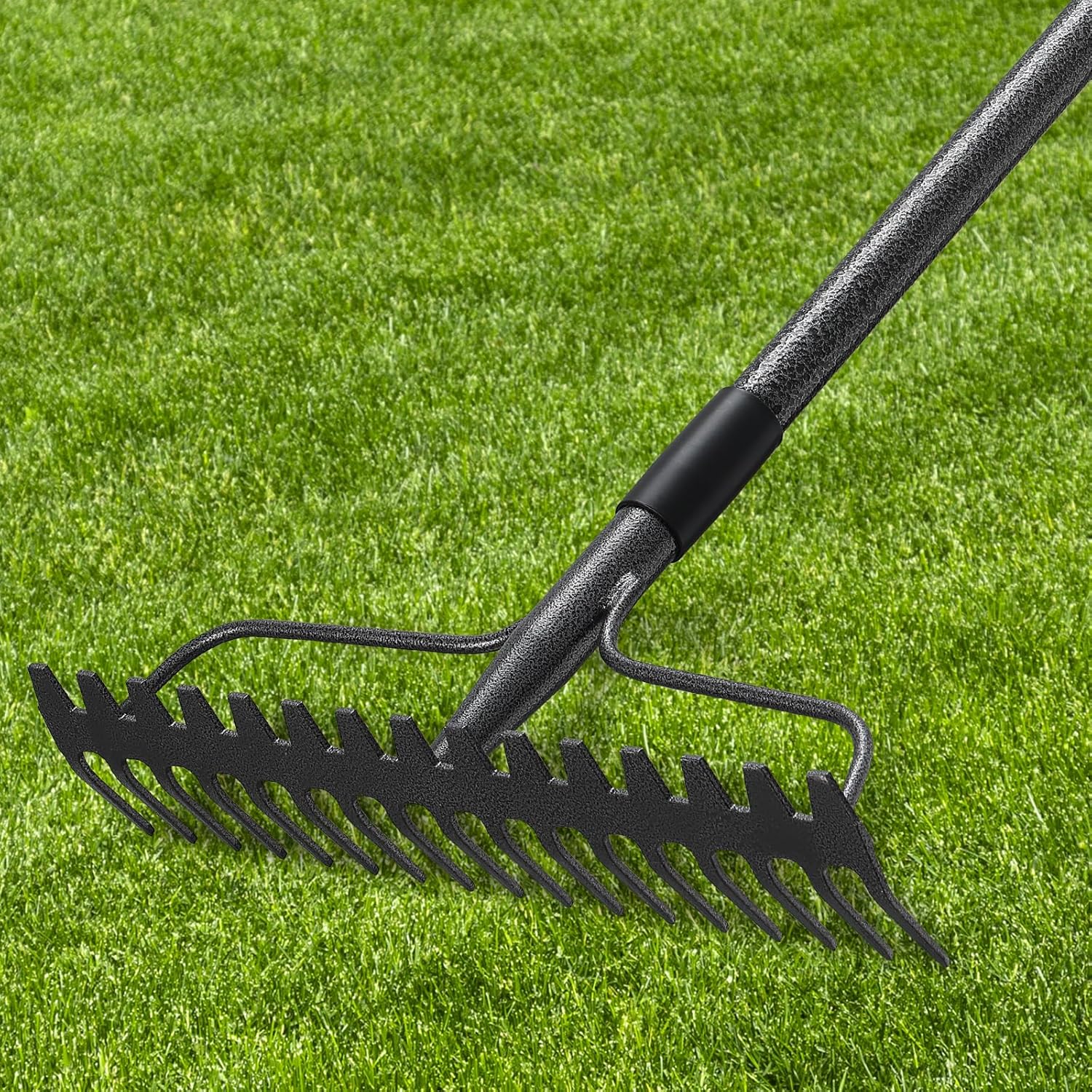
The DIIG 63" bow rake is a versatile garden tool built for heavier yard chores like breaking up compacted soil, spreading topsoil or gravel, and gathering light debris. Its 17 steel tines and 17" wide head penetrate and level ground efficiently, while the 3mm-thick head and triple-welded connection reduce the chance of teeth bending or detaching during tougher jobs. The stainless steel multi-section handle adjusts by rotating and tightening sections, so you can shorten it for detail work or extend for leverage when prying rocks out of grass. Practical benefits include good ground coverage per stroke, corrosion-resistant materials for outdoor use, and straightforward assembly. Limitations are that the all-metal stainless handle and grip may feel cold or slick in wet conditions and the rake is aimed at general yard use rather than delicate gardening tasks where finer tines are needed. For removing medium-sized rocks from turf and general leveling this rake offers durability and reach, but expect a firm, utilitarian feel rather than cushioned ergonomics.
Best for: Gardeners who want a single, durable tool for medium-duty yard work such as removing rocks from turf, breaking up compacted soil, and leveling ground without switching tools frequently.
Less Ideal for: Those needing a delicate rake for fine gardening, transplanting, or prolonged raking where a lightweight, cushioned-handle tool would be preferable.
- 17-tine wide metal head provides good coverage for leveling and pulling rocks from grass
- Triple-welded head connection and 3mm-thick tines increase durability under heavy use
- Stainless steel handle resists rust and the multi-section design allows adjustable length
- Metal construction handles heavier materials like gravel, compacted soil, and thatch
- All-metal grip and handle offer little cushioning and can be uncomfortable during long sessions
- May be heavier than lightweight rakes, which can tire some users over extended use
Verdict: Sturdy, wide 17-tine head and rust-resistant stainless steel construction make this rake a reliable choice for removing rocks from grass and heavy yard leveling tasks.
Jardineer Heavy-Duty Bow Rake with 18 Steel Tines (Long Handle)

| Rake Type | Stone Rake |
|---|---|
| Head Material | Alloy Steel |
| Handle Material | Aluminum |
| Tines | 18 |
| Head Size | 16 inches |
This Jardineer bow rake is built for heavy yard work where strength and coverage matter. Its 16-inch wide head has 18 thick alloy-steel tines and a triple-welded joint so it can penetrate compacted soil, pry out stones, and spread gravel or mulch without the head separating. The head offers two working edges: shorter tines to break up compacted ground and longer tines to rake and level loose material, which makes switching tasks quick while you work. An aluminum long handle keeps the tool lighter than an all-steel shaft and the anti-rust coating on the head improves durability for outdoor use. The rake ships with a detachable handle for easier storage and assembly in minutes. Expect a very capable landscaping tool that excels on rocky turf and gravel paths but is a bit heavier than leaf-specific rakes and lacks adjustability found on some telescoping models.
Best for: A buyer who prioritizes durable performance for preparing seedbeds, clearing rocks from grass, and moving gravel or mulch will appreciate this tool; it suits homeowners and landscapers who need a robust, no-nonsense rake for tough ground work.
Less Ideal for: If you mainly need a feather-light rake for leaf collection, frequent ergonomic adjustments, or long periods of repetitive hand-friendly use, a flexible leaf rake or adjustable-handle model is a better match.
- Sturdy alloy-steel head with 18 thick tines resists bending when digging into compacted soil or gravel.
- Dual-sided tine design lets you use short tines for prying stones and long tines for spreading and leveling material.
- Triple-welded joint reduces risk of head detachment during heavy tasks.
- Wide 16-inch head covers more ground for faster raking and leveling.
- Handle is aluminum which is lighter but transmits more shock than a cushioned or fiberglass grip.
- Non-adjustable long handle limits length customization for different user heights.
- Heavier and stiffer tines make it less suited for delicate leaf raking or fine lawn grooming.
Verdict: Built for heavy-duty rock and gravel work, this wide 18-tine bow rake gives the strength and coverage performance-focused users need to clear and level rocky turf efficiently.
BlumeTrec 68" Adjustable Bow Rake with 17 Manganese-Steel Tines

| Head Material | Manganese steel |
|---|---|
| Handle Material | Stainless Steel |
| Head Size | 17 inches |
| Overall Length | 68 inches |
This BlumeTrec bow rake is built for multi-purpose yard work: a 17-inch manganese-steel head with 17 welded tines tackles compacted soil, dethatching, leaf collection, and light leveling, while the dual-sided design (long tines one way, shorter tines the other) lets you switch between loosening and spreading without swapping tools. The 68-inch stainless-steel handle with a soft non-slip grip helps maintain an upright posture for longer sessions and breaks down into threaded sections for easier storage and transport. In real use the solid tines and heat-treated head feel durable and resist bending during heavy raking, and the wide head covers ground efficiently so you spend fewer passes per task. Assembly is straightforward with the provided fasteners. Limitations are that the long steel handle is modular rather than a single-piece shaft, which may develop play at the threaded joints over many seasons, and the tool is large for small patios or container gardens where a shorter rake would be easier to maneuver.
Best for: Gardeners who need a single, heavy-duty rake that handles soil prep, dethatching, and leveling across medium to large lawns and beds and who value durability and coverage over compact size.
Less Ideal for: People with very small patios, container gardens, or those who prefer lightweight, travel-friendly tools should consider a shorter or folding rake instead.
- Durable manganese-steel head with 17 welded tines for strong soil penetration and resistance to bending
- Dual-sided head provides long tines for loosening and short tines for spreading and leveling
- Long 68-inch handle encourages upright posture and reduces back strain during extended use
- Detachable multi-section handle for compact storage and easier transport
- Multi-section threaded handle can develop slight play over time compared with a one-piece shaft
Verdict: A robust, versatile bow rake that combines heavy-duty tines and a long handle to speed up soil prep and lawn maintenance across medium to large outdoor spaces.
HRADHOL 60-Inch Adjustable Steel Bow Rake with 14 Tines

| Handle Material | Stainless Steel |
|---|---|
| Head Material | Stainless Steel |
| Rake Type | Garden Rake |
| Number of Items | 1 |
This HRADHOL bow rake is a straightforward, budget-friendly tool for loosening soil, spreading gravel, and pulling rocks from turf. The 14-steel-tine head combines longer tines for penetrating and lifting embedded material with shorter tines for leveling and spreading, so you can both expose and gather rocks in grassy areas. Its stainless steel head and handle construction and welded design give it a durable feel for regular yard work, and the double-locking screws keep the head secure during use. The telescoping multi-section handle adjusts to 31, 45, or 60 inches so different users can work upright and it breaks down for compact storage. Expect solid performance on light to moderate tasks like dethatching, smoothing soil, and raking gravel; very heavy-duty prying or frequent work in rocky, root-filled soil may stress the tines or connections. Assembly is simple but the multi-piece handle means one more joint than a fixed-handle rake.
Best for: Buyers who want an affordable, no-frills metal bow rake for routine rock removal, leveling, and light soil work and who value an adjustable, compact tool for shared household use.
Less Ideal for: Landscapers or users who need a heavy industrial rake for constant heavy prying or for breaking up very rocky, root-laden soil should choose a heavier fixed-handle commercial tool instead.
- 14 steel tines for a mix of penetration and leveling
- Adjustable handle (31", 45", 60") lets users work upright and stores compactly
- Stainless steel head and handle with welded construction for corrosion resistance
- Double locking screws secure the head during use
- Multi-section handle introduces additional joints that may be less robust than a one-piece shaft
- Designed for light to moderate duties and may not withstand heavy prying in very rocky ground
Verdict: A practical, low-cost stainless steel bow rake that balances rock-pulling and leveling tasks with an adjustable handle for comfortable, shared use.
Bully Tools 7-Gauge 16-Tine Stone Rake with 66" Fiberglass Handle

| Rake Type | Stone Rake |
|---|---|
| Head Material | Alloy Steel |
| Handle Material | Fiberglass |
| Number of Tines | 16 |
| Item Highlight | Heavy Duty Garden Rake for Spreading Gravel, Mulch, Soil Leveling |
The Bully Tools 7-gauge stone rake is built for demanding yard and landscaping jobs where durability matters. Its extra-thick alloy steel head with 16 tines gives strong, consistent performance when spreading gravel, removing rocks and debris from grass, and leveling soil for seeding or mulch. The long 66" fiberglass handle provides good leverage and resists moisture and warping better than wood, so it stays reliable through repeated use and in wet conditions. A rubber grip helps control the tool during heavy passes, and the wide 18" head covers ground quickly. Because the head is commercial grade, it requires more effort to maneuver than lighter leaf rakes but that stiffness is what lets it shift stones and break up compacted soil without bending. Assembly is minor but required. For anyone who needs a rugged, no-nonsense tool that holds up under frequent heavy use, this rake delivers consistent results; buyers who want a lightweight, delicate rake for fine garden beds may prefer a softer-tined model instead.
Best for: Gardeners and landscapers who prioritize a dependable, heavy-duty tool for clearing rocks, spreading gravel, and leveling large turf areas and want a rake that stands up to frequent tough use.
Less Ideal for: Casual users who only need a lightweight leaf rake for fine debris or tight planting beds should consider a softer, more maneuverable rake instead.
- 7-gauge alloy steel head offers commercial-grade strength for moving stones and heavy material
- 16 tines and 18" head provide broad coverage for faster leveling and spreading
- 66" fiberglass handle delivers leverage and resists moisture and warping
- Rubber grip improves user control during heavy use
- Made in USA construction with durable components for long-term reliability
- Heavier and stiffer than lightweight leaf rakes, making it less suitable for delicate beds
- Requires minor assembly out of the box
Verdict: Choose this heavy-duty, commercial-grade stone rake when you need a reliable tool that can move rocks and level turf repeatedly without bending.
Walensee Dual-Sided Heavy Duty Bow Rake, 63" Stainless Steel Handle, 17" Head

| Head Size | 17 inches |
|---|---|
| Handle Material | Stainless Steel |
| Head Material | Metal |
| Rake Type | Garden Rake |
The Walensee dual-sided bow rake is a practical all-purpose garden tool built for yard maintenance tasks like loosening compacted soil, pulling thatch, spreading mulch and leveling gravel or topsoil. One side of the 17-inch head has 17 reinforced steel tines for aggressive raking and soil penetration while the opposite edge provides a flatter surface for smoothing and leveling. The head is heat-treated manganese steel with triple-welded joints and double-locking screws, so it feels sturdy under heavy use. A 63-inch stainless steel handle with an adjustable multi-section pole reduces bending and gives comfortable reach for longer sessions. In use the wide head covers ground quickly and the rigid construction stands up to rocky or rooty soil, though the metal head makes the tool best suited to outdoor, tough-duty tasks rather than delicate bed work. The rake is straightforward to use and low maintenance but its full-metal build means it is heavier than lightweight aluminum or wooden-handled rakes and may be overkill for occasional light-duty chores.
Best for: Homeowners and regular gardeners who want a single, durable rake that handles soil breaking, dethatching and leveling across medium to large yards.
Less Ideal for: Casual users with very small gardens or those who need an ultra-light tool for frequent, gentle bed work should consider a lighter or softer-tined rake instead.
- Dual-sided head combines aggressive tines for loosening with a flat side for leveling.
- Heat-treated manganese steel head and triple-welded construction for durability.
- Wide 17-inch head covers more ground per pass for faster work.
- Long adjustable stainless steel handle reduces bending and improves reach.
- All-metal construction increases weight compared with lighter rakes, which may tire some users.
- Not tailored for delicate planting beds or very fine finishing work due to rigid steel tines.
Verdict: Choose this heavy-duty dual-sided bow rake if you want one durable tool that quickly handles soil loosening, dethatching and leveling across medium to large yards.
Choosing the Right Garden Rake for Rocks in Grass: Key Factors to Consider
Tine Design and Spacing
Tine shape and the gap between tines determine how well a rake will pick up rocks while leaving grass intact. Stiff, slightly curved tines can hook and lift small to medium stones without slicing into soil. Wider spacing lets grass blades pass through while retaining stones, but too wide and smaller pebbles will fall through. Consider the typical size of rocks in your lawn and choose a tine pattern that traps those sizes without dragging sod.
Tine material matters too. Hardened steel tines hold their straightness when prying stones from compacted turf. Coated or galvanized finishes reduce surface rust when rakes sit outside between uses. For mixed jobs that include leaves and small debris, a hybrid tine profile that balances flexibility and strength will be more versatile.
Head Width and Coverage
Head width affects how quickly you can clear an area and how much control you retain near obstacles. A wider head covers more ground in fewer strokes, which is useful on large lawns with frequent rock migration. Narrower heads give better access beside flower beds, around tree trunks, and along fences.
Think about storage and transport too. Wider heads can be harder to store or carry in a small shed, while smaller heads are more maneuverable. If you have a large lawn with many rocks, prioritize coverage. If you need to work near delicate plantings, lean toward a narrower, more precise head.
Handle Length and Ergonomics
A handle that fits your height and working posture reduces strain on your lower back and shoulders. Longer handles let you reach farther without bending, which is helpful when raking across a slope or pulling rocks toward you. Shorter handles increase leverage for prying embedded stones.
Grip shape and material also influence comfort during long sessions. Cushioned or contoured grips reduce hand fatigue and slipping when your hands are sweaty or wet. Some handles offer an offset or angled connection to the head that improves wrist position and reduces overreach. Consider how long you will use the rake in a single session and whether ergonomic features matter to avoid aches and repetitive strain.
Weight, Balance, and Maneuverability
Weight affects how much effort is required to sweep and lift rocks. A heavier head can help a rake bite into compacted turf and lift stones, but too much weight turns repeated raking into a tiring workout. Balance between head and handle determines control and reduces wrist strain when collecting heavier material.
Look for rakes that feel steady without being cumbersome. Lightweight materials for the handle combined with a robust head often deliver the best tradeoff. If you plan to use the rake for extended periods, prioritize a lighter, well-balanced tool. For occasional heavy-duty clearing, a stiffer, heavier head may be appropriate.
Durability and Weather Resistance
Rakes for outdoor use are exposed to moisture, dirt, and impact from rocks. Corrosion-resistant finishes and solid joints between head and handle extend a tool's usable life. Welded connections and reinforced sockets are less likely to loosen when prying stones.
Materials like galvanized steel, stainless hardware, and weatherproof handle coatings withstand seasons of lawn work. Consider how you store the rake; even the best protective finish needs basic shelter to avoid accelerated wear. Durability also includes replaceability: some rakes allow the head to be replaced if tines bend beyond repair, which can be a cost-effective long-term choice.
Best Rake Shapes for Turf-Friendly Rock Removal
Head profile plays a big role in how the rake interacts with grass. A slightly cupped head lifts material with less scalp pressure than a perfectly flat head, so it is gentler on shallow-rooted turf. Straight heads offer precise control when scraping closer to the soil, which can be useful for pulling deeply embedded stones but risks more surface damage if used heavily.
- Cupped heads reduce scalping and protect shallow roots
- Straight heads offer stronger prying force for embedded rocks
- Medium-profile heads balance lift and control for mixed lawns
Using a Rake Without Damaging Your Lawn
Work with the grain of the grass and use lighter, shallower strokes for the first pass to reveal loose stones. Follow up with firmer pulls only where rocks are lodged. Avoid forcing tines under turf at a steep angle as that is when most scalping and root damage occurs. Perform small test spots to find the right stroke depth for your lawn. Raking when soil is slightly moist often makes rock removal easier because stones are less likely to bounce and roll under the grass, but overly wet turf is vulnerable to tearing, so pick a workable window.
- Start with light sweeps, then increase force selectively
- Test a small area to set stroke depth
- Prefer slightly damp, not soggy, turf for easier removal
When to Use a Short-Handled Rake Versus a Long-Handled One
Short handles give more leverage for prying stubborn stones and are more precise in tight spaces. They are a good choice for small lawns, planters, or working around landscaping where space is limited. Long-handled rakes let you stand more upright and cover more ground per pass, which reduces bending but can be less effective for deeply embedded rocks. If you are tall, choose a handle length that keeps your spine neutral. Many gardeners prefer an intermediate length that balances reach and control. Consider an extendable handle if you alternate between tight-detail work and wide-area clearing.
- Short handle: better leverage and precision
- Long handle: less bending and wider coverage
- Extendable handle: balance of reach and control
Cleaning and Maintaining Your Rake
Remove dirt and trapped debris after each use to prevent corrosion and keep tine spacing consistent. Wiping metal parts dry and storing the rake indoors or under cover prolongs finish life. Periodically inspect the head-to-handle joint for looseness and tighten or repair fasteners before they fail. Sharpening is rarely necessary for stone-raking tines, but straightening bent tines with a vice or clamp restores function. Replacing damaged grips and refreshing protective coatings on wooden handles keeps the tool comfortable and usable for seasons.
- Clean and dry after use to prevent rust
- Check and tighten head-to-handle connections
- Straighten bent tines and refresh handle coatings when needed
How We Chose the Best Garden Rake for Rocks in Grass
Our selection focused on rakes that perform well when you need to pull, gather, or remove stones from grassy surfaces without digging up roots or killing turf. We prioritized durable tine designs and spacing that capture rocks while letting grass pass through, tested handle ergonomics for extended use, assessed head width for efficient coverage, and checked construction materials for long-term resistance to bending or rust. We also considered weight and balance so the tool can be used with minimal fatigue and looked for heads shaped to avoid scalping the lawn. We excluded specialty landscape rakes meant only for soil grading and hand tools too small to move significant volumes of material. We did not include multipurpose leaf rakes that are too flexible to handle stones reliably. The final list emphasizes practical dimensions and build choices that matter in turf work: tine stiffness and spacing, head shape, handle length and comfort, overall weight and balance, and corrosion resistance.
FAQ
Will a leaf rake work for picking up rocks in grass?
Leaf rakes are usually too flexible to handle rocks reliably. They tend to bend around stiff or heavy stones and can push rocks deeper into turf. For consistent rock collection choose a rake with firmer tines and a sturdier head.
How often should I rake rocks from my lawn?
Frequency depends on local conditions and how quickly rocks migrate. Inspect the lawn after heavy rains and any landscaping work that disturbs soil. Seasonal checks in spring and fall catch gradual accumulations before they damage mowers.
Can I use a garden rake on sod without damaging it?
Yes, if you select a rake with gentler tine spacing and use light strokes. Avoid driving tines deep under the sod and test a small area to confirm the stroke depth that lifts stones without scalping roots.
Is a metal or plastic head better for removing rocks?
Metal heads are stronger and better for prying and lifting rocks, while plastic heads can flex too much. Choose a metal head with corrosion protection for durability. Plastic may work for very small, occasional jobs but is not ideal for frequent rock removal.
Should I wear any protection when raking rocks?
Wear sturdy gloves to protect hands from blisters and sharp stones, and closed-toe shoes to protect feet from rolling rocks. Eye protection is a good precaution when prying embedded stones that may flick debris.
Final Verdict
When choosing a garden rake for rocks in grass, prioritize tine design and spacing, handle ergonomics, and a durable head-to-handle connection. Those attributes determine how effectively the tool lifts stones without stressing turf or your body. Balance head width and weight to match the size of your lawn and the typical rock sizes you face. Your final choice should reflect whether you need wide coverage for big lawns or more precise control near plantings. Focus on the tradeoffs outlined here to find a rake that removes rocks efficiently while minimizing lawn damage and physical strain.
