

Note: This article contains affiliate links. If you click on these links and make a purchase, I may earn a small commission at no extra cost to you. This helps support my research and content. Read my full affiliate disclosure here.
If you maintain stone pathways, gravel beds, or decorative rock areas, the right gravel garden rake makes daily upkeep faster and keeps surfaces looking tidy. The wrong tool can scatter stones, gouge edging, or leave uneven high and low spots that collect water. This guide looks at six shortlisted Gravel Garden Rakes chosen for real garden work: spreading, leveling, edging protection, and longevity. We evaluated head shape, tine spacing, handle length and material, and how each design behaves on compacted or loose gravel. Read on to understand the tradeoffs and which rake features fit your yard, driveway, or decorative bed. The next section lays out editorial criteria used to pick these top options before the product list itself.
Top Picks at a Glance
| Best Quality Built to a higher standard if you want something more solid | Bully Tools 7-Gauge 16-Tine Stone Rake with 66" Fiberglass Handle |  |
| Best Value The sweet spot between price and what you get | DIIG 63" Bow Rake with 17-Tine Metal Head and Stainless Steel Handle |  |
| Best Budget The cheapest option that still gets the job done reliably | HRADHOL 60-Inch Adjustable Steel Bow Rake with 14 Tines |  |
| Highest Rated A top-rated pick with lots of positive feedback | THE GROUNDSKEEPER II Garden Rake with Fiberglass Handle and Hardened Steel Tines |  |
| Most Popular A crowd favorite that many people choose with confidence | Walensee Dual-Sided Heavy Duty Bow Rake, 63" Stainless Steel Handle, 17" Head |  |
Bully Tools 7-Gauge 16-Tine Stone Rake with 66" Fiberglass Handle

| Rake Type | Stone Rake |
|---|---|
| Head Material | Alloy Steel |
| Handle Material | Fiberglass |
| Head Size | 18 inches |
| Tines | 16 |
The Bully Tools 7-gauge 16-tine stone rake is built for heavy-duty gravel and yard-prep work where strength and coverage matter. The extra-thick alloy-steel head and 16 tines let you move and level gravel, mulch, and compacted soil without bending or missing spots, while the 66-inch fiberglass handle gives good leverage and cuts fatigue compared with a short wooden shaft. Typical use cases are spreading stone, smoothing beds before seeding, redistributing mulch, and scraping out debris or roots. Notable features are the commercial 7-gauge steel construction, rubber grip for control, and weather-resistant fiberglass handle that holds up to moisture. Practical benefits include faster coverage of large areas thanks to the wide 18-inch head and durable materials that stand up to repeated heavy use. Limitations are that its heavy-duty build makes it heavier to swing than lightweight leaf rakes and the fixed long handle can be awkward in tight beds or trucks; minor assembly is required out of the box.
Best for: Buyers who prioritize performance and durability for large gravel beds, landscaping jobs, or regular heavy-duty yard work and want a tool that speeds up coverage and holds up to frequent use.
Less Ideal for: Not the best choice for gardeners who need a lightweight rake for delicate beds, tight planting areas, or primarily leaf cleanup in small yards.
- Commercial-grade 7-gauge alloy-steel head for exceptional durability under heavy loads
- 16 tines and 18-inch head provide broad, even coverage for faster leveling
- 66-inch fiberglass handle offers strong leverage and resists moisture
- Rubber grip improves control during heavy raking tasks
- Heavier than lightweight leaf rakes, so more effort for prolonged overhead use
- Long fixed handle can be cumbersome in tight spaces or when transporting
Verdict: Choose this stone rake when you need a tough, commercial-grade tool that moves and levels gravel and mulch quickly and reliably.
DIIG 63" Bow Rake with 17-Tine Metal Head and Stainless Steel Handle
| Head Size | 17 |
|---|---|
| Handle Material | Stainless Steel |
| Head Material | Metal |
| Item Weight | 1.75 kg |
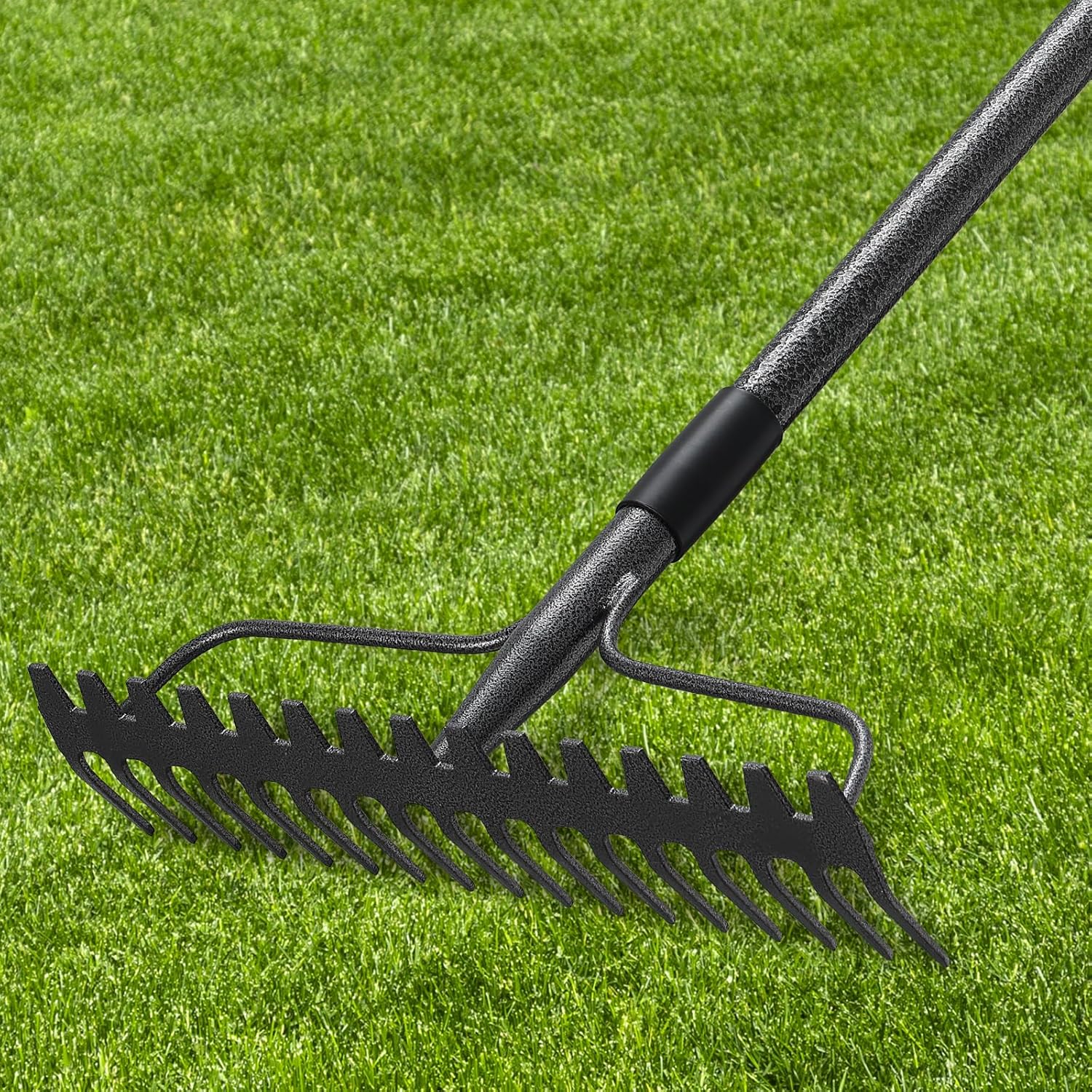
This DIIG bow rake is built for heavier garden jobs where you need to break up compacted material and level surfaces. The 17-tine, 17-inch-wide metal head with 3mm thickness bites into gravel, compacted soil, and mulch for effective spreading and grading, while the triple-welded connection aims to keep the head secure during forceful use. The handle uses multi-section stainless steel poles so you can adjust length by adding or removing sections, which helps adapt reach for different tasks and users. Practical benefits include the rigid metal head that resists bending under load and a corrosion-resistant finish for outdoor durability. Assembly is simple and storage is compact thanks to the sectional handle. Limitations to expect are the all-metal construction can be heavier than fiberglass or wooden-handle rakes and the stainless-steel grip may be slippery without an added rubber sleeve in wet conditions. For precision grading of very fine sand or delicate plant roots a finer-toothed landscaping rake would be preferable.
Best for: Gardeners and yard owners who prioritize a durable, metal rake for heavy tasks like leveling gravel, breaking compacted soil, and moving coarse material and who want an adjustable-length tool for flexible reach and storage.
Less Ideal for: People seeking an ultra-light rake for long-duration repetitive work or a very fine-tooth tool for delicate topdressings or turf finishing should consider alternative landscaping rakes.
- 17-tine, 17-inch metal head provides wide coverage and strong penetration into compacted material
- Triple-welded head connection increases durability under heavy use
- Stainless steel handle and anti-corrosion coating improve rust resistance for outdoor use
- Adjustable multi-section handle lets you change length for reach and storage convenience
- All-metal construction adds weight compared with fiberglass or wooden-handle rakes
- Handle lacks a dedicated soft grip which can feel slippery or uncomfortable during prolonged use
Verdict: A tough, metal 17-tine bow rake built to handle leveling and breaking compacted gravel and soil with an adjustable stainless-steel handle for versatile use.
HRADHOL 60-Inch Adjustable Steel Bow Rake with 14 Tines

| Handle Material | Stainless Steel |
|---|---|
| Head Material | Stainless Steel |
| Head Size | 13.7 inches |
This HRADHOL bow rake is a straightforward, no-frills tool designed for ground prep and gravel work. It combines 14 steel tines for breaking up soil and dethatching with shorter tines for spreading and leveling gravel or soil. The multi-section handle can be set to three lengths so users can work upright and store the tool compactly when not in use. Built from stainless steel with a coated finish and welded head, the rake is intended to resist bending during typical yard tasks and the double locking screws help keep the head secure. For gravel gardens it performs well at raking and creating a smooth finish across beds and pathways, and the 13.7-inch head gives decent coverage without being unwieldy. Expect assembly to be required and the basic metal finish means it is utilitarian rather than premium, but it offers practical functionality for routine maintenance. If you need a heavier industrial-grade tool for constant professional use, a thicker commercial head would be preferable.
Best for: A homeowner or gardener who wants an affordable, versatile rake for occasional gravel bed maintenance, soil prepping, and light landscape tasks and values compact storage and adjustable handle lengths.
Less Ideal for: Professional landscapers or users who need a heavy-duty, wide-format rake for intensive daily use should consider commercial-grade alternatives.
- Adjustable multi-section handle with three length settings for comfortable working posture and compact storage
- Durable stainless steel head and handle construction with welded structure aimed at resisting bending
- 14-tine head combines long and short tines for both soil loosening and precise leveling
- Secure head attachment with double locking screws to reduce loosening during use
- Basic consumer-grade construction may not withstand continuous heavy commercial use
- Head width is modest compared with large landscape rakes, so coverage requires more passes
Verdict: A practical, budget-friendly steel bow rake that adjusts for user comfort and handles gravel and soil leveling reliably for home garden use.
THE GROUNDSKEEPER II Garden Rake with Fiberglass Handle and Hardened Steel Tines

| Head Material | Alloy Steel |
|---|---|
| Handle Material | Fiberglass |
| Head Size | 21 inches |
| Number of tines | 28 |
The Groundskeeper II is a purpose-built garden rake that uses angled, hardened steel tines and a lightweight fiberglass handle to make leaf removal, mulch work and light de-thatching easier. In everyday use the 21-inch head with 28 spring-loaded tines digs into debris so you can rake standing up with less downward force, which reduces back strain on longer jobs. The fiberglass handle keeps the tool light while the co-polymer head resists breakage, and the tines are replaceable for longer service life. It also self-cleans when flipped and pulled toward you, speeding repetitive passes and clearing needles or pine straw efficiently. Some assembly is required and the aggressive tines are stiffer than flexible leaf rakes, so they work best on lawns, beds, gravel and heavier debris rather than on very delicate plants or fine mulch that could be disturbed. Overall it is a durable, pro-oriented option if you want a rake that reduces effort and stands up to frequent use.
Best for: Buyers who value a durable, low-effort rake for frequent yard work and prefer tools with proven customer feedback and long-term reliability.
Less Ideal for: If you only need an occasional, gentle leaf rake for delicate flower beds or very fine mulch, a softer fan-style rake would be a better choice.
- Light overall weight reduces fatigue during extended use
- Angled, spring-loaded hardened steel tines let you rake while standing and dig in without downward pressure
- Durable construction with fiberglass handle and co-polymer head for professional-use longevity
- Self-cleaning action when flipped and pulled speeds work and reduces clogging
- Stiffer steel tines can be too aggressive for very delicate plants or fine decorative mulch
- Requires minor assembly before first use
Verdict: Choose the Groundskeeper II when you want a lightweight, professional-grade rake that reduces back strain and holds up to regular, heavy yard work.
Walensee Dual-Sided Heavy Duty Bow Rake, 63" Stainless Steel Handle, 17" Head

| Head Size | 17 inches |
|---|---|
| Handle Material | Stainless Steel |
| Head Material | Metal |
| Rake Type | Garden Rake |
The Walensee dual-sided bow rake is a practical all-purpose garden tool built for yard maintenance tasks like loosening compacted soil, pulling thatch, spreading mulch and leveling gravel or topsoil. One side of the 17-inch head has 17 reinforced steel tines for aggressive raking and soil penetration while the opposite edge provides a flatter surface for smoothing and leveling. The head is heat-treated manganese steel with triple-welded joints and double-locking screws, so it feels sturdy under heavy use. A 63-inch stainless steel handle with an adjustable multi-section pole reduces bending and gives comfortable reach for longer sessions. In use the wide head covers ground quickly and the rigid construction stands up to rocky or rooty soil, though the metal head makes the tool best suited to outdoor, tough-duty tasks rather than delicate bed work. The rake is straightforward to use and low maintenance but its full-metal build means it is heavier than lightweight aluminum or wooden-handled rakes and may be overkill for occasional light-duty chores.
Best for: Homeowners and regular gardeners who want a single, durable rake that handles soil breaking, dethatching and leveling across medium to large yards.
Less Ideal for: Casual users with very small gardens or those who need an ultra-light tool for frequent, gentle bed work should consider a lighter or softer-tined rake instead.
- Dual-sided head combines aggressive tines for loosening with a flat side for leveling.
- Heat-treated manganese steel head and triple-welded construction for durability.
- Wide 17-inch head covers more ground per pass for faster work.
- Long adjustable stainless steel handle reduces bending and improves reach.
- All-metal construction increases weight compared with lighter rakes, which may tire some users.
- Not tailored for delicate planting beds or very fine finishing work due to rigid steel tines.
Verdict: Choose this heavy-duty dual-sided bow rake if you want one durable tool that quickly handles soil loosening, dethatching and leveling across medium to large yards.
Choosing the Right Gravel Garden Rake: Key Factors to Consider
Head Design and Tine Spacing
Head shape and the spacing of tines control how a rake interacts with gravel. Wider spacing lets larger stones pass while moving smaller aggregate, which helps on decorative beds but can leave gaps if stones are very fine. Narrower spacing can level finer material but risks catching and displacing bigger stones.
A flatter head spreads material evenly across a surface but may scrape edging, while a slightly curved head holds stones as you move them. Consider the predominant stone size and whether you need to push, pull, or both when choosing head geometry.
Head Material and Construction
The head material affects long-term durability when working with abrasive gravel. Hardened steel heads resist bending and wear but need good corrosion protection. Thicker steel or reinforced cast heads survive heavy use better than thin stamped metal. Heads welded or bolted securely to the collar are more repairable than one-piece designs.
Pay attention to how tines are attached and whether they can be replaced. Some heads use bolted tine sections that can be swapped as they wear. Avoid heads with fragile welds or thin sections that are likely to fracture under repeated impact from heavier stones.
Handle Length, Material, and Comfort
Handle reach affects posture and leverage when leveling long runs of gravel. A handle that is too short forces stooping and fatigue; an excessively long handle can be unwieldy in tight spaces. Wood handles provide natural feel and some vibration damping, while fiberglass or composite handles resist moisture and splitting. Metal handles can be very strong but may transmit more shock to the hands.
Grip shape and finish matter for comfort during extended use. A slightly textured or cushioned grip reduces slipping and blisters. Consider whether you will be working from standing positions or kneeling and choose a handle profile accordingly.
Connection Strength and Repairability
The joint between head and handle is the most common failure point when raking gravel. A well-designed ferrule, reinforced collar, or threaded connection distributes stress and resists loosening. Fasteners should be accessible for tightening or replacement if they corrode or back out over time.
Repairable connections extend the tool's service life. If the head is replaceable, you can refresh a worn tool rather than discard it. Look for designs that allow straightforward replacement of bolts or collars without specialized parts.
Weight and Balance
Weight affects both control and fatigue. Heavier heads can move larger volumes of gravel with fewer passes but increase arm strain. Lighter rakes reduce fatigue for long jobs but may require more effort to level heavy or compacted aggregates. Balance between head and handle makes the tool feel predictable when pushed or pulled.
For extended maintenance sessions, prioritize a balanced tool that matches your strength and the scale of the task. For occasional spot work, a lighter option may be preferable.
Corrosion Resistance and Maintenance
Grinding and water splashes accelerate metal wear when working with gravel. Protective finishes, stainless or galvanized alloys, and sealed fasteners reduce rust and maintain function. Wooden handles benefit from periodic oiling to prevent splitting and moisture ingress.
Routine maintenance-tightening fasteners, checking for bent tines, and storing the rake off the ground-prolongs life. Consider how easy it is to find replacement parts or to touch up protective coatings when making a selection.
Best Rake Types for Different Gravel Uses
Different gravel tasks call for different rake types. A leaf-style or fan rake is excellent for sweeping surface debris from gravel without moving too many stones. A bow-style or landscape rake with a straight, rigid head is better for pushing and leveling larger volumes of aggregate. Consider a dual-head approach if you maintain both decorative beds and pathways.
For driveways or areas with mixed stone sizes, a rigid landscape-style head with replaceable tines handles heavier work without bending. For fine decorative gravel and intricate edging, a lighter, more maneuverable head helps you finesse edges without displacing border materials.
- Fan-style heads: good for sweeping debris, gentle on stones
- Landscape/rigid heads: best for leveling and grading larger volumes
- Dual-head setups: versatile for mixed tasks and different stone sizes
Preparing the Surface Before Raking
Before raking, clear oversized debris and remove weeds or plant material that could get tangled in tines. If surface compaction is an issue, loosen the top inch or two with a light pass of a coarser tool or a tine rake before attempting fine grading. This prevents the gravel from forming ridges or hollows during the leveling process.
Check edges and hardscapes. Temporary edge protection like removable boards helps keep gravel from spilling into planted beds while you work. Working in straight runs and finishing with consistent pulls produces a smoother, more uniform surface.
- Remove branches and large debris first
- Loosen compacted areas for easier leveling
- Protect adjacent planting beds and edging
Techniques for Even Spreading and Leveling
Work in passes: push gravel into the low spots, then pull back to distribute evenly. Use the rake head at a shallow angle for spreading and a steeper angle when gathering. Short, controlled strokes help avoid bouncing stones and creating new depressions.
When building a new layer or topping up existing gravel, start at the highest point and work outward. For long runs, overlap your passes so there are no missed strips. Finish by lightly tamping or walking the surface to seat small stones and then perform a final light rake to restore texture.
- Push then pull technique for uniform distribution
- Use shallow angles for spreading, steeper angles for gathering
- Overlap passes and finish with light tamping
Edging and Border Protection
Edges are vulnerable to being scraped or pushed out during raking. To avoid damaging curbing or plant borders, keep the rake head slightly away from the edge and use a gentler, sweeping motion near borders. For tight spaces, use a smaller headed rake or hand tools to tidy along hardscapes without disturbing edging.
If you frequently lose gravel to adjacent beds, install low-profile edging that sits slightly above the gravel plane. That barrier reduces the need for precise raking along the border and protects plants from abrasive stone.
- Maintain slight clearance from hard edges
- Use smaller heads for tight edging work
- Consider low-profile edging to retain gravel
Maintaining Your Gravel Rake
After use, shake off loose stones and brush away grit from the head and fasteners. Wipe metal parts dry and apply a light protective oil to steel heads and fasteners if you expect moisture exposure. Wooden handles benefit from occasional sanding and oiling to prevent splinters and moisture damage.
Inspect tines and the head-to-handle connection regularly. Straighten bent tines promptly and tighten any loose bolts. Replace worn or broken components to avoid further stress on the remaining structure.
- Clean off grit and moisture after use
- Oil metal parts and maintain wooden handles
- Inspect and repair bent tines or loose fasteners
How We Chose the Best Gravel Garden Rake
We filtered candidate Gravel Garden Rakes by features that matter on stone and aggregate surfaces. Primary consideration went to head geometry and tine spacing because these determine how the tool moves small stones without piercing fabric or gouging edging. We prioritized durable head materials and secure head-to-handle connections to resist bending or loosening when working with heavier aggregates. Handle reach and grip comfort were evaluated to reduce back strain during large or repeated jobs. We considered weight distribution so rakes feel balanced when pushing or pulling. Corrosion resistance, especially on metal heads and fasteners, was included because gravel work exposes tools to moisture and abrasive stone dust. Finally, we looked at build quality and ease of replacing wear parts such as tines or bolt connections. Excluded from the list were lightweight yard rakes intended for leaves or fine mulch; those heads and tines are not designed for stone and can fail quickly. We also excluded novelty designs with unrepairable one-piece construction. The products selected meet the criteria above and represent practical choices for gardeners maintaining gravel surfaces.
FAQ
Can I use a regular leaf rake on gravel?
Often a leaf rake is too flexible and its tines too fine for gravel. It can bend or break and will move less stone per pass. Leaf rakes are fine for sweeping light debris from a gravel surface but are not ideal for leveling or spreading aggregate.
What tine spacing works best for decorative gravel?
It depends on stone size. For fine decorative gravel, closer tine spacing helps create a smooth finish. For larger decorative stone, wider spacing prevents jamming and lets the rake move material without lifting big pieces. Match spacing to your predominant stone size.
How do I prevent gravel from spilling into planting beds while raking?
Use removable edge boards or temporary barriers when raking near beds. Keep the rake head slightly back from the edge and use smaller, controlled strokes to avoid launching stones into adjacent areas. Low-profile permanent edging also reduces loss over time.
How often should I replace the rake head or tines?
Frequency varies with use, but inspect the head seasonally if you maintain gravel regularly. Replace or repair tines when they bend repeatedly, fracture, or wear down so they stop engaging the gravel properly. Repairing early prevents damage to the handle and fasteners.
Is a heavier rake always better for gravel work?
Not always. Heavier heads move more material per pass and can be efficient for large jobs, but they also increase fatigue. Choose weight based on how often you work and your strength. For frequent light maintenance, a lighter, balanced tool may be preferable.
Final Verdict
Choosing the right Gravel Garden Rake comes down to matching head design, tine spacing, and handle ergonomics to the size of your stone and the scale of tasks you perform. Durable head construction and a strong, repairable connection to the handle reduce downtime and extend service life. Balance weight against the workload to avoid unnecessary fatigue. Prioritize a rake that protects edging and lets you achieve smooth grades without excessive effort. With the criteria above in mind, you can select a tool that keeps gravel beds and pathways neat with minimal maintenance.
