

Note: This article contains affiliate links. If you click on these links and make a purchase, I may earn a small commission at no extra cost to you. This helps support my research and content. Read my full affiliate disclosure here.
If your goal is to keep vegetables, overwintering perennials, or seedlings alive through freezing nights, choosing the right greenhouse for winter matters. A winter greenhouse does more than extend the season; it stabilizes temperatures, manages humidity, and can reduce frost damage in exposed yards or small homestead plots. This guide covers seven top greenhouses for winter growing, shortlisted for their insulation, ventilation, structural strength, and ease of use. Below we explain the practical differences that matter in cold climates and how each pick performs against those yard-ready criteria.
Top Picks at a Glance
| Best Overall The best all-around choice for most situations | Quictent 20 x 10 x 6.6 ft Tunnel Greenhouse with Dual Hinged Doors |  |
| Best Quality Built to a higher standard if you want something more solid | FLY BY YAN 6×4 ft Outdoor Polycarbonate Greenhouse with Roof Vent |  |
| Best Value The sweet spot between price and what you get | VEVOR Walk-In Tunnel Greenhouse, 14.6 x 6.4 x 6.3 ft Galvanized Steel Frame |  |
| Best Budget The cheapest option that still gets the job done reliably | Greengro Small Walk-In Greenhouse with PE Cover and Zippered Door |  |
| Highest Rated A top-rated pick with lots of positive feedback | RUIJOROO Walk-In Tunnel Greenhouse with PE Cover and Mesh Windows (9.8 x 6.5 x 6.5 ft) |  |
| Most Popular A crowd favorite that many people choose with confidence | EAGLE PEAK 6×8 Easy-Setup Pop-Up Greenhouse with Roll-Up Door |  |
| Best Seller A high-volume bestseller chosen again and again | Pure Garden 4-Tier Mini Greenhouse with PVC Cover and Locking Wheels |  |
Quictent 20 x 10 x 6.6 ft Tunnel Greenhouse with Dual Hinged Doors

| Size | 20'x10'x6.6' |
|---|---|
| Cover Material | Polyethylene (PE), 150 GSM |
| Frame Material | Galvanized steel |
| Number of Doors | 2 hinged doors |
| Number Of Vents | 8 |
This Quictent tunnel greenhouse is built to extend the growing season through fall and winter while remaining useful in spring and summer. It uses a thickened galvanized steel frame with extra crossbars and spiral ground stakes to resist wind and reduce top sag under snow or water. The 150 GSM polyethylene cover has reinforced seams, mesh reinforcement, and high light transmission for seedlings and vegetable beds, while eight screened vents and two patented hinged door frames give reliable ventilation and easy entry with tools. Practical benefits include strong wind anchoring (buryable skirt), easier access than zipper doors, and solid structural support for winter loads. Expect straightforward assembly that requires two people and periodic tightening of fasteners. The cover and frame are durable for typical seasonal exposure but are not as rigid as permanent polycarbonate greenhouses and will need care in very heavy snow or hurricane-force winds. For balanced gardeners wanting a durable, larger walk-in tunnel greenhouse to protect crops across seasons, this model offers a robust mid-price option.
Best for: Gardeners who want a durable, walk-in tunnel greenhouse that reliably protects vegetables, seedlings, and potted plants through winter and extends the growing season without moving to a permanent structure.
Less Ideal for: Those who need a fully permanent, ultra-rigid greenhouse for year-round heavy-snow or hurricane-prone locations should consider framed polycarbonate or permanent buildings instead.
- Reinforced galvanized steel frame with extra crossbars for improved snow and water drainage
- 150 GSM tear-resistant PE cover with UV inhibitor and reinforced seams for higher light transmission and durability
- Patented dual hinged-door frames that open 180 degrees for easy access and better airflow
- Eight mesh screen vents and hook-and-loop full perimeter seals for controlled ventilation and heat retention
- Burial-capable 8-inch skirt and spiral ground stakes for stronger wind resistance
- Not as rigid or long-lasting as permanent polycarbonate greenhouses in extreme weather
- Assembly is manual and typically requires two people and time to tighten connections
Verdict: A sizable, reinforced tunnel greenhouse that balances winter protection, ventilation, and easy access for gardeners who want a robust seasonal shelter without a permanent build.
FLY BY YAN 6×4 ft Outdoor Polycarbonate Greenhouse with Roof Vent

| Cover Material | Polycarbonate (PC) |
|---|---|
| Frame Material | Aluminum |
| Number Of Vents | 1 |
| Indoor Outdoor Usage | Outdoor |
This 6×4 ft FLY BY YAN greenhouse is built for gardeners who need a sturdy, all-season shelter for seedlings, overwintering plants, and small-scale vegetable production. It uses a reinforced aluminum frame with slide-in 4 mm polycarbonate panels that have a UV coating, so the structure admits light while reducing harmful radiation and retaining heat better than a basic plastic cover. Assembly is designed to be quick with a simple install system and slide-in panels, and a single adjustable roof vent plus a lockable door make it easy to manage airflow and secure plants during cold spells. Practical benefits include improved frost protection, more stable interior temperatures in winter, and a durable frame that resists routine weather. Limitations are the modest footprint, which restricts how many pots or larger specimens fit inside, and the panel thickness while adequate for seasonal use is not the same as heavy commercial glazing for extreme climates. Expect to site and anchor it carefully for best wind resistance and to plan plant layout around the available space.
Best for: Gardeners who need a compact, durable greenhouse to extend the growing season and protect tender plants through winter while valuing a faster, straightforward assembly.
Less Ideal for: Those who require large-scale winter production, room for many mature plants, or professional-grade glazing for extreme climates should consider larger or more heavily built alternatives.
- Aluminum frame with slide-in 4 mm polycarbonate panels for a stable, lightweight structure
- UV-coated panels increase light transmission while protecting plants from harmful radiation
- Quick-install design reduces assembly time using slide-in panels
- Adjustable roof vent and lockable door allow ventilation control and secure access
- 6×4 ft interior limits space for larger plants or extended winter staging
- Panel thickness and construction may not match heavy-duty commercial greenhouses in extreme weather
Verdict: A quick-to-assemble, compact greenhouse that provides reliable winter protection and better light control than simple covers for small-scale gardeners.
VEVOR Walk-In Tunnel Greenhouse, 14.6 x 6.4 x 6.3 ft Galvanized Steel Frame

| Cover Material | Polyethylene (PE) |
|---|---|
| Number Of Vents | 8 |
| Number of Doors | 1 |
| Indoor Outdoor Usage | Outdoor |
This VEVOR walk-in tunnel greenhouse is a budget-friendly, practical solution for gardeners who want a simple winter shelter for vegetables and seedlings. It uses 1" galvanized steel pipes with added diagonal bars, U-shaped stakes, and tie-downs to create a reasonably stable hoop structure, while the thick 140 g/m² polyethylene cover with double-stitched seams helps retain warmth and block sun. The roomy walk-in interior fits multiple shelving units and makes plant care and watering easy through the large roll-up zipper door. Ventilation is handled by eight Velcro mesh windows that keep pests out while allowing airflow, which is useful for preventing damp, stagnant air on milder winter days. Expect straightforward assembly but plan extra time securing the cover edges and stakes for winter winds and heavy snow, since hoop houses like this are more vulnerable to extreme storms than rigid greenhouses. For gardeners focused on maximizing protected growing space and season extension without a big investment, this greenhouse delivers practical performance with predictable limitations in severe weather.
Best for: Gardeners who want the most protected growing area per dollar and plan to extend their vegetable or seedling production into winter with a practical, easy-to-use shelter.
Less Ideal for: People who need an all-season, heavy-duty structure for regions with frequent heavy snowfall or hurricane-force winds should choose a sturdier rigid greenhouse instead.
- Galvanized steel frame with diagonal bars and U-shaped stakes for improved stability
- Thick 140 g/m² PE cover with double-stitched seams for better insulation and tear resistance
- Spacious walk-in layout fits multiple shelves and eases plant access
- Eight Velcro mesh windows and a roll-up zipper door balance ventilation and pest protection
- Hoop-house construction is less resistant to heavy snow and high winds than rigid-frame greenhouses
- Cover and stakes require careful anchoring for winter storms and may need occasional tightening
Verdict: A cost-effective, roomy tunnel greenhouse that maximizes winter growing space for gardeners who will secure it against wind and snow.
Greengro Small Walk-In Greenhouse with PE Cover and Zippered Door
| Cover Material | Polyethylene (PE) |
|---|---|
| Frame Material | Metal |
| Closure Type | Zipper |
| Nominal Wall Thickness | 16 millimeters |
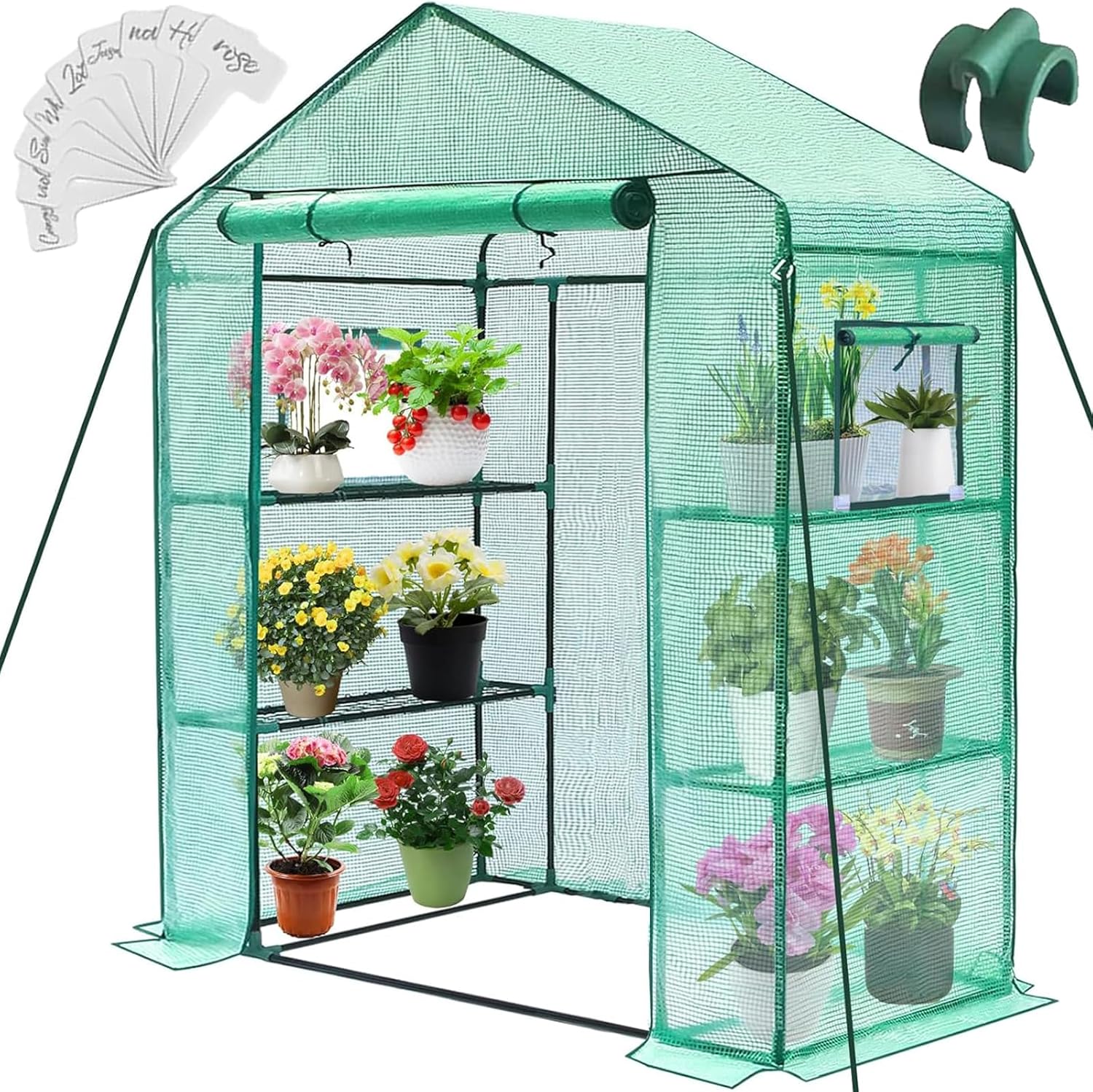
This Greengro small walk-in greenhouse creates a sheltered microclimate for potted plants, seedlings and herbs by combining a metal framework with a thick PE cover and zippered access. It is typically used on a patio, balcony or in a backyard to extend the growing season, shield plants from wind and rain, and keep pests out. Notable features include screened ventilation windows, a roll-up zippered door, four internal shelves for staging pots, and guy ropes with ground stakes for added stability. Practical benefits are straightforward setup without tools, portability for repositioning, and weather-resistant protection that lets you start seeds earlier or overwinter tender plants. Important limitations are its small footprint and modest shelf weight capacity, so it is best for small to medium pots rather than heavy planters, and the lightweight frame and cover remain less durable than rigid greenhouse structures in long-term, high-wind exposure.
Best for: Buyers who want an efficient, moveable solution to protect and organize several small to medium potted plants and seedlings without investing in a permanent structure.
Less Ideal for: Gardeners who need a long-term, heavy-duty greenhouse for large pots, full-size vegetables, or locations regularly exposed to very strong winds should consider sturdier, permanent options.
- Thick polyethylene cover with reinforced edging offers waterproofing and UV reduction
- Zippered roll-up door and screened windows provide ventilation and easy access
- Tool-free assembly and detachable design for quick setup and relocation
- Integrated shelves create organized vertical growing space for multiple pots
- Small size limits capacity to small and medium pots and seed trays
- Lightweight frame and cover are not as long-lasting as permanent rigid greenhouses
Verdict: A compact, easy-to-assemble micro greenhouse that protects and organizes small to medium potted plants while staying portable and budget friendly.
RUIJOROO Walk-In Tunnel Greenhouse with PE Cover and Mesh Windows (9.8 x 6.5 x 6.5 ft)

| Size | 9.8×6.5×6.5 |
|---|---|
| Cover Material | Polyethylene (PE) |
| Number of Doors | 1 |
| Number Of Vents | 6 |
| Indoor Outdoor Usage | Outdoor |
This RUIJOROO walk-in tunnel greenhouse provides a straightforward, no-frills shelter for seedlings, vegetables and potted plants through cool or wet seasons. The powder-coated iron frame with a triangular base design gives the structure extra stability, while the 140 g/m² PE cover is described as sunproof and waterproof to help retain humidity and protect plants from light rain and wind. Ventilation is practical: a zippered mesh door plus six mesh windows let you manage airflow and reduce excess heat build-up on sunny days. Assembly is simple with clear instructions and is suitable for a single person with basic tools. Expect a portable setup that works well on a patio or lawn but requires staking or anchoring in exposed sites because lightweight tunnel greenhouses can struggle in high winds. The PE cover will perform seasonally but is less durable long-term than rigid polycarbonate options, so plan to store it indoors in winter or replace the cover after a few seasons if exposed to intense sun or abrasion.
Best for: Buyers who prioritize a dependable, easy-to-assemble seasonal greenhouse to protect seedlings and vegetable beds and who value straightforward, practical construction over permanent rigidity.
Less Ideal for: Gardeners seeking a permanent, all-weather greenhouse for year-round heavy snow or hurricane-prone locations should choose a rigid-frame or polycarbonate structure instead.
- Sturdy powder-coated iron frame with triangular base for improved stability
- 140 g/m² PE cover that is sunproof and waterproof to retain humidity
- Good ventilation via one zippered mesh door plus six mesh windows
- Walk-in size gives easy access for potting and moving plants
- Simple assembly with clear instructions
- PE cover is less long-lasting than rigid greenhouse panels and may need replacement after several seasons
- Lightweight tunnel design will need secure anchoring in windy locations
Verdict: A reliable, easy-to-assemble walk-in tunnel greenhouse that delivers seasonal protection and ventilation for backyard vegetable and seedling gardening.
EAGLE PEAK 6×8 Easy-Setup Pop-Up Greenhouse with Roll-Up Door

| Size | 6×8 |
|---|---|
| Cover Material | Polyethylene (PE) |
| Frame Material | Alloy Steel |
| Number of Doors | 2 |
| Number Of Vents | 2 |
This EAGLE PEAK 6×8 pop-up greenhouse is built for gardeners who want a quick, sturdy shelter for winter protection and seed starting. The preassembled alloy steel frame uses a patented center-lock that lets one person raise the structure without tools, while the powder-coated finish, wind ropes, and stakes improve outdoor stability. The PE cover is water- and UV-resistant, which helps retain humidity and filter sunlight through cold months. Two roll-up zippered doors and mesh windows provide adjustable ventilation and keep small animals out. Practical benefits include fast setup, walk-in access for tending plants, and compatibility with optional shelving to increase growing capacity. Limitations to consider are that the PE cover is less durable than polycarbonate in heavy snow or prolonged abrasion, and pop-up frames generally need careful anchoring in high winds; long-term outdoor exposure may require occasional cover replacement. For a risk-averse buyer wanting simple winter protection and easy assembly, this greenhouse delivers predictable, straightforward performance.
Best for: Buyers who want a low-effort, dependable winter greenhouse for frost protection and seed starting and who prefer easy single-person setup and predictable performance.
Less Ideal for: Growers needing a permanent, heavy-duty greenhouse for heavy snow loads or long-term all-season use should consider rigid-frame polycarbonate or wood greenhouses instead.
- One-person pop-up setup with patented center-lock for fast assembly
- Alloy steel frame with powder coating and included wind ropes and stakes for improved outdoor stability
- Water-resistant and UV-resistant PE cover that helps retain humidity for winter protection
- Walk-in size with two zippered roll-up doors and mesh windows for ventilation and access
- PE cover is less impact- and snow-resistant than rigid panels and may need replacement over time
- Pop-up frames require good anchoring and may not perform as well in very high winds
Verdict: A fast, one-person pop-up greenhouse that reliably extends the growing season with simple setup and practical winter protection.
Pure Garden 4-Tier Mini Greenhouse with PVC Cover and Locking Wheels

| Number of Doors | 2 |
|---|---|
| Closure Type | Zipper |
| Weight Capacity | Maximum weight: 24 pounds |
| Cover Material | Polyvinyl Chloride (PVC) |
| Frame Material | Alloy Steel |
This 4-tier Pure Garden mini greenhouse provides a compact, movable environment for starting seedlings, growing herbs, and protecting small potted plants from frost. Assembly is tool-free and the tubular alloy steel frame plus clear PVC cover create a warm, sheltered space; the zippered roll-up door gives easy access and ventilation control. Each shelf is rated to hold up to 24 pounds, so it accommodates multiple trays, medium pots, or seed flats across four levels. Locking caster wheels make it simple to move the unit onto a porch or into a sunroom, and you can remove the wheels to keep it stationary outdoors. Practical benefits include season extension for vegetables and tender perennials and convenient organization of plants and supplies. Limitations are the lightweight PVC cover, which will need careful anchoring and protection from strong wind and prolonged sun exposure, and the modest shelf spacing that limits very large pots or tall plants.
Best for: Gardeners who want a versatile, space-efficient greenhouse to start seedlings, grow herbs, or protect small plants through cooler months and who value portability and simple setup.
Less Ideal for: Growers who need a heavy-duty, long-term outdoor greenhouse for large plants or commercial propagation should look for sturdier, larger climate-controlled options.
- Compact four-tier design fits seed trays and multiple small to medium pots
- Tool-free assembly with locking wheels for easy repositioning
- Clear PVC cover with zippered roll-up door for protection and ventilation
- Alloy steel tubular frame offers basic stability for everyday use
- PVC cover is lightweight and can deteriorate under prolonged sun or rough weather
- Shelf spacing and weight limits restrict use with large or heavy containers
Verdict: A practical, easy-to-move four-shelf greenhouse that extends the season for seed starting and small-plant growing in compact spaces.
Choosing the Right Greenhouse for Winter: Key Factors to Consider
Thermal Retention and Insulation
How well a greenhouse retains heat determines whether plants survive long cold nights and how much supplemental heat you need. Wall and roof coverings vary from single-layer polyethylene to twin-wall polycarbonate and glass, each offering different R-value and light diffusion. In winter, thicker or multi-wall panels and the ability to add insulating quilts or thermal mass will reduce daytime heat loss overnight and blunt rapid temperature swings.
Insulation also affects condensation. Poor thermal retention can create cold spots where moisture forms and drips on plants. Consider how insulation choices interact with ventilation plans so you do not trap humidity while trying to hold warmth.
Structural Strength and Snow Load
Winter greenhouses face snow and ice that add significant weight to roofs and frames. A structure rated for higher snow loads, with robust rafters, cross-bracing, and corrosion-resistant fasteners, will resist sagging and collapse. Roof pitch matters because steeper roofs shed snow more readily, reducing long-term load.
Anchoring systems that secure the frame to the ground or footings are part of structural integrity. Look for sections and connections that can be tightened after cold-season settling and for replaceable parts so repairs are straightforward after a winter storm.
Ventilation and Humidity Control
Sealed winter greenhouses can trap humidity, increasing disease risk for tender plants. Effective ventilation lets excess moisture escape without a catastrophic heat loss. Options include adjustable roof vents, louvered side vents, and the ability to run low-output fans or automated vent openers in response to temperature and humidity.
Consider how vents close and seal for night-time warmth while still preventing stagnant air pockets. Good humidity control reduces fungal outbreaks and keeps foliage dry after watering, which is important when growers cannot open doors each day due to cold weather.
Heating Options and Fuel Efficiency
Supplemental heating is often necessary in true winter conditions. The greenhouse should accommodate heaters safely, with placement that promotes even heat distribution and keeps units away from flammable materials. Fuel type and efficiency matter for long cold spells; some gardeners rely on electric heaters, others on propane or passive solar plus thermal mass.
Heat distribution is as important as heater size. Cold corners and low airflow create microclimates where plants suffer. Evaluate whether the greenhouse design allows for fans, radiant flooring, or water barrels to even out temperatures and reduce overall fuel use.
Ease of Access and Daily Maintenance
Winter greenhouse life requires frequent checks for frozen pipes, ice build-up, and plant stress, so doors and access points should be easy to open with gloved hands and free from drafts when closed. Shelving layouts that maximize light while keeping walkways clear help you tend plants quickly in cold conditions.
Maintenance considerations include how easy it is to replace a torn cover, tighten loose fasteners after freeze-thaw cycles, and clean glazing without causing damage. Simpler, modular systems are often easier to service when working outside in winter gear.
Site and Orientation
Where you place the greenhouse affects solar gain, wind exposure, and snowdrift patterns. Southern exposure maximizes winter sun in the Northern Hemisphere, while nearby windbreaks can reduce heat loss and snow accumulation. Avoid low spots that collect cold air and drifting snow.
Consider access to water and power because running heaters or automatic venting often requires electricity. Also think about run-off when snow melts and how greenhouse siting will affect drainage in spring.
Preparing Your Garden for a Winter Greenhouse
Choose a level, well-drained spot with maximum winter sun. Clear away snow-snagging branches and rake the site to reduce spring mud. If you install on a lawn, plan for temporary protective boards during construction to avoid damaging turf when temperatures are low.
Decide whether you will use a permanent foundation, such as concrete or timber footings, or a seasonal anchored frame. Permanent foundations improve stability and make anchoring easier, but seasonal setups allow relocation and less ground disturbance.
- Check local wind patterns and position the greenhouse so the strongest winds hit the short side rather than the long side.
- Plan access paths that stay clear of snow and provide space to open doors fully.
Passive Heat Strategies to Reduce Fuel Needs
Use thermal mass like water barrels, dark garden beds, or stone to store daytime heat and release it at night. Even modest mass can blunt temperature drops and lower heater runtime. Place thermal mass where it receives direct sun.
Insulate the north side or cover exposed benching with removable insulating panels for the coldest months. Simple measures such as bubble wrap on framing or a removable thermal curtain can have outsized effects on overnight lows.
- Orient glazing for maximum winter sun.
- Add removable insulation around benches and seed trays.
Managing Snow and Ice
Regularly remove heavy snow from roofs to prevent long-term load stress. Use a soft brush or roof rake from ground level when possible and avoid sharp tools that can puncture glazing. For peaked roofs, snow will shed naturally if pitch is sufficient, but flat or low-pitch roofs need frequent clearing.
Design features that help shed ice include rounded gutterless edges and steep roof angles. Ensure drainage pathways are clear so melting snow does not refreeze at low points and block vents or doors.
- Check fasteners and seals after storms; thermal cycles can loosen connections.
- Have spare cover material and replacement clips on hand for quick field repairs.
Lighting and Plant Placement in Low Sun
Winter light levels are low, so place the most light-hungry crops closest to the glazing and use shelving that does not block lower plants. Reflective surfaces and light-colored benches help disperse available light deeper into the structure.
If you use supplemental lights, position them to avoid creating heat islands directly under fixtures and to give even coverage. Timers and thermostatic controls help coordinate heat and light so energy is used efficiently.
- Rotate crops to balance light needs.
- Use clear, clean glazing to maximize transmission.
Watering and Humidity Management in Cold Conditions
Watering schedules change in winter because plants transpire less but humidity remains high. Water less frequently and check pots and soil by touch. Avoid overwatering, which raises humidity and increases disease risk when ventilation is limited.
Place saucers and trays to catch drips and avoid frozen puddles. If running a heater, ensure it does not dry plants excessively; a balance between ventilation, humidity, and heat will reduce fungal problems.
- Water in the warmest part of the day to reduce leaf wetness overnight.
- Monitor humidity with a simple hygrometer and adjust vents accordingly.
How We Chose the Best Greenhouse for Winter
We selected greenhouses for winter use by applying garden-focused, real-world criteria that matter when plants face prolonged cold, snow, and greater heating needs. Key evaluation points included thermal performance under freezing conditions, which measures how well the structure retains daytime heat and reduces night-time drops. Structural strength and snow-load capacity were tested conceptually to ensure frames and covers can survive repeated snow and wind exposure. Ventilation and humidity control were assessed for how effectively the designs prevent condensation and fungal problems in a sealed winter environment. Usability factors included ease of assembly in cold conditions, available anchoring options for frozen ground, and access for daily care such as watering and frost protection. We also considered materials durability against UV and freeze-thaw cycles. We excluded simple cold frames and decorative lean-tos that lack year-round sealing or snow-load ratings because they are not intended for winter protection. The result is a concise list of greenhouses that meet the structural, thermal, and practical needs of serious winter gardening.
FAQ
Do I need a heater in a greenhouse for winter?
It depends on your climate and the plants you are growing. In mild winters you can rely on passive solar gain and insulation for hardy crops. For tender species or colder regions a supplemental heater is often necessary to maintain safe minimum temperatures.
What glazing is best for winter performance?
Multi-wall polycarbonate and double-glazed glass offer better insulation than single-layer polyethylene. They reduce heat loss and diffuse light, but each material has tradeoffs in weight and cost. Consider durability and how easy the panels are to replace when damaged.
How do I prevent snow from damaging the greenhouse roof?
Choose a greenhouse with adequate snow-load strength and a roof pitch that sheds snow. Remove heavy accumulations promptly with a soft tool and check anchor points regularly. Reinforce framing if you expect repeated heavy snowfall.
Can I grow vegetables in a winter greenhouse without artificial lights?
You can grow many cool-season vegetables with only natural light if the greenhouse is well-sited for winter sun and plants are chosen for low light tolerance. For faster growth or fruiting crops, supplemental lighting is usually needed in higher latitudes.
How often should I ventilate a winter greenhouse?
Ventilation frequency depends on internal humidity and daytime temperatures. Vent briefly during the warmest part of sunny days to exchange moist air without losing too much heat. Automated venting tied to temperature or humidity sensors can simplify this task.
Is it better to anchor a greenhouse to a foundation or use ground anchors?
Permanent foundations offer the most long-term stability and ease of sealing, which is helpful in winter. Ground anchors are cheaper and allow relocation, but they may require seasonal tightening and provide less resistance to heavy winds or shifting frost.
Final Verdict
For winter growing prioritize thermal retention, structural strength, and controlled ventilation. Expect tradeoffs between insulation and light transmission and plan for how you will add heat or thermal mass when sunlight is limited. Practical features like sturdy anchoring, easy access for maintenance, and replaceable covers reduce winter headaches. Choose the greenhouse that best matches your climate, crop choices, and how much effort you will put into daily maintenance. Prioritize safety and durability first, then balance insulation and ventilation to keep plants healthy through the cold season.
