

Note: This article contains affiliate links. If you click on these links and make a purchase, I may earn a small commission at no extra cost to you. This helps support my research and content. Read my full affiliate disclosure here.
Choosing the right annuals for planters changes how a patio, balcony, or entryway looks and performs all season. Containers behave differently than in-ground beds: soils dry faster, roots are confined, and exposure can be stronger. That means you need plants that flower reliably, tolerate container root conditions, and fit the light and watering realities of your site. This guide shortlists seven top annuals for planters suited to a range of exposures and maintenance levels. We explain how each type behaves in pots and evaluate options by bloom time, sun tolerance, and container vigor so you can pick the best performer for your situation.
Top Picks at a Glance
| Best Overall The best all-around choice for most situations | The Old Farmer's Almanac Petite Mixture Marigold Seeds (approx. 200 seeds) |  |
| Best Quality Built to a higher standard if you want something more solid | NatureZ Edge California Giants Zinnia Seeds, 1 oz (Bulk) |  |
| Best Value The sweet spot between price and what you get | NatureZ Edge Zinnia Seed Mix, 5 Pack (5 g), Non-GMO |  |
| Best Budget The cheapest option that still gets the job done reliably | Carpet Creeping Zinnia elegans Seeds — 500 Count |  |
| Highest Rated A top-rated pick with lots of positive feedback | Axel's Garden Seeds Jewel Mix Nasturtium (Heirloom Non-GMO) |  |
| Most Popular A crowd favorite that many people choose with confidence | KVITER Swiss Giants Pansy Heirloom Flower Seeds (1600 count) |  |
| Best Seller A high-volume bestseller chosen again and again | KVITER Nasturtium Heirloom Flower Seeds (75 Count) |  |
The Old Farmer's Almanac Petite Mixture Marigold Seeds (approx. 200 seeds)

| Plant or Animal Product Type | Tagetes patula |
|---|---|
| Number of Pieces | 200 |
| Expected Blooming Period | Summer to Fall |
| Sunlight Exposure | Full Sun |
| Moisture Needs | Moderate Watering |
These Petite Mixture Marigolds are an easy-to-grow annual seed option for gardeners who want lots of color in small spaces and containers. Sow in spring in full sun and they will produce abundant orange, red, and yellow blooms from summer into fall; the plants are drought tolerant once established and attract pollinators. The pack contains roughly 200 open-pollinated, non-GMO seeds that are packaged for the current season, making them convenient for multiple pots or repeated plantings. Practical benefits include low maintenance after establishment, suitability as a protective companion plant in vegetable beds, and flowers that work well for cutting or drying. Expect straightforward germination and the ability to harvest seeds for future seasons. Limitations are inherent to seeds: germination and uniformity depend on sowing technique and conditions, and plants will need regular watering until established and full sun to perform their best.
Best for: Gardeners who want an economical, low-maintenance flowering annual for pots and small patios and who prioritize repeat plantings and easy care.
Less Ideal for: Anyone wanting instant plants or specific hybrid cultivars with uniform flower size and color should consider transplants or named varieties instead.
- Compact, vibrant blooms in orange, red, and yellow ideal for pots and small containers
- Non-GMO, open-pollinated seeds packaged fresh for the current season
- Drought tolerant once established which reduces watering needs
- Attracts pollinators and can be used for cutting or drying
- Germination and plant uniformity depend on proper sowing and growing conditions
Verdict: A fuss-free, budget-friendly seed pack that reliably produces colorful, compact marigolds perfect for pots and small outdoor spaces.
NatureZ Edge California Giants Zinnia Seeds, 1 oz (Bulk)

| Indoor Outdoor Usage | Outdoor |
|---|---|
| Sunlight Exposure | Full Sun |
| Expected Blooming Period | Summer to Fall |
| Material Features | GMO Free |
| Unit Count | 1 Ounce |
These California Giants zinnia seeds are a straightforward choice for gardeners who want tall, showy blooms from a single 1 ounce packet. The mix is non-GMO, lab-tested for high germination, and intended for outdoor planting in full sun where it will bloom from summer into fall. Gardeners typically sow the seeds directly into pots or garden beds in warm weather and keep soil moderately moist until seedlings establish. The main benefits are strong germination rates and drought-tolerant, long-blooming plants that perform well in hot, sunny conditions, making them suitable for patio containers. Because the packet is bulk quantity, it stretches across multiple pots or several seasons of sowing. Limitations are that the variety grows quite tall so you will need deep, stable containers or staking in windy spots, and blooms favor full sun so shaded patios will underperform. Seeders should also plan for regular deadheading to maximize flower display.
Best for: Gardeners who want low-risk, easy-to-grow annuals for sunny patio pots and prefer reliable germination and long-lasting color without specialized care.
Less Ideal for: People with small shallow containers, heavily shaded balconies, or those seeking compact bedding plants that stay very short.
- High germination rate tested in lab for reliable starts
- Non-GMO, open pollinated seeds for natural varieties
- Designed for full sun with drought tolerance and long bloom time
- Bulk 1 ounce pack provides seed for multiple pots or repeat sowing
- Plants can reach tall heights requiring deep pots or support
Verdict: A dependable bulk packet of non-GMO zinnia seeds that reliably produces tall, long-blooming color for sunny pots and patios.
NatureZ Edge Zinnia Seed Mix, 5 Pack (5 g), Non-GMO
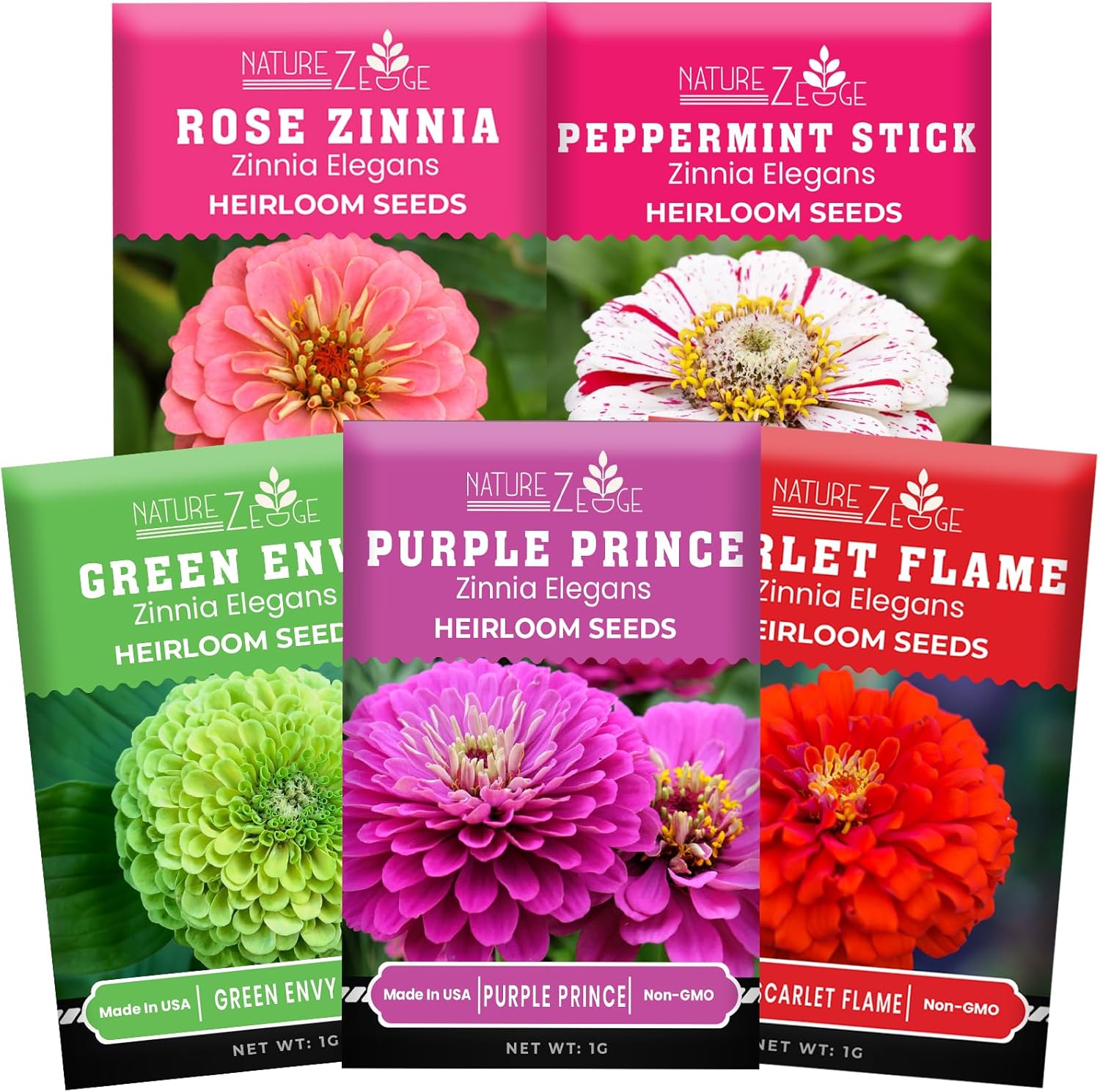
| Expected Blooming Period | Spring to Fall |
|---|---|
| Sunlight Exposure | Full Sun |
| Expected Planting Period | Spring |
| USDA Hardiness Zone | 2-11 |
| Moisture Needs | Regular Watering |
These NatureZ Edge zinnia seeds are a convenient, no-fuss option for adding long-lasting color to sunny pots and garden beds. The mix is non-GMO and sold in a multi-packet format that makes it easy to sow successive batches or distribute between containers. Zinnias prefer full sun and regular watering, and this mix is described as suitable for planting in spring with blooms through fall in USDA zones 2 to 11, so it will perform across a wide range of climates. For container use the practical benefits are clear: easy germination, quick flowering, and a variety of bloom colors useful for mixed planters or cutting for small arrangements. The seed quantity is aimed at hobby growers rather than commercial use, so expect to space plants for airflow and deadhead to prolong bloom. Limitations include the absence of variety-specific details such as plant height or flower size, so if you need dwarf or giant cultivars for a particular pot scale you may want a labeled variety instead.
Best for: Gardeners who prioritize straightforward, reliable color in sunny containers and want an easy-to-grow, multi-packet seed mix for staggered planting or multiple pots.
Less Ideal for: Growers who need named cultivars with guaranteed compact or giant growth habits for precisely scaled container designs.
- Non-GMO, open-pollinated seed mix suitable for natural gardening
- Designed for full sun with blooming from spring through fall for a long display
- Packaged in multiple small packets that are convenient for potting or staggered sowing
- Suitable across USDA zones 2 to 11, offering wide climatic compatibility
- No specifics on plant height or variety types included, which makes selecting for pot size less precise
- Seed count and germination percentage are not listed in the product details
Verdict: A practical, easy-to-sow zinnia mix that delivers season-long color in sunny pots for gardeners who value reliability and convenience.
Carpet Creeping Zinnia elegans Seeds — 500 Count

| Unit Count | 500 Count |
|---|---|
| Indoor Outdoor Usage | Indoor, Outdoor |
| Sunlight Exposure | Full Sun |
| Expected Blooming Period | Summer |
| Material Features | GMO Free |
This 500-seed pack of Zinnia elegans is aimed at gardeners who want lots of colorful, easy-care annuals for pots and borders. Zinnias thrive in full sun and well-drained soil and the packet’s heirloom, non-GMO seeds grow into heat- and drought-tolerant plants that bloom from summer until frost. They are promoted as a cut-and-come-again variety, so regular harvesting of stems encourages more blooms — a useful trait for creating frequent small bouquets from patio containers. The seeds are suitable for beginners since maintenance is straightforward: plant in spring, water regularly until established, deadhead or cut stems to prolong flowering, and expect pollinators to visit. Limitations are that success depends on proper sun and drainage and germination and performance can vary with local conditions; the seed packet does not include germination rate information or detailed planting depth instructions. For budget-minded container gardeners this pack supplies plenty of seed to fill multiple pots or replace plants through the season, but expect some thinning and succession planting for best displays.
Best for: Gardeners on a tight budget who want many plants for patio pots or window containers and prefer low-fuss annuals that bloom through summer.
Less Ideal for: Those who need guaranteed germination rates, precise planting instructions, or specific cultivar performance for professional displays.
- Large 500-seed count gives enough seed to fill several pots or repeat plantings
- Non-GMO heirloom variety with a wide range of bloom colors
- Suitable for full sun containers and marketed as drought tolerant once established
- Good cut-flower habit that responds to regular cutting and attracts pollinators
- No stated germination rate or detailed planting instructions on the listing
- Performance can vary by climate and soil since specific zone guidance is not provided
Verdict: A high-count packet of easy-care, pollinator-friendly zinnia seeds built to supply plenty of blooms for full-sun pots throughout the season.
Axel's Garden Seeds Jewel Mix Nasturtium (Heirloom Non-GMO)

| Indoor Outdoor Usage | Outdoor |
|---|---|
| Other Special Features of the Product | Drought Tolerant, High Germination Rate, Low Maintenance |
| Expected Blooming Period | Spring to Fall |
| Sunlight Exposure | Full Sun |
| USDA Hardiness Zone | 3-11 |
These Jewel Mix nasturtium seeds produce compact 12–18 inch bushy plants with double and semi-double 2–3 inch blooms in reds, oranges, yellows and golds, making them an attractive choice for planters and small borders. Sow direct after the last frost about a half inch deep and thin to roughly 12 inches for a neat, bushy habit; plants germinate in 7–14 days and bloom in about 54–63 days. Notable features include drought tolerance, high germination rate, low maintenance care, and edible flowers and leaves that add a peppery note to salads. In practice the mix performs well in full sun and tolerates poorer soils, so it is forgiving in containers and on hot patios; it also attracts pollinators while helping deter common pests like aphids. Limitations to expect are that plants are annuals so they need replanting each year and they prefer warm weather so early-season or cool-site blooming may be limited. For reliable, easy summer color in planters these seeds deliver predictable results without fussy care.
Best for: Gardeners who want a dependable, low-effort annual for planters and patio containers that provides quick, reliable summer color and edible blooms.
Less Ideal for: Those seeking perennial solutions or early-spring bloomers in cool microclimates should consider other plants better suited to cold starts or multi-year beds.
- Heirloom non-GMO seeds with high germination rate for dependable established plants
- Compact dwarf habit suits containers and small planters
- Drought tolerant and low maintenance for easy summer care
- Edible flowers and leaves add culinary value and attract pollinators
- Annual plants that must be replanted each year
Verdict: A low-maintenance, reliable choice for planters that delivers compact, colorful annual blooms and edible foliage with minimal fuss.
KVITER Swiss Giants Pansy Heirloom Flower Seeds (1600 count)

| Unit Count | 1600 Count |
|---|---|
| USDA Hardiness Zone | 5–9 |
| Expected Blooming Period | Spring to Fall |
| Material Features | GMO Free, Heirloom |
| Sunlight Exposure | Full Sun |
These KVITER Swiss Giants pansy seeds offer a large, economical supply of heirloom Viola wittrockiana seeds for planting in planters, borders, and containers. They are described as fast-germinating (7–10 days) when kept lightly moist and produce compact, perennial-form mounds that hold large mixed-color blooms from late spring through early fall. The packet includes a step-by-step growing guide on every seed packet, and the variety is labeled non-GMO and made in the USA. In practical use these seeds are a good fit for massing in window boxes or large planters where continuous color and pollinator attraction are desired; they tolerate brief dry spells and adapt to typical loam soils in full to partial sun. Because this is a bulk seed count, expect variation in individual bloom size and color and plan for thinning or succession planting to avoid overcrowding. Also germination in real gardens can vary by season and care, so following the included guide and starting extra seed is prudent for reliable planter coverage.
Best for: Gardeners who want an economical, high-volume seed option to fill planters and containers with continuous, pollinator-friendly color and who prefer guidance from step-by-step instructions.
Less Ideal for: Buyers who need precise single-color varieties or small, curated mixes for tight-design planters should choose labeled single-color seed packs or pre-grown transplants instead.
- Very large 1,600 seed count is cost-effective for filling multiple planters or mass plantings
- Heirloom non-GMO seeds with a growing guide on each packet helps inexperienced growers
- Long bloom window from spring through fall provides extended color in containers
- Compact habit suits window boxes, pots, and planter edges without excessive pruning
- Bulk seed mixes can produce variability in flower size and exact colors
- Requires thinning or careful spacing when sowing dense planters to avoid overcrowding
Verdict: If you need a high-volume, heirloom pansy seed pack to fill planters with long-lasting mixed-color blooms, this 1,600-count Swiss Giants packet delivers broad coverage and practical growing guidance.
KVITER Nasturtium Heirloom Flower Seeds (75 Count)

| Unit Count | 75 Count |
|---|---|
| Sunlight Exposure | Full Sun |
| USDA Hardiness Zone | 3-9 |
| Expected Blooming Period | Summer to Fall |
| Material Features | GMO Free, Heirloom |
These KVITER nasturtium seeds are an easy-to-grow choice for planters and containers, especially when you want colorful trailing blooms with minimal fuss. The packet contains 75 heirloom, non-GMO seeds that germinate quickly in 10 to 14 days and are recommended for full sun and well-drained, sandy soils. Plants grow as trailing vines that work well on the edges of large planters or spilling from hanging baskets and will bloom from summer into fall. The included step-by-step growing guide helps beginners with planting depth and spacing, and the flowers are edible and attractive to pollinators which adds practical value for mixed planter displays. Limits to expect are typical for nasturtiums: they prefer moderate watering and can perform poorly in heavy, waterlogged soils, and they are annuals so you will need to replant each year. For cautious gardeners who favor reliable, low-maintenance annuals for planters, these seeds are a straightforward option.
Best for: Gardeners seeking a low-risk, easy annual for planters who want quick germination, trailing color, and pollinator-friendly blooms without complex care.
Less Ideal for: Those who need permanent perennial plantings or who have consistently heavy clay soils and cannot provide well-drained potting mix.
- Heirloom, non-GMO seeds that maintain true-to-type flowers
- Fast germination (10–14 days) for quick planter fills
- Trailing habit suitable for edges of planters, hanging baskets, and trellises
- Edible blooms that also attract pollinators
- Detailed growing guide included to aid beginners
- Annuals that must be replanted each year
- Prefers sandy, well-drained soil and can struggle in heavy or waterlogged soils
Verdict: A dependable, easy-to-grow pack of heirloom nasturtium seeds that fills planters with trailing, pollinator-friendly blooms with minimal effort.
Choosing the Right Annuals for Planters: Key Factors to Consider
Light Exposure
Light levels determine which annuals will actually produce steady blooms in a planter. Many container-friendly annuals need full sun to flower well and will become leggy or sparse in heavy shade. Conversely, some shade-tolerant annuals will scorch or stop setting buds in prolonged direct sun.
Assess the daily pattern of sun and shade where the planter will sit. Morning sun and afternoon shade differs from full-day sun and that difference changes which plants will thrive. Match plant choices to the measured exposure to avoid slow growth or short bloom periods.
Water Retention and Potting Mix
Planters dry out faster than garden soil because they have less volume and more drainage. The right potting mix and the plant's tolerance for drying between waterings both matter. Some annuals need consistently moist soil to keep producing blooms, while others can handle brief drying cycles without stress.
Choose a mix with good water-holding capacity for thirsty annuals or a fast-draining mix for succulents and drought-tolerant types. Consider adding water-retentive amendments or a layer of mulch on surface pots to reduce evaporation and keep roots cooler.
Plant Size and Growth Habit
How a plant fills a container affects visual balance and maintenance. Upright growers suit narrow tall pots, mounding plants work well in medium bowls, and trailing or spiller annuals are ideal for hanging baskets or wide rimmed planters.
Estimate mature spread and height before planting so plants do not become overcrowded. Overcrowding increases water stress and disease pressure. Also think about companion plants: pairing an upright thriller with a trailing spiller and a foliage filler creates a balanced container composition.
Bloom Timing and Succession
Different annuals peak at different times of the season. Some start strong in spring and fade by midsummer, while others bloom from mid-summer into fall. Choosing plants with overlapping bloom windows ensures continuous color without replacing pots frequently.
Plan for succession by combining early bloomers with long-blooming varieties. Deadheading habits also influence bloom length: some species rebloom freely after spent flowers are removed, while others provide short bursts and need replacement to maintain color.
Cold and Heat Tolerance
Containers are more exposed to temperature swings than ground soil. Roots in small pots can overheat in direct sun or chill quickly during cool nights. Pick annuals that tolerate the typical temperature extremes in your area and the microclimate where the planter sits.
For hot sun locations choose heat-tolerant annuals that hold color under high temperatures. For cool, breezy spots pick types that resist cold stress and will continue producing buds when nights drop.
Pest and Disease Resistance
Planters can concentrate pest and disease problems because of limited root space and frequent irrigation. Some annuals are more resistant to common container issues like powdery mildew, fungal root rot, or aphid outbreaks.
Favor plants with known resilience in containers if you want low-maintenance displays. Good airflow around pots, careful watering practices, and routine inspection reduce problems regardless of species.
Matching Annuals to Planter Types
Choose annuals based on planter dimensions and exposure rather than picking plants first and forcing them into unsuitable containers. Shallow bowls favor shallow-rooted, trailing annuals while deep pots work for larger, upright varieties that need more soil volume.
Consider decorative effect as well. A classic combination is a tall, upright plant as the focal point, a mid-height filler with contrasting foliage, and a trailing spiller that drapes over the rim. This creates visual depth and helps distribute root space among different growth habits.
- Hanging baskets excel with trailing or cascading annuals.
- Wide shallow pots are best for massed mounds of compact annuals.
- Tall narrow planters suit single-stemmed or clumping upright annuals.
Watering Strategies for Containers
Establish a watering routine that reflects planter size, potting mix, and plant needs. Small pots often require daily checks during heat spells, while larger containers retain moisture longer. Use finger checks and consider moisture meters if you are uncertain.
Deliver water until it flows from the drainage holes to ensure the entire root zone receives moisture. Avoid frequent light sprinklings that saturate only the surface and encourage shallow roots. Group containers with similar watering needs together to make maintenance simpler.
- Water in the morning to let foliage dry before night.
- Use saucers carefully – standing water can increase root rot risk.
- Mulch the surface of larger pots to reduce evaporation.
Soil Mix and Fertilizing in Pots
A quality potting mix tailored for containers gives annuals the air and drainage they need while holding enough moisture for steady growth. Avoid garden soil in planters because it compacts and reduces drainage.
Because nutrients wash out faster in containers, feed annuals with a balanced, soluble fertilizer on a regular schedule or use a slow-release formula at planting. Adjust feeding frequency based on growth vigor and bloom density.
- Choose mixes with peat, coir, or bark for moisture retention plus perlite for drainage.
- Top-dress with compost or a slow-release fertilizer at planting time.
- Flush salts periodically if using soluble feeds heavily.
Design and Color Combinations
Planter displays are most effective when you consider texture, color, and contrast as a unified composition. Use foliage color and leaf shape as much as flowers to create interest from different angles.
Repeat a color or foliage motif across multiple containers to tie a space together. For small balconies, choose a restrained palette of two or three colors. For larger patios, bolder contrasts and varied textures can make a stronger statement.
- Combine one tall focal plant with mid-size fillers and trailing spillers.
- Use contrasting leaf textures to add depth even when blooms fade.
- Rotate color schemes seasonally for continued interest.
Seasonal Care and Overwintering Thoughts
Most annuals complete their life cycle in a single season, but how you manage them in late season affects the container's look and readiness for next year. Remove spent plants and refresh soil in late fall or early spring to reduce disease carryover.
If you want to extend displays, consider staggered plantings or switching to cooler-season annuals as temperatures change. Clean pots and refresh potting mix annually when practical to maintain healthy root environments.
- Deadhead spent flowers to promote further blooming where applicable.
- Replace potting mix every season or two for long-term planter health.
- Bring frost-sensitive containers under cover or indoors when cold snaps threaten.
How We Chose the Best Annuals for Planters
Our shortlist focused on annuals that consistently perform in containers rather than plants that only thrive in open garden beds. We prioritized species and varieties known to establish quickly in potting mix, set abundant blooms, and tolerate the temperature and moisture swings common in planters. Evaluation criteria included bloom duration and intensity, sun and shade tolerance, drought and watering tolerance, container vigor and root behavior, and general maintenance needs like deadheading or pruning. Plants that required specialized soils or delicate greenhouse starts were excluded. We also filtered out types that are primarily groundcover or too large for standard containers. To produce practical guidance we relied on container-specific traits gardeners observe: whether a plant flowers reliably from spring through frost, how it responds to intermittent watering, how it occupies space in a pot (mounding, trailing, or upright), and typical pest or disease sensitivity in container culture. The result is a list of seven annual types suited to common planter sizes and use cases.
FAQ
How often should I water annuals in small balcony planters?
It often depends on container size and exposure. Small pots in full sun may need daily watering during hot spells, while larger containers can go several days between thorough waterings. Check the top inch of mix for dryness as a rule of thumb.
Can I mix different annuals in one planter?
Yes, combining plants with similar light and water needs works well. Pair an upright focal plant with mid-height fillers and trailing spillers, but avoid mixing thirsty plants with drought-tolerant types in the same pot.
Do annuals need fertilizer more often in pots than in beds?
Usually yes. Nutrients leach from potting mixes faster than from garden soil, so container annuals benefit from regular liquid feeds or a slow-release fertilizer at planting to maintain steady blooms.
When should I replace annuals in planters?
Replace them when flowering declines significantly or plants become rootbound, typically when they outgrow the container or after several months of continuous bloom. For continuous color, plan staggered replantings through the season.
What are signs that an annual is unhappy in a planter?
Look for wilting despite regular watering, yellowing lower leaves, sparse flowering, and stunted growth. These often indicate root crowding, nutrient deficiency, or improper watering rather than an inherent dislike of container culture.
Can I reuse potting soil from last year for new annuals?
You can reuse it if it has been refreshed, but old mix often compacts and loses nutrients. Amend or replace most of the mix and add fresh compost or slow-release fertilizer to give new annuals a healthy start.
Final Verdict
When selecting annuals for planters prioritize how plants handle container-specific stresses: light exposure, watering frequency, and confined root space. Choose for bloom duration and growth habit first, then match pot size and mix to support those traits. Accept tradeoffs between high-maintenance, high-impact bloomers and low-maintenance resilient types. Focusing on the criteria above will help you pick annuals that deliver consistent color throughout the season and simplify care in a container setting.
