

Note: This article contains affiliate links. If you click on these links and make a purchase, I may earn a small commission at no extra cost to you. This helps support my research and content. Read my full affiliate disclosure here.
Picking the right annuals for raised beds matters because these containers have shallower soil, different drainage, and a visible edge that highlights plant form. The wrong choices can flop, get root-bound, or demand constant watering. This guide narrows the options to seven top annuals suited specifically for raised beds, focusing on plants that bloom reliably, fit compact root zones, and tolerate the microclimate created by raised soil. Below you will find short profiles of the best choices plus practical guidance on spacing, light, soil, and maintenance based on the evaluation criteria used to select them.
Top Picks at a Glance
| Best Overall The best all-around choice for most situations | Survival Garden Seeds 36-Variety Heirloom Flower Seed Kit |  |
| Best Quality Built to a higher standard if you want something more solid | Isla's Garden Seeds Dahlia-Flowered Zinnia Mix — 500 Heirloom Non-GMO Seeds |  |
| Best Value The sweet spot between price and what you get | VISTATU Zinnia Elegans Heirloom Seed Mix, 1000 Count |  |
| Best Budget The cheapest option that still gets the job done reliably | Carpet Creeping Zinnia elegans Seeds — 500 Count |  |
| Highest Rated A top-rated pick with lots of positive feedback | BuggyBeds Impatiens (Balsam) Flower Seeds — 500 Count |  |
| Most Popular A crowd favorite that many people choose with confidence | Outsidepride Strawberry Blonde French Marigold Seeds (200 pcs) |  |
| Best Seller A high-volume bestseller chosen again and again | KVITER Cut-and-Come-Again Zinnia Heirloom Flower Seeds (550 Count) |  |
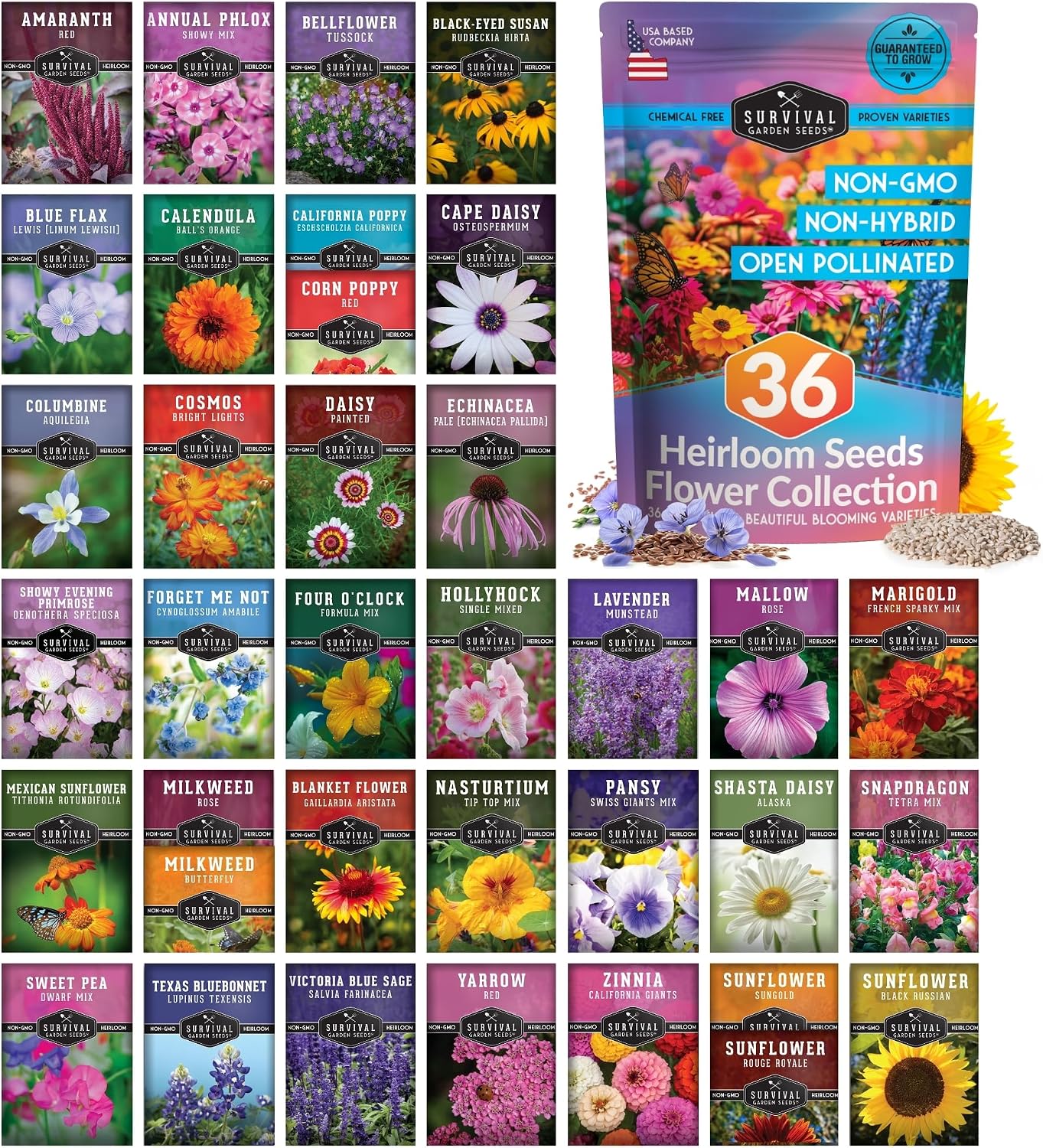
Survival Garden Seeds 36-Variety Heirloom Flower Seed Kit
| Unit Count | 36 Count |
|---|---|
| Indoor Outdoor Usage | Outdoor |
| Sunlight Exposure | Full Sun |
| USDA Hardiness Zone | 3-10 |
| Seed Treatment Method | Untreated |
This 36-variety heirloom seed kit supplies a broad mix of annuals and perennials—zinnias, lavender, poppies, sunflowers, milkweed and more—intended to fill beds and containers with color from spring through fall. Each variety is sold in its own packet with clear, variety-specific planting instructions so beginners can follow recommended planting depth, soil temperature, sunlight, and moisture needs. Because the seeds are untreated, open-pollinated, and non-GMO, you can save seed for future seasons and support pollinators with species like milkweed and coneflower. The kit is suited to loam soils and full sun exposures and is useful for cut-flower production, borders, and pollinator habitat. Expect a mix of short- and taller plants that will come in at varying times, which helps maintain continuous color but may require some planning for spacing and succession planting in raised beds. Packet-by-packet instructions reduce guesswork, but germination and bloom timing will depend on local conditions and basic bed preparation.
Best for: Gardeners who want an all-purpose, beginner-friendly seed collection to create colorful, pollinator-supporting plantings in raised beds or containers and who value heirloom, saveable seed.
Less Ideal for: Growers seeking a curated single-species display or strictly uniform height for formal bed designs should consider single-variety packs or purpose-built mixes instead.
- Large, diverse mix of 36 heirloom, non-GMO flower varieties for season-long interest
- Individually labeled packets with variety-specific planting and care instructions
- Includes pollinator-friendly species such as milkweed and coneflower
- Untreated, open-pollinated seeds suitable for saving and replanting
- Mix of heights and bloom times can require extra planning for spacing in raised beds
- Germination and flowering depend on local climate and soil preparation
Verdict: A convenient, beginner-friendly heirloom seed collection that supplies 36 varieties for season-long color and pollinator-friendly plantings in raised beds.
Isla's Garden Seeds Dahlia-Flowered Zinnia Mix — 500 Heirloom Non-GMO Seeds

| Indoor Outdoor Usage | Outdoor |
|---|---|
| Sunlight Exposure | Full Sun |
| Moisture Needs | Moderate Watering |
| Material Features | GMO Free, Heirloom |
| Expected Blooming Period | spring,summer |
This dahlia-flowered zinnia mix is aimed at gardeners who want big, showy annuals for beds and cut-flower production. The seeds grow into tall, upright plants topped with large fully double blooms that hold well on stems, making them useful both as garden specimens in raised beds and for cutting. They prefer full sun, warm soil, and moderate consistent watering, and the packet lists straightforward planting depth and spacing for easy bed planning. Notable features include heirloom non-GMO seed stock, broad USDA zone adaptability, and strong pollinator appeal which helps beneficial insects in a productive garden. Limitations to expect are typical annual behavior: plants finish the season and require replanting each year, and success depends on warm soil and regular watering during hot spells. In very small or heavily shaded raised beds these tall, vigorous plants can crowd lower neighbors, so allot appropriate spacing or pair them with shorter companions. For gardeners focused on dependable seasonal performance and abundant cut blooms, this mix delivers clear visual impact and reliable midsummer to early fall flowering.
Best for: Gardeners who prioritize strong seasonal performance and abundant showy blooms in full-sun raised beds or cutting gardens and want reliable, easy-to-grow annuals.
Less Ideal for: Those needing low-growing groundcovers or plants for shady beds should choose shorter or shade-tolerant varieties instead.
- Produces large, fully double blooms that work well for cutting and display
- Heirloom non-GMO seed stock sourced from U.S. growers
- Attracts pollinators which benefits nearby flowering plants
- Performs across a wide range of USDA zones for flexible planting
- Plants are tall and vigorous so they can crowd small or densely planted beds
Verdict: Choose this mix when you want dependable, high-impact annuals that produce large cut-worthy blooms in sunny raised beds.
VISTATU Zinnia Elegans Heirloom Seed Mix, 1000 Count

| Sunlight Exposure | Full Sun |
|---|---|
| Moisture Needs | Moderate Watering |
| Material Features | Heirloom |
| Unit Count | 1000 Count |
| Plant or Animal Product Type | zinnia |
This 1000-count packet of VISTATU heirloom Zinnia elegans seeds supplies a big quantity of mixed-color, open-pollinated zinnia seed intended for direct sowing in sunny beds or containers. The variety is described as compact and bushy, reaching about 6 to 8 inches tall with small 1.25-inch flowers in pink, yellow, red, white, and lavender, which makes it well suited for shallow container plantings and massing at the front of beds. Seeds are packaged to resist moisture and tearing and are sold as untreated heirloom seed, so germination depends on correct sowing after the last frost and shallow planting to allow light exposure. Practical advantages are the high seed count for seeding multiple containers, compatibility with full sun, and low to moderate watering needs. Limitations are that results depend on proper planting and local climate, and the mix may contain variable genetics since it is open-pollinated rather than a uniform hybrid, so bloom size and exact colors can vary. This seed packet works best when you want many small, colorful annuals for container edge plantings or short mixed displays.
Best for: Gardeners who want an affordable way to plant many small, full-sun annuals in containers or window boxes and prefer traditional heirloom varieties over uniform hybrids.
Less Ideal for: Growers seeking uniform, predictable bloom color and size or those who need certified germination rates for precise production should consider treated hybrid seed or plug-grown plants instead.
- Very large seed count lets you fill multiple containers or overseed for good coverage
- Heirloom open-pollinated seeds give a traditional mix of colors and preserve seed-saving potential
- Designed for full sun plantings and described as low to moderate water needs suitable for typical container watering routines
- Open-pollinated mix produces variable flower size and color rather than uniform plants
- No guaranteed germination rate printed on the package so outcomes depend on seed handling and sowing technique
Verdict: If you need a high-volume pack of heirloom zinnia seeds to mass-plant sunny containers and create a low-maintenance colorful display, this packet delivers.
Carpet Creeping Zinnia elegans Seeds — 500 Count

| Unit Count | 500 Count |
|---|---|
| Indoor Outdoor Usage | Indoor, Outdoor |
| Sunlight Exposure | Full Sun |
| Expected Blooming Period | Summer |
| Material Features | GMO Free |
This 500-seed pack of Zinnia elegans is aimed at gardeners who want lots of colorful, easy-care annuals for pots and borders. Zinnias thrive in full sun and well-drained soil and the packet’s heirloom, non-GMO seeds grow into heat- and drought-tolerant plants that bloom from summer until frost. They are promoted as a cut-and-come-again variety, so regular harvesting of stems encourages more blooms — a useful trait for creating frequent small bouquets from patio containers. The seeds are suitable for beginners since maintenance is straightforward: plant in spring, water regularly until established, deadhead or cut stems to prolong flowering, and expect pollinators to visit. Limitations are that success depends on proper sun and drainage and germination and performance can vary with local conditions; the seed packet does not include germination rate information or detailed planting depth instructions. For budget-minded container gardeners this pack supplies plenty of seed to fill multiple pots or replace plants through the season, but expect some thinning and succession planting for best displays.
Best for: Gardeners on a tight budget who want many plants for patio pots or window containers and prefer low-fuss annuals that bloom through summer.
Less Ideal for: Those who need guaranteed germination rates, precise planting instructions, or specific cultivar performance for professional displays.
- Large 500-seed count gives enough seed to fill several pots or repeat plantings
- Non-GMO heirloom variety with a wide range of bloom colors
- Suitable for full sun containers and marketed as drought tolerant once established
- Good cut-flower habit that responds to regular cutting and attracts pollinators
- No stated germination rate or detailed planting instructions on the listing
- Performance can vary by climate and soil since specific zone guidance is not provided
Verdict: A high-count packet of easy-care, pollinator-friendly zinnia seeds built to supply plenty of blooms for full-sun pots throughout the season.
BuggyBeds Impatiens (Balsam) Flower Seeds — 500 Count

| Unit Count | 500 Count |
|---|---|
| Material Features | Heirloom |
| Indoor Outdoor Usage | Outdoor |
| Sunlight Exposure | Partial Shade |
| Other Special Features of the Product | High Germination Rate |
These BuggyBeds impatiens seeds supply 500 heirloom seeds intended to produce a season of colorful annual blooms in shaded or partially shaded outdoor beds. Typical use is direct sowing or starting indoors and transplanting into raised beds, borders, or containers where impatiens thrive out of intense sun. Seller notes a high germination rate and care instructions advise shallow sowing, consistently moist, well-draining fertile soil, and moderate temperatures. For raised beds this seed count is generous and supports dense plantings or multiple successive plantings across a season. Practical benefits include easy establishment for gardeners of varying experience and plenty of seeds to replace losses or expand plantings. Limitations are that the listing specifies red color only and does not include variety names or detailed germination percentages, so exact bloom color mix and expected germination beyond the general claim remain uncertain. You will also need to provide proper shade and consistent watering to get reliable results.
Best for: Gardeners who want a reliable, high-volume source of impatiens for filling raised beds and value straightforward, low-maintenance annuals that perform well in shade.
Less Ideal for: People seeking named cultivars, specific flower color mixes, or certified germination guarantees should consider seed brands that list variety and germination test results.
- Large seed count (500) suitable for filling raised beds or multiple plantings
- Heirloom seeds for open-pollinated plants rather than hybrids
- Notes a high germination rate which reduces the need to overseed extensively
- Suitable for partial to full shade locations common in raised bed placements
- Listing gives color as red only and lacks details on specific cultivars or color mix
- No exact germination percentage or seed viability date provided
Verdict: A high-count pack of heirloom impatiens seeds that reliably supplies enough plants to fill shaded raised beds for a season of low-maintenance color.
Outsidepride Strawberry Blonde French Marigold Seeds (200 pcs)

| Seeds per pack | 200 Pcs |
|---|---|
| Plant type | Annual flower |
| USDA zones | 3-10 |
These Outsidepride Strawberry Blonde French marigold seeds grow into compact 8–10 inch plants that produce multicolored blooms from spring through fall, making them a dependable choice for seasonal color in raised beds and containers. They are typically sown indoors or directly in the garden at warm soil temperatures, with a recommended spacing of about 8 inches; germination takes roughly 5–20 days. Notable features include heat and drought tolerance, deer-resistant fragrant foliage, and strong attractiveness to bees and butterflies, so they work well in pollinator-focused plantings. Practical benefits for raised beds are uniform, low-growing habit that does not overwhelm nearby vegetables, extended bloom period, and minimal maintenance once established. Limitations are that these are annuals so they must be replanted each year and they require full sun to perform best; in cool, shaded, or very wet sites they will be less vigorous. For gardeners who prefer predictable, colorful mass plantings in raised beds, these seeds offer an easy-to-manage option with good visual and ecological payoff.
Best for: Gardeners who want an easy, low-maintenance annual to add reliable seasonal color and pollinator benefits to raised beds and patio containers without large, spreading plants.
Less Ideal for: People seeking permanent perennial plantings or those with predominantly shaded or waterlogged raised beds should consider other species.
- Compact 8–10 inch habit fits well in raised beds and containers
- Heat and drought tolerant, suitable for warm summer conditions
- Fragrant foliage helps deter deer and reduces wildlife damage
- Attractive to bees and butterflies, supporting pollinator gardens
- Annual plants that must be replanted each season
- Performs poorly in shade or overly wet soils
Verdict: A dependable, low-growing annual seed for adding long-lasting color and pollinator interest to raised beds with full sun exposure.
KVITER Cut-and-Come-Again Zinnia Heirloom Flower Seeds (550 Count)

| Unit Count | 550 Count |
|---|---|
| USDA Hardiness Zone | 3-10 |
| Expected Blooming Period | Summer to Fall |
| Sunlight Exposure | Full Sun |
| Material Features | GMO Free, Heirloom |
These KVITER zinnia seeds are a large-pack option for gardeners who want dependable, repeat-blooming annuals in raised beds. The packet contains 550 heirloom, non-GMO seeds that are described as having a high germination rate and producing 18 inch double blooms; plants are labeled drought tolerant, rabbit resistant, and attractive to pollinators. Typical use is direct sowing in spring through fall in full sun and loam soil, with seeds sprouting in about 7–10 days under warm conditions. The cut-and-come-again habit means you can harvest flowers and get repeated blooms, which is handy for continuous color and for cut-flower beds. Practical benefits for raised beds include vigorous seasonal performance, low maintenance once established, and a large quantity that lets you fill multiple beds or interplant for continuous displays. Limitations are that performance depends on following the included planting guide and warm germination temperatures, and bulk seed quantities may exceed what small gardens need.
Best for: Gardeners who want a low-risk, high-yield annual for sunlit raised beds and prefer easy-care, repeat-flowering plants that provide steady cut flowers through the season.
Less Ideal for: People with only a few square feet of planting space who need a small, precise number of plants or gardeners in cool climates who cannot provide warm germination conditions.
- Large 550-count packet provides enough seed to fill multiple raised beds or create dense plantings
- Heirloom non-GMO seed with a provided step-by-step growing guide for inexperienced gardeners
- Cut-and-come-again habit lets you harvest blooms and encourages reblooming through summer and fall
- Drought tolerant and rabbit resistant traits reduce routine maintenance in raised bed settings
- Bulk quantity may be more than needed for very small raised beds
- Germination is optimized at warm soil temperatures so indoor starts or heat may be required in cool climates
Verdict: A risk-averse choice for raised beds that delivers abundant, low-maintenance, cut-and-come-again zinnia blooms all summer and fall.
Choosing the Right Annuals for Raised Beds: Key Factors to Consider
Bed Depth and Root Volume
Raised beds often have shallower soil than in-ground beds, which limits how deep roots can grow. Choose annuals with compact root systems or fibrous, shallow roots to avoid crowding and stress. A plant that needs a deep taproot will quickly become root-bound and struggle to access water and nutrients. Also consider the total soil volume available per plant when planning spacing so each root system receives adequate resources.
Soil volume affects how often you need to water and fertilize. In narrow or shallow beds, smaller cultivars and those with contained habits will stay healthier and require less frequent repotting or renovation.
Light Exposure and Placement
Raised beds can sit in bright, exposed locations or be shaded by fences and trees; match the annual's light needs to the bed's microclimate. Full-sun annuals will need at least six hours of direct sunlight; partial-shade selections perform better where mornings are bright but afternoons are filtered.
Placement within the bed also matters. Taller or more vigorous varieties belong toward the back or center of a bed unless you are going for a mixed-layered effect. Consider how surrounding structures or neighboring plants will alter light and temperature across the growing season.
Water Retention and Drainage
Raised beds generally drain faster than the surrounding soil, so balance plants' drought tolerance with the bed's irrigation strategy. Species that tolerate short dry spells reduce the risk of wilting between waterings, while thirstier annuals demand more consistent moisture and a heavier watering schedule.
Amend soil to improve water-holding capacity when growing thirstier annuals, and use mulch to moderate evaporation. Evaluate how often you can realistically water and choose plants that align with that routine.
Mature Habit and Aesthetic Role
Decide whether you want focal blooms, a carpet of color, or trailing spillover. Some annuals are upright and architectural, providing height and structure, while others are mounding or trailing and fill beds with continuous color. The habit affects spacing, companion planting choices, and how often you may need to deadhead or trim to maintain form.
Consider seasonal transitions: choose a mix of early and late bloomers, and include some foliage interest to keep beds attractive before and after peak flowering.
Soil Fertility and Feeding Needs
Annuals in raised beds depend entirely on the supplied soil for nutrients. Some high-flowering varieties need regular feeding to sustain bloom, while others perform well on average fertility. Understand the fertilizer schedule that each annual requires and match it to your willingness to feed during the season.
Incorporate slow-release fertilizer at planting for steady nutrition, and plan light liquid feeds during heavy bloom periods for heavy feeders to prevent yellowing and reduced flowering.
Maintenance Time and Practical Care
Assess how much time you can commit to deadheading, pruning, staking, and dividing. Low-maintenance annuals are preferable for public or high-traffic beds, whereas intricate varieties that need frequent grooming are better for dedicated display areas.
Also consider winter cleanup and whether you want to replace beds midseason. Plants that self-clean or maintain a tidy habit reduce labor and keep the bed looking good throughout the season.
Sun and Shade Pairing Strategies
Raised beds often present variable light conditions along their length. When planning mixes, map the bed's sun patterns through the day and plant accordingly. Full-sun annuals should occupy the brightest spots; place partial-shade tolerant varieties where they will get morning light but avoid hot afternoon sun.
- Group plants with similar light needs together to simplify care and avoid localized scorch or poor flowering.
- Use taller, sun-loving plants as windbreaks for more delicate partial-shade species to reduce stress from drying winds.
Soil Mixes That Support Strong Blooms
A well-draining, fertile mix is the foundation for healthy annuals in raised beds. Blend a loam-based commercial mix with organic matter to increase water retention without sacrificing drainage. Add a small amount of slow-release fertilizer at planting and top-dress midseason for continuous bloom.
- Include compost or well-rotted manure to boost nutrients and microbial life.
- Avoid heavy clay or pure peat mixes that can compact or dry out quickly in raised conditions.
Irrigation Tips for Raised Beds
Because raised beds dry faster, tailor irrigation to plant needs and bed size. Drip irrigation and soaker hoses deliver water to the root zone efficiently and reduce foliage wetness that can invite disease. For small or portable beds, hand-watering in the morning so moisture soaks in before heat is sufficient.
- Mulch surface with coarse organic mulch to slow evaporation and moderate soil temperature.
- Check soil moisture at root level rather than relying on surface dryness to decide when to water.
Designing for Seasonal Interest
Stagger bloom times by combining early, mid, and late-season annuals so the bed never looks bare. Include a mix of textures and foliage colors to carry interest beyond peak flowering. Use repeat colors or forms to create cohesion across the bed rather than random assortments.
- Plant a backbone of mounding or upright varieties and add trailing or filler annuals to soften edges.
- Reserve a few plants to replace early-fading specimens for continuous color through the season.
Companion Plants and Pest Management
Choose companions that share light and water requirements to minimize conflict. Incorporate flowers that attract beneficial insects to help manage pests naturally. Regularly inspect beds for common raised-bed problems like powdery mildew or slugs and address issues early to prevent rapid spread in the confined bed space.
- Avoid planting two species with the same susceptibility to a particular disease in the same bed.
- Use clean soil and replace worn-out mixes every few seasons to reduce buildup of soil-borne pathogens.
How We Chose the Best Annuals for Raised Beds
We selected plants that reliably perform in raised-bed conditions by applying practical, garden-focused filters. First, we prioritized bloom season and flower consistency so picks provide long visual impact in a limited planting window. Second, we evaluated mature plant size and root habit to ensure compatibility with shallow bed depths and dense plantings. Third, water and drought tolerance were considered because raised beds tend to dry faster than in-ground beds. Fourth, we looked at disease and pest resistance traits common to containerized environments. Fifth, growth habit and maintenance needs were assessed to favor plants that require minimal pruning and fit well with mixed-planting schemes. We excluded varieties that demand deep soil profiles, extensive staking, or highly specialized care that most raised-bed gardeners will not provide. Plants were judged on measurable horticultural traits such as bloom length, expected mature spread, typical root depth, and general care complexity. These concrete criteria align with the scoring metrics used for each plant and help gardeners match choices to their raised-bed specifics.
FAQ
How deep should a raised bed be for most annuals?
Most annuals do well in 6 to 12 inches of good-quality planting mix. Shallow-rooted or compact varieties can thrive in the lower end, but deeper-rooted annuals will need more soil volume to avoid stress.
Can I mix annuals and perennials in the same raised bed?
Yes, you can mix them if you match light and water needs and account for different root habits. Perennials may outlast the annuals and can crowd them over time, so plan spacing and future maintenance accordingly.
How often should I fertilize annuals in raised beds?
Feed heavy-blooming annuals every 4 to 6 weeks with a balanced liquid feed or follow the label on a slow-release product. Lighter feeders usually do fine with a single application at planting plus one midseason top-dress.
What is the best way to prevent raised beds from drying out?
Use a moisture-retentive but well-draining soil mix, apply 1 to 2 inches of organic mulch, and install drip irrigation or soaker hoses if you need consistent moisture. Grouping plants with similar water needs also helps.
When should I replace the soil in a raised bed used for annuals?
Refresh or replace the top several inches of soil every 1 to 2 years and consider a full mix replacement every 3 to 5 years if fertility or drainage declines. Adding compost annually helps maintain soil structure and nutrients.
Final Verdict
Choose annuals for raised beds by balancing bloom impact with the bed's soil depth, water availability, and light. Prioritize plants with compact root systems, reliable bloom periods, and maintenance needs that fit your time budget. Mix habits and bloom times to extend seasonal interest and reduce labor. Focusing on these tradeoffs will help you build raised beds that stay colorful and healthy with manageable effort rather than chasing high-maintenance specimens that struggle in limited soil volumes.
