

Note: This article contains affiliate links. If you click on these links and make a purchase, I may earn a small commission at no extra cost to you. This helps support my research and content. Read my full affiliate disclosure here.
Container plants face different nutrient challenges than in-ground plantings. Pots and planters hold limited soil and dry out faster, so a fertilizer that releases nutrients slowly can keep growth steady without frequent applications or nutrient spikes. This guide covers six top shortlisted slow release fertilizers for container plants and explains how each type addresses longevity, nutrient balance, and runoff concerns. We evaluate options for how long they feed, how they behave in different potting mixes, and how much maintenance they require. Below you'll find practical guidance to match a slow release option to your pots and routines, plus the criteria we used to pick these products.
Top Picks at a Glance
| Best Overall The best all-around choice for most situations | Proven Winners Continuous-Release Granular Fertilizer, 2.5 lb |  |
| Best Quality Built to a higher standard if you want something more solid | Osmocote Smart-Release Plant Food Flower & Vegetable, 8 lb. |  |
| Best Value The sweet spot between price and what you get | Osmocote Smart-Release Plant Food Plus Outdoor & Indoor, 8 lb |  |
| Best Budget The cheapest option that still gets the job done reliably | RAINFLOW Slow-Release Granular Fertilizer 14-13-13 (11.28 oz) |  |
| Highest Rated A top-rated pick with lots of positive feedback | Osmocote Smart-Release Plus Plant Food, 15-9-12, 8 lb (2 Pack) |  |
| Most Popular A crowd favorite that many people choose with confidence | Osmocote Smart‑Release Plant Food Plus Outdoor & Indoor, 2 lb |  |
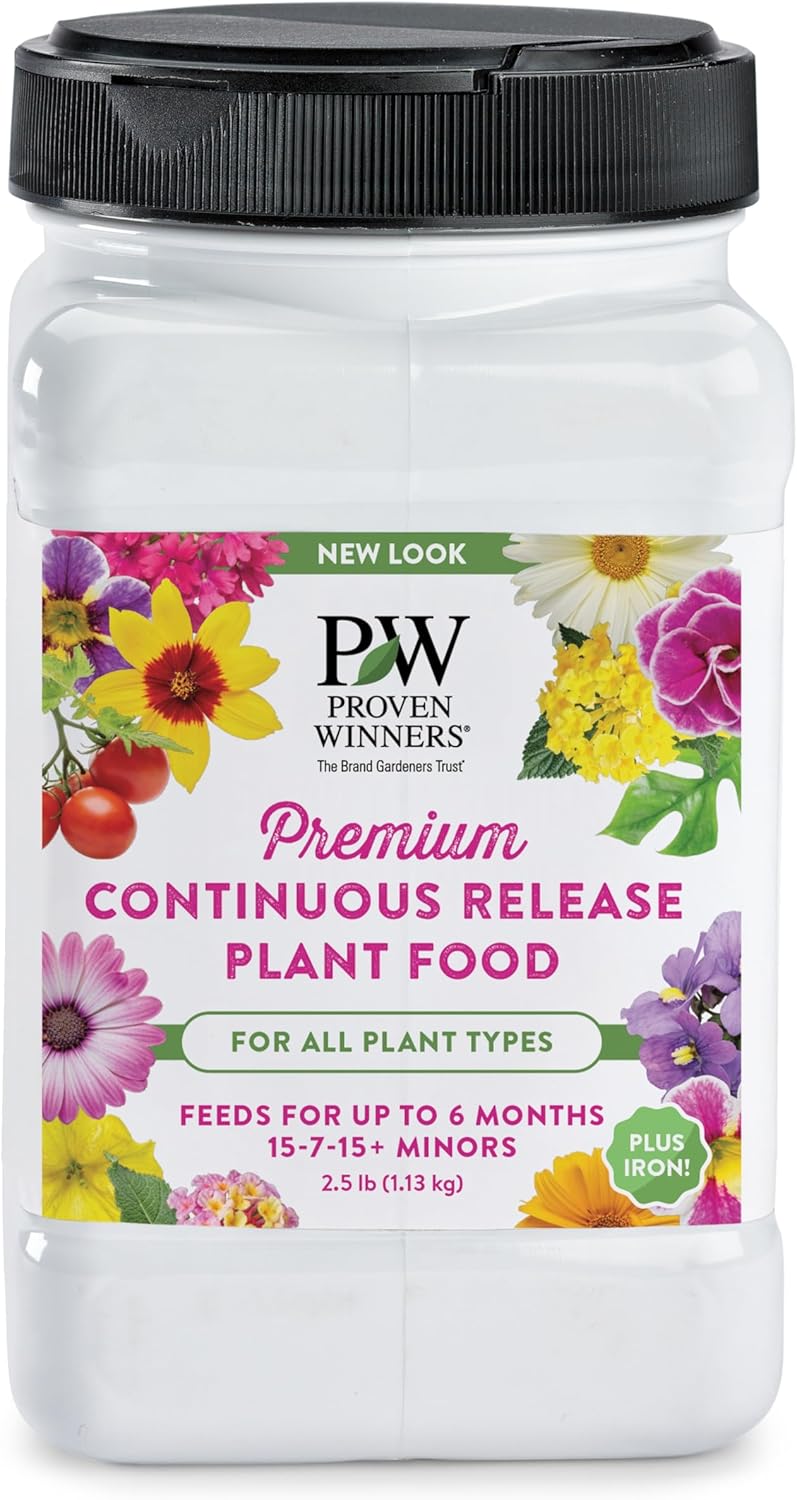
Proven Winners Continuous-Release Granular Fertilizer, 2.5 lb
| Item Form | Granules |
|---|---|
| Unit Count | 40 Ounce |
| Mixing Ratio | 15-7-15 |
| Application Method | Shake into soil |
This Proven Winners granular fertilizer is a ready-to-use, slow-release formula designed for containers, hanging baskets, window boxes and landscape beds. The 15-7-15 N-P-K mix comes in a 2.5 pound shaker container so you can sprinkle the pellets into potting soil at planting or around established plants and water them in. The pellets have a temperature-sensitive coating that releases nutrients more quickly in warm, active growth periods and more slowly in cool weather, which helps match feeding to plant demand without frequent reapplications. Practical benefits include convenience for busy gardeners, predictable feeding for flowering and foliage performance, and inclusion of micronutrients like iron. Limitations are that the set N-P-K ratio is not adjustable for specialty needs and one container covers a medium area so larger collections will need multiple units. Follow the package rates and safety guidance and reapply roughly every six months for continued results.
Best for: Ideal for gardeners who want an easy, low-maintenance feeding solution for flowering container plants and mixed garden beds and prefer a single application that lasts a season.
Less Ideal for: Not the best choice for growers who need custom nutrient ratios for vegetables or specialty plants or who prefer liquid feed schedules and immediate nutrient corrections.
- Time-release pellets feed plants for up to six months with one application
- Temperature-sensitive coating times nutrient delivery to active growth periods
- Handy shaker container makes application into potting mix quick and tidy
- Suitable for containers, hanging baskets, window boxes and landscape beds
- Fixed 15-7-15 formulation cannot be adjusted for specific crop needs
- One 2.5 lb container provides medium coverage and may not suffice for collections of many containers
Verdict: A convenient, single-application slow-release fertilizer that keeps container and bedding plants fed through the growing season with minimal attention.
Osmocote Smart-Release Plant Food Flower & Vegetable, 8 lb.

| Item Form | Granules |
|---|---|
| Specific Uses For Product | Root Development |
| Target Species | Perennials |
| Mixing Ratio | 1:22 (1 lb.:1 cubic foot) |
Osmocote Smart-Release Flower & Vegetable is a granular slow-release fertilizer designed to provide steady nutrition to vegetable beds, raised beds, and perennial planting areas for up to four months. It is applied by mixing the measured scoop into the top 1 to 3 inches of soil or broadcasting over mulched areas, with 1 lb treating roughly 40 sq ft. The balanced 14-14-14 NPK formula supports root development and consistent above-ground growth without frequent reapplication. Notable practical benefits include the no-burn reputation that makes it forgiving if you misapply, and the temperature-responsive release that aligns feeding with plant uptake. It comes with an applicator and clear coverage guidance, so it is straightforward to use for typical home gardeners. Limitations are that release rate depends on soil temperature so feeding timing can vary between climates, and as a granular product it requires incorporation into the soil rather than being foliar or water-soluble for quick correction of deficiencies. For gardeners seeking a low-maintenance, season-long feed for edible and ornamental plantings, this performs predictably and safely.
Best for: Home gardeners who want a reliable, low-maintenance fertilizer for vegetable plots, raised beds, and perennial borders and prefer a product that reduces the need for frequent feeding.
Less Ideal for: Growers who need fast corrective feeding or who prefer liquid or foliar fertilizers for immediate nutrient delivery should consider other options.
- Balanced 14-14-14 NPK supports both root and top growth across vegetables and flowers
- Slow-release formula feeds up to four months, reducing reapplication frequency
- Included scoop and clear coverage guidance make application easy and consistent
- Formulation is forgiving and unlikely to burn plants even if over-applied
- Nutrient release depends on soil temperature so timing can vary by climate
- Granular form must be mixed into soil and cannot correct nutrient deficiencies quickly
Verdict: Choose this if you want a dependable, mistake-proof slow-release fertilizer that feeds vegetables and flowers for an entire season.
Osmocote Smart-Release Plant Food Plus Outdoor & Indoor, 8 lb

| Item Form | Granules |
|---|---|
| Application Method | Sprinkle |
| Specific Uses For Product | Plant Food |
| Coverage | Full |
| Mixing Ratio | 1 scoop (3 tbsp) per 2 gal pot or 4 sq. ft. |
Osmocote Smart-Release Plant Food Plus is a granular, resin-coated fertilizer designed to deliver steady nutrition for up to six months from a single application. It is applied by sprinkling the recommended scoopful into the top 1 to 3 inches of potting or garden soil and watering in; outdoor rates are halved for indoor plants. The resin coating times nutrient release so plants receive consistent feeding rather than a sudden flush, which the product backs with a no-burn pledge when used as directed. Practical benefits include broad compatibility with vegetables, flowers, shrubs and container plants, long coverage that reduces reapplication frequency, and clear dosing guidance for pots and garden beds. Limitations are that the formula details and ingredient breakdown are not specified on the listing and that granular slow-release products can be slower to correct acute nutrient deficiencies compared with soluble feeds.
Best for: Gardeners who prioritize steady, low-maintenance feeding and want a single, long-lasting application for mixed beds and containers.
Less Ideal for: Growers needing immediate correction of nutrient deficiencies or those who prefer liquid feeds and frequent, adjustable dosing.
- Feeds continuously for up to six months with a single application
- Resin-coated granules control nutrient release to reduce risk of overfeeding
- Suitable for both indoor and outdoor use across many plant types
- Clear application rates for pots and garden beds make dosing straightforward
- Ingredient breakdown is not specified, so exact nutrient ratios beyond '11 nutrients' are not clear
- Not ideal for quickly correcting acute nutrient deficiencies since release is slow
Verdict: Choose this product when you want a reliable, low-maintenance, six-month slow-release fertilizer that works across most garden and container plants.
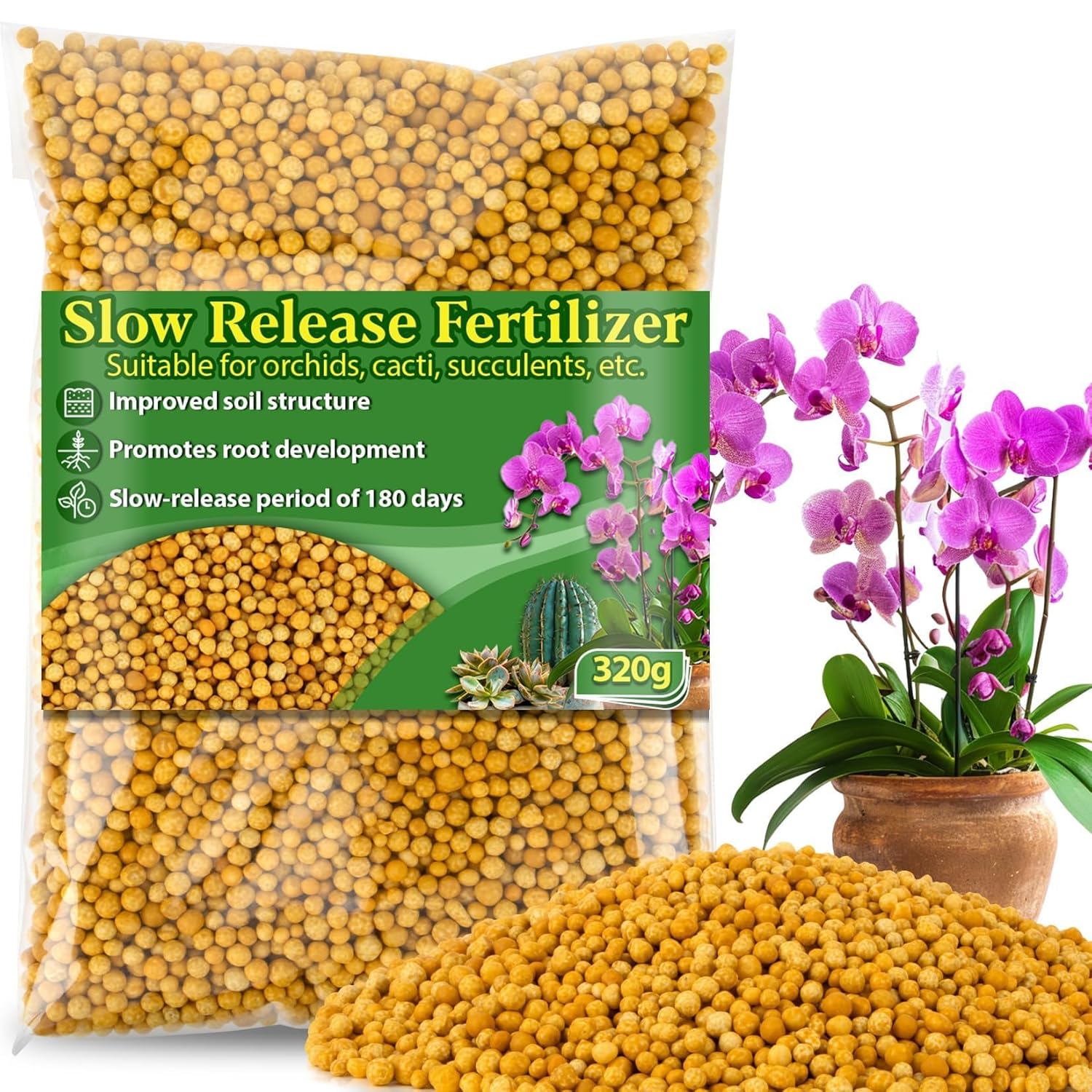
RAINFLOW Slow-Release Granular Fertilizer 14-13-13 (11.28 oz)
| Item Form | Granules |
|---|---|
| Application Method | Spray or Soil Application |
| Target Species | orchids, succulents, cacti, vegetables, flowering plants |
| Mixing Ratio | 14:13:13 |
This RAINFLOW slow-release granular fertilizer delivers balanced nutrition with a 14-13-13 formula and is designed to feed plants gradually for up to 180 days. Typical use is to sprinkle or mix the granules into potting soil or topdress containers and lightly water to activate the slow-release technology, reducing how often you need to reapply. It is marketed as suitable for orchids, succulents, cacti, vegetables and flowering plants, so it works for common container plant types. The granular form is easy to measure and apply, and the long release period can save time for busy or budget-minded gardeners by cutting application frequency. Because this is an 11.28 ounce package it is best for small collections or trial use rather than feeding many large containers, and gardeners who need exact soluble feeding schedules or specialized formulas may want a different product. For container plants, its simplicity and multi-plant compatibility make it a practical option for routine maintenance.
Best for: Gardeners with a modest number of container plants who want a low-effort, all-purpose slow-release fertilizer to reduce how often they feed.
Less Ideal for: People managing large container collections, professional growers, or those who need stage-specific or water-soluble nutrient programs.
- Balanced 14-13-13 NPK supports general growth, flowering and fruiting
- Slow-release formula claims up to 180 days of nutrient delivery, reducing application frequency
- Granular form is easy to apply as a topdress or mixed into potting media
- Suitable for a wide range of container-friendly plants including succulents, orchids and vegetables
- Small 11.28 oz package may not be cost-effective for larger collections or frequent use
- Mixing ratio listed is unusual (14:13:13) and may be unclear for users expecting standard soluble feeding instructions
Verdict: A handy, low-effort slow-release granular fertilizer for small container gardens that reduces reapplication frequency.
Osmocote Smart-Release Plus Plant Food, 15-9-12, 8 lb (2 Pack)

| Item Form | Granules |
|---|---|
| NPK | 15-9-12 |
| Specific Uses For Product | Plant Growth |
| Target Species | plants |
This Osmocote Smart-Release Plus is a slow-release granular fertilizer best used for regular feeding of container plants, garden beds, and houseplants. The resin-coated granules deliver a balanced 15-9-12 NPK plus secondary nutrients, releasing feed gradually over as long as six months so you do not need to fertilize frequently. It is simple to apply to potting mixes, containers, and landscape plantings and is suitable for flowers, vegetables, shrubs and trees. The product comes as two 8 lb bags, enough for roughly 600 sq ft when used per label directions, which makes it convenient for maintaining multiple containers across a season. Expect steady, low-maintenance nutrition that helps reduce the risk of nutrient spikes or frequent leaching compared with soluble fertilizers. Limitations are that you cannot quickly correct a deficiency with this product and release rate depends on temperature and watering, so results may vary in very cool or constantly wet container situations.
Best for: Gardeners who want a dependable, low-maintenance fertilizer for multiple containers or mixed plantings and prefer steady, long-term feeding over frequent applications.
Less Ideal for: Growers who need rapid nutrient corrections, precise timed feeding for sensitive crops, or who prefer water-soluble feeds for daily fertilizing.
- Resin-coated granules provide controlled nutrient release for up to six months
- Balanced 15-9-12 formula with 11 essential nutrients suitable for many plant types
- Ready-to-use granular form that is easy to apply to containers and garden beds
- Value pack includes two 8 lb bags for extended coverage
- Not suitable for quickly correcting acute nutrient deficiencies
- Release rate is temperature and moisture dependent, so feed timing can vary
Verdict: Choose this slow-release fertilizer if you want reliable, long-lasting feeding for container plants with minimal ongoing maintenance.
Osmocote Smart‑Release Plant Food Plus Outdoor & Indoor, 2 lb

| Item Form | Granules |
|---|---|
| Application Method | Sprinkle |
| Target Species | All plants |
| Mixing Ratio | 1 capful (3 tablespoons) per 2 gallons soil or per 4 sq. ft. |
| Unit Count | 32 Ounce |
Osmocote Smart‑Release Plant Food Plus is a granular, resin‑coated fertilizer designed to feed flowers and other plants steadily for up to six months with 11 essential nutrients. You apply it by sprinkling the recommended amount into the top inch or two of potting mix or garden soil, watering it in, and reapplying every six months; indoor plants use about half the outdoor rate. The resin coating times nutrient release to moisture and temperature, which reduces the need for frequent feedings and lowers the risk of fertilizer burn when used as directed. It works across containers, raised beds, and in‑ground flower beds and covers up to roughly 75 square feet per 2 lb container. Limitations are that a single 2 lb container is only enough for small gardens or several pots, and the slow‑release formula is not suitable when an immediate corrective boost is needed for acute nutrient deficiencies. For gardeners focused on steady, maintenance feeding for flowering plants this is an easy, low‑effort option.
Best for: Gardeners who want reliable, low‑maintenance feeding for flowers and mixed plantings and prefer a consistent supply of nutrients over months rather than frequent liquid feedings.
Less Ideal for: Growers who need fast corrective feeding for visible nutrient deficiencies or those managing very large beds who want bulk fertilizer options to reduce trips to reapply.
- Feeds continuously up to six months with a single application
- Resin coating times nutrient release to plant needs based on moisture and temperature
- Formulated with 11 essential nutrients suitable for a wide range of flowering plants
- No-burn pledge when used as directed reduces risk of overfeeding
- 2 lb container only covers about 75 sq. ft., so frequent repurchase is needed for larger gardens
- Slow‑release formulation does not provide a rapid corrective nutrient boost
Verdict: Choose this product if you want a hands-off, long‑lasting fertilizer that keeps flowering plants fed for months with a single application.
Choosing the Right Slow Release Fertilizer for Container Plants: Key Factors to Consider
Release Duration and Predictability
How long a product feeds is central to choosing a slow release fertilizer for pots. Container mixes have limited buffering capacity, so a granule or coated prill that releases steadily over weeks or months reduces the risk of sudden nutrient surges after a single application.
Predictable release schedules help you plan repotting and seasonal feeding. Shorter-term slow release products are useful for seasonal containers or fast-growing annuals, while longer-duration formulas suit larger specimens or winter overwintering. Also consider how temperature and moisture cycles in small pots affect release rates; warm, frequently watered containers will release nutrients faster than cool, dry ones.
Nutrient Ratio and Micronutrient Content
Check the N-P-K ratio and whether micronutrients are included. Containers often need a balanced feed because roots cannot forage beyond the pot. A fertilizer with appropriate nitrogen for foliage, phosphorus for flowering and root development, and potassium for overall plant health helps avoid common container deficiencies.
Micronutrients like iron, magnesium, and trace elements matter for long-term container health, especially in recycled potting mixes or when using rainwater low in minerals. Choose a product whose nutrient profile matches the type of plants you grow, such as foliage-heavy houseplants, flowering annuals, or edible containers.
Physical Form and Application Accuracy
Slow release fertilizers come as coated granules, resin-encapsulated prills, or organic pellets. The physical form affects how easy it is to measure and distribute in small pots. Smaller granules are easier to mix into potting soil and spread evenly, while larger pellets may sit on the media surface and release unevenly unless worked in.
For container use, look for products that allow precise portioning so you can avoid overfeeding small pots. Clear application instructions for specific pot sizes reduce the risk of burn or salt buildup and make maintenance straightforward for hobby gardeners.
Interaction With Potting Mix and Watering Habits
Potting mixes vary in texture, organic content, and water retention. A slow release fertilizer that performs well in peat-, coir-, or bark-based mixes will produce more reliable results. Products that rely on moisture-activated coatings can release much faster in water-retentive media or with frequent watering schedules.
Consider your typical watering frequency and whether you use self-watering containers or saucers, which can exacerbate salt accumulation. Match the fertilizer's release mechanism to your routine to avoid unexpectedly rapid release or buildup of soluble salts at the soil surface.
Salt Accumulation and Plant Safety
Because pots have limited leaching volume, salts from fertilizers can concentrate and harm roots. Slow release options generally reduce that risk, but some formulations still produce soluble salts that can build up over time.
Look for products with recommendations for occasional flushes, or choose blends with a lower initial salt index for sensitive plants. Regular monitoring of plant leaves and periodic soil testing can help detect early signs of salt stress so you can adjust feed schedules or perform a leach.
Environmental Runoff and Responsible Use
Containers often drain to patios, lawns, or storm systems. Selecting a slow release fertilizer reduces pulses of soluble nutrients entering runoff, but you should still consider how you water and where the container drains.
Use measured applications and avoid feeding immediately before heavy rain or excessive overhead watering that pushes nutrients through the pot. Choose formulations with lower leaching potential when growing near waterways, and follow label guidance to minimize environmental impact.
Matching Release Length to Plant Type
Different container plants need different feeding cadences. Annual bedding plants and quick-growing herbs often respond well to shorter-duration slow release options that feed for six to eight weeks. Perennial container specimens, larger patio shrubs, and decorative trees in pots benefit from products labeled for three to six months, which reduce the need for mid-season reapplication.
- Short-duration options: best for seasonal color and frequent repotting.
- Medium-duration options: good for mixed planters and vegetable containers.
- Long-duration options: suited to large pots, patio shrubs, and overwintered specimens.
Application Tips for Small Pots and Window Boxes
Measure precisely and err on the lower side for small pots. It is easy to over-apply in a 4- or 6-inch container, which can stress roots and scorch foliage. Broadcast granular product evenly across the soil surface or blend a measured dose into the top inch of media when repotting.
- Follow label dosing by pot diameter when provided.
- Work granules into fresh potting mix during repotting for even distribution.
- Avoid placing concentrated piles of granules near stems or crown bases.
Managing Salt Buildup and Flushing
Even slow release fertilizers can lead to salt accumulation in containers that receive frequent light waterings. Periodic flushing with free-draining water helps remove excess soluble salts and refresh the root zone. For edible containers, flush before harvesting heavy crops or if leaf margins show browning or tip dieback.
- Flush with twice the pot volume of water every few months if buildup is suspected.
- Check saucer water and empty it after watering to avoid roots sitting in concentrated solutions.
- Consider repotting with fresh mix every one to two years for heavily fed containers.
Choosing Organic Vs Synthetic Release Mechanisms
Organic slow release options rely on microbial breakdown and add organic matter to the potting mix, which benefits structure over time. Synthetic coated prills or polymer-encapsulated granules offer more predictable release schedules, especially in variable temperatures common on balconies and patios.
bullets nobody want this? This line will be ignored by page builder.
- Organic feeds improve soil biology and are gentle for edible containers.
- Synthetic coatings give consistent nutrient timing but may lack micronutrients unless formulated specifically.
Seasonal Timing and Repotting Strategies
Plan your feeding around repotting and active growth windows. Apply longer-duration products in spring for containers you expect to leave in place through summer. For plants you repot midseason, prefer shorter-duration feeds so nutrients align with the fresh media and root establishment.
bullets':['Apply slow release fertilizer at planting or immediately after repotting for best integration.','Delay long-duration products in late season to avoid forcing late growth before dormancy.']
- Ensure all headings are free of numbering.
Troubleshooting Common Container Feeding Problems
Yellowing leaves, stunted growth, or blossom drop can signal nutrient imbalance or incorrect feeding schedule. Investigate watering habits, pot size, and drainage before increasing fertilizer rates. A dilute liquid feed can be used as a diagnostic to see if plants respond quickly, indicating a short-term deficit rather than long-term salt buildup.
- Test soil pH and consider micronutrient supplementation if deficiencies persist.
- Inspect root systems during repotting to check for compaction or root-bound stress that limits nutrient uptake.
How We Chose the Best Slow Release Fertilizer for Container Plants
We focused on attributes that matter for container gardening rather than broad-field use. Our evaluation prioritized nutrient release consistency in small volumes of potting mix, compatibility with common container media, and safety for typical ornamental and edible potted plants. We also looked for options that minimize soluble nutrient leaching in frequent-watering scenarios and that perform across a range of pot sizes and drainage conditions. Contributors filtered out products that are only formulated for landscape or agricultural broadcast use, and we excluded specialty blends intended solely for turf, hydroponics, or professional greenhouse systems. The final shortlist reflects a balance of release-duration options, N-P-K balance appropriate for flowers, vegetables, and foliage, and physical form factors that are easy to apply and measure for pots. Other included evaluation criteria were solubility under repeated watering, presence of micronutrients, and clear labeling of release duration so gardeners can match feeding intervals to container size and plant type.
FAQ
How often should I apply slow release fertilizer to container plants?
It depends on the product's labeled release duration and your potting mix. Short-term products may need reapplication every six to eight weeks, while long-duration formulas can last three to six months. Adjust timing for frequent watering or very warm conditions, which accelerate release.
Can I use slow release fertilizer with edible containers?
Yes. Choose fertilizers labeled safe for edible plants and prefer lower salt-index formulations or organic options. Follow label withholding periods when provided and avoid overapplication to prevent flavor or salt issues.
Will slow release fertilizer prevent the need to repot?
No. Slow release feeding maintains nutrient levels but does not address limited root space or depleted media structure. Repotting is still necessary when plants become root-bound or the potting mix degrades.
How do I prevent fertilizer burn in small pots?
Measure carefully and use the lower end of the recommended dose for small pots. Work granules into the mix when repotting instead of piling them on the surface, and flush the container with water if you suspect salt buildup.
Do coated prills work in cool conditions on northern patios?
Coated prills that rely on temperature and moisture for release may slow down in cool conditions. For cool-season containers, choose products with predictable release at lower temperatures or supplement with occasional liquid feeds during active growth.
Can I mix slow release fertilizer types in the same pot?
Mixing different release mechanisms is possible but increases complexity and risk of uneven feeding. If you do mix, reduce total recommended rates and monitor plants closely for signs of overfeeding or deficiency.
Final Verdict
For container gardening, prioritize release predictability, an appropriate nutrient ratio, and a physical form that you can measure easily in small pots. Tradeoffs include longer intervals between feedings versus the potential for salt buildup in tight-rooted containers. Match release length to plant growth rate and pot size, monitor watering habits, and flush or repot when necessary. Using the evaluation criteria in this guide will help you select a slow release fertilizer that keeps potted plants healthy with minimal mid-season maintenance. Focus on compatibility with your potting mix and watering routine to choose confidently.
