

Note: This article contains affiliate links. If you click on these links and make a purchase, I may earn a small commission at no extra cost to you. This helps support my research and content. Read my full affiliate disclosure here.
If you want crisp, long-lasting borders that keep mulch, soil, and plants in their place, choosing the right metal garden edging matters. The wrong profile can bend, rust, or become a tripping hazard; the right edging creates clean lines, makes mowing easier, and survives season-to-season with minimal upkeep. This guide covers seven shortlisted metal garden edging options selected for different yard situations and installation styles. We evaluate how well each option resists corrosion, how easy it is to install and contour, and what maintenance it requires. Read on for practical guidance to match edging materials and profiles to your landscape goals.
Top Picks at a Glance
| Best Overall The best all-around choice for most situations | SJPULMO Galvanized Steel Landscape Edging Kit, 6-Pack (42" panels, 21 ft total) |  |
| Best Quality Built to a higher standard if you want something more solid | STIRLINGEAR 33 ft Cor-Ten Steel Landscape Edging (10-Pack) with Stakes |  |
| Best Value The sweet spot between price and what you get | STIRLINGEAR 50 ft Corrugated Metal Garden Edging, Rust-Resistant Black |  |
| Best Budget The cheapest option that still gets the job done reliably | LAVEVE Corrugated Galvanized Steel Garden Edging, 12 in x 20 ft |  |
| Highest Rated A top-rated pick with lots of positive feedback | Hemikaki 6 in x 40 ft Galvanized Corrugated Metal Garden Edging |  |
| Most Popular A crowd favorite that many people choose with confidence | STIRLINGEAR 33 ft Powder-Coated Galvanized Steel Landscape Edging (10-Pack) |  |
| Best Seller A high-volume bestseller chosen again and again | STIRLINGEAR 6-Pack Galvanized Steel Landscape Edging, 40" L x 6" H (20 ft total) |  |
SJPULMO Galvanized Steel Landscape Edging Kit, 6-Pack (42" panels, 21 ft total)

| Material Type | Galvanzied Steel with Powder Coating |
|---|---|
| Panels | 6 panels (42" each), 21ft total |
| Includes | Stakes, latch stakes, gardening glove, manual |
| Height | 4.5" (2" above ground, 2.5" below) |
This SJPULMO garden edging kit provides a straightforward way to create crisp, long-lasting borders. The kit ships with six 42" galvanized steel panels (21 feet total), matching stakes and latch stakes that lock panels together, plus a pair of gloves and a manual for quick setup. The panels are powder-coated for rust resistance and are described as easy to bend so you can shape curves or tight corners by hand and secure the edging with the included hammer-in spikes. In practice the heavy-gauge steel and latch system keep panels aligned and resist deformation better than thin plastic edging, making this suitable for visible bed edges and tree rings. Expect to use a rubber mallet for installation in compacted soil and to plan joints where panels meet since they come in fixed lengths. The finish helps outdoors durability but exposed cut edges could show wear over many seasons. If you want a durable, performance-focused metal border that installs without complex tools, this kit delivers; however it is a permanent to semi-permanent solution and needs some effort to remove or reposition later.
Best for: Buyers who prioritize a durable, professional-looking metal edge and are prepared to install a semi-permanent border for flower beds, pathways, or tree rings.
Less Ideal for: Those needing a temporary, lightweight, or tool-free edging solution for very small containers or frequent repositioning should consider alternatives.
- Galvanized steel with powder coating resists rust and holds a straight edge.
- Latch stakes and spikes secure panels together for stable, professional-looking borders.
- Bendable panels allow shaping curves and custom layouts without cutting.
- Includes stakes, gloves, and a manual so you have the basic hardware and guidance to install.
- Fixed 42" panel length means more joints for longer runs and occasional cutting for custom lengths.
- Requires physical effort and a mallet to install in compacted or rocky soil.
Verdict: Choose this kit when you want a durable, rust-resistant metal edging that shapes to curves and stays securely fastened for a professional finish.
STIRLINGEAR 33 ft Cor-Ten Steel Landscape Edging (10-Pack) with Stakes

| Material | Corten weathering steel |
|---|---|
| Total length | 33 ft (10-pack) |
| Stakes included | 11 heavy-duty stakes |
| Finish | Rust patina |
This Cor-Ten steel edging kit supplies 33 feet of continuous border using ten 40-inch strips and eleven hammer-in stakes for a secure installation. It is designed for defining turf-to-bed lines, walkways, and garden features where a low, permanent edge is desired. The weathering steel forms a protective rust patina that eliminates painting and gives a consistent aesthetic as it ages. Each strip is built to be bent for curves or trimmed to length so you can create straight runs or soft arcs; the included stakes anchor the edging to resist seasonal soil movement. Practical benefits include long service life with minimal upkeep and a natural finished look that integrates with many landscape styles. Limitations are that it is a rigid metal product that requires physical effort and basic tools to cut and hammer in, and the visible height is only about 2 inches above ground which may not suit beds needing taller containment.
Best for: Gardeners who prioritize long-term, low-maintenance edging that holds clean lines in high-use landscapes and who are comfortable doing a moderately physical installation.
Less Ideal for: Those who need a removable, temporary border or require a tall edge to retain heavy mulch or soil should consider other options.
- Cor-Ten weathering steel develops a protective rust patina for long-term durability without painting
- Includes 11 heavy-duty stakes for stable anchoring and resistance to seasonal soil shifts
- Modular 40-inch strips can be bent or trimmed to form straight lines or curves
- Low-maintenance finish blends with rustic and modern garden styles
- Requires cutting and hammering for installation, which needs effort and basic tools
- Only about 2 inches remains visible above ground, so it may not provide high containment
Verdict: Choose this Cor-Ten steel edging if you want a durable, low-maintenance metal border that forms a stable, long-lasting rust finish for permanent landscape edges.
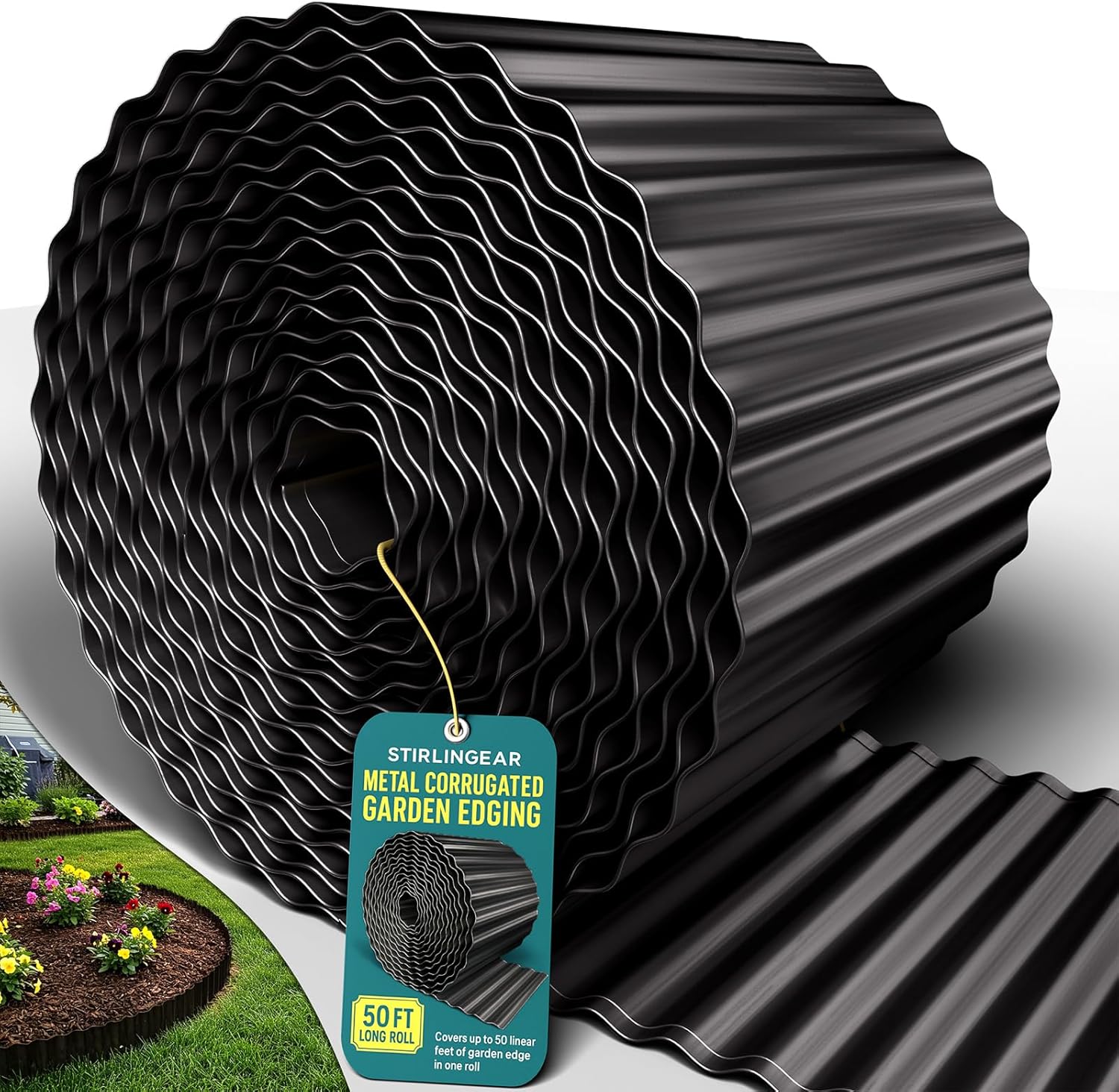
STIRLINGEAR 50 ft Corrugated Metal Garden Edging, Rust-Resistant Black
| Material Type | Metal |
|---|---|
| Length | 50 ft |
| Height | 5.5 inches |
This 50-foot corrugated metal edging is a practical, long-lasting solution for defining garden beds, walkways, and driveways. Made from galvanized steel with a black coating, it resists rust and weathering so you can expect multi-season durability. The corrugated profile adds stiffness and grip in the soil while still allowing the roll to bend for curves and tight corners; it can be cut with tin snips or shears to size for custom layouts. Installation is straightforward: no trenching is required for many installations — the edging can be pressed or lightly tapped into place, which saves time and effort on DIY projects. At 5.5 inches tall it keeps mulch, gravel, and soil contained without creating a high visual barrier. The main compromises are that it requires decent soil contact and occasional re-seating in very loose or frozen ground, and sharp cut edges mean gloves are recommended when handling. Overall it is a cost-effective, durable choice for homeowners who want a neat, modern border that lasts.
Best for: Homeowners who want a durable, low-maintenance edging solution that is quick to install and can be shaped to fit curved beds and walkways.
Less Ideal for: People needing a decorative or high-profile border or those who prefer soft, flexible landscape materials that are simple to remove seasonally.
- Galvanized steel with black coating resists rust and weathering
- Flexible corrugated design bends around curves and tight corners
- 50 feet length covers large areas or multiple projects without joins
- Ridged profile grips soil for easier press-in installation without trenching
- May need re-seating in very loose or frozen soil over time
- Cut edges can be sharp and require gloves and careful handling
Verdict: Choose this rust-resistant, flexible metal edging when you want a durable, low-fuss border that quickly shapes to curves and covers large areas.
LAVEVE Corrugated Galvanized Steel Garden Edging, 12 in x 20 ft

| Material Type | Metal |
|---|---|
| Item Highlight | Galvanized Steel Garden Border |
| Unit Count | 1 Count |
| Number of Packs | 1 |
The LAVEVE corrugated metal garden edging is a reinforced galvanized steel strip meant to form permanent landscape borders. It installs by digging a shallow trench, inserting the edging, and backfilling to hold it in place; the corrugated 3D profile and U-shaped rolled hems increase rigidity so it resists sagging once anchored. The steel is described as weather-resistant and finished to be family- and pet-friendly, and the material is flexible enough to bend around curves or be cut to length for custom beds, pathways, or paver edges. For gardeners who need a long-lasting, low-profile border, the heavier steel is more robust than thin aluminum options and should stand up to seasonal wetting and light impacts. Expect heavier weight during handling and the need for basic tools to shape and seat it; very hard compacted soil may require moistening or extra effort to drive the edging fully upright. This is a practical choice when durability and a neat, continuous metal border are higher priorities than ultra-lightweight or decorative alternatives.
Best for: Practical gardeners looking for a durable, long-lasting metal border who prioritize solidity and a low-maintenance finish over the lightest-weight option.
Less Ideal for: People who want a purely decorative, ornate edging or those needing an ultra-lightweight, temporary solution for seasonal plantings.
- Galvanized steel construction for greater strength and long-term durability
- Corrugated roll-forming profile increases rigidity and helps prevent sagging
- U-shaped rolled hems create smoother, safer edges for family and pets
- Flexible enough to bend into curves and cut to length for custom layouts
- Heavier material requires more effort to handle and install compared with lighter edging options
- May need moistening or extra force in very compacted soil to seat securely
Verdict: Buy this if you want a sturdy, weather-resistant galvanized steel edging that creates a durable, customizable border for long-term landscape use.
Hemikaki 6 in x 40 ft Galvanized Corrugated Metal Garden Edging

| Material | Galvanized steel |
|---|---|
| Height | 6INCN |
| Length | 40FT |
| Number of Items | 40 |
This Hemikaki corrugated metal edging is built from galvanized steel and meant to provide a long-lasting, low-maintenance border for beds and walkways. The 6-inch height and corrugated profile give the strip rigidity while still allowing it to be bent into curves or circles for custom layouts. Hemmed top and bottom edges reduce sharpness during handling and installation. In practice it is installed by pressing into soft soil or by cutting and setting into a narrow trench in harder ground, then backfilling for a clean, rooted edge that keeps mulch and turf separate. The galvanized finish resists corrosion outdoors, so it holds up in damp conditions better than uncoated metal. It is not a rigid modular system, so prolonged heavy loading or constant foot traffic on the lip can create deformation, and cutting requires metal shears and safety gloves which are not included. For homeowners wanting a dependable, long-lived metal border this product delivers straightforward performance with simple installation steps.
Best for: Homeowners who prioritize a durable, low-maintenance border and want a metal edging that holds up in wet or long-term outdoor conditions and can be formed to custom shapes.
Less Ideal for: People who need a decorative snap-together or modular edging system or who expect to step repeatedly on the top edge should consider alternative rigid or reinforced products.
- Galvanized steel construction offers good corrosion resistance for outdoor use
- Corrugated profile adds stiffness while still allowing the edging to bend into curves
- Hemmed top and bottom edges reduce sharpness during handling
- Suitable for multiple landscaping uses including flower beds, tree rings, and paths
- Requires metal cutting tools and protective gloves for trimming which are not included
- Can deform under heavy, concentrated loads or constant foot traffic on the edge
Verdict: Choose this galvanized corrugated edging when you want a straightforward, corrosion-resistant metal border that bends to shape and lasts in outdoor conditions.
STIRLINGEAR 33 ft Powder-Coated Galvanized Steel Landscape Edging (10-Pack)

| Total length | 33 ft (10-pack) |
|---|---|
| Material Type | Powder-Coated Galvanized Steel |
| Stake count | 11 stakes included |
| Finish | Black powder coat |
This 10-pack landscape edging kit provides a durable, low-profile solution for defining flower beds, paths, and lawn borders. Each 40-inch panel is made from powder-coated galvanized steel and installs with hammer-in stakes, so you can create a neat edge quickly without excavating long trenches. The kit includes 11 stakes for anchoring and a black finish that blends into planting beds. In practice the metal is stiff enough to hold a clean line against turf and light soil movement yet flexible enough to be cut and eased around gentle curves. The powder coating and galvanization help resist rust in typical garden conditions, making this a good long-term option for a risk-averse gardener who wants minimal maintenance. Keep in mind the panels are low profile, so they do not provide a tall barrier against creeping roots or heavy mulch; very thick turf or aggressive runners may still cross the line. Installation requires a hammer and occasional trimming at corners, but no special tools are needed.
Best for: Home gardeners who want a low-maintenance, long-lasting edging solution that installs quickly and keeps flower beds tidy with minimal ongoing fuss.
Less Ideal for: Gardeners needing a high barrier against invasive roots or a tall edging for steep grade changes should consider taller or buried edging systems instead.
- Durable galvanized steel with powder coating for rust resistance
- Hammer-in stake design enables fast installation without deep digging
- Low-profile panels create a neat, professional-looking border
- Flexible enough to cut and shape around gentle curves
- Includes stakes so kit is ready to anchor after layout
- Low profile does not block aggressive runners or heavy mulch movement
- May require trimming and shaping for tight corners or complex curves
Verdict: A fuss-free, rust-resistant steel edging kit that gives risk-averse gardeners a quick, durable way to create clean flower-bed borders.
STIRLINGEAR 6-Pack Galvanized Steel Landscape Edging, 40" L x 6" H (20 ft total)

| Material Type | Metal |
|---|---|
| Unit Count | 6 Count |
| Unit Height | 6" |
| Unit Length | 40" |
This 6-pack galvanized steel landscape edging provides a straightforward way to create clean, consistent borders around lawns, beds, and walkways. Each 40-inch section connects with a seamless joint system so you can form long runs without visible gaps, and the flexible steel bends to follow gentle curves while staying rigid enough to hold soil and mulch separation. Installation is DIY friendly: the kit uses hammer-in stakes and connectors so a rubber mallet and a couple of hours will lay out a typical yard border. Galvanized steel resists rust for season-to-season durability and requires little maintenance compared with untreated metal. The edging is best for defining beds and guiding mowing lines rather than heavy-duty retaining walls or steep slopes where deeper anchoring would be needed. Also, shaping very tight radii will be limited by the panel height and stiffness. For homeowners who want a neat, long-lasting metal edge without specialized tools, this kit is a practical choice.
Best for: Homeowners who want a reliable, low-maintenance metal edge to neatly define beds and lawn lines and prefer an easy DIY installation with predictable results.
Less Ideal for: Landscapers needing deep, structural retaining edges or anyone who must form very tight or complex curves should consider heavier-duty or specialized edging solutions.
- Galvanized steel construction offers rust resistance and low maintenance
- Seamless connection design creates continuous, gap-free borders
- Flexible panels bend to follow gentle curves for a polished look
- Easy DIY installation with hammer-in stakes and simple connectors
- Not intended for heavy retaining or stabilizing steep soil due to limited height
- May be difficult to form very tight-radius curves because of panel stiffness
Verdict: A low-maintenance, rust-resistant galvanized steel edging kit that lets risk-averse gardeners create neat, continuous borders quickly with simple tools.
Choosing the Right Metal Garden Edging: Key Factors to Consider
Material and Corrosion Protection
Metal edging comes in several alloys and coatings that determine how it holds up where soil, irrigation, and winter moisture meet. Galvanized steel, corten-style weathering steel, and aluminum behave differently: galvanized steel offers good initial rust protection where soils are not highly acidic, while weathering steel develops a protective patina that can be attractive but may transfer rust-colored runoff to adjacent paving or lighter mulches.
Aluminum resists corrosion but is softer and may dent under mower contact. Powder-coated finishes add a protective layer but can chip where the edge is cut or struck. Think about nearby irrigation, soil pH, and whether the edging will sit partially buried; these conditions determine which metal and finish will last with minimal upkeep.
Profile Shape and Height
The cross-section profile affects how the edging performs as a mowing boundary and how it contains mulch. Taller profiles are better for deep mulch or to prevent soil creep on a slope, while lower profiles keep edges discreet and reduce tripping hazards. Some profiles include a lip or flange to hold the edge more firmly in the ground and provide a clean mowing line.
Flat, narrow profiles are easier to tuck close to lawn mower wheels but may be easier to bend. Thicker, rolled-top profiles resist deformation but are more visible. Choose the profile based on the containment needs of the bed and how visible you want the metal edge to be in the landscape.
Flexibility and Curve Handling
Garden beds rarely run in straight lines, so the ability to form smooth curves is critical. Thin, narrow metal edging and specially designed roll profiles bend more readily for gentle curves and sweeping beds. Stiffer, thicker sections are better for straight runs or where you want a very crisp architectural line.
Consider whether you will install continuous rolls or modular pieces with connectors. Continuous rolls reduce seams but require more on-site bending; modular lengths simplify corners but introduce transition points that can catch mower blades or debris if not secured properly.
Anchoring and Fastening Options
How the edging is fixed determines long-term stability. Some metal edgings rely on integrated stakes or spikes where the flange is hammered into the soil, while others use separate anchor pins or buried backstops. Strong anchoring prevents edges from popping up under freeze-thaw cycles or when struck by a mower.
Think about the soil type and whether you will be installing in compacted ground, clay, or sandy conditions. Softer soils may need longer stakes or supplemental backfilling, while rocky ground might require pre-drilling or alternative fastening strategies. Ease of securing the edge affects both installation time and the chance of future movement.
Workability and Tools Required
Cutting and shaping metal edging requires specific hand tools or basic power tools. Thin steel and aluminum can be cut with aviation snips or a hacksaw, while thicker rolled edges may need a reciprocating saw or an angle grinder. Finishes like powder coat or galvanized surfaces should be re-protected at cut edges with touch-up paint or a cold galvanizing compound to prevent corrosion at exposed metal.
Also consider how easy the edging is to handle during installation. Lightweight pieces are faster to maneuver alone, whereas heavier sections may require an extra pair of hands. If you prefer a DIY install with household tools, prioritize options described as easy to cut and shape.
Aesthetics and Visibility
Metal edging is both functional and visual. A narrow, low profile provides a subtle, modern line that complements planted beds and ornamental grasses without dominating the view. Taller, rolled-top edging reads as an architectural statement and can emphasize a pathway or formal bed edge.
Finish color and patina will affect how the edge reads next to plantings and hardscape. Dark powder-coat tones recede visually, while bright or weathered finishes stand out. Consider the overall garden style when selecting the finish and profile so the edging enhances, rather than distracts from, the design.
Preparing the Bed and Measuring Runs
Start by marking the intended edge line with string or a garden hose to visualize curves and transitions. Walk the line and modify as needed before you cut turf or dig a trench. Accurate measuring reduces waste and ensures you order or cut enough material for continuous runs.
For long runs, plan where seams or connector pieces will sit. Place seams behind perennial masses or under mulch where they will be less visible. Allow an extra few feet for corner tie-ins or adjustments.
- Use a garden hose for fluid curves and string for straight runs.
- Account for stake spacing and connector overlaps when measuring.
Basic Installation Steps
Typical installation involves cutting the turf along the planned line, excavating a narrow trench to seat the edging, and anchoring the edging so the top sits at the desired height relative to the lawn. A flat-bladed spade and a small tamp are often all you need for manual installs.
After placing the edging, backfill on the planted side to lock the edge vertically and add soil or mulch to finish the bed. Check alignment frequently and adjust stake placement to keep the edge straight or smoothly curved.
- Seat the edging so the top is just above or flush with the turf depending on mowing strategy.
- Backfill on the planting side to prevent leaning and to stabilize the profile.
Cutting, Joining, and Finishing Cut Edges
Cutting metal cleanly reduces rough edges that can snag gloves or draw rust lines. Use the right tool for the material thickness and wear protective gear. When edges are exposed after cutting, apply a protective coating or zinc-rich compound to limit corrosion where the factory finish is removed.
Joining sections with manufacturer-specified connectors keeps seams tight and reduces movement. Where connectors are not available, overlap edges and stagger seams so mower blades are less likely to catch. Finish exposed fasteners flush or cover them with soil or mulch.
- Use appropriate cutting tools and protective equipment.
- Protect cut edges to prevent premature rusting.
Maintaining Metal Edging Over Time
Inspect edging seasonally for loose stakes, bends, or chipped finishes. Re-tamp soil around anchors as needed and apply touch-up coatings to any scratched or cut areas to prevent localized corrosion. Small dents can often be pushed back into place with a rubber mallet.
Keep the edge clear of dense soil build-up on the lawn side to maintain a clean mowing line. If rust stains appear on hardscape or mulch, address the source by improving drainage or applying a different finish where practical.
- Re-secure stakes after winter heave and check for bending from equipment strikes.
- Touch up cut or scratched metal with appropriate protective coatings.
Design Uses and Creative Applications
Metal edging is useful beyond simple bed borders. Use it to form crisp paths, define rock gardens, or create contained zones for gravel or decomposed granite. Its clean profile works well with modern and cottage-style plantings alike.
You can also use metal edging as a planting pocket edge for raised sheet-mulched beds or to create geometric shapes that make maintenance easier and reduce mower overreach.
- Edge pathways to prevent gravel migration.
- Create visual frames around specimen plantings with tall profiles.
How We Chose the Best Metal Garden Edging
We focused on traits that matter most to gardeners who want long-term, low-fuss metal borders. Our selection filters prioritized corrosion resistance, because exposure to soil and irrigation determines longevity. We evaluated installation flexibility to see how well edging adapts to straight runs and curved beds, and we considered attachment and anchoring methods so products would stay put through foot traffic and lawn care. Durability of cross-section and thickness was important to resist bending from mower impacts or freeze-thaw cycles. We also looked at finish and coating quality that affect maintenance frequency and visual longevity. Practicality factors such as ease of cutting, availability of fittings for corners or transitions, and whether the edge sits flush to turf or raised slightly were applied as additional filters. We excluded items that were clearly decorative only, too flimsy for routine lawn edging, or that required specialized tools or contractors for basic installation. The final list emphasizes options that a typical homeowner or gardener can install and maintain without specialized equipment. The scoring criteria reflect these editorial priorities: rust resistance, installation ease, edge rigidity, finish quality, and maintenance needs.
FAQ
Will metal edging rust quickly in a wet climate?
It depends on the metal and finish. Galvanized and aluminum options resist moisture better than raw steel. Some weathering steels intentionally form a stable patina, but nearby surfaces can stain. Choosing a coated product and maintaining cut edges reduces rust risk.
Can I install metal edging by myself without heavy tools?
Yes. Many metal edging types are designed for DIY installation with a spade, mallet, and hand snips. Heavier rolled or thicker gauges may need a reciprocating saw or an extra set of hands to maneuver, but basic installation is within reach for most gardeners.
How deep should metal edging be buried?
Depth varies with profile and function. Typically, edging is buried enough so the flange or lower portion is secured below grade and the visible top sits slightly above or flush with the lawn. For containment of mulch on slopes, a deeper seat helps prevent soil creep.
Will metal edging interfere with lawn mowers?
Properly set edging should create a clean mowing line and not interfere. Low-profile edges are less likely to contact mower decks, while taller edges can provide a stronger barrier if you use a walk-behind mower. Secure anchors and flush installation reduce the chance of catching blades.
Is aluminum a good choice for garden edging?
Aluminum resists corrosion and is lightweight, making it easy to handle and suitable in wetter sites. It is softer than steel, so it may dent from lawn equipment or impacts more readily, but for many gardens the trade-off for low corrosion is acceptable.
Final Verdict
Choose metal edging based on the conditions of your site and the look you want to achieve. Prioritize corrosion protection where moisture and soil chemistry are concerns, select a profile height that contains material without creating a tripping hazard, and plan for anchoring that suits your soil type. Balance ease of installation and workability against long-term rigidity to find the right compromise for your garden. With the correct material and a thoughtful install, metal edging delivers tidy lines and reduced maintenance for years.
