

Note: This article contains affiliate links. If you click on these links and make a purchase, I may earn a small commission at no extra cost to you. This helps support my research and content. Read my full affiliate disclosure here.
If you garden in a suburban or urban yard, the right greenhouse transforms how and when you grow. A greenhouse for yards protects seedlings, extends your growing season, and gives fragile plants a controlled environment without needing a large footprint. This guide shortlists seven top choices suited to small- to medium-sized yards and explains practical tradeoffs like weather resistance, usable square footage, and ventilation. Below you will find concise evaluations of the top contenders plus the decision factors we used to select them, so you can match a yard greenhouse to the space and plants you want to nurture.
Top Picks at a Glance
| Best Overall The best all-around choice for most situations | Aoodor 6 x 8 ft Walk-In Greenhouse with Polycarbonate Panels and Adjustable Skylight |  |
| Best Quality Built to a higher standard if you want something more solid | Sylviera 8×12 ft Aluminum Frame Greenhouse with Hygrometer |  |
| Best Value The sweet spot between price and what you get | Sylviera 6×4 ft Outdoor Polycarbonate Greenhouse with Hygrometer | 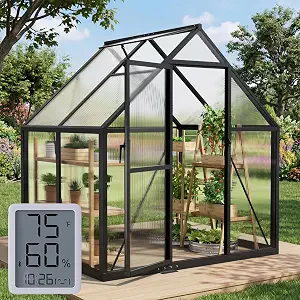 |
| Best Budget The cheapest option that still gets the job done reliably | Greengro Small Walk-In Greenhouse with PE Cover and Zippered Door |  |
| Highest Rated A top-rated pick with lots of positive feedback | Plus Yard 6'x3'x3' Outdoor Greenhouse with Removable Bottom |  |
| Most Popular A crowd favorite that many people choose with confidence | Grezone Walk-in Tunnel Greenhouse with Dual Zippered Doors and 6 Vent Windows (10 x 7 x 7 ft) |  |
| Best Seller A high-volume bestseller chosen again and again | EAGLE PEAK 6×8 Easy-Setup Pop-Up Greenhouse with Roll-Up Door |  |
Aoodor 6 x 8 ft Walk-In Greenhouse with Polycarbonate Panels and Adjustable Skylight

| Size | 6 x 8 Ft |
|---|---|
| Cover Material | Polycarbonate (PC) |
| Frame Material | Aluminum |
| Number Of Vents | 1 |
| Indoor Outdoor Usage | Outdoor |
This 6 x 8 ft walk-in greenhouse gives a backyard gardener a sturdy, weather-resistant space to start seedlings, overwinter potted plants, or grow heat-loving vegetables. The heavy-duty aluminum frame resists rust and pairs with multiwall polycarbonate panels that transmit light like glass while improving insulation for cooler nights. Built-in gutters route rainwater away from the base and the adjustable skylight plus a vent help control heat and humidity on warm days. A lockable two-sided door makes access simple and secure for frequent use. Assembly is modular and aided by illustrated instructions, though the kit still requires time and care to align panels and fasteners correctly. The greenhouse provides good protection from light frost and pests but is not a freestanding heated structure for severe winter climates, and permanent anchoring may be needed in very windy sites.
Best for: For a homeowner who wants a reliable, mid-size backyard greenhouse to extend the growing season, start transplants, and protect plants from pests and light frost while balancing durability and ease of use.
Less Ideal for: Not the best choice for gardeners needing a climate-controlled, year-round heated setup or very large production space; commercial growers or those in extreme winter climates should consider insulated or heated alternatives.
- Aluminum frame offers corrosion resistance and durable support
- Polycarbonate panels combine high light transmission with improved thermal insulation over plastic covers
- Gutter system channels rainwater away to reduce erosion around the base
- Adjustable skylight and venting let you control heat and humidity
- Lockable two-sided door for convenient, secure access
- Requires careful assembly and panel alignment which can be time consuming
- Not designed as a heated greenhouse for very cold or severe winter conditions
Verdict: Aoodor's 6 x 8 ft walk-in greenhouse is a durable, well-ventilated backyard solution that balances light transmission and insulation for season extension and everyday gardening.
Sylviera 8×12 ft Aluminum Frame Greenhouse with Hygrometer

| Cover Material | Polycarbonate (PC) |
|---|---|
| Frame Material | Aluminum |
| Nominal Wall Thickness | 4mm |
| Number Of Vents | 2 |
| Number of Doors | 1 |
The Sylviera 8×12 greenhouse is built for gardeners who want a sturdy, year-round growing space in a backyard. It uses a reinforced aluminum frame and strengthened corner brackets to resist wind and snow, while clear 4mm double-wall polycarbonate panels admit light and reduce UV exposure for steadier interior temperatures. The layout provides a single lockable door, two adjustable roof vents and drainage channels in the roof to help manage humidity and runoff. Assembly is typical for kit greenhouses: labeled parts and supplied tools simplify construction but you will likely need at least one helper and some silicone to seal panel gaps for maximum weatherproofing. In practical use the greenhouse gives enough room to organize benches and containers for seasonal production and seed starting, and the included hygrometer helps monitor conditions. Expect the structure to perform well for sheltering plants through varied weather, though the relatively thin panels and aluminum frame mean extreme storm events or very heavy snow loads may require additional anchoring or reinforcement.
Best for: Gardeners who need a performance-oriented backyard greenhouse for season extension and organized plant production and who value structural stability and ventilation control.
Less Ideal for: People seeking a no-assembly, ultra-heavy-duty commercial greenhouse or those who need the highest snow-load capacity without adding reinforcement.
- Reinforced aluminum frame and corner supports for improved wind and snow resistance
- 4mm double-wall polycarbonate panels that admit light while blocking UV and improving thermal stability
- Adjustable roof vents and lockable door for practical ventilation and security
- Drainage channel roof design helps manage rain and runoff during storms
- Panels are 4mm which is lighter duty than thicker commercial panels and may need extra bracing for heavy snow
- Assembly requires at least one helper and some gap sealing for best weatherproofing
Verdict: A backyard-focused greenhouse that balances durable aluminum framing and light-managing polycarbonate panels to deliver reliable year-round performance for serious home growers.
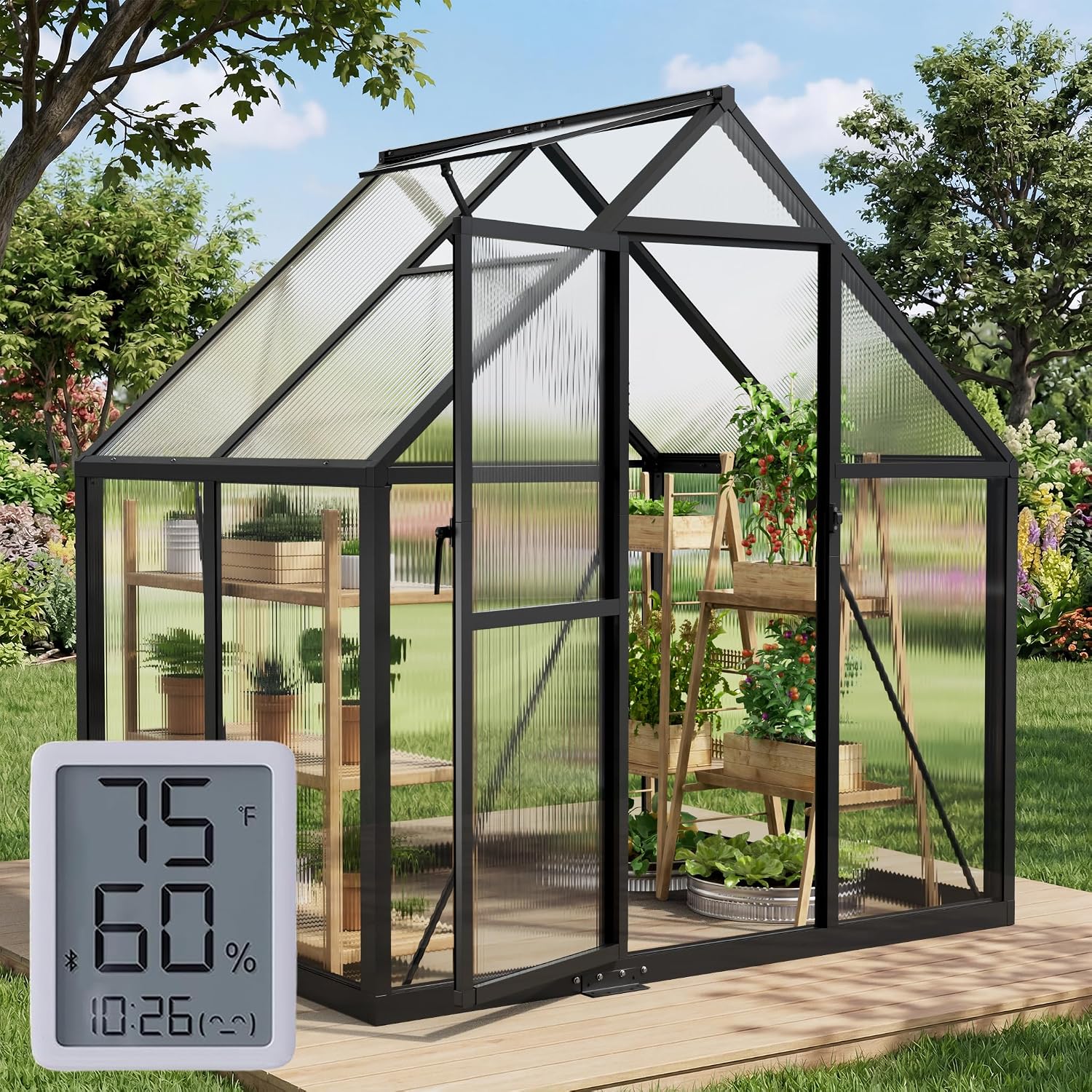
Sylviera 6×4 ft Outdoor Polycarbonate Greenhouse with Hygrometer
| Cover Material | Polycarbonate (PC) |
|---|---|
| Frame Material | Aluminum |
| Number Of Vents | 2 |
| Indoor Outdoor Usage | Outdoor |
The Sylviera 6×4 ft greenhouse is a compact walk-in shelter that creates a controlled environment for vegetables, herbs, and ornamentals. It uses an aluminum frame with 4mm double-wall polycarbonate panels to let light in while blocking UV, and the kit includes roof vents, a lockable door, and a hygrometer for basic climate monitoring. Typical use is to stage potted plants and seed trays on shelving inside, open vents to prevent overheating on warm days, and close up for wind or light snow. Notable features are the impact-resistant panels that improve insulation compared with single-sheet plastic, a reinforced frame for better wind resistance, and labeled parts with tools to simplify assembly. In practice this means extended growing seasons and safer overwintering for small crops, but expect a modest usable footprint that limits large beds and taller crops. Assembly takes two people and some time to align panels and secure seams, and heavy wind or deep snow may still require additional anchoring or sealant to keep joints tight.
Best for: Gardeners who prioritize year-round performance and want a durable small greenhouse to extend seasons and protect plants from wind and light snow.
Less Ideal for: Those needing a large production space, tall plant beds, or a no-assembly, instant shelter should consider larger or prebuilt alternatives.
- Double-wall polycarbonate panels provide UV protection and better insulation than thin plastic sheeting
- Aluminum frame offers corrosion resistance and increased structural strength
- Adjustable roof vents and a lockable door help regulate temperature and airflow
- Includes a hygrometer and labeled parts for clearer assembly and basic climate monitoring
- Small interior footprint limits planting layout and vertical growing space
- Assembly requires two people and careful alignment of panels for a weather-tight fit
Verdict: Choose this compact Sylviera greenhouse when you want a durable, ventilated small walk-in that reliably extends your growing season.
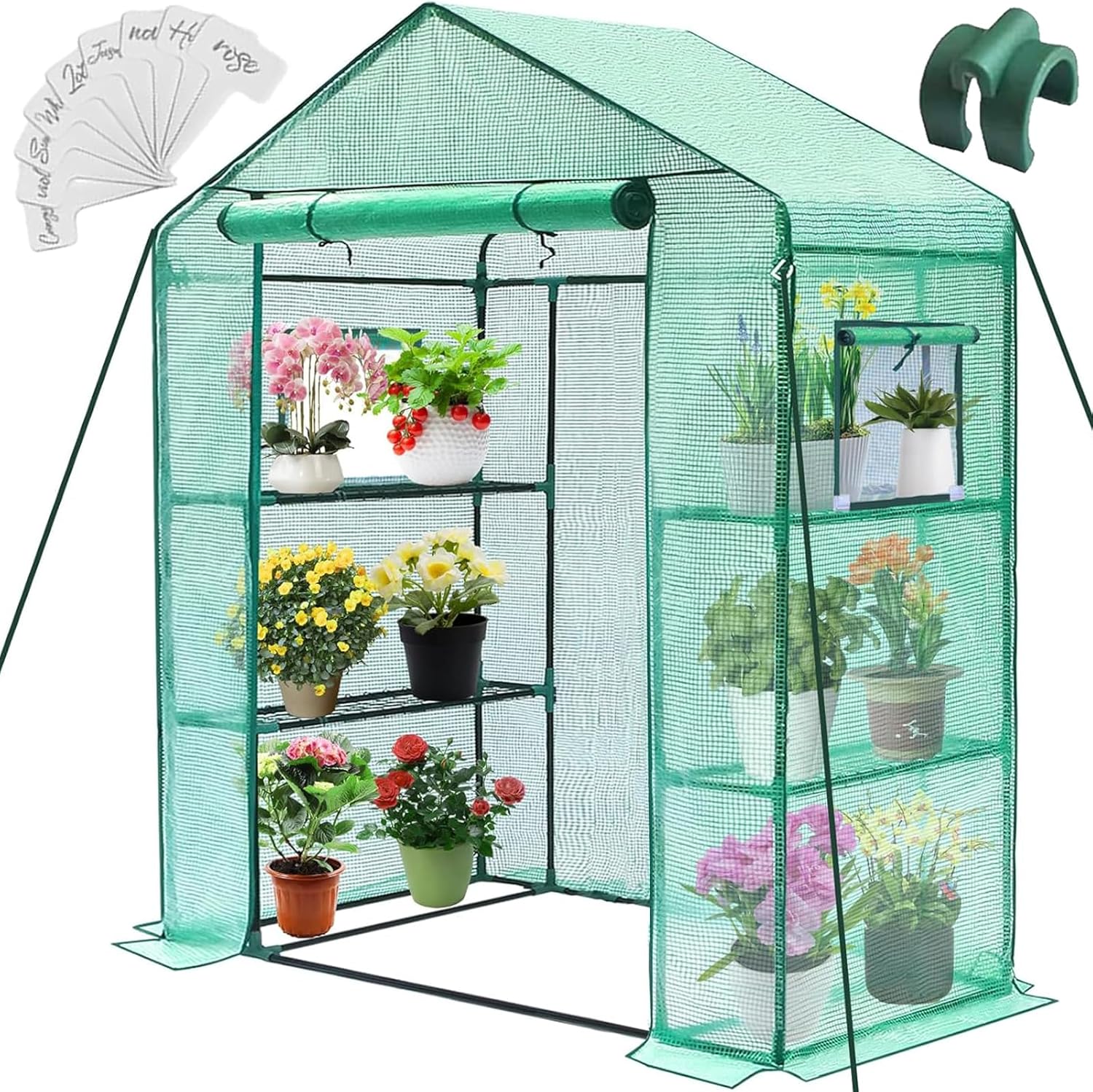
Greengro Small Walk-In Greenhouse with PE Cover and Zippered Door
| Cover Material | Polyethylene (PE) |
|---|---|
| Frame Material | Metal |
| Closure Type | Zipper |
| Nominal Wall Thickness | 16 millimeters |
This Greengro small walk-in greenhouse creates a sheltered microclimate for potted plants, seedlings and herbs by combining a metal framework with a thick PE cover and zippered access. It is typically used on a patio, balcony or in a backyard to extend the growing season, shield plants from wind and rain, and keep pests out. Notable features include screened ventilation windows, a roll-up zippered door, four internal shelves for staging pots, and guy ropes with ground stakes for added stability. Practical benefits are straightforward setup without tools, portability for repositioning, and weather-resistant protection that lets you start seeds earlier or overwinter tender plants. Important limitations are its small footprint and modest shelf weight capacity, so it is best for small to medium pots rather than heavy planters, and the lightweight frame and cover remain less durable than rigid greenhouse structures in long-term, high-wind exposure.
Best for: Buyers who want an efficient, moveable solution to protect and organize several small to medium potted plants and seedlings without investing in a permanent structure.
Less Ideal for: Gardeners who need a long-term, heavy-duty greenhouse for large pots, full-size vegetables, or locations regularly exposed to very strong winds should consider sturdier, permanent options.
- Thick polyethylene cover with reinforced edging offers waterproofing and UV reduction
- Zippered roll-up door and screened windows provide ventilation and easy access
- Tool-free assembly and detachable design for quick setup and relocation
- Integrated shelves create organized vertical growing space for multiple pots
- Small size limits capacity to small and medium pots and seed trays
- Lightweight frame and cover are not as long-lasting as permanent rigid greenhouses
Verdict: A compact, easy-to-assemble micro greenhouse that protects and organizes small to medium potted plants while staying portable and budget friendly.
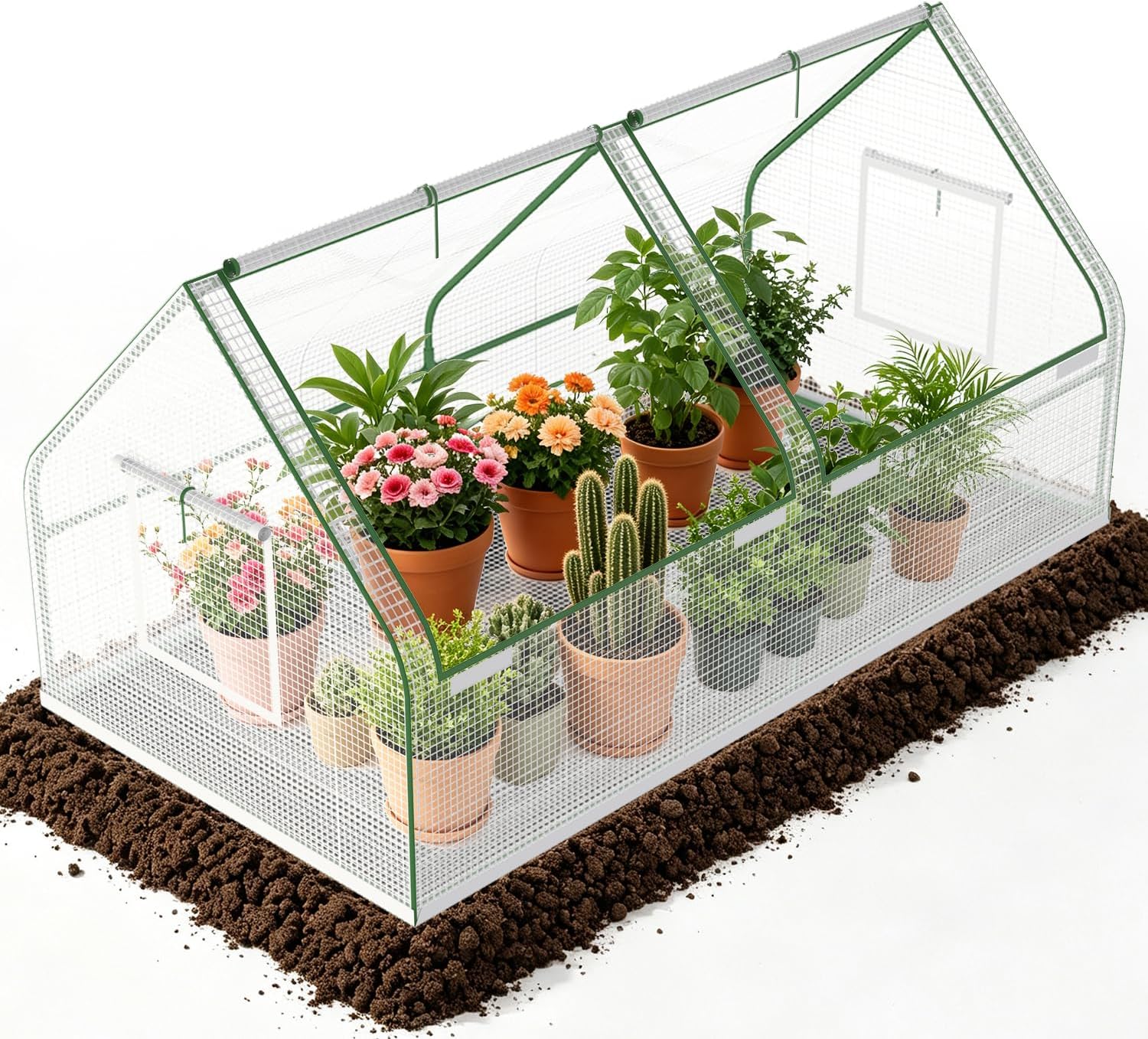
Plus Yard 6'x3'x3' Outdoor Greenhouse with Removable Bottom
| Cover Material | Polyethylene (PE) |
|---|---|
| Frame Material | Alloy Steel |
| Number Of Vents | 2 |
| Closure Type | Zipper |
| Indoor Outdoor Usage | Outdoor |
This Plus Yard greenhouse is a small, practical shelter for extending the growing season on a patio, balcony or in a yard. It uses a 16 mm plastic-coated steel frame and a durable polyethylene cover to keep seedlings and potted plants warmer and sheltered from wind and light rain. The removable Velcro-secured base lets you choose a fully enclosed footprint to retain heat and contain spills or remove it for direct in-ground planting. Two roll-up doors and side mesh windows create adjustable cross-ventilation for humidity control while keeping out larger debris. Assembly is tool-free with plug-in frame pieces, so it goes up and down quickly for seasonal storage. For gardeners focused on dependability, the rust-resistant frame and waterproof cover provide sensible protection without complicated maintenance. Keep in mind the shelter is best for wind-sheltered spots and lighter weather; the thin PE cover and lightweight frame are not equivalent to permanent glass or rigid polycarbonate greenhouses in long-term durability or heavy-wind resistance.
Best for: Gardeners who want a reliable, easy-to-assemble seasonal greenhouse to protect seedlings and potted plants on a patio or yard and prioritize straightforward, low-maintenance performance.
Less Ideal for: People needing a permanent, heavy-duty greenhouse for year-round outdoor exposure or for sites regularly exposed to strong winds should consider more rigid structures.
- Rust-resistant 16 mm plastic-coated steel frame offers sturdy, low-maintenance support
- Removable Velcro-secured waterproof base allows enclosed or open-bottom setups
- Durable PE cover provides light rain and UV protection while transmitting sunlight
- Two roll-up doors and side mesh windows enable adjustable cross-ventilation
- Tool-free plug-in assembly for quick setup and seasonal storage
- PE cover and lightweight frame are less durable than rigid glass or polycarbonate for extreme weather
- Best suited to sheltered locations since it may need extra anchoring in high winds
Verdict: Choose this greenhouse if you need a dependable, easy-to-build seasonal shelter that protects seedlings and potted plants while being simple to store away.
Grezone Walk-in Tunnel Greenhouse with Dual Zippered Doors and 6 Vent Windows (10 x 7 x 7 ft)

| Cover Material | Polyethylene (PE) |
|---|---|
| Frame Material | Alloy Steel |
| Number of Doors | 2 |
| Number Of Vents | 6 |
| Indoor Outdoor Usage | Outdoor |
This Grezone walk-in tunnel greenhouse is a budget-friendly, yard-sized shelter that gives seedlings and potted plants basic weather protection while allowing easy access. It uses a reinforced powder-coated steel frame with crossbars and diagonal supports, and a 140 g/m2 PE grid cover rated UV80+ that the brand says is waterproof and more durable than typical thin PE covers. Two zippered doors (one mesh, one PE) and six roll-up vents provide ventilation options for warm days and pest control, while the cover’s close fit helps retain warmth in cooler weather. Setup is a butterfly-screw assembly that a two-person team can complete in a few hours; the materials and build are practical for seasonal use but are not professional-grade. Expect useful protection from rain, light frost, and sun but plan to anchor the structure for windy conditions and replace the cover eventually if exposed to heavy sun or snow over multiple seasons. The greenhouse is a straightforward option for gardeners who want accessible, sheltered growing space without specialized equipment.
Best for: Gardeners who want an affordable, walk-in greenhouse to extend the growing season and protect plants in a typical yard and who value easy access and ventilation over permanent, heavy-duty construction.
Less Ideal for: Those seeking a permanent, heavy-duty glazed greenhouse for year-round commercial use or gardeners in very exposed, high-wind or heavy-snow locations should consider more robust framed or polycarbonate options.
- Reinforced steel frame with crossbars and diagonal supports for improved stability
- Thicker 140 g/m2 PE grid cover rated UV80+ for better UV protection and water resistance
- Dual doors with separate mesh and PE panels for ventilation and pest control
- Six roll-up vents to improve airflow and reduce overheating on warm days
- PE cover is durable for its class but will degrade faster than rigid glazing under prolonged UV or heavy snow
- Lightweight tunnel design requires anchoring and may not withstand very strong winds without additional support
Verdict: A cost-conscious, walk-in solution that delivers solid seasonal protection and ventilation for yard gardeners who want accessible sheltered growing space.
EAGLE PEAK 6×8 Easy-Setup Pop-Up Greenhouse with Roll-Up Door

| Size | 6×8 |
|---|---|
| Cover Material | Polyethylene (PE) |
| Frame Material | Alloy Steel |
| Number of Doors | 2 |
| Number Of Vents | 2 |
This EAGLE PEAK 6×8 pop-up greenhouse is built for gardeners who want a quick, sturdy shelter for winter protection and seed starting. The preassembled alloy steel frame uses a patented center-lock that lets one person raise the structure without tools, while the powder-coated finish, wind ropes, and stakes improve outdoor stability. The PE cover is water- and UV-resistant, which helps retain humidity and filter sunlight through cold months. Two roll-up zippered doors and mesh windows provide adjustable ventilation and keep small animals out. Practical benefits include fast setup, walk-in access for tending plants, and compatibility with optional shelving to increase growing capacity. Limitations to consider are that the PE cover is less durable than polycarbonate in heavy snow or prolonged abrasion, and pop-up frames generally need careful anchoring in high winds; long-term outdoor exposure may require occasional cover replacement. For a risk-averse buyer wanting simple winter protection and easy assembly, this greenhouse delivers predictable, straightforward performance.
Best for: Buyers who want a low-effort, dependable winter greenhouse for frost protection and seed starting and who prefer easy single-person setup and predictable performance.
Less Ideal for: Growers needing a permanent, heavy-duty greenhouse for heavy snow loads or long-term all-season use should consider rigid-frame polycarbonate or wood greenhouses instead.
- One-person pop-up setup with patented center-lock for fast assembly
- Alloy steel frame with powder coating and included wind ropes and stakes for improved outdoor stability
- Water-resistant and UV-resistant PE cover that helps retain humidity for winter protection
- Walk-in size with two zippered roll-up doors and mesh windows for ventilation and access
- PE cover is less impact- and snow-resistant than rigid panels and may need replacement over time
- Pop-up frames require good anchoring and may not perform as well in very high winds
Verdict: A fast, one-person pop-up greenhouse that reliably extends the growing season with simple setup and practical winter protection.
Choosing the Right Greenhouse for Yards: Key Factors to Consider
Site and Footprint
Where you place a greenhouse in your yard determines how much usable space you actually get and how exposed the structure will be to wind and sun. Measure the available area, accounting for access on all sides, and check local setbacks or homeowner association rules. A greenhouse that fits tightly between a fence and a shed may need narrower doors and careful shelving layout to stay functional.
Consider sunlight angles through the year. A compact greenhouse in full southern exposure will outperform a larger one placed in deep shade. Also think about access to water and electricity if you plan to use heaters, fans, or irrigation. Even when not required, proximity to a water source makes daily care easier and reduces hose runs that create tripping hazards.
Frame Material and Strength
The frame determines wind resistance, longevity, and how well the greenhouse handles snow loads in winter. Steel and aluminum frames are common; steel offers robust strength but can rust if coatings fail, while aluminum resists corrosion and is lighter for easier assembly. Wood frames provide thermal mass and a more natural look but need regular treatment to resist rot.
Check connection methods and brace geometry. Cross-bracing and reinforced corners reduce sway and extend the life of the structure in exposed yards. If your yard sees strong gusts or occasional heavy snow, prioritize a design with higher-rated load capacity and clear anchoring options.
Covering Material and Light Transmission
Glazing affects heat retention, light quality, and durability. Polycarbonate panels offer good insulation and impact resistance while diffusing sunlight to reduce hot spots. Polyethylene film is inexpensive and flexible but prone to tearing and UV degradation over time. Glass provides excellent clarity but increases weight, breakage risk, and structural demands.
Consider the balance between insulation and light. For seed starting and early-season growth you want even, bright light plus thermal retention overnight. Look for coverings with UV inhibitors and known lifespans, and plan for replacement intervals in your maintenance schedule.
Ventilation and Microclimate Control
A yard greenhouse must ventilate heat and moisture to prevent plant stress and disease. Roof vents, louvered side vents, and cross-ventilation paths let you passively regulate temperature when possible. For warmer seasons or tightly sealed structures, provision for fans, automatic vent openers, or roll-up side panels helps prevent overheating.
Humidity control matters too. Excess moisture encourages fungal diseases and reduces transpiration. Good airflow plus the ability to dry benches and soil between waterings will keep plants healthier. Decide whether you need powered controls or whether passive vents and manual adjustments will suit the scale of your yard setup.
Interior Layout and Usable Growing Area
Manufacturers often specify footprint dimensions, but usable space depends on door placement, headroom, and shelf configuration. Tall ridge heights allow trellised crops and standing work, while lower lean-to or compact designs limit vertical plantings. Consider bench widths, aisle clearance, and whether the greenhouse can accept standard shelving or benching kits.
Think about how you garden: seed-starting, potting, overwintering perennials, or growing vegetables. Benches at comfortable working height reduce back strain, and movable shelving maximizes flexibility. For intensive production, calculate square footage per plant type to ensure the greenhouse can meet yield expectations.
Access, Doors, and Security
Door size and type shape daily usability. Wide, well-sealed doors allow wheelbarrows, carts, and large plants to pass through, while sliding doors save exterior clearance. Secure latching matters if you store tools or seedlings in the greenhouse, and lockable doors offer peace of mind in accessible yards.
Consider threshold design for water shedding and pest exclusion. Simple details like handles at a comfortable height, smooth track operation, and storm latches improve long-term satisfaction. If pets or wildlife visit your yard, tighter seals and lower gaps help keep them out.
Sizing for Small and Medium Yards
Match greenhouse size to your routine tasks. A small footprint can still support extensive seed starting or a winter workbench if it prioritizes vertical space and efficient shelving. For medium yards you have more flexibility to add benches, lean-to features, or potting areas while keeping a compact overall impression.
Think about future needs. A backyard that starts with seed trays may later host overwintered potted shrubs or a small vegetable rotation. Choosing a slightly larger footprint now can avoid the need to replace the structure later.
- Measure clearances for doors and access on all sides.
- Plan bench layout before choosing dimensions.
- Allow room for maintenance tasks and seasonal rotation.
Anchoring and Foundations
Anchoring keeps a yard greenhouse stable during wind events and prevents gradual shifting that strains connections. Options range from ground stakes and augers to concrete footings or timber perimeter bases. The right choice depends on soil type and whether the installation is semi-permanent or intended to be movable.
A simple timber base raises the frame off the soil, improving drainage and giving a solid surface for benching. Concrete anchors are overkill for some owners but worthwhile in exposed locations with regular high winds.
- Use anchors rated for local wind loads.
- Consider a raised timber base for drainage and rigidity.
- Verify local codes if adding permanent foundations.
Seasonal Use and Climate Considerations
Decide how many seasons you want to use the greenhouse. If you need true winter protection in cold climates, prioritize insulation, stronger frames, and the ability to add supplemental heat. For mild climates, lightweight coverings and passive ventilation may be sufficient year-round.
Also consider summer heat. Compact greenhouses can overheat quickly; plan for shading, ventilation, and the option to move potted plants outside when temperatures spike. Balance seasonal tradeoffs based on the crops you intend to grow most often.
- Choose coverings with suitable insulation ratings for your winter lows.
- Plan for shade or movable shading in summer.
- Ensure vents and fans can handle expected summer temperatures.
Maintenance and Longevity
Routine maintenance preserves performance and extends the life of a yard greenhouse. Clean glazing to maximize light, check seals and fasteners seasonally, and replace worn covers before failures occur. Keep an inventory of common replacement parts such as panel clips, vent hardware, and door rollers.
Materials that resist corrosion and UV degradation reduce the time you spend on upkeep. A design that allows easy part replacement and straightforward access to fasteners makes seasonal servicing faster and cheaper over the long run.
- Inspect anchors, seals, and glazing each spring and fall.
- Keep spare fasteners and clips on hand.
- Clean interior surfaces to reduce pest and disease pressure.
Accessory Options That Improve Usability
Shelving, benches, rainwater capture, and automatic vent openers transform a greenhouse from occasional shelter into a workable garden space. Bench systems that bolt to the frame save floor space, while mobile benches offer flexibility for seasonal changes. Rainwater capture and drip irrigation simplify frequent watering needs, especially during peak growth periods.
Automatic vent openers use temperature-responsive wax or gas elements to passively regulate vents without power. For gardeners who want low-maintenance climate control, these small accessories make a big difference during heat spikes.
- Prioritize shelves and benches that match your pot sizes.
- Consider passive vent openers for low-tech climate control.
- Add gutters or rain barrels to make watering more efficient.
How We Chose the Best Greenhouse for Yards
We shortlisted greenhouses that perform well in small to medium yard settings and prioritized criteria gardeners rely on in real-world use. Durability and structural strength were essential, including frame material and wind or snow load handling for exposed suburban lots. Usable interior space and layout mattered because compact external dimensions can still deliver generous benching and plant height. Ventilation and climate control options were evaluated to ensure reliable temperature and humidity management for seedlings and potted crops. Ease of assembly and available replacement parts were considered to minimize long-term maintenance hassles. Lastly, access and usability features such as door width, shelving compatibility, and anchoring solutions were weighed because these affect daily gardening tasks. We excluded large commercial or hobby greenhouses that require extensive foundations or permanent utility hookups. We also filtered out temporary or disposable shelters that lack weather resistance. The remaining picks represent greenhouses suited to typical yards, balancing structural resilience, usable growing area, and straightforward upkeep.
FAQ
Can a small yard greenhouse extend my growing season noticeably?
Yes. Even a compact greenhouse protects plants from cold nights and wind, allowing earlier planting of seedlings and later harvesting in fall. The extent of extension depends on insulation, local winter lows, and whether you use supplemental heat.
Is polycarbonate glazing a good choice for yard greenhouses?
Often. Polycarbonate balances light diffusion, impact resistance, and insulation better than single-pane glass or thin film. It is especially practical in yards where durability and lower maintenance are priorities.
Do I need a permanent foundation for a backyard greenhouse?
It depends on exposure and intended permanence. Movable greenhouses can use ground anchors or timber bases, while permanent installations benefit from concrete footings for stability and drainage. Soil type and local codes are important factors.
How important is ventilation in a small greenhouse?
Very important. Small spaces heat up quickly, so vents, fans, or automatic openers prevent overheating and reduce humidity-related diseases. Passive cross-ventilation may suffice in mild climates, but active ventilation is better for warm seasons.
What maintenance should I expect for a yard greenhouse?
Expect seasonal cleaning of glazing, checks of seals and fasteners, and occasional replacement of clips or weatherstripping. More frequent inspections are needed after storms to ensure structural integrity.
Final Verdict
For yard gardeners, the best greenhouse is the one that balances structural strength, usable interior layout, and climate control in the space you have. Prioritize durable frames and glazing if your location faces wind or snow, and favor ventilation and benching solutions if you plan intensive seed starting or summer production. Smaller footprints can be highly productive if they use vertical space and smart shelving. Decide which tradeoffs matter most for your gardening style and choose a greenhouse that fits your site, maintenance willingness, and seasonal ambitions. That approach will deliver the most reliable performance and satisfaction for years of backyard growing.
