

Note: This article contains affiliate links. If you click on these links and make a purchase, I may earn a small commission at no extra cost to you. This helps support my research and content. Read my full affiliate disclosure here.
When fleas appear in a household with cats, treating the environment is as important as treating pets. You need a spray that knocks down fleas on carpets, upholstery, and baseboards while posing minimal risk to curious cats that share every room. This guide shortlists five top flea sprays for home use with cats and explains the features gardeners and pet owners should check before buying. We evaluate sprays for pet safety profile, coverage on common indoor surfaces, and ease of application so you can make a practical, informed choice. Read on for quick pointers that match your indoor routine and cleaning habits.
Top Picks at a Glance
| Best Quality Built to a higher standard if you want something more solid | GoneNaturally Flea & Tick Spray for Cats and Home (16 fl oz) |  |
| Best Value The sweet spot between price and what you get | Vet's Best Flea & Tick Home Spray for Cats, Cotton Spice — 96 oz Refill |  |
| Best Budget The cheapest option that still gets the job done reliably | Hartz UltraGuard Plus Cat Flea & Tick Spray, 8 oz |  |
| Highest Rated A top-rated pick with lots of positive feedback | Vet's Best Flea & Tick Home Spray for Cats, Cotton Spice, 32 oz |  |
| Most Popular A crowd favorite that many people choose with confidence | Wondercide Flea, Tick & Mosquito Spray for Pets & Home, Rosemary, 16 fl oz |  |
GoneNaturally Flea & Tick Spray for Cats and Home (16 fl oz)
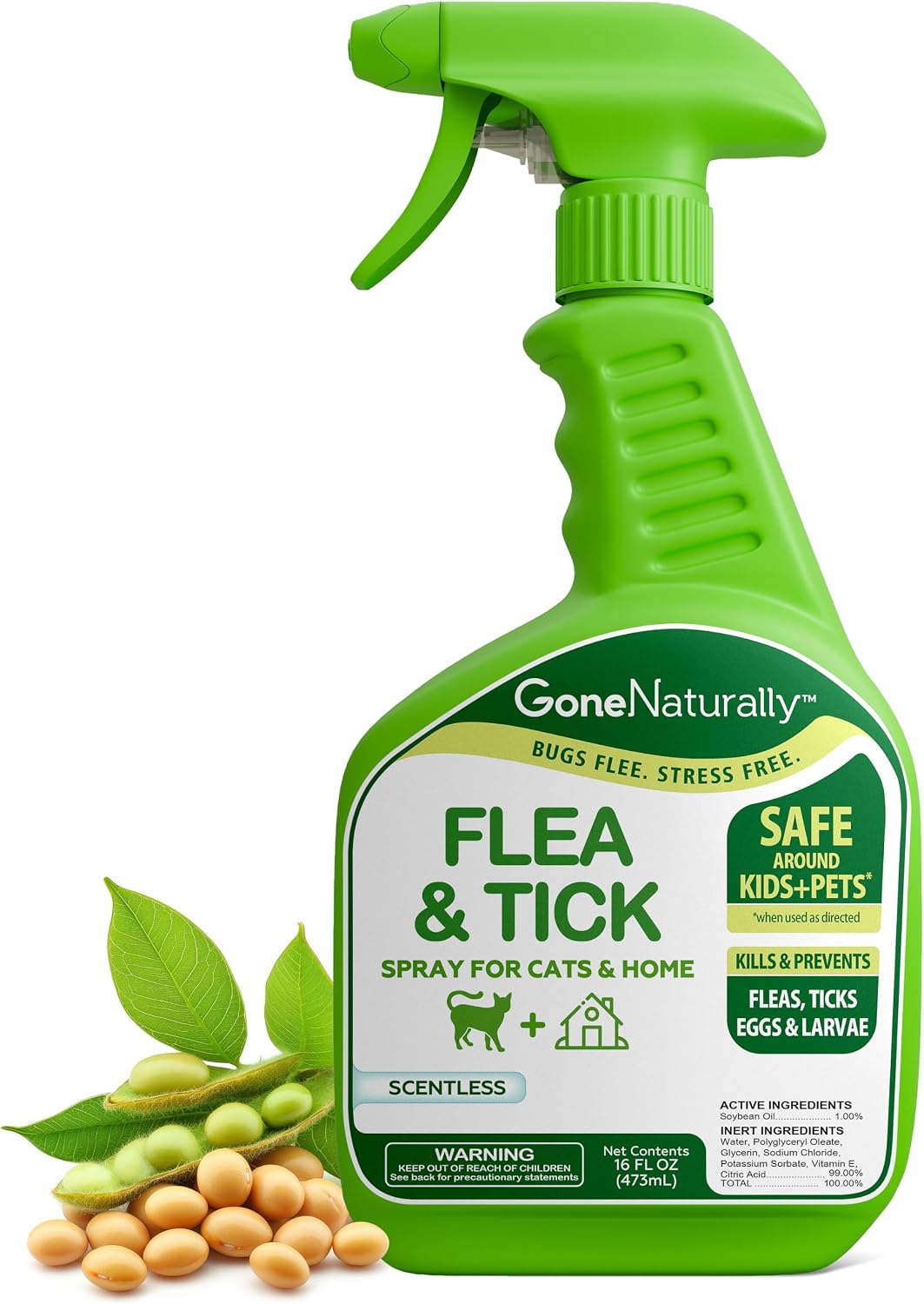
| Unit Count | 16 Fluid Ounces |
|---|---|
| Item Form | Spray |
| Scent Name | Unscented |
| Pet Type | Cat |
| Active Ingredients | Soybean Oil |
This scentless flea and tick spray uses soybean oil as the active ingredient so it can be applied to cats 12 weeks and older and also sprayed around bedding, carpets and furniture to target eggs and larvae. Typical use follows the brand’s 28-day plan: apply to your cat daily (rub into the coat so product reaches the skin) and treat home surfaces every other day while vacuuming and washing bedding to break the flea life cycle. The formula avoids essential oils, which makes it suitable for heat-sensitive cats and owners seeking a plant-based alternative to synthetic insecticides. Practical benefits include multi-surface use, clear directions for an integrated pet-plus-home routine, and an unscented finish that will not bother sensitive pets or people. Limitations are that it requires repeated daily and home treatments to be effective, one bottle may not be enough for larger infestations or multi-pet homes, and the label warns to avoid certain surfaces where staining could occur. Use alongside veterinary advice for severe infestations rather than as a sole emergency fix.
Best for: Buyers who prioritize a performance-focused, pet-safe approach to eliminate fleas across both animal and home and are willing to follow a disciplined multi-week treatment plan.
Less Ideal for: People needing an immediate one-time knockdown for severe infestations or those who prefer a single-dose veterinary prescription solution.
- Uses soybean oil rather than essential oils so it is formulated for cats and reduces risk of essential-oil toxicity
- Scentless formula that will not mask odors or bother sensitive pets and owners
- Designed for both pet and home treatment to address eggs and larvae where fleas reproduce
- Clear 28-day application plan and directions for treating bedding, carpets and furniture
- Requires daily application to the pet and repeated home treatments for at least 28 days to be effective
- Single 16 fl oz bottle may be insufficient for large homes or multiple animals
Verdict: Choose this spray if you want a scentless, soybean-oil treatment that targets fleas on both cats and home surfaces when used as a committed 28-day program.
Vet's Best Flea & Tick Home Spray for Cats, Cotton Spice — 96 oz Refill

| Unit Count | 96 Fluid Ounces |
|---|---|
| Item Form | Spray |
| Scent Name | Cotton Spice |
| Target Species | Cat |
| Active Ingredients | Clove Oil 0.05%, Cottonseed Oil 0.05% |
This Vet's Best 96 oz refill is a plant-powered home spray designed to control fleas, ticks, flea eggs, and mosquitoes on cats and in the household. It is typically used as a light mist applied to a cat's coat (after a spot test) or sprayed on bedding, carpets, rugs, and upholstery to reduce pest presence and break the flea life cycle. Notable features include certified natural active oils (clove and cottonseed) and a mild cotton spice scent; the label also emphasizes nonstaining formulation and specific application intervals for infestation control versus ongoing prevention. Practical benefits are its suitability for frequent environmental treatment, the large refill size for regular use, and a gentler alternative to chemical pesticides for owners seeking natural options. Important limitations are that it is intended only for cats 12 weeks and older, may cause sensitivity in some animals so testing a small area first is required, and it is meant to complement rather than fully replace veterinary treatments for severe infestations.
Best for: Buyers who prioritize practical, natural pest control and want a refill-sized indoor spray to maintain flea and tick prevention around cats and in the home.
Less Ideal for: Owners dealing with an active, heavy infestation who need fast, prescription-strength systemic treatment or immediate eradication should consult a veterinarian instead.
- Plant-based active ingredients (clove oil and cottonseed oil) for a gentler alternative to conventional pesticides
- Large 96 fl oz refill provides extended coverage for home and multiple treatments
- Labeled safe for use on cats 12 weeks and older and on bedding, carpets, and upholstery when used as directed
- Nonstaining formula with a mild cotton spice scent suitable for indoor use
- Not intended as a standalone solution for severe infestations and should be combined with veterinary treatments if needed
- Can cause sensitivity in individual cats so initial spot testing and observation are required
Verdict: Choose this large, plant-based refill if you want a gentler, home-focused flea and tick spray to maintain prevention around cats and household fabrics.
Hartz UltraGuard Plus Cat Flea & Tick Spray, 8 oz

| Unit Count | 8 Fluid Ounces |
|---|---|
| Item Form | Spray |
| Scent Name | Fresh |
| Target Species | Fleas, Ticks, Flea Eggs |
| Active Ingredients | Methoprene; Tetrachlorvinphos |
Hartz UltraGuard Plus is a budget-friendly cat spray that delivers quick-contact control of fleas and ticks plus an insect growth regulator to target eggs and larvae. The trigger sprayer produces a broad, gentle stream so you can mist a cat’s coat, bedding, or furniture and then rub the product through the fur; instructions recommend reapplying weekly if needed. Active ingredients include tetrachlorvinphos and methoprene, which together kill adults and interrupt immature stages, and the formula claims to start killing fleas within about 10 minutes. Practical benefits are straightforward: easy topical application without messy baths and the ability to treat both the pet and its environment. Limitations to note are that the product contains older active ingredients that some owners avoid, it requires weekly application rather than a long-lasting single dose, and cats with sensitivity may need a patch test first. For simple, low-cost outbreak control or maintenance in multi-pet households this spray is a usable option; for chronic heavy infestations or pets with special sensitivities consider veterinary products with different chemistries.
Best for: Shoppers who need an inexpensive, easy-to-apply flea control to treat occasional outbreaks and household areas and who prioritize low upfront cost over long-duration prescriptions.
Less Ideal for: Owners managing severe, recurring infestations, pets with known sensitivities, or those who prefer prescription-strength monthly treatments should consider alternatives.
- Contains an insect growth regulator plus adulticide to target eggs and larvae as well as adult fleas and ticks
- Trigger spray allows quick application to coat, bedding, and upholstery
- Starts killing fleas rapidly and can be used weekly for prevention
- Affordable 8 oz size suited to occasional treatments
- Uses older active ingredients that some pet owners prefer to avoid
- Requires repeat weekly applications rather than a single long-duration treatment
Verdict: A low-cost, easy-to-use spray that kills adult fleas and interrupts immature stages, making it a practical choice for budget-focused, at-home flea control.
Vet's Best Flea & Tick Home Spray for Cats, Cotton Spice, 32 oz

| Unit Count | 32 Fluid Ounces |
|---|---|
| Item Form | Spray |
| Scent Name | Cotton Spice |
| Target Species | Cat |
| Active Ingredients | Clove Oil 0.05% Cottonseed Oil 0.05% |
This 32 oz Vet's Best home spray uses a plant-powered formula (cottonseed and clove oils) to target fleas, flea eggs, ticks and mosquitoes on contact and can be applied lightly to a cat's coat or sprayed on bedding, carpets and furniture. Typical use is a short patch test on the cat, then two weekly applications for active infestations or once weekly for maintenance; the label includes directions for treating surfaces without staining. Practical benefits include a gentler alternative to chemical treatments, a pleasant cotton spice scent, and versatility to treat both pets and their environment so you can break the flea life cycle. Important limitations are that active ingredients are present at very low concentrations so it is best used alongside veterinary prevention for robust, long-term control, and the product can cause sensitivity in some animals or mild eye and skin irritation in people if misused. Follow label guidance for kittens, pregnant or medicated cats and consult your veterinarian for severe infestations.
Best for: Buyers who want a veterinarian-formulated, gentler alternative to chemical sprays and who prioritize treating both the pet and the home as part of an integrated flea control plan.
Less Ideal for: Owners dealing with a severe, established infestation who need a single, high-potency medical treatment or those who prefer systemic prescription options for long-term prevention.
- Plant-based formula that kills fleas, flea eggs, ticks and mosquitoes on contact
- Can be used on cats 12 weeks and older and on bedding, carpets and furniture for environment treatment
- 32 fluid ounce size suitable for multi-room or multi-cat use
- Cotton spice scent leaves a pleasant aroma and is formulated to be non-staining
- Active ingredients are low concentration so may be less effective as a standalone solution for heavy infestations
- Some cats or household members may show sensitivity or irritation after use
Verdict: A vet-formulated, plant-based indoor spray that lets you treat cats and their environment for routine flea and tick control while avoiding harsher chemicals.
Wondercide Flea, Tick & Mosquito Spray for Pets & Home, Rosemary, 16 fl oz

| Unit Count | 16 Fluid Ounces |
|---|---|
| Item Form | Spray |
| Scent Name | Rosemary |
| Active Ingredients | 4.2% Cedar Oil; 1.5% Rosemary Oil; 0.1% Sesame Oil |
Wondercide Rosemary spray is a plant‑powered topical and household spray designed to kill and repel fleas, ticks, and mosquitoes on pets and in the home. You apply it directly to fur by misting and rubbing through the coat for spot or whole‑body use, and you can also spray bedding, furniture, and play areas from 8 to 12 inches away. The formula lists cedar oil, rosemary oil, and sesame oil as active ingredients with water and mild surfactants as carriers, which makes it a low‑chemical alternative to conventional pesticides and suitable for use around families when directions are followed. Practical benefits include a pleasant rosemary scent, non‑staining water‑based formula, and a single product that treats both pets and living spaces. Limitations are that it is a contact‑kill product rather than a systemic treatment, so thorough application and repeated use are needed to break an infestation cycle, and it is not registered with the EPA as a traditional pesticide which may concern buyers wanting regulatory oversight. Follow the label for patch testing and avoid use on birds, reptiles, aquatic environments, or pets with compromised health.
Best for: Buyers who prioritize safer, plant‑based solutions and want a single spray for spot treatment of pets and to freshen and protect pet areas in the home.
Less Ideal for: Those who need a systemic or long‑lasting prescription strength flea treatment or who prefer products with full EPA pesticide registration.
- Plant‑based active ingredients (cedar oil, rosemary oil) offer a gentler alternative to conventional pesticides
- Can be applied to both pets and home surfaces, treating bedding, furniture, and play areas
- Water‑based, non‑staining formula with a mild rosemary scent
- Suitable for puppies, kittens, and senior pets when used as directed and after patch testing
- Kills by contact only, so it requires thorough and repeated application to control established infestations
- Not registered by the EPA as a conventional pesticide, which may be a concern for buyers seeking regulatory approval
Verdict: Choose this spray if you want a plant‑based, dual pet-and-home option that reduces pests by contact while avoiding harsh chemical treatments.
Choosing the Right Flea Spray for Home with Cats: Key Factors to Consider
Cat-Safe Labeling and Contact Guidance
Look for explicit labeling that addresses use in homes with cats and provides clear instructions about when cats can re-enter treated areas. Some sprays are formulated to be low-toxicity for felines but still require short reentry wait times to allow vapors to dissipate. Understand whether the product recommends removing cats from the room during application and for how long, and whether it specifies washing pet bedding or airing out rooms afterward.
Cats groom themselves frequently and can ingest residues by licking fur or cleaned paws. A label that explains direct contact risks, surface drying times, and any necessary post-application cleanup reduces uncertainty and helps you plan safe treatment without long displacements for indoor-only cats.
Indoor Surface Compatibility
Homes with cats include varied surfaces: wool rugs, synthetic carpets, hardwood floors, upholstered furniture, and pet beds. A useful flea spray will list which surfaces are safe for application and flag porous materials or finished wood where testing in an inconspicuous spot is advisable.
Consider how the spray behaves on fabric versus hard surfaces. Some formulas leave a light residue that repels fleas but may attract dust or alter fabric texture. Others dry clear and require no wiping. If you expect to treat bedding or frequent-contact items, prioritize sprays that note safe use on fabrics and washing guidance.
Lifecycle Control and Residual Action
Effective home flea control needs to address eggs and larvae as well as adult fleas. Look for sprays that include ingredients or synergists targeting multiple lifecycle stages or that recommend pairing with an insect growth regulator. Residual activity on carpets and crevices matters because flea eggs and larvae hide in fibers and behind baseboards; longer residuals can reduce how often you must retreat.
At the same time, longer residuals may mean more prolonged exposure risk for pets. Balance the benefit of extended control with safety guidance on residue contact times and whether routine vacuuming interferes with efficacy.
Application Method and Coverage Pattern
Spray nozzle type and recommended application pattern affect how thoroughly you can treat floors, furniture folds, and pet beds. A fine mist nozzle helps cover fabric evenly, while a stream setting may be better for targeted crevice work. Look for products that include clear instructions on sweep patterns, distance from the surface, and recommended number of passes for carpets.
Also consider whether the spray requires shaking, diluting, or mixing with water. Ready-to-use sprays are easier for quick treatments, while concentrates can be more economical but need accurate dilution to ensure both safety and effectiveness.
Residue, Odor, and Indoor Air Considerations
Indoor treatments affect air quality and household comfort. Some formulations have strong odors that linger, which can stress sensitive cats or people. Others dry quickly with minimal smell. Check whether the product recommends ventilating treated rooms and for how long.
Residue considerations include whether the spray leaves visible film, attracts dust, or soils light fabrics. If you have children or seniors at home, choose products with lower odor and minimal lingering particulate matter. Plan follow-up cleaning such as vacuuming or laundering pet bedding according to label instructions to reduce residual exposure.
Cleaning and Routine Integration
A practical flea-control plan pairs spray use with household routines like vacuuming, washing bedding, and regular litter box management. Some sprays work best when used immediately after vacuuming so they reach eggs and larvae exposed in carpet fibers. Others can be applied between cleanings to maintain a protective layer.
Consider how often you are willing to repeat treatments and whether the product instructions fit your cleaning schedule. Products that require extensive pre-treatment prep or long waiting periods before re-entry are less convenient for busy households with indoor-only cats.
Preparing Your Home Before Treatment
Start by removing cat food bowls and toys from the treatment area and moving litter boxes to an untreated space if possible. Vacuum carpets and upholstery thoroughly to remove adult fleas, eggs, and debris so the spray can reach deeper into fibers.
Launder pet bedding, throw blankets, and removable cushion covers in hot water. Open windows for a short period during and after application if the product label allows ventilation. Test the spray on an inconspicuous fabric patch if you are concerned about staining or texture changes.
- Vacuum seams, edges, and under furniture where flea eggs accumulate.
- Seal vacuum bag or empty canister contents away from the house to prevent reinfestation.
- Keep cats out of treated rooms until the product's specified re-entry time.
Targeting Hotspots: Where Fleas Hide Indoors
Fleas often concentrate in areas where pets rest: pet beds, carpet edges, under furniture, and along baseboards. Focus spray applications on these hotspots and on crevices where larvae can develop out of sight.
For multi-room infestations, treat connected living areas rather than isolated spots to interrupt the lifecycle. Follow label directions about treating upholstery and pet furniture; some products allow direct treatment of pet bedding only after washing.
- Treat around baseboards and under cushions where eggs collect.
- Spray pet sleeping areas and grooming stations with extra attention.
- Avoid saturating fabrics; use recommended distances and application counts.
Using Sprays Safely Around Cats
Always read and follow the product label for re-entry times, ventilation, and any post-application cleaning steps. If the label asks that cats be removed during application, place pets in a safe, ventilated room or with a caregiver until the area is dry and the re-entry interval has passed.
When allowing cats back into treated areas, inspect for wet or sticky residues on bedding or furniture. If residue is present and the label permits, launder or wipe the surface before letting cats resume normal contact.
- Avoid spraying directly on cats unless the product explicitly allows it.
- Keep food and water bowls covered or removed during treatment.
- Wash hands after handling treated fabrics or vacuum contents.
Integrating Spray Use with Ongoing Prevention
A single spray is rarely enough to eliminate an indoor infestation. Combine environmental treatment with routine pet flea prevention recommended by your veterinarian to lower the chance of reinfestation.
Schedule follow-up treatments according to the product's residual claims and your household activity. Regular vacuuming and laundering of pet items break the lifecycle by removing eggs and larvae exposed by the initial spray.
- Set a vacuuming schedule for high-traffic pet areas.
- Wash pet bedding weekly during active seasons.
- Reassess treatment frequency after four to six weeks and retreat if fleas persist.
When to Call a Professional
If heavy infestations persist despite repeated, label-compliant environmental treatments and pet prevention, professional pest control may be necessary. Professionals can access stronger options and have tools for treating hidden spaces like wall voids or deep-set carpet layers.
Before hiring help, document the steps you have taken and share the cat-safety constraints with the professional so they can propose a strategy that minimizes disruption to indoor-only pets.
- Note whether fleas persist despite proper re-entry intervals and vacuuming.
- Ask professionals about non-volatile or targeted treatments suitable for homes with cats.
- Confirm any planned chemicals and request clear instructions on cat re-entry and cleaning after treatment.
How We Chose the Best Flea Spray for Home with Cats
We focused on products formulated or labeled for indoor use around cats and that target multiple flea lifecycle stages rather than only adults. Selection prioritized clear safety information, including directions about reentry times, contact exposure, and ventilation needs. We filtered out sprays whose labels lacked explicit cat guidance or required removing cats for several days because those are impractical for multi-cat households. We also weighed real-world application factors that matter to owners: how well a spray covers carpets and upholstery, whether it is suitable for use on bedding and pet furniture, and whether it pairs with routine vacuuming or laundering. Additional editorial filters included ease of dosing and spray delivery, residue concerns for frequent use, and whether the formula is compatible with common indoor surfaces. Exclusions included outdoor-only products, treatments intended solely for carpets without surface disinfection claims, and sprays with unclear instructions about cat contact. The final picks reflect a balance of pet safety, indoor coverage, lifecycle control, and user-friendly application.
FAQ
Are flea sprays safe to use in homes with indoor-only cats?
Often they are safe when the label specifies cat use and you follow re-entry and ventilation instructions. Some sprays require pets to be out of the room only until surfaces are dry. Always follow the specific product guidance and consult your veterinarian with concerns.
How long should I keep cats out of a room after spraying?
It usually depends on the product and can range from until the spray dries to several hours. Check the label for the recommended re-entry time and avoid letting cats back in until that period has passed and any strong odors have dissipated.
Can I spray pet bedding and furniture directly?
Some sprays are labeled for direct application to pet bedding and upholstery, often with guidance to launder bedding before reuse. If the label does not allow direct treatment, remove and wash fabrics or treat surrounding areas instead.
Will vacuuming remove the need to spray?
Vacuuming helps remove eggs, larvae, and adults and improves spray penetration, but it rarely replaces environmental treatment. Most infestations require a combined approach of vacuuming, laundering, and targeted spray applications to interrupt the flea lifecycle.
How many treatments does a typical home need to control fleas?
It depends on infestation severity. Light cases may clear after one or two treatments spaced according to label directions, while heavier infestations may need repeated applications over several weeks plus consistent vacuuming and pet prevention.
What should I do if my cat shows signs of illness after a spray?
Remove the cat from the area and provide fresh air. Contact your veterinarian promptly and bring the product label or information so the vet can assess potential exposure. Follow any veterinary instructions for cleaning or monitoring symptoms.
Final Verdict
Prioritize sprays that clearly address safe indoor use with cats, list compatible surfaces, and offer lifecycle control to reduce repeat treatments. Balance the desire for long residual protection against label guidance for re-entry and residue management so your pets stay safe while you control fleas. With careful selection and consistent follow-through-vacuuming, laundering, and following application directions-you can regain a flea-free home without undue risk to indoor cats.
