

Note: This article contains affiliate links. If you click on these links and make a purchase, I may earn a small commission at no extra cost to you. This helps support my research and content. Read my full affiliate disclosure here.
Picking the right topsoil for vegetable gardens changes how well your beds hold moisture, feed plants, and resist compaction across the season. Whether you are planting raised beds, in-ground rows, or container gardens, the wrong soil mix wastes seed, fertilizer, and time. This guide shortlists six strong topsoil options suited for vegetable gardens and evaluates them against practical gardener concerns like texture, nutrient retention, and drainage. Read on to understand the characteristics that matter and how each criterion affects growth before you choose the best soil for your plot.
Top Picks at a Glance
| Best Overall The best all-around choice for most situations | Garden Magic Michigan Peat Organic Potting Top Soil Blend, 40 lb |  |
| Best Quality Built to a higher standard if you want something more solid | FoxFarm Raised Bed Planting Mix, 1.5 cu ft |  |
| Best Value The sweet spot between price and what you get | Espoma Organic Vegetable & Flower Garden Soil Mix, 1 cu ft |  |
| Best Budget The cheapest option that still gets the job done reliably | Premium Topsoil 0.75 cu. ft. Lawn and Garden Top Soil with Peat Moss |  |
| Highest Rated A top-rated pick with lots of positive feedback | E.B. Stone Organics Raised Bed & Potting Mix, 2 cu ft |  |
| Most Popular A crowd favorite that many people choose with confidence | Miracle-Gro Organic Outdoor Potting Mix, 16 qt. |  |
Garden Magic Michigan Peat Organic Potting Top Soil Blend, 40 lb

| Volume | 40 liters |
|---|---|
| Unit Count | 1 Count |
| Included Components | Michigan Peat – 5540 – 40lb |
| Item Highlight | Dark Reed Sedge Peat and Sand – Moisture Retaining Mix |
This 40 lb Garden Magic topsoil blend is a straightforward, multipurpose soil for patching lawns, filling raised beds, and routine potting tasks. It combines dark reed sedge peat with sand to hold moisture while allowing excess water to drain, so seedlings and established plants avoid both drought stress and waterlogging. Because it is sold ready-to-use, you can apply it straight from the bag to fill holes, refresh container mixes, or amend heavy clay and light soils to improve structure. Practical gardeners will appreciate its useful volume in a manageable bag and its suitability for indoor and outdoor projects. Limitations are that it is a general-purpose mix rather than a specialty fertilizer or heavily amended planting mix, so heavy-feeding crops or long-term container plantings may still need extra compost or nutrients. For larger landscaping jobs you will need multiple bags or bulk quantities since the product comes in 40 lb units.
Best for: Buyers who want a dependable, easy-to-use topsoil for routine garden maintenance, patching lawns, and general bed or container refreshes without special soil preparation.
Less Ideal for: Gardeners seeking a high-nutrient, specialty potting mix for heavy-feeding vegetables or long-term container specimens should consider amended or fertilized blends instead.
- Ready-to-use out of the bag for indoor and outdoor planting
- Blend of reed sedge peat and sand balances moisture retention and drainage
- Useful for improving heavy clay or light soils as a top dressing
- Versatile for lawns, raised beds, containers, and general garden repair
- Not formulated as a nutrient-rich or fertilized potting mix for long-term container culture
- Sold in 40 lb bags, so larger projects require multiple bags or bulk sourcing
Verdict: A practical, ready-to-use topsoil blend that reliably improves drainage and moisture retention for everyday garden patching and bed refreshes.
FoxFarm Raised Bed Planting Mix, 1.5 cu ft

| Brand Name | FoxFarm |
|---|---|
| Volume | 1.5 cubic feet |
| Style Name | Raised Bed |
| Ingredients | Aged forest products, sphagnum peat moss, earthworm castings, oyster shell, dolomite lime |
This FoxFarm Raised Bed Planting Mix is a premixed soil blend intended for filling raised beds and containers without additional amendments. It mixes aged forest products and sphagnum peat moss for moisture retention and aeration, with earthworm castings, oyster shell, and dolomite lime supplying slow-release nutrients and pH buffering. Typical use is simple: fill your raised bed or pot, plant seedlings or transplants, and water; the mix is designed to hold moisture while still draining to avoid waterlogging. The clear benefits are convenience and a balanced starting environment for vegetables and herbs, which can reduce the need for immediate fertilizing and heavy soil amendments. Limitations include the small 1.5 cubic foot bag size for larger beds and the presence of peat which may concern gardeners favoring peat-free or fully organic-certified media. Also, heavier-feeding crops may still require supplemental fertilization later in the season.
Best for: Gardeners who want a convenient, plant-ready soil that gives vegetable beds and containers a balanced, nutrient-holding foundation without extra mixing or complex preparation.
Less Ideal for: Large-scale growers or those filling full-size raised beds who need bulk soil or prefer peat-free mixes should look for bigger-volume or alternative formulations.
- Ready-to-use blend eliminates mixing and speeds planting
- Formulated for raised beds and containers to balance moisture retention and drainage
- Includes earthworm castings and oyster shell for slow-release nutrients and mineral support
- Contains dolomite lime to help stabilize pH for many vegetable crops
- Small 1.5 cu ft bag requires multiple bags for typical raised beds
- Contains sphagnum peat moss, which some gardeners avoid for environmental reasons
Verdict: Buy this if you want a convenient, nutrient-rich, ready-to-use soil that jumpstarts raised bed vegetable and container gardens.
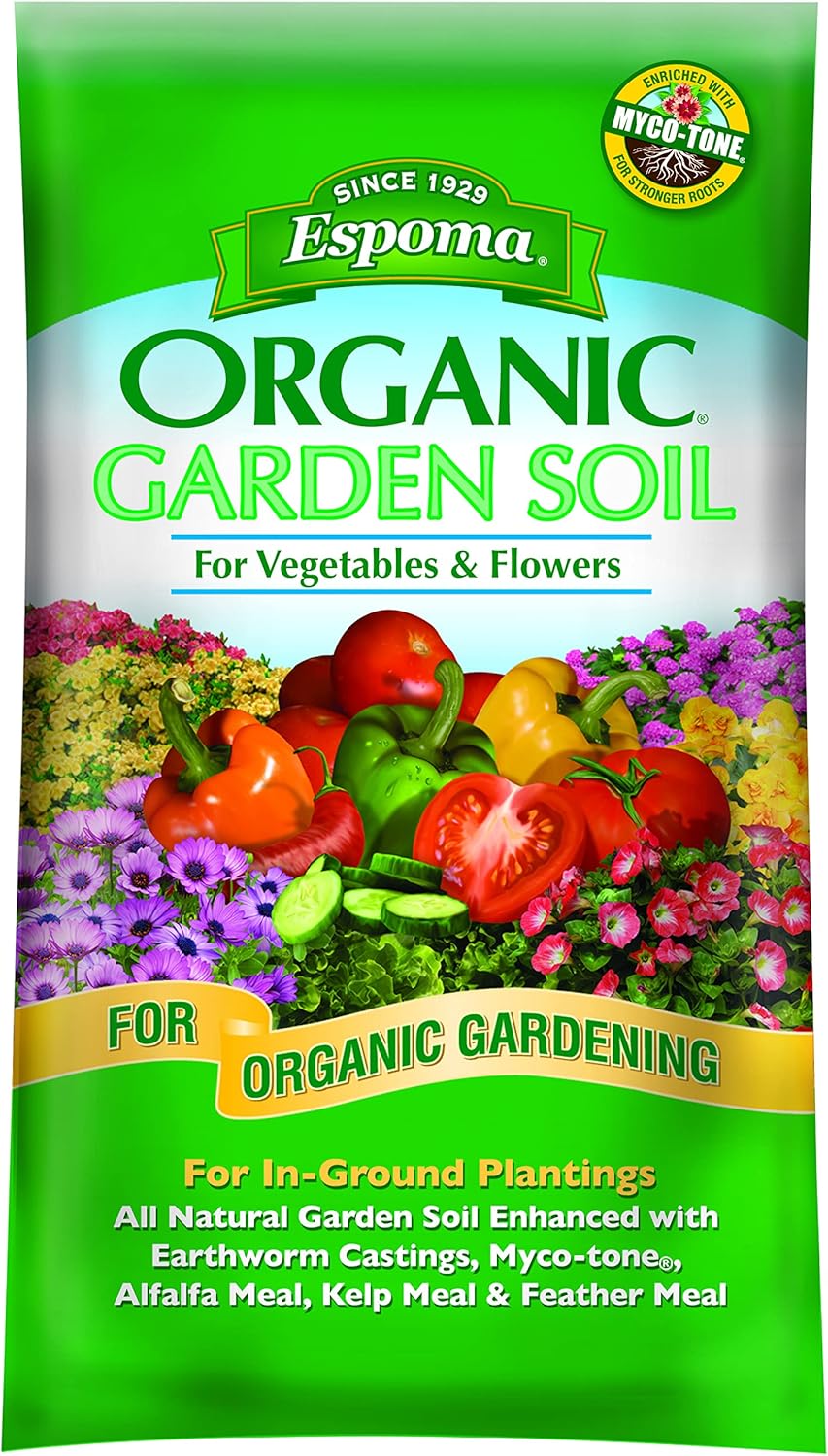
Espoma Organic Vegetable & Flower Garden Soil Mix, 1 cu ft
| Volume | 1 cubic feet |
|---|---|
| Style Name | Peat Moss |
| Unit Count | 1536 Ounce |
Espoma Organic Vegetable & Flower Garden Soil is a 1 cubic foot, peat-based planting mix designed to be blended into native garden soil at planting or transplanting. It contains Canadian sphagnum peat moss, earthworm castings, alfalfa meal, kelp meal, feather meal, limestone for pH adjustment, and a mycorrhizal blend to help root establishment. In practice you work a few inches of this mix into planting holes or rows to loosen dense soil, add organic matter, and give young squash transplants a nutrient-rich root zone. The organic amendments supply slow-release nutrients and biological activity that support early growth, while the mycorrhizae improve water and nutrient uptake. Limitations to note are the peat-heavy base, which dries faster than compost-rich mixes and may require more frequent watering, and the small 1 cu ft bag size that means multiple bags are needed for larger beds. For gardeners who prefer organic inputs and want an easy-to-use planting mix to boost transplant success, this product is straightforward and effective.
Best for: Gardeners who prioritize organic inputs and want a convenient planting mix to boost transplant success for vegetables like squash in established beds.
Less Ideal for: Large-scale landscapers or gardeners needing bulk soil amendments for entire raised beds who prefer compost-rich mixes or peat-free alternatives.
- Formulated with organic amendments like earthworm castings, alfalfa meal, kelp meal, and feather meal for slow-release nutrients
- Contains a mycorrhizal blend to support root establishment and improved nutrient uptake
- pH adjusted with limestone to better suit common garden plants
- Ready-to-use planting mix that blends easily with native soil when transplanting
- Peat-heavy base can dry out faster than compost-rich mixes, increasing watering frequency
- Small 1 cubic foot bag requires many bags for larger squash beds
Verdict: A compact, organic planting mix that makes transplanting squash easier by giving young roots nutrient-rich, biologically active soil.
Premium Topsoil 0.75 cu. ft. Lawn and Garden Top Soil with Peat Moss

| Unit Count | 1 Ounce |
|---|---|
| Number of Packs | 1 |
| Brand Name | Generic |
| Manufacturer | Scotts |
This topsoil bag is a straightforward lawn and garden soil conditioner blended with peat moss to improve texture and water retention. It is typically used to topdress thin areas of lawn, fill small low spots, or refresh planting beds before seeding or transplanting. The peat moss content helps the soil hold moisture and makes it easier to work with when spreading by hand or with a rake. Because the bag is a smaller 0.75 cubic foot unit, it is convenient for spot repairs and small projects where hauling bulk soil would be impractical. Important limitations are its small volume per bag, which means larger lawn restorations will require many bags and extra handling, and the product details do not include nutrient analysis or pH so buyers wanting a tailored fertilization plan will need to test soil separately. Safety notes recommend avoiding dust inhalation and keeping the product away from children and pets during use.
Best for: Homeowners doing small repairs, spot topdressing, or single-bed refreshes who want an easy-to-handle soil option without buying bulk loads.
Less Ideal for: People restoring or resodding large lawns or contractors who need bulk quantities and detailed soil specifications should choose bulk topsoil or tested mixes instead.
- Contains peat moss to improve moisture retention and soil texture
- Smaller 0.75 cu ft bag is easy to carry and suitable for spot repairs
- Works as a general soil conditioner for topdressing and bed refreshes
- Small bag size makes it inefficient for large lawn projects
- No nutrient analysis or pH information provided
Verdict: A convenient small-bag topsoil with peat moss that makes quick spot repairs and bed touch-ups easy for budget-minded homeowners.
E.B. Stone Organics Raised Bed & Potting Mix, 2 cu ft

| Brand | E.B. Stone Organics |
|---|---|
| Volume | 2 cubic feet |
This 2 cubic foot bag of E.B. Stone Organics Raised Bed & Potting Mix is a ready-to-use, organic garden soil designed for raised beds, large containers, and vegetable planting. The blend combines compost, coir, pumice, earthworm castings, and mycorrhizae to create a loose, living medium that drains well while retaining moisture and nutrients. Use it straight from the bag to fill beds or top up planters, or mix it into native soil to improve structure and fertility. Notable features are the inclusion of biological amendments like castings and mycorrhizae and the coarse components that help aeration and drainage for vegetable roots. Practical benefits include a lower need for immediate fertilizer thanks to compost content and easier transplanting and root development due to the friable texture. Limitations are typical for organic mixes: nutrient levels will vary naturally so occasional feeding may be needed for heavy-feeding crops, and a 2 cu ft bag is best for patching or small beds rather than filling very large raised beds without multiple bags.
Best for: Buyers who prioritize a dependable, organic base soil for raised beds and container vegetable gardens and want a low-maintenance, biologically active mix to promote steady plant growth.
Less Ideal for: Gardeners who need a nutrient-rich, ready-to-harvest solution without any supplemental feeding or those filling very large commercial beds in a single purchase.
- Formulated specifically for raised beds and large containers
- Contains compost and earthworm castings to support soil biology
- Includes coir and pumice for balanced moisture retention and drainage
- Contains mycorrhizae to help root establishment and nutrient uptake
- 2 cubic feet per bag may require multiple bags for larger beds
- Organic nutrient levels are variable so supplemental fertilizing can be necessary
Verdict: A dependable, biologically rich ready-to-use soil blend that simplifies establishing productive raised beds and container vegetable gardens.
Miracle-Gro Organic Outdoor Potting Mix, 16 qt.

| Volume | 16 qt. |
|---|---|
| Item Highlight | Plant Soil For Outdoor Container Plants, Contains Quick-Release Natural Fertilizer, OMRI Listed |
| Manufacturer | Scotts Miracle Gro |
This 16 qt. Miracle-Gro Organic Outdoor Potting Mix is designed specifically for outdoor container plants and is useful for planting strawberries in pots. The mix contains responsibly sourced peat and upcycled green waste and includes a quick-release natural fertilizer that feeds for up to two months, which helps young strawberry plants establish and start producing. It is OMRI listed so it fits an organic container-gardening approach. Typical use is to partially fill a 12-inch pot, set the plant with a loosened root ball, add more mix, and water thoroughly; a single bag is sized to fill about one 12-inch container. Practical benefits include moisture retention suitable for exposed pots and a built-in starter nutrient charge so you may not need immediate additional feeding. Important limitations are that nutrients last about two months so plan a feeding schedule for fruiting plants and that peat-based mixes can compact over time, so repotting or refreshing the soil biannually is recommended for continued vigor.
Best for: Gardeners who want an organic-ready potting mix for outdoor container strawberries and prefer a product that gives an initial nutrient boost while simplifying first-season care.
Less Ideal for: Growers who need a long-term, self-sustaining soil blend for mature strawberry beds or those who avoid peat entirely should consider alternatives.
- OMRI listed and made with responsibly sourced peat suitable for organic container gardening
- Includes quick-release natural fertilizer that feeds plants for up to two months
- Formulated to retain moisture for outdoor containers exposed to sun and wind
- Contains upcycled green waste and is locally crafted to reduce transport distance
- Fertilizer effect is limited to about two months so additional feeding is needed for ongoing fruiting
- Peat-based mix can compact over time and requires bi-annual repotting to refresh structure
Verdict: A convenient OMRI-listed container potting mix that gives outdoor strawberry starters an organic nutrient boost and good moisture retention for the first months.
Choosing the Right Topsoil for Vegetable Gardens: Key Factors to Consider
Texture and Particle Size
Texture controls how easily roots move through soil and how well the soil resists compaction. For vegetable gardens, a loamy balance of sand, silt, and clay gives both drainage and stability so roots can explore for nutrients and water.
Very coarse or very fine particles create problems. Coarse sandy soils drain too quickly and hold little nutrient, requiring more frequent watering and feeding. Very fine, clay-dominant topsoil can compact and restrict root growth, causing waterlogging and poor aeration. When assessing topsoil, look for descriptions or lab results that indicate a loamy or sandy-loam texture and test small batches in a bucket to feel how it crumbles and retains moisture.
Organic Matter and Nutrient Retention
Organic matter feeds soil biology and buffers nutrients so plants get a steady supply across the season. Topsoils with moderate organic content improve aggregation, increase cation exchange capacity, and help retain applied fertilizer and natural nutrients.
Too little organic matter means frequent fertilizing and poorer soil life. Too much undecomposed material may pull nitrogen from plants as it breaks down. Prefer well-aged compost or stabilized organic matter that contributes to nutrient retention without causing temporary nitrogen drawdown.
Drainage and Water-Holding Balance
Vegetables benefit from soils that drain excess water after heavy rain but still hold enough moisture between waterings. The right topsoil balances pore sizes so larger pores move excess water out and smaller pores retain moisture for roots.
If your garden site tends to stay wet, choose soils that emphasize drainage and have visible coarse material or perlite-like components. For dry sites, seek soils with higher organic matter and finer pore distribution to hold water. Matching the soil to your microclimate reduces plant stress and irrigation frequency.
Weed Seed and Pathogen Cleanliness
Topsoil that contains weed seeds or plant pathogens increases your workload and can introduce problems that persist for seasons. Clean screened topsoil or products explicitly tested for low seed count reduce the risk of introducing perennial weeds or disease inoculum to new beds.
Inspect product descriptions for screening, pasteurization, or lab testing claims and consider a small germination test at home by moistening a sample and watching for sprouts. Starting with clean soil lowers maintenance and keeps young transplants from competing with volunteer weeds.
Consistency and Bag Uniformity
When filling multiple beds or topping up beds across a season, consistency between batches matters. Variability in particle mix, moisture content, or organic content leads to uneven growth and different watering needs across the garden.
Reliable topsoil suppliers use standardized blending and screening processes. If you must buy multiple deliveries, keep records of lot details and mix batches together to reduce variability across beds.
pH and Contaminant Testing
Soil pH affects nutrient availability for vegetables, and contaminants like heavy metals can be a health concern in urban or unknown-source soils. Topsoils intended for vegetable gardens should have pH information or be easily adjustable with lime or sulfur.
Choose topsoil from sources that disclose testing for common contaminants if you garden in areas with industrial history or on fill sites. If documentation is unavailable, plan to test the soil after installation and adjust with amendments or choose raised beds with an approved soil blend.
Preparing Your Bed Before Adding Topsoil
Remove existing turf, large roots, and construction debris before bringing in new topsoil. Work to a depth that matches the intended root zone for your vegetables, usually 8 to 12 inches for many annual crops.
Roughly loosen compacted subsoil to improve drainage and root penetration. If you are topping an existing bed, blend the new topsoil with the native layer rather than simply adding a thin cap which can create a barrier.
- Clear the area of perennial weeds and roots
- Loosen compacted layers with a fork or tiller in dry conditions
- Blend new topsoil with existing soil for a gradual transition
How Much Topsoil Do You Need
Estimate volume by measuring bed length, width, and target depth, then convert cubic feet to the unit used by your supplier. For raised beds, aim for at least 12 inches of high-quality topsoil for most vegetables; deeper-rooted crops like carrots or parsnips benefit from 18 inches.
Remember to account for settling and decomposition. Freshly placed topsoil often settles a bit, especially if it has high organic content, so add a small buffer to avoid shortfalls during planting.
- Measure dimensions before ordering
- Add 10 to 15 percent extra for settling
- Deeper beds for root vegetables improve yields
Adjusting Topsoil With Amendments
Even good topsoil sometimes needs tweaks. If the soil is too sandy, add compost and fine organic matter to improve water-holding capacity. If it is heavy and clay-rich, incorporate coarse sand and mature compost to open up structure.
Use a basic soil test to guide amendment choices rather than guessing. Lime or sulfur can correct pH, while compost and rock phosphate adjust long-term fertility.
- Use compost to increase organic content gradually
- Match amendments to soil test results
- Avoid over-amending with raw high-carbon materials that tie up nitrogen
Using Topsoil in Containers and Raised Beds
Topsoil for in-ground beds differs from mixes designed for containers. For containers and shallow raised beds, blend topsoil with compost and a drainage component to create a lighter, more porous mix that still holds nutrients.
Prioritize mixes that drain freely in pots to prevent root rot while delivering enough organic material to sustain vegetables between feedings.
- Blend topsoil with compost and pumice for pots
- Ensure adequate drainage holes
- Top up containers with fresh mix each season to replace lost organic matter
Seasonal Considerations When Installing Topsoil
The best time to add topsoil is during a window when the ground is workable and not saturated. Avoid installing when the site is waterlogged, as added soil can compact and settle poorly.
Fall installations let winter freeze-thaw cycles help settle and integrate the new soil, while spring installations give you a fresh planting surface. Plan around weather and planting dates to minimize disturbance after installation.
- Avoid working wet soils to prevent compaction
- Use fall for large additions to allow integration
- Start beds early in spring if you need immediate planting
How We Chose the Best Topsoil for Vegetable Gardens
We focused on attributes gardeners can verify and measure rather than marketing claims. Our selection filtered for topsoils formulated or suitable for edible beds and excluded blends intended only for ornamentals or erosion control. Key evaluation criteria included particle texture and structure to assess root penetration and compaction risk; nutrient retention and organic content to judge immediate and sustained fertility; drainage and water-holding balance to prevent both drought stress and root rot; weed seed content and cleanliness to reduce establishment work; and consistency and bag-to-bag uniformity for predictable results across multiple purchases. We also considered sourcing transparency and whether the product described testing for contaminants, but products without clear sourcing were excluded. The result is a list of six topsoil options that meet these practical filters and perform well on the specific gardener-focused dimensions we describe in the scoring criteria.
FAQ
How soon can I plant vegetables after adding new topsoil?
You can often plant immediately if the topsoil is screened and balanced, but wait a few weeks if the soil contains fresh uncomposted organic material. Fresh high-carbon amendments can temporarily reduce available nitrogen, so allow time for decomposition or add a starter fertilizer if planting right away.
Should I use topsoil alone or mix with compost for vegetable beds?
Mixing topsoil with compost is usually beneficial. Compost improves nutrient content and soil biology, while topsoil provides structure. A common approach is to blend 25 to 40 percent compost into topsoil for new vegetable beds, adjusting based on soil tests.
How do I test topsoil for contaminants or suitability?
Collect a composite sample from several spots in the area and send it to a local extension or certified lab for pH, nutrient, and contaminant testing. For urban or unknown-source soils, specifically request heavy metal screening if you will grow root crops or leafy greens eaten raw.
Can I use topsoil with high organic matter in raised beds?
Yes, soils with higher organic matter are generally good for raised beds but ensure the organic matter is well-aged. Very fresh or uncomposted material can cause nitrogen drawdown and uneven settling, so prefer stabilized compost blends.
How often will I need to top up or replace garden topsoil?
Top up annually or every few years depending on cropping intensity and erosion. Heavy feeding and multiple crop cycles gradually deplete organic matter, so plan for periodic additions of compost or fresh topsoil to maintain fertility and structure.
Final Verdict
Choose topsoil that matches your garden site and crop needs rather than picking the richest-sounding option. Prioritize appropriate texture, balanced drainage, and reliable organic content to minimize extra amendment work and reduce watering stress. Also factor in cleanliness and consistency so new beds establish quickly and behave predictably across the garden. By focusing on the practical criteria outlined here, you can select a topsoil that supports healthy root systems and steady yields. Match the soil to your planting method, test and amend as needed, and you will get the best long-term results from your vegetable garden.
