

Note: This article contains affiliate links. If you click on these links and make a purchase, I may earn a small commission at no extra cost to you. This helps support my research and content. Read my full affiliate disclosure here.
Getting the right bagged topsoil for growing grass changes how quickly seed or sod takes hold and how even your lawn looks. The wrong texture or nutrient profile can stunt seedlings, create drainage problems, or force you into repeated overseeding. This guide looks at a shortlist of top-performing bagged topsoil options chosen for lawn use, focusing on the mixes that work best for seeding, patching, and leveling. We evaluated each product for particle texture, nutrient content, and how it behaves when spread and watered. Below you will find concise reasons these picks made the list and the evaluation criteria we used to compare them before the product entries.
Top Picks at a Glance
| Best Quality Built to a higher standard if you want something more solid | Scotts Turf Builder LawnSoil, 1 cu. ft. |  |
| Best Value The sweet spot between price and what you get | Garden Magic Michigan Peat Organic Potting Topsoil Mix, 40 lb (4-Pack) |  |
| Best Budget The cheapest option that still gets the job done reliably | Premium Topsoil 0.75 cu. ft. Lawn and Garden Top Soil with Peat Moss |  |
| Highest Rated A top-rated pick with lots of positive feedback | Coast of Maine Monhegan Blend Organic Topsoil (1 cu ft) |  |
| Most Popular A crowd favorite that many people choose with confidence | Garden Magic Michigan Peat Organic Potting Top Soil Blend, 40 lb |  |
| Best Seller A high-volume bestseller chosen again and again | Scotts Turf Builder LawnSoil, 1 cu ft (2-pack) |  |
Scotts Turf Builder LawnSoil, 1 cu. ft.

| Brand | Scotts |
|---|---|
| Volume | 1 cubic feet |
| Item Weight | 32.7 pounds |
Scotts Turf Builder LawnSoil is a ready-to-use topsoil blend formulated to help new grass establish faster and thicker. It combines premium soil ingredients with starter fertilizer so you can spread it over seed, sod or plugs to improve germination and early root growth. In practice it is easy to use: rake a thin layer over bare patches or rototill into the topsoil before overseeding, then water as directed. The product emphasizes moisture retention, which helps seedlings through dry periods, and the built-in nutrients remove the need to apply a separate starter feed right away. Limitations are its single-cubic-foot bag size, which means many bags are needed for larger yards, and it is a surface/establishment product rather than a long-term soil amendment for structural problems. Also follow the handling instructions for fertilizer-containing soils and use gloves when spreading.
Best for: Buyers who want a simple, low-risk way to thicken or repair a lawn with minimal extra products and hands-on soil mixing.
Less Ideal for: People managing large lawns who need bulk topsoil for wide coverage or gardeners needing to amend subsoil or resolve drainage and compaction problems.
- Contains starter fertilizer to support early root and shoot development
- Formulated to improve moisture retention for better seed germination
- Suitable for use with seed, sod and grass plugs
- Ready-to-use blend that removes the need for immediate separate fertilizing
- Sold in 1 cu ft bags which is inefficient for large-area projects
- Not designed to fix deep soil structure or drainage issues
Verdict: A convenient, fertilizer-enhanced topsoil ideal for homeowners who want an easy, reliable product to establish thicker grass in small to moderate lawn repairs.
Garden Magic Michigan Peat Organic Potting Topsoil Mix, 40 lb (4-Pack)

| Unit Count | 2560 Ounce |
|---|---|
| Number of Packs | 4 |
| Brand Name | Garden Magic |
| Volume | 40 liters |
This Garden Magic Michigan Peat topsoil mix is a general-purpose, ready-to-use soil sold in 40 lb bags intended for potting, top dressing, and garden beds. The dark blend of reed sedge peat and sand helps retain moisture while still allowing excess water to drain, so it can benefit container plants, raised beds, and as a soil conditioner to loosen heavy clay or improve light soils. It comes in a four-pack that suits larger projects or seasonal refreshes. Practical benefits include simple out-of-the-bag use with no amendments required for many houseplants and landscape tasks, and its moisture-retaining formula reduces the need for frequent watering in drier periods. Important limitations are that it is a general-purpose mix rather than a specialized potting soil with added fertilizers or pH adjustments, so heavy feeders or specific plants may need additional nutrition or amendments. Handle with basic precautions because it is a natural product and can cause irritation if inhaled or in contact with eyes or skin.
Best for: Buyers who want a reliable, no-fuss topsoil for common gardening tasks like potting, top dressing, and soil improvement and prefer a product that reduces frequent watering.
Less Ideal for: Gardeners seeking a nutrient-rich, plant-specific potting mix or those needing precise pH or fertilizer content should consider specialized soils instead.
- Ready-to-use formula suitable for indoor and outdoor planting
- Blend of reed sedge peat and sand that balances moisture retention and drainage
- Useful for improving soil structure in heavy clay or light soils
- Sold in a multi-bag pack convenient for larger projects or repeat use
- Not formulated with added fertilizers or plant-specific amendments
- Natural components can irritate skin or lungs if handled without protection
Verdict: A dependable, ready-to-use 40 lb topsoil option that improves moisture retention and soil structure for everyday potting and garden projects.
Premium Topsoil 0.75 cu. ft. Lawn and Garden Top Soil with Peat Moss

| Unit Count | 1 Ounce |
|---|---|
| Number of Packs | 1 |
| Brand Name | Generic |
| Manufacturer | Scotts |
This topsoil bag is a straightforward lawn and garden soil conditioner blended with peat moss to improve texture and water retention. It is typically used to topdress thin areas of lawn, fill small low spots, or refresh planting beds before seeding or transplanting. The peat moss content helps the soil hold moisture and makes it easier to work with when spreading by hand or with a rake. Because the bag is a smaller 0.75 cubic foot unit, it is convenient for spot repairs and small projects where hauling bulk soil would be impractical. Important limitations are its small volume per bag, which means larger lawn restorations will require many bags and extra handling, and the product details do not include nutrient analysis or pH so buyers wanting a tailored fertilization plan will need to test soil separately. Safety notes recommend avoiding dust inhalation and keeping the product away from children and pets during use.
Best for: Homeowners doing small repairs, spot topdressing, or single-bed refreshes who want an easy-to-handle soil option without buying bulk loads.
Less Ideal for: People restoring or resodding large lawns or contractors who need bulk quantities and detailed soil specifications should choose bulk topsoil or tested mixes instead.
- Contains peat moss to improve moisture retention and soil texture
- Smaller 0.75 cu ft bag is easy to carry and suitable for spot repairs
- Works as a general soil conditioner for topdressing and bed refreshes
- Small bag size makes it inefficient for large lawn projects
- No nutrient analysis or pH information provided
Verdict: A convenient small-bag topsoil with peat moss that makes quick spot repairs and bed touch-ups easy for budget-minded homeowners.
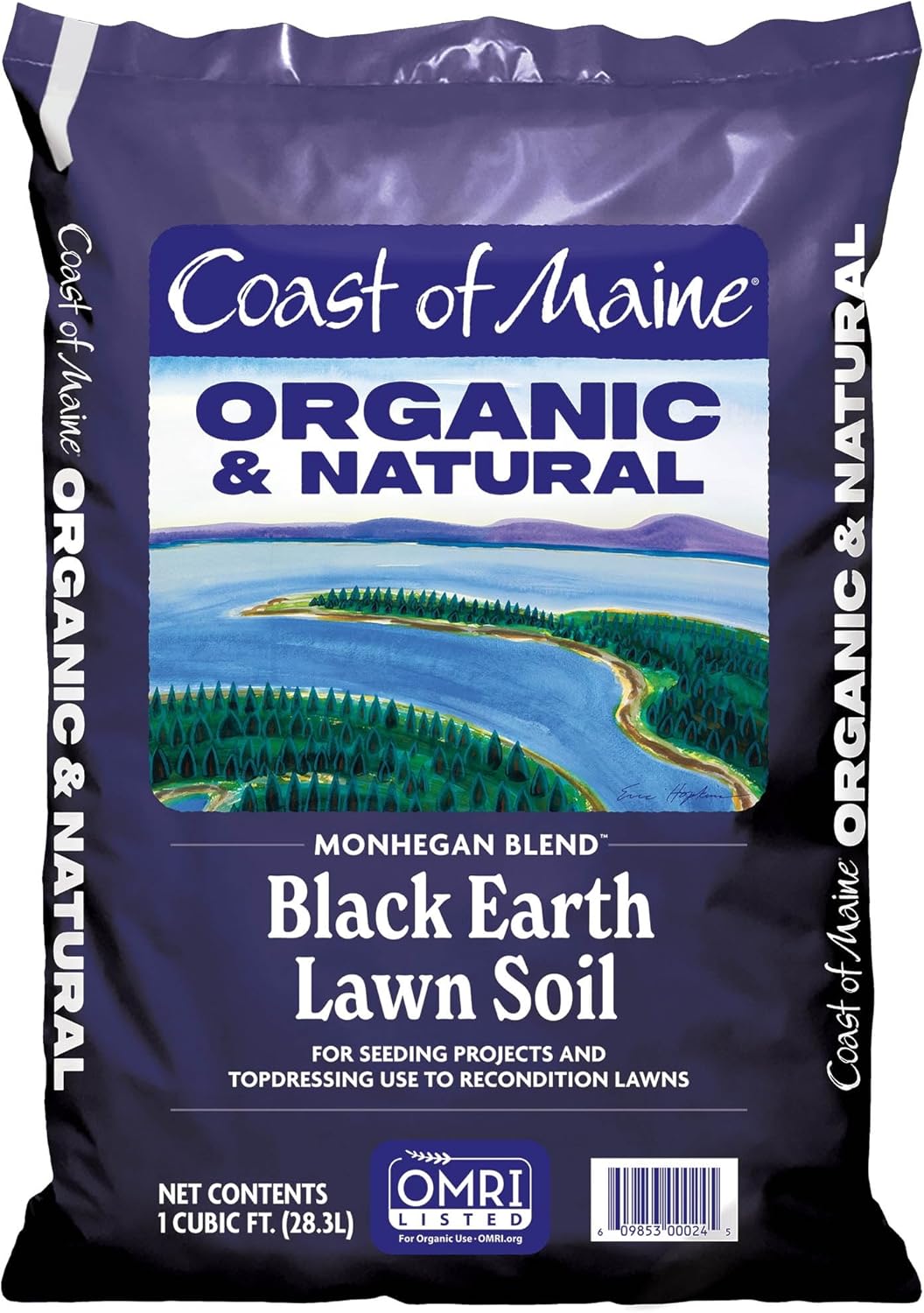
Coast of Maine Monhegan Blend Organic Topsoil (1 cu ft)
| Unit Count | 1 Count |
|---|---|
| Volume | 1 cubic feet |
| Main Ingredients | Composted farm manures, sphagnum peat moss, aged bark |
| Made in | United States |
Coast of Maine Monhegan Blend is an organic topsoil formulated from composted farm manures, sphagnum peat moss, and aged bark that works well for reconditioning lawns and filling thin or bare patches. Typical use is as a topdressing or spot repair material: spread a thin layer over the turf or bare area, water it in, and allow grass to grow through. Notable features include OMRI listing for organic gardening, a fine texture that makes it easy to spread by hand or with a rake, and ingredients that improve moisture retention and soil structure to support root development and beneficial microbes. In practice this means fewer amendments are needed to establish seed or strengthen weakened turf and it is light enough to use in raised beds and containers as well. Limitations to note are the small 1 cu ft bag size, which requires many bags for large lawns, and the peat content, which some gardeners avoid for sustainability reasons. Also handle with care to avoid inhaling fine particles.
Best for: Gardeners who prioritize a reliable, organic soil amendment for repairing lawns and improving thin turf and who prefer ready-to-use topdressing that supports soil biology.
Less Ideal for: People who need to cover large lawn areas with a single purchase or who want a peat-free or bulk delivery soil option.
- OMRI-listed organic formula suitable for organic lawns
- Fine, easy-to-spread texture ideal for topdressing and patching
- Blend of composted manures, peat moss, and aged bark improves moisture retention and soil structure
- Supports beneficial microorganisms that aid turf recovery
- Small 1 cubic foot bag means multiple bags are needed for larger lawns
- Contains peat moss, which some gardeners avoid for environmental reasons
Verdict: Choose this OMRI-listed topsoil when you want a dependable organic blend for reliable lawn patching and topdressing.
Garden Magic Michigan Peat Organic Potting Top Soil Blend, 40 lb

| Volume | 40 liters |
|---|---|
| Unit Count | 1 Count |
| Included Components | Michigan Peat – 5540 – 40lb |
| Item Highlight | Dark Reed Sedge Peat and Sand – Moisture Retaining Mix |
This 40 lb Garden Magic topsoil blend is a straightforward, multipurpose soil for patching lawns, filling raised beds, and routine potting tasks. It combines dark reed sedge peat with sand to hold moisture while allowing excess water to drain, so seedlings and established plants avoid both drought stress and waterlogging. Because it is sold ready-to-use, you can apply it straight from the bag to fill holes, refresh container mixes, or amend heavy clay and light soils to improve structure. Practical gardeners will appreciate its useful volume in a manageable bag and its suitability for indoor and outdoor projects. Limitations are that it is a general-purpose mix rather than a specialty fertilizer or heavily amended planting mix, so heavy-feeding crops or long-term container plantings may still need extra compost or nutrients. For larger landscaping jobs you will need multiple bags or bulk quantities since the product comes in 40 lb units.
Best for: Buyers who want a dependable, easy-to-use topsoil for routine garden maintenance, patching lawns, and general bed or container refreshes without special soil preparation.
Less Ideal for: Gardeners seeking a high-nutrient, specialty potting mix for heavy-feeding vegetables or long-term container specimens should consider amended or fertilized blends instead.
- Ready-to-use out of the bag for indoor and outdoor planting
- Blend of reed sedge peat and sand balances moisture retention and drainage
- Useful for improving heavy clay or light soils as a top dressing
- Versatile for lawns, raised beds, containers, and general garden repair
- Not formulated as a nutrient-rich or fertilized potting mix for long-term container culture
- Sold in 40 lb bags, so larger projects require multiple bags or bulk sourcing
Verdict: A practical, ready-to-use topsoil blend that reliably improves drainage and moisture retention for everyday garden patching and bed refreshes.
Scotts Turf Builder LawnSoil, 1 cu ft (2-pack)

| Number of Packs | 2 |
|---|---|
| Manufacturer | The Scotts Miracle-Gro Company |
| Item Weight | 32 pounds |
Scotts Turf Builder LawnSoil is a garden-ready soil blend meant for seeding, sod installation, patching bare spots, and plug projects. It pairs a moisture-retaining base with Scotts starter fertilizer so newly sown seed has nutrients and water-holding capacity to encourage quicker germination and stronger early root growth compared with many native soils. You would typically spread it over prepared ground or mixed into shallow topsoil when overseeding or laying sod; the product helps small seedbeds stay evenly moist through warm, dry periods. Practical benefits include simpler prep for DIY lawn repairs and reduced need to add separate starter fertilizer at planting. Important limitations are that it is sold in bagged cubic-foot quantities so large-area projects require many bags and manual spreading, and the formulation is designed for establishing new turf rather than long-term topdressing or addressing major soil structure problems.
Best for: Homeowners and DIYers who want an easy, all-in-one soil to establish new lawns or repair bare spots without separate fertilizer steps.
Less Ideal for: Landscapers or large-property owners needing to treat many square feet quickly or those who need heavy-duty soil remediation for compaction or drainage problems.
- Includes starter fertilizer to feed new grass during early growth
- Moisture-retaining formula improves germination in warm or dry conditions
- Formulated specifically for seeding, sod installation, and patching bare areas
- Sold in small bagged units which makes coverage of large lawns labor intensive
- Not formulated as a long-term soil amendment for deep compaction or major drainage issues
Verdict: A convenient, fertilizer-infused lawn soil that makes seeding and patching simpler for homeowners starting or repairing turf.
Choosing the Right Bagged Topsoil for Growing Grass: Key Factors to Consider
Particle Texture and Grading
Texture determines how well seed contacts soil and how easily water moves through the layer. For grass, a finely screened, loamy texture with a mix of sand, silt, and organic fines gives seeds a stable bed and prevents crusting after watering. Coarse chunks, stones, or uncomposted wood make it hard to seed evenly and can trap pockets of dry or overly wet soil.
Grading affects leveling and compaction. A well-graded bagged topsoil spreads smoothly with a rake, compacts just enough to hold seed, and still allows roots to penetrate. When assessing options, look for descriptions or specs that mention screening, particle sizes, or loam composition rather than generic "garden soil" claims.
Starter Nutrient Content
New lawns need a modest, balanced nutrient boost to support germination and the first true leaves. Bagged topsoil that includes a starter fertilizer or reports nitrogen, phosphorus, and potassium content reduces the need for immediate feeding. Too little fertility slows early growth; too much, especially high soluble nitrogen, can burn young seedlings.
Nutrient content matters differently for seeding versus plugging or sodding. Seeded areas benefit from a low-to-moderate starter nutrient level that supports root development, while sod installation can tolerate slightly higher initial fertility because the turf is already established above the soil surface.
Organic Matter and Moisture Retention
Organic matter helps hold moisture, improves structure, and feeds soil biology that supports grass roots. For lawns, a balance is needed: enough organic material to retain moisture and encourage microbial activity, but not so much that the mix compacts or stays soggy.
High organic content is especially helpful in sandy sites or during initial establishment periods with irregular rainfall. In clay-prone yards, screened organic amendments in the bag can improve tilth and drainage when mixed properly with existing soil.
Screening, Cleanliness, and Weed Seed Content
Clean, screened topsoil prevents introducing weed seeds, roots, or large debris into the lawn. Even a small amount of weeds in new topsoil multiplies rapidly on shallow seeded areas. Bags that note weed-free or screened status reduce the risk of early competition and the need for spot treatments later.
Inspect bags for descriptions about sterilization, pasteurization, or testing for weed seeds. While no bag is guaranteed sterile, better screening and quality control lower the likelihood of contaminating a freshly seeded lawn.
Ease of Spreading and Workability
How the topsoil handles during spreading affects labor and final results. A mix that rakes out evenly, does not clump when wet, and beds down without heavy compaction is faster to install and leads to a more uniform lawn surface. Look for bagged topsoil that mentions being pre-screened or easy to spread.
Workability also determines whether a homeowner can achieve proper seed-to-soil contact without heavy machinery. If a product requires heavy tilling or repeated raking, that increases time and may disturb adjacent turf.
Moisture Behavior and Drainage
The moisture behavior of a bagged topsoil influences watering frequency and seed health. Some mixes retain moisture well and reduce the need for constant light watering, which is useful in hot or windy conditions. Others drain quickly and are better suited to low-lying sites or heavy soils where wetness is a concern.
Consider local climate and existing soil when choosing. A moisture-retentive mix helps seed germinate in dry climates, while faster-draining mixes prevent waterlogging in rainy regions.
Preparing the Area for New Topsoil
Start by removing debris, rocks, and dead vegetation so the new topsoil will make full contact with the existing surface. If you are patching bare spots, loosen the soil in the repair area with a rake or trowel to eliminate a hard crust.
Measure the depth you plan to add. For overseeding or light topdressing, a thin layer that improves seed contact is best. For repairs and leveling low spots, add soil in layers and gently firm each layer to avoid future settling.
- Clear the site of large debris before spreading
- Loosen compacted soil to help root penetration
- Add topsoil in thin lifts for leveling to reduce settling
Seeding and Sodding Techniques with Bagged Topsoil
When seeding, spread topsoil to create a smooth, shallow bed and then apply seed at the recommended rate. Lightly rake seed into the soil or use a seed spreader followed by a gentle tamp to ensure seed-to-soil contact.
For sod, a slightly coarser, stable topsoil surface helps the sod adhere and encourages rapid root growth. Lay sod on a firm, even bed and water thoroughly to eliminate air pockets and encourage roots to move into the new soil.
- Lightly firm seeded areas without compacting
- Keep seeded areas consistently moist until established
- Water newly laid sod deeply and regularly for the first two weeks
Adjusting Topsoil Choice for Climate and Soil Type
In sandy yards, choose a bagged topsoil with higher organic matter to improve water and nutrient retention. In clay-dominant sites, a screened loam blend with some sand can help break up dense soils and improve drainage.
For hot, dry regions, prioritize moisture-retentive mixes and plan a conservative watering schedule to keep seeds or sod from drying. In cool, wet climates, choose faster-draining mixes to avoid prolonged saturation that can rot seed or slow root development.
- Match moisture retention to local rainfall patterns
- Use higher organic content in sandy soils
- Choose better-draining mixes for clay or low-lying areas
Common Installation Mistakes to Avoid
Adding an overly deep layer of bagged topsoil in a single pass is a frequent error. Too-thick layers settle more and can smother seedlings. Apply soil in controlled lifts and allow each to consolidate.
Neglecting seed-to-soil contact or leaving the surface loose leads to poor germination and erosion. Finish with a light roll or tamp where appropriate, and protect newly seeded slopes with a straw cover or erosion control fabric if needed.
- Do not exceed recommended depth for seeding
- Avoid burying seed too deeply beneath topsoil
- Protect sloped areas from washout after spreading
Maintaining Lawn Health After Installation
Continue a regular watering routine adjusted to germination stage and local weather. Once grass is established, transition from frequent shallow waterings to deeper, less frequent irrigations to encourage root growth.
Delay heavy traffic and mowing until grasses are well rooted. Light first mow is often needed when seedlings reach a mowable height, and keeping blades sharp helps prevent tearing tender shoots.
- Shift to deeper watering as roots establish
- Mow only when turf is matured enough to tolerate cutting
- Monitor for weeds and address early to reduce competition
How We Chose the Best Bagged Topsoil for Growing Grass
We prioritized traits that directly affect grass establishment and short-term lawn performance. Key evaluation criteria included particle texture and grading, because a sandy but not rocky mix improves seed-to-soil contact and drainage. Nutrient profile and starter fertility were considered to assess whether the product supports the first 6 to 8 weeks of growth without immediate fertilizer. Organic matter content and stability were measured to predict moisture retention and how long the soil will resist compaction. Weed-free guarantee and screening mattered because stray seeds or large debris sabotage new lawns. Moisture behavior and drainage testing determined whether mixes tend to hold water or shed it too quickly, which affects seed rot and root development. We excluded blends intended only for flower beds, heavy clay amendments, or purely decorative topdressing that lack the grading and nutrients needed for turf establishment. Products were filtered to those labeled and formulated for lawn repair, seeding, or sod setting. Testing focused on practical garden performance rather than marketing claims, so we emphasized measurable specs and real-world handling.
FAQ
How deep should I spread bagged topsoil when seeding a lawn?
For seeding, keep the new topsoil layer shallow, typically less than one inch of fresh material to improve seed contact. If you need to repair depressions, add soil in small lifts and compact lightly between layers to avoid future settling.
Can I use any bagged topsoil for both sod and seed?
Many bagged topsoils are suitable for both, but blends designed for turf establishment will mention starter fertility and screening. Sod tolerates slightly coarser surfaces, while seed benefits from finer screened loam to promote contact and germination.
How soon should I fertilize after applying bagged topsoil for grass?
If the bagged topsoil includes starter nutrients, you may delay additional fertilization until grass shows steady growth, often 6 to 8 weeks. When the product lacks fertilizer, apply a balanced starter feed at seeding or shortly after germination following label guidance.
Will bagged topsoil prevent weeds in my new lawn?
Cleanly screened, weed-free bagged topsoil reduces the chance of introducing new weed seeds, but it does not guarantee a weed-free lawn. Weed pressure also depends on surrounding seed sources and ongoing maintenance.
Is it necessary to mix bagged topsoil with existing soil?
Blending a thin layer of bagged topsoil into the top few inches of existing soil improves seed contact and root transition. For large repairs or heavy clay, mixing helps create a more hospitable rooting zone and better drainage.
How should I store leftover bagged topsoil?
Keep unopened bags in a dry, covered location to prevent moisture uptake and weed seed contamination. If a bag is opened, reseal and cover the remaining contents or transfer to a waterproof bin to preserve quality until reuse.
Final Verdict
Choose the bagged topsoil that balances particle texture, starter nutrients, and organic matter for the specific task you have in your yard. Thin, well-graded loam with modest starter fertility is best for seeding, while slightly coarser, stable mixes help when laying sod or leveling low spots. Prioritize screened, weed-reduced products if you want to minimize early competition and installation headaches. Weigh tradeoffs between moisture retention and drainage based on your climate and existing soil. With the right mix and proper site preparation, bagged topsoil can make the difference between a patchy lawn and a uniformly established turf.
