

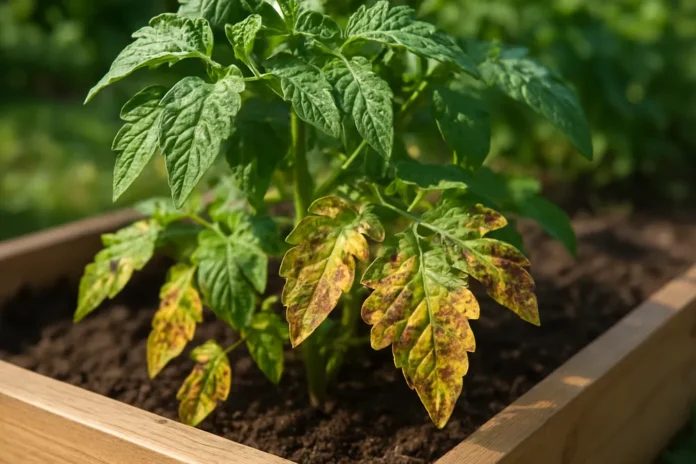
Tomato leaves usually turn brown because of watering stress, fungal disease, sun damage, nutrient imbalance, or normal aging of older foliage. The exact cause often depends on whether the browning starts at the edges, between veins, or in spots.
Seeing tomato leaves turning brown can be alarming, especially when the rest of the plant seemed healthy just days earlier. Brown leaves can show up as crispy edges, dry patches, dark spots, or whole leaf sections that fade from yellow to brown.
In tomatoes, browning is usually a sign of stress rather than one single problem. Watering mistakes, fungal diseases, heat, fertilizer issues, and even normal aging can all trigger brown foliage. The good news is that the pattern on the leaves often gives you strong clues about what is happening and whether the plant can bounce back.
If you look closely at where the browning starts and how fast it spreads, you can usually separate harmless older-leaf decline from a disease or care issue that needs attention. Once you know the cause, the right fix is much easier.
What Brown Tomato Leaves Usually Mean
Brown leaves are not a diagnosis by themselves. In tomatoes, brown tissue is often the end result of something else that started earlier as yellowing, spotting, wilting, or bleaching. When leaf cells die, they turn tan, brown, or nearly black depending on the cause.
Start by noticing which leaves are affected first. If the oldest lower leaves are browning while the top growth still looks strong, the issue may be age, splash-borne disease, or a mobile nutrient problem. If upper leaves are browning, think heat, sunscald, herbicide drift, or certain diseases. If the whole plant is involved, root stress or major watering problems become more likely.
- Crispy brown edges often point to water stress, fertilizer burn, or salt buildup.
- Brown spots with yellow halos commonly suggest fungal or bacterial leaf diseases.
- Bleached or papery brown patches can come from sunscald or heat stress.
- Brown lower leaves that yellow first may be normal aging, early blight, or nutrient deficiency.
- Sudden widespread browning after a spray or windy day can indicate chemical injury.
Watering Problems Are One of the Most Common Causes
Underwatering and Dry Soil
Tomatoes are thirsty plants, especially once they are flowering and setting fruit. When soil gets too dry, leaves may wilt during the day, then develop dry brown margins or curled crispy sections. Container tomatoes are especially prone to this because potting mix dries much faster than garden soil.
A plant that repeatedly swings from very dry to very wet often shows leaf scorch. The roots cannot supply moisture evenly, and the foliage pays the price. Lower leaves may brown first, but severe drought stress can affect the whole plant.
Overwatering and Poor Drainage
Too much water can also lead to browning, though it usually starts with yellowing and limp leaves. Waterlogged soil reduces oxygen around the roots, which weakens the plant and can trigger root rot. Once the roots struggle, leaves begin to discolor and die back.
If the soil stays soggy for days, brown leaves may come with wilting that does not improve after watering. This is a strong clue that the problem is not lack of water but damaged roots.
- Water deeply and consistently rather than lightly every day.
- Let the top inch of soil dry slightly in containers before watering again.
- Use mulch in garden beds to slow evaporation and reduce moisture swings.
- Make sure containers have drainage holes and never sit in standing water.
Fungal and Bacterial Diseases Can Cause Brown Spots and Dead Leaves
Early Blight
Early blight is one of the most common reasons tomato leaves turn brown. It usually starts on lower leaves as small dark spots that expand into brown lesions with concentric rings, giving them a target-like appearance. The tissue around the spots often turns yellow before the leaf dies.
This disease spreads more easily in warm, humid weather and when foliage stays wet. Lower leaves are often hit first because soil splashes fungal spores upward during rain or overhead watering.
Septoria Leaf Spot
Septoria starts as many small circular spots, usually on lower leaves. The centers may turn tan or grayish while the surrounding tissue yellows, then the leaf eventually browns and drops. Though the spots are often smaller than early blight lesions, severe infections can quickly thin out a plant.
Late Blight and Bacterial Diseases
Late blight can cause large, water-soaked dark brown blotches that spread fast, especially in cool, wet weather. Bacterial spot and bacterial speck can also create dark lesions that merge and kill leaf tissue. These problems are more serious because they can move quickly through a planting under favorable conditions.
- Remove badly infected lower leaves and discard them in the trash, not the compost pile if disease is active.
- Water at the base of the plant to keep leaves dry.
- Space plants well and prune lightly for airflow.
- Mulch the soil surface to reduce splash-up from rain and irrigation.
- Rotate tomatoes and related crops to a new area when possible.
Sun, Heat, and Weather Stress Can Scorch Foliage
Tomatoes love sun, but even sun-loving plants can suffer during extreme heat, intense afternoon exposure, or sudden transitions from protected conditions to full outdoor sun. Browning from sun or heat usually looks dry, papery, and irregular rather than spotty and disease-like.
Newly transplanted tomatoes are especially vulnerable. If seedlings move straight from a sheltered store display, greenhouse, or indoor setup to strong summer light, leaves can bleach, then turn brown. This is often called sunscald on foliage, though fruit can sunscald too.
Hot winds can make the damage worse by pulling moisture out of leaves faster than roots can replace it. In raised beds and containers, that combination of strong sun and rapid drying often causes the leaf edges to crisp first.
- Harden off transplants gradually before planting them in full sun.
- Water early in the day during heat waves so plants enter the afternoon well hydrated.
- Use mulch to cool root zones and reduce heat stress.
- Provide temporary shade cloth during extreme heat, especially for young plants.
Nutrient Issues and Fertilizer Burn May Be to Blame
Potassium Deficiency and General Nutrient Imbalance
Potassium deficiency can cause yellowing and browning along leaf margins, especially on older leaves. The edges may look scorched while the inner parts of the leaf remain greener at first. Magnesium issues can also contribute to interveinal yellowing that eventually turns brown.
Tomatoes in containers are more likely to show nutrient stress because frequent watering washes nutrients out of the potting mix. Plants growing in very sandy soil can do the same.
Too Much Fertilizer
Overfertilizing can burn roots and leaf edges. If you recently applied a strong liquid feed, a synthetic fertilizer, or too much manure-based product, salts can build up and damage the plant. The result may be brown leaf tips, scorched edges, or sudden decline.
Fertilizer burn is especially common in containers because salts accumulate faster there. The soil surface may even show a crusty residue in some cases.
- Use a balanced tomato fertilizer at the label rate, not extra for faster growth.
- Avoid feeding dry plants with strong fertilizer solutions.
- Flush container soil occasionally with plain water if salt buildup is suspected.
- Consider a soil test in garden beds if recurring nutrient problems show up.
Pests and Chemical Injury Can Leave Leaves Brown
Some insect problems cause stippling, curling, or yellowing before leaves turn brown. Spider mites are a common example during hot, dry weather. Their feeding can make leaves look dusty, speckled, bronzed, and eventually scorched.
Herbicide drift is another possibility if tomato leaves suddenly twist, cup, or distort and then develop brown patches. Tomatoes are very sensitive to lawn weed killers and drift from broadleaf herbicides. Even compost or mulch contaminated with persistent herbicides can cause injury.
Insecticidal soaps, horticultural oils, and foliar sprays can also burn leaves if applied in hot sun or mixed too strongly. The browning often appears shortly after treatment and may be concentrated on the sprayed surfaces.
- Check leaf undersides for mites, fine webbing, or clusters of insects.
- Avoid spraying during the hottest part of the day.
- Keep weed killers well away from tomatoes and nearby beds.
- Follow all label rates carefully when using fertilizers or plant sprays.
Sometimes It Is Just Normal Aging
Not every brown tomato leaf means trouble. As plants grow taller and fuller, the oldest lower leaves naturally receive less light and airflow. These leaves may yellow, then brown and dry up over time. This is common once the plant is putting energy into flowers and fruit.
Natural aging is more likely when the browning is limited to a few bottom leaves and the rest of the plant looks vigorous. In that case, simply prune off the dead foliage to improve airflow and keep the plant tidy.
How to Tell Which Cause Is Most Likely
The fastest way to narrow down the cause is to combine leaf pattern, plant location, and recent weather or care changes. Brown spots after several rainy days suggest disease. Crispy edges after missed waterings point toward drought stress. Damage on one side after a spray day may indicate chemical burn.
- Look at where the browning starts: lower leaves, upper leaves, edges, centers, or spots.
- Notice how it developed: slowly over weeks or suddenly in a day or two.
- Think about recent conditions: heavy rain, heat waves, fertilizer applications, or pesticide sprays.
- Check soil moisture and drainage rather than guessing from the leaf symptoms alone.
- Inspect leaves closely for rings, halos, webbing, or distortion that point to disease or pests.
What to Do Right Now to Help the Plant Recover
Brown tissue will not turn green again, so focus on stopping the problem from spreading and supporting healthy new growth. Tomatoes can recover surprisingly well if the main stem and upper growth remain strong.
- Trim off fully dead leaves with clean pruners.
- Water deeply and evenly, keeping the soil moist but not soggy.
- Mulch around the plant to stabilize soil moisture and reduce disease splash.
- Avoid wetting the foliage when you irrigate.
- Improve spacing or staking so air moves through the plant.
- Hold off on extra fertilizer unless a clear nutrient issue is likely.
- Treat confirmed fungal issues early with an appropriate garden fungicide labeled for tomatoes if needed.
If most of the plant is still green and producing new leaves, recovery is very possible. If the stem is darkening, the plant is collapsing despite moisture, or disease is moving rapidly through many leaves, removal may be the better option to protect nearby tomatoes.
How to Prevent Brown Leaves on Future Tomato Plants
Prevention is easier than cure with tomatoes. Most brown-leaf problems become less common when plants have steady moisture, good airflow, and less leaf wetness.
- Plant tomatoes in full sun with enough spacing for airflow.
- Use cages, stakes, or trellises to keep foliage off the ground.
- Mulch after the soil warms to reduce splash and moisture loss.
- Water at the base instead of overhead.
- Choose disease-resistant varieties when possible.
- Rotate planting areas and clean up old tomato debris at season's end.
- Feed moderately and consistently rather than in heavy bursts.
- Harden off seedlings gradually before exposing them to intense sun and wind.
For container growers, prevention also means using a large pot, quality potting mix, and a reliable watering routine. Small containers dry too quickly and make brown-leaf problems much more likely in summer.
FAQ
Should I Cut Off Brown Tomato Leaves?
Yes, fully brown or dead leaves can be removed because they will not recover. Pruning them off improves airflow and helps you monitor whether new damage is still spreading.
Can Overwatering Cause Tomato Leaves to Turn Brown?
Yes. Overwatering can suffocate roots, cause yellowing first, and eventually lead to brown dying foliage, especially if the soil stays soggy.
Do Tomato Leaves Turn Brown From Too Much Sun?
They can, especially after transplanting or during extreme heat. Sun and heat damage often looks dry, bleached, or papery before turning brown.
Why Are Only the Bottom Leaves on My Tomato Plant Turning Brown?
Bottom leaves often brown first from normal aging, splash-borne fungal disease, or nutrient problems that show up on older foliage. If the upper plant still looks healthy, the issue may be limited and manageable.
Will Brown Tomato Leaves Turn Green Again?
No. Brown tissue is dead and will not recover, but the plant can still produce healthy new growth if the underlying problem is corrected.
What Does Early Blight Look Like on Tomato Leaves?
Early blight usually starts on lower leaves as brown spots with concentric rings and yellowing around them. As it spreads, affected leaves dry out and die.
Can I Still Eat Tomatoes From a Plant with Brown Leaves?
Often yes, if the fruit itself is healthy and the issue is limited to foliage stress or mild leaf disease. Do not use fruit that is rotting, moldy, or badly damaged.
Need a fix fast? Read our guide to the best tomato fungicides, fertilizers, and watering tools so you can stop leaf damage and keep your plants producing.
