

Note: This article contains affiliate links. If you click on these links and make a purchase, I may earn a small commission at no extra cost to you. This helps support my research and content. Read my full affiliate disclosure here.
Picking the right organic topsoil matters because it sets the stage for every vegetable you grow. Good topsoil improves root development, evens moisture, and supplies the slow-release nutrients that reduce supplemental feeding. In a home garden or raised bed, the wrong topsoil can compact, drain poorly, or lack key organic matter. This guide covers six shortlisted organic topsoils chosen for vegetable gardens. We evaluate texture, nutrient profile, and drainage behavior so you can match a soil to raised beds, in-ground rows, or container vegetables. Read on for practical considerations that make transplanting, watering, and seasonal fertility easier.
Top Picks at a Glance
| Best Overall The best all-around choice for most situations | Coast of Maine Tomatoes & Veggies Organic Planting Soil, 20 qt |  |
| Best Quality Built to a higher standard if you want something more solid | Espoma Organic Vegetable & Flower Garden Soil Mix, 1 cu ft |  |
| Best Budget The cheapest option that still gets the job done reliably | Espoma Organic Potting Soil Mix, 8 qt |  |
| Highest Rated A top-rated pick with lots of positive feedback | BACCTO Raised Bed Soil with Organic Compost, 1.5 cu ft |  |
| Most Popular A crowd favorite that many people choose with confidence | Burpee Premium Organic Potting Mix with Coco Coir (9 Quart) |  |
| Best Seller A high-volume bestseller chosen again and again | Back to the Roots All-Purpose Peat-Free Potting Mix, 12 qt (2-pack) |  |
Coast of Maine Tomatoes & Veggies Organic Planting Soil, 20 qt

| Brand Name | Coast of Maine |
|---|---|
| Unit Count | 1 Count |
| Included Components | Tomatoes and Veggies (20qt) Organic and Natural Planting Soil |
| Volume | 20 quarts |
This 20‑quart Coast of Maine Tomatoes & Veggies planting soil is an organic blend intended to improve garden and container soils for vegetables such as tomatoes, peppers, cucumbers and similar crops like watermelon. It combines composted manure, sphagnum peat moss and aged bark with seaweed and marine-derived meals to add nutrients and feed soil biology. In practice you can use it to seed, transplant, top-dress or mix into raised beds and containers to improve drainage, moisture retention and aeration while encouraging beneficial microbes and worms. The bag is lightweight and convenient for small beds or container-grown melons; because it is OMRI listed it fits organic gardening plans. Limitations are its 20 qt volume, which means multiple bags are needed for large melon plots, and like many planting mixes it is a starting medium rather than a complete season-long fertilizer so occasional feeding or side-dressing will still be necessary for heavy‑feeding crops like watermelon.
Best for: Gardeners who want an organic, biology-first planting mix for vegetables and container-grown melons and who prioritize soil health and sustainable ingredients.
Less Ideal for: Growers planting large in-ground watermelon plots who need bulk soil or a complete season-long fertility program should consider bulk amendments or garden soil blends sold by the cubic yard.
- OMRI listed organic formula suitable for certified organic gardens
- Blend of composted manure, peat moss and aged bark improves drainage and moisture retention
- Includes seaweed and marine meals to supply natural nutrients and support soil biology
- Lightweight 20 qt bag is easy to handle for containers and raised beds
- Small 20 quart volume is not economical for filling large in-ground melon beds
Verdict: Choose this OMRI-listed, marine-amended planting soil when you want a lightweight, biology‑focused organic mix to improve beds and containers for melons and other vegetables.
Espoma Organic Vegetable & Flower Garden Soil Mix, 1 cu ft
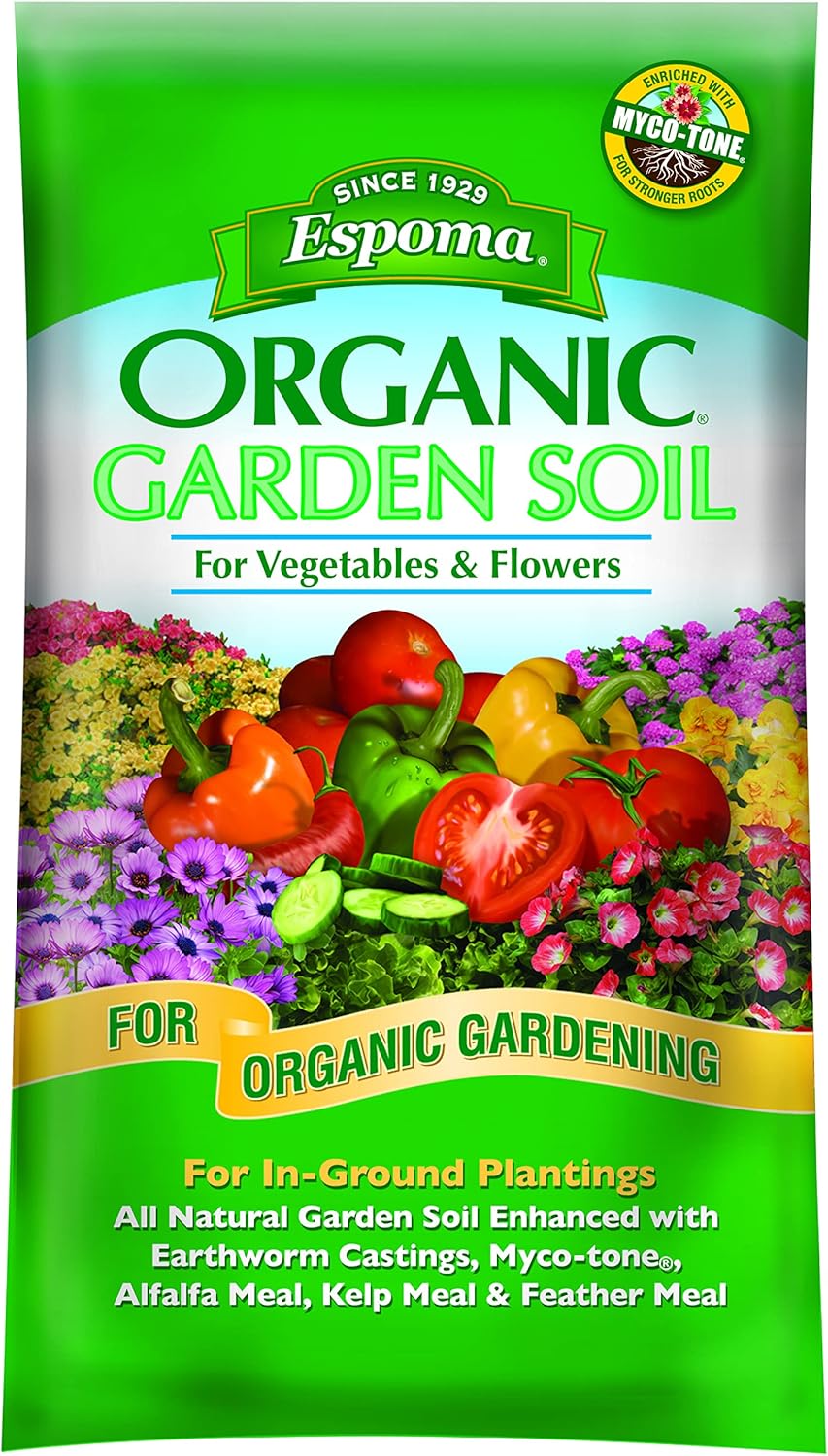
| Volume | 1 cubic feet |
|---|---|
| Style Name | Peat Moss |
| Unit Count | 1536 Ounce |
Espoma Organic Vegetable & Flower Garden Soil is a 1 cubic foot, peat-based planting mix designed to be blended into native garden soil at planting or transplanting. It contains Canadian sphagnum peat moss, earthworm castings, alfalfa meal, kelp meal, feather meal, limestone for pH adjustment, and a mycorrhizal blend to help root establishment. In practice you work a few inches of this mix into planting holes or rows to loosen dense soil, add organic matter, and give young squash transplants a nutrient-rich root zone. The organic amendments supply slow-release nutrients and biological activity that support early growth, while the mycorrhizae improve water and nutrient uptake. Limitations to note are the peat-heavy base, which dries faster than compost-rich mixes and may require more frequent watering, and the small 1 cu ft bag size that means multiple bags are needed for larger beds. For gardeners who prefer organic inputs and want an easy-to-use planting mix to boost transplant success, this product is straightforward and effective.
Best for: Gardeners who prioritize organic inputs and want a convenient planting mix to boost transplant success for vegetables like squash in established beds.
Less Ideal for: Large-scale landscapers or gardeners needing bulk soil amendments for entire raised beds who prefer compost-rich mixes or peat-free alternatives.
- Formulated with organic amendments like earthworm castings, alfalfa meal, kelp meal, and feather meal for slow-release nutrients
- Contains a mycorrhizal blend to support root establishment and improved nutrient uptake
- pH adjusted with limestone to better suit common garden plants
- Ready-to-use planting mix that blends easily with native soil when transplanting
- Peat-heavy base can dry out faster than compost-rich mixes, increasing watering frequency
- Small 1 cubic foot bag requires many bags for larger squash beds
Verdict: A compact, organic planting mix that makes transplanting squash easier by giving young roots nutrient-rich, biologically active soil.
Espoma Organic Potting Soil Mix, 8 qt

| Brand Name | Espoma |
|---|---|
| Unit Count | 256 Ounce |
| Volume | 8 liters |
| Style Name | Mix |
Espoma Organic Potting Soil Mix is a ready-to-use, organic container mix designed for indoor and outdoor pots, including vegetables and herbs such as jalapenos. It blends sphagnum peat moss, humus and perlite to give a light, well-draining texture while added earthworm castings, alfalfa meal, kelp meal and feather meal supply slow-release nutrients. The included Myco-Tone mycorrhizae can help young roots establish and improve nutrient uptake, which is useful when starting pepper seedlings or repotting into larger containers. Typical use is filling 1–5 gallon pots or containers, planting transplants, and topping up as plants grow. Because it is formulated without synthetic fertilizers, you get a more natural fertility baseline but may need to supplement with a balanced organic fertilizer for heavy-feeding pepper plants during peak fruiting. The 8 quart volume is convenient for small batches and container gardening but means you will need multiple bags for several plants. For jalapenos this mix provides the drainage, structure, and organic matter peppers prefer while supporting steady growth with minimal prep.
Best for: Home gardeners who grow jalapenos in containers and want an organic, ready-made mix that supports healthy root development and steady growth without DIY blending.
Less Ideal for: Large-scale growers or those who prefer a single bag to supply many plants should consider larger volume commercial mixes or bulk soil options.
- Organic formula with peat moss, humus and perlite for good drainage and aeration
- Contains earthworm castings and plant meals for slow-release organic nutrients
- Includes Myco-Tone mycorrhizae to help root establishment and nutrient uptake
- Suitable for both indoor and outdoor container vegetables and herbs
- Small 8 qt volume requires multiple bags for several pepper plants
- No synthetic fertilizer included so extra feeding may be needed for heavy fruiting
Verdict: A convenient organic potting mix that gives jalapeno plants good drainage, natural fertility, and beneficial mycorrhizae for strong container growth.
BACCTO Raised Bed Soil with Organic Compost, 1.5 cu ft

| Brand Name | BACCTO |
|---|---|
| Included Components | Raised Bed Soil with Organic Compost, Manure, & Earthworm Castings |
| Volume | 1.5 cubic feet |
| Item Highlight | Compost, Manure & Earthworm Castings for Vegetables, Flowers, Herbs, Shrubs |
BACCTO Raised Bed Soil arrives ready to use straight from the bag and is formulated for raised beds and elevated planters. It combines organic compost, composted manure and earthworm castings to improve moisture retention, introduce beneficial microbes, and provide immediate planting medium for vegetables, herbs and flowers. Typical use is topping or filling raised beds, refreshing container mixes, or creating new planting pockets for seedlings; because it is pre-mixed you can plant directly without extra amendments. For gardeners focused on dependable performance the inclusion of manure and castings supports steady root development and better initial moisture management compared with plain topsoil. Important limitations are bag volume and scope: at 1.5 cubic feet this bag suits small beds or spot applications but you will need multiple bags for larger vegetable plots, and it does not list guaranteed nutrient analysis or slow-release fertilizer levels so heavier feeders may require additional feeding. Safety notes advise avoiding skin or eye contact and using in well ventilated areas.
Best for: Gardeners who prioritize a reliable, ready-made soil for small raised beds or container vegetable plantings and want a mix that promotes steady root growth without extra prep.
Less Ideal for: Large-scale vegetable growers or gardeners who need exact nutrient guarantees and prefer to custom-blend amendments for heavy-feeding crops.
- Ready-to-use mix that requires no on-site blending
- Contains composted manure and earthworm castings to add microbes and improve moisture retention
- Formulated specifically for raised beds and a range of plant types including vegetables and herbs
- Small 1.5 cu ft volume means multiple bags are needed for larger beds
- No detailed nutrient or N-P-K analysis provided for precise fertilization planning
Verdict: A convenient, microbe‑rich ready mix that reliably gets small raised beds and container vegetables off to a strong start.
Burpee Premium Organic Potting Mix with Coco Coir (9 Quart)

| Item Form | Powder |
|---|---|
| Specific Uses For Product | Plant Growth, Root Development, Seed Development, Soil Conditioning |
| Coverage | 9 Qt Container |
| Liquid Volume | 9 quarts |
Burpee Premium Organic Potting Mix is a ready-to-use container soil designed for indoor and outdoor pots, seed starting, and raised bed containers. The mix combines coco coir for improved aeration and moisture retention with a nutrient blend that feeds plants for up to three months, making it useful for establishing seedlings or repotting established vegetables, herbs, and ornamentals. It is OMRI listed, which suits organic growers, and the bag is sold in a convenient 9-quart size that fits most small to medium containers. Practical benefits include reduced watering frequency thanks to the coir component and a balanced medium that promotes root development and germination. Limitations are the small bag size for larger projects and that it supplies nutrients for only a limited period, so longer-term containers will need supplemental fertilizer. The mix is powdery and light, so it is easy to handle but may compress over time in deep pots and benefit from occasional loosening.
Best for: Gardeners who want a compact, ready-made organic potting mix that reduces maintenance and supports reliable seed starting and container growth.
Less Ideal for: Those establishing large beds or filling many large containers at once should choose bulk soil or larger bags instead.
- OMRI listed organic blend suitable for organic container gardening
- Coco coir improves moisture retention while maintaining good aeration
- Includes slow-release nutrients that feed plants for up to three months
- Light, easy-to-handle texture ideal for seed starting and repotting
- 9-quart bag is small for larger containers or multiple pots
- Nutrient supply is temporary so additional fertilizer is required for long-season crops
Verdict: A compact OMRI-listed potting mix with coco coir that simplifies seed starting and short-term container growing by improving moisture balance and early root development.
Back to the Roots All-Purpose Peat-Free Potting Mix, 12 qt (2-pack)

| Number of Packs | 2 |
|---|---|
| Unit Count | 384 Ounce |
| Item Type Name | Natural & Organic All-Purpose Peat-Free Potting Mix |
| Style Name | Specialty Potting Mix |
This peat-free potting mix is designed as a ready-to-use growing medium for herbs, vegetables, and flowers in containers and raised beds. It blends coconut coir for moisture retention, beneficial mycorrhizae to support root growth, yucca extract to help move water and nutrients into roots, and dolomitic limestone to moderate pH. Typical use is topping or filling raised beds and large containers where you want a light, well-draining soil that still holds moisture and supplies initial nutrients. The organic components make it a good match for edible gardens, and the inclusion of mycorrhizae can speed early root establishment. Expect a lighter texture than traditional loam or compost-heavy mixes, so you may need to supplement with compost or aged manure for long-term fertility in production beds. Also, the bagged volume is modest per pack, so plan quantities for larger raised beds. For gardeners who avoid peat and want a plant-friendly, moisture-smart base mix, this is a practical option with clear environmental intent.
Best for: Gardeners who prioritize sustainable, peat-free products and want an easy-to-use, moisture-retentive base mix for filling or topping raised beds for vegetables and herbs.
Less Ideal for: Those building large-scale vegetable beds who prefer a heavy, compost-rich soil straight away or who want to rely solely on the bag mix for season-long fertility.
- Peat-free, organic formula supports environmentally conscious gardening
- Coconut coir and yucca extract improve moisture retention without becoming waterlogged
- Contains mycorrhizae to encourage stronger early root systems
- Dolomitic limestone helps balance pH to reduce acidity-related nutrient issues
- Light, coir-rich texture may require added compost or fertilizers for sustained vegetable production
- Small combined volume per pack means multiple bags needed for larger raised beds
Verdict: A sustainable, plant-friendly peat-free potting mix that gives raised-bed vegetable growers a moisture-smart, root-supporting base to build on.
Choosing the Right Organic Topsoil for Vegetable Gardens: Key Factors to Consider
Organic Matter Content
Organic matter is the cornerstone of vegetable-bed topsoil because it feeds soil life, improves structure, and stores nutrients. Higher organic matter makes soil more friable for root growth and increases the soil's capacity to hold nutrients that plants can access over time. It also cushions moisture swings by improving water retention in sandy sites and improving aggregation in heavier soils.
When assessing a bag or bulk topsoil, look for percentages or descriptions of composted material. Fresh wood chip or uncomposted manure can create nitrogen drawdown as microbes consume nitrogen to break down the material. Well-composted inputs deliver immediate benefit without creating short-term fertility problems.
Texture and Particle Size
Texture determines how easily roots penetrate and how the soil drains. A loam-like mix with a blend of sand, silt, and clay gives the best compromise for most vegetables, offering both drainage and water-holding capacity. Very sandy topsoils drain quickly but may struggle to retain nutrients; heavy clay-rich topsoils can hold water but impede root growth unless amended with organic matter.
Descriptions or lab analyses that list particle-size distribution are helpful. For raised beds, a light, crumbly texture speeds establishment and warms earlier in spring. For in-ground repairs, texture should match or improve the surrounding soil to avoid creating a barrier layer that restricts water movement.
Drainage and Moisture Balance
Vegetables generally need consistent moisture without standing water. The ideal topsoil drains excess rain away while retaining enough water for daily plant use between irrigations. Drainage is influenced by texture, organic matter, and compaction resistance.
Consider how you irrigate: drip systems and soaker hoses work best with soils that retain some moisture near the root zone. If you garden in a heavy-rain region, prioritize mixes that resist compaction and shed excess water so roots do not suffocate. For drought-prone areas, choose soils with higher organic content or that are explicitly rated for improved water retention.
pH and Contaminant Screening
Most vegetables prefer a slightly acidic to neutral pH. Knowing the pH of a topsoil lets you anticipate whether lime or sulfur adjustments will be needed for nutrient availability. Reliable suppliers provide pH information or suggest expected ranges for their blends.
Contaminant screening matters in urban or previously disturbed sites. Topsoils should be free of persistent herbicide residues, excessive salts, and heavy metals that can accumulate in edible crops. When lab results are unavailable, source soil from suppliers who disclose testing practices or from reputable composting programs with feedstock controls.
Seed and Weed Content
Seed content affects how much weeding you will do in a new bed. Bulk topsoil and composts can carry viable weed seeds if feedstocks were not fully composted or screened. For vegetable beds, lower weed seed counts reduce early competition and maintenance time.
Screened soils that list finishing steps such as pasteurization, screening to a specific mesh, or long-term curing are preferable. If a soil is unscreened or described as raw fill, plan on additional weeding and possibly a short solarization period before heavy planting.
Ease of Handling and Suitability for Bed Type
Practical handling considerations influence how quickly you get beds planted. Bulk topsoil that settles into dense clods or that contains a high proportion of fines can be hard to spread and may require extra tilling or raking. Bagged topsoils are convenient for small raised beds and containers but may be more expensive per cubic foot.
Consider the amount you need and how you will move it. Lightweight, screened loam that crumbles easily into a fine seedbed reduces prep work. For deep raised beds, a mix that layers cleanly with compost and existing soil helps maintain good drainage and root access without constant reworking.
Preparing Your Site Before Adding Topsoil
Prepare the planting area so the new topsoil integrates smoothly with existing ground. Remove perennial weeds and roots, loosen compacted subsoil to a depth of at least 6 to 8 inches, and correct major grade issues that trap water.
If you are filling raised beds, check that bed walls and liners are intact and that there is adequate drainage at the base. Spread topsoil in 2- to 3-inch lifts and lightly tamp or rake each layer to avoid creating hardpan layers that block root movement.
- Clear perennial weeds and large roots before adding new soil
- Loosen compacted subsoil to improve drainage and root penetration
- Add topsoil in thin layers to prevent a barrier between old and new soils
Amending Topsoil for Specific Vegetables
Different vegetables have slightly different needs. Heavy feeders like tomatoes and brassicas benefit from additional compost or well-rotted manure incorporated before planting. Root crops require a finer, rock-free tilth to prevent forked or misshapen roots.
For leafy greens, ensure the soil has available nitrogen and good moisture retention. For bulb crops and onions, leaner, well-drained soil encourages stronger bulbs. Adjust amendments based on crop needs rather than a one-size-fits-all approach.
- Mix additional compost for heavy-feeding crops
- Screen or sift topsoil for carrots and other root crops
- Adjust fertility with tested amendments rather than excess nitrogen
Testing and Adjusting Soil After Installation
Once topsoil is spread and beds are planted, test the soil within a few weeks to confirm pH and nutrient availability. A basic soil test will indicate whether phosphorus, potassium, or minor nutrients are lacking and whether pH adjustments are needed.
Follow test recommendations conservatively. Organic systems benefit from gradual, steady amendments derived from compost, rock minerals, and plant-based fertilizers rather than aggressive synthetic correction. Monitor moisture and compaction through the first season and topdress with compost annually to maintain structure.
- Get a pH and basic nutrient test after bed installation
- Apply recommended amendments slowly and based on test results
- Topdress with compost yearly to sustain organic matter levels
Storage and Handling Tips for Bulk and Bagged Topsoil
Store topsoil on a flat, well-drained surface to avoid contamination and weed invasion. Keep bagged soil covered if stored for long periods to prevent nutrient leaching and moisture buildup that leads to compaction.
When moving bulk soil, avoid creating dust by slightly moistening very dry material. For large deliveries, use a tarp to protect from rain and shade to reduce excessive drying in hot climates.
- Store on an impermeable surface away from drainage flow
- Cover bags and bulk piles to protect quality
- Slightly moisten dry soil before spreading to reduce dust
Sourcing Local Soil Versus Commercial Blends
Local topsoil can be cost-effective and well-suited to blending with your native ground, but it may vary in quality and composition from load to load. Commercial blends tend to be more consistent and often include explicit organic matter percentages and finishing processes.
If you use local soil, have it tested and consider amending with compost and a screening step to reduce weed seeds and rocks. For gardeners who need predictable results quickly, a screened commercial organic topsoil provides a known baseline to start from.
- Test local soil for fertility and contaminants before use
- Blend local soil with compost to improve structure and nutrition
- Opt for screened materials where seed content is a concern
How We Chose the Best Organic Topsoil for Vegetable Gardens
We focused on attributes that directly affect vegetable production and everyday garden use. Primary evaluation criteria included organic matter content and nutrient profile to judge fertility and microbial support; texture and structure to assess root penetration and seedbed quality; drainage and water-holding balance to prevent both drought stress and waterlogging; pH stability and buffering to suit common vegetable needs; and contamination screening to avoid weed seed, herbicide residues, and heavy metals. Products were selected from widely available commercial soil blends intended for vegetable or general garden use. We excluded potting mixes formulated for containers, engineered soilless mixes, and products labeled strictly for lawns or landscaping because their blend ratios and particle sizes differ from what vegetables need. We also filtered out amendments sold only in very small volumes intended for hobby projects rather than bed building. In short, entries had to demonstrate appropriate organic matter percentages, a loamy texture or clear particle-size profile, reliable drainage characteristics, and basic contamination testing where information was available. These filters align with the score metrics used across the shortlist.
FAQ
How deep should I add organic topsoil for a new vegetable bed?
Aim for at least 6 to 12 inches of quality topsoil for most vegetables so roots have room to develop. For deep-rooted crops like tomatoes or carrots, deeper topsoil or a layered build with additional compost will support better growth.
Can I mix compost with topsoil, and in what ratio?
Yes. A common approach is to mix 20 to 30 percent well-rotted compost with native soil or topsoil when preparing beds. Heavy feeders can tolerate a higher proportion, while root crops often prefer a lower percentage for a finer tilth.
Is bagged organic topsoil as effective as bulk topsoil?
Bagged soils are convenient and consistent for small projects but may be more processed and sometimes drier. Bulk topsoil can be more economical and suitable for large beds, but quality varies, so testing and screening are important.
How do I know if topsoil contains herbicide residue or other contaminants?
Look for supplier documentation about feedstock controls and lab testing. If in doubt, have a soil lab screen samples for common herbicide residues and heavy metals, especially when using soil from urban sites or unknown sources.
When is the best time to add topsoil to raised beds?
Early spring or fall are ideal because temperatures and moisture levels make soil easier to work and allow amendments to begin integrating before peak growth. Avoid installing when the ground is waterlogged or frozen.
How often should I refresh topsoil in established vegetable beds?
Topdress beds annually with 1 to 2 inches of compost to maintain organic matter and fertility. Every few years, work compost into the top 6 inches and replace or amend compacted or depleted topsoil as needed.
Final Verdict
Choose topsoil that balances organic matter and texture for the vegetables you grow. Prioritize soils with good organic content and a loamy structure if you want reduced watering needs and easier root development. Consider pH and contaminant screening when sourcing soil, and plan to maintain beds with yearly compost topdressing. Ultimately, match the soil's drainage and particle profile to your site and crops. That focus will simplify planting and fertility decisions and give you the best chance of productive, low-maintenance vegetable beds.
