

Note: This article contains affiliate links. If you click on these links and make a purchase, I may earn a small commission at no extra cost to you. This helps support my research and content. Read my full affiliate disclosure here.
Raised beds concentrate soil, drainage, and root space, so choosing the right flowers matters more than planting randomly. The wrong varieties can struggle with shallow soil, heat at the surface, or competing roots from nearby vegetables and ornamentals. This guide looks at six reliable flower options suited specifically for raised beds, focusing on plants that perform well in contained soil, offer strong seasonal interest, and minimize maintenance. Each shortlisted option was chosen because it solves common raised bed challenges: shallow rooting, rapid drying, and limited space for layering. The guide explains the traits that make each type a good fit and the growing conditions they need, then walks through practical planting and maintenance strategies before the FAQ and final verdict.
Top Picks at a Glance
| Best Overall The best all-around choice for most situations | Seed Needs Alyssum Seeds Variety Pack — 4 Pack |  |
| Best Quality Built to a higher standard if you want something more solid | Burpee Wildflower Mix — Hummingbird & Butterfly Seed Blend (25,000 seeds) |  |
| Best Value The sweet spot between price and what you get | SWEET YARDS Drought Tolerant Wildflower Mix — 1 oz (7,500+ Seeds) |  |
| Best Budget The cheapest option that still gets the job done reliably | Sow Right Seeds Blanket Flower (Gaillardia aristata) Seed Packet |  |
| Most Popular A crowd favorite that many people choose with confidence | SWEET YARDS Wildflower Seeds Butterfly & Hummingbird Mix — 1 oz (7,500+ Seeds) |  |
| Best Seller A high-volume bestseller chosen again and again | Eden Brothers All-Perennial Wildflower Seed Mix, 1/4 lb |  |
Seed Needs Alyssum Seeds Variety Pack — 4 Pack

| Expected Blooming Period | Summer to Fall |
|---|---|
| Sunlight Exposure | Partial Sun |
| Expected Planting Period | Spring |
| USDA Hardiness Zone | 3,4,5,6,7,8,9,10 |
| Moisture Needs | Moderate Watering |
This Seed Needs alyssum seed pack supplies multiple heirloom, open-pollinated varieties intended for quick, low-growing blooms that work well in containers, hanging baskets, rock gardens, or as a groundcover. Typical use is direct sowing in spring with sowing instructions printed on each packet; plants establish quickly, bloom through summer and into fall, and emit a sweet fragrance that attracts bees and butterflies. Notable features include heirloom seed stock, adaptability to several soil types, suitability for partial sun to full sun sites, and a packet count sized for sharing or multiple containers. Practical benefits are fast floral cover for hanging baskets and edging, pollinator support, and forgiving moisture needs once established. Important limitations are that these are annuals in many climates so they need reseeding each year, germination depends on correct sowing and local conditions, and the pack does not specify exact seed counts per variety which makes precise planning harder for larger displays.
Best for: Gardeners who prefer proven, pollinator-friendly annuals for quick color in hanging baskets and containers and who value seed quality backed by many other buyers.
Less Ideal for: People seeking permanent perennial plantings or those who want guaranteed germination without doing any seed starting work should consider live plants or plug transplants instead.
- Heirloom, open-pollinated seeds suitable for preserving true-to-type blooms
- Quick to establish and blooms profusely from summer into fall
- Attracts pollinators such as bees and butterflies, enhancing garden ecology
- Versatile use in hanging baskets, containers, rock gardens, and as groundcover
- Annual habit in most regions requires reseeding each year
- Germination and performance depend on correct sowing and local climate
- Seed counts per individual variety are not specified for exact planning
Verdict: A reliable heirloom seed pack that delivers fast, fragrant blooms ideal for filling full-sun hanging baskets and attracting pollinators.
Burpee Wildflower Mix — Hummingbird & Butterfly Seed Blend (25,000 seeds)

| Unit Count | 1 Count |
|---|---|
| Number of Pieces | 25000 |
| Sunlight Exposure | Full Sun |
| Expected Blooming Period | Spring to Fall |
| USDA Hardiness Zone | 4, 5, 6, 7, 8, 9, 10 |
This Burpee Wildflower Hummingbird and Butterfly mix is a high-volume seed blend intended to establish pollinator-friendly blooms across a large sunny area. One bag contains 25,000 non-GMO seeds of 18 annual and perennial varieties, enough to cover up to about 1,000 square feet when broadcast-sown. It is typically used by scattering seed over prepared, well-drained soil in spring or early summer and keeping the seedbed evenly moist until seedlings are established. Notable features include a mix of species that bloom from spring through fall and compatibility with USDA zones 4 through 10, which gives broad regional suitability. Practical benefits are quick visual impact from annuals like cosmos and zinnia, season-long interest from perennials such as gaillardia and lupine, and strong appeal to pollinators. Limitations to plan for are variable germination by species (mixes often favour faster-growing annuals), the need for regular moisture during establishment, and that a broadcast mix will produce a naturalized, informal look rather than uniform, tidy plantings suitable for precise raised-bed designs.
Best for: Gardeners who want an efficient, low‑cost way to fill a sunny raised bed or larger area with pollinator-attracting color without fuss and who prioritize coverage and seasonal interest over exact plant placement.
Less Ideal for: Gardeners seeking formal, evenly spaced bedding plants or single-species displays that require precise spacing and uniform habit should choose individual seed packets or transplants instead.
- Very large seed count covers up to 1,000 sq ft so one purchase can establish a big display
- Includes 18 varieties combining quick-blooming annuals with longer-lived perennials for season-long color
- Non-GMO certified and marketed for pollinator attraction, which supports wildlife-friendly gardens
- Wide USDA zone range (4–10) makes it suitable for most temperate regions
- Mix format can produce uneven stands with some species dominating the bed
- Requires consistent moisture and attention during the first weeks for good germination
- Not formulated for precise spacing or formal raised-bed patterns
Verdict: If you need fast, economical pollinator-friendly coverage for a sunny raised bed, this large mixed-seed bag delivers broad seasonal color with minimal purchasing effort.
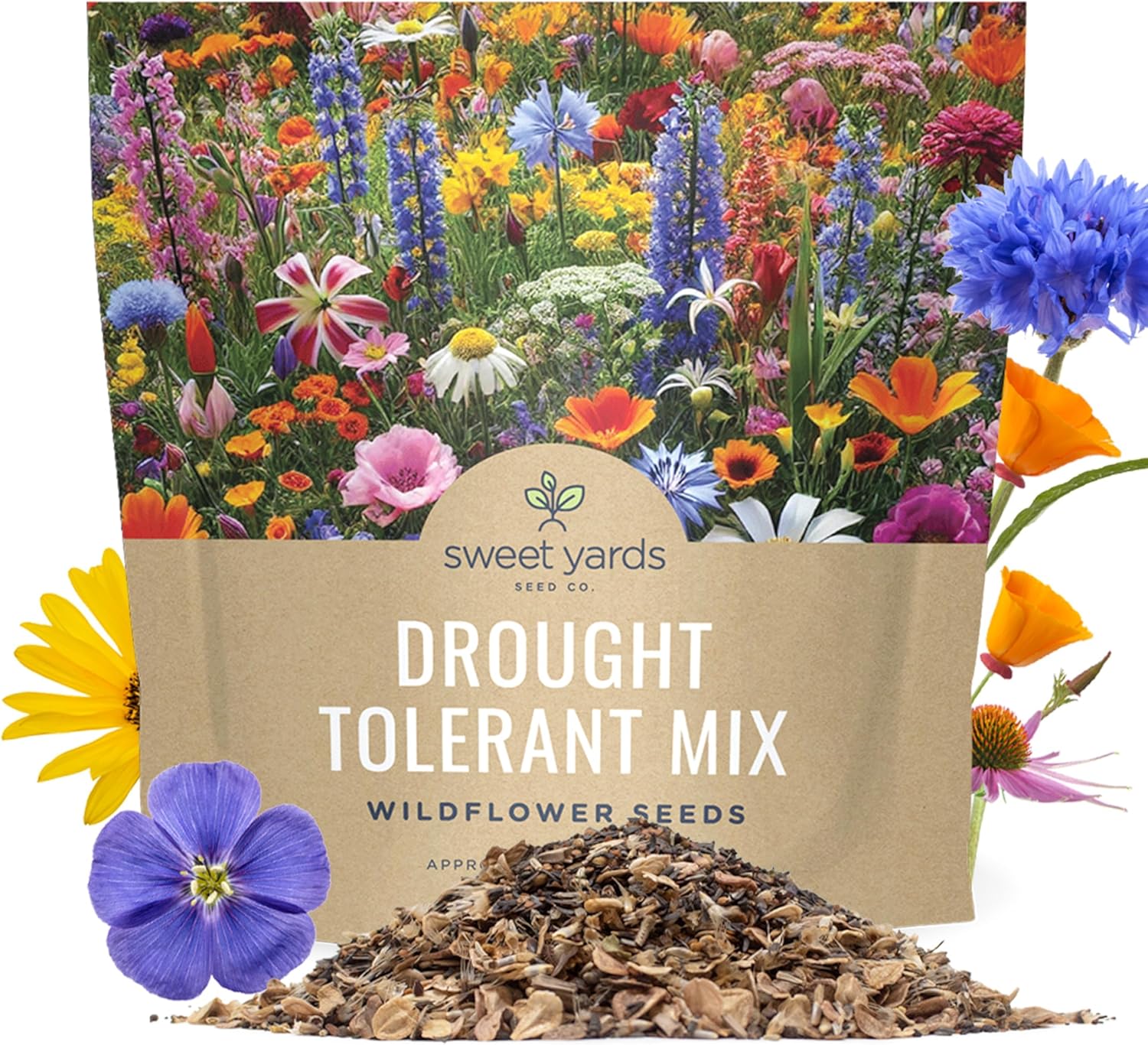
SWEET YARDS Drought Tolerant Wildflower Mix — 1 oz (7,500+ Seeds)
| Unit Count | 1 Ounce |
|---|---|
| Number of Pieces | 7500 |
| Sunlight Exposure | Full Sun |
| Moisture Needs | Moderate Watering |
| Expected Blooming Period | Spring to Fall |
This drought-tolerant wildflower mix is a performance-focused seed blend intended to establish a low-maintenance, pollinator-friendly display in sunny spots. The packet contains over 7,500 open-pollinated seeds across 21 dryland species, combining annuals and perennials so you get an early flush of color and plants that return in subsequent seasons. It is packaged in resealable premium packaging with planting instructions, which helps preserve seed viability between seasons. Recommended for full-sun sites and adaptable to most soils, the mix is formulated for moderate watering and is especially suited to areas where water is limited. In a raised bed the variety of bloom times and heights creates layered interest without intensive care, but expect some variability in germination and bloom density because mixes include both robust and slower-establishing species. If you want a fast, uniform carpet of a single flower type this is not that product, but for a resilient, pollinator-attracting meadow effect in a sunny raised bed it delivers strong, lasting value.
Best for: Gardeners who prioritize resilient, low-water flowerings and want an easy-to-establish pollinator mix for sunny raised beds that performs across seasons.
Less Ideal for: People who need a uniform carpet of a single flower species, exact color schemes, or rapid, perfectly even coverage in a small ornamental bed.
- Large seed count (over 7,500 seeds) suitable to cover about 100 sq. ft.
- Mix of 21 drought-tolerant species offering staggered bloom times and pollinator value
- Open-pollinated non-GMO seeds with premium resealable packaging and planting instructions
- Adaptable to most soils and formulated for full sun with moderate watering needs
- Mix composition leads to uneven germination and variable bloom density across the bed
- Not optimized for a uniform single-species display or precise color control
Verdict: Use this mix when you want a drought-tolerant, pollinator-friendly wildflower display that fills a sunny raised bed with seasonal color and minimal fuss.
Sow Right Seeds Blanket Flower (Gaillardia aristata) Seed Packet

| Expected Blooming Period | Summer to Fall |
|---|---|
| Sunlight Exposure | Full Sun |
| Moisture Needs | Regular Watering |
| Material Features | GMO Free, Heirloom |
This Sow Right Seeds packet contains at least 600 mg of Blanket Flower (Gaillardia aristata) seed, a hardy, drought-tolerant perennial that performs well in sunny raised beds. Sow thinly at about 1/8 inch deep once soil temperatures reach roughly 70 to 75°F; expect germination in 14 to 21 days and first flowers in 60 to 90 days. The plants are described as growing 18 to 22 inches tall and attract bees and butterflies, making them useful for pollinator-friendly mixed plantings or a low-maintenance border. The seeds are non-GMO heirloom and come with planting instructions, and the brand emphasizes fresh seed and solar-powered production. Limitations to note are that best results require full sun and regular watering while establishing, and the packet size is modest so you may need multiple packets to densely fill a large raised bed. For small to medium raised beds it offers an inexpensive way to add long-blooming color and pollinator value without complex care.
Best for: Gardeners on a budget who want an easy, pollinator-friendly perennial to fill sunny raised beds with bright color and low ongoing maintenance.
Less Ideal for: Those who need instant dense coverage or want shade-tolerant varieties should choose different seeds or pre-grown transplants.
- Non-GMO heirloom seed suitable for sustainable gardens
- Attracts pollinators like bees and butterflies
- Drought and heat tolerant once established
- Clear planting instructions with quick germination window
- Packet quantity is small so more packets may be needed for dense coverage
Verdict: A low-cost way to add long-blooming, pollinator-attracting blanket flowers to sunny raised beds.
SWEET YARDS Wildflower Seeds Butterfly & Hummingbird Mix — 1 oz (7,500+ Seeds)

| Unit Count | 1 Ounce |
|---|---|
| Number of Pieces | 7500 |
| Expected Blooming Period | Spring to Fall |
| Sunlight Exposure | Full Sun |
| Moisture Needs | Moderate Watering |
This 1 ounce packet of Sweet Yards Wildflower Seeds mixes 23 open‑pollinated annual and perennial species aimed at creating a pollinator‑friendly display across roughly 100 sq ft. It is typically broadcast or sown in prepared raised bed soil in full sun and will bloom from spring through fall with moderate watering. The seed mix is heirloom and sold as a high seed count (7,500+), which makes it a cost‑effective way to fill a raised bed quickly and support insects and hummingbirds. The package includes planting instructions and a reusable zipper for storage, and the brand emphasizes freshness and germination. Practical downsides are the mixed species approach: taller varieties (up to about 4 ft) can dominate smaller beds and individual species proportions are not specified, so you may not get an even spread of every flower type. Also, while labeled adaptable to most soils, specific local native preferences are not guaranteed, so expect to do occasional thinning and reseeding to shape the mix to a planted design.
Best for: Gardeners who want an easy, pollinator‑focused way to fill a sunny raised bed with color and habitat and who prefer a high‑seed‑count, ready‑to‑sow mix supported by positive customer feedback.
Less Ideal for: Growers seeking a meticulously planned ornamental bed with exact species placement or a strictly native plant palette should choose individual seed packets or curated native mixes instead.
- Large seed count (7,500+ seeds) covers roughly 100 sq ft for quick bed fill
- Contains 23 open‑pollinated species that attract butterflies, hummingbirds, and bees
- Heirloom, non‑GMO seeds with packaging that includes planting instructions and a reusable zipper
- Broad bloom window from spring through fall for extended color and pollinator activity
- Mixed species packet does not state exact seed ratios so some flowers may dominate
- Some varieties reach about 4 feet and can overwhelm small raised beds without thinning
- Not tailored to specific native plant communities so local adaptation may vary
Verdict: A high‑seed‑count heirloom wildflower mix that quickly fills sunny raised beds with pollinator‑attracting blooms for season‑long color.
Eden Brothers All-Perennial Wildflower Seed Mix, 1/4 lb

| Sunlight Exposure | Full Sun |
|---|---|
| USDA Hardiness Zone | 3,4,5,6,7,8,9,10 |
| Expected Blooming Period | Summer,Fall |
| Moisture Needs | Moderate Watering |
| Material Features | GMO Free |
This Eden Brothers All-Perennial Wildflower mix is a bulk packet of non-GMO seeds intended for outdoor, full-sun planting in USDA zones 3–10. It contains about 19 perennial varieties such as Shasta daisy, purple coneflower, foxglove, and black-eyed Susan and is sold as a throw-and-grow mix that can cover up to roughly 1,000 sq ft from a 1/4 lb packet. Typical use is spring sowing into prepared, sandy to well-drained beds; plants are drought-tolerant once established and bloom from summer into fall, attracting bees, butterflies, and hummingbirds. Practical benefits include broad zone suitability, a long bloom window, and a high germination focus that can produce a naturalized, low-maintenance flower area well suited to raised beds receiving full sun. Limitations are that results take time to mature to full coverage and that a diverse wildflower mix can produce variable heights and bloom timing, so it will look more informal than a planned, uniform raised-bed display.
Best for: Gardeners who want a low-maintenance, pollinator-friendly perennial display in sunny raised beds and prefer proven mixes rather than planning individual varieties.
Less Ideal for: Those who need instant, tightly controlled color or uniform plant height in a formal raised-bed layout should consider single-species plugs or planned bedding plants instead.
- 100% perennial, non-GMO seed mix with 19 popular wildflower species
- Suitable for a wide range of USDA zones (3–10) for broad climate compatibility
- Designed for full sun and moderate watering with drought-tolerant varieties once established
- Covers up to about 1,000 square feet from a 1/4 lb packet for large-area planting
- Attracts pollinators including bees, butterflies, and hummingbirds
- Takes multiple seasons to reach full, uniform coverage and peak bloom
- Mix contains varieties of varying heights and bloom times, so results are informal and variable
Verdict: Choose this mix if you want an easy, pollinator-attracting perennial blanket of wildflowers for sunny raised beds that establishes into multi-year color.
Choosing the Right Flowers for a Raised Bed: Key Factors to Consider
Light and Exposure
Flower choices must match the raised bed's light profile. Many beds sit against fences, walls, or under trees and receive partial sun only part of the day. A plant labeled full sun may languish if it gets less than six hours. Conversely, shade-tolerant flowers often produce fewer blooms in hot, exposed beds.
Consider microclimates around the bed: reflective heat from patios, shade from neighboring structures, and morning versus afternoon sun. Place taller, sun-loving varieties where they will not shade smaller neighbors. If the bed gets mixed light during the day, favor versatile varieties that tolerate both sun and light shade.
Soil Volume and Rooting Depth
Raised beds vary in depth, from shallow 6-inch boxes to deep 18-inch builds. Root depth suitability is critical because shallow-rooted perennials and annuals establish faster and are less likely to suffer in thin soils. Deep-rooted plants may hit the bottom and become root bound or unstable.
When selecting flowers, match recommended root depth to your bed depth. Where soil volume is limited, choose compact or fibrous-rooted species and use containers or larger beds for plants that need more depth. Also monitor settling and top up soil to maintain a healthy root zone.
Moisture Management
Raised beds drain faster than in-ground beds, so moisture management is a major factor. Flowers that are drought tolerant or that have fibrous root systems cope better with intermittent watering. Mulch and organic matter help retain moisture, but you still need to plan for more frequent irrigation in hot weather.
Consider drip irrigation or soaker hoses for even moisture delivery. For mixed beds with vegetables, water needs can conflict; group flowers with similar moisture requirements together to avoid over- or under-watering sensitive species.
Plant Size and Spacing
Raised beds are often used where space is limited, so plant size and mature spread should be considered carefully. Overcrowding reduces airflow, increasing disease pressure, and leads to poor flowering as plants compete for light and nutrients.
Follow mature dimensions on plant tags and allow room for seasonal growth. Use a layered approach: low groundcover or edging flowers at the front, medium-height varieties in the middle, and taller specimens at the back or center. This preserves visual interest without crowding.
Bloom Season and Succession
For continuous color, choose a combination of early, mid, and late-season bloomers. Some flowers offer long, repeat blooming when deadheaded, while others have a single flush. Mixing life cycles and bloom habits keeps the bed looking full from spring through fall.
Plan for succession by planting later-blooming species alongside early bloomers and by keeping a few quick-blooming annuals to plug gaps. Also consider foliage interest for off-bloom periods so the bed remains attractive between peak flowering times.
Maintenance and Longevity
Maintenance needs vary widely: some flowers require regular deadheading, pinching, or staking, while others are carefree. In raised beds used alongside vegetables, low-maintenance flowers free up time for edible care. Perennials often return year after year but may need annual division to avoid overcrowding.
Balance desire for low maintenance with the aesthetic goal. If you prefer minimal work, prioritize self-cleaning, disease-resistant varieties and avoid tall, floppy plants that need staking or frequent grooming.
Matching Flowers to Raised Bed Depths
Raised bed depth dictates what you can plant successfully. In shallow beds under 8 inches, choose compact, shallow-rooting annuals and dwarf perennials that do not require deep soil. In beds 12 inches or deeper you have more flexibility to include larger perennials and bulbs that need room to develop.
When renovating a bed, improve rooting conditions with a deep, loose planting mix and avoid compacted soil layers. If depth is constrained, consider growing taller specimens in containers next to the bed and using the bed for mid-height and low-growing flowers.
- Shallow beds: choose compact, fibrous-rooted plants
- Medium beds: include most perennials and summer annuals
- Deep beds: accommodate bulbs and larger perennials
Planting and Watering Best Practices
Planting technique affects establishment more than variety choice. Loosen the soil to the depth of the root ball, mix in compost for steady nutrients, and settle plants so crowns sit level with the soil surface. Water thoroughly at planting to eliminate air pockets and encourage rapid root growth.
For watering, aim for deep, infrequent soakings rather than light, frequent sprinkles. This trains roots downward and reduces surface drying. Use mulch to reduce evaporation and protect shallow roots from temperature swings that are more pronounced in raised beds.
- Loosen and amend soil before planting
- Water deeply at planting, then establish a regular schedule
- Mulch to conserve moisture and moderate soil temperature
Designing for Color and Structure
Think of the raised bed as a small stage. Combine a few dominant colors with contrasting foliage and repeat those colors to unify the bed. Use height and texture to create layers and avoid planting every variety in a single block.
Include foliage contrast-silvery, variegated, or textured leaves add interest when flowers are not in bloom. Edge the bed with low flowers or groundcover to give a clean look and protect taller plants from foot traffic.
- Choose 2 to 3 main colors and repeat for cohesion
- Layer heights: low at the front, medium in the middle, tall at the back
- Mix foliage textures for off-peak interest
Seasonal Care and Winterizing
Raised beds can warm earlier in spring and drain faster in winter. For perennial flowers, add a light layer of mulch in late fall to protect crowns from freeze-thaw cycles. Remove heavy mulch in spring to allow soil to warm and plants to break dormancy.
Cut back spent annuals and divide crowded perennials in early spring or fall as appropriate. Check drainage in winter; standing water can harm crowns and roots, so remediate poorly draining beds before planting the following season.
- Use winter mulch to protect crowns in cold climates
- Divide perennials to maintain vigor
- Fix drainage problems before the next planting season
Companion Planting with Edibles
Raised beds often combine vegetables and flowers. Choose flowers that attract pollinators and beneficial insects while not competing aggressively with edibles for water and nutrients. Low, non-invasive flowers can provide color and function without overwhelming vegetable crops.
Group plants by water needs and avoid placing thirsty ornamentals next to drought-loving edibles. Consider aromatic or pest-repellent flowers along the bed edge to help deter pests from sensitive crops.
- Plant pollinator-friendly flowers near fruiting vegetables
- Group by water needs to simplify irrigation
- Use non-invasive, low-competition varieties near annual vegetables
How We Chose the Best Flowers for a Raised Bed
We prioritized traits that matter in raised beds and that gardeners can verify from seed or plant labels. Criteria emphasized sun and shade tolerance so choices match common bed exposures, rooting depth and habit because raised beds often have limited soil volume, and drought resilience to handle faster surface drying. We also scored for bloom length and repeat flowering to favor sustained color, and for disease and pest resistance to reduce care time in mixed beds. Exclusions included plants that require deep, undisturbed soil, aggressive spreaders that will overtake a small bed, and highly finicky varieties that need specialty soils or constant attention. Our evaluation focused on adaptability to typical raised-bed mixes, predictable seasonal performance, and straightforward cultural needs. The result is a balanced list of plants that fit most raised-bed situations and common gardener skill levels.
FAQ
Can I mix perennials and annuals in the same raised bed?
Yes. Mixing perennials and annuals gives continuous color while perennials establish. Place perennials where they have space to grow long-term and use annuals to fill gaps or provide seasonal accents.
How often should a raised bed with flowers be watered?
It depends on bed depth and weather but generally water deeply once or twice a week during dry spells. Shallow beds and hot, windy conditions require more frequent checks and supplemental water.
Will raised beds cause flowers to dry out faster than in-ground plantings?
Often yes because raised beds drain and warm more quickly. Mulch and organic matter help retain moisture, and drip irrigation can provide consistent watering without wetting foliage.
What is the best mulch for keeping raised bed flowers healthy?
Organic mulches like shredded bark or composted leaves moderate temperature and retain moisture while slowly adding nutrients. Avoid heavy mulches that pack down and suffocate shallow-rooted plants.
Should I fertilize flowers in a raised bed differently than in-ground beds?
Raised bed mixes can be richer and may need less frequent feeding early on. Monitor growth and bloom; light, balanced fertilization during the growing season keeps flowers productive without encouraging excessive foliage at the expense of blooms.
How do I prevent tall flowering plants from flopping in a raised bed?
Choose sturdy varieties, avoid over-fertilizing with high nitrogen, and place tall plants where they get wind protection. Use staking or supports at planting if needed to guide growth until roots anchor.
Final Verdict
Picking the right flowers for a raised bed comes down to matching light, root depth, and moisture needs to the bed's physical limits. Prioritize compact or adaptable varieties when soil is shallow, and use mulch and targeted watering to offset faster drying. Balance bloom season and maintenance expectations when planning the bed. With careful selection and proper cultural practices, you can create a long-flowering, low-fuss display that complements vegetables or stands alone as a colorful focal point.
