

Note: This article contains affiliate links. If you click on these links and make a purchase, I may earn a small commission at no extra cost to you. This helps support my research and content. Read my full affiliate disclosure here.
If you garden in sandy yards, hot slopes, or areas with water restrictions, choosing the right flowers makes a dramatic difference for long-term success. Flowers that tolerate dry soil spend less time wilting, need fewer interventions, and often reward you with longer bloom cycles and fewer pests. This guide covers six top picks suited for dry conditions and explains the traits that help them thrive. We shortlisted plants based on drought tolerance, soil and sun preferences, and maintenance demands. Below you will find clear evaluation points to match plants to sunny beds, slopes, or containers, plus practical care notes to keep them flourishing with minimal water.
Top Picks at a Glance
| Best Overall The best all-around choice for most situations | PLANTMEW Desert Bloom Drought‑Tolerant Wildflower Seed Mix (23 Varieties, 4 oz) |  |
| Best Quality Built to a higher standard if you want something more solid | Groundio Moss Rose (Portulaca grandiflora) Mixed-Color Seeds, 23,500 Count |  |
| Best Value The sweet spot between price and what you get | SunHaven Seeds Drought Tolerant Wildflower Mix, 1 oz |  |
| Best Budget The cheapest option that still gets the job done reliably | Wivolibe Mixed Strawflower Seeds (2500+), Non-GMO Heirloom |  |
| Highest Rated A top-rated pick with lots of positive feedback | Carpet Creeping Blue Sage (Salvia farinacea) Seeds — 200 Pack |  |
| Most Popular A crowd favorite that many people choose with confidence | SWEET YARDS Drought Tolerant Wildflower Mix — 1 oz (7,500+ Seeds) |  |
PLANTMEW Desert Bloom Drought‑Tolerant Wildflower Seed Mix (23 Varieties, 4 oz)

| Expected Blooming Period | Year Round |
|---|---|
| Sunlight Exposure | Full Sun |
| Unit Count | 1 Count |
This Desert Bloom mix is designed for dry, full‑sun locations and blends 23 heirloom annual and perennial species so you get quick first‑year color plus plants that return in subsequent seasons. Typical use is scatter‑seeding over a prepared bed or dry patch, lightly raking the seed in and giving an initial watering; after establishment the mix is meant to need very little supplemental irrigation. Notable features include a high seed count (advertised as 36,000+ seeds for broad coverage), a formula targeted to xeriscaping and hot climates, and species chosen to attract bees and butterflies. Practical benefits are large coverage for the price, reduced maintenance compared with high‑water ornamentals, and increased pollinator habitat for tough slopes or rocky soil. Important limitations are that success still depends on correct timing and surface preparation in your climate and that mixes with many species can produce variable results year to year so you may not get every flower shown on the packet.
Best for: Gardeners who need a low‑maintenance, attractive solution for hot, dry sites and want to establish a pollinator‑friendly wildflower area without intensive watering.
Less Ideal for: People seeking a monoculture of a single flower type or anyone with consistently shady, moist yards where drought‑tolerant species will not thrive.
- Blended for drought tolerance and full sun so established plants require minimal watering
- Contains both annuals and perennials for immediate bloom and longer‑term return
- High seed count claims broad coverage of 450–600 sq ft from a single pack
- Formulated to attract bees and butterflies, supporting pollinators in dry landscapes
- Performance depends on proper seeding timing and bed preparation which can affect germination
- Species mix can produce uneven representation so some varieties may be scarce in your meadow
Verdict: Choose this mix when you want a big, low‑water wildflower meadow that establishes in hot, sunny, dry soils and boosts pollinators with minimal upkeep.
Groundio Moss Rose (Portulaca grandiflora) Mixed-Color Seeds, 23,500 Count

| Unit Count | 23500 Count |
|---|---|
| Expected Blooming Period | Summer to Fall |
| Sunlight Exposure | Full Sun |
| Material Features | GMO Free, Heirloom |
| Other Special Features of the Product | High Germination Rate |
These Groundio moss rose seeds supply a huge quantity of Portulaca grandiflora seed for quickly establishing a colorful carpet of low annual flowers. They are intended to be surface-sown in well-drained soil and will germinate quickly in warm temperatures, producing double-petaled blooms in mixed pinks, reds, yellows, oranges, whites, and purples from summer into fall. Key useful traits are high reported germination, non-GMO heirloom seed, and strong tolerance for heat and drought, which makes them easy to use in pots, hanging baskets, rock gardens, and dry sunny beds. Practical benefits include very broad coverage from one packet, minimal watering needs once established, and simple sowing that does not require a green thumb. Limitations are that the seed mix is aimed at full sun and well-drained soils only, so performance will drop in shadier or waterlogged locations, and buyers who need precise spacing or single-color uniformity may prefer smaller, variety-specific packets instead of this mixed bulk offering.
Best for: Gardeners who want a low-maintenance, high-coverage annual to fill pots and sunny containers quickly without fuss, and who prioritize easy establishment and drought tolerance over precise variety control.
Less Ideal for: People planting in shade, consistently moist containers, or those seeking single-color displays or tight spacing control for formal designs should choose a different seed selection.
- Very large seed count (23,500) provides extensive coverage for pots and containers
- High reported germination for faster, more reliable establishment
- Heat and drought tolerant once established, suitable for hot sunny sites
- Non-GMO heirloom seed for traditional varieties and genetic consistency
- Designed for full sun and well-drained soil so not suitable for shady or wet conditions
- Mixed colors mean less control if you want a single color or uniform look
Verdict: If you need an easy, low-water annual to rapidly fill sunny pots and hanging baskets with nonstop summer color, this giant pack of moss rose seeds delivers simple, reliable results.
SunHaven Seeds Drought Tolerant Wildflower Mix, 1 oz

| Moisture Needs | Low |
|---|---|
| Sunlight Exposure | Full Sun |
| Expected Blooming Period | Spring to Fall |
| Material Features | GMO Free |
| Unit Count | 1 Ounce |
This 1 oz SunHaven Seeds wildflower mix is designed for low-water landscapes and xeriscaping where reliable color and low maintenance are priorities. You sow the seeds on well-draining, sunny sites and expect blooms from spring through fall with species chosen for heat and drought tolerance. Notable features include a resealable ounce packet that covers roughly 100 sq ft and a blend of proven varieties such as coreopsis, California poppy, coneflower, and yarrow that attract bees and butterflies. In practice the mix establishes with minimal supplemental irrigation once plants are mature, making it a good choice for slopes, meadows, and naturalized beds on dry soil. Limitations are that germination and early growth still need adequate seed-to-soil contact and occasional watering in very dry hotspots, and some annuals in the mix may need reseeding to maintain long-term coverage. For gardeners prioritizing water conservation, this mix balances durability, pollinator value, and easy sowing for practical, low-input plantings.
Best for: Gardeners who want a low-maintenance, water-wise planting that delivers seasonal color and supports pollinators without frequent watering or intensive upkeep.
Less Ideal for: Growers seeking only long-lived perennial borders or those who need instant, full-season bloom in shaded or consistently moist sites should consider other options.
- Drought-tolerant species selected for hot, dry conditions
- Covers about 100 square feet per 1 oz packet for efficient area coverage
- Non-GMO seed blend that attracts pollinators like bees and butterflies
- Resealable packet suitable for multiple sowings and storage
- Early germination can require supplemental watering or good seed-to-soil contact in very dry sites
- Contains a mix of annuals and perennials so long-term coverage may need periodic reseeding
Verdict: A practical, water-wise wildflower mix that establishes into colorful, pollinator-friendly plantings on dry, sunny sites with minimal ongoing irrigation.
Wivolibe Mixed Strawflower Seeds (2500+), Non-GMO Heirloom

| Indoor Outdoor Usage | Indoor, Outdoor |
|---|---|
| Other Special Features of the Product | High Germination Rate, Non-GMO |
| Expected Blooming Period | Summer to Fall |
| Sunlight Exposure | Full Sun |
These mixed strawflower seeds are a budget-friendly way to add long-lasting color to dry soil beds, containers, or pollinator patches. Sow seeds on the soil surface or start indoors 4–6 weeks before the last frost; seedlings appear in about a week at warm temperatures. Plants grow tall and well-branched and produce multicolored, papery blooms from summer into fall that are prized for both fresh bouquets and dried arrangements. Key features include high germination, heat and drought tolerance once established, and natural pest resistance, which reduce upkeep and recurring costs. Practical advantages are the large seed count for extensive planting and the flexibility to direct-sow or transplant. Limitations are that seeds need light to germinate so they must not be buried, and established plants reach substantial height which may require staking in exposed sites. For gardeners working with very compact spaces who prefer low-stature mixes, these tall varieties may be more than needed.
Best for: Gardeners on a tight budget who need a low-maintenance, drought-tolerant flower to fill beds or containers and produce both fresh and dried blooms over a long season.
Less Ideal for: People wanting very compact, low-growing flower varieties for tiny rock gardens or window boxes should consider shorter cultivars instead.
- Very large seed count provides strong value for mass planting or successive sowings
- Drought and heat tolerant once established, suitable for dry soil conditions
- Papery blooms are excellent for both fresh cutting and long-lasting dried arrangements
- High germination rate and pest resistance reduce maintenance and replanting needs
- Seeds require light for germination so they must be pressed onto the surface rather than covered
- Plants grow tall and may need staking or space planning in the garden
Verdict: A high-value seed packet that delivers drought-tolerant, long-blooming strawflowers ideal for filling dry soil areas with minimal ongoing cost.
Carpet Creeping Blue Sage (Salvia farinacea) Seeds — 200 Pack

| Unit Count | 200 Count |
|---|---|
| Sunlight Exposure | full sun to partial shade |
| Expected Blooming Period | Spring to Fall |
| Soil Type | Loam/Sandy Soil |
| Moisture Needs | Moderate Watering |
These Salvia farinacea (Blue Sage) seeds are intended for gardeners who want a reliable, drought-tolerant perennial that blooms from late spring through fall. Sow indoors 8–10 weeks before last frost or direct-sow in spring; seeds need light to germinate, about 70–75°F, and typically sprout in 5–12 days. Plants form tidy 18–24 inch clumps with upright blue flower spikes that attract bees, butterflies and hummingbirds and are useful in borders, meadows, containers, and as cut flowers. The packet is heirloom and GMO-free, and the plants are deer resistant and tolerant of moderate watering once established, which suits dry-site gardens. Limitations are that they are hardy only in zones 8–10 and should be grown as annuals in colder climates, and they prefer well-drained loam or sandy soil so heavy clay or poorly drained areas will need amendment. For continuous bloom, occasional deadheading is recommended. The seed count makes it easy to plant multiple beds or replace short-lived annual plantings each season.
Best for: Gardeners who prioritize dependable, low-water flowering plants for dry or well-drained sites and want long season color with pollinator value.
Less Ideal for: Gardeners in colder climates seeking a true perennial without replanting each year or those with heavy, poorly drained clay soil unless amended for drainage.
- Large 200-seed packet allows multiple plantings or backups
- Long bloom season from late spring through fall for sustained color
- Drought tolerant once established, suitable for dry gardens
- Attracts pollinators including bees, butterflies and hummingbirds
- Heirloom and non-GMO seed source
- Hardy only in USDA zones 8–10 and behaves as an annual in colder regions
- Requires well-drained soil and light at sowing so heavy or compacted soils need preparation
Verdict: Choose these seeds if you want a high-count, drought-tolerant flowering salvia that delivers months of reliable bloom and pollinator interest in dry, well-drained gardens.
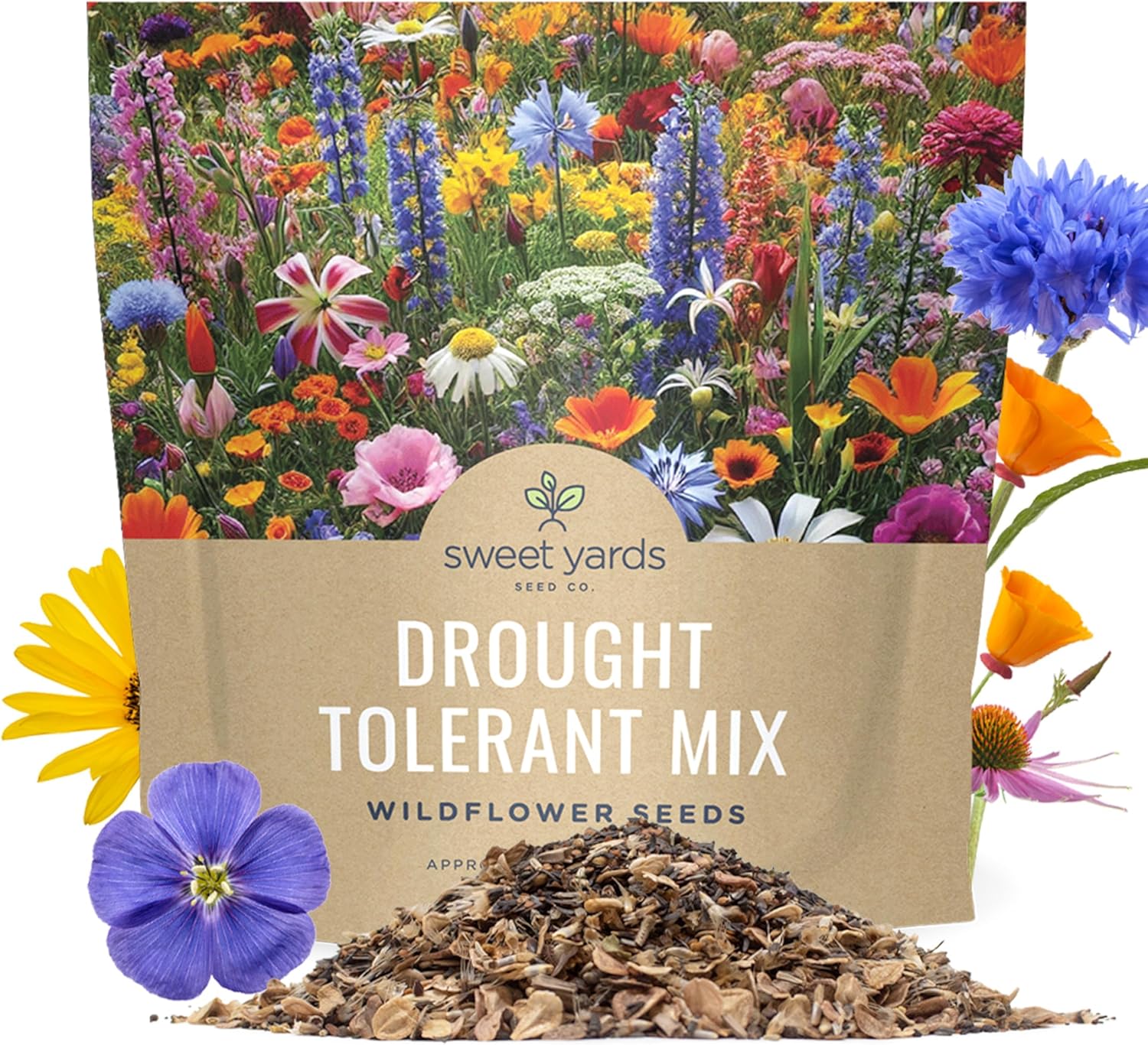
SWEET YARDS Drought Tolerant Wildflower Mix — 1 oz (7,500+ Seeds)
| Unit Count | 1 Ounce |
|---|---|
| Number of Pieces | 7500 |
| Sunlight Exposure | Full Sun |
| Moisture Needs | Moderate Watering |
| Expected Blooming Period | Spring to Fall |
This drought-tolerant wildflower mix is a performance-focused seed blend intended to establish a low-maintenance, pollinator-friendly display in sunny spots. The packet contains over 7,500 open-pollinated seeds across 21 dryland species, combining annuals and perennials so you get an early flush of color and plants that return in subsequent seasons. It is packaged in resealable premium packaging with planting instructions, which helps preserve seed viability between seasons. Recommended for full-sun sites and adaptable to most soils, the mix is formulated for moderate watering and is especially suited to areas where water is limited. In a raised bed the variety of bloom times and heights creates layered interest without intensive care, but expect some variability in germination and bloom density because mixes include both robust and slower-establishing species. If you want a fast, uniform carpet of a single flower type this is not that product, but for a resilient, pollinator-attracting meadow effect in a sunny raised bed it delivers strong, lasting value.
Best for: Gardeners who prioritize resilient, low-water flowerings and want an easy-to-establish pollinator mix for sunny raised beds that performs across seasons.
Less Ideal for: People who need a uniform carpet of a single flower species, exact color schemes, or rapid, perfectly even coverage in a small ornamental bed.
- Large seed count (over 7,500 seeds) suitable to cover about 100 sq. ft.
- Mix of 21 drought-tolerant species offering staggered bloom times and pollinator value
- Open-pollinated non-GMO seeds with premium resealable packaging and planting instructions
- Adaptable to most soils and formulated for full sun with moderate watering needs
- Mix composition leads to uneven germination and variable bloom density across the bed
- Not optimized for a uniform single-species display or precise color control
Verdict: Use this mix when you want a drought-tolerant, pollinator-friendly wildflower display that fills a sunny raised bed with seasonal color and minimal fuss.
Choosing the Right Flowers for Dry Soil: Key Factors to Consider
Sun Exposure and Microclimate
Most flowers adapted to dry soil prefer full sun because higher light encourages deeper root development and reduces humidity-driven disease. Match plant choices to the actual hours of sun you get; a site that looks bright may still receive only morning sun. Plants labeled as tolerant of partial shade will generally need at least four hours of direct sun to show drought-hardy behavior.
Consider microclimates created by walls, fences, or paving. South- and west-facing spots baked by reflected heat amplify water stress, so choose the toughest species for those locations or provide a bit of afternoon shade with a lattice or companion planting.
Soil Texture and Drainage
Dry-soil flowers usually need free-draining ground. Sandy or rocky soils shed water quickly, which favors species that handle intermittent moisture rather than consistent wet feet. Before planting, test drainage in the planting area: dig a hole, fill with water, and time how long it takes to empty. Fast-draining sites suit drought-adapted perennials and annuals alike.
If your soil is compacted clay but tends to be dry on the surface, amend only lightly and focus on plants tolerant of both heat and periodic crusting. Excessive organic matter can retain moisture and invite root rot, so avoid heavy compost or poorly decomposed mulches in true dry sites.
Rooting Habit and Establishment Needs
Plants that develop deep or extensive root systems are better long-term survivors in dry soil. During the first season, even drought-tolerant flowers usually require regular deep waterings to establish roots. After establishment, many can survive on infrequent soakings rather than daily misting.
When planting, give new transplants a large enough hole and water deeply at planting time. Mulch lightly to reduce evaporation but keep any mulch away from crowns. Plan for a season of higher attention so the plants can put down the roots that will let them thrive with minimal water thereafter.
Bloom Season and Pollinator Value
Choose species with bloom windows that match your garden goals. Some dry-soil flowers provide long season color from late spring into fall, while others concentrate bloom in a shorter flush. Extended bloomers reduce the perceived need for replacements and provide continuous value in low-water landscapes.
Also consider pollinator benefits. Many drought-tolerant flowers are native or nectar-rich and support bees and butterflies. Selecting plants that bloom in succession helps local pollinators during dry periods when other nectar sources are scarce.
Maintenance and Longevity
Maintenance expectations differ widely among drought-tolerant flowers. Some are short-lived perennials that need division every few years; others are long-lived and nearly carefree after establishment. Pruning, deadheading, and occasional feeding can prolong blooms, but high-maintenance tasks negate the water-saving benefits if you must water frequently to support vigorous regrowth.
Assess how much time you want to spend on grooming. For low-maintenance landscapes, favor species that self-clean or need only an annual tidy. If you are willing to deadhead regularly, you can often coax longer bloom periods from otherwise low-water plants.
Compatibility with Containers and Small Spaces
Containers dry out faster than in-ground plantings, so choose compact drought-hardy varieties for pots or provide a mulched, well-draining mix. Some dry-soil flowers thrive in containers because their root systems are naturally confined and they do not require rich soil.
If using containers, size them generously to increase soil volume and reduce watering frequency. Group pots to create shared microclimates and use terracotta or glazed materials strategically to control evaporation and soil heat.
Site Preparation for Dry Beds and Rock Gardens
Prepare dry sites by improving drainage where water can puddle and removing competing weeds that steal moisture. In rocky beds, create planting pockets with coarse grit or a small amount of well-rotted compost to give seedlings a foothold without increasing overall water retention too much.
Use a light mulch of gravel or coarse bark to reduce surface evaporation while allowing rain to penetrate. Avoid thick layers of moisture-retaining mulch near crowns because that can cause rot in dry-adapted species.
- Test soil drainage before planting
- Plant at the same depth as nursery pots to avoid crown burial
- Add grit or coarse sand for better percolation in heavier soils
Watering Strategy After Establishment
Shift from frequent shallow waterings to occasional deep soakings once plants are established. Deep watering encourages roots to grow downward where soil retains more moisture. Schedule waterings around prolonged heat spells and dormant periods rather than using a fixed daily routine.
For new installations, water deeply at planting and reduce frequency gradually over the first season. Monitor plants for stress signals such as drooping or slowed growth, then respond with a thorough soak rather than brief surface sprays.
- Water deeply and infrequently to encourage root growth
- Avoid overhead watering in high-heat to reduce leaf scorch risk
- Use a soil moisture probe or simple finger test to decide when to water
Design Ideas for Dry-Soil Color
Combine textures and bloom shapes to keep a dry garden visually interesting even when water is scarce. Pair upright spires with mounded foliage and feathery grasses to create contrast. Repeating a few species across a bed provides cohesion and resilience.
Use containers, rockery pockets, and narrow hedgerows to carry color into slopes and poorly irrigated corners. Group plants with similar water needs to simplify care and avoid overwatering the more drought-tolerant specimens.
- Repeat plants in drifts for stronger visual impact
- Mix foliage tones with blooms for season-long interest
- Use gravel paths and stones to reflect heat and emphasize drought theme
Seasonal Care and Winter Considerations
Many drought-tolerant flowers die back or cut back in winter and need only light protection in cold climates. In areas with freeze-thaw cycles, avoid heavy mulches that trap moisture next to crowns. For perennials, divide and replace congested clumps in spring or early fall to maintain vigor.
In mild climates, some species remain semi-evergreen and benefit from a light autumn tidy. Remove spent flower stalks selectively to encourage fresh growth in the following season rather than wholesale cutting back.
- Divide overcrowded perennials to restore flowering
- Keep mulch light in winter to prevent rot
- Adjust watering in dormant seasons to very occasional refreshes
Using Native Species in Dry Gardens
Native flowers are often a smart choice for dry sites because they evolved with local rainfall and soil types. They typically require less intervention to establish and support local wildlife. Check regional native plant lists to find species that match your climate and soil.
When introducing natives, prioritize sourcing from reputable growers that propagate regionally adapted stock. This increases the chance the plants will display the natural drought resilience you expect.
- Consult regional lists for climate-matched natives
- Group natives by water need and bloom time
- Avoid aggressive non-natives that can outcompete local flora
How We Chose the Best Flowers for Dry Soil
We focused on traits that matter for gardens where soil stays dry between waterings. Each candidate needed documented drought tolerance in established conditions, consistent flowering under low-moisture stress, and adaptability to common garden soils such as sandy, gritty, or shallow loam. We also prioritized species that perform reliably in full sun or partial shade typical of dry sites. Evaluation criteria included seasonal water needs and survivability, soil tolerance and adaptability, bloom reliability under stress, maintenance and pruning requirements, and suitability for beds, slopes, and containers. We excluded plants that require rich, moisture-retentive soils, heavy feeding, or frequent deadheading to stay attractive. To narrow the list we considered widely recommended species by regional extension advice and experience reports from dry-site gardeners, removing rare cultivars with narrow climate windows. The result is a practical set of low-water flowering options suited to a range of dry garden uses.
FAQ
How often should I water drought-tolerant flowers?
Often you will water newly planted drought-tolerant flowers weekly for the first month, then reduce to deep soakings every 2 to 4 weeks depending on heat and soil. Established plants usually survive on occasional thorough waterings rather than frequent light sprays.
Can I grow dry-soil flowers in containers?
Yes, but containers dry out faster so choose compact drought-hardy varieties and use a free-draining potting mix. Increase container size where possible and mulch the surface to slow evaporation.
Will adding compost help dry soils?
A small amount of well-rotted compost can help seedlings establish by improving nutrient availability, but heavy compost or moisture-retentive soil mixes can hold water and lead to root issues with true dry-site species. Use amendments sparingly and focus on drainage improvements.
Do drought-tolerant flowers need fertilizer?
They generally need minimal feeding. A light application of balanced fertilizer in spring can boost early growth, but over-fertilizing encourages lush, water-hungry growth that undermines drought hardiness.
How do I prevent winter rot in low-water perennials?
Avoid heavy mulches that trap moisture next to crowns and ensure plants are not planted too deep. In wet winters, improve drainage and consider lifting and replanting overly susceptible species in higher, drier spots.
Final Verdict
For dry soil sites, prioritize plants with strong drought tolerance, deep or fibrous rooting habits, and low maintenance demands. Match species to your sun exposure and soil texture, and expect to invest time during the first season to establish roots. Once established, the right flowers will provide long seasons of color with infrequent watering and minimal pruning. Balance bloom length and maintenance when making choices: longer-blooming but slightly higher-care plants may be worth the effort in focal areas, while truly low-maintenance species work best for slopes, rockeries, and out-of-the-way borders.
