

Note: This article contains affiliate links. If you click on these links and make a purchase, I may earn a small commission at no extra cost to you. This helps support my research and content. Read my full affiliate disclosure here.
Picking the right soil for English lavender matters more than most gardeners expect. Lavender thrives in soil that drains fast, keeps a neutral to slightly alkaline pH, and resists compaction through the growing season. The wrong mix can leave plants sitting in moisture, reduce flowering, and increase winter loss. This guide covers five shortlisted soils for English lavender, chosen for their drainage, structure, and pH management. We evaluated each option for real garden conditions so you can find a soil that suits containers, beds, or gravelly borders. Below we explain how we evaluated mixes and what to consider when you plant or repot lavender.
Top Picks at a Glance
| Best Overall The best all-around choice for most situations | Gardenera Organic Lavender Potting Mix, 2 Quart |  |
| Best Budget The cheapest option that still gets the job done reliably | Doter Lavender Potting Mix (1 qt) |  |
| Highest Rated A top-rated pick with lots of positive feedback | Rosy Soil Herb Mix Organic Potting Soil, 4 Quart |  |
| Most Popular A crowd favorite that many people choose with confidence | Soil Sunrise Lavender Potting Soil Mix (8 Quarts) |  |
| Best Seller A high-volume bestseller chosen again and again | Back to the Roots Premium Organic Potting Mix, 6 Quart |  |
Gardenera Organic Lavender Potting Mix, 2 Quart
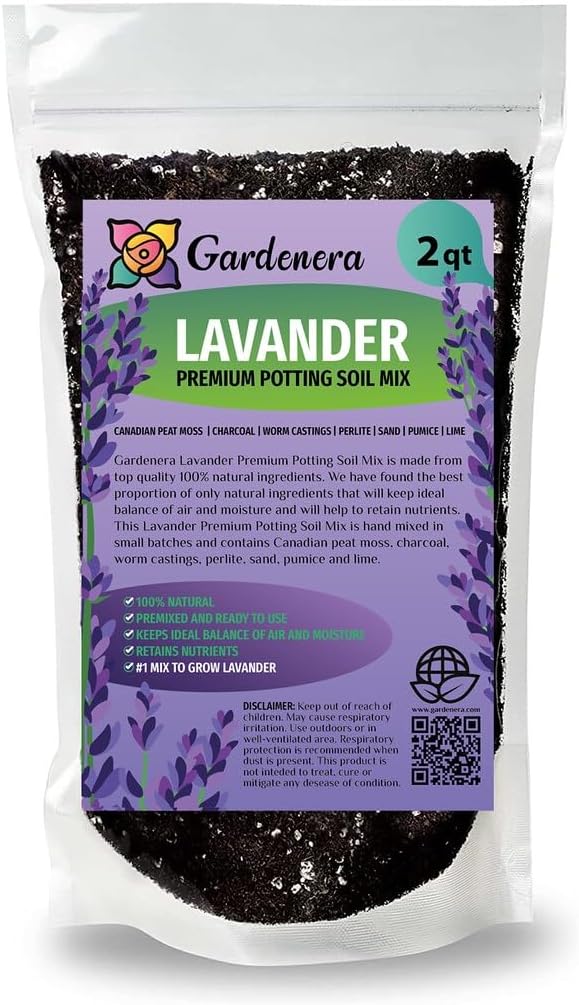
| Brand Name | Gardenera |
|---|---|
| Item Type Name | Lavender Potting Mix |
| Volume | 2 quarts |
This Gardenera Lavender Potting Mix is formulated for growing lavender in containers and small beds where good drainage and slightly alkaline balance matter. The blend pairs Canadian peat moss for moisture retention with perlite, sand and pumice to keep soil airy and prevent waterlogging, while charcoal helps keep the root zone clean and worm castings add slow-release nutrients. Lime is included to help adjust pH so lavender can access minerals. Typical use is filling pots or amending a planting hole for English lavender seedlings and transplants; after planting water in and avoid overwatering to preserve the mix's aeration benefits. The 2 quart bag is convenient for trial plantings or small containers but will not cover larger beds, so plan multiple bags for more plants. This mix targets gardeners who want a ready-made media tuned to lavender rather than mixing their own components. Expect good drainage and healthier root development, but budget and quantity needs are important considerations for bigger projects.
Best for: Gardeners who want a pre-mixed, lavender-focused potting medium for containers or small plantings and prefer a plug-and-play option over sourcing individual ingredients.
Less Ideal for: Those planting multiple landscape-sized lavender beds or anyone seeking a peat-free or bulk soil solution should consider larger or different products.
- Formulated specifically for lavender with components that improve drainage and aeration
- Includes worm castings for natural nutrient support and charcoal for cleaner root environment
- Contains lime to help maintain a pH favorable to lavender
- Small 2 quart size is handy for container gardeners or trial plantings
- Only 2 quarts per bag makes it impractical as the sole supply for planting multiple shrubs
- Peat-based mix may compress over time and require top dressing or refreshment
Verdict: This ready-made mix gives English lavender the drainage, aeration, and slight pH boost it needs in containers or small plantings without having to blend ingredients yourself.
Doter Lavender Potting Mix (1 qt)

| Brand Name | Doter |
|---|---|
| Item Type Name | Garden soil |
| Volume | 1 quarts |
| Unit Count | 1 Count |
This 1-quart Doter Lavender Potting Mix is a tailored growing medium for lavender and other Mediterranean herbs, aimed at giving plants the drainage and slightly acidic to neutral pH they prefer. It combines coir and perlite to retain some moisture while allowing excess water to escape, which helps prevent root rot in containers or raised beds. The formula is described as nutrient-enriched to encourage stronger root development and more fragrant blooms, making it useful for repotting small plants, starting seedlings, or refreshing the top layer of a container. Because it comes in a 1-quart unit, it is most practical for small pots or trial plantings rather than large beds. Buyers should plan to use multiple units for bigger projects or mix with bulk soil when planting many lavender plants. The mix is simple to use straight from the bag and suits gardeners who want a ready-made lavender blend without formulating their own soil amendments.
Best for: Gardeners who want an off-the-shelf, lavender-focused potting mix for containers, small raised beds, or repotting individual plants and prefer convenience over mixing their own media.
Less Ideal for: Gardeners establishing large lavender borders or commercial growers who need bulk soil and exact nutrient analyses should choose larger, clearly specified products instead.
- Formulated specifically for lavender with balanced pH to support aromatic blooms
- Perlite and coir blend improves drainage while retaining some moisture for container growing
- Nutrient-enriched to support root development and flowering
- Convenient small 1-quart size for repotting, seed starting, or trial plantings
- Small volume means multiple bags are required for larger gardens or many containers
- No detailed ingredient ratios or guaranteed analysis provided
Verdict: A ready-made, small-format lavender mix that simplifies potting and repotting for home gardeners who want good drainage and bloom support.
Rosy Soil Herb Mix Organic Potting Soil, 4 Quart

| Unit Count | 64 Ounce |
|---|---|
| Volume | 4 quarts |
| Item Highlight | Biochar, Worm Castings, Mycorrhizae Blend, Peat-Free, Fast Draining |
This 4-quart Rosy Soil Herb Mix is a ready-to-use potting soil aimed at container herbs and small outdoor planters. It combines wood biochar, compost, worm castings, bark fines, and beneficial mycorrhizae to create a light, airy medium that drains quickly while retaining nutrients near roots. Typical use is straight from the resealable bag into 6-inch pots or balcony planters for basil, thyme, lavender, and other culinary and aromatic herbs without needing to amend or blend. The peat-free formula and microbial inputs help build a living soil that supports stronger root growth and improved nutrient uptake, which can lead to fuller, more flavorful plants. Because the mix is designed for drainage and seedling establishment it is less likely to sit wet and invite root rot in containers. Limitations are the small 4-quart volume — the bag covers only a few pots — and there is no listed NPK analysis for fine-tuning fertilization, so heavier-feeding herbs or larger plantings will need supplemental fertilizer over time.
Best for: Buyers who prioritize a reliable, peat-free, microbially active potting mix for container herbs and want a plug-and-play soil that promotes healthy roots with minimal effort.
Less Ideal for: Gardeners needing large volumes for beds or heavy-feeding herbs and those who require a measured fertilizer profile built into the mix.
- Peat-free, organic blend using biochar and worm castings to support microbial activity.
- Includes beneficial mycorrhizae to improve root establishment and nutrient uptake.
- Fast-draining, airy texture suitable for seedlings and container-grown herbs.
- Resealable 4-quart bag ready to use without additional mixing.
- Small volume per bag restricts use to a few pots or small planters.
- No nutrient (NPK) breakdown provided for precise fertilizing schedules.
Verdict: Choose this mix if you want a dependable, peat-free, microbially rich potting soil that encourages strong roots and fast drainage for container lavender and other herbs.
Soil Sunrise Lavender Potting Soil Mix (8 Quarts)

| Volume | 8 quarts |
|---|---|
| Unit Count | 1 Count |
| Ingredients | Peat, perlite, charcoal, pumice, sand, wormcastings, lime |
| Style Name | Peat Moss,Potting Soil Mix |
This Lavender Potting Soil Mix is a small-batch blend designed to mimic Mediterranean soils lavender prefers. It combines peat moss for moisture retention with perlite, pumice, sand and horticultural charcoal to keep the mix light and fast-draining, while worm castings supply gentle, organic nutrients and lime adjusts pH toward mild alkalinity. In practice the mix is best used for container-grown lavender or small raised beds where drainage and a slightly alkaline pH matter; the sandy loam texture helps prevent root rot and reduces overwatering risks. The resealable 8-quart bag is convenient for repotting one or two 10–12 inch pots and the ingredient list is straightforward and chemical-free. Limitations are the small volume if you need to fill large planters or multiple pots and peat-based content if you prefer a fully peat-free or larger-scale landscape amendment. For hobbyists focused on container lavender, this blend simplifies getting soil conditions closer to what the plants need without extra amendments.
Best for: Gardeners who want an off-the-shelf, lavender-focused potting mix for container or small raised-bed planting and value a ready-made, no-fuss soil that reduces the need for additional amendments.
Less Ideal for: Large-scale landscapers or growers who need bulk soil quantities or gardeners seeking a peat-free, landscape-grade amendment for in-ground beds.
- Formulated for lavender with ingredients that improve drainage and aeration (perlite, pumice, sand)
- Includes worm castings for gentle organic nutrient support
- Lime-adjusted to favor the slightly alkaline pH lavender prefers
- Horticultural charcoal and pumice help reduce compaction and potential root rot
- Small 8-quart bag may not be enough for multiple or large containers
- Contains peat moss, which some gardeners avoid for sustainability reasons
Verdict: If you want a convenient, lavender-specific potting mix that improves drainage and adjusts pH for healthier container plants, this ready-made 8-quart blend delivers.
Back to the Roots Premium Organic Potting Mix, 6 Quart

| Unit Count | 192 Fluid Ounces |
|---|---|
| Volume | 6 quarts |
| Item Highlight | Peat-free potting soil for outdoor plants, indoor plants, vegetables, herbs and flowers |
| Made in | USA |
Back to the Roots Premium Organic Potting Mix is a small-batch, all-purpose soil designed for indoor and outdoor container plants, including flowers, herbs, and vegetables. The 6 quart bag contains a peat-free blend made from upcycled plant matter and wood fines, with added organic plant food, yucca extract to help retain and regulate moisture, and dolomitic limestone to stabilize pH. In practice this mix is easy to use straight from the bag for potting annuals and bedding plants or for refreshing topsoil in containers. Its light, well-draining texture helps roots establish without becoming waterlogged while still holding enough moisture for frequent flowering plants. Because it is organic and made in the USA, it suits growers who want a lower-carbon-footprint option. Limitations are the small bag size for larger projects and that very heavy feeders or long-term container plantings may need periodic fertilization or larger volumes of soil to maintain vigor.
Best for: Buyers who want a safe, organic, ready-to-use potting mix for potted flowers and small container gardens and prefer products with predictable performance and lower environmental impact.
Less Ideal for: Gardeners planning large-scale repotting, heavy-feeding perennials, or long-term container plantings that require bulk soil or extended nutrient release.
- Peat-free organic formula made from upcycled plant matter and wood fines
- Includes yucca extract for improved moisture retention and control
- Dolomitic limestone added to help balance soil pH for flowering plants
- Light, well-draining texture suitable for container-grown flowers and annuals
- Small 6 quart bag is not economical for large pots or multiple containers
- Does not include slow-release fertilizer strong enough for long-term heavy feeders
Verdict: A reliable, peat-free organic potting mix that delivers predictable moisture control and pH balance for potted flowers and small container gardens.
Choosing the Right Soil for English Lavender: Key Factors to Consider
Drainage and Water Flow
Lavender needs a fast-draining root zone to avoid root rot and fungal problems. A mix with coarse particles such as builders sand, grit, or perlite lets excess water move quickly away from roots. In garden beds, incorporating coarse mineral material and creating a raised planting surface helps water run off instead of pooling around crowns.
Assess drainage by feeling the soil after a heavy rain or watering. If it stays soggy more than a day, the mix is too fine. Good drainage also affects how often you need to water and how tolerant plants are to cool, wet weather.
pH Stability and Alkalinity
English lavender prefers a neutral to slightly alkaline pH, often around 6.5 to 7.5. Soil mixes that are heavily acidic will stunt growth and reduce flowering. Choosing ingredients that resist acidification over time-such as crushed limestone or alkaline mineral additives-helps keep pH in the preferred range.
Avoid relying solely on organic acidifying materials like fresh peat or uncomposted bark in lavender mixes. Regularly testing pH is useful because water quality and fertilizer use can shift root-zone acidity over seasons.
Soil Structure and Longevity
A soil that holds a stable, open structure prevents compaction and preserves air space for roots. Coarse mineral components and well-aged, gritty organic matter maintain friability longer than fine, dense media. In containers, structure matters even more because repeated wetting and drying can collapse fine particles and reduce porosity.
Choose mixes that include a high fraction of inorganic grit or gravel and minimal high-swelling organic matter. Long-lasting structure reduces the need for frequent repotting and keeps plants healthier across years.
Particle Size and Root Penetration
Lavender roots need to move through the soil easily to establish and access moisture during dry spells. A particle size distribution that includes several millimeter-sized grit encourages root branching and prevents roots from circling in containers. Fine, powdery soils can restrict root growth and hold too much water.
For in-ground planting, a looser top layer with larger particles near the crown helps prevent crown rot. In containers, a mix with a visible proportion of grit or pumice makes it easier for roots to anchor and breathe.
Nutrient Balance and Low-Feeding Needs
English lavender is a light feeder and dislikes high nitrogen or rich organic loads. Soils designed for lavender should provide modest levels of essential nutrients while avoiding high levels of nitrogen that promote soft, leafy growth at the expense of flowers. Slow-release, low-nitrogen options or light compost fractions work well.
Excessive fertility also encourages lush growth that is more prone to disease and winter damage. Selecting a mix formulated for Mediterranean herbs or that specifies low organic matter content helps maintain the right nutrient balance.
Preparing Planting Sites for English Lavender
Site preparation determines how any soil will perform. For in-ground planting, pick a sunny spot with good air circulation and build a raised bed or mound if your native soil is heavy clay. Dig in coarse grit and ensure the planting area sits slightly higher than surrounding ground to prevent water pooling.
For containers, choose pots with generous drainage holes and use a fast-draining mix with added mineral grit. Avoid oversized pots that retain too much moisture; a snug container encourages better root exploration without waterlogging the root ball.
- Create a raised planting area on heavy soils using coarse sand and grit.
- Ensure containers have multiple drainage holes and a gravel layer is not necessary if the mix drains well.
- Position plants in full sun to reduce leaf wetness and encourage compact growth.
Amendments That Improve Lavender Soil
Not all amendments are equal. Coarse builders sand, grit, pumice, and small gravel increase drainage and structural stability. Avoid fine sand and silt that can compact under moisture cycles. Small amounts of well-aged compost give trace nutrients without retaining too much water.
For pH adjustment, finely ground limestone can be mixed in to raise alkalinity slowly. Use it cautiously and test soil pH periodically to avoid overcorrecting. Avoid fresh organic materials that acidify the soil.
- Grit and pumice improve porosity without adding moisture-holding organic matter.
- A light dusting of ground limestone can help maintain slightly alkaline conditions.
- Well-aged compost should be used sparingly to avoid increasing water retention.
Container Vs In-Ground Mix Differences
Container mixes need to dry between waterings and must resist compaction in a limited volume. That means a higher proportion of coarse components and lower organic content than standard potting mixes. In-ground soils can rely more on native structure but still benefit from added grit and raised planting.
When repotting, refresh only the top third of the container mix if it still drains well. Full replacement is necessary when the media shows signs of collapse, persistent sogginess, or poor flowering.
- Containers: prioritize grit/pumice and air-filled porosity.
- In-ground: focus on drainage paths and slightly raised planting.
- Refresh mixes gradually rather than complete overhaul unless structure is lost.
Watering Practices Linked to Soil Choice
How you water lavender must match the soil. Fast-draining soils permit less frequent, deeper watering that encourages durable root systems. Overwatering in heavy soils is the most common cause of decline. Let the top inch or two of fast-draining mixes dry before watering again.
In containers, check moisture by lifting the pot or probing with a finger. Plants in rich, moisture-retentive mixes may need more attention to avoid root rot. Adjust irrigation frequency seasonally, reducing water in cooler months.
- Water deeply and infrequently in well-draining soil.
- Allow topsoil to dry between waterings to reduce fungal risks.
- Reduce irrigation in autumn to harden plants for winter.
Maintaining Soil Health Over Time
Keep soil structure by avoiding heavy mulches that trap moisture next to the crown. Use light, inorganic mulches like gravel in Mediterranean-style borders. If using organic mulches, keep them a few inches away from stems and apply sparingly.
Monitor pH and replenish grit or replace the top layer if the mix compacts. Annual inspection of root health and soil moisture behavior helps decide when to refresh or repot.
- Use light, inorganic mulches to protect the root zone without increasing moisture.
- Check pH every year or two, especially if water is acidic.
- Top-dress containers annually and replace media when structure collapses.
How We Chose the Best Soil for English Lavender
We selected soils based on criteria that matter for English lavender in garden beds and containers. Drainage and texture were top priorities because lavender roots cannot tolerate prolonged wetness. We also checked pH stability and buffering capacity because lavender prefers neutral to slightly alkaline conditions and some amendments change pH over time. Structure and long-term friability were evaluated to ensure the mix resists compaction across seasons. Nutrient balance and low organic matter were considered so plants get enough trace nutrients without excess moisture retention. Particle size and sand content were used as proxies for water flow rate and root penetration. Finally, we considered suitability for both in-ground and container use, since root zone volume changes how mixes behave. Exclusions: blends aimed solely at moisture-retentive moisture-retaining vegetable mixes, heavy peat-only media, and generic potting soil with no drainage modifiers were excluded. We focused on mixes and amendments that specifically address drainage, pH control, and long-term structure for lavender growing situations.
FAQ
Do I need to add sand to soil for English lavender?
Often yes. Coarse sand or grit improves drainage and prevents compaction. Use coarse builders sand or grit rather than fine sands. Mix it into the root zone rather than just topping the soil.
Can I use garden soil straight from the yard for lavender?
It depends on your soil texture. Heavy clay or poorly drained garden soil should be amended or raised with grit and coarse material. Sandy, well-draining native soil may work with minimal amendment.
What pH should soil for English lavender have?
Lavender prefers neutral to slightly alkaline conditions, typically around pH 6.5 to 7.5. Test soil and amend with ground limestone if the pH is persistently acidic.
How often should I replace potting mix for lavender in containers?
Check structure annually. If the mix retains too much water, compacts, or the plant shows poor flowering, replace one third to half of the media or fully repot every 2 to 3 years depending on condition.
Will adding compost help lavender?
Use compost sparingly. A small fraction of well-aged compost supplies trace nutrients without increasing moisture retention too much. Excess compost can hold water and encourage soft growth that is more disease-prone.
Final Verdict
Choose soils for English lavender that prioritize drainage, stable pH, and long-term open structure. Expect tradeoffs: more coarse mineral content improves drainage but reduces nutrient and water holding, while higher organic content increases moisture and feeding needs. Match mix composition to your planting situation-containers need grittier media, while beds benefit from incorporated grit and raised planting. Focus on drainage, particle size, and pH buffering when deciding. That combination will give you the best chance of healthy growth and reliable flowering in the seasons ahead.
