

Note: This article contains affiliate links. If you click on these links and make a purchase, I may earn a small commission at no extra cost to you. This helps support my research and content. Read my full affiliate disclosure here.
If white grubs are chewing roots and leaving brown patches in your lawn, choosing the right beneficial nematodes for grubs can make the difference between temporary relief and season-long control. These microscopic worms attack grub larvae in the soil without harming plants, pets, or people when used correctly. This guide covers our five shortlisted options suited to grub suppression, explaining when to apply, how to handle the product, and which soil conditions matter most. We evaluate each choice for ease of application and how long the treatment persists in real garden soils. Read on to find a practical option that fits your lawn size, timing window, and moisture regime.
Top Picks at a Glance
| Best Overall The best all-around choice for most situations | NaturesGoodGuys Triple Blend Beneficial Nematodes (30 Million) |  |
| Best Value The sweet spot between price and what you get | Bug Sales Beneficial Nematodes Hb (Heterorhabditis bacteriophora) — 50 Count |  |
| Highest Rated A top-rated pick with lots of positive feedback | NaturesGoodGuys HB+SC Beneficial Nematodes, 500 Million |  |
| Most Popular A crowd favorite that many people choose with confidence | NaturesGoodGuys Triple Blend Beneficial Nematodes, 15 Million |  |
| Best Seller A high-volume bestseller chosen again and again | NaturesGoodGuys Triple Blend Beneficial Nematodes HB+SC+SF, 25 Million |  |
NaturesGoodGuys Triple Blend Beneficial Nematodes (30 Million)

| Target Species | Insects |
|---|
This product supplies 30 million beneficial nematodes in a triple blend (Heterorhabditis bacteriophora, Steinernema carpocapsae, and Steinernema feltiae) intended for suppressing soil-dwelling pests such as grubs, fungus gnats, and flea larvae. You mix the nematodes with water and apply them to soil or potting mix where the nematodes actively seek and infect target insects. The formulation is labeled safe for use around people, pets, and vegetables, so it can be used in lawns, garden beds, and indoor potted plants. Notable practical benefits are the broad target range from the three species and the biological, non-chemical control method that integrates well with organic practices. Important limitations are that nematodes are perishable and require proper storage and prompt application after arrival, and effectiveness depends on correct soil moisture and temperature conditions for nematode activity. Expect seasonal and environmental sensitivity and the need for follow-up treatments for sustained grub pressure.
Best for: Gardeners who want a biological, non-chemical way to reduce grubs and other soil pests across lawns and beds and who are willing to follow storage and application instructions for best results.
Less Ideal for: People who need an instant, guaranteed kill or who cannot manage timing and soil conditions for repeated biological applications should consider alternative control methods.
- Triple species blend expands the range of pests controlled compared with a single-species product
- Supplied quantity (30 million) is suitable for treating multiple small to medium areas
- Safe for use around people, pets, and vegetables when applied as directed
- Can be applied to lawns, garden beds, and indoor potting mixes for flexible use cases
- Perishable product that can lose viability if not stored and applied promptly
- Effectiveness depends on soil temperature and moisture so timing matters
Verdict: Choose this triple-blend nematode pack if you want a broad-spectrum, biological option to suppress grubs and other soil pests while keeping treatments safe for people, pets, and edible plants.
Bug Sales Beneficial Nematodes Hb (Heterorhabditis bacteriophora) — 50 Count

| Unit Count | 50 Count |
|---|---|
| Item Form | Liquid |
| Target Species | Insects |
This product delivers 50 live beneficial nematodes (Heterorhabditis bacteriophora) intended to control grubs and a long list of other soil pests. The nematodes arrive as a liquid concentrate you mix with water and apply with a watering can or sprayer, best done in the morning, evening, or on cloudy days and to moist soil. Key benefits are the broad target range — from lawn grubs and Japanese beetles to root borers and certain weevils — and the safety profile since they are harmless to people and pets when used as directed. Practical use requires following storage and activation rules: keep unactivated nematodes refrigerated at 36 to 45°F and use activated material within six hours. They are most effective when soil is kept moist for about two weeks after application and repeated treatments may be needed for heavy infestations. The main limitations are the perishable nature of live nematodes and the need for timely application and proper moisture management, which means planning and some follow-up to see reliable results in grub control.
Best for: Gardeners who want a practical, organic way to reduce grub populations and other soil pests and who are willing to follow storage and application steps for a biological treatment.
Less Ideal for: People who prefer a one-time, nonperishable chemical treatment or those unwilling to refrigerate and apply a live biological agent promptly.
- Targets a wide range of soil pests including lawn grubs, Japanese beetles, and root weevils
- Safe for humans and pets when used according to directions
- Easy to apply with a watering can or sprayer and compatible with typical garden routines
- Instructions include storage and timing guidance to preserve nematode viability
- Live product requires refrigeration and has a limited usable window once activated
- Effectiveness depends on maintaining soil moisture and may require repeat applications
Verdict: A practical organic choice for gardeners who will follow refrigeration and application steps to reliably reduce grubs and other soil pests.
NaturesGoodGuys HB+SC Beneficial Nematodes, 500 Million

| Target Species | Insects |
|---|
This product supplies 500 million live beneficial nematodes (Heterorhabditis bacteriophora and Steinernema carpocapsae) intended to control soil pests such as grubs, fungus gnats, flies and other root-feeding larvae. You apply the powder to moist soil with a watering can or sprayer during early morning or evening, then keep the soil moist for about two weeks so the nematodes can move and find hosts. The listing includes recommended application rates for preventative and active infestations and notes a minimum soil temperature of about 53°F for activity. Practical benefits are chemical-free pest control safe around people, pets and plants, suitability for container plants, raised beds and greenhouses, and straightforward storage instructions if you cannot apply immediately. Important limitations are that nematodes are perishable living organisms that require prompt use or refrigeration and that effectiveness depends on correct application timing, soil temperature, and maintaining moisture, so several repeat applications may be needed for heavy infestations.
Best for: Gardeners who prioritize dependable, nonchemical grub control and are willing to follow handling and application steps closely to maintain nematode viability.
Less Ideal for: People who need an instant knockdown solution or who cannot meet temperature and moisture requirements for biological controls should consider alternative treatments.
- Targets a wide range of soil-dwelling pests including grubs and fungus gnats
- Chemical-free and safe to use around people, pets and plants
- Usable in pots, raised beds, greenhouses and outdoor garden soil
- Clear application guidance with recommended rates for prevention and active control
- Live product requires prompt use or refrigerated storage and will lose viability if mishandled
- Requires soil temperatures above about 53°F and sustained moisture for successful control
Verdict: A reliable, chemical-free option for controlling grubs and other soil pests when applied and handled correctly.
NaturesGoodGuys Triple Blend Beneficial Nematodes, 15 Million

| Unit Count | 15 Count |
|---|---|
| Target Species | Insects |
| Active Ingredients | Heterohabditis bacteriophora; Steinernema carpocapsae; Steinernema feltiae |
This product supplies three species of beneficial nematodes—Heterohabditis bacteriophora, Steinernema carpocapsae, and Steinernema feltiae—packaged as 15 million infective juveniles for soil application. It is designed to be activated with water and released with a watering can or hose-end applicator onto moist soil where grubs, root-feeding larvae, and other target insects live. The included storage instructions let you refrigerate the unactivated nematodes for up to 30 days, and once mixed they must be applied within six hours, which encourages planning applications on cool, overcast days or early morning. In practical use the mix is safe around people, pets, and plants and fits into an integrated organic pest program, reducing reliance on chemical insecticides. Important limitations are the short window after activation and the need to maintain soil moisture and cool temperatures for best results, so timing and proper storage are essential to achieve the expected control.
Best for: Gardeners who prefer biological, low-toxicity solutions for grub and root-feeding pests and who plan applications carefully to meet storage and activation timing.
Less Ideal for: Those who need immediate, one-time rapid knockdown regardless of temperature or moisture or who cannot apply treatments shortly after activation.
- Contains three complementary nematode species to target a broad range of soil insect pests
- Safe to use around people, pets, and garden plants
- Can be stored unactivated in the refrigerator for up to 30 days
- Simple activation and application with watering can or hose-end sprayer
- Once activated the nematodes must be applied within six hours, limiting application flexibility
- Performance depends on soil moisture and cool conditions, so reduced efficacy in hot dry weather
Verdict: Use this triple-species beneficial nematode mix when you want an organic, pet-safe biological control for soil grubs and root-feeding pests and can apply it within the product's storage and activation constraints.
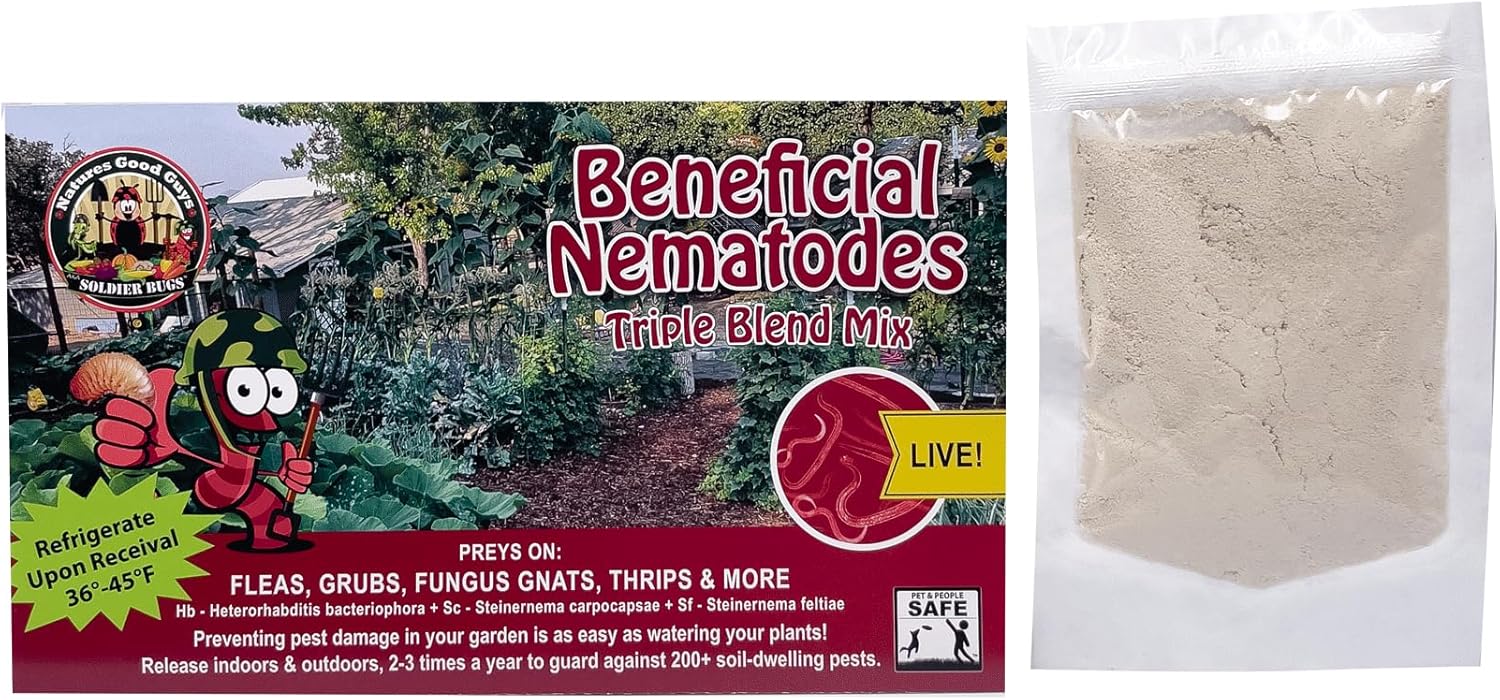
NaturesGoodGuys Triple Blend Beneficial Nematodes HB+SC+SF, 25 Million
| Unit Count | 25 Count |
|---|---|
| Item Form | Powder |
| Active Ingredients | Heterorhabditis bacteriophora; Steinernema carpocapsae; Steinernema feltiae |
| Indications | Pest Control – Insects, Soil Health Improvement |
This product supplies three species of beneficial nematodes (Heterorhabditis bacteriophora, Steinernema carpocapsae, Steinernema feltiae) in an inactive powder form that you hydrate and apply to soil to target grubs and other soil-dwelling insects. Typical use is mixing the pack with water at the recommended temperature, then applying with a watering can, pump sprayer, or hose-end sprayer while keeping soil moist for two weeks for effective establishment. Notable features include a claimed coverage of up to 6,200 square feet, refrigeration storage for up to 30 days before activation, and compatibility with indoor or outdoor use and around people and pets. In practice this translates to a biological, low-toxicity alternative to chemical insecticides that treats pests where they live in the soil. Important limitations are that nematodes are temperature and moisture sensitive so applications must follow the temperature and soil moisture windows, and viability declines if the product is not kept cool in transit or stored correctly before use.
Best for: Homeowners who prefer a low-toxicity, biological approach to grub and soil insect control and who will follow application timing and storage instructions closely.
Less Ideal for: Gardeners who need an immediate knockdown solution or who cannot guarantee maintaining specified soil temperatures and consistent moisture after application.
- Contains three complementary nematode species to target a broad range of soil pests including grubs
- Covers up to 6,200 square feet per pack when applied as directed
- Can be stored unactivated in the refrigerator for up to 30 days for scheduling flexibility
- Safe for use around people, pets, and plants when applied according to instructions
- Effectiveness depends on following strict temperature and soil moisture windows during activation and after application
- Viability can be lost if the product is not kept cool during shipping or storage
Verdict: Choose this triple-species nematode pack if you want a science-based, low-toxicity biological treatment for grubs and other soil pests and can store and apply it within the recommended temperature and moisture windows.
Choosing the Right Beneficial Nematodes for Grubs: Key Factors to Consider
Strain Match To Target Grubs
Different nematode species and strains vary in which grub larvae they infect and how aggressively they attack. Choosing a strain that targets the grub species present in your region increases the odds of kill and reduces wasted application.
Pay attention to labels that specify recommended pest species or lifecycle stages. Some strains prefer young larvae near the soil surface while others can reach and infect deeper or older instars. If the product does not list target pests clearly, plan for follow-up monitoring and additional treatments.
Application Timing and Soil Conditions
Timing is critical because nematodes are living organisms that need a window when grubs are active near the root zone. For many turf-infesting grubs, late summer to early fall or spring emergence windows work best. Applying when soil temperatures and moisture levels favor both nematodes and grubs improves contact and infection rates.
Soil moisture before, during, and after application matters. Nematodes move in a water film between soil particles, so apply to moist ground and water in gently after application. Avoid very hot, dry conditions or frozen soil; extreme temperatures reduce nematode survival and performance.
Product Viability and Storage
Because these are live biologicals, shelf life and storage instructions determine how effective the product will be when you use it. Look for clear expiration or use-by dates and guidance on refrigeration if required. Longer shelf life gives more flexibility for timing, but once rehydrated the usable window is usually short.
Transporting and storing at recommended temperatures preserves nematode activity. If a product arrives warm or has been kept too long, viability testing (observing movement after rehydration) can inform whether to proceed with application or request a replacement.
Application Method and Equipment
Consider how the manufacturer expects the product to be applied. Some formulations are rehydrated and applied with a garden sprayer, hose-end applicator, or watering can. Others come in simpler sachets intended for spot treatments. Match the packaging and instructions to equipment you already own or can use without specialized gear.
Uniform coverage is important because nematodes need to contact grubs in the soil. If you have uneven watering or a large lawn, choose a product and method that allow consistent distribution across the treatment area.
Coverage Rate and Packaging Size
Products list coverage in square feet or square meters once rehydrated. Estimate your treatment area before buying so you do not run short mid-application. Larger properties often need multiple packs or larger bulk kits designed for even dispersion.
Smaller, single-use packets reduce waste and reduce the risk of storing rehydrated nematodes incorrectly. For annual or irregular grub issues, smaller packs can be more practical, while frequent treatments justify larger format options.
Environmental Compatibility and Non-target Safety
One of the advantages of beneficial nematodes is their safety profile compared with synthetic insecticides. Still, consider local environmental conditions such as heavy clay or compacted soils that limit nematode movement and oxygen availability. Some soil types or high organic-matter soils can reduce contact rates with grubs.
Also assess the impact on beneficial insects and soil organisms. Most nematode strains used for grub control are specific to certain larval pests, but confirm the product documentation to ensure it aligns with your conservation goals for pollinators and soil life.
When To Apply Nematodes For Best Effect
Apply nematodes when grub larvae are active and near the root zone. For many turf-infesting species that means targeting late summer into early fall or the spring window when eggs hatch. Check local extension guidance for typical grub life cycles in your area to hit the most vulnerable larval stage.
Avoid applications during heat waves, drought, or frozen ground. Ideally, apply when daily soil temperatures are in the moderate range and you can keep the soil moist for several days after treatment to support nematode movement and infection.
- Water the area lightly before application if the soil surface is dry.
- Apply in early morning or late afternoon to avoid UV exposure and heat stress.
- Keep the soil moist for at least a week after application, with gentle watering.
Preparing and Mixing Live Nematode Products
Follow rehydration instructions exactly. Many products instruct you to loosen a sachet into clean water and let the nematodes hydrate for a specific period before application. Use clean containers and avoid chlorine-treated water unless it has been dechlorinated by standing or using a neutralizer.
Mix only the amount you will apply immediately. Once rehydrated, nematodes have a limited window of viability. Pour gently into sprayer tanks and agitate periodically during application to keep them suspended.
- Do not use high-pressure sprayers or very fine nozzles that can damage nematodes.
- Rinse equipment with clean water before and after to prevent contamination.
Integrating Nematodes Into A Grub Management Plan
Treating with nematodes is one tool among several. Combine biological tactics with cultural practices such as improving drainage, avoiding drought stress, and maintaining healthy turf to resist grub damage. Monitor grub levels with periodic soil checks to decide if spot treatments or larger applications are needed.
If an infestation is heavy, plan for follow-up treatments timed to larval development rather than assuming a single application will eliminate all stages. Use nematodes as part of a longer-term strategy to reduce grub populations over seasons.
- Inspect turf with a shovel to assess grub density before treating.
- Rotate biological approaches with cultural controls rather than relying solely on one method.
Common Application Mistakes To Avoid
A frequent error is applying nematodes during dry or hot periods when they cannot move or survive. Another is using chlorinated water for mixing without allowing it to off-gas, which can harm the organisms. Over-diluting or underapplying leads to poor coverage and ineffective control.
Also avoid applying just before heavy rain that will wash nematodes past the target zone or into standing water where they cannot find hosts. Read label instructions on nozzle size, pressure limits, and immediate post-application watering for best results.
- Do not store rehydrated bait or solution for later use.
- Follow label directions on allowable tank additives; some fertilizers or surfactants can reduce nematode survival.
Measuring Success And When To Re-Treat
Expect gradual improvement rather than instant disappearance of grub damage. Check treated zones after 2 to 4 weeks for reduced grub numbers by sampling small sod plugs. Turf recovery may lag as roots regrow but fewer grub counts indicate progress.
If grub counts remain high after a reasonable assessment window, consider a repeat application timed to a susceptible larval stage. Keep records of application dates, soil conditions, and observed results to refine timing in subsequent seasons.
- Use consistent sampling methods when checking for grubs to compare results.
- Document soil moisture and temperature during applications to understand performance drivers.
How We Chose the Best Beneficial Nematodes for Grubs
We focused on selections that gardeners can reliably use against soil-dwelling grub larvae. Our editorial filters prioritized biological strain match to common grub species, clear application methods for homeowner sprayers or watering cans, and documented viability under typical lawn conditions. We weighed product shelf life and storage instructions because nematode viability affects field performance. Application window and recommended soil moisture levels were important since timing and watering determine control success. We also considered packaging sizes and rehydration instructions for accuracy of dosing and ease of use. Excluded from consideration were products with insufficient application guidance, unclear strain identity, or no viability data. We did not include treatments that require specialized commercial equipment or that rely on synthetic chemicals rather than live biological agents. The scoring emphasized strain suitability, ease of application, persistence in soil, and storage stability to reflect what matters most when using beneficial nematodes for grub control.
FAQ
Will beneficial nematodes harm my plants or pets?
Most nematode strains marketed for grub control target insect larvae and are safe for plants, people, and pets. Follow label precautions to avoid accidental ingestion and avoid applying directly where people or pets will contact wet treated surfaces until they dry.
How long do nematodes remain active in the soil after application?
Persistence depends on soil temperature, moisture, and organic matter. Under favorable conditions, nematodes can persist for weeks to months, but activity often declines over time, so a single application may not provide season-long suppression.
Can I apply nematodes with a regular garden sprayer?
Yes, but use a sprayer that does not produce high pressure or very fine misting that can damage nematodes. Follow nozzle and pressure recommendations and agitate the tank periodically to keep organisms suspended during application.
Is it better to spot-treat problem areas or treat the whole lawn?
Spot treatment can be efficient for isolated infestations and reduces product use. For widespread or uneven damage, treating larger swaths ensures better control. Base the choice on the extent of grub presence observed during turf inspections.
Do nematodes work in all soil types?
Nematodes move more easily in sandy and loamy soils than in heavy clay that restricts movement. Soil compaction and poor drainage can reduce effectiveness. Amending compacted areas and improving moisture management helps biological control work better.
Final Verdict
Choose a nematode product that matches the grub species and the timing window when larvae are vulnerable. Prioritize strains with clear target information, straightforward application instructions, and storage guidance so you can apply living organisms effectively. Expect to integrate nematode treatments with proper watering and turf care, and be prepared to reapply if monitoring shows persistent grub populations. With realistic expectations and attention to timing and soil moisture, beneficial nematodes for grubs can be a safe, practical component of a long-term grub management plan.
