

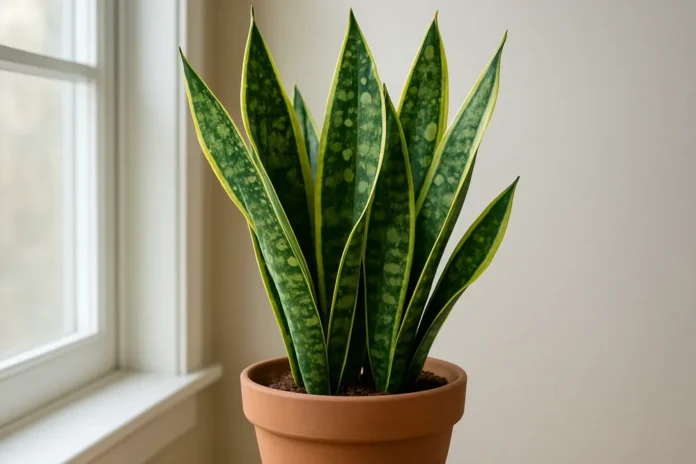
Snake plant yellow spots are most often caused by too much direct sun, watering problems, pests, or fungal damage. The exact cause usually shows up in the shape, texture, and spread of the spots.
If your snake plant has yellow spots, it is telling you that something in its environment or care routine is off. The good news is that snake plants are tough, and in many cases the problem is fixable once you match the spotting pattern to the cause.
I usually start by looking at where the spots are, whether they feel dry or soft, and whether they are spreading. A few pale, dry blotches on the sun-facing side suggest one issue, while tiny yellow speckles with webbing or sticky residue point somewhere else. Snake plant yellow spots are a symptom, not a diagnosis, so reading the details matters.
Below, I will walk through the most common causes, how to tell them apart, and what to do next without putting extra stress on the plant.
What Yellow Spots Usually Mean on a Snake Plant
Yellow spots can show up for a few very different reasons, but they generally fall into four buckets: light damage, moisture stress, pest feeding, or disease. Some spots stay small and cosmetic, while others spread into larger yellow patches, brown scars, or mushy tissue.
- Dry, bleached, or papery yellow patches often suggest sunburn.
- Yellowing that comes with soft leaves or soggy soil often points to overwatering and possible root stress.
- Tiny stippled yellow dots, especially with webbing or insects present, usually indicate pests.
- Circular or irregular spots that darken, expand, or develop halos can signal a fungal or bacterial leaf spot issue.
When I diagnose spotting on snake plants, I look at the newest damage first, not the oldest scars. Old spots can mislead you because several different problems eventually dry to a similar tan-yellow mark.
Too Much Direct Sun Can Scorch the Leaves
Snake plants tolerate bright conditions well, but intense direct afternoon sun can still burn them, especially if they were grown in lower light and then moved suddenly. Sunscald often appears as pale yellow spots or larger washed-out patches on the side of the plant facing the window or outdoors.
These spots usually feel dry, not soft. Over time, they may turn tan, beige, or light brown and become permanently scarred. The affected tissue does not turn green again, but new leaves can grow normally once the light is corrected.
Signs the Spots Are Caused by Sunburn
- Spots are concentrated on the brightest side of the plant
- Damage looks bleached, faded, or papery
- Leaves remain firm rather than mushy
- The issue started after moving the plant closer to a hot window or outside
Move the plant to bright, indirect light or filter the harshest sun with a sheer curtain. If you want to keep it in a sunnier spot, acclimate it gradually over a couple of weeks. Damaged areas will stay marked, so judge recovery by healthy new growth rather than the old leaf surface.
Overwatering and Root Stress Are Common Culprits
One of the most common reasons a snake plant develops yellow spotting is simply staying too wet for too long. Snake plants store water in their leaves and rhizomes, so they do best when the potting mix dries out well between waterings. When the roots sit in damp soil, they start to weaken, and the leaves can respond with blotchy yellow areas before more obvious rot sets in.
In this case, the yellow spots may be joined by leaves that feel softer than usual, wrinkling near the base, or a potting mix that smells stale. If the problem continues, yellow spots can turn brown and mushy, especially low on the leaf.
Clues That Excess Moisture Is the Issue
- Soil stays damp for many days after watering
- The pot has poor drainage or a saucer full of standing water
- Yellow spots appear with soft, limp, or collapsing foliage
- The roots or rhizomes smell sour, blacken, or feel mushy
If you suspect overwatering, do not rush to water again just because a leaf looks stressed. A root-damaged snake plant can look thirsty and overwatered at the same time, and adding more water usually makes the spotting worse.
To fix it, let the soil dry thoroughly. If the mix is dense, compacted, or slow to drain, repot into a gritty blend made for succulents or cacti, or amend regular houseplant mix with extra perlite or pumice. Trim away rotten roots or mushy rhizomes with a clean blade before replanting. Going forward, water deeply but only when the mix has dried out most or all of the way, depending on season and light.
Underwatering Can Also Create Yellow Spotting
Although overwatering is more common, a badly neglected snake plant can also develop yellow spots. When the plant stays dry for too long, the leaves lose internal moisture and become stressed. Instead of the even firmness snake plants are known for, leaves may look slightly folded, thin, or puckered, with scattered yellow or tan blemishes.
This type of spotting usually appears alongside overall dehydration signs rather than mushiness. The soil may pull away from the sides of the pot, and water may run straight through if the mix has become bone dry and hydrophobic.
- Leaves feel thinner or lightly wrinkled
- Potting mix is extremely dry and hard to re-wet
- Tips may brown as well as spot
- There is no sour smell or softness at the base
If this sounds like your plant, rehydrate it thoroughly by watering until the full root ball is moistened and excess drains away. Then return to a steady schedule based on soil dryness, not the calendar. Snake plants should dry between waterings, but not be abandoned for months at a time during active growth.
Pests Often Cause Tiny Yellow Speckles or Stippling
Spider mites and thrips are two of the most likely pests behind yellow spots on snake plants. Their feeding damages leaf tissue cell by cell, which shows up as small pale yellow dots, stippling, or silvery scarring. The pattern is often finer and more scattered than sunburn or watering damage.
Spider mites are especially common in dry indoor air. You may notice faint webbing where leaves meet or along the leaf surface. Thrips tend to leave more elongated scars and can distort new growth. Mealybugs are less likely to create classic stippling, but they can weaken the plant and contribute to yellow marks along with sticky residue.
How to Tell if Pests Are Responsible
- Spots are very small, numerous, and peppered across the leaf
- You see webbing, moving specks, sticky residue, or cottony clusters
- Damage keeps appearing on new leaves
- Nearby houseplants show similar symptoms
Start by isolating the plant. Wipe the leaves, including the undersides and the tight creases near the base, with a damp cloth. Then treat with insecticidal soap or neem-based products labeled for indoor plants, repeating as directed. For spider mites, regular rinsing and improved humidity around the plant can help reduce pressure, though good airflow still matters.
Pest damage on snake plants is easy to miss early because the leaves are thick and upright. I like to hold each leaf at an angle to the light. Fine stippling and silvery feeding scars show up much better that way than they do head-on.
Leaf Spot Diseases Can Start as Yellow Marks
Fungal and bacterial leaf spot diseases can also begin as yellow spots, especially when leaves stay wet, air circulation is poor, or the plant is crowded. These spots may be round or irregular, and they often enlarge over time. Some develop darker centers, brown margins, or a distinct yellow halo.
Disease-related spots usually look more defined than general watering stress. If the leaf surface stays wet after misting, splashing, or overhead watering, pathogens have an easier time taking hold, particularly in lower light or cooler rooms.
Signs You May Be Dealing with a Disease Issue
- Spots are circular or expanding with a target-like look
- Yellow areas have brown, black, or water-soaked centers
- Damage spreads from one area to neighboring leaves
- The plant is frequently misted or kept in stagnant, humid conditions
Remove badly affected leaves with sterilized pruners, cutting them at the base. Avoid wetting the foliage, space the plant for better airflow, and water the soil directly. If spotting continues to spread rapidly, a houseplant-safe fungicide may help with fungal issues, but it will not repair existing damage. Sanitation and drier leaf conditions are usually the biggest wins.
Cold Damage, Fertilizer Burn, and Physical Injury Are Less Common but Possible
Not every yellow spot is caused by water, sun, pests, or disease. Snake plants can also react to cold drafts, hot blasts from vents, salt buildup from fertilizer, or bruising from handling. These causes are less common, but they are worth considering if the usual explanations do not fit.
Cold injury often creates pale yellow patches that later turn mushy or brown, especially after exposure to temperatures below about 50 degrees Fahrenheit. Fertilizer burn may show as yellowing and browning along leaf margins or in patches if salts build up in the soil. Physical injury can leave isolated yellow marks where a leaf was bent, scraped, or knocked.
- Cold damage follows a chilly window, drafty door, or winter move
- Fertilizer issues are more likely if you feed frequently or at full strength
- Salt buildup may leave a crust on the soil surface or pot rim
- Mechanical damage tends to stay localized and does not spread
If fertilizer is the issue, flush the soil well and cut back feeding. Snake plants are light feeders and usually only need occasional fertilizer during active growth. If cold exposure caused the problem, move the plant to a steadier indoor temperature and remove any tissue that turns mushy.
How to Diagnose the Real Cause Step by Step
When a snake plant shows yellow spots, avoid making three or four changes at once. A slower, cleaner diagnosis makes it much easier to stop the problem. Start with the simplest evidence you can observe right away.
- Look at the location of the spots. One sun-facing side suggests light stress, while random spotting all over may suggest pests or disease.
- Check the texture. Dry, papery spots point more toward sunburn or old physical damage. Soft or water-soaked areas raise concern about rot or disease.
- Inspect the soil and roots. If the mix is soggy, compacted, or sour-smelling, moisture stress is likely involved.
- Examine for pests using bright light, especially on leaf undersides and in creases.
- Review any recent changes such as repotting, moving to stronger light, heavy feeding, or exposure to cold.
Once you identify the most likely cause, correct that issue and then watch the plant for a couple of weeks. Existing spots may remain, but the key sign of success is that new damage stops appearing.
What to Do Right Now to Help Your Snake Plant Recover
Most snake plants recover best when you simplify care instead of over-treating them. Give the plant stable conditions, correct the likely cause, and let it grow out of the stress. You do not need to cut every spotted leaf unless it is badly damaged or actively decaying.
- Move it to bright, indirect light if harsh sun is hitting the leaves
- Let wet soil dry or rehydrate fully dry soil as needed
- Repot if the current mix stays soggy or roots are rotting
- Inspect and treat for pests if you see stippling, webbing, or insects
- Keep leaves dry if fungal or bacterial spotting seems likely
- Avoid fertilizer until the plant is stable again
If a leaf is mostly healthy with a few cosmetic marks, I usually leave it alone. If it is soft, collapsing, or heavily diseased, remove it cleanly at the base so the plant can focus on healthier growth.
How to Prevent Yellow Spots From Coming Back
Prevention is mostly about consistency. Snake plants are forgiving, but they do best when light, watering, and airflow stay within a reasonable range. Big swings are what tend to produce spotting.
- Use a pot with drainage and a fast-draining mix
- Water only after the soil has dried appropriately
- Give bright, indirect light or gentle morning sun instead of intense afternoon scorch
- Inspect leaves regularly for early pest activity
- Skip routine misting and avoid crowding the plant
- Fertilize lightly during spring and summer only
I have found that snake plants stay cleaner and healthier when they are not fussed over too much. A bright room, a breathable potting mix, and patience between waterings prevent most yellow spotting problems before they start.
FAQ
Will Yellow Spots on a Snake Plant Go Away?
No, existing yellow spots usually do not turn green again. Recovery shows up as healthy new growth and the absence of new spots.
Should I Cut Off Leaves with Yellow Spots?
Only remove leaves if they are badly scarred, mushy, diseased, or unattractive enough that you want them gone. Minor cosmetic spotting on an otherwise firm leaf is not harmful.
Can Too Much Sun Really Damage a Snake Plant?
Yes. Snake plants handle bright light well, but sudden exposure to strong direct sun, especially hot afternoon sun, can bleach and scorch the leaves.
Do Spider Mites Cause Yellow Spots on Snake Plants?
Yes. Spider mites commonly create tiny yellow speckles or stippling, and you may also notice faint webbing or a dusty look on the leaves.
Can Overwatering Cause Spots Before the Leaves Rot?
Yes. Early root stress from excess moisture can show up as blotchy yellow areas before the leaves become soft or collapse.
Is Misting a Snake Plant a Good Idea if It Has Yellow Spots?
Usually no. Misting does not solve most spotting problems and can worsen leaf spot diseases by keeping foliage wet.
How Often Should I Water a Snake Plant with Yellow Spots?
Water based on soil dryness rather than a set schedule. Most snake plants need less frequent watering than people expect, especially in lower light or winter.
Need the right fix fast? Read our guide to the best soil mixes, pots, and pest treatments for snake plants so you can stop yellow spots and keep new leaves clean.
