

Note: This article contains affiliate links. If you click on these links and make a purchase, I may earn a small commission at no extra cost to you. This helps support my research and content. Read my full affiliate disclosure here.
High temperatures change how plants take up nutrients and water, so choosing the right fertilizer for summer heat matters more than at other times of year. In the peak of summer you want feeds that support root function, preserve blooms, and avoid forcing soft, tender growth that wilts in midday sun. This guide shortlists seven top options suited to hot-weather gardening and explains the real-world tradeoffs you need to consider. We evaluate nutrient ratios, application method, and stress-mitigation benefits to help you pick the best approach for your beds, containers, or lawn.
Top Picks at a Glance
| Best Overall The best all-around choice for most situations | Scotts Turf Builder Southern Lawn Food, 14.06 lb |  |
| Best Quality Built to a higher standard if you want something more solid | Simple Lawn Solutions 16-4-8 Liquid Lawn Fertilizer (1 Gallon) |  |
| Best Value The sweet spot between price and what you get | Yard Mastery 7-0-20 Stress Blend Granular Lawn Fertilizer (18 lb) |  |
| Best Budget The cheapest option that still gets the job done reliably | Miracle-Gro Water Soluble All Purpose Plant Food, 1.5 lb |  |
| Highest Rated A top-rated pick with lots of positive feedback | Miracle-Gro Water Soluble All Purpose Plant Food, 12.5 lb |  |
| Most Popular A crowd favorite that many people choose with confidence | Miracle-Gro Water Soluble All Purpose Plant Food, 10 lb | 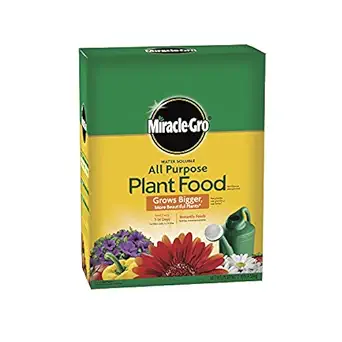 |
| Best Seller A high-volume bestseller chosen again and again | Scotts Turf Builder SummerGuard Lawn Food with Insect Control, 15,000 sq. ft. |  |
Scotts Turf Builder Southern Lawn Food, 14.06 lb

| Item Form | Granules |
|---|---|
| Application Method | spreader |
| Coverage | 5,000 sq. ft. |
| Mixing Ratio | 32-0-10 |
| Target Species | Southern lawns, Southern grass |
Scotts Turf Builder Southern Lawn Food is a granular fertilizer made specifically for southern warm-season grasses such as Zoysia, St. Augustine, Bermuda, Bahia, and Centipede. It is designed for broadcast or drop spreader application and uses slow-release nitrogen in every granule so you can apply one feeding and expect up to six weeks of greening. Typical use is in the growing season—apply after the first spring mow or in recommended fall windows and follow spreader settings listed on the bag; light watering after application speeds results but is not required. Practical benefits include even coverage from all-in-one particles, deeper root development to help through heat and drought, and a known feeding schedule for repeat applications. Important limitations are that it contains phosphorus so local restrictions may apply and it is not a weed-and-feed product, so broadleaf weeds will not be controlled by this bag. The product is most useful when paired with a proper spreader and timing that matches Zoysia's fall growth window.
Best for: Homeowners who prioritize a reliable, low-risk fertilizer tailored to Zoysia and other southern warm-season lawns and who prefer predictable, infrequent feedings with measured spreader guidance.
Less Ideal for: Gardeners who need a fertilizer that also controls weeds or who must avoid phosphorus due to local restrictions should consider alternative weed-and-feed or phosphorus-free products.
- Formulated for warm-season southern grasses including Zoysia
- Slow-release nitrogen in each granule for up to six weeks of feeding
- All-in-one particles promote even distribution and consistent greening
- Builds deeper roots to help maintain color through heat and drought
- Contains phosphorus which may be restricted by local regulations
- Does not include weed control so separate weed treatment may be needed
Verdict: A dependable, slow-release granular feed designed to strengthen roots and keep Zoysia green with a single application lasting about six weeks.
Simple Lawn Solutions 16-4-8 Liquid Lawn Fertilizer (1 Gallon)

| Item Form | Liquid |
|---|---|
| Application Method | Spray |
| Mixing Ratio | 1:10 |
| Liquid Volume | 128 fluid ounces |
| Target Species | Fish |
This 1 gallon concentrated liquid fertilizer supplies a balanced 16-4-8 NPK blend with added seaweed and fish emulsion to support greener foliage and stronger roots. It is designed to be mixed at a 1:10 ratio and applied as a spray, making it practical for routine monthly feedings to maintain turf health. The formulation targets nitrogen-driven greening and growth while phosphorus supports root development and potassium helps turf resilience where deficiencies exist. The inclusion of organic fish and seaweed components can aid soil biology and nutrient uptake compared with straight synthetic formulas. For users managing centipede grass, the product is easy to incorporate into an established fertilizing schedule and the full-coverage spray application covers large lawns quickly. Important limitations are that it is a supplemental lawn food rather than a one-time corrective treatment for severe nutrient imbalances and it requires proper dilution and watering after application to avoid uneven results. Expect steady maintenance benefits when used as directed rather than immediate dramatic changes.
Best for: Homeowners who want a reliable, easy-to-apply maintenance fertilizer for centipede and other warm-season lawns and prefer a product that supports steady greening and soil health over time.
Less Ideal for: Gardeners seeking an immediate corrective treatment for acute nutrient problems or those who need a granular slow-release program without monthly spraying.
- Balanced 16-4-8 NPK formula targets greening, root development, and turf strength
- Contains seaweed and fish emulsion to support soil biology and nutrient uptake
- Concentrated 1:10 mixing ratio reduces storage volume and treats large areas from one gallon
- Spray application delivers even coverage for routine monthly maintenance
- Not intended as a corrective treatment for severe nutrient deficiencies
- Requires mixing and follow-up watering to ensure even uptake
Verdict: A dependable monthly liquid lawn food that keeps centipede grass green and healthy with a balanced 16-4-8 formula and added seaweed and fish for soil support.
Yard Mastery 7-0-20 Stress Blend Granular Lawn Fertilizer (18 lb)

| Analysis (N-P-K) | 7-0-20 |
|---|---|
| Iron content | 3% |
| Form | Granules |
| Coverage | 6000 |
This granular 7-0-20 Stress Blend from Yard Mastery is designed for summer lawn care to help stressed turf regain color and vigor. Applied at 3 lbs per 1,000 sq ft, the product supplies potassium-heavy nutrition with 7% nitrogen, 20% potash, 3% iron and Bio-Nite to support recovery and color during hot weather. Typical use is an evenly broadcast application followed by watering within 48 hours to move nutrients into the root zone; one 18 lb bag covers about 6,000 sq ft. Practical benefits include a simpler schedule for summer maintenance because the higher potassium helps drought and heat tolerance while iron improves greening without extra nitrogen-driven top growth. The granules store well in dry conditions and the directions are straightforward for repeat applications every 30 to 45 days. Limitations are that it is a feed-focused fertilizer rather than a broad soil amendment, so it will not replace a comprehensive soil test program and may be less useful on lawns needing phosphorus or organic matter improvement.
Best for: Homeowners who want a practical, repeatable summer feeding to help lawns survive heat and maintain color with minimal fuss.
Less Ideal for: Gardeners focused on rebuilding poor soils, correcting phosphorus deficiency, or those who prefer liquid or organic amendment programs.
- High potassium formula supports heat and drought tolerance
- Includes iron for faster greening without excess leaf surge
- Granular form stores up to two years when kept dry for convenient seasonal use
- Clear application rate and coverage makes planning treatments straightforward
- No phosphorus content so not suitable for lawns that need root development correction
- Not formulated as a soil amendment so it does not add organic matter or address soil structure
Verdict: Choose this fertilizer if you need a straightforward, potassium-rich summer feed to help your lawn survive heat and return to deep green quickly.
Miracle-Gro Water Soluble All Purpose Plant Food, 1.5 lb

| Item Form | Powder |
|---|---|
| Application Method | Watering Can |
| Target Species | For all flowers, vegetables, trees, shrubs and houseplants |
| Mixing Ratio | 24-8-16 |
Miracle-Gro Water Soluble All Purpose Plant Food is a powdered, water-soluble fertilizer formulated to deliver fast nutrition to a broad mix of plants. You mix the powder into a watering can or a garden feeder and apply every 1 to 2 weeks depending on whether plants are indoors or out. The 24-8-16 NPK ratio supplies a strong nitrogen boost for leafy growth along with phosphorus and potassium to support flowering and fruit set. For pepper growers this means it can help produce vigorous plants and encourage fruit development when used at the recommended strengths. Notable features include clear mixing guidance for both indoor and outdoor use and compatibility with container and in-ground plantings. Practical benefits are quick uptake by roots and flexible application options. Important limitations are the high nitrogen proportion, which can favor foliage over fruit if overused, and the need to follow dilution instructions to avoid nutrient burn. This product is best used as a regular boost within a balanced feeding plan rather than the only fertility source for long-term soil health.
Best for: Home gardeners looking for an affordable, easy-to-use boost to support vigorous pepper plant growth and quick results in both containers and garden beds.
Less Ideal for: Growers who want a low-nitrogen or slow-release fertility plan for long-term soil building should consider specialized or organic alternatives.
- Water-soluble powder that feeds plants quickly through the roots
- Clear mixing instructions for indoor and outdoor applications
- Broadly labeled for use on flowers, vegetables, trees, shrubs and houseplants
- Feeds approximately 600 sq. ft. from the 1.5 lb container
- High nitrogen ratio may encourage foliage more than fruit if used too frequently
Verdict: A budget-friendly, fast-acting soluble fertilizer that gives bell pepper plants a regular nitrogen-rich boost to promote vigorous growth and quicker results.
Miracle-Gro Water Soluble All Purpose Plant Food, 12.5 lb

| Item Form | Powder |
|---|---|
| Specific Uses For Product | Plant Food |
| Coverage | general purpose, suitable for various plants |
| Mixing Ratio | 1 tablespoon per gallon of water |
Miracle‑Gro Water Soluble All Purpose is a powder fertilizer designed to dissolve in water and deliver fast nutrients to indoor and outdoor plants. Gardeners mix the recommended scoop with a watering can or use a compatible garden feeder to apply directly to the soil around roots; the product gives routine feedings every 7 to 14 days outdoors or every 2 weeks for houseplants. Notable features include an NPK of 24‑8‑16 for strong vegetative growth, a quoted coverage of about 5,000 sq ft from a 12.5 lb container, and an included scoop with separate measuring ends for indoor and outdoor rates. In practice this means quick uptake for leafy growth and an easy, repeatable dosing routine for reliability across container and in‑ground Clusia specimens. Limitations are that it is a general‑purpose formula rather than a Clusia‑specific mix and frequent applications are required during the growing season, so you will need to follow the label closely to avoid overfeeding.
Best for: Buyers who want a dependable, easy‑to‑measure fertilizer to keep Clusia healthy with consistent, repeatable feedings and straightforward application routines.
Less Ideal for: Growers seeking a slow‑release or custom‑formulated Clusia fertilizer or those who prefer lower‑frequency, hands‑off feeding strategies.
- Fast‑acting water‑soluble formula for near‑instant nutrient availability
- Simple mixing ratios and included scoop make dosing consistent
- Large 12.5 lb container covers a lot of garden area for routine feedings
- Suitable for both container and in‑ground use so it works with potted Clusia and landscape plantings
- General all‑purpose NPK may not match specialized nutrient needs of Clusia at every growth stage
- Requires regular applications during the season rather than a slow‑release schedule
Verdict: A reliable, easy‑to‑mix water‑soluble fertilizer that delivers fast, consistent feedings for Clusia in both pots and landscape settings.
Miracle-Gro Water Soluble All Purpose Plant Food, 10 lb

| Item Form | Granules, Powder |
|---|---|
| Application Method | watering can |
| Target Species | For all flowers, vegetables, trees, shrubs and houseplants |
| Fertilizer Analysis | 24-8-16 |
Miracle-Gro Water Soluble All Purpose Plant Food is a fast-acting granular formula that dissolves in water to feed shrubs, flowers, vegetables and houseplants. You mix measured scoops into a watering can or garden feeder and apply at the soil line every 1 to 2 weeks; the water-soluble format delivers nutrients quickly to roots, which can produce visibly fuller growth compared with unfed plants. The product is labeled safe for all common plant types when used as directed and includes guidance for indoor and outdoor dilution rates. Notable features are the broad target list (shrubs included), the 24-8-16 NPK balance that favors leafy growth, and a large 10 lb container that covers extensive garden area. Practical benefits for shrub care are rapid nutrient availability during the growing season and easy application with routine watering. Important limitations are the relatively high nitrogen proportion, which is ideal for leaf development but may be less suitable when the goal is to limit vegetative growth or to force blooms or fruit without adjusting timing or concentration. Follow the package directions to avoid overfeeding and protect nearby sensitive plants.
Best for: Gardeners who want a reliable, quick-feed fertilizer to boost shrub vigor and see noticeable growth within weeks and who value products with extensive customer use and guidance.
Less Ideal for: Growers seeking a low-nitrogen bloom booster or a slow-release, low-maintenance fertilizer for seasonal feeding should consider more specialized formulas.
- Water-soluble formula delivers nutrients quickly to roots for faster response
- Broadly labeled for indoor and outdoor use including shrubs, trees, flowers and vegetables
- Clear dilution and application instructions for watering can or garden feeder
- High-coverage 10 lb container suitable for large gardens
- High nitrogen ratio may encourage leafy growth over blooms or fruiting if used during flowering
- Requires regular reapplication every 1–2 weeks rather than long-term slow feeding
Verdict: A dependable, fast-acting water-soluble fertilizer that reliably boosts shrub growth when used as directed.
Scotts Turf Builder SummerGuard Lawn Food with Insect Control, 15,000 sq. ft.

| Item Form | Granules |
|---|---|
| Specific Uses For Product | Lawn |
| Coverage | 15000 square feet |
| Mixing Ratio | 20-0-8 |
Scotts Turf Builder SummerGuard combines a lawn fertilizer and insect control in one granular formula aimed at summer use. You apply it to a dry lawn when insect activity appears, broadcast it with a rotary or drop spreader at the recommended setting, then water it in. The product is formulated to feed and strengthen turf against heat and drought while also killing and protecting against a range of listed pests such as ants, chinch bugs, armyworms, ticks, and spiders. A single 40 lb bag covers about 15,000 square feet, which suits mid to large lawns and reduces the need for separate insect treatments during the season. Important practical notes are follow the spreader settings Scotts recommends and avoid using other insect, weed, or disease products for a week after application. Also observe safety guidance and keep it away from children and pets until watered in. For homeowners wanting a single-step summer treatment, this simplifies maintenance but requires careful application and timing to be effective.
Best for: Homeowners who prioritize strong summer performance and want a combined feed-and-insect-control treatment to protect lawns during hot, insect-active months.
Less Ideal for: Gardeners seeking purely organic, pet-safe granular products or those who need frequent targeted spot treatments rather than broad broadcast applications.
- Two-in-one formula feeds turf and provides insect control so you can treat both needs in one application
- Formulated to help lawns withstand heat and drought, supporting summer stress management
- Large coverage per bag (15,000 sq ft) reduces frequency of purchases for medium to large yards
- Contains insecticide so it is not appropriate when you need purely organic or pet-safe granular options
- Requires correct spreader settings and watering-in for safe and effective performance
- Must avoid using other control products for one week after application which limits follow-up treatments
Verdict: Buy this if you want a single summer lawn treatment that feeds grass and protects it from common lawn insects and heat stress.
Choosing the Right Fertilizer for Summer Heat: Key Factors to Consider
Nutrient Ratio and Timing
The balance between nitrogen, phosphorus, and potassium matters differently in summer than in spring. High nitrogen encourages soft leafy growth that can scorch or wilt under hot sun, while adequate potassium and phosphorus help water regulation, flower retention, and root strength.
Timing is also important. Lighter, more frequent applications help avoid nutrient surges that push tender growth during heat waves. Look for formulas or schedules that emphasize maintenance feeding rather than vigorous growth stimulation in the hottest months.
Foliar Versus Soil Application
Foliar feeding can be useful for a fast nutrient boost, especially for micronutrients that correct deficiencies quickly. However, spraying leaves in hot midday sun can cause leaf burn, so foliar sprays are best applied in cool mornings or evenings.
Soil applications feed roots and support longer-term uptake. In dry, hot soils choose soluble feeds that move to the root zone with limited irrigation, or incorporate slow-release options that supply steady nutrition without promoting excessive top growth.
Solubility and Compatibility with Watering
Solubility determines how a fertilizer moves in hot, often drier soils. Highly soluble feeds can be effective with a single, well-timed irrigation to push nutrients into the root zone. Conversely, poorly soluble products may sit on the surface and be less available unless watered in thoroughly.
Consider how the product fits with your summer watering routine. If you water infrequently, choose formulas designed for deeper movement. If you use drip irrigation or light daily watering, soluble, lower-concentration feeds are safer to avoid salt buildup.
Micronutrients and Stress Support
Micronutrients like magnesium, calcium, iron, and boron play outsized roles when plants are under heat stress. Calcium helps cell wall stability and reduces blossom end rot on fruiting crops, while magnesium is central to chlorophyll and photosynthesis efficiency.
A fertilizer that provides a balanced set of micronutrients or allows easy supplementation can reduce summer-specific disorders and keep plants functioning well despite higher temperature and water stress.
Formulation and Safety in High Temperatures
Formulation type matters for safety and effectiveness in summer heat. Liquid and water-soluble powders deliver faster results and are easier to control at low doses, but they also risk foliar burn if misapplied in strong sun.
Granular slow-release options reduce application frequency and lower the chance of burning, but they must be compatible with your irrigation to release properly. Consider whether you need a no-burn, low-salt formulation for containers and potted plants that are more prone to heat-related stress.
Plant Type and Growth Stage
Different plants respond to heat and fertilization in distinct ways. Flowering and fruiting plants benefit from formulas that support bloom retention and fruit set, while lawns and foliage plants often need maintenance-level nitrogen with attention to water use efficiency.
Match the fertilizer to the plant's growth stage. Avoid high-nitrogen feeds during peak summer if your goal is drought resilience and bloom preservation. For young transplants, choose gentle, root-supporting feeds rather than aggressive growth stimulants.
Adjusting Feeding Schedules for Heat Waves
During extended heat events, reduce feed concentration or frequency to avoid driving soft growth that will suffer in daytime heat. Aim for lower-concentration applications applied in the cool parts of the day and allow plants time to recover after heat spikes.
Watch plant responses rather than following a rigid calendar. Signs like leaf scorch, wilting despite watering, or loss of flowers indicate it may be time to pause feeding until temperatures moderate.
- Apply feeds early morning or late evening to minimize foliar burn
- Cut application rates by 25 to 50 percent during extreme heat
- Prioritize root-focused applications when soils are warm and dry
Feeding Containers and Small Spaces
Containers heat up and dry out faster than garden beds, so choose low-salt, slow-release formulations or very dilute soluble feeds for potted plants. Frequent small waterings can leach salts, but that also requires more frequent, gentle feeding to maintain nutrition.
Consider blending a time-release granule with occasional liquid micronutrient boosts to keep container crops productive without risking root burn or salt accumulation.
- Use low-salt feeds for tender container plants
- Supplement with foliar micronutrients in cool hours if deficiency signs appear
- Repot or refresh media if salts build up after a season of heavy summer feeding
Supporting Flowering and Fruit Set in Hot Weather
To preserve blooms and encourage fruit set, prioritize potassium and phosphorus over aggressive nitrogen. These nutrients support carbohydrate movement, flower retention, and overall stress tolerance in reproductive tissues.
Regular light feeding that maintains consistent nutrient availability is better than infrequent heavy feeds that trigger soft leaf growth and then stress during heat waves.
- Choose maintenance-level nitrogen with higher potassium for flowering crops
- Apply bloom-support feeds during cooler parts of the day
- Watch for increased fruit drop as a sign of heat stress rather than nutrient failure
Lawn Care in High Temperatures
Lawns in summer benefit from conservative feeding that avoids pushing lush growth when water is limited. Use slow-release nitrogen sources and leaner application rates to keep turf resilient and reduce mowing stress.
Focus on root health and avoid late-afternoon fertilization that encourages tender blades before hot nights. Aeration and appropriate irrigation practices paired with modest feeding have more effect on summer lawn health than heavy fertilization.
- Favor slow-release formulas and reduced nitrogen rates
- Combine feeding with aeration and deep, infrequent watering
- Delay aggressive fertilization until cooler fall conditions when roots can respond
Correcting Common Summer Nutrient Deficiencies
Heat can make some nutrient deficiencies more noticeable. Interveinal chlorosis often points to magnesium or iron issues, while blossom end rot in fruiting vegetables is frequently tied to calcium availability and inconsistent watering.
Quick foliar applications of chelated micronutrients can correct certain shortages, but long-term correction usually requires addressing soil pH, organic matter, and consistent root-level nutrition.
- Use foliar micronutrients sparingly and in cool hours
- Test soil pH if deficiencies persist despite feeding
- Improve organic matter to support steady nutrient release and root health
How We Chose the Best Fertilizer for Summer Heat
We evaluated fertilizers for summer heat with a focus on how they actually behave in hot conditions rather than on marketing claims. Selection started with formulas proven to support heat tolerance and sustained flowering or fruit set in summer. We prioritized nutrient balance that limits excess nitrogen-driven tender growth, options that enhance root uptake, and products that are compatible with reduced watering schedules. Key evaluation criteria included N-P-K balance and micronutrient content, suitability for foliar versus soil application in high temperatures, solubility and ease of application, and compatibility with common summer watering practices. We also judged formulations by their ability to support stress-mitigating functions such as improved osmotic balance or calcium and magnesium availability. Exclusions included any fertilizers that require cold-season application only or those with unclear nutrient labeling. The end result is a set of products that perform reliably in heat, fit typical summer watering routines, and are practical for beds, containers, and lawns alike.
FAQ
Can I use the same fertilizer in summer that I used in spring?
Sometimes, but adjust the rate. Spring feeds often promote vigorous growth that can be vulnerable in high heat. Reduce application strength or switch to a maintenance formula with less nitrogen for summer use.
Is foliar feeding safe during hot weather?
Foliar feeding is effective for micronutrients but should be done in cool morning or evening hours to avoid leaf scorch. Avoid spraying during the heat of the day and use dilute solutions.
How often should I feed container plants in summer?
Containers usually need more frequent, lighter feedings because media dries and leaches nutrients faster. Use low-concentration liquid feeds every one to two weeks or a slow-release granule designed for containers.
Will fertilizers help plants survive a heatwave?
Fertilizers can support plant health and resilience, but they are not a substitute for proper watering, shade, and cultural care. During extreme heat, prioritize moisture management and reduce feeding intensity.
Are slow-release fertilizers better for summer use?
Slow-release products reduce application frequency and lower burn risk, which can be advantageous in summer. They must be compatible with your irrigation pattern to release nutrients at the right time.
Final Verdict
When choosing a fertilizer for summer heat, prioritize formulations and schedules that protect root health, supply needed micronutrients, and avoid forcing tender top growth. Match feed type to planting situation: slow-release or low-salt options for containers, maintenance blends for lawns, and potassium-leaning formulas to support flowering and fruiting. Balance is the key tradeoff. Conservative feeding and attention to watering and timing will do more for summer plant resilience than heavy fertilization. Use the evaluation criteria here to choose an approach that keeps plants productive without increasing heat-related stress.
