

Note: This article contains affiliate links. If you click on these links and make a purchase, I may earn a small commission at no extra cost to you. This helps support my research and content. Read my full affiliate disclosure here.
If dandelions are taking over sunny patches of your lawn or garden beds, choosing the right weed killer makes the difference between a temporary fix and lasting control. The right product for dandelions should kill the visible plant and weaken the root crown and taproot so new shoots are less likely to return. This guide examines seven top options suited for dandelion control across lawns, driveways, and planting beds. We shortlisted products that perform well in real garden situations and evaluated them for spot effectiveness, safety for turf and desired plants, and ease of use. Below you will find the shortlist and the practical criteria we used to compare them before the detailed product blocks.
Top Picks at a Glance
| Best Overall The best all-around choice for most situations | Ortho WeedClear Weed Killer for Lawns with Comfort Wand, 1 gal. | 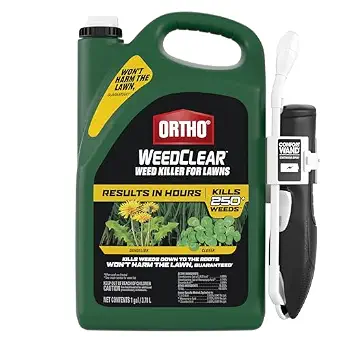 |
| Best Quality Built to a higher standard if you want something more solid | RM43 Concentrated Extended Control Weed Killer (1 gallon) |  |
| Best Value The sweet spot between price and what you get | Spectracide Weed Stop for Lawns Concentrate, 40 oz |  |
| Best Budget The cheapest option that still gets the job done reliably | Spectracide Weed Stop for Lawns Plus Crabgrass Killer, Ready-to-Use, 1 Gal |  |
| Highest Rated A top-rated pick with lots of positive feedback | Factory Hardware Store Hi-Yield 2,4-D Broadleaf Weed Killer Concentrate, 32 oz (2-pack) |  |
| Most Popular A crowd favorite that many people choose with confidence | Spruce Weed & Grass Killer Kit with Power Wand and 64 oz Refill |  |
| Best Seller A high-volume bestseller chosen again and again | Roundup Weed & Grass Killer with Comfort Wand, 1.33 gal. |  |
Ortho WeedClear Weed Killer for Lawns with Comfort Wand, 1 gal.

| Item Form | Spray |
|---|---|
| Coverage | 16000 square feet |
| Liquid Volume | 128 fluid ounces |
| Unit Count | 128 Fluid Ounces |
Ortho WeedClear is a 1 gallon ready-to-use herbicide formulated to kill common broadleaf lawn weeds down to the root while leaving turfgrass unharmed when applied according to the label. It is typically used for spot treatment or light broadcast applications using the included Comfort Wand, which gives a continuous, targeted spray without pumping. The formula combines three active ingredients to attack over 250 listed weeds, including dandelions and clover, and the manufacturer says you can see visible decline in hours and that treated areas are rainproof after one hour. Practical benefits include the convenience of a pre-mixed bottle, wide weed coverage, and a wand that improves accuracy around desirable plants. Important limitations are that it is designed for small to medium infestations rather than heavy brush or year-long prevention, and best results require application when weeds are actively growing in spring or fall and daytime temperatures are below 90°F. Users must follow safety directions about drying time before people or pets re-enter the area.
Best for: Buyers who want a convenient, lawn-safe solution for tackling common broadleaf weeds like dandelions with precise spot or small-area treatments and minimal setup.
Less Ideal for: Not a good choice for clearing dense brush, large-scale infestations, or users who need long-term preemergent control across large areas.
- Ready-to-use formula eliminates measuring and mixing
- Comfort Wand provides precise, continuous spray for spot treatments
- Kills over 250 listed broadleaf weeds down to the root
- Rainproof within one hour for faster scheduling of treatments
- Not intended for heavy brush, vines, or year-long weed prevention
- Effectiveness depends on applying when weeds are actively growing and temperatures are suitable
Verdict: A convenient, ready-to-use weed killer with a comfort wand that reliably removes dandelions and other common broadleaf lawn weeds while protecting your grass when used as directed.
RM43 Concentrated Extended Control Weed Killer (1 gallon)

| Unit Count | 128 Fluid Ounces |
|---|---|
| Liquid Volume | 1 gallons |
| Item Form | Spray |
| Coverage | 17297 square feet |
| Active Ingredients | glyphosate |
RM43 is a concentrated herbicide designed to kill existing weeds to the root and prevent regrowth for up to a year when applied to non-crop areas. Mixed with water and applied with a sprayer, it treats large areas quickly—the label lists coverage up to about 17,297 square feet per gallon—making it practical for barnyards, driveways, fence lines, and other places where you want no vegetation. The formula combines glyphosate with an additional herbicide and a surfactant so it is rainfast in about two hours and claims long residual control. Key benefits are powerful, long-lasting control and the ability to make multiple gallons of spray from the concentrated bottle for spot or area treatment. Important limitations are that it is non-selective and must never be used near desirable plants or turf, and safety precautions are required during mixing and application to avoid skin or eye contact. It is intended for use on non-crop areas only and is not suitable for selective removal of dandelions in lawns where surrounding grass should be preserved.
Best for: Buyers who need a high-performance, non-selective solution for clearing large non-crop areas of persistent weeds and want long-lasting results rather than spot treatments.
Less Ideal for: Homeowners seeking a selective dandelion killer for lawns or gardeners who want to preserve nearby plants should choose a selective herbicide or spot-treatment method instead.
- Concentrated formula that can be mixed to make multiple gallons of spray for wide coverage
- Combination of active ingredients plus surfactant for fast rainfastness and strong root kill
- Labelled for up to one year of vegetation control, reducing frequency of reapplication
- Large coverage per gallon suitable for farms, driveways, and non-crop areas
- Non-selective total vegetation control that will kill desirable plants on contact
- Requires careful handling, mixing, and PPE to avoid exposure and follow disposal rules
Verdict: Choose RM43 when you need a powerful, long-lasting, large-area herbicide to permanently remove unwanted vegetation in non-crop areas.
Spectracide Weed Stop for Lawns Concentrate, 40 oz

| Unit Count | 40 Fluid Ounces |
|---|---|
| Coverage | 20000 square_feet |
| Item Form | Liquid |
Spectracide Weed Stop for Lawns is a concentrated liquid herbicide intended for use with a garden sprayer to target broadleaf weeds in established turf. You mix the 40 oz concentrate with water per the label and spray in spring or fall when weeds are actively growing or small; the formula kills by contact and claims visible results in hours and root kill within days. Practical features include coverage large enough to treat up to 20,000 sq ft from one bottle and a rainfast window of six hours so treatment is not immediately lost to watering or light rain. The product is designed to control common dandelions, clover and chickweed and can be used for spot treatments or whole-lawn applications after mowing. Important limitations are that it requires careful mixing and an external sprayer, it is a contact killer so very large established weeds may need a repeat application, and users must follow safety directions to avoid skin or eye contact. For someone who wants a no-nonsense, fast-acting solution for dandelions in a lawn, this concentrate is straightforward and effective when applied correctly.
Best for: Gardeners who want an efficient, strong herbicide to remove dandelions and other broadleaf weeds from turf and prioritize coverage and quick results.
Less Ideal for: People without a sprayer or those seeking an all-in-one ready-to-use applicator should consider alternatives better suited to very small yards or those wanting pre-mixed bottles.
- Concentrated formula treats up to 20,000 sq ft from a single 40 oz bottle
- Kills over 200 listed broadleaf weeds including dandelion, chickweed and clover
- Produces visible results in hours and kills to the root for longer control
- Rainproof after six hours so light rain or watering will not wash it away
- Requires a separate garden sprayer and correct mixing for safe, effective application
- Contact activity means very large or deeply rooted weeds may need repeat spot treatments
Verdict: A concentrated, fast-acting lawn herbicide that is a practical choice for getting rid of dandelions across medium to large lawns when mixed and applied correctly.
Spectracide Weed Stop for Lawns Plus Crabgrass Killer, Ready-to-Use, 1 Gal

| Item Form | Spray |
|---|---|
| Coverage | Up to 5,000 sq ft |
| Liquid Volume | 1 gallons |
Spectracide Weed Stop for Lawns Plus Crabgrass Killer is a one-gallon, ready-to-use lawn spray designed to kill broadleaf and grassy weeds by contact, including dandelions and crabgrass. You use it straight from the bottle with no mixing required; apply after mowing and when daytime temps are between 45°F and 90°F for best results. The formula claims visible wilting in about five hours and lists more than 470 weed types it targets, so it is useful for treating individual patches or larger areas up to the advertised coverage. Practical benefits are ease of use, fast visible action, and a broad spectrum of weeds controlled without complicated dilution. Important limitations are that it kills by contact rather than systemic uptake, so very large established weeds or roots may require repeat applications, and there are temperature restrictions and specific cautions for Bermudagrass to avoid temporary discoloration. For budget-minded gardeners who want a fast, no-mix solution for dandelions and common lawn weeds, this is a convenient option; those needing long-term systemic control of deep-rooted perennials may prefer products formulated for root translocation.
Best for: Homeowners looking for an inexpensive, easy-to-use spot or area treatment to quickly tackle dandelions and other common lawn weeds without mixing chemicals.
Less Ideal for: Those who need systemic, long-term root translocation for very deep or perennial weeds or who manage heat-sensitive turf varieties that require specialized products.
- Ready-to-use formula requires no mixing and is quick to apply
- Kills a wide variety of common lawn weeds including dandelions and crabgrass
- Produces visible wilting in about five hours for fast confirmation of effect
- Advertised coverage up to 5,000 sq ft per gallon for treating larger lawns
- Works by contact so deeply established roots may need repeat treatments
- Temperature restrictions and cautions for Bermudagrass limit use in hot conditions
Verdict: A budget-friendly, no-mix lawn spray that gives fast visible control of dandelions and common turf weeds for homeowners who want quick results.
Factory Hardware Store Hi-Yield 2,4-D Broadleaf Weed Killer Concentrate, 32 oz (2-pack)

| Number of Packs | 2 |
|---|---|
| Unit Count | 32 Fluid Ounces |
| Item Form | Liquid |
| Active Ingredient | Dimethylamine Salt of 2,4-Dichlorophenoxyacetic Acid |
This two-pack of Hi-Yield 2,4-D broadleaf weed killer is a concentrated post-emergent formula intended for targeting common lawn weeds such as dandelions, chickweed, and plantain. You mix the liquid concentrate to the label directions and apply to established turf and other labeled outdoor areas for spot treatments or wider coverage. The selectivity of the 2,4-D active ingredient means it targets broadleaf weeds while leaving most grasses unharmed when used correctly. The bundle provides extra capacity for larger yards or repeat seasonal applications, and the liquid format gives control over dilution and spray volume. Important limitations are that it is a chemical herbicide requiring careful handling, precise mixing, and adherence to label timing to avoid damage to desirable plants; it will not control grassy weeds and is not a preventative preemergent. Users should follow safety instructions and avoid application during windy or very hot conditions.
Best for: Homeowners who prioritize dependable, targeted control of broadleaf lawn weeds and want a concentrated product they can measure and apply themselves for seasonal treatments.
Less Ideal for: Gardeners seeking an all-in-one weed solution for grassy weeds or those who prefer non-chemical or preventive approaches should consider alternatives.
- Selective broadleaf control effective on common lawn nuisance weeds like dandelions
- Concentrate format lets you adjust dilution for spot treatments or larger areas
- Two 32 oz bottles provide enough product for multiple applications or larger properties
- Contains 2,4-D which requires careful handling and strict adherence to label directions
- Not effective against grassy weeds or as a preventative soil treatment
Verdict: Buy this concentrated 2,4-D two-pack when you need reliable, targeted post-emergent control of dandelions and other broadleaf lawn weeds.
Spruce Weed & Grass Killer Kit with Power Wand and 64 oz Refill

| Unit Count | 64 Fluid Ounces |
|---|---|
| Coverage | 1 bottle treats up to 400 weeds |
| Item Form | Multiple |
The Spruce Weed & Grass Killer Kit pairs a 64 oz no-mix herbicide refill with a battery-powered wand for targeted spot treatment of dandelions and other broadleaf and grassy weeds. You unlock the wand, hold the nozzle about 12 inches from the plant and spray until leaves and stems are wet; the formula begins dehydrating plant tissue quickly with visible darkening or wilting within an hour and complete death often by 24 hours. The product is formulated from water, essential oils and a surfactant so there is no measuring or mixing, and the refill claims coverage of up to 400 weeds. The reusable powered wand and included AA batteries make application fast for cracks, driveways, and flower bed edges, and the sprayer is designed to be rainproof after ten minutes. Important limitations are that this is a nonselective contact herbicide so it will damage desirable plants if oversprayed and it should not be applied on lawns; weather and temperature guidance (above 60°F, calm dry conditions) affect effectiveness. For dandelion spot treatments this kit offers quick, convenient control but requires careful aiming and adherence to directions to avoid collateral damage.
Best for: Buyers who want a fast, easy, spot-treatment solution for dandelions and similar weeds and who prioritize proven product performance and practical safety features.
Less Ideal for: Anyone needing a lawn-safe selective herbicide or broad area broadcast treatment should look for a product formulated specifically for turf or larger acreages.
- Ready-to-use no-mix formula for quick spot treatments
- Battery-powered wand for precise application in cracks and edges
- Visible results within about one hour and dead weeds often by 24 hours
- Large 64 oz refill covers many spot treatments (up to 400 weeds)
- Designed to be rainproof within 10 minutes of application
- Nonselective contact formula will harm desirable plants if oversprayed
- Effectiveness depends on following temperature and weather guidelines
Verdict: A convenient, no-mix spot-treatment kit that delivers fast visible control of dandelions when used carefully and away from desirable plants.
Roundup Weed & Grass Killer with Comfort Wand, 1.33 gal.

| Item Form | Liquid |
|---|---|
| Coverage | 400 sq. ft. |
| Liquid Volume | 1.33 gallons |
This 1.33 gallon Roundup formula is a user-friendly, fast-acting herbicide aimed at removing weeds like dandelions, crabgrass, poison ivy, clover, and other common broadleaf species. The jug includes a Comfort Wand with one-touch continuous spray, which makes spot treatment around flower beds, walkways, driveways, and along fences easier and reduces hand fatigue compared with separate pump sprayers. The product claims visible results in as fast as six hours and becomes rainproof in about 30 minutes, so it tolerates short-term weather changes. Coverage is listed at about 400 sq. ft., suitable for small to medium yards or multiple targeted applications. Important limitations are that it is a nonselective herbicide so care is required to avoid desirable plants, and treated areas should remain clear of people and pets until dry. Also, planting times after application vary from 1 to 30 days depending on the planting target, so plan any replanting accordingly.
Best for: Buyers who prioritize a straightforward, fast-acting solution for visible control of dandelions and other common weeds and who want an easy-to-use spray wand for spot treatments.
Less Ideal for: Homeowners looking to selectively treat lawns without harming grass or those with large acreage who need concentrated, high-coverage solutions.
- Comfort Wand with one-touch continuous spray reduces hand strain during spot treatments
- Fast visible results in as soon as six hours and rainproof within about 30 minutes
- Kills common broadleaf weeds and grasses down to the root for longer-lasting control
- Ready-to-use liquid requires no mixing or extra equipment
- Nonselective formula will damage desirable plants if contacted
- Coverage (about 400 sq. ft.) may require multiple containers for larger yards
Verdict: A convenient, ready-to-use herbicide with a comfort spray wand that delivers quick, reliable control of dandelions and other broadleaf weeds.
Choosing the Right Weed Killer for Dandelions: Key Factors to Consider
Active Ingredient and Mode of Action
Different active ingredients target plant physiology in distinct ways. For dandelions, look for ingredients that translocate into the taproot and crown rather than only burning leaf tissue. Translocating chemistries move from foliage down into roots and help reduce regrowth from the stored reserves in the taproot.
Knowing the mode of action also helps with rotating products between seasons to reduce the chance of resistant populations developing. Read label directions closely to understand contact versus systemic effects and whether multiple applications are recommended for full control.
Turf Compatibility
Not all lawns tolerate the same herbicides. Warm-season and cool-season grasses can react differently to similar products, and some formulations are labeled only for ornamental beds or non-selective uses. Turf-compatible options allow you to treat dandelions in lawns without causing broad grass injury when applied at recommended rates.
Consider the lawn species you have, recent overseeding or reseeding, and the time of year. Treated areas may be more vulnerable during heat stress or drought, so choose a product with a safety profile that matches your lawn conditions.
Application Method and Timing
How a product is applied affects both effectiveness and collateral impact. Spot treatments, hose-end sprayers, ready-to-use trigger bottles, and granules each deliver chemistry differently. Spot sprays and targeted applicators reduce exposure to desirable plants, while broadcast applications cover larger areas but require careful calibration.
Timing matters: dandelions are easiest to control when actively growing and before heavy seed set. Applying during cool, moist mornings improves uptake into the root system. Avoid applying before heavy rain or during extreme heat to prevent runoff and stress on turf.
Residual Activity and Follow-up Needs
Some herbicides provide residual soil activity that suppresses new seedlings, while others act only on existing plants. For dandelions, which reproduce from seed and can regrow from roots, residual control can reduce seedling establishment but does not eliminate established taproots on its own.
Expect to plan for follow-up treatments in the same season or the next, especially if infestations are heavy. Consider products with a balance between adequate residual suppression and minimal long-term soil persistence if you are concerned about future planting or pollinator exposure.
Safety, Handling, and Environmental Considerations
Herbicides vary in toxicity to people, pets, and beneficial insects. Read personal protective equipment recommendations and adhere to reentry intervals for treated areas. Keep products away from pollinator-attractive blooms and avoid drift onto flowering plants to reduce impact on bees and other pollinators.
Proper disposal of unused product and mixing rinses is part of responsible use. Consider mechanical or cultural control options as part of an integrated plan if you want to minimize chemical applications.
Label Clarity and Practical Instructions
Clear label instructions make a product usable by typical gardeners. Labels should specify target weeds, turf compatibility, application rates, mixing steps, safety precautions, and reapplication intervals. Products with ambiguous instructions increase the chance of misuse and poor results.
Prefer labels that list common lawn grasses and offer guidance for spot versus broadcast applications. Manufacturers that provide mixing charts, nozzles or wand tips guidance, and crop restrictions help prevent accidental damage to desirable plants.
When to Treat Dandelions for Best Results
Treat dandelions when plants are actively growing and not stressed by drought or extreme heat. Early spring and fall are often the best windows because plants are moving nutrients between leaves and roots, which helps systemic herbicides translocate into the taproot.
Avoid treating during the hottest part of the day or immediately before heavy rain. Small, young plants can be easier to kill, but larger rosettes are still controllable if you choose a product with strong root translocation and follow label rates.
- Target treatments when leaves are fully open and photosynthesizing.
- Wait for calm days to minimize spray drift.
- Do not treat newly seeded lawns until the label allows.
Spot Treatment Techniques That Reduce Turf Risk
Concentrate applications on individual rosettes with a fine spray or a trigger bottle to limit contact with nearby grass. Use a shielded wand or homemade barrier when spraying next to sensitive plants to prevent drift and overspray.
For stubborn plants, apply twice at label-allowed intervals rather than increasing concentration. Follow-up spot treatments often give better results with less grass stress than a single heavy application.
- Apply in calm conditions and keep nozzle close to the target.
- Clean equipment between uses to avoid cross-contamination of concentrates.
Nonchemical and Cultural Controls to Pair With Herbicides
Combining manual removal, mowing practices, and lawn health improvements reduces overall weed pressure. Hand-pulling or using a trowel to remove taproots can remove individual plants without herbicides, especially in small areas or near ornamentals.
Encourage a dense, vigorous turf through proper mowing height, regular fertilization, and overseeding to shade out dandelion seedlings. Cultural practices reduce the number of herbicide applications needed over time.
- Pull when soil is moist to remove more of the taproot.
- Mow at recommended heights for your grass type to limit sunlight to weed seedlings.
Protecting Pollinators and Beneficial Plants
Dandelion blooms can attract bees and other pollinators. Avoid spraying when flowers are open and pollinators are active. If treating in beds with ornamentals, use spot applications and keep sprays away from flowering plants.
Plan herbicide timing to minimize exposure during peak bloom periods. Mechanical removal or targeted weeding during bloom is a safer option for pollinator protection.
- Apply in early morning or late evening when pollinators are less active.
- Rinse spray equipment away from flowering plants.
Interpreting Label Language and Restrictions
Labels specify where products can be used and list turfgrass species and ornamental exclusions. Carefully match the label to your situation to avoid illegal or damaging uses. Some formulations are intended for non-selective use and will injure grass.
Follow reentry intervals and livestock or pet restrictions. If the label language is unclear about a particular grass type or planting situation, err on the side of caution and choose a product with explicit guidance that fits your lawn or bed.
- Look for clear instructions on mixing ratios and nozzle settings.
- Note maximum number of applications per season to plan follow-ups.
How We Chose the Best Weed Killer for Dandelions
We narrowed options by prioritizing attributes that matter to gardeners dealing specifically with dandelions. First, we focused on active ingredients known to affect perennial broadleaf weeds and deep taproots, since dandelions can resprout from root crowns. Second, we evaluated application methods and coverage so gardeners can pick products suited to spot treatments, broadcast lawn sprays, or targeted syringe-style applications. Third, turf safety was a major filter. Many effective weed killers can stress or damage desirable grasses if used incorrectly, so we favored formulations or label guidance that limit harm to common lawn types. Fourth, residual control and re-emergence rates were considered to estimate how often follow-up treatments are likely to be needed. Finally, ease of mixing, application precision, and clear label instructions were used to judge practicality. We excluded products with weak evidence for taproot control, unclear active ingredient information, or label restrictions that prevent typical homeowner applications. The final list reflects items that balance root-system impact, safety for turf and ornamentals, and user-friendly application.
FAQ
Can I use a single application to permanently remove dandelions?
Often a single application reduces top growth and weakens the root, but permanent removal usually requires follow-up. Multiple treatments timed for active growth increase the chance of killing the taproot and reducing regrowth.
Will treating dandelions harm my lawn?
It depends on the product and application method. Selective herbicides labeled for your grass type and careful spot application usually minimize turf injury. Avoid overapplication and follow label timing for best safety.
Is it safe to spray when dandelions are blooming?
Spraying during bloom risks exposing pollinators to chemicals. If possible, wait until after flowering or use nonchemical removal when blooms are present. If treatment is necessary, minimize spray drift and avoid spraying during peak pollinator activity.
Are granular treatments effective on dandelions?
Granular products can suppress seedlings and provide residual control but are generally less effective at killing established taproots than properly applied systemic foliar sprays. Granules are useful as part of an integrated program for preventing new plants.
How long after treatment will I see results?
Visible leaf wilting can appear within a few days for some products, while full browning and root decline may take several weeks. Systemic products need time to translocate into roots, so be patient and plan follow-up inspections.
Can I spray dandelions near vegetable beds or pet areas?
Exercise caution. Keep sprays and drift away from edible plants and follow label guidance on reentry intervals for pets. Consider spot removal or physical control close to vegetable plots to avoid contamination.
Final Verdict
Prioritize a product that matches your lawn type and the scale of the infestation. For scattered plants, precise spot treatments with a translocating herbicide and careful application minimize turf impact. For heavier infestations combine chemical control with cultural practices to reduce long-term pressure. Balance effectiveness against root systems with safety for desirable grasses and pollinators. Follow label directions, plan for follow-up treatments if needed, and select timing that maximizes uptake into the taproot for the best long-term control.
