

Note: This article contains affiliate links. If you click on these links and make a purchase, I may earn a small commission at no extra cost to you. This helps support my research and content. Read my full affiliate disclosure here.
Wave petunias are prized for their nonstop drifts of color, but they need steady, predictable nutrition to keep flowering hard through the season. Choosing the right fertilizer for Wave Petunias affects bloom size, the frequency of deadheading you need to do, and how well plants resist heat stress and stretch. This guide covers the top shortlisted fertilizers suited for Wave petunia beds, baskets, and mixed containers. We evaluated products based on the practical needs of summer-flowering petunias and explain the feeding schedules and nutrient profiles that matter. Read on for clear guidance to match a fertilizer to your planting style and maintenance preferences.
Top Picks at a Glance
| Best Overall The best all-around choice for most situations | Jack's Classic Petunia FeED Water-Soluble Fertilizer, 1.5 lb (20-6-22) |  |
| Best Quality Built to a higher standard if you want something more solid | Jack's Classic Blossom Booster Water-Soluble Fertilizer 10-30-20, 1.5 lb |  |
| Best Value The sweet spot between price and what you get | Miracle-Gro Watering Can Singles All Purpose Plant Food, 24 Packets |  |
| Best Budget The cheapest option that still gets the job done reliably | Jobe's Flowering Plant Food Spikes 10-10-4, 50-Count |  |
| Highest Rated A top-rated pick with lots of positive feedback | Miracle-Gro Water Soluble Bloom Booster Flower Food, 10-52-10, 1 lb |  |
| Most Popular A crowd favorite that many people choose with confidence | Miracle-Gro Water Soluble All Purpose Plant Food, 3 lb |  |
| Best Seller A high-volume bestseller chosen again and again | Jack's Classic Blossom Booster 10-30-20 Water‑Soluble Fertilizer, 8 oz |  |
Jack's Classic Petunia FeED Water-Soluble Fertilizer, 1.5 lb (20-6-22)

| Item Form | Powder |
|---|---|
| Specific Uses For Product | Bloom Production |
| Application Method | Spray |
| Unit Count | 24 Ounce |
Jack's Classic Petunia FeED is a concentrated, water-soluble powder fertilizer designed to produce vigorous green growth and abundant blooms on petunias and other iron-dependent annuals. You mix the measured powder with water using the included scoop and apply as a foliar spray, root drench, or in a continuous feed system, which makes it flexible for hanging baskets, containers, and garden beds. The 20-6-22 NPK ratio targets bloom production while added micronutrients support iron-loving plants and help maintain leaf color. As a powder concentrate it is economical because a small amount yields multiple gallons of feed solution. The product is straightforward to use with clear mixing directions, and the powder form stores compactly between uses. Limitations are that it is a single-purpose bloom formula so it is not a full-season balanced feed for all crops, and careful mixing is required to avoid overfeeding with concentrated solutions. For growers who prioritize strong flowering performance in petunias, this fertilizer delivers focused, professional-grade nutrition.
Best for: Gardeners focused on maximizing flower production from petunias and other iron-loving annuals who prefer a concentrated, professional-style fertilizer for containers and beds.
Less Ideal for: Casual gardeners seeking a single, all-season feed for mixed plantings or those who prefer ready-to-use liquid fertilizers will want a different product.
- High 20-6-22 NPK ratio geared toward bloom production and lush green growth
- Water-soluble powder concentrates make the product economical per gallon of feed
- Includes micronutrients formulated for iron-loving annuals to improve leaf color
- Versatile application as foliar spray, root feeding, or in continuous feed systems
- Specialized bloom formula rather than an all-purpose, balanced fertilizer
- Requires precise measuring and mixing to avoid nutrient burn
Verdict: Choose this concentrated water-soluble formula when you want targeted, professional-grade nutrition to boost blooms and leaf color in petunias.
Jack's Classic Blossom Booster Water-Soluble Fertilizer 10-30-20, 1.5 lb

| Item Form | Powder |
|---|---|
| Application Method | foliar or root feeding |
| Target Species | Flowers |
| Mixing Ratio | 1:3:2 |
Jack's Classic 10-30-20 Blossom Booster is a concentrated powdered fertilizer formulated to push flowering and improve bloom color and quantity. It mixes with water using the included scoop and can be applied as a foliar spray, root drench, or in continuous-feed setups, which makes it convenient for both potted dahlias and garden beds. The high middle number (phosphorus) supports bud set and flowering while added micronutrients help overall plant health. Practical benefits include economical coverage from a powder concentrate, clear mixing directions for frequent or maintenance feedings, and compatibility with different application methods. Limitations to note are that it is a bloom-focused formula so it is not balanced for heavy leafy growth and must be measured and mixed correctly to avoid overfeeding. Users should follow the specified dilution rates and timing around bud set to get the best results for dahlias.
Best for: Gardeners who prioritize bigger, more plentiful blooms on dahlias and want a cost-effective, flexible fertilizer they can apply by spray or soil drench.
Less Ideal for: Growers focused on building foliage, establishing young plants, or those who want an all-in-one balanced feed for both vegetative growth and flowering.
- High phosphorus ratio (10-30-20) tailored to increase bloom set and flower production
- Water-soluble powder concentrates allow economical mixing for multiple gallons of feed
- Can be used as foliar spray or root drench and works with continuous-feed systems
- Includes a measuring spoon and clear mixing ratios for straightforward application
- Formulated primarily for flowering so it is not ideal when promoting strong vegetative growth
- Requires careful measuring and mixing which adds a small learning step for new users
Verdict: Choose this concentrated 10-30-20 water-soluble booster when you want a practical, application-flexible fertilizer to increase dahlia bloom number and color.
Miracle-Gro Watering Can Singles All Purpose Plant Food, 24 Packets

| Number of Packs | 24 |
|---|---|
| Unit Count | 10.24 Ounce |
| Item Form | SOLID |
| Application Method | watering can |
| Mixing Ratio | 1 teaspoon per 1 gallon of water |
Miracle-Gro Watering Can Singles are single-use, pre-measured fertilizer packets intended to make feeding roses and other garden plants simple and reliable. To use, tear a packet into a watering can, add the specified amount of water, then apply the solution while watering; the manufacturer recommends feeding every 7 to 14 days during active growth. The packets remove measuring errors and mess, which helps prevent accidental overfeeding. Because the formula is labeled for all flowers, vegetables, trees and shrubs, it fits into regular rose care routines for bloom and bush development. Practical benefits include instant solubility, clear application instructions for outdoor and indoor containers, and consistent coverage per packet for about 10 sq. ft. of garden. Limitations are that you must keep up with the every-1–2-week schedule for best results and that the product is sold as a general-purpose feed rather than a rose-specific bloom booster, so dedicated rosarians seeking targeted NPK ratios might prefer a specialized rose fertilizer.
Best for: Gardeners who want a low-risk, no-mess way to feed roses and mixed flower beds as part of routine watering and prefer simple, foolproof dosing.
Less Ideal for: Specialist rose growers seeking a targeted bloom-boosting formula or those who want a single, slow-release application instead of frequent liquid feedings.
- Pre-measured packets eliminate measuring and reduce mess and dosing errors
- Water-soluble formula mixes quickly in a watering can for immediate application
- Labeled for use on flowers, roses, shrubs, trees and vegetables so it suits mixed beds
- Clear directions for indoor and outdoor application and coverage per packet
- General all-purpose formula rather than a rose-specific NPK for bloom boosting
- Requires regular reapplication every 7–14 days to maintain results
Verdict: If you want a safe, fuss-free way to feed roses while you water, these pre-measured soluble packets make regular feeding simple and consistent.
Jobe's Flowering Plant Food Spikes 10-10-4, 50-Count

| N-P-K ratio | 10-10-4 |
|---|---|
| Application method | Insert pre-measured spikes into the ground |
| Form | Sticks |
| Target species | flowering houseplants |
These Jobe's flowering plant food spikes are pre-measured sticks designed to feed flowering plants without mixing, measuring, or liquid spills. You insert spikes into the potting mix near the root zone and they release a steady supply of nutrients over time, which is useful for container-grown wave petunias where regular feeding helps maintain blooms. The 10-10-4 N-P-K ratio supports balanced growth and flowering, and the 50-count pack covers multiple pots or repeat feedings. Practical benefits include convenience, reduced mess compared with granular or liquid feeds, and predictable dosing that is easy for beginner gardeners to follow. Limitations are that spikes offer less control over timing and concentration than a liquid feed and they may not dissolve evenly in very compacted or overly dry soil. For gardeners who fertilize frequently or want to tailor dosing precisely for heavy bloom cycles, supplementing with a soluble bloom booster might be necessary.
Best for: Buyers who want an affordable, low-effort way to keep container wave petunias blooming without regular measuring or mixing; ideal for casual or time-pressed gardeners.
Less Ideal for: Gardeners who prefer precise, adjustable feeding schedules or who rely on heavy bloom-boosting regimens for show-quality displays should consider liquid or granular alternatives.
- Pre-measured spikes for mess-free, consistent dosing
- Balanced 10-10-4 N-P-K formulated to support flowering
- 50-count pack covers multiple pots and repeat applications
- Simple insert-and-forget application suitable for busy gardeners
- Less precise control over nutrient timing and concentration than liquid fertilizers
- May not dissolve uniformly in very compacted or extremely dry soils
Verdict: A budget-friendly, no-mess fertilizer solution that keeps wave petunias blooming with simple, pre-measured spikes.
Miracle-Gro Water Soluble Bloom Booster Flower Food, 10-52-10, 1 lb

| Item Form | Liquid |
|---|---|
| Application Method | Water Soluble |
| Coverage | 500 square feet |
| Target Species | all blooming plants |
| Mixing Ratio | 1 tablespoon/gallon (1.5 tsp for indoor plants) |
This Miracle-Gro bloom booster is a water-soluble plant food designed for flowering annuals and perennials, and it is typically mixed into a watering can or used with a garden feeder. The 10-52-10 formula supplies a high phosphorus dose aimed at increasing bud set and flower production, and it starts working quickly through root and foliar feeding when applied as directed. Practical features include a simple mixing ratio (1 tablespoon per gallon for outdoor use, reduced rate for indoor plants) and compatibility with the Miracle-Gro garden feeder for easy coverage up to about 500 square feet per refill. For gardeners focused on colorful displays, the concentrated phosphorus and repeat feeding schedule (every 7 to 14 days during bloom) deliver noticeably fuller flower shows. Limitations are that it is specifically a bloom booster rather than an all-purpose fertilizer and should be used only during bud set and bloom to avoid nutrient imbalance; following label rates is important to prevent overfeeding. For basic container or bedding displays, it is an easy-to-use option that targets bloom performance without complicated application steps.
Best for: Gardeners who want an affordable, straightforward booster to increase flower production on annuals and container displays and who plan to feed regularly during the bloom period.
Less Ideal for: Those seeking an all-in-one, season-long fertilizer or a slow-release product for hands-off maintenance should look elsewhere.
- High phosphorus 10-52-10 formula to promote more blooms and better bud set
- Water-soluble for quick uptake and easy mixing in a watering can or garden feeder
- Clear mixing instructions with lower indoor rate to reduce risk of burning when used as directed
- Covers a substantial area per feeder refill, useful for beds and multiple containers
- Focused on bloom boosting rather than providing a balanced, all-season nutrient program
Verdict: If you want an inexpensive, easy-to-use booster that reliably increases blooms on annuals and containers, this is a strong, no-frills choice.
Miracle-Gro Water Soluble All Purpose Plant Food, 3 lb

| Item Form | Powder |
|---|---|
| Application Method | Mix with water in a watering can |
| Fertilizer Analysis (N‑P‑K) | 24-8-16 |
| Unit Count | 48 Ounce |
| Coverage | Feeds approximately 1,200 sq. ft. |
Miracle‑Gro Water Soluble All Purpose Plant Food is a powdered NPK 24‑8‑16 formula that dissolves in water to give plants a quick nutrient boost. You mix measured scoops into a watering can and apply to the soil at the base of plants every 7–14 days for outdoor use or every 14 days for houseplants. Notable features include a high nitrogen content for leafy growth, compatibility with containers and in‑ground beds, and guidance for use with a Miracle‑Gro Garden Feeder for larger areas. In practical terms this is a fast‑acting feed that encourages bigger, greener foliage and works well in regular maintenance of perennials like hostas. Limitations are that it is a fast‑release fertilizer rather than a slow‑release option, so it requires regular reapplication and careful measuring to avoid overfeeding. Also, the 24‑8‑16 balance is geared toward vegetative growth, so it is not optimized if you want to prioritize flowering or bloom boosting.
Best for: Buyers who want a reliable, fast‑acting feed to maintain lush, leafy perennials and container plants and who value proven products with broad user endorsement.
Less Ideal for: Gardeners seeking a single, long‑lasting granular fertilizer or a bloom‑focused formula should consider alternative slow‑release or high‑phosphorus products.
- Water‑soluble powder mixes easily for quick uptake by roots
- High nitrogen formula promotes robust leafy growth ideal for shade plants
- Clear mixing and application instructions for both indoor and outdoor use
- Suitable for containers and in‑ground gardens and compatible with garden feeders
- Requires frequent applications so it is not a low‑maintenance, slow‑release option
- High nitrogen ratio is less suitable when the primary goal is more flowers than foliage
Verdict: A fast‑acting, water‑soluble fertilizer that reliably produces bigger, greener hosta leaves when used as directed.
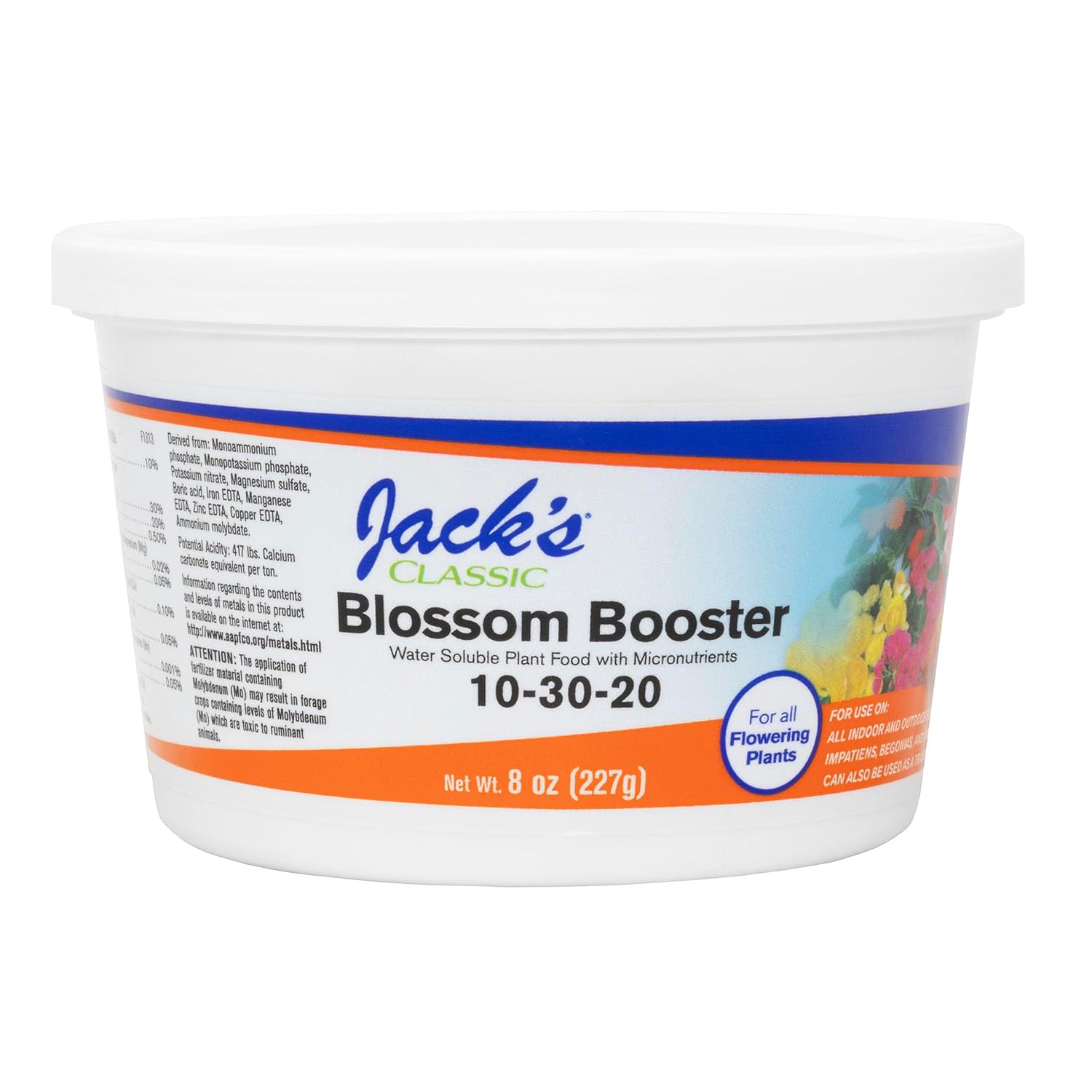
Jack's Classic Blossom Booster 10-30-20 Water‑Soluble Fertilizer, 8 oz
| Item Form | Powder |
|---|---|
| Application Method | watering or spraying on leaves |
| Mixing Ratio | 10-30-20 |
| Unit Count | 8 Ounce |
Jack's Classic Blossom Booster is a concentrated powder fertilizer designed to increase flower production and color in flowering plants. You mix the measured powder with water using the included scoop and apply it either through watering or as a foliar spray; it also works in continuous feed systems. The 10-30-20 NPK ratio is intentionally bloom‑focused, so it directs nutrients toward flower formation rather than vegetative growth. Built‑in micronutrients reduce the need for additional supplements, and the powder format makes it easy to create multiple gallons of solution from a single tub. For gardeners growing wave petunias, the targeted bloom formula helps encourage fuller, more colorful displays when used on the regular feeding schedule. Limitations are that it is a concentrated, general bloom formula rather than a petunia‑specific feed, so careful mixing and following directions are important to avoid overfeeding, and it does not include pH adjustment features for very hard water or alkaline soils.
Best for: Gardeners who want a reliable, no‑nonsense bloom booster to produce bigger displays of flowering annuals and prefer proven, easy‑to‑follow feeding routines.
Less Ideal for: Growers who need a fertilizer that also corrects soil pH or who prefer a product tailored exclusively to petunias or to very specific water chemistry conditions.
- Bloom‑focused 10-30-20 NPK encourages more and brighter flowers
- Water‑soluble powder yields multiple gallons of feed from one tub
- Includes micronutrients so additional supplements are usually unnecessary
- Versatile application as a root drench, foliar spray, or continuous feed
- Not formulated specifically for petunias so results may vary compared with specialty petunia feeds
- Requires careful measuring and mixing to avoid overfeeding
Verdict: Use this proven 10-30-20 water‑soluble powder when you want a straightforward, micronutrient‑complete boost to maximize flowers on wave petunias.
Choosing the Right Fertilizer for Wave Petunias: Key Factors to Consider
Nutrient Ratio and Bloom Focus
Petunias respond best to fertilizers that emphasize phosphorus and potassium relative to nitrogen once established. A bloom-focused nutrient balance encourages flower production and richer color while limiting excess leafy, leggy growth that reduces the overall floral display.
When evaluating fertilizer labels, look for formulations that shift toward bloom support after seedlings or transplants are established. That will help maintain compact plants with consistent flowering rather than encouraging a rush of foliage followed by sparse blooms.
Release Pattern and Feeding Frequency
Slow-release and controlled-release fertilizers provide steady nutrition over weeks and reduce the need for frequent applications, which is useful for large beds or when maintenance time is limited. Water-soluble options give faster correction and let you tune feeding frequency during peak bloom times.
Decide if you want weekly light feedings or a lower-effort monthly schedule. Frequent light feedings are easier on tender roots in containers and can sustain nonstop blooms, while slow-release granules are convenient for large plantings but may deliver nutrients more gradually.
Salt Levels and Root Safety
High soluble salt content increases the risk of fertilizer burn, especially in containers and hanging baskets where roots are confined. Petunias are susceptible to salt stress which shows as leaf scorch, reduced bloom set, or wilting despite adequate moisture.
Choose low-salt formulations for small pots and for any situation where you water infrequently or use shallow media. Rinse or flush containers periodically if you use higher-salt feeds to prevent buildup and protect root health.
Formulation Type and Garden Use
Granules, spikes, water-soluble powders, and liquid concentrates each behave differently in a garden setting. Water-soluble feeds are versatile for quick results and foliar feeding. Granules and controlled-release prills are low-effort but may vary in duration depending on temperature and moisture. Liquids are easy for sidedressing and spot treatments.
Match the formulation to how you garden: choose water-soluble or liquid concentrates if you monitor and feed regularly, and choose slow-release granules for large stretches of bedding or when you need fewer interventions.
Container Media and Compatibility
Wave petunias are commonly grown in shallow baskets and mixed containers with fast-draining media. Some fertilizers bind differently in high-organic or soilless mixes, so compatibility matters for nutrient availability and avoiding lockup.
Look for products labeled safe for soilless media, containers, and hanging baskets. Consider whether the feed works well with your potting mix and irrigation style to avoid nutrient imbalances that reduce bloom performance.
Ease of Use and Application Tools
Practicality determines how consistently a fertilizer will be applied. Products that measure easily, disperse cleanly, and fit common watering cans or hose-end applicators reduce measurement mistakes and uneven feeding.
Assess whether you prefer a measured scoop, pre-dosed tablets, or a concentrate that mixes with water. Ease of use is especially important for gardeners managing many containers or for those who want to minimize time spent on routine feeding.
Timing Fertilizer Applications Through the Season
Start feeding seriously after petunias are established and actively growing. Early feeds for newly set plants should be lighter and more balanced to support root development, then shift to bloom-focused ratios as flowers form.
Increase feeding frequency slightly during peak bloom and heat waves because higher temperatures speed nutrient uptake and deplete media faster. In late season, taper feeding to avoid late flushes of growth that could be damaged by early cool weather.
- Begin with a gentle feed one to two weeks after transplanting
- Switch to higher-phosphorus bloom formulas once flowering begins
- Feed more often during hot, sunny stretches to sustain blooms
Adjusting Feed for Containers Versus In-Ground Beds
Containers dry and leach nutrients faster than in-ground plantings, so water-soluble or more frequent feeds are often needed for baskets and pots. For beds, slow-release granules can provide steady nutrition without as much hands-on maintenance.
Containers also concentrate salts, so choose lower-salt or water-soluble feeds that allow you to flush the media. In the ground, normal rainfall and irrigation dilute salts more effectively, allowing for different product choices.
- Use water-soluble feeds weekly for small pots
- Consider slow-release granules for large landscape drifts
- Flush containers monthly if using higher-salt formulations
Feeding When Growing Mixed Containers with Other Annuals
Mixed containers combine species with different nutrient needs. Select a fertilizer that supports the most bloom-hungry component without oversupplying foliage-hungry plants. A balanced but bloom-biased feed usually keeps most annual combinations looking their best.
If a companion plant prefers foliage over flowers, use targeted spot feeding for that plant instead of changing the whole container regimen. Foliar feeding can also correct short-term deficiencies without upsetting the overall balance.
- Choose a bloom-biased balanced feed for mixed displays
- Target spot feeds to individual plants with different needs
- Use foliar feeding for quick correction of nutrient stress
Recognizing Nutrient Deficiencies and Overfeeding
Yellowing leaves, reduced bloom set, or small pale flowers often point to nutrient shortfalls, especially nitrogen or micronutrients. Conversely, overly lush leafy growth with few flowers usually indicates too much nitrogen relative to phosphorus and potassium.
Regular visual checks paired with an understanding of the fertilizer type help you correct course. When in doubt, dilute feeds or reduce frequency rather than increasing concentration, and flush containers to remove built-up salts before changing products.
- Pale leaves may indicate nitrogen or iron deficiency
- Poor flowering with lush foliage suggests excess nitrogen
- Flush containers to remedy suspected salt buildup
Organic Options Versus Synthetic Feeds
Organic fertilizers release nutrients more slowly and build soil biology, which helps long-term container and bed health. They can be gentler for roots but may not promote the same fast bloom response as soluble synthetics during peak season.
Synthetic water-soluble feeds give predictable, quick results for bloom encouragement but require consistent application and carry a higher risk of salt buildup. Consider combining approaches: use an organic base to support media health and a light synthetic feed to sharpen bloom performance when needed.
- Organic feeds build soil biology and reduce burn risk
- Synthetic feeds provide rapid, predictable bloom response
- Combine approaches for steady media health and targeted bloom boosts
How We Chose the Best Fertilizer for Wave Petunias
We focused on fertilizers that support sustained flowering, compact growth, and reliable performance in containers and landscape drifts where Wave petunias are most often used. Selection emphasized nutrient formulations that promote bloom set without excessive vegetative growth, feeding formats suited to frequent or low-effort applications, and ingredients that keep plants resilient under heat and high light. Evaluation criteria included nutrient ratio and release pattern, application flexibility for containers or bedding, impact on flowering frequency and bloom size, salt levels and risk of fertilizer burn, and ease of use for routine summer maintenance. We excluded products meant only for seedlings, slow-release bulbs, or specialty turf fertilizers that do not supply the bloom-focused nutrients petunias need. Products that made the list demonstrated clear specifications, practical feeding intervals, and compatibility with common garden practices such as regular deadheading and pinching. We prioritized options that balance strong bloom encouragement with predictable plant habit across typical home garden conditions.
FAQ
How often should I feed Wave petunias in containers?
It depends on the fertilizer type. Water-soluble feeds are commonly used weekly at a diluted rate, while controlled-release granules may only need a single application every four to eight weeks. Check plant response and adjust frequency during heat or heavy bloom periods.
Can I use a general-purpose fertilizer for Wave petunias?
General-purpose fertilizers can work, but look for one that shifts toward bloom support once plants are established. If a general feed is high in nitrogen, it may produce excess foliage at the expense of flowers, so monitor flowering and switch if needed.
Are foliar feeds helpful for maintaining blooms?
Foliar feeding can provide a quick nutrient boost when plants show short-term stress or when soil uptake is limited. It is best used as a supplement rather than a primary feeding method for steady, season-long bloom maintenance.
What signs indicate fertilizer burn in petunias?
Fertilizer burn shows as brown, crisp leaf edges, sudden wilting despite adequate moisture, or rapid dieback of new growth. In containers, salt buildup is a common cause, and flushing the potting mix with water often helps reverse early symptoms.
Should I change feeding when temperatures peak?
Yes. Higher temperatures increase evaporation and nutrient uptake, so you may need to feed more frequently at lighter rates during heat waves. Avoid high-concentration feeds in extreme heat to reduce burn risk.
Do slow-release fertilizers work well for hanging baskets?
They can, but hanging baskets dry quickly and may benefit more from water-soluble feeds applied regularly. If using slow-release prills, choose a formulation rated for containers and monitor flowering to ensure the release rate matches the basket's needs.
Final Verdict
Prioritize a fertilizer that matches your planting situation and maintenance rhythm. For containers and baskets, favor lower-salt, water-soluble or container-rated slow-release options that allow you to manage frequent bloom demand. For large beds, longer-lasting granules reduce labor while still supporting continuous flowering. Balance bloom-focused nutrient ratios, a release pattern you will maintain, and root-safety to avoid burn. By aligning feed type and schedule with your watering routine and planting style, you can keep Wave petunias blooming vigorously throughout the season.
