

Note: This article contains affiliate links. If you click on these links and make a purchase, I may earn a small commission at no extra cost to you. This helps support my research and content. Read my full affiliate disclosure here.
Getting the feeding right for young vegetable plants makes a big difference to transplant success and first yields. Seedlings need a nutrient mix that supports steady leaf growth and root development without causing salt burn or overly lush, weak stems. This guide covers our seven shortlisted liquid fertilizers for vegetable seedlings and explains how each product type handles concentration control, nutrient balance, and application methods. Below you will find practical notes on why each characteristic matters in a real nursery or windowsill setup and the specific evaluation criteria used to judge the options. Read on to match a feeding approach to your seed-starting setup and growing goals.
Top Picks at a Glance
| Best Overall The best all-around choice for most situations | FoxFarm Grow Big Liquid Plant Food (16 fl oz) |  |
| Best Quality Built to a higher standard if you want something more solid | Neptune's Harvest Tomato & Vegetable Organic Liquid Fertilizer (2-4-2), 36 oz |  |
| Best Value The sweet spot between price and what you get | True Organic Liquid Tomato & Vegetable Food, 32 fl oz |  |
| Best Budget The cheapest option that still gets the job done reliably | Miracle-Gro Liquid All Purpose Plant Food Concentrate, 32 oz |  |
| Highest Rated A top-rated pick with lots of positive feedback | FoxFarm Grow Big Liquid Plant Food, 6-4-4 Quart Concentrate |  |
| Most Popular A crowd favorite that many people choose with confidence | Miracle-Gro Quick Start Planting & Transplant Starting Solution, 48 fl. oz. |  |
| Best Seller A high-volume bestseller chosen again and again | TPS Nutrients Liquid Plant Food for AeroGarden and Hydroponics, 8 oz | 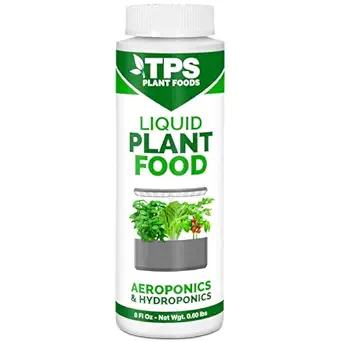 |
FoxFarm Grow Big Liquid Plant Food (16 fl oz)

| NPK | 6-4-4 |
|---|---|
| Form | Liquid |
| Unit Count | 16 Fluid Ounces |
| Mixing Ratio | 2 teaspoons per 1 gallon |
FoxFarm Grow Big is a 6-4-4 liquid concentrate designed to boost vegetative size and structure for vegetables, roses and houseplants. Mix at the manufacturer recommendation (2 teaspoons per gallon) and apply as part of your watering or as an early-morning foliar spray; the low pH formula helps keep micronutrients stable for reliable uptake. For tomato growers it delivers a nitrogen-forward balance that supports leafy growth and strong vines during the pre-flowering and fruit-set stages, and the pint concentrate is easy to store and measure. Notable features include quick-soluble liquid delivery and clear feeding guidance so you can feed every other watering without extensive guesswork. Limits to consider are that this is a vegetative feed rather than a bloom/fruit-specific formula, so you will want to switch to a bloom or fruit-focused fertilizer at flowering to optimize fruit development, and a pint will require careful dilution for larger vegetable beds or multiple plants. Overall it is a dependable, easy-to-use vegetative booster when you want predictable growth before tomatoes set heavy fruit.
Best for: Gardeners who prioritize consistent, predictable vegetative growth for tomato plants and want a straightforward, low-fuss feeding routine. Ideal for growers who value reliable nutrient uptake and clear instructions over experimental blends.
Less Ideal for: Growers seeking an all-in-one bloom and fruit booster or those managing large-scale tomato plantings who need bulk quantities of fertilizer.
- Concentrated liquid formula for fast nutrient uptake and easy mixing.
- Low pH formulation that helps keep micronutrients stable and available.
- Clear mixing instructions and flexible application by watering or foliar spray.
- Nitrogen-focused NPK (6-4-4) that promotes robust vegetative growth and strong vines.
- Not formulated specifically for flowering or heavy fruiting stages so a bloom/fruit fertilizer is needed later.
- Pint size may be small for larger vegetable gardens and requires frequent repurchasing.
Verdict: A dependable, easy-to-use liquid concentrate that reliably promotes vigorous vegetative growth in tomatoes during the pre-flower stages.
Neptune's Harvest Tomato & Vegetable Organic Liquid Fertilizer (2-4-2), 36 oz

| Item Form | Liquid |
|---|---|
| Specific Uses For Product | Plant Growth, Vegetable Development, Houseplant Care |
| Application Method | Liquid |
| Coverage | Medium |
| Mixing Ratio | 2-4-2 |
Neptune's Harvest Tomato & Vegetable fertilizer is a fish and seaweed based liquid plant food designed for the vegetative stage of tomatoes and other vegetables. You mix the concentrate with water (manufacturer recommends about 1 oz per gallon for outdoor plants) and apply as a root drench or foliar feed every 1 to 2 weeks for garden plants or weekly for houseplants. The 2-4-2 NPK and added calcium, molasses, humates, yucca extract, and biological microbes support leafy growth, root development, and soil biology rather than just a short burst of nitrogen. In practice it helps produce fuller foliage and can improve fruit set and quality when used consistently through the season. Because it is organic and low in salt it is forgiving of slightly overenthusiastic feeding, but the nutrient concentrations are lower than synthetic bloom boosters so expect slower, steadier gains rather than immediate big pushes in flowering or fruiting. Best used by gardeners focused on steady yield improvement and soil health rather than rapid, high-N fertilization programs.
Best for: Potted-tomato growers who prioritize reliable plant health, steady yield increases, and improved soil biology over rapid chemical forcing. Ideal for gardeners who prefer organic inputs and regular, measured feedings.
Less Ideal for: Growers seeking very rapid, high-impact flowering or fruiting with synthetic-strength fertilizers or those who need an odor-free product for indoor use in tight spaces.
- Organic, fish-and-seaweed based formula that supports soil biology and root health
- Versatile application as both a root drench and foliar feed
- Includes secondary ingredients (calcium, molasses, humates, yucca extract) that aid overall plant vigor and stress resistance
- Concentrated 36 oz bottle provides many feedings for potted tomato plants when mixed to label rates
- Lower NPK intensity compared with synthetic bloom or fruit boosters, so results are steadier not immediate
- Strong natural odor from fish-based ingredients which some users may find unpleasant
Verdict: A dependable organic liquid fertilizer that builds healthier roots and steady yields for potted tomatoes while supporting long-term soil biology.
True Organic Liquid Tomato & Vegetable Food, 32 fl oz

| Item Form | Liquid |
|---|---|
| Liquid Volume | 32 fluid ounces |
| Mixing Ratio | 2 oz. per gallon of water |
| Specific Uses For Product | Root Development, Seed Development, Gardening, Agriculture |
True Organic Liquid Tomato & Vegetable Food is a ready-to-mix organic fertilizer designed to feed tomato and vegetable plants in both containers and in-ground beds. You mix 2 oz. per gallon of water and apply every two weeks during the growing season, which makes it easy to add to routine watering or foliar-feeding schedules. The formula blends fish solubles, molasses, kelp extract and soy protein hydrolysate to support root development, soil biology, and fruit set rather than supplying only synthetic NPK. A 32 fl. oz. bottle is sized for small to medium plots and claims coverage around 60 sq. ft., so it is convenient for kitchen gardens and several container groups. Expect steadier growth and improved plant vigor when used consistently, especially where gardeners prefer certified-organic inputs. Limitations are typical of organic liquids: nutrient levels are lower than concentrated synthetic options, so heavier-feeding or larger acreage plantings may need larger quantities or supplementary products to meet peak demand.
Best for: Gardeners who prioritize organic inputs and want a simple, repeatable liquid feed for tomato beds and mixed vegetable patches, especially in small to medium plots or containers.
Less Ideal for: Large-scale growers or those needing very high, fast-acting nutrient doses should consider concentrated synthetic fertilizers or bulk organic solids instead.
- Organic, multi-source nutrient blend including soy protein hydrolysate and kelp to support plant and soil health
- Liquid form mixes easily for foliar or soil applications using the 2 oz per gallon ratio
- Suitable for both containers and in-ground tomato and vegetable plantings
- 32 fl. oz. bottle sized for small to medium gardens with stated coverage of about 60 sq. ft.
- Lower nutrient concentration than synthetic concentrates so you may need more product for high-demand periods
- Not intended for human consumption and contains fish- and molasses-derived ingredients that may have odor during application
Verdict: A user-friendly organic liquid feed that makes consistent two-week nourishment simple for small to medium tomato and vegetable gardens.
Miracle-Gro Liquid All Purpose Plant Food Concentrate, 32 oz

| Item Form | Liquid |
|---|---|
| Specific Uses For Product | Plant Growth, Root Development |
| Application Method | Mix with water in a watering can |
| Mixing Ratio | 1:10 (concentrate to water, estimate) |
Miracle-Gro Liquid All Purpose is a water-soluble concentrate you mix into a watering can and apply every 1 to 2 weeks to container and in-ground plants. It is formulated for general plant growth and root development and is marketed for flowers, vegetables, shrubs and houseplants, so it works as a straightforward feed for flowering bulbs like calla lilies. The bottle’s mixing guidance (cap measures for garden application and 1 teaspoon per gallon for containers) makes it easy to dose for pots or small beds. Practical benefits include fast uptake through the soil when applied as directed and compatibility with routine watering schedules. Limitations to note are that it is an all-purpose formula rather than a bloom-focused or calcium-rich fertilizer tailored specifically to calla lilies, so growers seeking targeted bloom enhancement or specialty nutrition may want a supplement. Also, frequent use at higher-than-recommended strength can risk fertilizer burn, so follow the mixing directions and schedule.
Best for: Buyers who want an affordable, easy-to-use liquid fertilizer to keep calla lilies and other flowering plants regularly fed without fuss.
Less Ideal for: Growers seeking a specialist bloom-boost or a fertilizer formulated for specific micronutrient needs should consider a targeted or bloom-specific product instead.
- Concentrated liquid mixes easily with water for quick application
- Clear dosing instructions for both garden beds and container plants
- Suitable for a wide range of plant types including flowering bulbs and houseplants
- General all-purpose formula not specifically formulated for enhancing blooms of calla lilies
Verdict: A budget-friendly, easy-to-use liquid concentrate that reliably feeds calla lilies and other common garden plants on a regular schedule.
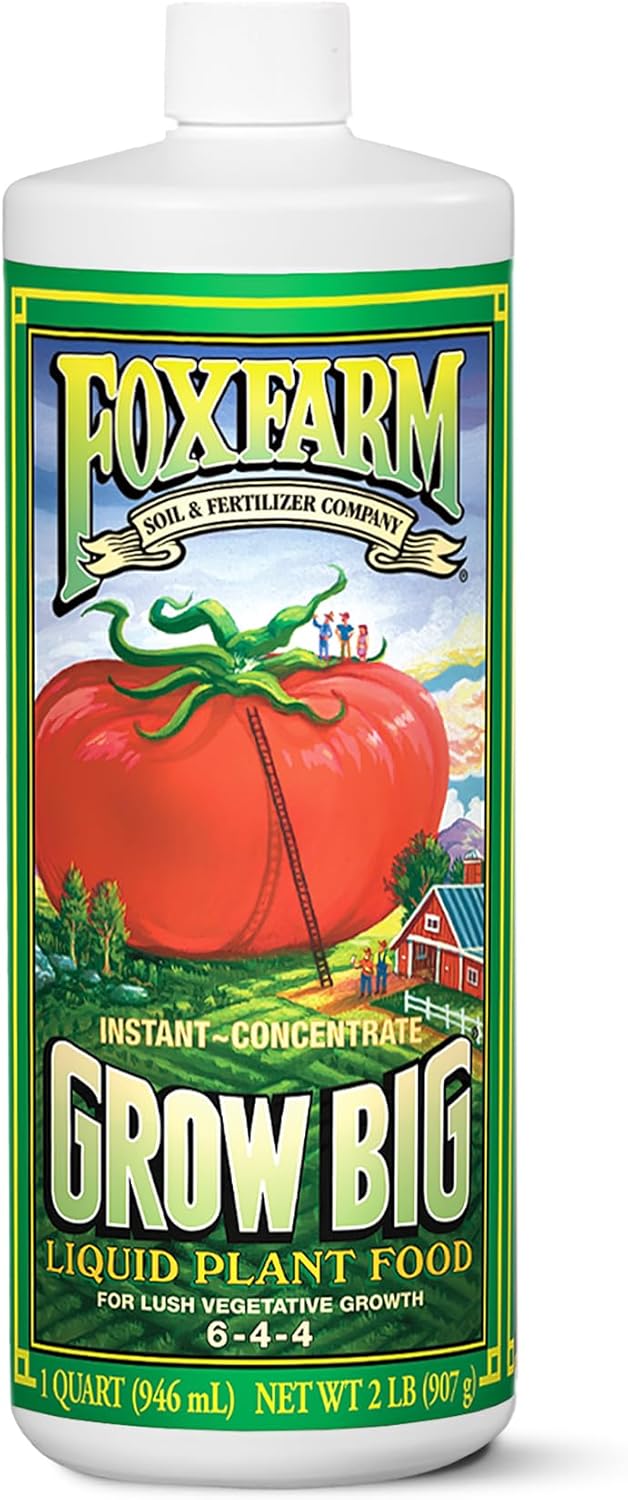
FoxFarm Grow Big Liquid Plant Food, 6-4-4 Quart Concentrate
| N-P-K | 6-4-4 |
|---|---|
| Form | Liquid concentrate |
| Unit count | 32 Fluid Ounces |
| Mixing ratio | 2-3 teaspoons per gallon |
FoxFarm Grow Big is a water-soluble concentrate designed to boost vegetative growth and speed nutrient uptake in vegetable gardens and ornamentals. Mixed at 2 to 3 teaspoons per gallon, it can be applied through watering or foliar feeding to quickly deliver nitrogen-focused nutrition that supports larger plants and stronger stems. The low pH formula helps keep micronutrients stable so feedings remain effective, and the quart concentrate covers repeated applications for a small plot or a set of containers. Practical benefits include clear mixing instructions, versatility for both indoor and outdoor use, and a fast-acting effect when plants need a growth push. Limitations to note are the higher nitrogen emphasis, which favors leaf and stem growth over bloom or fruit set, and the presence of phosphorus in the formula that may be restricted in some local lawn rules. For gardeners who prioritize consistent, predictable feedings, this product is straightforward to measure and integrate into a regular watering schedule.
Best for: Gardeners who want a reliable, easy-to-dose liquid fertilizer to encourage rapid vegetative growth in vegetable beds, containers, and established plants and who value predictable results from each feeding.
Less Ideal for: Growers focused primarily on maximizing flowering or fruit set who need a bloom-boosting formula or those working under strict phosphorus-use restrictions in their area.
- Concentrated liquid formula for fast nutrient uptake and quick visible response
- Low pH formulation helps maintain micronutrient stability during storage and application
- Versatile application by watering or foliar feeding for indoor and outdoor use
- Clear mixing ratio (2–3 teaspoons per gallon) simplifies repeatable feedings
- Nutrient ratio (6-4-4) emphasizes vegetative growth rather than flowering or fruit production
- Contains phosphorus which may be restricted by local regulations for turf or non-agricultural use
Verdict: Choose this concentrate when you want a dependable, fast-acting liquid feed to promote vigorous leafy and structural growth in a vegetable garden.
Miracle-Gro Quick Start Planting & Transplant Starting Solution, 48 fl. oz.

| Item Form | Liquid |
|---|---|
| Specific Uses For Product | Agriculture,Starting |
| Application Method | Mix with water and pour around new plantings |
| Target Species | For all flowers, vegetables, trees, shrubs, transplants and seedlings |
| Mixing Ratio | Fill cap to 1st line and mix with 1 gallon of water |
Miracle-Gro Quick Start is a liquid concentrate designed for use when planting or moving seedlings and transplants. You measure the concentrate with the bottle cap, mix with a gallon of water, and pour the diluted solution around the root zone to settle soil and feed young roots. The 4-12-4 NPK formula emphasizes phosphorus to encourage root development and faster blooms versus unfed plants. Typical use is at planting and again seven days later, after which you can switch to a regular feeding schedule. Practical benefits include an easy, measured application, compatibility with flowers, vegetables, trees, shrubs and seedlings, and clear instructions for gardeners who want a simple transplant routine. Limitations to note are that this is a starter solution only, so it is not intended as a long-term sole fertilizer, and frequent large-scale applications without following label guidance could overfeed delicate seedlings. Also it is a liquid concentrate, so you need a watering can and care when diluting to avoid spills or accidental over-concentration.
Best for: Gardeners who want a simple, reliable way to reduce transplant shock and give seedlings a nutrient-rich start when planting in beds or containers.
Less Ideal for: People seeking an all-in-one, long-term fertilizer solution for ongoing feedings or those who prefer granular or organic-only products.
- Focused 4-12-4 NPK formula to encourage root development at transplanting
- Liquid concentrate with a measured cap makes dosing straightforward
- Suitable for a wide range of plants including vegetables, flowers, shrubs and trees
- Simple application that settles soil and feeds roots right after planting
- Designed as a short-term starter solution rather than a complete feeding program
- Requires correct dilution and handling to avoid overfeeding seedlings
Verdict: Use this easy-to-dose liquid starter to give seedlings and transplants a nutrient boost that helps roots establish quickly.
TPS Nutrients Liquid Plant Food for AeroGarden and Hydroponics, 8 oz

| Item Form | Liquid |
|---|---|
| Specific Uses For Product | Plant Growth, Root Development |
| Target Species | Herb, Vegetable |
| Mixing Ratio | 5 mL (1 tsp) per quart of feedwater |
| Unit Count | 8 Fluid Ounces |
This 8 oz liquid plant food provides concentrated, reservoir-safe nutrition intended for AeroGarden and comparable hydroponic units. It is used by mixing the recommended 5 mL per quart of feedwater into the system reservoir on a regular feeding schedule to supply macro and micronutrients for herbs, greens, and other compact edible plants. Notable features include a liquid formulation that dissolves easily, a focus on root development, and explicit compatibility with indoor hydroponic gardens. In practice it simplifies feeding for small indoor crops because a measured teaspoon per quart is straightforward to dose and store. Important limitations are the small bottle size, which will require frequent repurchasing for larger or multiple units, and the need to follow dilution directions carefully to avoid overfeeding. Safety handling is necessary because the concentrate should be kept away from children and pets. For risk-averse growers, the product’s clear mixing ratio and hydroponic focus make predictable feeding simple, but you should track reservoir concentrations rather than guessing frequency or volume adjustments.
Best for: Buyers who want a simple, low-risk feeding routine for indoor green onions and other small edible hydroponic crops and prefer clear dosing instructions they can follow reliably.
Less Ideal for: Growers managing large hydroponic setups, outdoor beds, or those who need a detailed NPK profile for tailored nutrient programs should look for larger or fully specified concentrates.
- Designed specifically for AeroGarden and similar hydroponic systems for straightforward compatibility
- Liquid formula mixes easily for even nutrient distribution in the reservoir
- Clear mixing ratio (5 mL per quart) simplifies dosing and repeatable feeding
- Targets root development and steady growth for herbs and vegetables
- Small 8 oz bottle may not last long for multiple or larger units
- No full nutrient analysis or NPK breakdown provided on the product listing
Verdict: A compact, easy-to-dose liquid fertilizer that makes predictable feeding of indoor green onions simple and low risk.
Choosing the Right Liquid Fertilizer for Vegetable Seedlings: Key Factors to Consider
Nutrient Ratio and Strength
The ratio of nitrogen, phosphorus, and potassium matters more at the seedling stage than at maturity because young plants prioritize leaf and root establishment. A slightly higher but balanced nitrogen content encourages healthy leaf growth without overstimulating soft tissue that flops after transplant.
Concentration is crucial. Seedlings are sensitive to high soluble salt levels, so low-strength, seedling-specific ratios or the ability to dilute to a very weak solution reduces the risk of fertilizer burn. Look for products that specify parts-per-million (ppm) or low dilution rates for starts.
Micronutrients and Chelation
Trace elements such as iron, manganese, zinc, and boron support early root function and prevent subtle deficiency symptoms under artificial light or in sterile soilless media. Chelated micronutrients remain available in a wider pH range, which is important if you are using diverse water sources or media with variable pH.
A formula with a complete but gentle micronutrient package reduces the need for corrective foliar sprays later and helps seedlings establish more uniform growth across flats and trays.
Solubility and Water Clarity
Liquid fertilizers that dissolve completely and leave a clear solution reduce blockages when using fine-mist sprayers or capillary mat systems. Insoluble residues can clog watering cans, spray nozzles, and irrigation tubing, leading to uneven feeding and extra maintenance.
Highly soluble formulations also enable consistent dilution and predictable ppm readings, which is valuable when you monitor nutrient strength with a meter.
Ease of Dilution and Labeling
Clear, graduated dilution instructions tuned to seedling stages simplify safe feeding. Labels that give explicit low-rate mixes for first true leaves, hardening-off, and transplant time help you avoid guesswork and accidental overfeeding.
Products that include both volume ratios and ppm targets make it easier to adapt feeding to different container sizes and water quality, which matters for gardeners using rainwater, municipal supply, or well water.
Application Method Compatibility
Seedlings can be fed by bottom-watering, light top-water, or foliar misting. Fertilizers that work across these methods are more versatile for hobbyists and small-scale growers. For example, very high-salt concentrates are ill-suited to foliar feeding while well-balanced, low-salt liquids can be safely sprayed for quick correction.
Compatibility with common equipment such as hand sprayers, watering cans, and automated ebb-and-flow or capillary mat systems matters for consistent results.
Packaging and Storage Practicality
Smaller, well-marked bottles reduce waste and make it easier to keep a low-concentration stock solution on hand. Resealable, opaque containers protect light-sensitive components and lengthen shelf life. Child-resistant closures and clear expiration guidance are useful in multi-user spaces.
Think about how often you will feed seedlings and whether you need a concentrate that stores well after opening or a ready-to-use option you can pour directly without measuring.
When to Start Feeding Seedlings
Most seedlings benefit from their first weak feed after the first true leaves appear, not immediately after germination. At that early stage, the seed endosperm and seed reserves typically supply enough nutrients for the cotyledons and embryo to emerge.
Begin with a quarter to one-eighth of the label rate or a low ppm target, then increase gradually as the root system and first true leaves develop. Watch for signs of overfertilization such as slowed growth, leaf scorch, or white crust on the soil surface.
- Start feeding once true leaves are visible.
- Use very low concentrations to avoid burn.
- Adjust frequency based on media and water retention.
Mixing and Measuring Best Practices
Accurate dilution is the single biggest control gardeners have to prevent seedling damage. Use marked measuring spoons, syringes, or a small kitchen scale if the product gives mass-based instructions. When preparing a stock solution, label the container with dilution ratio and date.
If you test solution strength with a TDS or EC meter, rinse the probe between samples and calibrate periodically to keep readings reliable. Prepare only as much mixed solution as you will use within a week or two if the product lacks preservatives.
- Measure by volume or weight according to the label.
- Label stock solutions and record ppm/EC targets.
- Flush sprayers and lines after use to prevent buildup.
Feeding Schedules for Different Seed Starting Media
Soilless mixes and coco coir have little inherent fertility, so they typically require regular light feedings once seedlings begin to grow. Lightweight seed-starting soils with a small starter charge may allow one or two feeds later but still benefit from gentle liquid nutrition.
In heavier potting soil that contains slow-release charge, reduce feeding frequency and rely more on half-strength applications. The media's water retention alters how often you apply a dilute feed; drier mixes need less frequent but consistent feeding.
- Soilless media: more frequent, low-strength feeds.
- Starter soils: monitor growth before adding regular feed.
- Amended potting soils: feed sparingly to avoid salt buildup.
Signs of Underfeeding and Overfeeding
Underfed seedlings often show slow, leggy growth, pale leaves, and delayed development. Weak root systems may form in response, making transplants fragile. A mild increase in frequency or slight boost in concentration can correct deficiency signs gradually.
Overfeeding appears as leaf tip burn, dark brown or blackened margins, wilting even when media is moist, or white salt deposits on the soil surface. If you suspect overfeeding, flush the media with clean water and reduce concentration and frequency going forward.
- Look for pale leaves and slow growth for underfeeding.
- Leaf scorch and crusted soil indicate overfeeding.
- Correct problems slowly to avoid shock.
Integrating Fertilizer with Water Quality
Your source water changes how fertilizers behave. Hard water with high calcium and magnesium can raise solution pH and precipitate certain micronutrients, reducing availability. Soft or low-alkaline water can make nutrient solutions more acidic, which alters uptake dynamics.
If you suspect water quality issues, test pH and hardness and adjust either by using a different fertilizer formulation or by buffering the solution. Some liquid feeds are formulated to be pH-stable across a broad range and are better suited for variable water sources.
- Test your source water pH and hardness.
- Choose formulas tolerant of your local water chemistry.
- Adjust dilution based on observed seedling response.
How We Chose the Best Liquid Fertilizer for Vegetable Seedlings
We started by filtering products that are explicitly formulated or commonly used for young vegetable starts, excluding concentrated garden feeds meant only for mature plants and any fertilisers with a history of phytotoxicity reports in seedling trials. Primary evaluation criteria were a clear, stable nutrient profile appropriate for early growth, ease and safety of dilution, and application flexibility across common seed-starting setups such as trays, pots, and soluble mixes. We also assessed solubility and clarity to reduce clogging in watering cans and spray devices, and the presence of essential micronutrients that support root establishment and stress tolerance. Packaging and labeling clarity were considered because clear dilution directions reduce user error when feeding delicate seedlings. Finally, we gave extra weight to products that permit precise, low-rate feeding schedules and that integrate well with both inert soilless mixes and light potting soil. Products that failed to document dilution rates or that were targeted only at mature plants were excluded from the list.
FAQ
How often should I feed vegetable seedlings with a liquid fertilizer?
Often seedlings do well with feeding every 7 to 14 days at low concentration, or lighter feeds more frequently if the media dries quickly. Frequency depends on the media's fertility and water-holding capacity.
Can I foliar feed seedlings with liquid fertilizer?
Usually foliar feeding is possible with a low-salt, well-diluted solution and is useful for quick correction of deficiencies. Avoid foliar sprays with highly concentrated formulas that can scorch delicate leaves.
What dilution strength is safe for first true leaves?
A very weak solution, often around one-quarter to one-eighth of the standard label rate or a low ppm target recommended for seedlings, is a safe starting point. Adjust gradually based on plant response.
Is it better to bottom-water or top-water with liquid feeds?
Both methods work. Bottom-watering delivers nutrients directly to roots and reduces leaf wetting, while light top-watering or foliar feeding can correct surface deficiencies. Choose the method that fits your tray setup and reduces disease risk.
Will using liquid fertilizer speed up hardening off?
It can support stronger growth before hardening but will not replace careful environmental acclimation. Reduce feed strength as you harden seedlings and focus on light, airflow, and gradual exposure to outdoor conditions.
Final Verdict
For vegetable seedlings prioritize a gentle nutrient ratio, low dilution requirements, and good micronutrient coverage. Balance the need for steady leaf and root development against the risk of salt burn by starting with very weak feeds and advancing concentration gradually as roots establish. Choosing a product that dissolves clearly, provides precise dilution guidance, and works with your watering method will reduce mistakes and help you produce sturdier transplants. Focus on matching the fertilizer type to your media and water quality, and you will be more likely to move healthy seedlings into the garden with confidence.
