

Note: This article contains affiliate links. If you click on these links and make a purchase, I may earn a small commission at no extra cost to you. This helps support my research and content. Read my full affiliate disclosure here.
If you grow sago palms you know they prefer a potting soil that drains quickly yet holds enough moisture and nutrients between waterings. The right mix reduces root rot risk, supports slow steady growth, and simplifies feeding in containers or indoors. This guide covers six shortlisted potting soils for sago palm selected for their drainage, aeration, and nutrient profiles. Below we explain what matters in a sago palm mix and how each pick was judged against key garden-use criteria so you can choose the right mix for your pot size and watering routine.
Top Picks at a Glance
| Best Overall The best all-around choice for most situations | Gardenera Palm Tree Potting Mix (1 Quart) |  |
| Best Quality Built to a higher standard if you want something more solid | FoxFarm Ocean Forest Potting Soil, 12 Qt (4 Bags) |  |
| Best Value The sweet spot between price and what you get | Miracle-Gro Tropical Potting Mix (6 qt., 2-Pack) |  |
| Highest Rated A top-rated pick with lots of positive feedback | E.B. Stone Organics Citrus & Palm Mix Potting Soil, 1.5 cu ft |  |
| Most Popular A crowd favorite that many people choose with confidence | Miracle-Gro Cactus, Palm & Citrus Potting Mix, 8 qt. |  |
| Best Seller A high-volume bestseller chosen again and again | Back to the Roots Organic Expanding Coco Coir Potting Soil Brick (10 lb) |  |
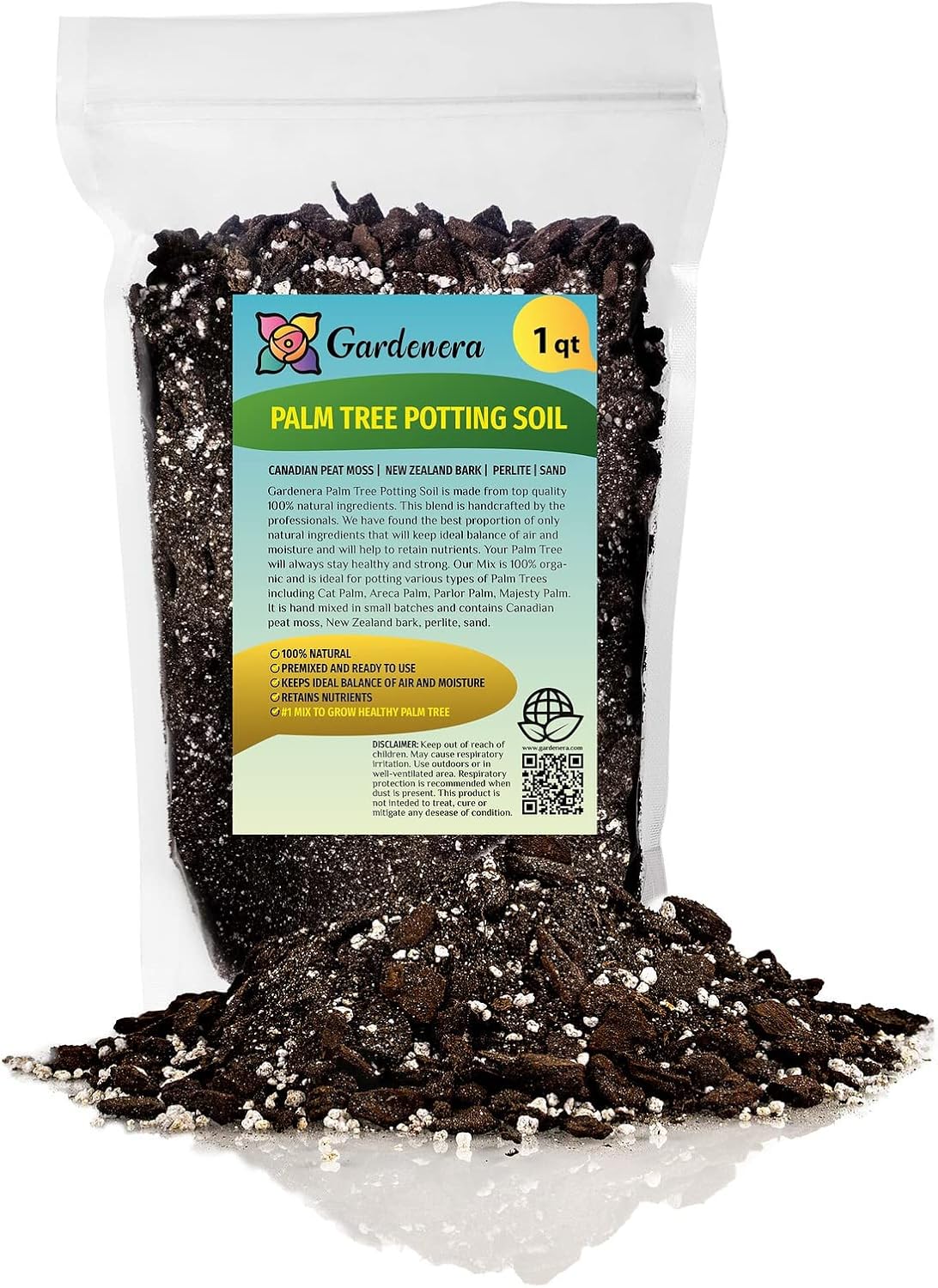
Gardenera Palm Tree Potting Mix (1 Quart)
| Unit Count | 1 Count |
|---|---|
| Item Type Name | Palm Tree Potting Mix |
| Volume | 1 quarts |
| Brand Name | Gardenera |
This Gardenera Palm Tree Potting Mix is a ready-to-use blend formulated for palm trees, combining Canadian peat moss, New Zealand bark, Ukrainian perlite, and sand to give a balance of moisture retention and drainage. It is typically used when repotting indoor or container palms or refreshing potting media for established potted specimens. The peat and bark add organic matter and structure while the perlite and sand increase aeration and reduce the risk of waterlogging. In practice this mix makes repotting straightforward: loosen roots, fill the new container, position the palm at the right height, and water to settle the soil. Because the bag is only 1 quart, it is best for single small pots, seedlings, or as a topdressing rather than filling large containers. The product notes safety precautions for handling dusty components, so wear a mask and gloves when working with it. If you want a palm-tailored, easy-to-use small bag for potting or small refreshes, this mix covers the bases; for larger jobs you will need multiple bags or a larger size option.
Best for: Buyers who need a small, palm-focused potting mix for repotting seedlings, small potted palms, or for topping up containers and who prioritize a product designed for palm root health.
Less Ideal for: Gardeners needing to fill large containers, multiple palm pots, or outdoor planting holes should avoid this size and choose bulk or larger-volume mixes instead.
- Formulated specifically for palms with peat, bark, perlite, and sand for balanced moisture and drainage
- Good aeration that helps prevent root rot in container palms
- Ready-to-use mix simplifies repotting and small pot top-ups
- Very small 1 quart volume limits use to seedlings or small pots
- Contains dusty components requiring gloves and a mask during handling
Verdict: A compact, palm-tailored potting mix that makes small repots and top-ups simple and effective.
FoxFarm Ocean Forest Potting Soil, 12 Qt (4 Bags)

| Brand | FoxFarm |
|---|---|
| Item Highlight | Ready-to-use, aerated soil with fish emulsion, crab meal and earthworm castings. |
| Number of Packs | 4 |
| Volume | 12 quarts |
FoxFarm Ocean Forest is a pre-mixed potting soil designed to give seedlings, container plants, and raised-bed plantings a nutrient-dense, well-aerated growing medium straight from the bag. The mix combines aged forest products, sandy loam and sphagnum peat moss for good drainage and air porosity while organic inputs such as fish emulsion, crab meal and earthworm castings provide immediate feeding for young plants. In practice it is most useful for transplanting seedlings, filling pots and topping raised beds where you want plants to establish quickly without a long wait for soil amendments. Notable features include an airy texture that reduces compaction and a built-in nutrient profile that can delay the need for early fertilizers. Important limitations are that it is sold in 12 quart bags which may require many bags for large raised beds and that the peat-based content may dry faster than heavier garden soils, so more frequent watering can be necessary. For gardeners focused on vigorous starts and faster establishment, it is a straightforward, high-performance potting mix.
Best for: Gardeners who prioritize fast, vigorous establishment in containers and raised beds and want a high-performance, plug-and-play soil to get plants growing quickly.
Less Ideal for: Those building large in-ground beds who need bulk topsoil or want a lower-maintenance, water-retentive soil for drought-prone sites should consider bulk garden soil alternatives.
- Ready-to-use, no mixing required for quick planting
- Aerated, light texture that reduces compaction and improves root oxygenation
- Contains organic amendments (fish meal, crab meal, earthworm castings) for immediate nutrient availability
- Small bag volume means multiple bags are needed for larger raised beds
- Peat-based mix can dry out faster than heavier soils, requiring more frequent watering
Verdict: Choose this mix when you want a ready-made, nutrient-rich potting soil that gives seedlings and raised-bed plantings a fast, high-performance start.
Miracle-Gro Tropical Potting Mix (6 qt., 2-Pack)

| Item Form | Granules |
|---|---|
| Specific Uses For Product | Plant Growth |
| Coverage | tropical plants |
| Liquid Volume | 6 quarts |
Miracle-Gro Tropical Potting Mix is a ready-to-use container soil designed for tropical houseplants like monstera, pothos, and fiddle‑leaf fig. The mix includes lava rock to improve aeration and drainage, and built-in nutrients that the manufacturer says feed plants for up to six months, so it is convenient for repotting or topping up containers. In practical use it produces a light, well-draining medium that helps prevent waterlogging and reduces the likelihood of fungus gnat attraction compared with denser soils. It works both indoors and outdoors and is easy to handle straight from the bag without blending other amendments. Important limitations are that bag size is small (6 qt per unit listed) so larger specimens will need multiple bags, and the precharged nutrients mean you should delay additional fertilizing for about a month and monitor feeding afterward. Also, if you prefer a custom mix with specific proportions of peat, coco coir, or chunky orchid bark, this premix may not match those exact ratios.
Best for: Buyers who want a convenient, low-effort potting mix that supports tropical houseplants and speeds up repotting without custom blending.
Less Ideal for: Experienced growers who prefer to custom-blend their own soil recipes or who need large volumes for mature, heavy-rooted specimens.
- Formulated specifically for tropical/container plants so composition suits species like monstera
- Lava rock included for improved drainage and aeration
- Feeds plants for up to six months reducing immediate need for fertilizer
- Less likely to attract fungus gnats than heavier soils
- Ready-to-use straight from the bag for easy repotting
- Small unit volume means multiple bags required for large pots or repotting mature plants
- Pre-mixed nutrient level requires waiting before adding extra fertilizer
Verdict: A convenient, well-draining premix that makes repotting and maintaining tropical houseplants like monstera faster and easier.
E.B. Stone Organics Citrus & Palm Mix Potting Soil, 1.5 cu ft

| Brand Name | E.B. Stone Organics |
|---|---|
| Unit Count | 1536 Ounce |
| Volume | 1.5 cubic feet |
| Style Name | Potting Soil |
E.B. Stone Organics Citrus & Palm Mix is a ready-to-use organic soil blend designed for container and in-ground planting of citrus, palms, avocados and tropical foliage. The mix pairs aged fir bark and pumice to keep the root zone well aerated and fast-draining so plants that dislike soggy feet avoid root rot, while added mycorrhizae improve nutrient and water uptake. It is intended to be used straight from the bag for potting or worked into beds when planting, which simplifies planting and repotting tasks. For gardeners seeking reliability, this blend delivers consistent structure and moisture retention without heavy amendments, and the organic base supports longer-term soil biology. Limitations are the single bag volume of 1.5 cubic feet, which means larger projects will require multiple bags and mixing on site, and it does not list N-P-K numbers or slow-release fertilizer content so supplemental feeding may be needed for heavy-feeding specimens.
Best for: Gardeners who prioritize reliable, low-maintenance potting media for citrus and tropical plants and want a ready-made organic blend that supports healthy roots.
Less Ideal for: People who need large volumes for landscaping projects or who prefer a potting mix with specified fertilizer content and tailored nutrient ratios.
- Formulated specifically for citrus, palms and tropicals to match their root needs.
- Aged fir bark and pumice provide good drainage and aeration to reduce risk of root rot.
- Contains beneficial mycorrhizae to enhance root nutrient and water uptake.
- Ready-to-use bag simplifies repotting or planting without on-site blending.
- Single bag is only 1.5 cubic feet so multiple bags are required for larger trees or beds.
- No detailed fertilizer analysis provided so additional feeding may be necessary for heavy feeders.
Verdict: Choose this mix when you want a consistent, ready-to-use organic soil that promotes healthy, well-aerated roots for citrus and tropical plants.
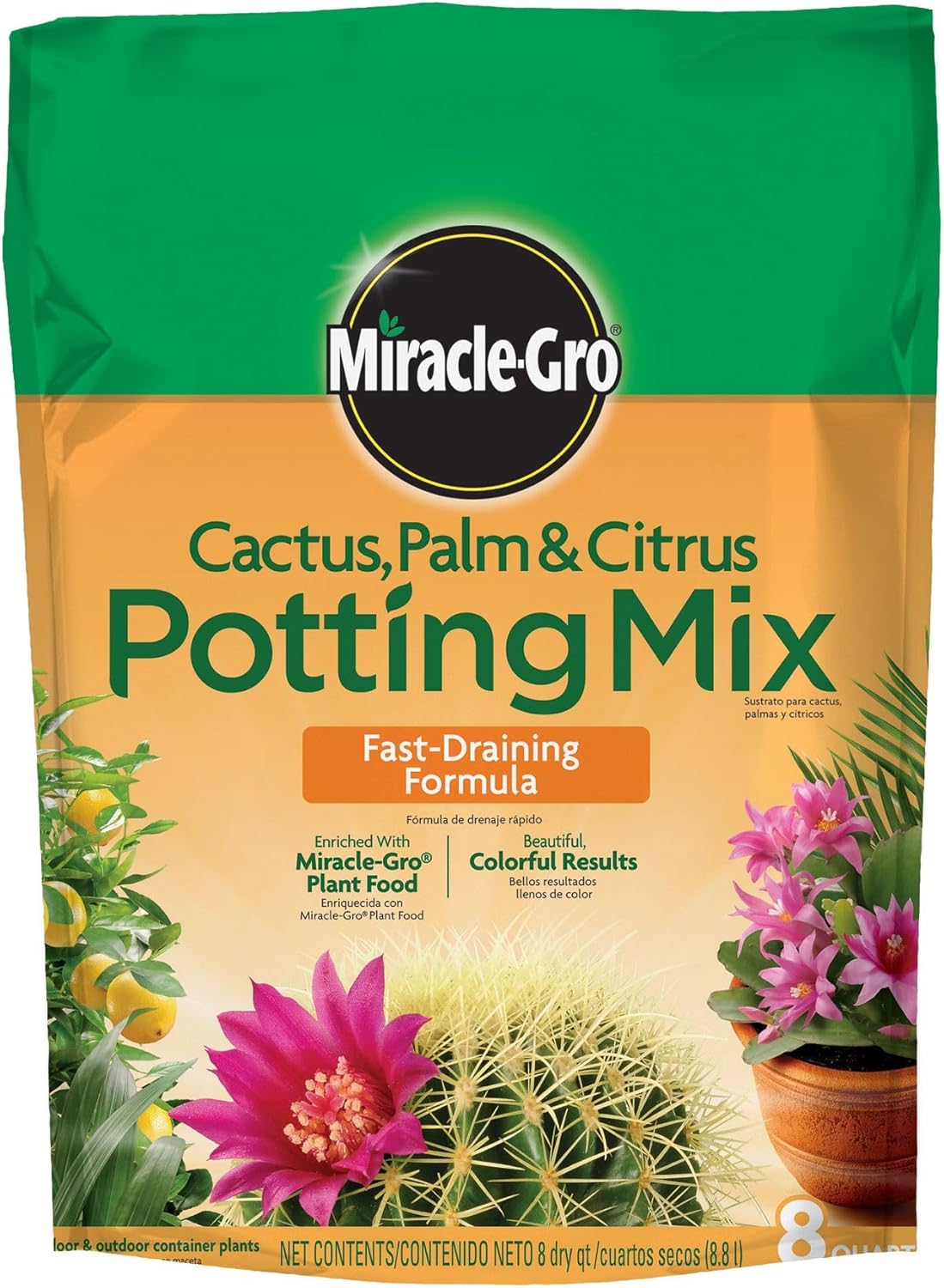
Miracle-Gro Cactus, Palm & Citrus Potting Mix, 8 qt.
| Brand Name | Miracle-Gro |
|---|---|
| Volume | 8 quarts |
| Unit Count | 1 Count |
This 8-quart Miracle-Gro potting mix is designed for container-grown cacti, palms, and citrus and combines peat moss, sand, perlite, and forest products for faster drainage and reduced compaction. It arrives ready to use and is enriched with Miracle-Gro plant food so newly potted citrus get an initial nutrient boost without immediate fertilizing. Typical use is straightforward: choose a pot with drainage, fill about one third, set the root ball and top up, then water and allow to drain. The formula helps soil dry between waterings, which is important for citrus root health in containers, and one bag is enough for two 8-inch pots. Limitations are the small volume for larger trees and the presence of peat moss if you prefer peat-free mixes; heavier or older citrus will need larger volumes and eventual repotting. For growers wanting a quick, reliable container medium that balances moisture retention with drainage, this mix performs as expected.
Best for: Growers who repot or maintain container citrus and want a ready-to-use mix that balances drainage and initial feeding for healthier root development.
Less Ideal for: Gardeners potting mature or large citrus specimens that need large volumes of soil or those seeking a peat-free or custom mineral-heavy citrus bonsai substrate.
- Fast-draining blend reduces risk of waterlogged roots for container citrus
- Pre-enriched with plant food to give newly potted plants an initial nutrient boost
- Contains perlite and sand to resist compaction and maintain aeration
- Formulated for indoor or outdoor containers so it works across sites
- 8-quart bag is small for larger or multiple citrus containers
- Contains peat moss which some buyers avoid for sustainability reasons
Verdict: A convenient, fast-draining, plant-food–enriched container mix that makes repotting small to medium citrus trees quick and reliable.
Back to the Roots Organic Expanding Coco Coir Potting Soil Brick (10 lb)

| Item Highlight | 10 lb compressed coco coir brick; peat-free; OMRI Listed |
|---|---|
| Item Type Name | Coconut Coir |
| Volume | 2 cubic feet |
| Ingredients | Coconut Coir |
| Style Name | Expanding Potting Soil |
This compressed coco coir brick provides a lightweight, peat-free potting medium that expands when you add water to create loose, airy substrate for containers and seed flats. It is typically used by hydrating the 10 lb block to about 2 cubic feet of coir and then using it alone for potted plants, mixing it into garden soil to improve drainage and aeration, or blending with compost for starting seeds. Notable features include OMRI listing for organic use, a balanced pH suited to a wide range of plants, and compact storage before expansion which saves space. Practical benefits are improved root aeration and water retention compared with heavy garden loam, easier handling than bulky bags, and versatility across vegetables, herbs, and ornamentals. Important limitations are that coco coir is a soilless substrate and does not supply significant nutrients on its own so you will need to add fertilizer or compost for long-term potted herbs like rosemary, and the product requires time and a water source to expand before use.
Best for: Buyers who prioritize low-risk, easy-to-handle, organic potting media and want a versatile base for container herbs and seed starting without dealing with heavy bags.
Less Ideal for: Gardeners who want a ready-to-plant, nutrient-rich potting mix out of the box or those who prefer soil with built-in slow-release fertilizer.
- Peat-free OMRI listed organic coco coir suitable for organic growing
- Expands from a compact brick to about 2 cubic feet for easy storage and transport
- pH balanced and airy texture that improves drainage and root aeration
- Versatile use: can be used alone, for seed starting, or mixed into existing soil
- Provides little inherent fertility so supplemental feeding or compost is needed for nutrient-hungry plants
Verdict: A compact, peat-free coco coir brick that expands into an airy, pH-balanced base ideal for low-risk organic container gardening and seed starting when paired with fertilizer or compost.
Choosing the Right Potting Soil for Sago Palm: Key Factors to Consider
Drainage and Aeration
Sago palms dislike constantly wet roots, so a mix that allows excess water to move away from the root ball is essential. Good drainage comes from a combination of coarse particles and air pockets that prevent the medium from becoming waterlogged. When choosing soil, look for materials like coarse sand, pumice, or perlite blended with finer organic matter to maintain structure.
Aeration keeps roots healthy by ensuring oxygen reaches root tissues. A dense, compacting mix reduces oxygen and invites root rot pathogens. Over time a poor mix will settle and lose its air space, so consider mixes formulated to resist compaction or those that include stable inorganic components.
Moisture Retention Balance
Sago palms need a middle ground: the soil should dry a bit between waterings without becoming bone-dry for long stretches. Organic components such as aged bark or coconut coir help hold usable moisture, while inorganic amendments moderate that retention so water escapes when needed.
A mix that retains too much water increases disease risk; a mix that sheds water too quickly forces more frequent watering and can stress the plant. Think about your watering habits and ambient humidity when choosing a retention level.
Nutrient Profile and Ease of Feeding
Sago palms are slow growers and benefit from a steady, balanced nutrient supply rather than heavy, salt-building feeds. Potting soils with a modest slow-release nutrient base reduce the need for constant fertilizing but should allow additional feeding when desired. The mix should not contain excessive salts or a concentrated fertilizer charge that could harm sensitive roots.
Also consider how easily the soil accepts liquid feeds. Some mixes with high organic oil content can float or repel water and feeds; choose a formula that wets consistently and distributes nutrients evenly.
pH and Mineral Compatibility
Cycads generally prefer a slightly acidic to neutral pH. A potting soil with pH in the 6.0 to 7.0 range helps ensure micronutrients remain available. Soils that are too alkaline or acidic can lock up iron and other key elements, leading to chlorosis or slow decline.
If your local water is very hard or alkaline, select a mix with buffering capacity or be prepared to amend with acidifying materials and monitor leaf color regularly.
Particle Size and Long-Term Stability
Particle size affects how a mix behaves as it ages. Larger, stable particles like bark chips, coarse sand, or pumice maintain structure for longer and resist compaction. Finer particles decompose and compress, reducing aeration over seasons.
For potted sago palms plan for repotting every few years and choose mixes that maintain their structure between repots, reducing root disturbance and the need for heavy rework.
Pest and Disease Resistance
Soil that stays uniform and drains well reduces the window for root pathogens and fungus gnats. Ingredients with good microbial balance and low weed seed content cut pest pressure. Avoid mixes with high amounts of uncomposted organic matter that can promote fungal growth.
Also consider whether the soil has been sterilized or pasteurized if you are repotting plants that showed past root issues. While sterilized mixes reduce immediate pathogen load, they may also lack beneficial microbes; gardeners often strike a balance by using clean mix and reintroducing beneficial microbes through compost teas or inoculants.
Adjusting Mixes for Container Size
Large containers need mixes that hold more moisture in the upper root zone while still providing drainage at the root core. Increasing the proportion of coarse particles in the bottom third of large pots helps prevent waterlogging where roots concentrate. In smaller pots a slightly finer balance helps the root ball access moisture quickly without the pot drying out too rapidly.
When repotting, inspect the old mix and loosen compacted areas before placing the plant into fresh medium. For very large specimens, consider a layered approach that places chunky drainage material near the pot base and a well-balanced potting mix above.
- Use more coarse amendments in large pots to maintain air pockets
- Smaller pots benefit from slightly finer but still free-draining mixes
- Loosen compacted root balls to encourage new root growth into fresh mix
Indoor Vs Outdoor Growing Considerations
Indoor sago palms are more prone to overwatering and low light stress, so choose a mix with reliable drainage and moderate moisture retention. Indoor humidity tends to be lower, so mixes that hold a touch more moisture without becoming soggy are useful.
Outdoor potted palms face rain exposure and temperature swings. For patio or porch use, prioritize mixes with excellent drainage and components that resist breakdown from repeated wetting and drying cycles.
- Indoors: slightly higher organic content for steady moisture
- Outdoors: emphasize inorganic drainage components
- Both: monitor irrigation and adjust watering frequency seasonally
How to Amend a Ready-Made Mix
If a store-bought potting soil is close but not ideal, simple amendments can tune it for sago palms. Add perlite or pumice to improve drainage and aeration. Incorporate coarse sand sparingly to increase weight and drainage without reducing aeration too much.
To adjust moisture retention, mix in small amounts of coconut coir or aged bark. For pH tweaks use lime or sulfur carefully and test before large-scale amendments. Avoid over-amending; small incremental changes are safer and let you observe how the plant responds.
- Add 10 to 30 percent perlite or pumice for better drainage
- Use aged bark or coir to slightly boost water holding without compaction
- Make pH adjustments gradually and test soil after changes
Watering and Fertilizer Tips for Sago Palms
Water deeply but allow the top portion of the mix to dry between waterings. Frequency will depend on pot size, season, and local climate. Overwatering is the most common mistake and will show first as soft, discolored lower fronds.
Use a balanced, slow-release fertilizer at lower-than-normal rates for tropical ornamentals, or apply liquid feedings diluted to half strength during the active growth season. Flush container soils occasionally to prevent salt buildup and monitor leaf color for nutrient deficiencies.
- Let the upper few inches dry before re-watering
- Fertilize lightly and monitor for salt buildup
- Flush pots yearly if you use regular chemical feeds
Repotting Schedule and Technique
Sago palms are slow to outgrow pots, but repotting every 2 to 4 years helps refresh the mix and inspect roots. Choose a pot only one size larger to avoid excess soil volume that retains too much moisture. Gently loosen circling roots and remove heavily decayed portions before setting the crown into fresh mix.
Ensure the crown sits at the same depth as before. After repotting, hold off on heavy fertilizer for a month so roots settle and any minor transplant stress can pass.
- Repot every 2 to 4 years, increasing pot size modestly
- Inspect and trim rotten roots during repot
- Avoid heavy feeding immediately after repotting
How We Chose the Best Potting Soil for Sago Palm
We focused on qualities that matter to gardeners growing sago palms in containers and small landscape beds. Key evaluation criteria included physical drainage and aeration, water retention balance, nutrient profile and ease of feeding, pH compatibility with cycads, and long-term stability so the mix does not compact over time. We also considered ingredients that reduce fungal and pest risk and whether the mix is suitable for indoor versus outdoor use. Practical factors such as bag consistency, mix uniformity, and how the soil handles repotting were weighed as well. Products that were overly dense, designed solely for moisture-loving plants, or formulated with heavy peat-only bases were excluded. We did not include mixes that require extensive on-site modification to be usable for cycads. The resulting shortlist emphasizes ready-to-use potting soils and mixes that need only minimal amendment to meet sago palm needs, rather than specialty blends that demand heavy customization.
FAQ
What soil ingredients help prevent root rot in sago palms?
Coarse components like perlite, pumice, coarse sand, and aged bark create air space and speed drainage, which reduces root rot risk. Avoid mixes that remain dense or compact quickly.
Can I use standard houseplant potting soil for a sago palm?
Standard potting soil can work if amended for drainage. Many houseplant mixes retain too much moisture on their own, so adding pumice or coarse sand and reducing fine peat will make them more suitable.
How often should I fertilize a sago palm in potting soil?
Usually feed lightly during the growing season with a balanced formula. Sago palms are slow growers and respond better to modest, regular feeding than heavy doses. Frequency depends on the nutrient charge in the chosen mix.
Is pH testing necessary for sago palm potting mixes?
Testing is useful if you see nutrient symptoms or if your water is very hard or very soft. Most quality mixes fall near neutral, but testing helps confirm that iron and other micronutrients will be available.
How can I reduce pest issues related to potting soil?
Use clean, well-draining mixes and avoid overwatering to reduce fungus gnats. Let the soil surface dry slightly between waterings and consider a light surface mulch or sticky traps for monitoring adults.
Final Verdict
Choose a potting soil for sago palm that prioritizes drainage and stable structure while offering moderate water retention and a modest nutrient base. Balance the mix to match container size and your watering routine: coarser blends for larger pots and outdoor use, slightly more moisture-holding mixes for indoor situations. Focus on mixes that resist compaction and provide consistent aeration. When in doubt, amend a near-ideal mix incrementally and monitor the plant. With the right medium you reduce disease risk and make routine care simpler, letting the sago palm maintain steady, healthy growth.
