

Note: This article contains affiliate links. If you click on these links and make a purchase, I may earn a small commission at no extra cost to you. This helps support my research and content. Read my full affiliate disclosure here.
Moving seedlings into larger pots or the garden is a risky moment for young plants. The right potting soil for transplanting seedlings keeps roots moist without suffocating them, provides readily available nutrients, and drains well enough to prevent damping-off or root rot. This guide summarizes the top shortlisted potting soils tailored for successful transplanting, explaining practical tradeoffs and the attributes that help fragile starts thrive. We evaluated each option on how it handles moisture, supports root growth, and feeds seedlings in the first critical weeks after transplant. Read on for what to expect from different mixes and how to match a soil to your seedlings and growing setup.
Top Picks at a Glance
| Best Overall The best all-around choice for most situations | Miracle-Gro Indoor Potting Mix for All Plants, 6 qt., 2-Pack |  |
| Best Quality Built to a higher standard if you want something more solid | Espoma Organic Seed Starter Premium Potting Soil Mix (8 qt, Pack of 2) |  |
| Best Value The sweet spot between price and what you get | Miracle-Gro Indoor Potting Mix for Seed Starting, 8 qt. (2-Pack) |  |
| Best Budget The cheapest option that still gets the job done reliably | SunGro Horticulture Organic Seedling Mix (8 Quart) |  |
| Highest Rated A top-rated pick with lots of positive feedback | Sol Soils Seedling & Propagation Mix (1 gal) |  |
| Most Popular A crowd favorite that many people choose with confidence | Miracle-Gro Potting Mix, 16 qt. (2-Pack) |  |
| Best Seller A high-volume bestseller chosen again and again | Back to the Roots Organic Expanding Coco Coir Potting Soil Brick (10 lb) |  |
Miracle-Gro Indoor Potting Mix for All Plants, 6 qt., 2-Pack

| Number of Packs | 2 |
|---|---|
| Unit Count | 400.58 Ounce |
| Item Highlight | Feeds for up to 6 Months |
| Ingredients | Sphagnum Peat Moss, Coir, Perlite, Fertilizer, Wetting Agent |
This Miracle-Gro indoor potting mix is formulated as an all-purpose soil for indoor container plants and is sold in a two-pack of 6‑quart bags. It combines sphagnum peat moss, coconut coir, and perlite to create a lightweight, well-draining mix that holds moisture yet releases it to roots, which helps tropical houseplants like a Dragon Tree avoid waterlogged roots. The bagged mix includes a slow-release fertilizer meant to feed plants for up to six months so you do not need to amend immediately after potting. Notably the formula excludes bark and compost, which can reduce habitats for fungus gnats — useful when repotting indoor specimens. Use is straightforward: fill a pot with drainage, set the plant, backfill with mix, and water. Limitations are that the fertilizer schedule is fixed to the included feed and heavy feeders may need additional fertilizing after several months, and serious growers who want a custom cactus or orchid-style mix will find the texture too fine. For routine repotting of Dragon Trees and similar tropical houseplants this mix is convenient and consistent.
Best for: Buyers who want a reliable, low-effort potting mix for repotting tropical houseplants like Dragon Trees and prefer a product with built-in feeding and pest-reduction features.
Less Ideal for: Specialist growers who need custom texture blends for succulents, orchids, or aggressive feeders should choose purpose-formulated mixes or amend this product accordingly.
- Balanced blend of peat moss, coir, and perlite for good moisture retention and drainage
- Includes slow-release fertilizer that feeds up to six months for low-maintenance care
- Bark- and compost-free formula reduces places for fungus gnats to breed
- Ready-to-use bag makes repotting quick with no mixing required
- Fertilizer is fixed for about six months so additional feeding may be necessary for heavy feeders
- Texture may be too fine for plants that prefer very fast-draining or chunky mixes
Verdict: A convenient, low-maintenance indoor potting mix that keeps Dragon Trees healthy with good drainage and up to six months of built-in feeding.
Espoma Organic Seed Starter Premium Potting Soil Mix (8 qt, Pack of 2)
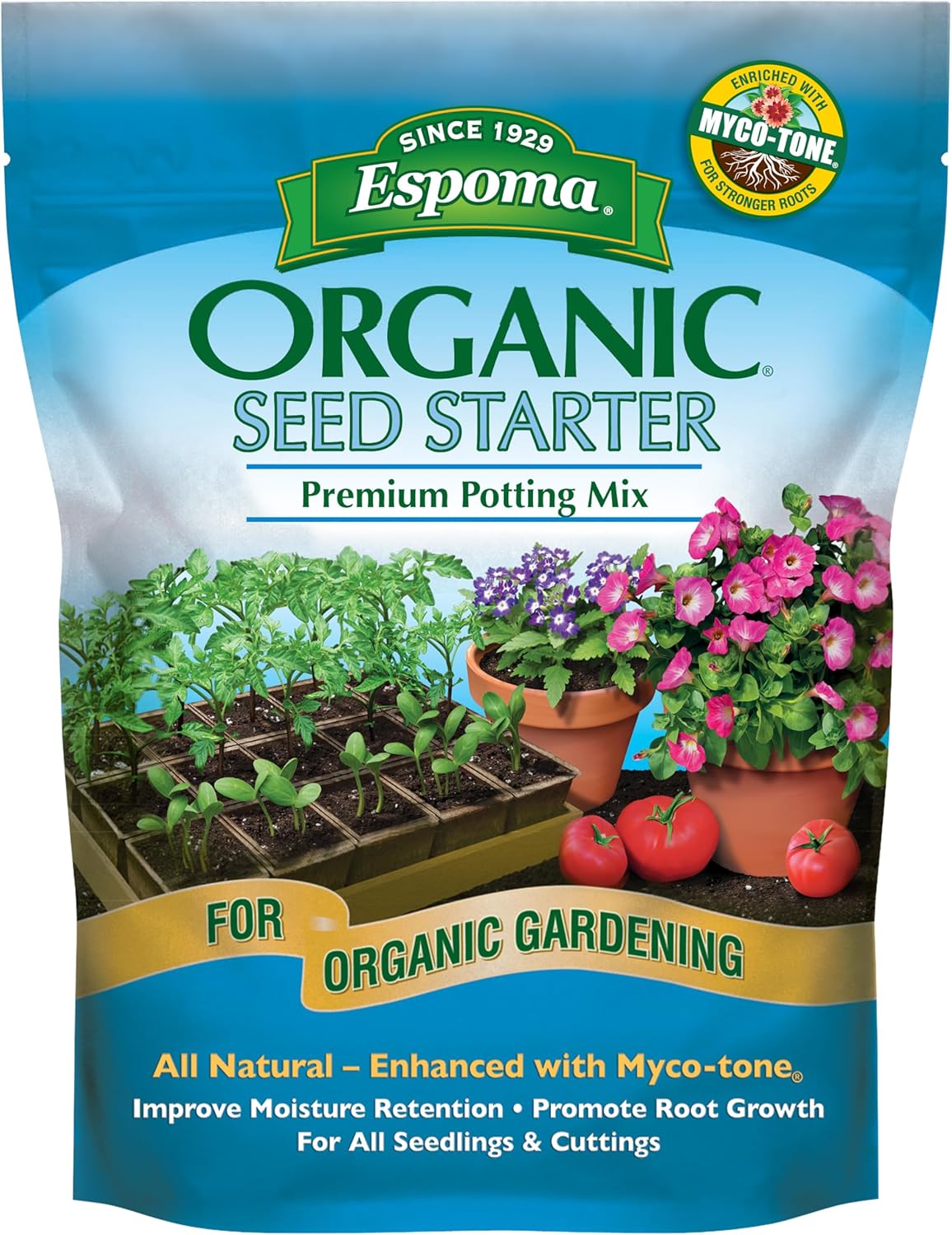
| Unit Count | 512 Ounce |
|---|---|
| Number of Packs | 2 |
| Volume | 8 quarts |
Espoma Organic Seed Starter is a lightweight, peat-based mix designed for germinating seeds and rooting cuttings. You would typically use it to start flower, vegetable or herb seedlings in trays or small pots before transplanting. The blend pairs sphagnum peat moss and perlite for good moisture retention and aeration while added yucca extract helps wetting and lime balances pH. Notable features include a myco-tone mycorrhizae mix to encourage early root establishment and organic amendments like kelp and alfalfa meal for gentle nutrition. In practice the mix produces fine, friable media that drains well yet holds enough moisture to keep delicate roots from drying out between waterings, which makes transplanting less stressful for young plants. The main limitations are its peat base, which can compress over time and may require mixing with a sturdier potting mix when moving seedlings into larger containers, and the absence of slow-release synthetic feed, so you will need to add fertilizer as plants grow.
Best for: Gardeners who prioritize fast, healthy seed germination and stronger early roots to improve transplant success and want an organic, ready-to-use seed mix.
Less Ideal for: Growers looking for an all-in-one growing medium that carries long-term nutrients for mature container plants or those who prefer peat-free seed mixes.
- Formulated for seed starting with peat moss and perlite to balance moisture retention and aeration
- Contains Myco-tone mycorrhizae to support early root development and transplant vigor
- Includes organic amendments such as kelp and alfalfa meal for mild nutrient support
- Yucca extract improves wetting so the mix hydrates evenly in trays and pots
- Peat-based formula can compress over time and may need mixing with coarser media for larger pots
- No built-in synthetic fertilizer requires feeding once true leaves develop
Verdict: Choose this organic seed starter when you want a lightweight, biologically enhanced mix that promotes strong early root growth and smoother transplanting.
Miracle-Gro Indoor Potting Mix for Seed Starting, 8 qt. (2-Pack)
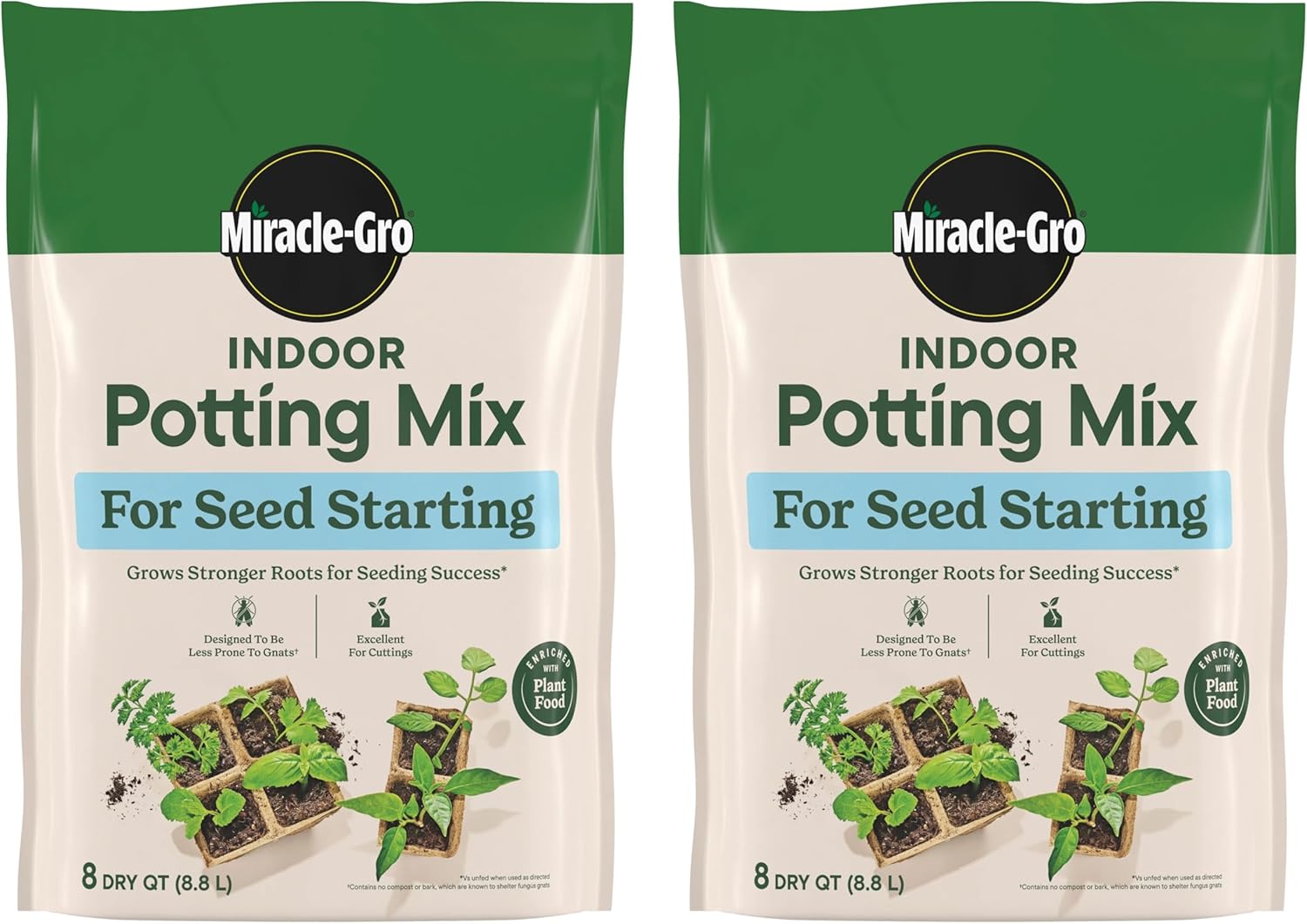
| Brand Name | Miracle-Gro |
|---|---|
| Item Type Name | Potting Mix |
| Number of Packs | 2 |
| Volume | 8 quarts |
This two-pack of Miracle-Gro Indoor Potting Mix is designed specifically for starting seeds and rooting cuttings indoors. The blend is lightweight and pre-enriched with plant food so seedlings get a nutrient boost during early root development, and the manufacturer says it yields stronger roots compared with unfed mixes when used as directed. It is intended for vegetables, flowers, and herbs and works well in cell trays and small containers; one 8 qt. bag will fill roughly three 72-cell trays. Notably, the formula omits compost and bark, which helps lower the chance of fungus gnat infestations in damp seed-starting setups. Use it by filling trays or pots, keeping the mix evenly moist, and shielding newly sown seeds from direct sun until germination. Important limitations are standard for enriched mixes: it contains fertilizer (so handle carefully) and it is a seed-starting medium rather than an all-purpose potting soil for mature plants, so you will likely transplant seedlings into a different mix or amend soil later.
Best for: Buyers who want a low-effort, indoor seed-starting medium that supports faster root development and reduces common pest risks while following proven seed-starting practices.
Less Ideal for: Gardeners who need a permanent potting soil for mature container plants or who prefer fully organic, compost-rich mixes should consider alternatives.
- Lightweight, ready-to-use formula tailored for seed germination and cuttings
- Pre-enriched with plant food to support early root and seedling growth
- Excludes compost and bark to reduce habitat for fungus gnats
- Comes as a two-pack so you have enough mix for multiple trays
- Contains fertilizer which requires careful handling and storage
- Intended for seed starting so not formulated as long-term potting soil for mature plants
Verdict: A practical, low-risk seed-starting mix that boosts early root growth and reduces fungus gnat risk, making it a reliable choice for indoor vegetable seedlings.
SunGro Horticulture Organic Seedling Mix (8 Quart)

| Brand Name | SUN GRO |
|---|---|
| Style Name | Peat Moss |
| Volume | 8 quarts |
SunGro Horticulture Seedling Mix is a fine-textured, peat-based starting mix formulated to germinate seeds in flats, pots, and plug trays. It contains sphagnum peat moss, perlite for lightness and drainage, and an organic wetting agent to promote even water absorption, which helps maintain consistent moisture for small seeds. The mix also includes a silicon-enriched additive called RESiLIENCE intended to support stronger seedlings and reduce wilting during establishment. Typical use is filling trays or small pots, keeping the medium evenly moist but not waterlogged, then transplanting seedlings once roots are established. Practical benefits include predictable moisture retention, a clean fine texture that allows delicate roots to develop, and OMRI listing for organic onion transplants and other edible starts. Limitations are its small 8 quart volume for larger onion seed programs and that peat-based mixes dry out faster than heavier soils, so frequent monitoring is required; it also provides limited long-term nutrients so potting up into a richer mix or fertilizing before transplant is necessary.
Best for: Gardeners who want an organic, predictable seed starting medium for small to medium onion seed batches and who prioritize reliable germination over bulk volume.
Less Ideal for: Commercial growers or anyone starting very large quantities of onion seedlings should choose larger-volume or more nutrient-dense starting media.
- Fine, light texture suitable for delicate seed germination
- Organic wetting agent promotes uniform water absorption
- OMRI listed so safe for organic edible starts
- Contains perlite for improved drainage and root aeration
- Small 8 quart bag may not be cost-effective for starting large onion batches
- Peat-based mix has low long-term nutrient content and needs fertilizing before transplant
Verdict: A reliable OMRI-listed seed starting mix that delivers even moisture and a fine texture ideal for producing healthy onion seedlings in small home gardens.
Sol Soils Seedling & Propagation Mix (1 gal)

| Brand Name | sol soils |
|---|---|
| Style Name | Seedling & Propagation Mix |
| Unit Count | 128 Ounce |
| Volume | 1 gallons |
This Seedling & Propagation Mix is designed specifically for starting seeds and rooting cuttings. It combines calcined clay for moisture buffering and aeration, hardwood biochar to improve structure and microbial activity, coconut husk as a peat-free moisture-retentive medium, and earthworm castings to supply gentle nutrients. In practice the mix is fine-textured and holds water without becoming soggy, which helps delicate roots establish while reducing the risk of damping-off. It is sterile out of the bag and compatible with most plant types, so you can use it in trays, small pots, or plug cells for both indoor seed starting and greenhouse propagation. Bags are hand-mixed in small batches so texture varies slightly between bags, but the ingredients are chosen to extend time between waterings and resist compaction over a single growing cycle. Important limitations: the bag is one gallon so larger or repeated projects will require multiple bags, and users should soak coconut husk as recommended to remove tannins before heavy use.
Best for: Buyers who prioritize reliable, low-maintenance seed starting want a consistent, sterile medium that reduces overwatering risk and helps fragile roots establish. Ideal for hobbyists and small greenhouse growers focused on dependable results.
Less Ideal for: Not a good fit for growers who need large volumes for broadscale sowing or those who prefer DIY mixes tailored to specific crop nutrient profiles.
- Blend formulated for seedlings with calcined clay for moisture consistency and aeration
- Hardwood biochar and castings support beneficial microbes and gentle nutrient supply
- Peat-free coconut husk improves moisture retention while providing aeration
- Fine texture and sterile mix suitable for trays, small pots, and cuttings
- Small 1 gallon volume may be insufficient for larger seed-starting projects
- Batch-to-batch texture variability due to small-batch mixing
Verdict: A dependable, fine-textured peat-free propagation mix that helps seedlings and cuttings establish with less risk of overwatering.
Miracle-Gro Potting Mix, 16 qt. (2-Pack)

| Feeds Plants | Up to 6 months |
|---|---|
| Volume | 16 quarts |
| Number of Packs | 2 |
| Intended Use | Outdoor containers |
| Ingredients | Sphagnum Peat Moss, Peat, Perlite, Compost, Fertilizer |
Miracle-Gro Potting Mix is a general-purpose container soil designed for outdoor pots, planters, and hanging baskets. It combines peat-based media, perlite, compost, and built-in fertilizer so you can pot vegetables, herbs, annuals, perennials, and shrubs without blending amendments. Typical use is straightforward: fill a pot about one third, set the plant at nursery depth, top off, and water until excess drains. Notable features are fast drainage to prevent root rot, an all-purpose nutrient charge that feeds plants for up to six months, and a texture that helps roots establish quickly. In practice this means less upfront prep and fewer immediate feedings compared with plain soil, and it is handy for seasonal repotting and new container plantings. Important limitations are that it is formulated for containers only (not in-ground beds) and the nutrient boost will diminish after the stated feeding period so you will need to supplement or repot for long-term specimens. Also peat-based mixes can compress over time and require refreshing each season.
Best for: Gardeners who want a low-effort, dependable potting soil for seasonal container planting and quick repots, especially those optimizing time and results across many pots.
Less Ideal for: Those wanting a soil to amend in raised beds or long-term in-ground planting should choose a garden soil formulated for in-ground use instead.
- Ready-to-use mix with built-in fertilizer that feeds up to six months
- Formulated for fast drainage to reduce risk of overwatering and root rot in containers
- Versatile for a wide range of outdoor container plants including vegetables, herbs, and flowers
- Not intended for in-ground garden beds
- Fertilizer effect is temporary and requires refeeding or repotting after about six months
Verdict: A convenient, fast-draining potting mix that simplifies container planting while providing up to six months of built-in nutrition.
Back to the Roots Organic Expanding Coco Coir Potting Soil Brick (10 lb)

| Item Highlight | 10 lb compressed coco coir brick; peat-free; OMRI Listed |
|---|---|
| Item Type Name | Coconut Coir |
| Volume | 2 cubic feet |
| Ingredients | Coconut Coir |
| Style Name | Expanding Potting Soil |
This compressed coco coir brick provides a lightweight, peat-free potting medium that expands when you add water to create loose, airy substrate for containers and seed flats. It is typically used by hydrating the 10 lb block to about 2 cubic feet of coir and then using it alone for potted plants, mixing it into garden soil to improve drainage and aeration, or blending with compost for starting seeds. Notable features include OMRI listing for organic use, a balanced pH suited to a wide range of plants, and compact storage before expansion which saves space. Practical benefits are improved root aeration and water retention compared with heavy garden loam, easier handling than bulky bags, and versatility across vegetables, herbs, and ornamentals. Important limitations are that coco coir is a soilless substrate and does not supply significant nutrients on its own so you will need to add fertilizer or compost for long-term potted herbs like rosemary, and the product requires time and a water source to expand before use.
Best for: Buyers who prioritize low-risk, easy-to-handle, organic potting media and want a versatile base for container herbs and seed starting without dealing with heavy bags.
Less Ideal for: Gardeners who want a ready-to-plant, nutrient-rich potting mix out of the box or those who prefer soil with built-in slow-release fertilizer.
- Peat-free OMRI listed organic coco coir suitable for organic growing
- Expands from a compact brick to about 2 cubic feet for easy storage and transport
- pH balanced and airy texture that improves drainage and root aeration
- Versatile use: can be used alone, for seed starting, or mixed into existing soil
- Provides little inherent fertility so supplemental feeding or compost is needed for nutrient-hungry plants
Verdict: A compact, peat-free coco coir brick that expands into an airy, pH-balanced base ideal for low-risk organic container gardening and seed starting when paired with fertilizer or compost.
Choosing the Right Potting Soil for Transplanting Seedlings: Key Factors to Consider
Drainage Versus Moisture Retention
How a potting soil balances drainage and moisture retention determines whether seedlings encounter drought stress or oxygen-starved roots. Seedlings need a medium that drains excess water quickly after watering but still holds enough moisture between waterings to keep tiny root hairs functional.
A mix that is too fine and dense will compact around delicate roots and hold water against the crown, increasing risk of damping-off and rot. Conversely, a very coarse, fast-draining mix can leave seedlings wilting between waterings and slow leaf development. Look for mixes with light components such as peat, coir, or fine compost combined with perlite or vermiculite to create a porosity profile suited to frequent, shallow root systems.
Particle Size and Texture
Particle size affects how easily new roots can penetrate the medium and how quickly the soil wicks water. Fine-textured mixes feel like soft crumb and are often easier for small root systems to colonize, which helps seedlings stabilize after transplant.
However, extremely fine, silt-like media compact under watering and handling. A slightly heterogeneous texture with a mix of fine and small coarse particles encourages both root gripping and airflow. Texture also influences seedling handling: a very dusty mix creates a mess when potting, while chunkier mixes are easier to tamp and level without compacting.
Starter Nutrient Profile
Newly transplanted seedlings need a modest supply of available nutrients to support initial leaf and root growth without burning tender roots. Soils labeled for seed starting or transplanting typically include low to moderate levels of easily available nitrogen, phosphorus, and potassium, often from mild organic sources or starter fertilizers.
Avoid mixes with heavy, long-term fertilizer loads meant for mature plants. Those can cause fertilizer burn in small transplants. If a mix is essentially inert, plan to begin a light feeding schedule after a week or two using diluted fertilizer to avoid overwhelming the seedlings.
pH and Mineral Balance
pH affects nutrient availability for seedling roots. Most common vegetables and flowers prefer a slightly acidic to neutral range, and potting soils formulated for seedlings are generally adjusted to that window. A pH that is too high or too low can lock out key nutrients just when young plants need them most.
Mineral balance is also important in regions with hard water or when using certain tap water sources. Some mixes include buffering materials to stabilize pH, which reduces the need for corrective additives after transplanting.
Cleanliness and Disease Risk
Seedlings are especially vulnerable to pathogens and pests introduced in contaminated soils. Sterilized or pasteurized mixes, and those produced under controlled conditions, lower the chance of damping-off fungi, root nematodes, or unwanted weed seeds appearing after transplant.
Gardeners should prefer clean mixes when moving seedlings, because dealing with disease in tiny plants is difficult. Also consider the origin and labeling of the mix if you are trying to avoid persistent weed seeds or soil-borne insect eggs.
Ease of Use and Handling
Practical handling matters when potting up dozens of seedlings. A mix that is easy to scoop, fills cell trays without leaving large air pockets, and presses to a consistent level speeds the process and reduces root damage. Lightweight mixes reduce strain when moving trays, especially under grow lights or into cold frames.
Also consider whether the soil settles noticeably after watering. Mixes that settle a lot will leave air gaps beneath root balls, which can dry roots. A stable mix maintains volume while remaining workable.
When to Repot Seedlings Into Potting Soil
Repot seedlings when roots start to show at the drainage holes or when true leaves begin developing beyond the seed leaves. At that stage the plant needs more space, oxygen, and consistent moisture than a starter plug or soil block provides.
Transplanting too early stresses plants that do not yet have enough root mass to take up water, while waiting too long can lead to root circling and slowed growth. Choose a potting soil designed for transplants so the medium supports rapid root spread without forcing frequent, heavy feedings.
- Check for root visibility around container edges or drainage holes
- Look for emergence of true leaves as a sign seedlings are ready
- Match soil moisture needs to your watering schedule and container size
Managing Moisture After Transplant
After moving seedlings, water thoroughly to settle the potting mix around new roots, then allow the surface to dry slightly before the next water. This routine encourages roots to grow outward seeking moisture while avoiding prolonged sogginess.
Use gentle watering methods such as a fine spray or bottom watering to prevent disturbing the root ball. Monitor weight of pots or test the medium with a finger to judge moisture rather than relying solely on a schedule.
- Use gentle watering to avoid displacing potting soil
- Allow slight surface drying to promote root exploration
- Consider saucers or trays to capture runoff and adjust watering frequency
Adjusting Fertility for Young Transplants
If the potting soil contains minimal starter nutrients, begin a light feeding schedule 7 to 14 days after transplant using a diluted balanced fertilizer. This supplies the boost seedlings need without overwhelming tender roots.
If the mix already includes starter fertilizer, delay additional feeding until you see steady new growth. Look for bright green leaves and new nodes as signs the nutrient level is adequate. Avoid high nitrogen solutions that encourage leggy growth at the expense of root development.
- Start with a quarter to half-strength fertilizer when appropriate
- Observe foliage color and growth rate before increasing feed strength
- Switch to a regular feeding schedule only after seedlings are well established
Container Choices That Complement Potting Soil
Container material and size influence how a potting soil performs. Smaller cells dry faster, so a soil with higher moisture retention is useful for small trays. Larger pots allow more root growth but also require mixes that drain well to avoid soggy crowns.
Ensure pots have adequate drainage holes. Even the best transplant mix will fail seedlings in containers that hold standing water. For porous pots such as terracotta, expect faster drying and adjust the soil choice or watering frequency accordingly.
- Match pot size to seedling stage to balance water retention and root space
- Use containers with reliable drainage holes
- Consider pot material effect on drying rate when picking a mix
Transitioning Seedlings Outdoors
When moving seedlings outdoors after potting up, harden them gradually to avoid transplant shock. The potting soil should support moisture availability during the acclimation period and not dry out quickly under wind or sun exposure.
Topdress with a thin layer of the same transplant mix or mulch to conserve moisture around roots during the first week outside. Avoid overfertilizing before hardening off, since vigorous leaf growth can make plants more vulnerable to environmental stress.
- Harden off seedlings gradually over 5 to 10 days
- Keep newly transplanted seedlings sheltered from strong wind and direct midday sun
- Monitor soil moisture closely during the transition period
How We Chose the Best Potting Soil for Transplanting Seedlings
We started by filtering mixes intended specifically for seed-starting or transplant stages, then narrowed choices using attributes that matter to gardeners moving seedlings into bigger containers or beds. Key evaluation criteria included physical texture and particle size to ensure easy root penetration, drainage versus moisture-holding balance to limit both drought stress and waterlogging, and nutrient release profile for gentle, starter-level feeding that avoids burning young roots. We also checked for consistency and ease of use so gardeners can pot up without sifting or heavy amendment, plus organic content and pest-free standards to minimize contaminants. Exclusions included heavy garden soils, unamended topsoil, and mixes designed solely for mature plants or slow-release long-term containers because those do not meet the immediate needs of newly transplanted seedlings. The final list favors mixes that combine light texture, stable water retention, and mild nutrient availability so seedlings establish quickly with minimal shock.
FAQ
Is potting soil for transplanting seedlings different from seed-starting mix?
Often yes. Seed-starting mixes can be finer and almost sterile to help germination, while potting soils for transplanting usually include slightly more structure, gentle nutrients, and better moisture retention to support root growth after repotting.
How soon after transplant should I start fertilizing seedlings?
If the transplant mix contains starter nutrients, wait until you see steady new growth before adding fertilizer. If the mix is inert, begin a light feeding schedule about one to two weeks after transplant with diluted fertilizer to avoid burning roots.
Can I amend garden soil to mimic potting soil for transplants?
You can improve garden soil structure with compost and coarse amendments, but true potting soils are formulated for container porosity and cleanliness. For transplants into beds, focus on loosening the bed, adding organic matter, and ensuring good drainage rather than trying to recreate a potting mix in situ.
Should I soak pots or the potting mix before transplanting seedlings?
Watering the seedlings and lightly moistening the potting mix before transplanting helps the roots settle and reduces air pockets. Avoid making the medium soggy; it should be moist but not dripping to prevent compaction and root stress.
Will using a sterile potting soil prevent diseases completely?
Sterile mixes reduce risk of pathogens but do not guarantee disease-free results. Clean handling, proper watering, and airflow are also important to prevent damping-off and other seedling diseases.
Final Verdict
Choosing the right potting soil for transplanting seedlings comes down to balancing drainage, moisture retention, and a mild nutrient supply. Prioritize a light, stable texture that allows easy root penetration and good aeration while holding enough water to bridge between waterings. Accept that tradeoffs exist: mixes that retain more moisture require less frequent watering but can be slower to dry after heavy rain, while very fast-draining blends need more frequent attention. Focus on the criteria that matter for your space and schedule so you can transplant with confidence and give young plants the best start possible.
