

Note: This article contains affiliate links. If you click on these links and make a purchase, I may earn a small commission at no extra cost to you. This helps support my research and content. Read my full affiliate disclosure here.
If you want an easy way to feed newly planted trees or keep established specimens healthy, tree spike fertilizers simplify routine fertilizing. These solid spikes release nutrients at the roots over weeks or months, reducing trips with a spreader or liquid feed. The right spike formula and release profile can support root establishment, encourage steady shoot growth, and avoid salt buildup that stresses trees. This guide covers seven carefully shortlisted tree spike fertilizer options for a range of planting stages and tree types. We evaluated each option on nutrient content, release duration, physical durability, and ease of application so you can pick the spike that fits your planting schedule and soil conditions.
Top Picks at a Glance
| Best Overall The best all-around choice for most situations | Jobe's Slow Release Tree & Shrub Fertilizer Spikes, 9 Count |  |
| Best Quality Built to a higher standard if you want something more solid | Lutz Corporation Tree & Shrub Fertilizer Spikes, 40-Count |  |
| Best Value The sweet spot between price and what you get | SimplyGro Tree & Shrub Fertilizer Spikes (12 count, 8-8-8 TruSpikes) |  |
| Best Budget The cheapest option that still gets the job done reliably | Jobe's Slow Release Tree and Shrub Fertilizer Spikes (5 Count) |  |
| Highest Rated A top-rated pick with lots of positive feedback | Lutz Corporation Maple-Birch Tree Fertilizer Spikes, 40-Pack |  |
| Most Popular A crowd favorite that many people choose with confidence | Miracle-Gro Tree & Shrub Plant Food Spikes, 12 Spikes |  |
| Best Seller A high-volume bestseller chosen again and again | Jobe's Organics Tree & Shrub Fertilizer Spikes 16-4-4, 30 Count (2 Pack) | 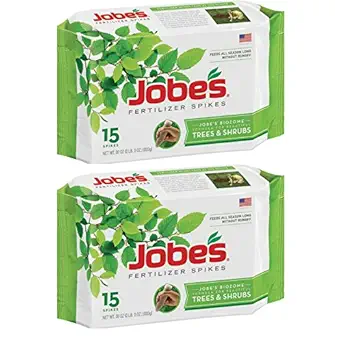 |
Jobe's Slow Release Tree & Shrub Fertilizer Spikes, 9 Count

| Unit Count | 9 Count |
|---|---|
| Application Method | Insert spikes into soil |
| Item Form | Sticks |
| Mixing Ratio | 15-3-3 |
| Specific Uses For Product | Plant Growth, Root Development, Soil Conditioning |
Jobe's tree and shrub fertilizer spikes are pre-measured sticks you hammer into soil around a tree's drip line to deliver a slow, steady supply of nutrients directly where roots are active. They are intended for twice-yearly use in early spring and late fall and are easy to apply with a plastic cap and light tapping so even casual gardeners can use them. The 15-3-3 formula targets leafy growth and root development while the spike form eliminates messy spreading and reduces runoff. For dogwood care this product supplies a safe, controlled dose and reduces the risk of overfertilizing compared with granular or liquid feeds. Limitations are the fixed NPK ratio and fixed dose per spike which may not suit trees needing different nutrient balances or fine-tuned feeding schedules, and they must be placed at the dripline and kept a safe distance from the trunk, which takes a bit of measuring. Overall, these spikes are a low-effort option for steady seasonal feeding when you want predictable results with minimal handling.
Best for: Home gardeners who prioritize cautious, low-effort feeding for established trees like dogwoods and want predictable, pre-measured nutrition without mixing fertilizers.
Less Ideal for: Gardeners who need customized NPK ratios, variable dosing, or frequent targeted treatments for nutrient deficiencies should consider alternative products.
- Pre-measured slow-release sticks reduce risk of overfertilizing
- Easy application around drip line with no mixing or spreading
- Spike delivery minimizes runoff and surface mess
- Long-lasting formula feeds through the growing season
- Fixed 15-3-3 ratio and dose per spike limit tailoring to specific nutrient needs
- Requires correct placement at dripline and spacing which adds minor setup effort
Verdict: An easy, low-risk way to deliver steady seasonal nutrition to dogwoods and other acid-loving trees without mixing or runoff.
Lutz Corporation Tree & Shrub Fertilizer Spikes, 40-Count

| Number of Items | 40 |
|---|---|
| Mixing Ratio | 8-10-10 |
| Application Method | Insert spikes into the soil near the root zone |
| Item Form | Solid |
| Contains | Sulfur, Iron, Manganese |
These Lutz Tree & Shrub Fertilizer Spikes are a seasonal, low-effort way to give established trees and shrubs a balanced, slow-release feed for up to 12 months. You insert stakes around the drip line so nutrients go straight into the root zone instead of sitting on the surface. The formula (8-10-10 with 4.8% sulfur, 3.3% iron and 3.2% manganese) targets common northern deficiencies that cause yellowing and supports leaf and root health without repeated applications. Practical benefits include no measuring or mixing, reduced mess compared with granular or liquid fertilizers, and the convenience of a once-per-year application timed at the start of the growing season. Limitations are that spike placement needs to follow label guidance for tree size to be effective and the 40-count pack may not cover large properties or many trees without buying multiple packages. These spikes are not a quick corrective for severe deficiencies but are well suited to maintenance feeding and preventing chlorosis over the season.
Best for: Gardeners and property owners who prioritize steady, low-maintenance nutrient delivery to maintain tree and shrub health across a growing season.
Less Ideal for: People needing an immediate corrective treatment for extreme nutrient deficiencies or those managing large numbers of trees who want a single, large-coverage product.
- Slow-release formula feeds up to 12 months, reducing reapplication frequency
- Includes iron and manganese to address chlorosis in northern trees and shrubs
- Simple, no-mess application by inserting spikes at the root zone
- Balanced 8-10-10 NPK blend supports both foliage and root development
- 40-count may be insufficient for large landscapes or many trees
- Not intended as a rapid corrective for severe nutrient deficiencies
Verdict: Choose these spikes when you want a year-long, low-effort maintenance feed that addresses common iron and manganese deficiencies in northern trees and shrubs.
SimplyGro Tree & Shrub Fertilizer Spikes (12 count, 8-8-8 TruSpikes)

| Item Form | Sticks |
|---|---|
| Application Method | Hammer the spike into the ground |
| Specific Uses For Product | Outdoor Gardening, Plant Growth, Plant Nutrition, Root Development, Tree & Shrub Fertilizer |
| Mixing Ratio | 8:8:8 |
| Unit Count | 12 Count |
These SimplyGro TruSpikes are pre-measured 8-8-8 fertilizer sticks made to be hammered into the root zone of trees and shrubs for slow, targeted feeding. Typical use is twice yearly—spring and fall—by inserting spikes around the drip line so nutrients dissolve directly where roots can take them up. The formula supplies balanced nitrogen, phosphorus, and potassium to support leaf growth, flowering and root strength, and the rigid TruSpike design resists breaking during installation. Practical benefits include reduced chance of overfeeding, less nutrient runoff compared with granular broadcast applications, and convenient, low-effort maintenance for multiple plants across a yard. Limitations are that coverage is listed as variable so you must match spike count to plant size and root spread, and spikes release nutrients over roughly three months so they are not a quick-fix for severe deficiencies. Also the fixed NPK ratio means you cannot tailor feeding for season-specific or micronutrient needs.
Best for: Gardeners who want an easy, low-maintenance way to provide balanced, seasonal nutrition to established shrubs and small to medium trees without frequent dosing.
Less Ideal for: Growers needing custom nutrient mixes, rapid corrective feeding, or precise micronutrient control should consider liquid or granular fertilizers and soil testing instead.
- Pre-measured 8-8-8 formula for balanced, general-purpose feeding
- TruSpike construction resists breaking when hammered into soil
- Delivers nutrients at the root zone to reduce surface runoff and waste
- Feeds continuously for up to three months, lowering maintenance frequency
- Coverage per spike is not specified so you must estimate number needed per plant
- Fixed NPK ratio cannot be adjusted for specific micronutrient deficiencies or special growth stages
Verdict: A simple, set-and-forget balanced spike feed that makes seasonal fertilizing of Podocarpus and other shrubs quick and low-effort.
Jobe's Slow Release Tree and Shrub Fertilizer Spikes (5 Count)

| NPK | 15-3-3 |
|---|---|
| Application Method | Insert spikes into the ground |
| Unit Count | 5 Count |
| Target Species | Tree and Shrub |
Jobe's Slow Release Tree and Shrub Fertilizer Spikes are pre-measured sticks formulated with an NPK of 15-3-3 intended to feed roots slowly through the growing season. You insert the spikes around the drip line of trees or shrubs using the included cap and a hammer, and the manufacturer recommends doing this in early spring and late fall. The spikes target the root zone so there is little mess or runoff and the slow-release feather and bone meal–based nutrients reduce the risk of overfertilizing. For practical use on acid-loving shrubs such as ligustrum, the spikes provide a season-long nutrient supply without regular granular or liquid feeding. Limiting factors are the small five-spike pack and fixed nutrient ratio, so larger shrubs or extensive hedges will need multiple packs and careful spacing to get even coverage. The application depth and minimum distance from the trunk must be followed to avoid root or trunk stress.
Best for: Gardeners who want a low-effort, no-mess fertilizer solution for individual ligustrum plants or small hedges and prefer twice-yearly maintenance over frequent feeding.
Less Ideal for: Large properties, long ligustrum hedgerows, or gardeners who need adjustable NPK blends or season-long custom feeding programs.
- Slow-release NPK 15-3-3 formulated for trees and shrubs
- Pre-measured spikes reduce mess and eliminate mixing or runoff
- Simple twice-yearly application targets root zone for efficient feeding
- Small 5-count pack may not cover multiple shrubs or long hedges
- Fixed nutrient ratio may not suit all soil tests or stages of growth
Verdict: A convenient, low-maintenance way to give individual ligustrum shrubs a season-long nutrient boost with minimal effort.
Lutz Corporation Maple-Birch Tree Fertilizer Spikes, 40-Pack

| Unit Count | 40 Count |
|---|---|
| Mixing Ratio | 8-10-10 |
| Item Form | Sticks |
| Target Species | trees, shrubs |
| Coverage | Full |
These Lutz Maple-Birch fertilizer spikes are a no-fuss slow-release option for maintaining trees and shrubs through a full growing season. Each stick contains an 8-10-10 N-P-K formula with added sulfur, iron, and manganese to address common nutrient deficiencies in northern species such as maple, birch, oak, and dogwood. Use is straightforward: insert the recommended number of spikes at the drip line once a year and the formulation releases nutrients gradually for up to 12 months. The spikes eliminate measuring and mixing, reduce surface mess, and make annual maintenance quick for large landscapes or busy homeowners. Because they include sulfur and micronutrients, they are especially helpful where chlorosis or low soil pH limits iron uptake. The package of 40 suits multiple small to medium trees or a mix of shrubs, but very large trees will require many spikes or repeat applications to cover their root zone. Also these are not designed for seasonal adjustments or immediate rapid correction where a liquid feed would be faster acting.
Best for: Gardeners and property owners who want a dependable, low-maintenance annual fertilizer for northern trees and shrubs and prefer a set-and-forget approach to seasonal feeding.
Less Ideal for: People who need rapid correction of nutrient deficiencies, drip-line spot treatments for small potted plants, or those managing tropical/palm-specific nutrient needs.
- Slow-release formula feeds continuously for up to 12 months, reducing reapplication frequency
- Includes sulfur, iron, and manganese to target chlorosis and improve micronutrient uptake
- Simple no-mess installation that requires no mixing or tools
- 8-10-10 N-P-K balance supports leaf and root development for trees and shrubs
- A 40-pack may be insufficient for very large trees or extensive landscapes
- Not suitable for quick corrective feeding since release is gradual
Verdict: Choose these spikes when you want an easy, once-a-year slow-release fertilizer that reliably supports northern trees and shrubs and addresses micronutrient deficiencies.
Miracle-Gro Tree & Shrub Plant Food Spikes, 12 Spikes

| NPK | 15-5-10 |
|---|---|
| Coverage | 12 spikes per season |
| Target Species | trees, shrubs, evergreens and acid-loving plants |
| Application Method | Place spikes around the tree's drip line |
These Miracle-Gro Tree & Shrub Plant Food Spikes are pre-measured sticks that deliver slow-release nutrition directly to the root zone of trees and shrubs. They are typically used by watering the soil around the drip line, spacing spikes around the drip line at least 3 feet apart, and driving them into the ground so they sit below the soil surface. The 15-5-10 NPK mix supplies a higher proportion of nitrogen for foliage with phosphorus and potassium to support root and overall plant health, and the package contains 12 spikes intended for seasonal feedings. Practical benefits include simple, low-effort applications for established cherry trees where precise granular spreading is inconvenient, and the spikes help localize nutrients to the root zone rather than blanket-feeding the whole bed. Limitations are that they are designed for early spring and mid-fall use only, so they do not replace a tailored feeding schedule for trees needing summer supplements, and they require firm soil for insertion which can be difficult in very compacted or rocky sites. The product is best as an easy seasonal maintenance feed rather than an intensive corrective treatment.
Best for: Gardeners who want a low-effort, dependable seasonal feed for established flowering trees and shrubs and prefer an application that targets the root zone without granular spreading.
Less Ideal for: People needing aggressive summer corrections, quick nutrient fixes, or those working on newly planted trees that require a different feeding routine.
- Slow-release formula delivers nutrients directly to the root zone
- Pre-measured spikes make application simple and low-mess
- NPK 15-5-10 supports foliage color and overall tree vigor
- Includes 12 spikes, enough for multiple small trees or one larger drip line
- Intended for two seasonal applications only and not for summer feeding needs
- Can be hard to install in very rocky or compacted soils
Verdict: A simple, targeted seasonal feeding option that makes it easy to maintain vibrant foliage on established flowering trees with minimal effort.
Jobe's Organics Tree & Shrub Fertilizer Spikes 16-4-4, 30 Count (2 Pack)

| Item Form | Sticks |
|---|---|
| Application Method | Insert spikes around each tree's dripline |
| Coverage | Medium |
| Target Species | Trees and shrubs |
| Mixing Ratio | 16:4:4 |
Jobe's Organics Tree & Shrub Fertilizer Spikes deliver a season-long supply of nutrients directly to root zones using ready-to-insert sticks. You place spikes around each tree's dripline in early spring and late fall and the time-release 16-4-4 formula supplies nitrogen, phosphorus, and potassium over time without mixing, runoff, or strong odors. The sticks are simple to use for homeowners who want low-effort maintenance and are especially helpful for fruit trees that benefit from steady nitrogen and balanced nutrients during the growing season. Practical advantages include mess-free application and reduced risk of overfertilizing since the product releases slowly. Limitations are that spikes give a general, medium coverage rather than precise dosing for individual tree ages or soil tests, and they are not a complete soil amendment if the soil lacks micronutrients or organic matter. For productive fruit trees, use these spikes as a routine, easy supplemental feed while still monitoring tree health and adjusting with soil tests or targeted treatments as needed.
Best for: Homeowners who want a low-effort, consistent feeding method for established fruit trees and shrubs and prefer an easy seasonal routine over frequent liquid or granular applications.
Less Ideal for: Gardeners who need customized fertilizer programs based on soil tests, young transplants requiring precise starter feeds, or those who want to correct micronutrient deficiencies with targeted products.
- Slow-release 16-4-4 formula feeds trees over the season without runoff
- Very easy application by inserting spikes around the tree dripline
- Mess-free, no mixing or strong odors
- Pack contains 30 spikes suitable for multiple trees or repeat treatments
- Medium coverage and fixed nutrient ratio limit precise dosing for specific tree needs
- Does not address soil structure or micronutrient deficiencies
Verdict: A simple, season-long slow-release spike that makes regular supplemental feeding of fruit trees quick and nearly foolproof.
Choosing the Right Tree Spike Fertilizer: Key Factors to Consider
Nutrient Formula and Ratios
The N-P-K ratio and included micronutrients determine how well a spike supports a tree at different growth stages. Young or newly planted trees often benefit from a moderate nitrogen supply to encourage root and shoot development, while established trees may need formulations that emphasize phosphorus for root health and potassium for overall stress tolerance.
Micronutrients such as iron, manganese, and zinc can correct common deficiencies, especially in alkaline or depleted soils. Look for spikes that list guaranteed analysis so you can match the fertilizer to the tree species and season rather than relying on vague marketing claims.
Release Rate and Longevity
Spikes are designed to release nutrients over a set period, typically measured in weeks to months. A slow, predictable release helps avoid nutrient shock and reduces the risk of salt accumulation near roots. Consider how long you want one application to last and choose a spike whose labeled release period aligns with your maintenance schedule.
Faster-release spikes may suit a planting-season boost, while longer-duration spikes are better for low-maintenance care. Also note that soil temperature and moisture affect release rate; colder, dry soils slow nutrient diffusion while warm, moist soils speed it up.
Physical Size and Durability
The spike's size affects how deeply nutrients reach the root zone and how many spikes you need per tree. Larger spikes contain more nutrients and can reach deeper root areas, but they may be harder to install in compacted soils. Durability matters because brittle spikes can break during insertion, leaving uneven dosing.
Choose spikes sized for the tree's trunk caliper and expected root depth. Durable material and a firm texture reduce breakage and help ensure even nutrient release over the product's advertised lifespan.
Application Ease and Placement
Correct placement determines whether nutrients reach active roots or remain unused near the surface. Good spikes are straightforward to position at the dripline or where feeder roots concentrate, and they can be installed with minimal tools. Consider whether you can insert spikes without moving mulch or disturbing roots in sensitive planting zones.
Also evaluate packaging that makes counting and storing spikes simple so seasonal applications are consistent and repeatable.
Soil and Environmental Compatibility
Soil texture, pH, and existing fertility affect how a spike performs. In very sandy soils, nutrients can move more quickly and may require shorter-acting formulations or additional placement points. Heavy clay can retain salts and slow release, increasing the risk of localized buildup.
Environmental concerns such as runoff and non-target exposure are minimized with targeted spike dosing, but you should still match spike strength to tree size and avoid over-application near water features or sensitive plantings.
When to Use Tree Spike Fertilizer
Tree spike fertilizers are most useful when you want targeted, low-effort feeding at the root zone. They are a good option after transplanting, following a stress event, or during a planned growth period such as the active spring flush. For long-term maintenance, spikes reduce the need for frequent granular or liquid applications.
Avoid installing spikes in frozen ground or immediately before a drought spell because nutrient movement depends on soil moisture. In established landscapes, time spike placement to coincide with soil warming and consistent moisture so roots can take up released nutrients.
- Use after planting to support root establishment
- Apply in early spring or during active growth
- Avoid in very dry, compacted, or frozen soils
How Many Spikes and Where to Place Them
Number and placement depend on tree size and root spread. For small ornamental trees you may only need a few spikes placed evenly around the dripline. Larger shade trees typically require more spikes spaced around the canopy edge to reach feeder roots.
Insert spikes at the recommended depth and distribute them evenly; avoid placing spikes directly against the trunk. If you are unsure where feeder roots are concentrated, work around the dripline where nutrient uptake is usually highest.
- Space spikes evenly around the dripline
- Do not place spikes against the trunk flare
- Adjust quantity by trunk diameter and canopy size
Managing Soil Conditions and Timing
Soil moisture and temperature influence how quickly spikes release nutrients. After installation, water the area lightly if soil is dry to start nutrient diffusion. In heavy clay, monitor for signs of salt stress and avoid placing too many spikes in one spot.
If soil test results are available, use them to select a spike formula that complements existing nutrient levels. Correcting a documented deficiency with targeted micronutrients is more effective than blanket feeding.
- Water lightly after placement in dry soils
- Reference soil test results where possible
- Avoid over-application in compacted clay soils
Integrating Spikes with Other Fertilizing Practices
Spikes work well as part of a broader fertility plan. Use them for targeted, interval feeding while relying on organic matter and mulches to support long-term soil health. Do not double up feedings immediately; allow the spike's release period to run before applying another nutrient source in the same area.
If you use granular or liquid feeds seasonally, space applications to prevent nutrient overlaps that could cause foliage burn or inefficient uptake.
- Combine spikes with mulch and organic inputs for soil health
- Space other fertilizing methods to avoid overlap
- Use spikes to fill gaps between scheduled feedings
Safety and Environmental Notes
Tree spikes reduce runoff risk because nutrients are concentrated at the root zone, but you should still avoid excessive applications near water bodies. Follow local guidelines for fertilizer use to protect nearby habitats.
Keep spikes out of reach of children and pets until fully inserted. If a spike breaks during installation, remove fragments from the surface to avoid non-target exposure.
- Avoid over-application near streams and ponds
- Store and handle spikes safely away from children and pets
- Retrieve broken fragments to prevent accidental contact
How We Chose the Best Tree Spike Fertilizer
We focused on attributes that matter most when using tree spike fertilizers around trees and shrubs. First, nutrient formulation was checked for a balanced N-P-K ratio appropriate for woody plants and for the presence or absence of micronutrients that promote root and foliar health. Second, release duration and delivery method were evaluated to ensure steady feeding over a predictable period and to avoid quick-release salts that can damage roots. Third, physical durability and sizing were considered so spikes resist crumbling during insertion and deliver nutrients at the target root zone. Fourth, application practicality was assessed, including how easy spikes are to place correctly and whether they require special tools. Finally, environmental considerations such as reduced runoff risk and suitability for different soil textures were part of our filters. We excluded options that relied on loose granular broadcast feeding or liquid-only systems because they do not meet the convenience and root-zone targeting expected from spike products. The result is a list focused on spikes that deliver steady, localized nutrition with predictable longevity and safe root contact.
FAQ
How often should I install tree spike fertilizer?
Frequency depends on the spike's labeled release duration and tree needs. Many spikes are designed to last several months, so seasonal placement in spring and mid-summer often suffices. Check the release period and avoid reapplying until that period has elapsed.
Can I use spikes on newly planted saplings?
Yes, but choose a formulation and size appropriate for the young root system. Smaller spikes with moderate nutrient strength are safer for delicate roots. Avoid placing spikes too close to the trunk and do not overapply near young trees.
Will spikes work in heavy clay or sandy soils?
Spikes function in most soils, but release rate and nutrient movement vary by texture. Sandy soils can let nutrients move faster and may require more frequent, shorter-duration spikes. Clay soils slow movement and increase risk of local buildup, so use fewer spikes and monitor tree response.
Are tree spikes safe around established shrubs and groundcovers?
They can be used, but be mindful of root competition and spacing. Place spikes where the target tree's feeder roots dominate and avoid clustering spikes where other plants will take up a disproportionate share of nutrients.
Do spikes replace the need for soil testing?
No. Soil testing provides information about existing nutrient levels and pH and helps you choose an appropriate spike formulation. Spikes are a convenient delivery method but work best when matched to documented soil conditions.
Final Verdict
When selecting a tree spike fertilizer, prioritize a nutrient formula that matches the tree's growth stage and a release duration that fits your maintenance rhythm. Physical durability and correct placement determine whether nutrients reach active feeder roots instead of being wasted near the surface. Balance convenience against soil conditions and environmental sensitivity: choose longer-lasting spikes for low-maintenance situations and shorter-acting options when you need quick correction. With those tradeoffs in mind, you can confidently pick a spike that supports steady, healthy tree growth.
