

Note: This article contains affiliate links. If you click on these links and make a purchase, I may earn a small commission at no extra cost to you. This helps support my research and content. Read my full affiliate disclosure here.
When you are moving light on trail, the right mosquito repellent can keep evenings comfortable and reduce disease risk without adding bulk. For backpacking, repellents must balance strong bite protection with low weight, easy application, and durability across changing conditions. This guide shortlists top-performing options suited specifically for hiking and multi-day trips. We evaluate each pick for how long it protects, how easy it is to carry and apply, and how it performs in wet or humid conditions. Read on to see the kinds of repellents that fit different packing styles and trip lengths, followed by practical buying advice to match the repellent to your itinerary.
Top Picks at a Glance
| Best Overall The best all-around choice for most situations | Ranger Ready Picaridin 20% Insect Repellent Spray, Scent Zero, 5 oz |  |
| Best Quality Built to a higher standard if you want something more solid | Thermacell Fuel-ZoneGuard Backpacker Mosquito Repeller (starter kit) |  |
| Best Value The sweet spot between price and what you get | Repel 100 Insect Repellent, 1 oz (98% DEET) |  |
| Best Budget The cheapest option that still gets the job done reliably | OFF! Deep Woods Dry Insect & Mosquito Repellent Spray, 2.5 oz |  |
| Highest Rated A top-rated pick with lots of positive feedback | Repel 100 Insect Repellent Pen-Size Pump (0.475 fl oz) |  |
| Most Popular A crowd favorite that many people choose with confidence | Repel 100 Insect Repellent Pump Spray, 4 oz (98% DEET) |  |
Ranger Ready Picaridin 20% Insect Repellent Spray, Scent Zero, 5 oz

| Active ingredient | 20% Picaridin |
|---|---|
| Net weight | 5 oz |
| Protection duration | Up to 12 hours (mosquitoes and ticks) |
This 5 oz Ranger Ready spray uses 20% picaridin to repel mosquitoes and ticks for up to 12 hours and smaller pests like gnats and biting flies for about 8 hours, which makes it well suited for day hikes or multi-hour backpacking outings. It dispenses as a non-aerosol mist that goes on dry and non-greasy, so it will not leave oily residue on clothing, packs, or gear. The Scent Zero formulation is useful for hunters or anyone who prefers minimal fragrance while outdoors. Directions recommend spraying exposed skin and clothing from 4 to 6 inches away and reapplying after the listed protection interval, so plan reapplication for multi-day trips. The product is labeled for use on adults and children over one year and is DEET-free, which may be preferable for sensitive users. Limitations: a 5 oz bottle is compact but may be marginal for long multi-day trips without resupply, and you must remember to reapply in heavy insect pressure to maintain protection against smaller biting pests.
Best for: Backpackers and day-hikers who want long-lasting, low-odor insect protection that is safe for family use and won’t leave oily residue on gear.
Less Ideal for: Users planning long unsupported expeditions who need multi-week supplies or those who prefer aerosol dispensers or DEET-based formulas for the absolute maximum bite-reduction in extreme conditions.
- Effective 20% picaridin formula offering up to 12 hours protection against mosquitoes and ticks
- Goes on dry and non-greasy so it does not stain clothing or gear
- Scent Zero reduces detectable fragrance for low-odor outdoor use
- Non-aerosol mist is easy to apply evenly to skin and clothing
- 5 oz size may be small for extended multi-day backpacking without resupply
Verdict: A compact, low-odor 20% picaridin spray that delivers long-lasting mosquito and tick protection without greasy residue, ideal for backpacking and day trips.
Thermacell Fuel-ZoneGuard Backpacker Mosquito Repeller (starter kit)

| Target Species | Mosquito |
|---|---|
| Power Source | Fuel Canister |
| Maximum Range | 15 feet |
| Included Components | (4) repellent mats, backpack repeller, travel bag |
The Thermacell Fuel-ZoneGuard Backpacker is a compact, fuel-canister powered mosquito repeller designed for camping and other outdoor activities. It heats a small repellent mat to diffuse an unscented, DEET-free formula and establishes a roughly 15-foot zone of protection after about 15 minutes of warm-up. Typical use is simple: attach a pressurized camping fuel canister, insert a mat, turn it on and carry or set it near your campsite; the unit includes a water-resistant travel bag and four mats for initial use. Practical benefits include hands-off protection without applying sprays to skin, low weight for backpacking, and visible indicators (an orange glow and color-changing mats) to show operation and remaining mat life. Important limitations are that it requires a specific pressurized butane/propane fuel canister (not included), is intended for outdoor use only and should be kept dry, and its protection is localized so it works best when placed centrally relative to the group. For campers who want reliable, no-spray coverage at a campsite, this is an easy-to-use solution, but you will need to carry compatible fuel refills for extended trips.
Best for: Campers and backpackers who prioritize lightweight, hands-free mosquito protection at a small campsite and prefer not to use sprays on skin.
Less Ideal for: People who need whole-yard coverage, want an electric or rechargeable option, or who cannot carry fuel canisters should consider alternative repellents.
- Creates a tested 15-foot protection zone for nearby outdoor activities
- Lightweight and portable design with included water-resistant travel bag
- Hands-free, scent-free protection that avoids applying repellents to skin
- Visible operation indicators and color-changing mats to show remaining mat life
- Requires a specific pressurized butane/propane fuel canister that is sold separately
- Protection is localized and may not cover larger group areas or windy conditions
Verdict: For campers who want lightweight, no-spray mosquito protection at a small campsite, this starter kit delivers reliable hands-free coverage in a compact package.
Repel 100 Insect Repellent, 1 oz (98% DEET)

| Active ingredient | 98.11% DEET |
|---|---|
| Protection duration | Up to 10 hours |
| Package size | 1 ounce |
Repel 100 is a small, 1-ounce travel pump spray formulated with very high DEET concentration for severe insect conditions. It is applied to exposed skin and clothing openings when spending extended time outdoors and is intended to protect against mosquitoes, ticks, biting flies, gnats, chiggers and fleas for up to about 10 hours per application. The pocket-sized bottle makes it convenient for hiking, camping, fishing or short trips where lightweight gear is a priority. Practical details in the label and directions note you should avoid applying it to certain synthetic fabrics and that treated clothing should be washed before reuse. The product’s strength means strong, long-lasting repellency, but it also increases the need for careful handling around children, delicate fabrics, leather and finished surfaces. For travelers and outdoor workers who need maximum bite protection, the concentrated formula delivers reliable coverage; casual users who prefer milder ingredients or frequent reapplication may find it more than they need.
Best for: Buyers who prioritize maximum, long-lasting bite protection during extended outdoor activities such as hiking, camping, fishing, or fieldwork and who carry minimal gear.
Less Ideal for: People looking for a mild, all-day daily repellent for casual backyard use or those who prefer natural or low-DEET formulations.
- Very high DEET concentration offers long-lasting protection against a wide range of biting insects
- Compact 1-ounce pump bottle is easy to carry in pockets, packs, or travel kits
- Label provides clear use directions for clothing and skin application in outdoor settings
- Effective for up to about 10 hours per application in severe conditions
- High DEET percentage can damage some fabrics, leather, plastics and finishes
- Requires careful storage and use around children due to strong active ingredient
Verdict: If you need compact, maximum-strength protection against biting flies and other blood-feeding insects for long outdoor periods, this concentrated DEET spray delivers dependable, long-lasting coverage.
OFF! Deep Woods Dry Insect & Mosquito Repellent Spray, 2.5 oz
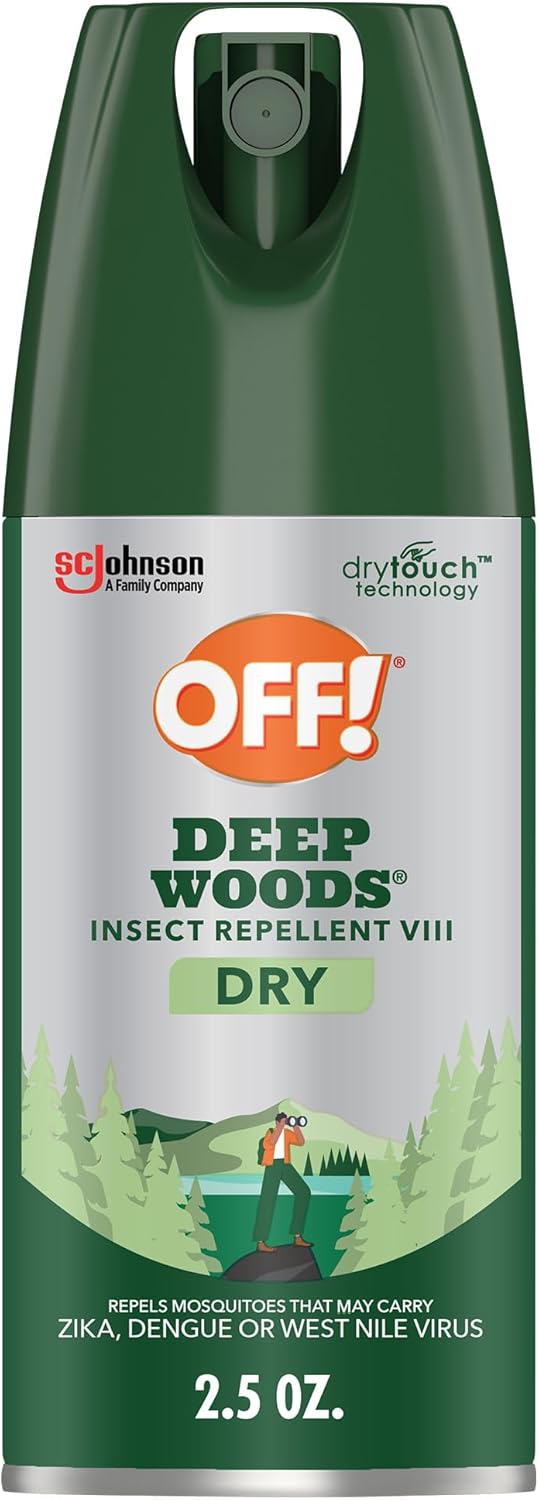
| Active ingredient | 25% DEET |
|---|---|
| Form | Aerosol spray |
| Long-lasting protection | Up to 8 hours |
| Indications | Hunting, fishing, camping, backpacking |
OFF! Deep Woods Dry is a compact aerosol repellent formulated with 25% DEET for multi-hour protection against mosquitoes, ticks, biting flies, gnats, and chiggers. In use you spray from about 6 to 8 inches to cover exposed skin or outer clothing; the formula is designed to feel powder-dry rather than oily, so it is comfortable for active outdoor pursuits like hiking, fishing, or hunting. The label claims up to eight hours of protection, making the small can useful for single-day trips or to keep in a pack. Practical benefits include reliable coverage for areas where disease-carrying mosquitoes and ticks are a concern and easy application to clothing openings like cuffs and socks. Important limitations are the strong warnings on eye irritation and flammability, and the need to avoid certain fabrics and surfaces listed on the label. Because it contains DEET, users should follow label directions for application on children and wash treated skin after returning indoors.
Best for: Buyers who want an effective, no-fuss repellent for day hikes, fishing, or hunting and prioritize affordable, portable protection over fragrance-free or non-DEET alternatives.
Less Ideal for: People looking for fragrance-free, DEET-free, or non-aerosol options and those who need a repellent specifically formulated for very young children or frequent daily reapplication.
- Contains 25% DEET for proven multi-hour protection against mosquitoes and ticks
- Powder-dry, non-greasy formula that is comfortable for active outdoor use
- Compact 2.5 oz aerosol is portable for day trips and fits in a pack or pocket
- Label indicates protection against insects that may carry Zika, Dengue, West Nile, and Lyme disease
- Aerosol is extremely flammable and must be kept away from heat and open flame
- Can irritate eyes and may cause skin reactions in rare cases
- Not suitable for some synthetic fabrics and painted or leather surfaces
Verdict: A small, budget-friendly DEET aerosol that delivers proven, long-lasting protection for adults on active outdoor trips.
Repel 100 Insect Repellent Pen-Size Pump (0.475 fl oz)

| Item Volume | 0.48 fluid ounces |
|---|---|
| Scent Name | Unscented |
| Item Form | Aerosol |
| Active Ingredient | 98.11% DEET |
Repel 100 is a compact, high-DEET insect repellent designed for serious outdoor use where strong, long-lasting protection is needed. The 0.475 ounce pen-style pump makes it easy to stash in a pocket, pack, or first-aid kit for hiking, camping, or travel. With roughly 98.11% DEET, the formula is intended for severe insect conditions and claims up to 10 hours of protection against mosquitoes that can carry Zika, West Nile, Dengue and Chikungunya, as well as ticks, biting flies, gnats, chiggers and fleas. The unscented aerosol form minimizes fragrance while delivering concentrated coverage, and the small size is convenient for single-person outings or emergency touch-ups. Important limitations are its very small volume, which means it is best used for short trips or as a backup rather than all-day group outings, and its high DEET content requires cautious use on gear and skin according to label instructions. There is also a California warning about chemicals linked to reproductive harm that some buyers will want to consider.
Best for: Buyers who prioritize reliable, long-lasting protection in high-infestation or remote outdoor settings and want a compact, ready-to-carry solution for solo use or emergency top-ups.
Less Ideal for: People seeking a refillable or multi-person repellent for extended trips or those who prefer low-DEET or natural alternatives should consider other options.
- Very high DEET concentration for up to 10 hours of protection in heavily infested areas
- Pen-size pump is highly portable and easy to carry on hikes or in a pocket
- Unscented aerosol minimizes fragrance while still delivering effective repellent
- Targets a broad range of pests including mosquitoes, ticks, biting flies and chiggers
- Very small 0.475 fl oz volume limits how many applications you can get from a single unit
- High DEET concentration requires careful application and avoidance of certain fabrics and plastics
Verdict: Choose Repel 100 when you need compact, proven DEET protection that lasts through severe insect conditions.
Repel 100 Insect Repellent Pump Spray, 4 oz (98% DEET)

| Active ingredient | DEET 98.11% |
|---|---|
| Protection duration | Up to 10 hours |
| Form | Pump spray |
| Net volume | 4 oz |
Repel 100 is a small, travel-friendly pump spray formulated with 98.11% DEET for heavy-duty insect protection. You apply it to exposed skin or outer clothing to repel mosquitoes that can carry Zika, West Nile, Dengue and other viruses, as well as ticks, gnats, biting flies, chiggers and fleas. The 4-ounce bottle is convenient to carry in a daypack and the manufacturer claims up to 10 hours of protection in severe conditions, which makes it suitable for long hikes, camping, and extended outdoor work. Practical features include a pump spray for controlled application and clear label directions about avoiding sensitive areas and washing treated skin afterward. The main limitation is the very high DEET concentration, which requires careful use around children, and can damage some materials and finishes, so you need to avoid contact with plastics, leather, watches and certain fabrics. Users who want a milder or scented repellent should consider lower DEET percentages or alternative active ingredients.
Best for: Buyers who prioritize maximum, long-duration insect protection for extended outdoor activities and want a compact, easy-to-carry repellent for severe conditions.
Less Ideal for: People looking for low-DEET, fragrance-free, or natural alternative repellents and those who need a product safe for frequent use on children or on delicate gear.
- Very high DEET concentration for strong, long-lasting protection in severe insect conditions
- Compact 4 oz pump bottle that is easy to carry for travel and day trips
- Effective against a wide range of pests including mosquitoes, ticks, biting flies, chiggers and fleas
- Label provides specific use and safety directions for clothing, children, and post-exposure washing
- High DEET content can damage plastics, leather, painted or varnished surfaces and some synthetic fabrics
- Not suitable for users seeking low-odor or natural ingredient repellents
Verdict: Choose Repel 100 when you need compact, maximum-strength DEET protection for long outdoor outings in severe insect conditions.
Choosing the Right Mosquito Repellent for Backpacking: Key Factors to Consider
Duration and Reapplication Schedule
How long a repellent prevents bites matters most on the trail. A longer labeled protection interval reduces how often you need to stop and reapply, which saves time and keeps hands and gear cleaner. Consider whether a single application covers several hours or if you will need frequent touch-ups while hiking and at camp.
Think about how reapplication fits your itinerary. For short day hikes, a product with moderate protection may be fine. For multiple nights in mosquito-prone camp environments, choose formulations with proven multi-hour efficacy to minimize interruptions and conserve product for longer trips.
Packability and Weight
Every gram counts when backpacking, so repellent packaging and size affect what you carry. Compact tubes or small spray bottles that fit into hip-belt pockets or inside a toiletry sack are preferable to bulky containers. Consider refillable small bottles if you need only a small amount for the trip.
Beyond raw weight, think about shape and durability. Soft sachets or thin plastic bottles collapse as you use them and save space. Hard glass or oversized containers add bulk and risk breakage. Choose packaging that suits how you organize your pack and how often you will access the product while moving or at camp.
Performance in Wet and Sweaty Conditions
Trail conditions are rarely pristine. You will sweat, move through wet vegetation, and possibly encounter rain. A repellent that beads off or washes away quickly is less useful for backpacking. Look for formulations that maintain a protective layer despite perspiration and light moisture.
If you plan to cross streams or expect heavy rain, note whether the label mentions water resistance. Even with water-resistant products, carry a lightweight tarp or pack cover to keep the repellent and other essentials dry. Performance after sweating matters especially for high-output activities like uphill hiking.
Application Method and Field Ease
How you apply repellent in camp affects cleanliness and convenience. Sprays can cover large areas quickly but may aerosolize and risk contaminating food or gear. Lotions and roll-ons reduce overspray and let you target exposed skin. Wipes are handy for quick touch-ups without extra containers.
Consider how easy it is to reapply with cold or gloved hands. Pumps and small flip-top bottles can be easier than fiddly caps when you are tired. Also think about how the product interacts with other gear, such as whether it transfers onto clothing, sleeping bags, or hydration bladders.
Active Ingredients and Safety
Understanding active ingredients helps you match protection needs with safety preferences. Different actives have different labeled durations, environmental profiles, and age-related usage guidelines. Read labels for concentration, age restrictions, and any restrictions on application to hands or near the face.
Also consider skin sensitivity if you have reactive skin. Some formulations pair an active ingredient with moisturizers to reduce irritation. Carry a small sample to patch-test before multi-day use to avoid unpleasant reactions while far from resupply.
Impact on Clothing and Gear
Certain repellents can stain fabrics, leave residues, or transfer oils to gear surfaces. On a long trip, residue buildup on pack straps, sleeping bag fabric, or clothing can be irritating and hard to clean in the field. Evaluate whether a product is likely to transfer when you sweat or sit against your pack.
If staining or transfer is a concern, consider clothing treatments or vapor formulations designed to minimize contact with fabric. Plan how you will store treated items, and keep a small cloth or wipes to clean unexpected transfers while on the trail.
Repellent Formats and When to Use Them
Different formats suit specific trail routines. Aerosol sprays are fast for covering exposed skin and clothing before a creek crossing or entering bug-heavy areas. Lotions and roll-ons are cleaner for campsite application and reduce overspray onto gear. Wipes are convenient for quick touch-ups when you are on the move and do not want to fumble with bottles.
For ultralight packers, concentrates or solid stick forms can minimize waste and bulk. Consider a small portion of a lotion or a single packet of wipes for short trips, and reserve larger bottles for basecamp or car-accessible outings.
- Sprays: fast coverage, risk of overspray
- Lotions/Roll-ons: targeted application, less transfer
- Wipes: quick touch-ups, low mess
- Sticks/Concentrates: compact and lightweight
Treating Clothing and Gear Versus Skin Application
Some repellents are formulated for treating clothing and gear rather than skin. Treating clothing can provide long-lasting protection without exposing skin to chemicals, which is useful for long stints in buggy camps. Follow label instructions closely for application and drying time to avoid staining or loss of performance.
Skin application is necessary for exposed areas like the face and hands. Combine treated clothing with targeted skin protection for efficient overall coverage while conserving product.
- Clothing treatments offer extended protection but require planning
- Skin repellents protect exposed areas and require reapplication
- Use both methods for heavy mosquito pressure
Managing Smell, Residue, and Comfort
Scent and residue affect how comfortable you feel wearing repellent day after day. Strong-smelling formulations can linger on clothes and in your tent. If scent is an issue, look for low-odor options or apply sparingly and avoid enclosed gear spaces immediately after applying.
Some products leave a greasy or sticky feel, which can be unpleasant while hiking. Test a small amount before a long trip, and keep lightweight wash supplies to remove residue during multi-week outings if necessary.
- Choose low-odor formulas if scent bothers you
- Avoid greasy residues that attract dirt
- Air out treated clothing before stowing inside a tent
Storage, Carry, and Leave-No-Trace Considerations
Pack repellents in leakproof bags and keep them away from food containers. Proper storage prevents accidental spills and contamination. For long trips, consider decanting into small durable bottles that are labeled and secured.
Be mindful of Leave-No-Trace principles when disposing of wipe packets or empty containers. Pack out all trash and avoid disposing of liquids on the trail or near water sources to protect the environment.
- Use leakproof containers and secondary bags
- Label decanted containers to avoid misuse
- Pack out all empty packaging
Balancing Protection with Environmental Sensitivity
If you are hiking in sensitive ecosystems or near water, consider the environmental impact of repellent runoff. Some active ingredients can affect aquatic insects and local fauna. Use products according to label guidance and avoid rinsing repellent from skin or clothing directly into streams or lakes.
When possible, apply repellent away from water and let it dry before swimming. For multi-day trips in remote wilderness, minimize the amount of excess product you carry to reduce the risk of accidental contamination.
- Avoid applying directly over water sources
- Let repellent dry before entering lakes or streams
- Follow label guidance to minimize environmental impact
How We Chose the Best Mosquito Repellent for Backpacking
We focused on how products behave in real backpacking situations rather than lab-only stats. Selection emphasized repellents that provide measurable bite reduction over hours, are easy to stow in a pack, and remain effective when exposed to sweat, rain, or high humidity. Practical usability was a must: we prioritized formats and dispenser designs that are quick to apply at camp without contaminating gear. Safety and label clarity were considered, favoring products with clear active-ingredient information and appropriate guidance for outdoor use. Evaluation criteria included duration of protection, packability and weight, resistance to moisture and sweat, ease of application in the field, and clarity of use and safety instructions. We excluded products that are clearly designed only for home use or that require bulky application systems unsuited to hiking. We also filtered out repellents with insufficient labeling for outdoor use or that rely on unproven claims without supporting usage guidance. The resulting picks balance field-proven protection and practicality for backpackers of different trip lengths.
FAQ
How often should I reapply repellent on multi-day hikes?
Reapplication depends on the product's labeled duration and your activity level. Many effective repellents last several hours, but heavy sweating or rain will shorten that window. Check the label and plan for at least one reapplication during long days or after significant moisture exposure.
Is it better to treat clothing or put repellent on skin?
Both approaches complement each other. Treated clothing offers extended protection for covered areas, while skin application protects exposed parts like the face and hands. For heavy mosquito pressure, use clothing treatment plus targeted skin repellent.
Can I use a repellent and sunscreen together while backpacking?
You can use both, but apply sunscreen first and let it absorb before applying repellent. Sunscreen may need more frequent reapplication, so plan the sequence and prefer combined strategies that minimize over-application of multiple products.
What is the best way to carry repellent to avoid spills?
Use small, durable, labeled bottles placed in leakproof zip bags or soft cases. Keep them separated from food and electronics. For ultralight setups, decant only the amount you need and secure caps with tape or a secondary closure.
Are there age restrictions I should know about for backpacking use?
Many repellents have age-specific guidance and concentration limits. Read the product label for recommendations for children and infants. For family trips, choose formulations and application methods that are appropriate for all ages on the trail.
Final Verdict
For backpacking, prioritize repellents that deliver long protection per application while minimizing weight and mess. Think about how the format fits your routine, how products hold up to sweat and rain, and whether you need to treat clothing in addition to skin. Balance protection duration with packability and environmental care to pick the right solution for your trip length and route. Focus on clear label instructions, a portable container, and a reapplication plan based on expected conditions. With those tradeoffs in mind, you can choose a repellent setup that keeps you comfortable on trail while staying light and responsible outdoors.
