

Note: This article contains affiliate links. If you click on these links and make a purchase, I may earn a small commission at no extra cost to you. This helps support my research and content. Read my full affiliate disclosure here.
If you have a patio, balcony, or porch that only gets filtered light, choosing the right plants for shaded containers makes the difference between green thumbs and wasted pots. Shade-tolerant container plants perform differently than those grown in garden beds because root space, soil mix, and watering frequency change how they use light and nutrients. This guide shortlists the top seven plants in pots that like shade, focusing on plants that establish well in containers, tolerate lower light, and deliver reliable foliage or blooms. Each candidate has been evaluated for light tolerance, container care, and seasonal behavior so you can pick options suited to your specific shaded spot. Read on for practical notes that will help you match plants to pot size, placement, and maintenance time.
Top Picks at a Glance
| Best Overall The best all-around choice for most situations | American Plant Exchange Cast Iron Plant (10-inch potted) |  |
| Best Quality Built to a higher standard if you want something more solid | American Plant Exchange Calathea Makoyana (6-Inch) with Pot Cover |  |
| Best Value The sweet spot between price and what you get | Plants for Pets Easy-to-Grow 12-Pack Mini Houseplants (2" Grower Pots) |  |
| Best Budget The cheapest option that still gets the job done reliably | CZ Grain Crimson Sky Caladium Bulbs (6) |  |
| Highest Rated A top-rated pick with lots of positive feedback | CZ Grain Caladium Bulbs (Fancy Leaf) — 6 Bulbs |  |
| Most Popular A crowd favorite that many people choose with confidence | Plants for Pets Pothos 4-Pack (4" Assorted) |  |
| Best Seller A high-volume bestseller chosen again and again | HOME GROWN Rainbow Mix Coleus Seeds (approx. 400) |  |
American Plant Exchange Cast Iron Plant (10-inch potted)

| Indoor Outdoor Usage | Indoor, Outdoor |
|---|---|
| Other Special Features of the Product | Air Purification, Drought Tolerant, Low Maintenance, Pet Friendly, Shade Resistant |
| Sunlight Exposure | Partial Shade |
| Soil Type | Peat Soil |
| Moisture Needs | Moderate Watering |
This 10-inch Cast Iron Plant is built to deliver reliable, low-effort greenery in low-light rooms and shaded patios. It’s typically used as a floor specimen, hallway accent, or patio centerpiece where other tropicals would falter. Notable features include drought tolerance, shade resistance, and broad upright leaves that form a dense, architectural clump; the plant arrives in potting soil and a nursery pot so it can go straight into display. Practical benefits are straightforward: minimal watering needs, tolerance of inconsistent care, and pet-friendly, air-purifying foliage that improves indoor ambiance without much fuss. Important limitations are that it is primarily foliage-focused so it does not flower for decorative blooms and its formal look may be large for very small tabletops. Also the listing specifies peat-based potting soil and a 10-inch pot which may require repotting or different soil if you prefer alternative mixes. For someone prioritizing dependable performance in low light, this plant delivers a durable, low-maintenance presence.
Best for: Buyers who want a dependable, low-maintenance shade plant that performs with minimal attention and improves a room’s greenery without demanding bright light or frequent care.
Less Ideal for: People seeking a showy flowering houseplant, highly compact tabletop specimens, or those who prefer hands-on, high-maintenance tropicals that need bright indirect light.
- Tolerates low light and shade, allowing placement in dim rooms or covered patios
- Drought tolerant and low-maintenance, good for busy owners or inconsistent watering
- Arrives potted in nursery soil and pot ready for immediate display
- Pet-friendly and noted for air-purifying qualities
- Primarily ornamental foliage with little to no decorative flowering
- May require repotting or soil change for long-term growth preferences
Verdict: Choose this Cast Iron Plant when you need a tough, low-care shade plant that reliably brings big, lasting foliage to dim indoor or shaded outdoor spots.
American Plant Exchange Calathea Makoyana (6-Inch) with Pot Cover

| Indoor Outdoor Usage | Indoor, Outdoor |
|---|---|
| Sunlight Exposure | Partial Shade |
| Moisture Needs | Moderate Watering |
| Container Material | Ceramic or Porcelain |
The Calathea Makoyana is a compact, pattern-leaved tropical houseplant that brings bold foliage interest to shaded patios, rooms, or offices. It is typically kept as an indoor potted specimen and prefers indirect light and consistent moisture, so most users place it in bright shade away from direct sun and water when the topsoil begins to dry. Notable features include its striking feather-like leaf patterns with burgundy undersides, pet-safe classification, and reported air-purifying qualities. In practice the plant performs well in small pots and ceramic covers, making it an easy focal point on tabletops or plant stands. Expect daily leaf movements and a slow to moderate growth habit rather than a fast-growing specimen. Important limitations are its preference for steady humidity and moderate watering discipline; environments that are very dry or erratically watered can cause leaf curling or brown edges. For someone who prioritizes high-impact foliage in shaded spots and is willing to monitor moisture and humidity, this Calathea is an attractive, low-footprint choice.
Best for: Buyers who want a high-impact, shade-tolerant potted plant for indoor or sheltered outdoor spots and who pay attention to regular watering and humidity.
Less Ideal for: People seeking a carefree, drought-tolerant plant or those who prefer fast-growing plants that quickly fill large containers.
- Attractive, patterned leaves with burgundy undersides that create visual impact in shade
- Suitable for partial shade and designed for indoor potted display
- Pet-friendly and described as having air-purifying qualities
- Comes in a 6-inch pot with a ceramic or porcelain cover for ready display
- Requires consistent moisture and higher humidity than many common houseplants
- Not a fast grower so it will remain a small, decorative specimen rather than filling large pots
Verdict: Choose this Calathea if you want a striking, shade-tolerant potted plant that adds dramatic patterned foliage to indoor or sheltered outdoor spots while remaining pet-safe.
Plants for Pets Easy-to-Grow 12-Pack Mini Houseplants (2" Grower Pots)

| Indoor Outdoor Usage | Indoor |
|---|---|
| Other Special Features of the Product | Air Purification, Compact, Low Maintenance |
| Sunlight Exposure | Partial Sun |
| Soil Type | Loam Soil |
| Moisture Needs | Regular Watering |
This 12-pack of mini houseplants is designed for container gardeners who want instant variety without sourcing individual plants. Each order includes a rotating mix of popular indoor species such as pothos, peperomia, spider plant varieties, croton, ficus, syngonium and begonia, all shipped in 2" grower pots and ready to be potted into decorative containers or grouped for impact. The small size makes them ideal for windowsills, terrariums, shelf displays and mixed container plantings. Care guidance is straightforward: bright, indirect light with watering when the soil dries and occasional feeding to encourage growth. Practical benefits include low maintenance, compact form for tight spaces, and the fun of receiving a surprise assortment. Limitations are the tiny starting pot size, which means most plants will need repotting within weeks to months, and variety is dependent on seasonal availability so you may not get every species pictured. Overall this is a convenient way to build a container plant collection quickly, especially if you plan to re-pot and arrange the plants into larger containers or themed groupings.
Best for: Buyers who want to quickly assemble container plantings or starter collections for small spaces and enjoy variety without sourcing individual plants.
Less Ideal for: Gardeners seeking mature, display-ready specimens or those who want guaranteed specific varieties rather than a rotating assortment should consider other options.
- Provides a dozen fully rooted, ready-to-pot plants for quick container displays
- Rotating assortment offers a broad mix of popular indoor species for variety
- Compact 2" pots are easy to place on shelves, windowsills, terrariums and grouped planters
- Low-maintenance varieties suited to bright, indirect light and regular watering
- Plants arrive in very small grower pots and will require repotting to thrive long term
- Exact varieties are not guaranteed and may differ from product images
Verdict: An easy, low-cost way to populate containers with a diverse set of small indoor plants ready for re-potting and display.
CZ Grain Crimson Sky Caladium Bulbs (6)

| Indoor Outdoor Usage | Outdoor |
|---|---|
| Expected Blooming Period | Summer |
| Sunlight Exposure | Partial shade to bright filtered light |
| USDA Hardiness Zone | Zones 9–11 for outdoor overwintering; lift and store tubers in colder zones |
| Moisture Needs | Evenly moist, well drained soil; avoid standing water |
These Crimson Sky caladium tubers offer an easy way to add dramatic red-and-pink foliage to a shade border or patio container during the warm season. Each pack contains six dormant tubers you plant about 2 inches deep after the soil has warmed; give plants partial shade or bright filtered light and consistently moist, well-drained soil for best results. The variety is grown for its leaves rather than flowers and can reach about 5 feet tall in favorable conditions, making it useful as a background or specimen in moist, shady spots. Because caladiums are tender, gardeners in colder zones should lift and store tubers before frost or treat them as annuals. Practical benefits include quick seasonal impact from a small number of tubers and flexible use in pots or beds, but you will need to manage winter storage in zones below 9 and avoid waterlogged soils that cause rot. Overall care is straightforward if you can provide regular moisture and filtered light.
Best for: Gardeners who want a low-effort, high-impact foliage plant for moist, partially shaded beds or containers and who prefer seasonal color they can manage year to year.
Less Ideal for: Those seeking cold-hardy perennials or gardeners who cannot provide regular moisture management and winter storage.
- Bold, decorative red and pink foliage that adds instant color to shady areas
- Six tubers allow planting as a group in one container or spacing across a bed
- Clear planting and care guidance for warm-season planting and overwintering
- Performs well in evenly moist, well drained soils suited to the article's moist-soil focus
- Tender tubers need to be lifted and stored in climates colder than USDA zones 9–11 or treated as annuals
Verdict: If you want an easy seasonal splash of bold foliage for moist, shady spots, these six Crimson Sky caladium tubers deliver immediate impact with simple warm‑season care.
CZ Grain Caladium Bulbs (Fancy Leaf) — 6 Bulbs

| Expected Blooming Period | Summer |
|---|---|
| Sunlight Exposure | Full Sun |
| USDA Hardiness Zone | 9–11 |
| Moisture Needs | Moderate; Keep Soil Evenly Moist |
| Material Features | Dormant Bulbs, Non GMO, Fancy Leaf Variety |
These caladium bulbs produce bold, heart-shaped foliage with creamy white centers and green margins that brighten shady patios and containers from late spring through fall. Planting is straightforward: set bulbs 1–2 inches deep after frost when soil warms to about 65°F, keep the soil evenly moist during growth, and fertilize monthly to maintain leaf color. They are sold as dormant, non-GMO bulbs that perform well in partial shade or filtered morning sun, making them especially useful for patio pots, hanging baskets, and layered shade borders. Practical advantages include easy establishment from bulbs and a compact habit that fills containers without constant pruning. Limitations are that they are hardy only in USDA zones 9–11 and require consistent moisture while active, so they need more attention in drier climates or containers that dry quickly. These are foliage plants rather than long-lasting flowering specimens, so buyers should expect seasonal leaf display rather than showy blooms.
Best for: Gardeners who want a low-effort, high-impact foliage plant for shady containers and patios and who prioritize easy seasonal planting and strong visual payoff over long-lived perennials.
Less Ideal for: Those seeking cold-hardy, maintenance-free perennials for year-round beds or gardeners who prefer flowering plants as the primary seasonal display.
- Striking, colorful foliage that brightens shade and filtered light areas
- Sold as dormant bulbs for easy seasonal planting and storage
- Compact mature size suitable for containers and small beds
- Non-GMO bulbs with simple planting instructions for beginners
- Only suited for USDA zones 9–11 without lifting or overwinter protection
- Needs consistently moist soil during active growth which can require more watering in containers
Verdict: A simple, high-impact choice for filling shady containers with colorful, tropical foliage when you want easy seasonal planting and bold visual results.
Plants for Pets Pothos 4-Pack (4" Assorted)

| Indoor Outdoor Usage | Indoor |
|---|---|
| Other Special Features of the Product | Air Purification |
| Sunlight Exposure | Full Sun |
| Moisture Needs | Regular Watering |
| USDA Hardiness Zone | 3 |
This four-pack delivers beginner-friendly pothos varieties that suit low-light rooms and simple indoor care routines. Each plant comes rooted in a 4" nursery pot and the assortment rotates between familiar types such as Marble Queen, Golden, Neon, and Satin, so you get visual variety without extra effort. Pothos are typically grown in hanging planters, on shelves, or trained up a support; they prefer bright, indirect light but tolerate lower light levels that many apartments and offices have. The listing emphasizes air-purifying benefits and gives clear care guidance: allow the soil to dry between waterings and keep temperatures above about 60 F. Practical strengths are resilience, fast trailing growth for a lush look, and compatibility with common indoor spots like living rooms, kitchens, or bathrooms. Limitations are that you may receive different varieties than pictured and plants arrive in small 4" pots, so plan to repot sooner if you want bigger specimens or longer-term display without frequent watering.
Best for: Buyers who want low-maintenance greenery for indoor spaces and prefer reliable, easy-to-care-for plants that tolerate lower light and occasional neglect.
Less Ideal for: Growers seeking large, mature plants ready for instant statement displays or those who want guaranteed, specific rare varieties.
- Easy to grow and tolerant of low to bright indirect light
- Four different varieties provide visual variety in one purchase
- Ships in small nursery pots that establish quickly and are ready for hanging or shelving displays
- Listed care guidance is straightforward for first-time plant owners
- Arrives in 4" pots so plants may need repotting soon for faster growth or long-term display
- Specific varieties are not guaranteed and assortment can vary
Verdict: A simple, low-maintenance way to add trailing, low-light-friendly pothos to your home with minimal fuss.
HOME GROWN Rainbow Mix Coleus Seeds (approx. 400)
| Sunlight Exposure | Part Shade to Shade |
|---|---|
| USDA Hardiness Zone | 2-11 |
| Expected Blooming Period | Spring through Frost |
| Material Features | GMO Free, Heirloom |
| Unit Count | 1 Count |
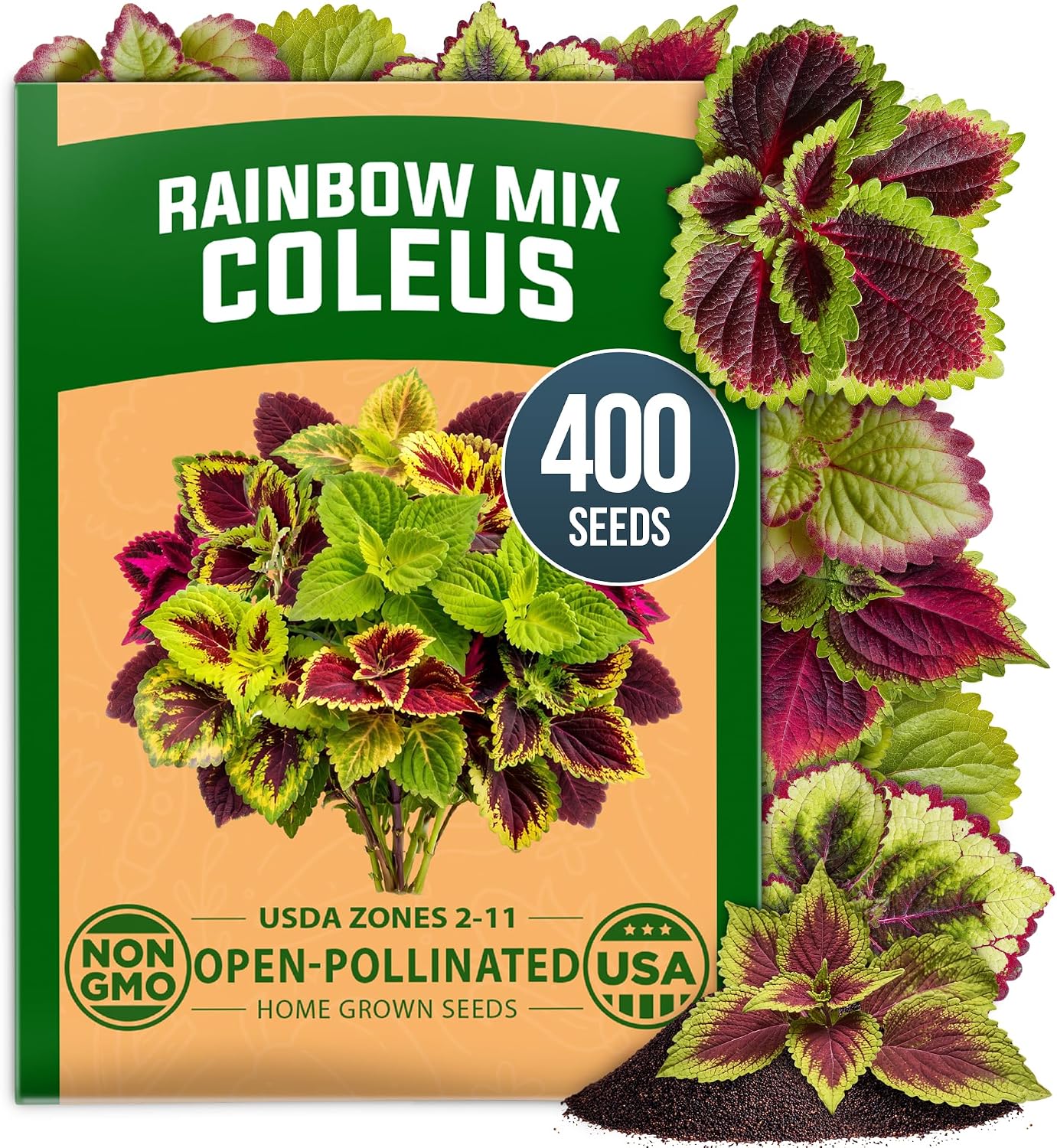
These Rainbow Mix coleus seeds produce compact, colorful foliage plants that are well suited to containers and shaded patio spots. Surface-sow the tiny seeds (do not cover), keep the medium warm and consistently moist, and seedlings typically appear in 10–14 days; pinch growing tips to encourage bushy, mounded plants. The mix is valued for season-long leaf color in shades of rose, green, bronze, cream, and scarlet, so you get visual impact without relying on flowers. Coleus grows indoors near bright north or east windows and outdoors in part shade to shade, making it a flexible choice for window boxes, mixed planters, and small pots. Important limitations are that coleus is a tender annual in most regions and needs protection from frost and prolonged drought, and it prefers warm temperatures for best germination and growth. For container gardeners who want low-maintenance, high-impact foliage, this seed mix is an easy way to produce many plants from one packet.
Best for: Gardeners who want easy-to-grow, high-impact foliage for containers and shaded patios and prefer predictable, low-fuss plants they can start from seed.
Less Ideal for: People seeking long-lived perennial landscaping or plants that tolerate full sun and drought without extra care.
- High seed count (about 400) gives many starts for containers or massing
- Open-pollinated non-GMO seeds from a mix that yields varied, colorful foliage
- Specifically suited to part shade and shade where many flowering plants struggle
- Compact, mounded habit that performs well in pots, window boxes, and mixed planters
- Tender annual in most zones and requires frost protection or indoor overwintering
- Requires consistent moisture and will suffer if soil dries out or remains waterlogged
Verdict: A high-count, non-GMO coleus seed mix that reliably produces compact, colorful foliage perfect for containers and shaded patios.
Choosing the Right Plants in Pots That Like Shade: Key Factors to Consider
Light Level and Type of Shade
Not all shade is the same. Deep shade under dense trees provides far less light than a north-facing balcony or an area with morning sun and afternoon shade. Plants marketed for shade vary in how little light they tolerate, so consider how many hours of direct sun, bright filtered light, or dappled light your container will actually receive.
Matching the plant's shade tolerance to your specific microclimate reduces stress, prevents legginess, and improves flowering. If light is extremely low, prioritize foliage-driven plants with bold textures and variegation rather than bloom-heavy species that need brighter conditions.
Pot Size and Root Space
Containers limit root expansion, which affects growth rate, watering needs, and nutrient availability. Some shade-loving plants adapt well to being slightly root-bound and stay compact, while others require larger pots to avoid frequent repotting. Decide whether you want long-term container residents or annuals that will be replaced each season.
Also consider pot material. Porous materials dry faster and may need more frequent watering in hot weather, while nonporous containers retain moisture longer. The pot's depth matters for species with deeper root habits versus shallow-rooted foliage plants.
Soil Mix and Drainage
Good container soil combines moisture retention with drainage. In shade, pots can stay damp longer, making soil that holds water without becoming waterlogged essential. Use mixes with organic matter for steady moisture and coarse particles such as perlite or grit to keep aeration around roots.
Avoid garden soil alone because it compacts in pots. Also ensure containers have adequate drainage holes and consider a thin layer of gravel or broken pottery under the soil only if it improves drainage in shallow pots; otherwise a well-structured potting mix is sufficient.
Watering Rhythm and Moisture Needs
Shade does not eliminate the need for consistent watering; it changes the rhythm. Pots in low light usually dry out more slowly, but both overwatering and inconsistent wet-dry cycles can stress plants. Choose plants whose moisture preferences match how often you can water-some tolerate brief dry spells better, while others prefer steady moisture.
Monitor moisture with your finger or a simple moisture meter. Mulching the top of the pot with shredded bark or leaf mold can help stabilize moisture levels and reduce watering frequency in shady settings.
Fertilizer and Nutrient Management
Container plants rely entirely on the grower for nutrients. Shade-grown plants typically grow more slowly than sun lovers, so they need balanced feeding without encouraging too-lush growth that is weak and leggy. A slow-release granular fertilizer applied according to container size or a regular diluted liquid feed during the growing season usually provides the right balance.
Avoid heavy feeding in late season when plants are preparing for dormancy. Monitor foliage for signs of deficiency such as yellowing or poor new growth, and adjust feeding or repot with fresh mix if needed.
Winter Care and Hardiness
In pots, roots are more exposed to cold than they are in the ground. Choose plants whose winter hardiness matches your climate, or plan to move containers to protected areas or provide insulation for roots. Some shade plants are seasonal and treated as annuals in colder regions, while others can overwinter with minimal protection.
Remember that insulating a pot or sinking it into the ground over winter changes watering and snow exposure, so plan winter care as part of your container choice to avoid root freeze or rot.
Best Foliage-first Choices for Deep Shade
In spots with very low light, foliage texture and color carry the visual interest. Look for plants with large, glossy leaves, strong variegation, or unique leaf shapes that can brighten shady corners. These choices often tolerate lower light while remaining compact enough for standard containers.
Place these plants where their leaf structure will be visible up close, such as near seating areas or entryways, and pair them with contrasting textures for visual impact.
- Use darker pots or neutral tones to let variegated leaves stand out
- Rotate pots occasionally to keep growth even
- Avoid overcrowding which reduces airflow and promotes disease
Flowering Options That Still Do Well with Limited Sun
Some shade-tolerant plants will still produce meaningful blooms in filtered light if their other needs are met. Flowering in shade tends to be sporadic or concentrated in cooler parts of the season, so expect shorter bloom runs than sun-loving counterparts.
Position flowering containers where reflected light is highest and use lighter-colored potting mix or mulch to reflect some light back onto the plant crown.
- Fertilize lightly during active bloom to encourage flowers without excess foliage
- Deadhead spent blooms to promote additional flowering
- Keep soil evenly moist during bloom periods
Designing Layered Shade Container Arrangements
Create depth by combining plants with different heights and textures in a single container or group of pots. A taller background plant, mid-height foliage, and a trailing element at the pot edge give containers a finished look without needing bright sun.
Consider the final mature size of each plant so taller species do not overshadow lower ones, and choose similar moisture and nutrient needs to simplify care.
- Use a single watering schedule by grouping plants with similar moisture needs
- Anchor designs with a bold-leaved focal plant and surround it with subtler textures
- Allow room for seasonal swaps-replace an underperforming annual with a fresh seasonal choice
Pot Placement and Microclimate Tips for Shaded Spots
Small changes in placement can dramatically affect performance. Move a container a few feet to catch morning sun or to avoid afternoon heat reflected from buildings. Walls, fences, and overhangs create microclimates that may be slightly warmer or cooler than open shade.
Use reflective surfaces sparingly to boost light for flowering species, and be mindful that moving pots frequently can disturb root systems if done during active growth.
- Avoid placing shade pots directly beneath dripping gutters or dense canopy that keeps pots constantly wet
- Elevate pots on feet or blocks to improve drainage and air circulation under the pot
- Group pots to create a humidity pocket for plants that prefer higher moisture
Seasonal Refresh and Repotting Schedule
Plan to refresh container soil and check roots every one to three years depending on plant vigor and pot size. Smaller pots often need more frequent attention and replenishing of nutrients. Repot in early spring before the main growth flush whenever possible.
When refreshing, prune away dead roots, add fresh potting mix, and check for pests. Seasonal refreshes give you a chance to replace tired annuals and adjust the design for changing light as trees grow or are pruned.
- Use a light hand when pruning shade plants; remove dead or weak growth to improve air flow
- Top-dress with compost or fresh mix rather than full repot when roots are not overcrowded
- Check drainage holes and clear any blockages during repotting
How We Chose the Best Plants in Pots That Like Shade
We prioritized traits that matter for real-world container gardening in low-light situations. Evaluation focused on light tolerance in shaded patios or balconies, container adaptability including root confinement and repotting needs, and moisture management since pots dry differently than beds. We also looked at seasonal interest and foliage resilience because shade gardens often rely on leaf texture and color rather than nonstop blooms. Finally, ease of care and pest resistance were considered to favor low-maintenance choices suited to casual and experienced gardeners alike. Excluded from consideration were plants that require full sun, large in-ground root systems, or specialized greenhouse conditions that cannot be met in typical outdoor containers. We also excluded varieties that need aggressive pruning or daily attention to survive in low-light pots. The result is a shortlist of plants that balance shade performance, container suitability, and straightforward upkeep.
FAQ
Can container plants survive in full shade all season?
Many shade-tolerant container plants will survive in full shade, but their growth pattern changes. Expect slower growth, fewer blooms, and a greater reliance on foliage interest. Choose species rated for low light and monitor for leggy growth; occasional relocation to brighter filtered light can help.
How often should I water shaded pots compared with sun-exposed ones?
Shaded pots generally dry more slowly than those in full sun, so you will likely water less often. However, frequency depends on pot size, material, and mix. Check moisture regularly and water when the top inch of soil begins to feel dry rather than on a strict schedule.
Do shade-loving plants need the same fertilizer as sun plants?
They often need lighter feeding because slower growth means less nutrient demand. Use a balanced, diluted liquid fertilizer during the growing season or a conservative slow-release product. Overfertilizing can cause weak, floppy growth in low light.
What are signs a plant in a shady pot is getting too little light?
Common signs include elongated stems, sparse foliage, loss of lower leaves, and reduced or absent flowering. Leaves may become smaller or paler. If these appear, consider moving the pot to a brighter shaded spot or choosing a species better adapted to deep shade.
How can I protect potted shade plants from winter cold?
Insulate pots by grouping them, moving to a sheltered location, or wrapping containers with bubble wrap or burlap. For hardy species, reduce watering and let them go dormant. Tender plants may need to be brought indoors or treated as annuals in colder climates.
Final Verdict
Choose shade-tolerant container plants that match the specific light level and space constraints of your patio or balcony. Prioritize species that handle confined roots, steady moisture, and slower seasonal growth so you avoid frequent repotting and stress-related problems. Balance foliage interest with occasional flowering where possible, and accept tradeoffs: deeper shade favors texture over nonstop blooms. With correct pot choice, soil mix, and placement, you can create low-maintenance, attractive shaded containers that perform consistently year after year.
