

Note: This article contains affiliate links. If you click on these links and make a purchase, I may earn a small commission at no extra cost to you. This helps support my research and content. Read my full affiliate disclosure here.
Choosing the right pot for a peace lily affects watering habits, root health, and how the plant looks in your home. The wrong pot can cause soggy roots or stunt growth, while the right container improves drainage, aeration, and stability. This guide covers seven top peace lily pots shortlisted for different indoor situations, from low-light corners to bright windowsills. We evaluate each option for drainage performance, appropriate pot size, material suitability, and how well the pot supports typical watering routines for peace lilies. Read on to find a pot that matches your plant, watering style, and space.
Top Picks at a Glance
| Best Overall The best all-around choice for most situations | UOUZ 12" Self-Watering Planter with 60 oz Removable Reservoir |  |
| Best Quality Built to a higher standard if you want something more solid | LE TAUCI 10 Inch Ceramic Planter with Drainage Saucer |  |
| Best Value The sweet spot between price and what you get | Fielda 8 Inch Self-Watering Plastic Planter — 2‑Pack with Tray and Saucer |  |
| Best Budget The cheapest option that still gets the job done reliably | Ferlypote 8-inch Plastic Plant Pots, Set of 2 (White) |  |
| Highest Rated A top-rated pick with lots of positive feedback | WSMKSZ 12" Water Ripple Plastic Plant Pot with Drainage Saucer (White) |  |
| Most Popular A crowd favorite that many people choose with confidence | Utopia Home Indoor Plant Pots with Drainage, 5‑Pack |  |
| Best Seller A high-volume bestseller chosen again and again | Fielda 8/10/12 Inch Self-Watering Planter Set |  |
UOUZ 12" Self-Watering Planter with 60 oz Removable Reservoir

| Material Type | Plastic |
|---|---|
| Other Special Features of the Product | Drainage Hole |
| Mounting Type | Tabletop |
| Included Components | Tray |
| Capacity | 3.8 pounds |
This 12-inch UOUZ planter is built for easy, low-maintenance container gardening. It uses a 60 ounce removable reservoir so you can water from the bottom and keep a peace lily hydrated for up to two to three weeks without top watering. Mesh drainage holes and a deep planting space help prevent soil loss and encourage healthy root development, while the built-in tray protects surfaces when used indoors. Made from durable 6.5 mm PP plastic with a matte finish, the pot is lightweight enough to move around yet substantial enough for everyday use on shelves, window sills, or patios. Practical features to note are the removable reservoir for cleaning and the option to water from the top or bottom depending on plant needs. The pot is intended for indoor use and its plastic construction means it will not have the breathability of terracotta, so monitor moisture for plants that prefer drier media.
Best for: Buyers who want a low-maintenance planter to keep a peace lily consistently watered and who value convenience and indoor-friendly design.
Less Ideal for: Gardeners who prefer porous, natural materials for maximum root aeration or who need a heavy outdoor planter that resists strong winds.
- Large 60 oz removable reservoir supports extended periods between waterings
- Bottom-watering design with built-in tray reduces risk of overwatering and protects surfaces
- Mesh drainage holes and deep planting space promote healthier root growth
- Durable, lightweight 6.5 mm PP plastic with a matte finish is easy to clean and move
- Plastic construction limits breathability compared with porous materials like terracotta
Verdict: Choose this planter when you want a simple, self-watering pot that keeps a peace lily healthy with minimal attention.
LE TAUCI 10 Inch Ceramic Planter with Drainage Saucer

| Material Type | Ceramic |
|---|---|
| Finish Types | Satin Glaze; Unglazed Interior |
| Capacity | 1.16 liters |
| Other Special Features of the Product | Drainage Hole and Saucer; Weather Resistant |
This LE TAUCI 10 inch ceramic planter is a purpose-built indoor pot that balances clean modern styling with practical plant care features. It is typically used for medium houseplants such as peace lilies, snake plants, and pothos; the 8 inch opening and roomy interior give roots space to spread. The pot includes a drainage hole plus mesh pad and a matching saucer, so excess water can escape and be contained rather than sitting at the roots. A silicone base pad helps protect furniture from moisture and scratches. Made from fired ceramic with a satin reactive glaze and an unglazed interior, it feels sturdy and resists fading under normal indoor light. Because the planter is ceramic, it is heavy and not frostproof for outdoor winter use, and it does not come as a detachable tray and pot, which makes emptying water a bit less convenient than a removable liner. For someone prioritizing reliable drainage and a durable, attractive display for a peace lily, this pot delivers practical performance with a refined look.
Best for: Buyers who want a durable, attractive indoor planter that prioritizes effective drainage and long-term plant health for medium houseplants like peace lilies.
Less Ideal for: People who need lightweight, frequently moved pots or planters intended for year-round outdoor use in freezing climates.
- Built-in drainage hole with mesh pad and matching saucer for controlled watering
- Sturdy high-temperature fired ceramic construction that resists fading and warping
- Unglazed interior promotes healthier root environment while satin glaze exterior looks refined
- Silicone base pad protects surfaces from scratches and moisture
- Heavy ceramic construction makes the pot difficult to move once planted
- Not suitable for outdoor freezing conditions and the tray is not detachable for easy draining
Verdict: A solid, performance-focused indoor planter that keeps peace lilies healthy with reliable drainage and a durable ceramic build.
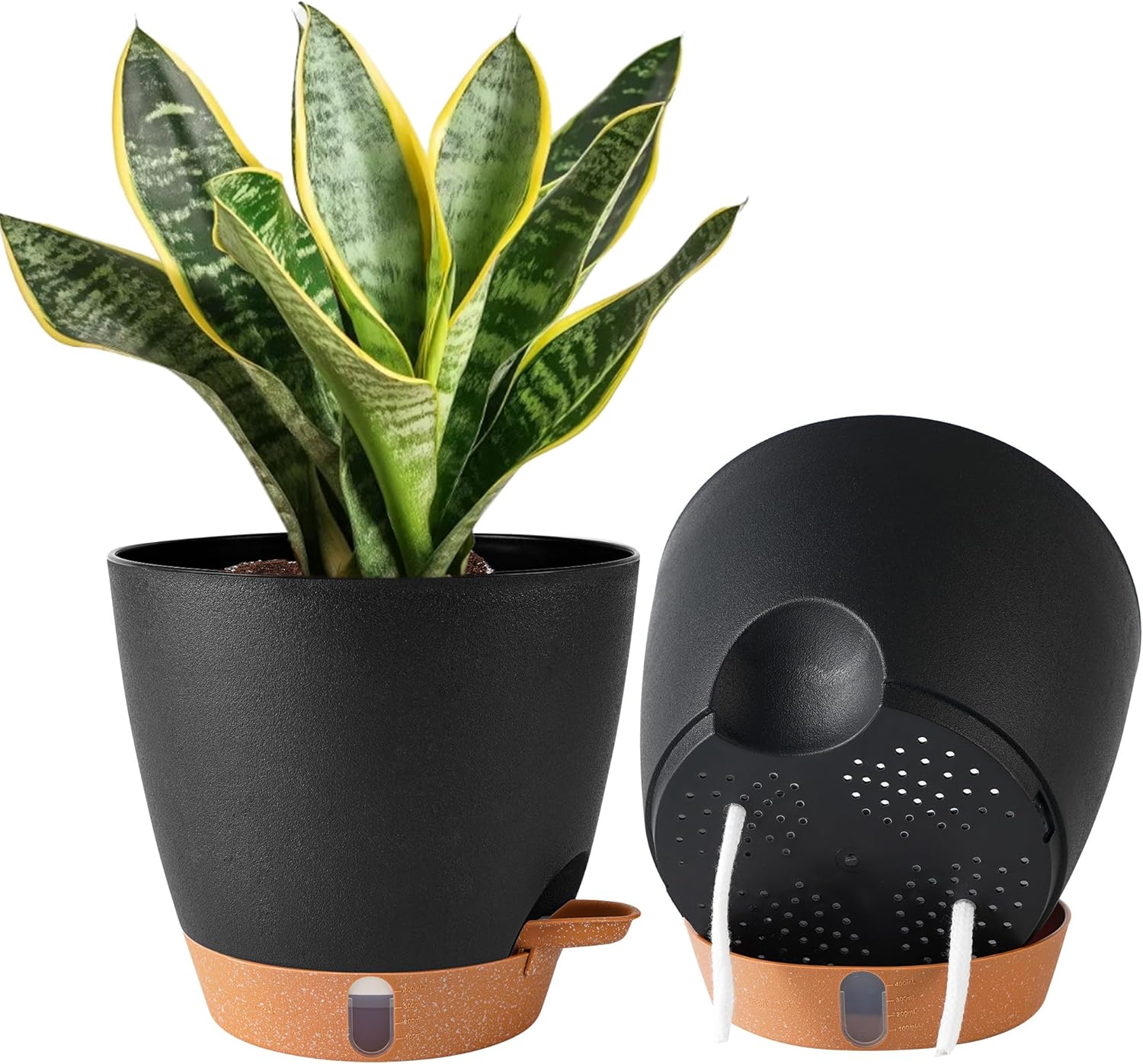
Fielda 8 Inch Self-Watering Plastic Planter — 2‑Pack with Tray and Saucer
| Capacity | 6.6 liters |
|---|---|
| Material Type | Plastic |
| Other Special Features of the Product | Breathable, Drainage Hole, Portable, Self Watering |
| Included Components | Tray, Saucer |
| Indoor Outdoor Usage | Indoor, Outdoor |
These Fielda 8-inch planters are designed to simplify everyday plant care with a built-in self-watering system and a clear water-level window that shows when the reservoir needs topping up. Typical use is potting houseplants, small patio specimens, or moving nursery pots into a slightly larger container; the included saucers make them easy to place on furniture or a balcony. Notable features are the cotton-wick feed that can sustain plants for several days, multiple drainage holes and a breathable mesh that help prevent waterlogging, and a thick, UV-resistant plastic body that withstands light outdoor exposure. In practice the clear indicator and removable tray save time and reduce guesswork about watering frequency, which is helpful for busy or cautious plant owners. Important limitations are that these are plastic planters so they retain heat in full sun and they suit small to medium plants rather than large specimens. Also the self-watering reservoir requires occasional cleaning to avoid algae buildup.
Best for: Buyers who want a low-effort, reliable planter that prevents over- and underwatering and suits everyday houseplants or small balcony containers with minimal fuss.
Less Ideal for: Gardeners seeking heavy-duty decorative pots for large outdoor plants or those who prefer porous materials like terra cotta for moisture-sensitive species should consider other options.
- Self-watering reservoir with cotton-wick feed reduces daily watering tasks
- Visible water level window makes hydration status easy to monitor
- Multiple drainage holes and breathable design help prevent root rot
- Durable thick plastic with UV resistance for indoor or light outdoor use
- Removable saucer tray simplifies mess-free placement and cleaning
- Plastic construction can heat up in strong direct sun and is less insulating than ceramic or clay
- Reservoir and wick need occasional cleaning to prevent algae or blockages
Verdict: If you want a fuss‑free, visible self‑watering system for everyday houseplants or small balcony containers, these 8‑inch Fielda planters make plant care much simpler.
Ferlypote 8-inch Plastic Plant Pots, Set of 2 (White)

| Capacity | 1.11 gallons |
|---|---|
| Material Type | Plastic |
| Finish Types | Matte |
| Mounting Type | Tabletop, Floor Standing |
| Indoor Outdoor Usage | Indoor, Outdoor |
These Ferlypote 8-inch plastic pots are a practical, no-frills option for everyday houseplants like a peace lily. Made from lightweight PP plastic with a matte finish, the pots are easy to move and resist UV and weather damage so they can sit on a porch or indoors without cracking. The included mesh-style drainage holes and relatively deep planting space promote airflow and keep soil from staying waterlogged, which helps prevent root rot for moisture-loving plants. You get two pots in the set, each rated for tabletop or floor use and suited to succulents, herbs or medium houseplants. Limitations are that the pots are basic plastic with no built-in saucers shown and they lack decorative detailing, so they are functional rather than a design focal point. For a budget-focused gardener who needs reliable drainage and weather resistance for peace lilies or similar houseplants, these deliver straightforward performance without extra cost.
Best for: Buyers who want an affordable, functional planter for moisture-loving houseplants like peace lilies and prefer easy-to-handle, weather-resistant pots over decorative options.
Less Ideal for: People seeking premium ceramic or designer planters for display-focused interiors or those who need integrated saucers and decorative finishes.
- Mesh drainage holes and deep planting space reduce risk of overwatering and support healthy roots
- Lightweight yet sturdy PP plastic construction is easy to move and resistant to UV and weather
- Comes as a two-pack which is convenient for grouping plants or replacing multiple pots
- No built-in saucers included which may require separate drip trays for indoor use
- Plain plastic appearance may not suit buyers looking for decorative planters
Verdict: A practical, budget-friendly two-pack of weather-resistant 8-inch pots that provide reliable drainage for healthy peace lily growth.
WSMKSZ 12" Water Ripple Plastic Plant Pot with Drainage Saucer (White)

| Diameter | 12 in |
|---|---|
| Material | Recyclable PP |
| Sidewall thickness | 6 mm |
This 12-inch WSMKSZ planter is a practical choice for a peace lily because it combines usable volume with built-in drainage and a removable saucer to catch excess water. Made from recyclable PP with relatively thick 6 mm sidewalls, the pot resists deformation and holds up to outdoor conditions while remaining lightweight enough to move around the home. The ripple texture is decorative but does not interfere with planting, and the size fits typical small to medium peace lily specimens without crowding roots. Drainage holes allow you to avoid waterlogged soil, and the saucer keeps floors and shelves clean after watering. Limitations are that the pot is plastic so it will not breathe like terracotta and may retain heat in full sun, and the white finish will show soil splashes over time. For someone focused on reliable root health and easy maintenance, this planter covers the essentials with a low-effort design.
Best for: Buyers who want a low-maintenance, moveable planter that protects surfaces and keeps peace lilies healthy with straightforward drainage and enough root space.
Less Ideal for: Collectors seeking a porous natural material for strict moisture control or those who prefer heavy decorative ceramic or stone planters for stability and aesthetic weight.
- Built-in drainage holes plus a matching saucer prevent overwatering and protect surfaces
- Durable recyclable PP construction with 6 mm sidewalls resists squeezing and deformation
- 12-inch diameter offers enough soil volume for small to medium peace lily plants
- Lightweight design makes it easy to move for cleaning, repotting, or repositioning indoors
- Plastic construction does not breathe like terracotta and can retain heat in direct sun
- White finish can show dirt and water stains over time
Verdict: A practical, lightweight 12-inch planter with drainage and a saucer that makes caring for a peace lily simple and low maintenance.
Utopia Home Indoor Plant Pots with Drainage, 5‑Pack

| Material Type | Plastic |
|---|---|
| Included Components | Saucers Tray |
| Unit Count | 5 Count |
| Other Special Features of the Product | Frost Resistant, Lightweight, Portable, Rot Resistant |
| Mounting Type | Tabletop |
These Utopia Home planters are a practical starter set for indoor potted trees and other houseplants. The pack includes five nested sizes and matching saucers so you can pot seedlings, small citrus or ficus cuttings and move them around a sunny windowsill or tabletop. Made from reinforced PP plastic, the pots are frost and rot resistant and feel light enough to reposition without strain. Each pot features drainage provisions and removable plugs that help prevent overwatering while the saucers protect furniture from runoff. The minimalist polished finish is unobtrusive with most décor, and the multiple sizes make it easy to repot a sapling as it grows. Limitations are that these are basic plastic planters so they offer less insulation and long-term durability than ceramic or thick fiberstone, and the listed specs emphasize indoor use rather than outdoor longevity in harsh weather. For buyers who prioritize fuss-free, lightweight containers with simple drainage, this set covers common needs for small potted trees and starter transplants.
Best for: Buyers who want a low-risk, practical set of indoor planters for starting or styling small potted trees and other houseplants and who value ease of use and social proof from a popular, well-reviewed product.
Less Ideal for: Gardners seeking heavyweight, display-grade planters for mature large trees or outdoor year-round exposure should consider ceramic, concrete, or fiberstone alternatives.
- Multiple pot sizes in one set for potting and repotting as a tree seedling grows
- Included saucers protect surfaces from drainage and allow indoor placement
- Drainage plugs and design to reduce risk of overwatering
- Lightweight, frost and rot resistant plastic that is easy to move
- Plastic construction provides less thermal insulation and premium appearance than heavier ceramic or stone pots
Verdict: A convenient, well-reviewed five-piece indoor planter set that makes starting and repotting small potted trees simple and low effort.
Fielda 8/10/12 Inch Self-Watering Planter Set

| Included Components | Saucer, Water Level Indicator Window |
|---|---|
| Capacity | 2.5 gallons |
| Material Type | Plastic |
| Indoor Outdoor Usage | Indoor, Outdoor |
These Fielda planters are a practical self-watering set for anyone who wants lower-maintenance container gardening. Each pot has a deep reservoir and an absorbent cotton wick that draws water up to the root zone, while a transparent water-level window lets you check reservoir volume without disturbing the plant. Detachable saucers and multiple drainage holes simplify cleaning and prevent overwatering, and the thicker plastic walls make the pots durable for both indoor and outdoor placement. In real use they keep soil evenly moist for roughly a week for typical houseplants, which is convenient for busy schedules or short trips. Limitations to note are the reduced usable planting depth because of the reservoir and the lightweight plastic construction, which can tip with very top-heavy plants in windy outdoor spots. The design is straightforward to set up and maintain, and the visible indicator and removable tray make it easy to avoid waterlogging while reducing daily watering chores.
Best for: Buyers who want a low-maintenance, reliable self-watering solution that visibly shows reservoir status and simplifies weekly care for common houseplants and balcony pots.
Less Ideal for: Growers needing maximum root depth for large specimen plants or those who prefer heavy, terracotta-style pots for stability and aesthetic weight.
- Self-watering reservoir with cotton wick delivers consistent moisture to roots for up to 7–10 days
- Transparent water-level window provides easy visual monitoring without moving the pot
- Removable saucer tray and multiple drainage holes simplify cleaning and prevent waterlogging
- Durable, high-temperature-resistant plastic resists fading and cracking for indoor or outdoor use
- Reservoir reduces usable planting depth compared with a regular pot of the same outer size
- Lightweight plastic can be prone to tipping with large, top-heavy plants in windy conditions
Verdict: A convenient, visible self-watering planter set that cuts down weekly watering while working reliably for typical houseplants and balcony containers.
Choosing the Right Peace Lily Plant Pot: Key Factors to Consider
Drainage and Overflow Control
Peace lilies are prone to root rot if water sits at the bottom of the pot. A pot with well-placed drainage holes or an integrated reservoir lets excess water escape or collect away from roots. That reservoir or saucer should be easy to check and empty so you are not guessing about moisture levels.
Consider whether you prefer open drainage that flows into a visible saucer or a hidden reservoir system with a fill indicator. Open drainage makes it easier to flush salts from the soil, while reservoirs can reduce the frequency of watering but require monitoring to avoid constant saturation.
Correct Pot Size and Repotting Needs
Choosing the right pot diameter and depth affects how quickly the soil dries and when you need to repot. A pot that is too large holds excess soil moisture and can keep roots too wet; a pot that is too small will restrict root growth and dry out fast. Aim for a pot only one or two inches wider in diameter than the current rootball for most houseplant peace lilies.
Also consider the availability of intermediate sizes so you can step up gradually as the plant grows without overpotting. Pots with clear internal depth are helpful for estimating soil volume and planning when the plant will need more room.
Material and Breathability
Pot material affects moisture retention, temperature buffering, and root oxygenation. Terra cotta and unglazed ceramic breathe and allow some evaporation through the walls, which helps prevent chronic wetness. Plastic and glazed pots retain moisture longer and are lighter, which can be useful for hanging or high shelves but may require more careful watering.
Also think about temperature sensitivity and the indoor environment. Some materials crack in dry heated rooms or fade in bright sun. Choose materials that match your home's humidity, the pot's intended location, and how often you want to water.
Ease of Maintenance and Cleaning
Peace lilies look their best when roots and surface soils are healthy and salt buildup is managed. Pots that allow easy removal of the plant for repotting, or that have smooth, non-porous interiors for rinsing, simplify maintenance. Removable saucers, accessible drainage plugs, or self-watering components with clear fill points make seasonal care less messy.
Consider how often you will want to wipe leaves, flush soil, or check roots. If you plan to reuse pots for different plants, durable, easy-to-clean finishes reduce disease carryover between plantings.
Stability and Placement
Peace lilies develop a top-heavy crown of leaves that can tip light containers. A pot's weight, base footprint, and low center of gravity contribute to stability. Heavy bases work well for floor specimens or tall variegated types, while lighter pots can be better for elevated displays but may require anchoring.
Also consider the pot's compatibility with the intended surface. Delicate tabletops may need padded bases or saucers to prevent scratches and moisture rings. The pot should provide secure placement in homes with pets or children where tipping is a concern.
Matching Pot Size to Peace Lily Growth Habit
Assess the plant's current rootball before choosing a new pot. For young or recently propagated peace lilies, shallow wide pots encourage horizontal root expansion and faster drying. Larger mature specimens benefit from deeper pots that support the root mass and provide reserve soil during bloom cycles.
If you are unsure, lift the plant gently from its nursery container to inspect roots. Look for a healthy network of white roots that are not circling tightly. Select a pot that allows a modest amount of additional soil around the rootball rather than a dramatically larger container that will hold excess moisture.
- Smaller specimens: choose 1 to 2 inches wider than nursery pot.
- Transplants: prefer pots with visible drainage and firm base.
- Large plants: prioritize stability and deeper soil volume.
Self-Watering Pots Versus Traditional Drainage
Self-watering pots can be useful if you travel or tend several plants. They provide a buffer against missed waterings by supplying water from a bottom reservoir. However, peace lilies prefer evenly moist but not waterlogged conditions, so a reservoir must be monitored to avoid constant saturation.
Traditional pots with drainage holes and saucers give direct control over watering and make it easy to flush excess salts from potting mix. If you choose a self-watering design, look for a clear fill indicator or an easily removable reservoir to prevent root sitting in water.
- Self-watering best for intermittent caretakers and consistent monitoring.
- Open drainage best for growers who water by feel or by weight.
Where to Place Peace Lily Pots Indoors
Placement affects watering frequency, light exposure, and temperature. Put pots in locations with bright, indirect light for best flowering and foliage. Avoid placing pots where direct midday sun will heat the container and accelerate drying or scorch leaves.
Consider humidity and airflow. Bathrooms and kitchens can provide higher humidity that many peace lilies enjoy, but ensure the pot has good drainage to prevent standing water. For drafty windows or near heating vents, choose materials that buffer temperature swings, such as ceramic with thicker walls.
- Choose stable pots for floor displays.
- Use lighter, hangable pots only where wind or movement is minimal.
Potting Mix and Interaction With Container
Pot choice and potting medium work together to determine drainage and aeration. A well-draining, loamy indoor mix with added perlite or bark helps keep the root zone airy while holding enough moisture for the plant. Some pots, especially unglazed clay, will wick moisture out through the walls and can speed drying when combined with airy mixes.
When repotting, loosen the rootball gently and avoid burying the stem too deep. Fill the new pot so the crown sits at the same level as before to reduce risk of crown rot. After repotting, water thoroughly and allow excess to drain to settle soil around roots.
- Aim for a mix that dries within a predictable cycle for your watering routine.
- Adjust mix components depending on pot material to prevent over-retention.
Aesthetics and Home Integration
Pots are functional and decorative. Choose finishes and shapes that complement your decor while meeting the plant's needs. Neutral tones and textured materials work well with peace lily foliage and allow blooms to stand out.
Also consider practical details like lip shape for catching water, saucer integration, and whether the pot will be displayed on a stand. Subtle design choices can make routine care less messy and improve the plant's presentation.
- Pick finishes that tolerate repeated wiping and occasional rinsing.
- Consider stackable or nested pots if you swap plants seasonally.
How We Chose the Best Peace Lily Plant Pot
We focused on attributes that matter most for keeping peace lilies healthy indoors. Primary evaluation criteria included drainage design, pot size options, material breathability and durability, and how the pot interacts with typical watering and humidity patterns. Drainage design was prioritized because peace lilies are highly sensitive to overwatering and need reliable excess-water paths or integrated reservoir systems. Pot size options were assessed for availability across common sizes so growers can match container volume to rootball size without frequent repotting. Material breathability and durability were judged by how well the pot allows oxygen exchange, resists cracking in dry indoor air, and holds up to repeated watering. Ease of maintenance was considered, including how simple it is to clean the pot, empty saucers, or access drainage holes. Aesthetics and stability were secondary but included to ensure practical tabletop and floor placements. We excluded decorative planters that lack any drainage provision or rigid liners that prevent water movement, since those designs increase risk of root rot for peace lilies. Also excluded were pots intended exclusively for outdoor planting where frost resistance or heavy-duty anchoring are the main concerns. The final shortlist favors pots that demonstrably reduce watering mistakes and make routine care simpler for typical indoor gardeners.
FAQ
How often should I water a peace lily in an indoor pot?
It depends on pot size, material, and room humidity. Typically water when the top inch of soil feels slightly dry. Smaller or plastic pots dry faster and may need weekly checks, while larger terracotta pots can go longer between waterings.
Can I use a decorative planter with no drainage for my peace lily?
Using a non-draining decorative planter increases the risk of root rot. If you must, place the plant in a nursery pot with drainage inside the decorative container and monitor the water that collects in the outer pot.
Should I repot my peace lily into a much larger pot when it gets rootbound?
Avoid jumping to a dramatically larger pot. Increase pot diameter by one or two inches to give roots room without creating excessive moist soil volume. Large jumps in pot size can slow drying and stress roots.
Are self-watering pots safe for peace lilies long term?
They can be safe if used correctly. Self-watering systems reduce watering frequency but require monitoring so the reservoir does not keep the soil constantly saturated. Use them when you can check the fill level and occasionally allow the soil to dry a bit.
What pot material helps prevent overwatering issues?
Unglazed clay or terracotta tends to wick moisture from the soil and can reduce chronic wetness. These materials dry faster than plastic or glazed ceramic, which can help prevent overwatering in humid or low-light spots.
Final Verdict
Select a peace lily pot that matches the plant's size, your watering habits, and the display location. Prioritize reliable drainage and a pot size that gives modest room to grow without creating excess soil volume that stays wet. Choose materials that suit your home's humidity and temperature so the container does not inadvertently speed drying or lock in moisture. Balancing drainage design, ease of maintenance, and stability will reduce watering mistakes and keep foliage vibrant. Use the guide's decision criteria to pick a pot that makes routine care straightforward and supports healthy growth indoors.
