

Note: This article contains affiliate links. If you click on these links and make a purchase, I may earn a small commission at no extra cost to you. This helps support my research and content. Read my full affiliate disclosure here.
If you want more control over temperature, humidity, and pests without committing to a full commercial setup, a hobby greenhouse is the most practical next step. The right structure gives you a longer growing season, a place to start seedlings, and room to experiment with heat-loving or delicate plants. This guide shortlists the top hobby greenhouses for small-scale gardeners and evaluates them on factors that matter in everyday use: ventilation, structural durability, ease of assembly, and footprint efficiency. Read on to see focused buying criteria and the specific features we weighed when creating this selection.
Top Picks at a Glance
| Best Overall The best all-around choice for most situations | Garvee 6×8 ft Walk-in Greenhouse with Polycarbonate Panels and Aluminum Frame |  |
| Best Quality Built to a higher standard if you want something more solid | Palram Canopia Hybrid 6 x 8 ft Polycarbonate Aluminum Greenhouse |  |
| Best Value The sweet spot between price and what you get | SPECILITE 56×56×78 Inch Walk-in Greenhouse with Thicken PE Cover |  |
| Best Budget The cheapest option that still gets the job done reliably | Greengro Small Walk‑In Greenhouse with Zippered Door and PE Cover |  |
| Highest Rated A top-rated pick with lots of positive feedback | INTER HUT 8×8 Pop-Up Walk-In Greenhouse |  |
| Most Popular A crowd favorite that many people choose with confidence | EAGLE PEAK 8×6 Pop-Up Walk-In Greenhouse |  |
| Best Seller A high-volume bestseller chosen again and again | EAGLE PEAK 6×4 Pop-Up Walk-In Greenhouse |  |
Garvee 6×8 ft Walk-in Greenhouse with Polycarbonate Panels and Aluminum Frame

| Cover Material | Polycarbonate (PC) |
|---|---|
| Frame Material | Aluminum |
| Number Of Vents | 1 |
| Indoor Outdoor Usage | Outdoor |
The Garvee 6×8 ft walk-in greenhouse is designed for hobby gardeners who want a durable, year‑round protected space for seedlings, potted plants and small vegetable beds. It uses multiwall polycarbonate panels on a matte aluminum frame to keep sunlight in while blocking harmful UV and to resist dents and discoloration. Practical features include an adjustable roof vent for airflow, a lockable outward‑opening swing door for security and four ground anchors plus mid‑post supports to stabilize the structure. The integrated rain gutter lets you route runoff for collection or away from the foundation. Assembly is mostly straightforward thanks to labeled parts and tool-free panel installation, though an electric driver speeds the process. Expect a single vent and a modest interior size, so airflow management and staging of plants will require some planning. This model balances durability and convenience for small backyard plots but is not a substitute for larger professional houses if you need extensive benching or high headroom.
Best for: Ideal for homeowners and hobby gardeners who want a dependable small greenhouse to extend the growing season and protect seedlings and potted vegetables in a backyard setting.
Less Ideal for: Not the best choice for growers who need large uninterrupted benching space, tall crops, or a commercial production setup.
- Reinforced polycarbonate panels with UV protection preserve plant health and let in light
- Matte aluminum frame resists scratches and requires little maintenance
- Lockable door and included ground anchors add security and stability
- Adjustable roof vent and integrated gutter improve climate control and water management
- Interior is compact with a single vent which limits passive airflow for larger heat loads
- Assembly still requires time and some tools for faster installation
Verdict: A sturdy, compact greenhouse that gives hobby gardeners weatherproof, UV‑protected growing space with practical ventilation and secure features.
Palram Canopia Hybrid 6 x 8 ft Polycarbonate Aluminum Greenhouse

| Cover Material | Polycarbonate (PC) |
|---|---|
| Frame Material | Aluminum |
| Number of Doors | 1 |
| Number Of Vents | 1 |
| Manufacturer Warranty Description | 5 Year Limited Warranty |
The Palram Canopia Hybrid 6 x 8 greenhouse is a homeowner-focused walk-in kit that balances light diffusion and transmission to extend the growing season. It uses twin-wall polycarbonate on the roof to block harmful UV while crystal-clear side panels let through over 90% of light, so sun-sensitive seedlings and sun-loving ornamentals can coexist. The powder-coated aluminum frame with a galvanized steel base gives a corrosion-resistant structure meant for long service, and the sliding-panel assembly system plus pre-drilled profiles is designed for DIY installation. Practical features include an adjustable vent for airflow control, a lockable hinged door that can be mounted left or right, a built-in gutter for water management, and a magnetic door catch. Expect straightforward benefits: better temperature and light control than a cold frame, low maintenance glazing that resists yellowing, and a footprint suitable for small yards. Important limitations are that assembly requires time and basic tools, anchoring hardware is not included, and the 6×8 size limits large-scale crops or heavy shelving layouts.
Best for: Home gardeners who want a durable, low-maintenance greenhouse to start seedlings, extend the season, and protect plants without professional installation.
Less Ideal for: Growers who need large production space or heavy interior racking should consider larger or commercial greenhouse options.
- Twin-wall roof panels block UV and diffuse sunlight to reduce plant stress
- Crystal-clear side panels provide high light transmission for healthy growth
- Durable powder-coated aluminum frame with galvanized steel base resists corrosion
- Adjustable vent and lockable hinged door allow airflow and secure closure
- Sliding-panel assembly and pre-drilled profiles simplify DIY installation
- Anchors are not supplied so additional anchoring hardware is needed for windy sites
- Assembly can be time-consuming and requires careful handling of panels
- 6 x 8 ft footprint may be too small for larger hobbyists who want extensive shelving
Verdict: A resilient, maintenance-free 6 x 8 greenhouse that gives hobby gardeners improved light control and season extension in a compact footprint.
SPECILITE 56×56×78 Inch Walk-in Greenhouse with Thicken PE Cover

| Cover Material | Polyethylene (PE) |
|---|---|
| Frame Material | Metal |
| Number of Doors | 1 |
| Number Of Vents | 2 |
| Indoor Outdoor Usage | Outdoor |
The SPECILITE 56×56×78 walk-in greenhouse is a straightforward small-frame greenhouse for hobby gardeners who need extra protected growing space. It assembles without tools from a metal tube frame and a thick PE cover and uses a roll-up zipper door plus two screened side windows for ventilation. In practical use it fits multiple pots or seed trays and the manufacturer states a 22 lb supported load for shelves and lights, so you can add small growth lights or trays inside. The PE cover offers basic protection from rain and light snow while the screen windows let you manage airflow to prevent overheating on sunny days. Because the parts are detachable you can relocate it seasonally or store it flat when not in use. Expect typical lightweight-greenhouse limitations though: the PE cover and simple frame are not as durable as rigid polycarbonate structures in high wind or heavy snow, and it will need anchoring and occasional tightening of the cover to stay taut. For hobby use where portability and easy setup matter, it works well.
Best for: Hobby gardeners who want an affordable, portable protected space to start seedlings, grow potted vegetables, or extend the season without a permanent build.
Less Ideal for: People needing a long-term, heavy-duty greenhouse for large crops or locations with frequent high winds or heavy snowfall should consider sturdier rigid-frame options.
- Tool-free assembly with detachable metal frame for easy setup and seasonal relocation
- Thick PE cover and roll-up zipper door provide weather protection and a warm microclimate
- Two screened side windows allow adjustable ventilation to reduce overheating
- Compact walk-in footprint fits multiple pots and seed trays for hobby gardeners
- Lightweight frame and PE cover are less wind- and snow-resistant than rigid greenhouses
- Requires anchoring and periodic cover adjustments to maintain tension and stability
Verdict: A practical, easy-to-move walk-in greenhouse that delivers protected growing space and simple ventilation for hobby gardeners who prioritize portability and quick setup.
Greengro Small Walk‑In Greenhouse with Zippered Door and PE Cover
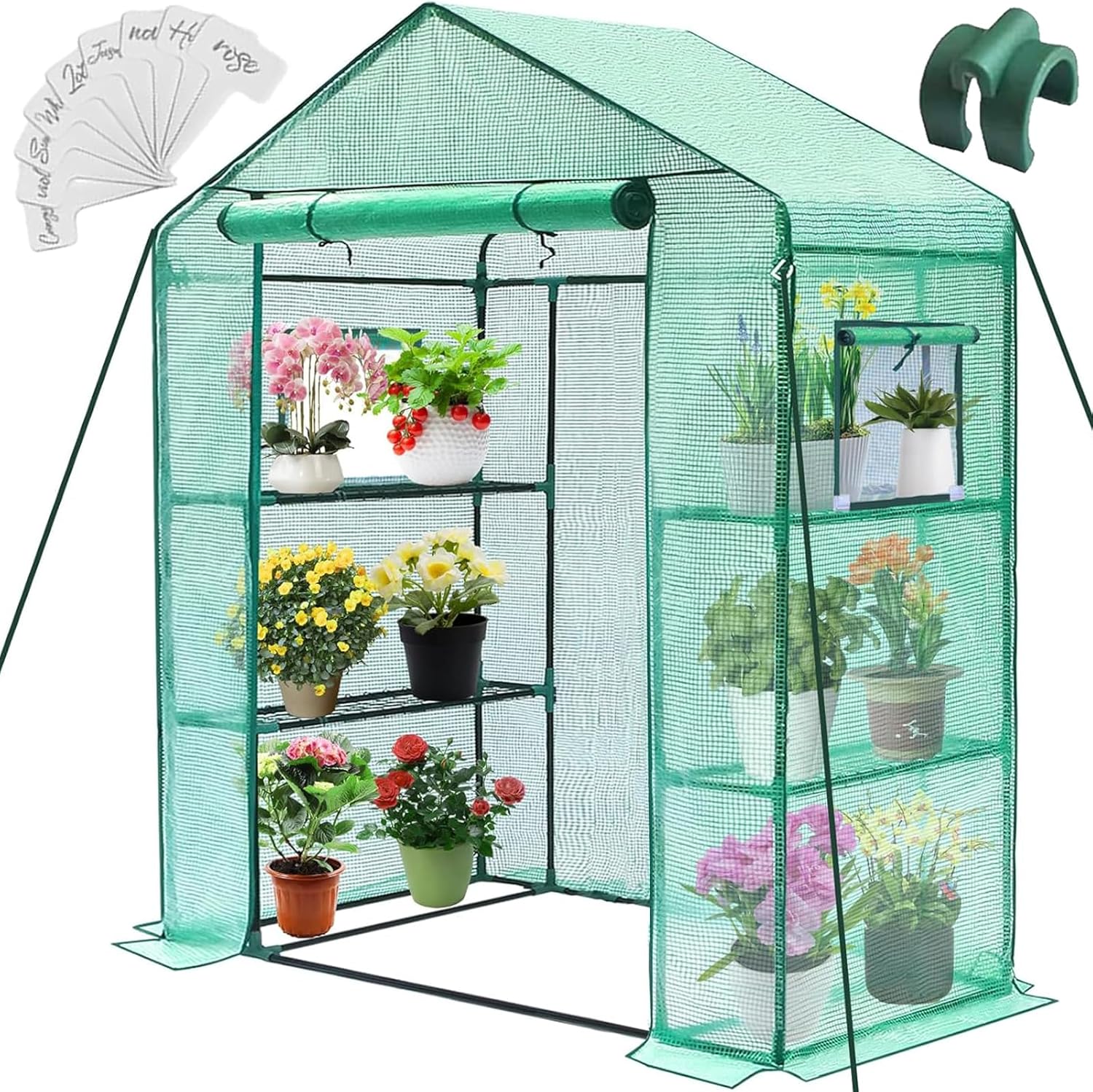
| Cover Material | Polyethylene (PE) |
|---|---|
| Frame Material | Metal |
| Closure Type | Zipper |
| Included Accessories | Ropes and ground stakes, plant tags, watering globes |
This Greengro small walk-in greenhouse creates a sheltered microclimate for potted plants and seedlings through winter and transitional seasons. It assembles without tools and uses a metal frame with a heavy PE cover, zippered door and screened ventilation windows to balance protection and airflow. The kit includes shelves, guy ropes and ground stakes so you can store up to a dozen small to medium pots and keep plants off the ground. The thick, grid-reinforced cover is waterproof and designed to cut UV exposure while resisting wind gusts commonly encountered in backyard settings. Because it is portable and detachable you can move it to a porch or garage when storms approach or take it down for storage. Important limitations are its small footprint and relatively light-duty frame compared with permanent greenhouses, so it is best for overwintering tender pots and starting seedlings rather than long-term heavy staging or large plants. Expect some care with anchoring in strong winds and routine inspection of the PE cover for wear.
Best for: Buyers wanting an inexpensive, no-fuss way to protect potted plants and seedlings through cold months who value portability and easy setup over permanent construction.
Less Ideal for: Gardeners who need a heavy-duty, permanent greenhouse to house large plants or long-term benching should consider sturdier, framed options instead.
- Thick, grid-reinforced PE cover provides waterproofing and UV reduction for winter protection
- Zippered door and screened windows offer easy access and adjustable ventilation
- Includes shelves, ropes and ground stakes so plants can be organized and the structure secured
- Tool-free assembly and detachable design make it easy to set up, relocate or store
- Small footprint limits the number and size of plants you can overwinter
- Lightweight frame and PE cover are less durable than rigid, permanent greenhouses in severe weather
Verdict: A budget-friendly, portable greenhouse that reliably shelters small pots and seedlings through winter while remaining easy to assemble and move.
INTER HUT 8×8 Pop-Up Walk-In Greenhouse

| Size | 8×8 |
|---|---|
| Cover Material | Polyethylene (PE) |
| Number Of Vents | 2 |
This INTER HUT 8×8 pop-up greenhouse is a walk-in shelter built for easy, seasonal gardening and seed starting. The center-lock pop-up frame lets one person erect it in minutes without tools, and the gable roof helps shed rain and snow while improving interior headroom. The PE cover provides basic UV protection and water resistance and the dual roll-up zippered doors plus two vents let you manage airflow; there are also power access ports for a heater or grow lights. With about 64 square feet of usable space you can fit shelving, multiple pots, or a small workbench, making it useful on a patio, balcony, or backyard for overwintering tender plants or extending the growing season. Practical limitations are typical for this class: the PE cover is less durable than rigid glazing and will need care from prolonged sun and wind exposure, and the steel frame requires proper anchoring in windy conditions. For homeowners wanting an inexpensive, easy-to-install greenhouse for year-round hobby gardening, this balances convenience and usable space well.
Best for: Homeowners who want an easy-to-assemble, moderately sized greenhouse to start seeds, protect plants from cold, and organize potted vegetables or flowers around the house.
Less Ideal for: Gardeners seeking a permanent, heavy-duty greenhouse with rigid glazing or professional commercial use should consider more robust framed structures instead.
- Pop-up center-lock frame for one-person, tool-free assembly
- Gable roof design improves runoff and interior headroom
- Dual roll-up zippered doors and vents for adjustable ventilation
- Power access ports for heaters or grow lights
- 64 sq ft walk-in space suitable for shelving and multiple plants
- Polyethylene (PE) cover is less durable than glass or polycarbonate and can degrade with prolonged UV and weather exposure
- Requires sturdy anchoring to stay secure in strong wind
Verdict: A quick-setup, walk-in greenhouse that gives homeowners usable growing space and simple climate control features without complex assembly.
EAGLE PEAK 8×6 Pop-Up Walk-In Greenhouse

| Size | 8×6 |
|---|---|
| Cover Material | Polyethylene (PE) |
| Frame Material | Alloy Steel |
| Number of Doors | 1 |
| Number Of Vents | 2 |
The EAGLE PEAK 8×6 pop-up greenhouse is a walk-in shelter aimed at extending the growing season and protecting plants from frost and light weather. Its preassembled alloy-steel frame uses extra steel reinforcement and a patented PeakPush center lock so one person can set it up quickly without tools. The PE cover is water-resistant and UV-filtering to help retain warmth and humidity, while the roll-up zippered door and mesh vents let you manage airflow and pest access. It includes stakes and guy ropes for added stability and a ground skirt you can weight down for windy conditions. Practical benefits include ample interior space for shelving or multiple pots, straightforward seasonal use for seed starting or fall protection, and replaceable covers or frames if components wear. Important limitations are that pop-up greenhouses are not engineered for heavy snow loads or sustained high winds so you will need to clear snow and add extra anchoring or weights during storms, and the PE cover will age faster than rigid glazing in strong sun over many seasons.
Best for: Gardeners who want an easy-to-assemble, walk-in greenhouse to start seeds, protect pots, and extend the growing season with minimal setup time and hands-on maintenance.
Less Ideal for: People needing a permanent, year-round structure for heavy snow loads or high-wind exposed sites should choose a rigid-glazed or anchored greenhouse instead.
- One-person, tool-free setup with patented center lock for fast assembly.
- Sturdy alloy-steel frame reinforced for better stability than typical pop-ups.
- Water-resistant, UV-filtering PE cover that traps warmth for season extension.
- Zippered roll-up door and mesh vents for adjustable ventilation and pest control.
- Not built to withstand heavy snow or severe winds without additional reinforcement.
- PE cover will wear faster than rigid glazing and may need replacement after prolonged sun exposure.
Verdict: Buy this if you want a roomy, one-person pop-up greenhouse that balances easy setup with a stronger steel frame for reliable seasonal protection.
EAGLE PEAK 6×4 Pop-Up Walk-In Greenhouse

| Size | 6×4 |
|---|---|
| Cover Material | Reinforced Polyethylene Film |
| Frame Material | Alloy Steel |
| Number of Doors | 1 |
| Number Of Vents | 2 |
The EAGLE PEAK 6×4 pop-up walk-in greenhouse is a compact, easy-to-use shelter for starting seeds, protecting tender plants from frost, and extending fall or early-winter growth. Its pre-assembled pop-up frame and patented center lock let one person erect the structure quickly without tools, and the reinforced polyethylene cover holds warmth and humidity while filtering light. Mesh windows and a roll-up zippered door provide straightforward ventilation and access, and included stakes and guy ropes help stabilize the unit in light to moderate winds. The alloy steel frame and powder-coated finish add durability compared with flimsy hobby tents, but because it is a lightweight pop-up design it still needs care in heavy snow or high winds and can require additional anchoring or weight bags for stormy weather. The greenhouse is best for patios, balconies, and small backyards where a simple, portable shelter is desirable rather than a permanent heavy-duty structure.
Best for: Buyers who want a small, reliable portable greenhouse they can set up alone to start seeds, overwinter plants, or extend the growing season in a patio or small yard with minimal fuss.
Less Ideal for: Gardeners needing a permanent, heavy-duty greenhouse for large crops or those in exposed, high-wind or heavy-snow climates should choose a framed, rigid structure instead.
- One-person, tool-free pop-up frame for quick setup
- Reinforced PE cover that retains warmth and is UV and water resistant
- Alloy steel frame with powder-coated finish for improved durability
- Zippered roll-up door and mesh windows for ventilation and easy access
- Pop-up design is not suited to heavy snow loads or extreme wind without extra anchoring
Verdict: A compact, one-person pop-up greenhouse that delivers easy setup and season-extension performance for small-space gardeners.
Choosing the Right Hobby Greenhouse: Key Factors to Consider
Structure Durability and Wind Resistance
A greenhouse that cannot handle typical wind and weather in your area will quickly become more trouble than help. Look at frame material, connection hardware, and reported wind ratings. Heavier-gauge aluminum or reinforced steel frames resist bending and last longer than thin tubing in exposed yards.
Anchoring matters as much as material. A well-anchored frame with ground spikes, a concrete perimeter, or integrated base rails reduces wobble and prevents uplift in gusts. Consider local wind and snow exposure when deciding whether to prioritize heavier construction.
Glazing Type and Light Transmission
Different glazing materials change how much light reaches plants and how well the greenhouse retains heat. Polycarbonate panels often balance light diffusion, impact resistance, and insulation. Single-layer polyethylene film transmits light well but offers little insulation and gets damaged more easily.
For seed starting and young transplants, even diffused light is preferable to harsh direct sun. Also consider UV resistance and how glazing ages; some plastics yellow or become brittle over a few seasons, reducing both light quality and structural integrity.
Ventilation and Temperature Control
A hobby greenhouse can overheat quickly on warm days, stressing plants. Look for adjustable vents, roof vents, louvered panels, or the ability to add automatic vent openers. Good cross-ventilation reduces disease pressure and helps regulate humidity during active growth periods.
Think about options for passive and active ventilation. Passive systems rely on placement and venting geometry, while active options include fans and thermostatic vent openers. The ability to add shade cloth or cooling systems matters in hotter climates.
Usable Interior Layout and Shelving
Total square footage is less important than how you can use that space. Narrow walkways and awkward roof slopes limit shelf placement and workability. Look for straight sidewalls, a door wide enough to bring in pots, and a roof height that allows you to work comfortably and stack shelving.
Modular shelving or anchoring points for hanging baskets increase flexibility. Consider whether the interior allows benching along the length or requires center aisles that reduce usable surface area.
Assembly Complexity and Required Tools
A hobby greenhouse is only useful if you can get it assembled and maintained within your time and skill limits. Some designs bolt together with straightforward fasteners, while others require cutting, drilling, or specialized tools. Check whether instructions are clear and if additional help is recommended.
Also consider seasonal disassembly needs. If you plan to move the structure or take it down for winter, choose a design that is manageable to dismantle and reassemble without specialized equipment.
Footprint, Site Requirements, and Foundations
Where you place the greenhouse affects sunlight, drainage, and longevity. Choose a site with maximum morning and midday sun, away from large shade-casting trees. Ensure the ground can be leveled and has good drainage to prevent water pooling around the base.
Decide on the foundation type you need. Small hobby greenhouses can often sit on compacted gravel or treated timber bases, while larger setups may benefit from concrete footings or perimeter foundations to improve stability and anchoring.
Sizing Strategies for Small Gardens
Start by listing the tasks you want the greenhouse to perform. Seed starting and overwintering a few tender pots require much less space than growing vegetables all season. Match the greenhouse footprint to those tasks so the interior layout supports benches, pot circulation, and equipment.
If space is tight, prioritize straight sidewalls and taller end walls to maximize usable shelving. A slightly longer and narrower footprint often fits better in small yards than a square unit because it leaves more usable perimeter wall for shelving and walkways.
- Plan for at least a 2-foot-wide walkway for comfortable pot movement.
- Allow extra bench space for staging pots and tools.
- Measure door width to ensure large pots can get inside.
Placement and Orientation
Orient the greenhouse so its longest side faces south or southeast in temperate climates to capture the most winter sun. In very hot climates, east-facing orientation reduces afternoon heat buildup and may make ventilation easier to manage.
Avoid placing the structure right under large trees. Falling debris can damage glazing and roots can destabilize foundations, while nearby shade reduces light levels inside.
- Keep at least a few feet clearance from fences and structures for air movement.
- Check local setback rules and neighbor sightlines before installation.
Managing Heat and Humidity Seasonally
Season extension depends on trapping heat on cooler nights and preventing heat stress on warm days. Use insulation strategies in winter such as bubble wrap or thermal curtains for small hobby greenhouses to boost nighttime temperatures. Ventilation, shade cloth, and evaporative cooling are the main tools for hot months.
Monitor humidity to avoid fungal problems. Good airflow, removing spent foliage, and avoiding overwatering are practical daily habits that protect plant health without adding complicated systems.
- Install vents that allow both low and high openings to encourage stack effect airflow.
- Use a simple thermometer-hygrometer to track conditions before investing in automation.
Accessory Planning and Upgrades
Think about the accessories you might need up front so the greenhouse can accept them. Common additions include shelving, automatic vent openers, benching systems, irrigation lines, and small heaters. Verify that frame and glazing attachment points can support added weight for shelving or hanging baskets.
Plan power access if you intend to use fans, heaters, or grow lights. Running electricity safely to a greenhouse usually requires outdoor-rated cabling and outlets with ground-fault protection.
- Choose modular shelving for flexible layout changes.
- Select accessories rated for outdoor greenhouse conditions.
Seasonal Maintenance Checklist
Regular checks extend the life of a hobby greenhouse. Inspect glazing for cracks or clouding each spring, tighten loose fasteners, and clear gutters and drainage paths. Replace any damaged sealants or perimeter anchoring if the frame shows movement after storms.
Keep the interior tidy to reduce pest and disease pressure. Clean benches between plant cycles and remove debris that traps moisture. A simple routine minimizes long-term repairs and keeps the greenhouse functioning through multiple seasons.
- Perform a pre-season inspection for anchors and vent operation.
- Wipe down glazing with mild soap and water to maintain light transmission.
How We Chose the Best Hobby Greenhouse
We focused on features that affect how a hobby greenhouse performs day to day in an amateur garden. Key evaluation criteria included structural durability against wind and snow loads, ventilation and airflow options for summer control, available grow space relative to footprint, and ease of assembly and ongoing maintenance. We also considered glazing type and light transmission, plus accessory compatibility for shelving, shelving layout, and climate control devices. Products were excluded if they were clearly sized or specified for commercial production or only suitable as temporary pop-up covers. Our shortlist favors greenhouses that combine reliable structure with practical ventilation, straightforward assembly, and adaptable interior layouts so gardeners can actually use them across seasons. These criteria align with the score metrics used for each entry and reflect dimensions buyers can verify from specs and user reports.
FAQ
How big should a hobby greenhouse be for starting seedlings and a few overwintering pots?
A compact greenhouse of roughly 6 by 8 feet often provides enough bench space for seed trays, a few staging areas, and room to overwinter pots. The exact size depends on how many trays you start at once and whether you need standing room for a potting bench.
Do I need a foundation for a small hobby greenhouse?
Small greenhouses can sit on compacted gravel or treated timber bases if the ground is level and drains well. Larger or exposed installations benefit from concrete footings or perimeter foundations to improve anchoring and stability in wind.
What glazing is best for a hobby greenhouse in a temperate climate?
Multiwall polycarbonate panels are a common choice because they balance light diffusion, impact resistance, and insulation. Single-layer plastic film is cheaper but offers less insulation and shorter service life, while glass gives excellent light but is heavier and requires a sturdier frame.
How do I prevent overheating in summer?
Use a combination of venting, shade cloth, and, if needed, small fans or evaporative cooling. Placing vents for cross-ventilation and using automatic vent openers helps maintain stable temperatures with minimal daily intervention.
Can I add shelving and heating later if I buy a basic model?
Often yes, as long as the frame has attachment points or the manufacturer provides compatible accessories. Check load capacity for shelving and ensure any heater is sized for the greenhouse volume and used with proper ventilation and safety measures.
Final Verdict
Choosing a hobby greenhouse comes down to balancing structural strength, light quality, and the internal layout you need for the gardening tasks you plan to do. Prioritize a sturdy frame and glazing that suit your climate, and make sure ventilation and shelving options match how you work. A modestly sized, well-vented greenhouse with adaptable shelving will serve most hobby gardeners best and minimize seasonal headaches. Focus on the features and tradeoffs described here and pick the design that fits your space, local conditions, and the plants you want to grow.
