

Note: This article contains affiliate links. If you click on these links and make a purchase, I may earn a small commission at no extra cost to you. This helps support my research and content. Read my full affiliate disclosure here.
Choosing the right walk-in greenhouse changes what you can grow and when. The right structure offers frost protection, stable humidity for seedlings, and enough room to move and work comfortably. For gardeners with limited outdoor space or those wanting to extend the growing season, the options shortlisted here balance usable floor area, weather resistance, and airflow. This guide covers seven top walk-in greenhouses that represent the best mix of materials, size, and ventilation for varied garden situations. We evaluate each pick against practical criteria gardeners care about, including frame strength, covering longevity, and usability in real-season conditions. Read on to find the fit for your plot and routine before the product-specific reviews below.
Top Picks at a Glance
| Best Overall The best all-around choice for most situations | IDEALHOUSE 6×8 ft Walk-In Greenhouse with Polycarbonate Panels and Aluminum Frame |  |
| Best Quality Built to a higher standard if you want something more solid | Backyard Discovery Bellerose XL Cedar Walk-In Greenhouse with Polycarbonate Panels and Pergola |  |
| Best Value The sweet spot between price and what you get | VEVOR Walk-In Tunnel Greenhouse, 14.6 x 6.4 x 6.3 ft, Galvanized Steel Frame |  |
| Best Budget The cheapest option that still gets the job done reliably | heyfurni Walk-In Greenhouse with 3-Tier Shelving and PE Cover |  |
| Highest Rated A top-rated pick with lots of positive feedback | EROMMY 8×16 ft Polycarbonate Walk-In Greenhouse with Double Hinged Doors |  |
| Most Popular A crowd favorite that many people choose with confidence | EAGLE PEAK 8×6 Pop-Up Walk-In Greenhouse |  |
| Best Seller A high-volume bestseller chosen again and again | EAGLE PEAK 8×6 Pop-Up Walk-In Greenhouse (Clear/White) |  |
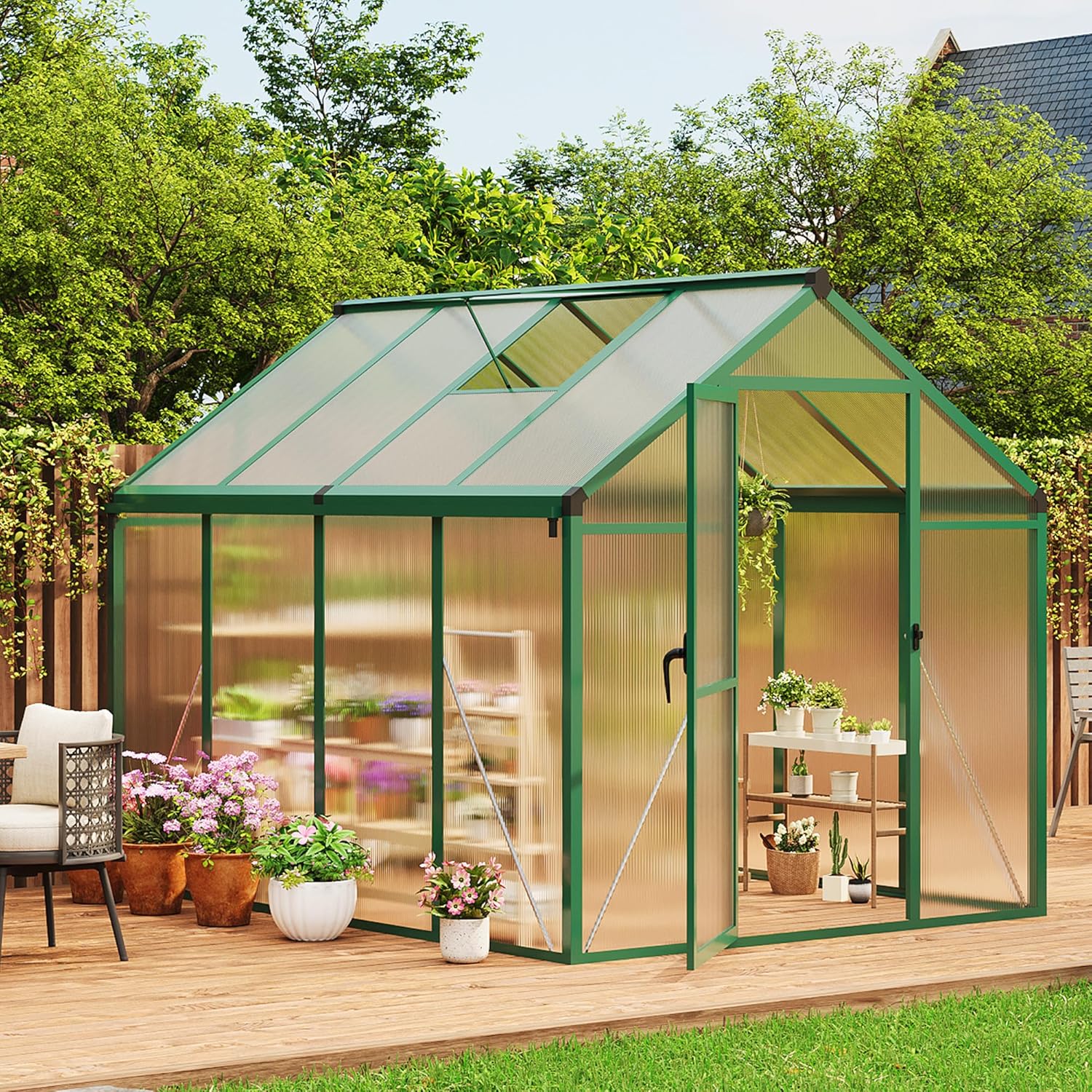
IDEALHOUSE 6×8 ft Walk-In Greenhouse with Polycarbonate Panels and Aluminum Frame
| Size | 6×8 FT |
|---|---|
| Cover Material | Polycarbonate (PC) |
| Frame Material | Aluminum Steel |
| Number Of Vents | 1 |
| Indoor Outdoor Usage | Outdoor |
This IDEALHOUSE 6×8 walk-in greenhouse is designed for gardeners who want a durable, easy-to-assemble sheltered growing space. It uses reinforced 720 g/m² polycarbonate panels that transmit light while blocking most UV and slide into an aluminum-steel frame with a slide-in assembly system that speeds setup. The greenhouse includes a roof vent and adjustable ventilation to help control temperature and airflow, plus a gutter-style water management feature for rainwater collection. In practice the structure provides a roomy footprint for seed-starting, overwintering tender plants, or extending the growing season for vegetables and ornamentals. Expect relatively straightforward assembly if you follow the instructions, but plan to handle heavy components carefully and allow for two shipments. The main limitations are the single roof vent for airflow control and the need to anchor the unit properly in exposed sites; the frame and panels are sturdy for typical garden conditions but may require additional bracing in high-wind locations.
Best for: Serious hobby gardeners who prioritize a robust, season-extension structure and want a relatively fast-build walk-in greenhouse for regular cultivation and overwintering of plants.
Less Ideal for: People needing a lightweight, ultra-portable tunnel-style greenhouse for quick seasonal use or gardeners in very windy coastal sites without plans to add extra anchoring or bracing.
- Reinforced 720 g/m² polycarbonate panels provide strong light transmission while blocking most UV
- Aluminum-steel frame offers solid structural support for outdoor use
- Slide-in panel assembly and clear instructions speed setup compared with conventional builds
- Integrated gutter system enables simple rainwater drainage and collection
- Top roof vent and adjustable ventilation help regulate internal temperature
- Only one roof vent limits fine-grained airflow control for larger heat loads
- Heavy components and sharp edges require careful handling during assembly
Verdict: A sturdily built, performance-focused 6×8 walk-in greenhouse that speeds assembly while providing durable protection for season-extension and overwintering.
Backyard Discovery Bellerose XL Cedar Walk-In Greenhouse with Polycarbonate Panels and Pergola

| Size | 13×11 ft |
|---|---|
| Cover Material | Polycarbonate (PC) |
| Frame Material | Wood |
| Number Of Vents | 2 |
| Closure Type | Sliding Doors |
The Bellerose XL is a purpose-built backyard greenhouse that gives hobby and performance-minded gardeners a robust year-round growing space. It combines a cedar structural frame with commercial-grade 4-wall polycarbonate panels to improve heat retention and withstand heavy snow and high winds when properly anchored. Use it as a seed-starting nursery, winter protection for tender plants, or a staging area for larger projects thanks to five fixed staging shelves, eight moveable plant hooks, hose hook-ups inside and out, and a built-in workstation. The temperature-activated exhaust fan plus two easy-open windows provide both forced and natural ventilation for better climate control. The integrated PowerPort (three outlets and three USB ports) makes it simple to add lights, fans, or heaters. Practical strengths are its weather-tested durability, generous interior space, and thoughtful utility features that reduce trips for extension cords and hoses. Expect a multi-person assembly and the need for a solid foundation and anchoring; it is heavy and requires planning for installation and electrical hookup.
Best for: Gardeners who want a durable, high-capacity backyard greenhouse to extend seasons and run serious growing projects and who are prepared to plan for installation and utilities.
Less Ideal for: Casual gardeners seeking a small, portable greenhouse or anyone who needs a simple, instant setup without hiring help or preparing a permanent foundation.
- Commercial-grade 4-wall polycarbonate panels for improved heat retention and durability
- Cedar frame naturally resistant to rot and engineered to handle heavy snow loads and high winds when anchored
- Integrated PowerPort with three outlets and three USB ports for powering lights, fans, and accessories
- Built-in workstation with multiple fixed shelves, moveable hooks, and interior/exterior hose hook-ups for organized, efficient workflow
- Temperature-activated exhaust fan and two operable windows for active and passive ventilation control
- Large, heavy kit requires multiple people, a stable foundation, and time-consuming assembly
- Electrical supply and anchoring are required but not included
- Stain saturation may vary across panels which could affect appearance
Verdict: If you need a rugged, well-equipped backyard greenhouse for season extension and high-performance growing, this cedar-built Bellerose XL delivers the space, insulation, and utility features to support serious gardening.
VEVOR Walk-In Tunnel Greenhouse, 14.6 x 6.4 x 6.3 ft, Galvanized Steel Frame

| Cover Material | Polyethylene (PE) |
|---|---|
| Frame Material | Alloy Steel |
| Number Of Vents | 8 |
| Closure Type | Zipper |
This VEVOR walk-in tunnel greenhouse is a sizeable, value-oriented hoop house built from galvanized steel pipes and a heavy-duty PE cover to protect plants from weather and extend the season. It assembles into a walk-in tunnel with a roll-up zippered door and eight mesh windows that use Velcro closures to balance ventilation with insect exclusion. The reinforced U-stakes, diagonal frame braces, and double-stitched seams improve stability and tear resistance compared with thinner hobby covers. Typical uses are starting seedlings, protecting tender vegetables and herbs, or fitting multiple shelving units for small-scale vegetable production. Expect practical benefits: easy access for watering and pruning, improved warmth in cooler months, and airflow control to reduce mildew. Limitations are typical for this price point: the thin-walled 0.02-inch tubing and PE cover will not perform like rigid polycarbonate or permanent greenhouses in very high winds or heavy snow, and periodic retightening and anchoring are required to maintain structure and cover tension.
Best for: Gardeners who want an inexpensive, easy-access greenhouse to start seedlings, protect vegetables, and extend the season without investing in a permanent structure.
Less Ideal for: People seeking a permanent, all-season greenhouse for heavy snow loads or commercial-scale production should consider rigid-frame polycarbonate or metal greenhouses instead.
- Large walk-in interior for easy access and multiple shelving options
- Galvanized steel frame with diagonal braces and U-stakes for improved stability
- Heavy-duty 140 g/m² PE cover with double-stitched seams for better tear resistance
- Eight mesh windows plus a roll-up zippered door for adjustable ventilation and pest control
- PE cover and 0.02-inch wall thickness tubing are vulnerable in prolonged extreme weather compared with rigid greenhouse materials
Verdict: A roomy, low-cost walk-in tunnel greenhouse that gives budget-focused gardeners a practical way to extend the growing season and protect plants.
heyfurni Walk-In Greenhouse with 3-Tier Shelving and PE Cover

| Cover Material | Polyethylene (PE) |
|---|---|
| Frame Material | Metal |
| Number of Doors | 1 |
| Closure Type | Zipper |
| Weight Capacity | Maximum weight: 17.6 pounds |
This compact walk-in greenhouse is aimed at gardeners who want an inexpensive way to start seedlings, protect pots, and extend the season. It assembles from powder-coated metal tubes and a UV-resistant polyethylene cover with a zippered roll-up door and side windows for ventilation. Inside are three wired shelves per side that hold seed trays and small to medium pots; each shelf is rated for about 17.6 pounds. The package includes ground pegs, ropes, and nylon ties to improve stability on calmer sites. Practical benefits are clear: it creates warmer, more humid conditions for earlier starts, keeps out small animals, and organizes plants vertically to save footprint. Important limitations are its lightweight construction and PE cover, which are less durable than glass or polycarbonate in heavy wind or long-term sun exposure, and the modest shelf weight limit that rules out very large pots or heavy grow lights. Assembly is straightforward but benefits from a rubber mallet and at least two people to steady the frame during setup.
Best for: Buyers on a tight budget who need a portable, easy-to-assemble walk-in greenhouse to start seedlings, overwinter tender plants, or organize many small pots in a small yard or balcony.
Less Ideal for: Those seeking a permanent, heavy-duty greenhouse for year-round use, large structural loads, or exposure to frequent strong winds should consider sturdier polycarbonate or framed glass options.
- Good footprint for balconies, patios, and small backyards with walk-in access
- UV-resistant PE cover and roll-up zippered door for ventilation and easy access
- Six wired shelves provide organized vertical growing and can be removed for taller plants
- Includes ground pegs, ropes, and nylon ties to increase stability during mild wind
- Lightweight frame that is easy to move, assemble, and disassemble
- PE cover and lightweight frame are not as long-lasting or windproof as rigid greenhouses
- Shelf load limit (about 17.6 lb) restricts use with very heavy pots or large equipment
Verdict: A very affordable, easy-to-assemble walk-in greenhouse that maximizes small-space growing with built-in shelving and basic weather protection.
EROMMY 8×16 ft Polycarbonate Walk-In Greenhouse with Double Hinged Doors

| Cover Material | Polycarbonate (PC) |
|---|---|
| Frame Material | Aluminum |
| Number of Doors | 2 |
| Number Of Vents | 2 |
| Size | 8×16 FT |
This EROMMY 8×16 ft greenhouse is built for gardeners who want a stable, year-round structure for seedlings, potted plants, and overwintering. It uses a heavy aluminum framework, iron roof bars and bracing, and a galvanized steel base with long ground stakes to reduce wobble in windy conditions. The 4mm twin-wall polycarbonate panels offer UV filtration and light diffusion while the slide-in panel system simplifies assembly and helps keep panels secure. Practical features include a wide double-hinged door that accommodates wheelbarrows and tall plants, plus two adjustable roof vents with five position settings to tune temperature and humidity. The package arrives in multiple cartons with hardware and instructions for DIY setup. Expect a multi-hour assembly that will require two people and careful anchoring to achieve the claimed wind resistance. The greenhouse is a solid option where structural stability and light control are priorities, though professional anchoring or bolting to a firm foundation may be needed in very exposed sites.
Best for: Gardeners who prioritize a durable, stable greenhouse for year-round growing and who plan to invest time in a proper DIY assembly and anchoring process.
Less Ideal for: Casual users who want a quick pop-up or temporary shelter or those unwilling to assemble a large kit with multiple cartons and hardware.
- Reinforced galvanized steel base and long ground stakes for improved wind resistance
- Sturdy aluminum frame with iron bracing for year-round structural stability
- 4mm twin-wall polycarbonate panels that diffuse light and block harsh UV
- Wide double-hinged doors that allow easy access for wheelbarrows and large plants
- Adjustable two roof vents with five positions for precise ventilation control
- Assembly is time-consuming and typically requires two people
- May need additional anchoring or bolting on very exposed sites to meet wind performance claims
Verdict: Buy this greenhouse if you need a robust, professionally braced walk-in structure that prioritizes stability and light control for reliable year-round gardening.
EAGLE PEAK 8×6 Pop-Up Walk-In Greenhouse

| Size | 8×6 |
|---|---|
| Cover Material | Polyethylene (PE) |
| Frame Material | Alloy Steel |
| Number of Doors | 1 |
| Number Of Vents | 2 |
The EAGLE PEAK 8×6 pop-up greenhouse is a walk-in shelter aimed at extending the growing season and protecting plants from frost and light weather. Its preassembled alloy-steel frame uses extra steel reinforcement and a patented PeakPush center lock so one person can set it up quickly without tools. The PE cover is water-resistant and UV-filtering to help retain warmth and humidity, while the roll-up zippered door and mesh vents let you manage airflow and pest access. It includes stakes and guy ropes for added stability and a ground skirt you can weight down for windy conditions. Practical benefits include ample interior space for shelving or multiple pots, straightforward seasonal use for seed starting or fall protection, and replaceable covers or frames if components wear. Important limitations are that pop-up greenhouses are not engineered for heavy snow loads or sustained high winds so you will need to clear snow and add extra anchoring or weights during storms, and the PE cover will age faster than rigid glazing in strong sun over many seasons.
Best for: Gardeners who want an easy-to-assemble, walk-in greenhouse to start seeds, protect pots, and extend the growing season with minimal setup time and hands-on maintenance.
Less Ideal for: People needing a permanent, year-round structure for heavy snow loads or high-wind exposed sites should choose a rigid-glazed or anchored greenhouse instead.
- One-person, tool-free setup with patented center lock for fast assembly.
- Sturdy alloy-steel frame reinforced for better stability than typical pop-ups.
- Water-resistant, UV-filtering PE cover that traps warmth for season extension.
- Zippered roll-up door and mesh vents for adjustable ventilation and pest control.
- Not built to withstand heavy snow or severe winds without additional reinforcement.
- PE cover will wear faster than rigid glazing and may need replacement after prolonged sun exposure.
Verdict: Buy this if you want a roomy, one-person pop-up greenhouse that balances easy setup with a stronger steel frame for reliable seasonal protection.
EAGLE PEAK 8×6 Pop-Up Walk-In Greenhouse (Clear/White)

| Size | 8×6 |
|---|---|
| Cover Material | Polyethylene (PE) |
| Frame Material | Alloy Steel |
| Number of Doors | 2 |
| Number Of Vents | 2 |
The EAGLE PEAK 8×6 pop-up greenhouse is a walk-in shelter that speeds seed starting and protects plants through cool weather. Its preassembled alloy-steel frame uses a patented PeakPush center lock so one person can raise the structure quickly without tools, and the heavier steel frame offers greater stability than typical lightweight pop-ups. The polyethylene cover is water-resistant and UV-treated to retain warmth and humidity while filtering sunlight, and two roll-up zippered doors plus mesh windows let you manage ventilation. It includes stakes and guy ropes for added security and can be reinforced with weights or snow clearing in bad weather. Expect straightforward use for starting seedlings, overwintering potted plants, and extending the growing season; shelving accessories can increase usable space. Limitations are typical of pop-up greenhouses: it is not a rigid permanent structure, needs anchoring in high wind or snow, and the PE cover will eventually need replacement with prolonged sun exposure.
Best for: Buyers who want a dependable, easy-to-assemble greenhouse to start seedlings and extend the growing season without hiring help, and who prioritize simple setup and reliable customer support.
Less Ideal for: Gardeners seeking a permanent, heavy-duty polycarbonate or glass greenhouse for year-round structural resistance or those needing large commercial-scale capacity.
- One-person PeakPush center lock enables fast, tool-free setup
- Alloy steel frame is heavier and more stable than many pop-up models
- UV-resistant PE cover retains warmth and humidity for season extension
- Roll-up zippered doors and mesh windows provide adjustable ventilation
- Includes stakes and guy ropes for anchoring in light to moderate wind
- Not designed as a permanent rigid structure and requires reinforcement for strong wind or heavy snow
- PE cover will degrade over time with extended sun exposure
Verdict: If you want a reliable, one-person setup greenhouse to extend your growing season with better-than-average frame stability, this pop-up is an excellent choice.
Choosing the Right Walk-In Greenhouse: Key Factors to Consider
Frame Strength and Anchoring
A greenhouse frame determines how the structure handles wind, snow, and everyday bumps. Metal frames vary in tube thickness and coating, and thicker, properly braced frames resist deforming in storms. Anchoring options like ground spikes, concrete footings, or screw anchors keep the greenhouse from shifting on windy sites.
Consider the local climate when evaluating frame specs. If your area gets heavy snow or strong gusts, look for models with cross-bracing and higher load ratings. For patios or rooftop situations where you cannot drive anchors into the soil, consider freestanding frames that allow ballast or weighted anchoring methods.
Cover Material and UV Resistance
The covering controls light transmission, insulation, and durability. Polyethylene films are common and economical but vary by thickness and UV stabilization; thicker, UV-treated films last longer and reduce brittleness. Polycarbonate panels offer better insulation and impact resistance, and twin-wall sheets trap air for improved thermal performance.
Think about how long you expect the structure to remain in place. A seasonal cover might be fine for occasional frost protection, while year-round growing demands a cover that resists yellowing and tearing. Also factor in how easy replacement panels or covers are to source when the original wears out.
Ventilation and Climate Control
Proper airflow prevents overheating, reduces humidity, and lowers disease pressure. Look for adjustable vents, roll-up doors, and options for passive vents placed near the ridge to encourage convective airflow. Some designs allow adding small fans or automatic vent openers for hands-off climate control.
The size and placement of vents matter as much as total vent area. For a compact walk-in greenhouse, a single high ridge vent combined with side openings can create effective cross-flow. Consider how you will manage shading and ventilation during heat waves and how easy it is to operate vents while working inside.
Usable Interior Layout and Access
A walk-in greenhouse should give you enough space to pot, move plants, and store tools. Look past total square footage to evaluate door width, headroom, and shelf compatibility. Narrow aisles and low ridge heights make working awkward even if the footprint sounds generous.
Consider how you will arrange benches, rolling plant stands, and irrigation. Models with integrated shelving or pre-drilled mounting points for shelves simplify setup. Also check door type and operation; sliding or wide zipper doors make it easier to bring in larger plants and equipment.
Assembly, Maintenance, and Replacement Parts
Ease of assembly affects how quickly you can use the greenhouse and whether you need extra help. Frames that use clear, labeled connectors and modular panels are faster to erect. Maintenance includes cleaning the cover to maintain light transmission, periodically checking fasteners, and replacing worn seals or panels.
Availability of replacement covers, panels, and connector parts extends the useful life of a greenhouse. Models designed for tool-free panel removal or with common-size panels make future repairs less of a headache.
Site Preparation and Foundation Options
The site you choose influences draining, sun exposure, and how sturdy the greenhouse will sit. A level, well-drained spot prevents standing water and reduces corrosion risk. Southern exposure generally provides the best winter light, while nearby trees can cast shade or drop debris on the cover.
Foundations can range from simple compacted gravel beds to concrete pads. A raised timber base can improve anchoring and soil warmth. Consider how you will route irrigation and electricity for supplemental lights or fans when planning the location and foundation type.
Sizing for Your Garden Space
Selecting the right size balances what you want to grow with the footprint you can spare. For seed starting and a few planters, a compact walk-in that fits on a small patio may be ideal. If you plan to overwinter larger potted plants or run multiple bench rows, prioritize length and headroom so you can move freely.
Measure gate access and delivery paths before choosing a model. A greenhouse that does not pass through your property gate will be hard to place. Also think about seasonal access: make sure doors can open fully where snow drifts or stacked containers might otherwise block them.
- Plan for work aisles at least 24 to 36 inches wide for comfortable movement.
- Check door clearances for wheelbarrows or cart-based potting.
- Factor in future expansion or additional shelving needs when choosing length.
Anchoring and Wind Protection Strategies
Wind is one of the main causes of greenhouse damage. Even sturdy frames can fail if not anchored correctly. Use the anchor system recommended for the chosen model and supplement with soil screws or concrete footings in exposed locations.
Landscaping can reduce wind exposure. Placing the greenhouse near a windbreak such as a fence or hedge offers protection, but leave enough clearance to prevent shading and airflow problems.
- Use ground anchors for soft soil and concrete anchors for solid bases.
- Consider tie-down straps and cross-bracing in high-wind areas.
- Maintain a vegetative buffer to reduce wind gusts without blocking light.
Managing Heat and Humidity
Small walk-in greenhouses can overheat quickly on sunny days. Passive ventilation with ridge vents and side openings helps, but shading cloth and strategic venting during midday will keep temperatures in a healthy range. Humidity control reduces fungal issues; use vents, fans, and avoid overwatering.
For those growing through winter, insulating measures such as bubble wrap on colder nights and sealing gaps at the base can protect plants while still allowing ventilation when needed.
- Install thermometer and hygrometer to monitor inside conditions.
- Use shade cloth when outside temperatures exceed crop tolerance.
- Employ automatic vent openers for consistent temperature control.
Seasonal Use and Crop Planning
Decide how you will use the greenhouse across seasons before selecting a model. Year-round use requires robust covers and good ventilation to handle summer heat and winter cold. A season-only greenhouse may allow for lighter materials and simpler anchoring.
Plan crop rotation and bench layout so that heavy or cold-sensitive plants are placed where they get the most warmth. If you will start transplants, allocate bench height and light exposure accordingly.
- Reserve north-side shelving for hardier plants and seedlings.
- Rotate crops to manage soil-borne pests if using in-ground beds.
- Match bench height to ergonomic potting work to reduce back strain.
Maintenance Checklist for Longevity
Regular maintenance extends a greenhouse's life. Clean the cover to keep light transmission high, inspect frame joints and tighten fasteners each season, and replace any torn cover material promptly. Check seals around doors and vents to maintain stable microclimates.
Keep an inventory of small spare parts like fasteners and clamps so you can make quick repairs. Seasonal inspection after winter storms will catch issues early and prevent larger failures.
- Wash covers with mild soap and soft brushes to avoid scratching.
- Lubricate moving door and vent hardware annually.
- Replace degraded ties and clips before high-wind seasons.
How We Chose the Best Walk-In Greenhouse
We narrowed the field by focusing on attributes that matter in everyday garden use. Primary evaluation criteria included frame strength and anchoring to resist wind and snow loads; covering material durability against UV and tearing; ventilation and airflow control to prevent overheating and disease; usable interior layout and access for potting, shelving, and wheelbarrow movement; and ease of assembly plus availability of replacement parts. We prioritized options with clear material specifications and gardener-oriented features like roll-up vents, adjustable vents, or integrated shelving brackets. Exclusions included temporary pop-up models designed only for brief frost protection and structures under minimal anchoring requirements. We also excluded greenhouses lacking any description of UV stabilization or with ambiguous frame ratings. The result is a list that favors reliable, season-ready walk-in greenhouses suitable for patios, small yards, and allotments. Scoring emphasized real-world durability, ventilation control, and workspace utility rather than novelty features that do not improve growing outcomes.
FAQ
How much ventilation does a walk-in greenhouse need?
Ventilation needs depend on size and local climate. Most walk-ins benefit from both low side vents and a high ridge vent to create cross-flow. In hot months, aim to exchange greenhouse air several times per hour using passive vents or small fans.
Can a walk-in greenhouse handle snow?
Some walk-ins are rated for light to moderate snow loads, but many lightweight polyethylene models are not designed for heavy accumulation. If you expect snow, choose a design with pitched roofs and robust framing and plan to clear snow promptly to prevent collapse.
Is a foundation necessary for a walk-in greenhouse?
A foundation is not always required but improves stability and longevity. Simple foundations like compacted gravel or timber bases help drainage and anchoring. Solid foundations are recommended for permanent installations or in windy sites.
How long do greenhouse covers typically last?
Cover lifespan varies with material and exposure. UV-treated polyethylene films often last one to five years depending on thickness and sun exposure. Polycarbonate panels can last a decade or more with proper maintenance. Local sunlight intensity and weather extremes have the biggest impact.
Can I add shelves and benches to any walk-in greenhouse?
Many walk-ins allow shelving, but compatibility depends on frame design and available attachment points. Look for models with pre-drilled holes, crossbars, or compatible brackets. Freestanding shelving is an alternative when attachment points are limited.
Final Verdict
Pick a walk-in greenhouse that matches your climate and how you intend to use it. Prioritize a sturdy frame and appropriate cover material if you need year-round protection, and focus on ventilation and interior layout for comfortable daily use. Accept tradeoffs: lighter covers cost less but need replacement sooner, while rigid panels give better insulation but increase upfront complexity. Use the evaluation criteria above to match a greenhouse to your site, crops, and maintenance willingness so you can grow with confidence.
