

Note: This article contains affiliate links. If you click on these links and make a purchase, I may earn a small commission at no extra cost to you. This helps support my research and content. Read my full affiliate disclosure here.
If you care for seedlings, herbs, or a few compact flowering plants in a 2×2 tent or shelf, the right 2×2 grow light makes a visible difference in plant vigor and uniformity. Poor light coverage leaves patchy growth and stretched stems, while the right fixture gives even canopy light, appropriate spectrum, and manageable heat for a small space. This guide covers seven shortlisted 2×2 grow lights suited to compact indoor gardens. We focus on how each option handles spectrum, uniform coverage, heat management, and energy use so you can match a fixture to your grow footprint and plant mix. Read on for practical buying factors and the editorial criteria used to choose these top picks.
Top Picks at a Glance
| Best Overall The best all-around choice for most situations | VIVOSUN LumaLight 100W LED Full Spectrum Grow Light |  |
| Best Quality Built to a higher standard if you want something more solid | AC Infinity IONBOARD S22 LED Grow Light Board (2×2) with Dimming Control |  |
| Best Value The sweet spot between price and what you get | MARS HYDRO FC-E1500 150W Full-Spectrum LED Grow Light |  |
| Best Budget The cheapest option that still gets the job done reliably | BESTVA DC1000 100W Bloom Boost LED Grow Light for 2×2/2×3 ft Tents |  |
| Highest Rated A top-rated pick with lots of positive feedback | Spider Farmer G1500 150W LED Grow Light (App Controlled) |  |
| Most Popular A crowd favorite that many people choose with confidence | Spider Farmer SF1000 100W Full Spectrum LED Grow Light |  |
| Best Seller A high-volume bestseller chosen again and again | MARS HYDRO TS1000 150W Full Spectrum LED Grow Light |  |
VIVOSUN LumaLight 100W LED Full Spectrum Grow Light

| Wattage | 100 watts |
|---|---|
| Light Source Type | LED |
| Number of Light Sources | 336 |
| Is Waterproof | True |
| Control Method | Remote |
The VIVOSUN LumaLight 100W is a compact full-spectrum LED grow light intended for indoor gardens and patios. It uses a mix of white, blue, red and far-red diodes to support all growth stages from seedlings through flowering, and the array is arranged to deliver uniform intensity across the canopy. Typical use is hanging above a small grow area with the included rope hangers and adjusting intensity via the four-level dimming knob or remote/mobile control when paired with VIVOSUN accessories. Notable features include IP65 water and dust resistance for high-humidity setups, a low-heat design for closer placement to plants, and Bluetooth/remote control compatibility for easier scheduling. Practical benefits are even coverage for several small plants, lower heat stress, and long expected LED life. Limitations are its 100W power level, which is best for small tents or a few plants rather than larger grow rooms, and some advanced scheduling requires the separate GrowHub controller for full smart automation.
Best for: A practical home grower who wants a reliable, compact full-spectrum light for seedlings through flowering and values even coverage and low heat in a small tent or patio setup.
Less Ideal for: Large-scale growers or those outfitting multi-shelf systems who need higher wattage fixtures or broader coverage should consider more powerful models.
- Full-spectrum diode mix (white, blue, red, far-red) suitable for all growth stages
- Dimmable four-level control plus Bluetooth/remote connectivity for convenient intensity adjustments
- IP65 waterproof and dustproof rating allows use in humid or misted environments
- Low-heat design with aluminum body for efficient thermal management and longer LED life
- At 100 watts it is intended for small tents or modest plant counts and not optimized for larger grows
- Advanced smart scheduling requires purchasing the GrowHub controller separately
Verdict: A dependable, compact full-spectrum LED grow light that delivers even coverage and low heat for small indoor grows.
AC Infinity IONBOARD S22 LED Grow Light Board (2×2) with Dimming Control
| Light Source Wattage | 115 watts |
|---|---|
| Power Source | Corded Electric |
| Light Source Special Features | Dimmable, Smart Control Compatible |
| Material Type | Aluminum |
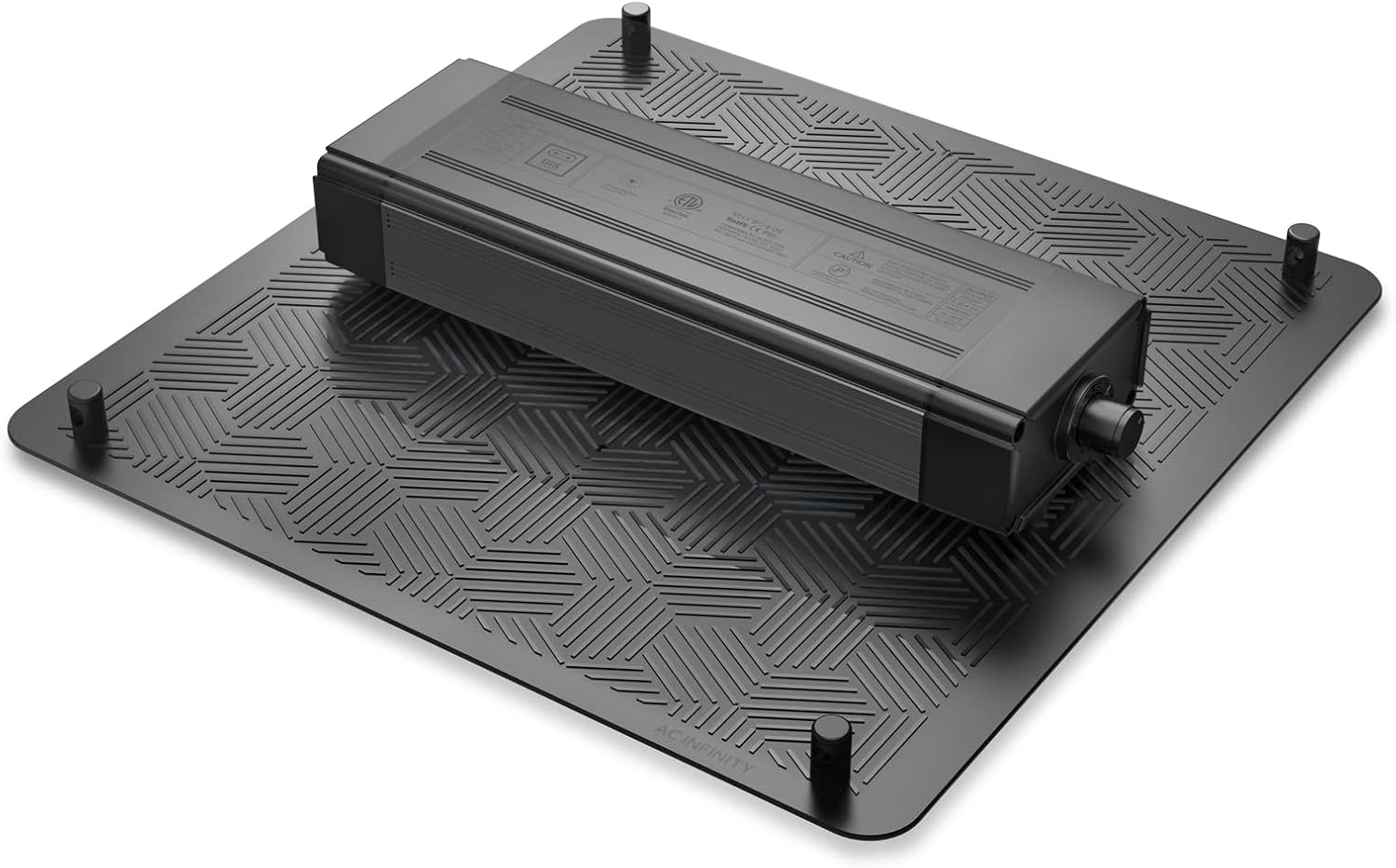
The AC Infinity IONBOARD S22 is a performance-focused 2×2 LED grow board built around Samsung LM301H diodes and a 115W driver, designed to give even full-spectrum coverage for a single small grow tent or bench. It mounts overhead and uses algorithmic diode placement to produce a uniform PAR map and deeper canopy penetration, which helps maintain consistent growth from seedlings to flower. The five-level dimmer (0 to 100% range) makes it easy to dial in intensity for different stages, and the board is compatible with AC Infinity smart controllers and an app for scheduling and environmental automation. A unibody aluminum construction and IP65 rating mean the fixture tolerates humid tent environments and sheds heat well for reliable operation. Limitations to consider are that this is optimized for a 2×2 footprint and single-board setups; larger grows will need additional or larger fixtures, and advanced scheduling requires buying the separate controller. For growers prioritizing uniform output and integration with environmental controls, the S22 offers a solid, compact option.
Best for: Growers who want a compact, high-performance 2×2 fixture that delivers uniform, high-quality light and can be integrated into a smart tent setup to maximize yields.
Less Ideal for: People outfitting larger tents or multi-shelf systems who need broader coverage per fixture or an all-in-one controller included with the light.
- Full-spectrum Samsung LM301H diodes for high-efficiency, plant-optimized light
- Algorithmic diode layout for uniform PAR coverage and better canopy penetration
- Dimmable 0–100% with a five-level control for stage-specific intensity
- Unibody aluminum build with IP65 rating suitable for humid grow tent environments
- Designed for a 2×2 coverage area so not suitable as a standalone solution for larger grow spaces
- Smart controller and app features require a separate controller purchase
Verdict: A compact, performance-oriented 2×2 grow board that delivers uniform, high-efficiency full-spectrum light and integrates with smart environmental controls.
MARS HYDRO FC-E1500 150W Full-Spectrum LED Grow Light

| Light Source Type | LED |
|---|---|
| Power Source | Corded Electric |
| Wattage | 150 watts |
| Light Source Special Features | Dimmable, Remote Control Compatibility |
| Specification Met | DLC, ETL |
The MARS HYDRO FC-E1500 is a plug-and-play 150W LED grow light built for 2×2 core coverage and up to about 3×3 maximum coverage in small grow tents. It uses high-efficiency Bridgelux diodes and a dense LED layout to deliver uniform light and a quoted PPF/PPE that targets healthy veg and bloom stages. The fixture is aluminum-bodied for passive heat dissipation, comes with dimmable output and remote/app compatibility for scheduling, and supports daisy-chaining with compatible controllers. In practice it is easy to hang, adjust intensity for seedlings through flowering, and integrate into a small tent or shelf setup. Limitations are its smaller footprint compared with higher-wattage fixtures and that advanced smart features require separate Mars Hydro controllers or hubs. For growers optimizing space and energy, it offers a strong output-to-wattage balance, but those needing larger canopy coverage or built-in app hardware will need a different unit.
Best for: Practical growers who want an energy-efficient, easy-to-install light that maximizes yields in a 2×2 tent or small shelf without unnecessary complexity.
Less Ideal for: Growers who need full-room or multi-cannopy coverage or who want integrated hub-based smart control included in the fixture.
- Compact 150W design suited to 2×2 core coverage
- High-efficiency Bridgelux LEDs for strong light output per watt
- Dimmable and compatible with remote/app controllers for scheduling
- Aluminum body and bar structure for passive heat dissipation
- Plug-and-play setup that is easy to hang in tents or racks
- Smart control requires purchasing a separate Mars Hydro hub or controller
- Smaller footprint limits coverage for larger tents or multi-plant canopies
Verdict: A compact, energy-efficient 150W full-spectrum fixture that delivers strong, controllable light for optimized 2×2 indoor grows.
BESTVA DC1000 100W Bloom Boost LED Grow Light for 2×2/2×3 ft Tents

| Light Source Type | LED |
|---|---|
| Wattage | 100 watts |
| Mounting Type | Hanging |
| Light Source Special Features | VEG and BLOOM modes; full spectrum (3000K, 5000K, 460nm, 660nm) |
| Number of Light Sources | 640 |
The BESTVA DC1000 is a compact LED grow light built for small tents and compact indoor setups. It delivers a full spectrum combining 3000K and 5000K white LEDs plus 460nm blue and 660nm red diodes, and offers separate VEG and BLOOM modes so you can tailor output for seedlings, vegetative growth, and flowering. The light is rated at 100 watts and uses 640 diodes with a 120 degree beam angle to provide even coverage across a 2×2 or 2×3 ft space. The unit hangs easily and has a metal body with an aluminum heat-dissipation design and a durable cooling system to keep intensity steady during long cycles. For growers on a budget, it targets higher yields per footprint by improving canopy penetration compared with basic shop LEDs. Limitations include its modest total power if you plan to push very high-light plants or very dense canopies and the need to add side or supplemental lighting for heavier canopies; users should also manage hanging height and run time to avoid light stretch or heat stress.
Best for: Practical growers outfitting a 2×2 or 2×3 ft tent who want a stage-adjustable, full-spectrum light on a limited budget and value straightforward setup and reliable cooling.
Less Ideal for: Large or high-demand commercial grows, or growers who need very high PAR for dense mature canopies without adding extra fixtures.
- Full spectrum with dedicated VEG and BLOOM modes for stage-specific lighting
- Designed for 2×2–2×3 ft tents with even 120° beam coverage
- Durable metal housing and active cooling for stable operation
- High diode count (640) for more uniform light distribution
- 100W output may be insufficient for very high-light or densely canopied crops
- No built-in dimmer or timer included, requiring external control for schedules
Verdict: A budget-friendly 100W full-spectrum LED that gives reliable, stage-specific coverage for 2×2–2×3 ft grow tents.
Spider Farmer G1500 150W LED Grow Light (App Controlled)

| Light Source Type | LED |
|---|---|
| Wattage | 150 watts |
| Light Source Special Features | Dimmable, Smart Control |
| Voltage | 110 volts |
| Material Type | Aluminum |
The Spider Farmer G1500 is a compact 150W LED fixture built for full‑cycle indoor growing in a 2×2 to 2.3×2.3 foot footprint. It uses high‑density Bridgelux diodes and aluminum construction to deliver even canopy coverage and efficient light output (PPE listed at 2.85 umol/J). Setup is straightforward: hang or table‑mount the slim rectangular panel, set schedules and dim levels in the Spider Farmer app, or adjust brightness on the built‑in digital display. The light supports daisy‑chaining and can be integrated into larger arrays, which is handy if you scale beyond a single small tent. Practical benefits include a true full spectrum for seedlings through flower, low heat production thanks to efficient diodes and cooling, and a 5‑year coverage for long term use. Limitations are its fixed 2×2 focused coverage, so larger areas require additional units, and advanced growers wanting the absolute highest PPE or ultra‑wide commercial coverage may prefer larger models in the same series.
Best for: Growers who need a reliable, easy to manage light for a single 2×2 tent or small bench and prioritize consistent performance and low maintenance.
Less Ideal for: People outfitting larger grow rooms or commercial racks who need broader single‑unit coverage or maximum PPE per fixture.
- Compact 150W design suited to 2×2 grow spaces
- Full spectrum diodes support all growth stages
- App control plus on‑unit dimming and digital display for easy scheduling
- High LED density with efficient Bridgelux diodes for even canopy coverage
- Daisy‑chainable and scalable for multi‑light setups
- Coverage is optimized for small 2×2 areas so larger tents need more units
- Not the highest PPE available compared with larger, higher‑end fixtures
Verdict: A dependable, app‑controlled 150W full‑spectrum light purpose‑built to deliver even, low‑heat performance for 2×2 grow setups.
Spider Farmer SF1000 100W Full Spectrum LED Grow Light

| Light Source Type | LED |
|---|---|
| Light Output Maximum | 10000 lumens |
| Light Source Wattage | 100 watts |
| Light Source Special Features | Dimmable |
| Specification Met | IP67 |
The Spider Farmer SF1000 is a compact 100W full spectrum LED grow light intended for 2×2 to 3×3 grow spaces and small tents. It uses a high diode count and upgraded LED chips to deliver broad-spectrum output that supports seedlings through flowering, with a dimmer knob to reduce intensity for early stages and ramp up for bloom. The fanless design and thick aluminum heatsink keep operation quiet while providing passive cooling, and the fixture meets IP67 for durable performance. Typical use is ceiling or tent mounting above individual plants or a small canopy where uniform coverage and deeper canopy penetration matter. Notable features include daisy-chain compatibility for linking multiple units under unified dimming, a 0–100% dimmable control, and a driver claimed to offer efficient power delivery. Practical benefits are even light distribution in a small footprint, predictable veg-to-flower capability, and near-silent operation. Limitations are inherent to its class: it is sized for small areas so you will need multiple units for larger tents, and the product description emphasizes specs from manufacturer tests rather than independent third-party PPFD maps.
Best for: Growers who want a quiet, compact full spectrum light for a small tent or single-plant setup and value adjustable intensity for each growth stage.
Less Ideal for: People running larger multi-plant rooms or commercial operations who need higher total output and broader single-fixture coverage.
- Full spectrum output suitable for all growth stages with added red and IR for flowering
- Dimmable 0–100% control lets you tailor light intensity to seedlings, veg, and bloom
- Fanless design with sturdy aluminum heatsink for quiet, low-maintenance operation
- Compact footprint ideal for 2×2 to 3×3 tents and small indoor setups
- Daisy-chain capable so multiple fixtures can be linked and dimmed together
- Coverage and power are intended for small grows so larger areas require multiple units
- Manufacturer gives efficiency and coverage figures without independent third-party PPFD charts
Verdict: A quiet, dimmable 100W full spectrum fixture that is a practical, balanced choice for hobbyists running 2×2 to 3×3 tents.
MARS HYDRO TS1000 150W Full Spectrum LED Grow Light

| Wattage | 150 watts |
|---|---|
| Light Source Type | Light Emitting Diode |
| Power Source | Corded Electric |
| Light Source Special Features | Dimmable, Daisy Chain |
| Number of Light Sources | 342 |
The MARS HYDRO TS1000 is a compact 150W LED grow light built for small indoor grows and tent setups. It delivers a full-spectrum output aimed at all growth stages and uses a dense array of 342 LEDs arranged to give stronger, more even light in the center and usable coverage up to about 3×3 feet for vegetative growth and 2.5×2.5 feet in bloom. The driver offers 0–100% dimming and the fixture supports daisy-chaining multiple units, which makes it easy to scale a canopy without extra wiring. Its aluminum body and patented white reflector boost light utilization while the fanless design keeps operation silent. Practical benefits include low energy draw compared with equivalent HID systems and simple inside-mount installation for tents or racks. Limitations are its modest total wattage and coverage, which mean multiple units are needed for larger rooms, and true smart controls are optional add-ons rather than built in. Also the RJ12 connector for daisy-chaining may be required separately.
Best for: Growers who want a reliable, energy-efficient light for a single tent or small personal garden and value quiet, even lighting and easy scaling with additional fixtures.
Less Ideal for: People planning to light large rooms or commercial canopies with a single fixture should look at higher-wattage models or multiple-unit kits instead.
- Full-spectrum LED array suitable for seed-to-flower growth stages
- Dimmable 0–100% driver for easy light intensity control
- Fanless aluminum design runs quietly and dissipates heat efficiently
- Daisy-chain support lets you connect multiple units for larger coverage
- 150W output limits single-unit coverage to small tents or compact setups
- RJ12 connector for chaining is not included and must be sourced separately
Verdict: A quiet, energy-efficient 150W full-spectrum LED that fits small grow tents and scales well if you add more units.
Choosing the Right 2X2 Grow Light: Key Factors to Consider
Canopy Coverage and PAR Distribution
Uniform photosynthetic photon flux density across the 2×2 footprint is the single biggest practical factor. Uneven output produces hot and cold spots so plants at the edge receive less light and stretch toward center. Look for PAR maps, spread angles, or stated effective footprint at realistic hanging heights to predict how many plants will get usable light.
Also consider how close the fixture can be mounted without causing leaf burn. In small tents you often hang lights lower to maximize usable PPFD, so a fixture with even distribution and low-intensity hotspots is easier to position for uniform growth.
Light Spectrum and Stage Versatility
Different growth stages respond to different wavelengths. A balanced full-spectrum fixture gives usable blue for compact vegetative growth and red for flowering development. Some 2×2 fixtures offer switchable veg/flower modes or dimming to tune intensity and spectrum to young seedlings or flowering plants. If you plan to run mixed-stage crops, opt for a versatile spectrum and reliable output across the active wavelength bands.
Spectrum matters for more than flowering. For seedlings and clones, blue-rich output encourages sturdy stems and compact form. During bloom, increased red and far-red energy drives flower initiation and development. Fixtures that list spectral power distribution or include both cool and warm diodes make it easier to meet stage-specific needs.
Heat Output and Thermal Management
Small grow spaces trap heat quickly. Excessive fixture heat raises canopy temperature, stresses plants, and can force heavier ventilation. Fixtures with efficient cooling, such as well-designed passive heatsinks or quiet fans, reduce microclimate disruption. Consider how the light behaves when run at higher intensities and whether heat sinks get hot to the touch when mounted close to plants.
Also plan for the mounting height and the tent or shelf ventilation. A light that runs cool at full power lets you hang lower for higher PPFD without raising canopy temperature unacceptably.
Electrical Efficiency and Runtime Costs
Energy use scales directly with run hours. Even in a small 2×2 space, fixtures that deliver more usable PAR per watt reduce electricity draw and lower heat produced per unit of light. Check input wattage versus claimed effective PPFD across the footprint rather than relying on wattage alone. Efficiency matters more when you run long photoperiods or multiple fixtures in adjacent shelves.
Also look for drivers with consistent dimming and stable output under expected voltages. Flicker or unstable output can stress plants and indicates subpar electronics that may fail sooner.
Form Factor and Mounting Flexibility
Fixture size, shape, and included hanging hardware determine how easily you can position a light inside a 2×2 tent or shelving unit. Low-profile panels are simpler to mount closer to plants and reduce interference with shelving. Adjustable hanging points, built-in ratchets, or multiple hanging tabs make it easier to fine-tune spread and angle.
Consider the clearance required for fans or heatsinks and how the light sits relative to tent frames or shelf lips. A compact fixture that provides even spread without overhang simplifies maintenance and plant access.
Durability and Electrical Safety
Moist, humid environments and frequent adjustments mean fixtures need reliable seals, corrosion-resistant hardware, and safe electrical components. Look for fixtures with protected drivers, grounded plugs, and thermal protection that prevents runaway heat. Robust build quality reduces the chance of early failure from vibration, humidity, or light knocks during routine plant care.
Longevity also ties into warranties and customer support reputation. While those are not the only markers, a reasonable warranty and clear safety labeling indicate a manufacturer confident in durability.
Best Setup Practices for a 2X2 Footprint
Position the fixture so the light cone covers the entire 2×2 canopy with minimal overlap in the center. In many small tents the optimal hanging height is lower than for larger rooms because plants are closer together. Start with the manufacturer-recommended height for seedlings and adjust lower as plants establish, watching for heat stress or bleaching.
- Map the canopy by placing PAR meter or a temporary lux meter grid to identify hot and cold spots.
- Use dimming to dial intensity rather than raising the fixture too close and creating hotspots.
- Rotate plants periodically to compensate for any residual unevenness in distribution.
Managing Heat and Ventilation in Tight Spaces
Even a modest light can raise canopy temperature in a sealed 2×2 tent. Prioritize passive-cooled fixtures where possible, and ensure inline exhaust or small oscillating fans keep air moving across the canopy. Cooler-running lights let you hang lower without overheating plants, improving usable PPFD.
- Place intake low and exhaust high to remove warm air effectively.
- Monitor canopy temperature and relative humidity after any change to light intensity or run hours.
- If using a fan-cooled fixture, confirm fan noise and clearance don't interfere with the grow space.
Matching Light Schedule to Plant Type
Photoperiod length and intensity interact. For vegetative growth, longer daily light hours at moderate intensity produce bushy, compact plants. For flowering crops, reduce daily hours and increase intensity within the fixture's safe operating range. In a small footprint, avoid running lights at maximum power for extended seedling periods; instead increase intensity gradually as plants mature.
- Use a reliable timer for consistent photoperiods.
- Combine lower-intensity, longer photoperiods for seedlings and shorter, higher-intensity cycles for bloom phases when appropriate.
- Monitor plant stretch and leaf coloration as the best signals to tweak schedule.
Light Maintenance and Placement Tips
Keep lenses and diodes clean to preserve output; dust and humidity films reduce transmitted light. Inspect mounting hardware periodically for corrosion and ensure hangers have secure connections. Replace or service drivers showing uneven output or audible issues promptly to avoid crop stress.
- Wipe panels gently with a soft cloth and mild cleaner when powered off and cool.
- Check cable routing to avoid pinching when adjusting shelves or tent frames.
- Record fixture run hours to anticipate driver replacement before failures occur.
How We Chose the Best 2X2 Grow Light
We prioritized fixtures that deliver predictable canopy coverage, useful light spectra for both vegetative and flowering phases, and efficient power use appropriate to a 2×2 footprint. Our primary evaluation dimensions were actual usable PAR output across a 2×2 area, spectrum tuning or balance for plant development stages, thermal management in confined spaces, build durability for repeated mounts, and electrical efficiency to keep running costs and heat low. We excluded oversized fixtures intended for larger rooms or commercial rigs because those distort canopy uniformity and increase heat in small tents. We also filtered out products lacking clear output specs or spectrum information, and those without basic safety features such as grounded plugs or thermal protection. What mattered most were measured or manufacturer-provided PAR maps for a 2×2 layout, combined spectrum info, real-world heat behavior, and mounting flexibility for close canopy placement.
FAQ
What hanging height works best for a 2×2 grow light?
Hanging height depends on the fixture and plant stage. Start at the manufacturer suggested height for seedlings, then lower incrementally while watching leaves for heat or bleaching. For mature vegetative growth you often hang lower to reach target PPFD, but keep an eye on canopy temperature.
Can one 2×2 light handle both veg and bloom stages?
Often yes. Many compact fixtures offer full-spectrum output or veg/flower modes that support both stages. You may need to change intensity and schedule, and in denser bloom phases you might increase intensity or add supplemental light if canopies become shaded.
How important is a dimming feature on a small fixture?
Dimming is valuable in small spaces because it gives fine control over intensity without moving the fixture. It helps you tailor light for seedlings, prevent heat stress, and extend fixture life by avoiding constant full-power operation.
Will a low-profile passive-cooled fixture run cooler than one with a fan?
Passive-cooled fixtures can run quieter and often maintain lower localized airflow, but their heat dissipation depends on heatsink design and surrounding ventilation. Fan-cooled units can move heat away efficiently but add noise and a moving part that may need maintenance.
How do I measure whether a light covers my canopy evenly?
Use a PAR meter to sample multiple points across the 2×2 footprint at your intended hanging height. Compare PPFD readings from center and corners to detect hot or cold spots. If a meter is not available, rotate plants frequently and watch for uneven growth as a practical proxy.
Are LED grow lights suitable for small hydroponic setups?
Yes, LEDs are commonly used in small hydroponic systems because they provide high usable PAR with lower heat and energy use. Ensure the fixture's spectrum and intensity match the crop and that ventilation manages humidity and heat.
Final Verdict
For a small 2×2 grow space, prioritize even PAR coverage, a useful spectrum for your plant stages, and low heat output. Those three tradeoffs steer the most practical decisions: hang height and distribution determine uniform growth, spectrum tuning affects compactness and flower initiation, and thermal behavior dictates how close you can safely run the fixture. Balance efficiency and mounting flexibility against durability and safety. When you focus on coverage, spectrum, and heat management first, the remaining choices become easier and you can select a 2×2 grow light that reliably supports healthy plants in a compact indoor garden.
