

Note: This article contains affiliate links. If you click on these links and make a purchase, I may earn a small commission at no extra cost to you. This helps support my research and content. Read my full affiliate disclosure here.
If you work with a compact greenhouse, the right grow light can make the difference between leggy seedlings and sturdy transplants. A grow light for a small greenhouse must balance usable light output, footprint, and heat so you can fit fixtures without overheating or crowding plants. This guide shortlists the top options for confined greenhouse spaces and explains the practical tradeoffs you should expect. The picks below are the top-rated small-greenhouse fixtures we vetted for spectrum, power efficiency, heat management, and installation flexibility. Read on for the evaluation criteria and concise guidance to help you pick lights that suit your bench layout and plant list.
Top Picks at a Glance
| Best Overall The best all-around choice for most situations | APICDOM 4ft Full Spectrum Linkable LED Grow Light (30W, 5000K + 660nm Red) |  |
| Best Quality Built to a higher standard if you want something more solid | VIVOSUN LumaLight 100W LED Full Spectrum Grow Light |  |
| Best Value The sweet spot between price and what you get | FECiDA Flat Panel LED Grow Lights, 4-Pack | 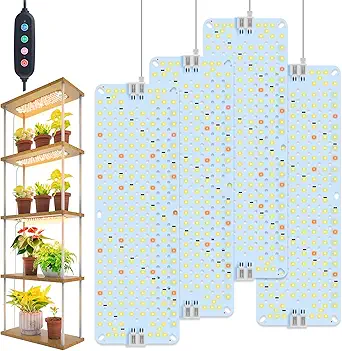 |
| Highest Rated A top-rated pick with lots of positive feedback | VIPARSPECTRA P700 70W Dimmable Full Spectrum LED Grow Light |  |
| Best Seller A high-volume bestseller chosen again and again | Barrina T5 1ft LED Grow Lights, 5000K Full Spectrum — 4-Pack |  |
APICDOM 4ft Full Spectrum Linkable LED Grow Light (30W, 5000K + 660nm Red)

| Light Output Maximum | 3600 lumens |
|---|---|
| Wattage | 30 watts |
| Color Temperature | 5000 Kelvin |
| Light Source Special Features | 660 nm Red Light Enhancement, Full Spectrum |
| Power Source | Corded Electric |
This APICDOM 4-foot LED strip is a compact, energy-efficient fixture intended for small greenhouses, grow tents, or shelving setups. It produces a full spectrum daylight output (5000K) with added 660 nm red light to support seedling development, flowering, and fruiting while drawing only 30 watts and producing up to 3600 lumens. The light is easy to mount or hang using the included hardware and inline power switch, and you can daisy-chain up to four units to cover longer benches without extra connectors. Its slim plastic housing fits neatly under shelves or in narrow greenhouse bays and is damp rated for typical indoor gardening environments. Limitations to consider are a single fixed output with no dimming or spectrum controls and a plastic body that may be less robust than metal fixtures in high-humidity commercial setups. For hobbyist growers who want simple, bright, linkable lighting, this unit balances performance and convenience well.
Best for: Gardeners running a small greenhouse or multi-shelf indoor setup who want bright, plug-and-play fixtures that are easy to install and expand.
Less Ideal for: Large-scale commercial growers or anyone needing adjustable spectrum control or heavy-duty metal fixtures for high-humidity, long-term installations.
- Full spectrum 5000K output with 660 nm red enhancement to support vegetative growth and flowering
- Low energy use at 30 watts while providing up to 3600 lumens
- Daisy-chain linkable up to four units for easy expansion and cleaner cable management
- Includes mounting hardware and supports both hanging and flush mounting for flexible placement
- No dimming or spectrum adjustment built in
- Plastic housing may feel less durable in very humid or commercial environments
Verdict: A space-saving, energy-efficient full-spectrum LED strip that is ideal for hobbyist small greenhouses needing bright, expandable lighting.
VIVOSUN LumaLight 100W LED Full Spectrum Grow Light

| Wattage | 100 watts |
|---|---|
| Light Source Type | LED |
| Number of Light Sources | 336 |
| Is Waterproof | True |
| Control Method | Remote |
The VIVOSUN LumaLight 100W is a compact full-spectrum LED grow light intended for indoor gardens and patios. It uses a mix of white, blue, red and far-red diodes to support all growth stages from seedlings through flowering, and the array is arranged to deliver uniform intensity across the canopy. Typical use is hanging above a small grow area with the included rope hangers and adjusting intensity via the four-level dimming knob or remote/mobile control when paired with VIVOSUN accessories. Notable features include IP65 water and dust resistance for high-humidity setups, a low-heat design for closer placement to plants, and Bluetooth/remote control compatibility for easier scheduling. Practical benefits are even coverage for several small plants, lower heat stress, and long expected LED life. Limitations are its 100W power level, which is best for small tents or a few plants rather than larger grow rooms, and some advanced scheduling requires the separate GrowHub controller for full smart automation.
Best for: A practical home grower who wants a reliable, compact full-spectrum light for seedlings through flowering and values even coverage and low heat in a small tent or patio setup.
Less Ideal for: Large-scale growers or those outfitting multi-shelf systems who need higher wattage fixtures or broader coverage should consider more powerful models.
- Full-spectrum diode mix (white, blue, red, far-red) suitable for all growth stages
- Dimmable four-level control plus Bluetooth/remote connectivity for convenient intensity adjustments
- IP65 waterproof and dustproof rating allows use in humid or misted environments
- Low-heat design with aluminum body for efficient thermal management and longer LED life
- At 100 watts it is intended for small tents or modest plant counts and not optimized for larger grows
- Advanced smart scheduling requires purchasing the GrowHub controller separately
Verdict: A dependable, compact full-spectrum LED grow light that delivers even coverage and low heat for small indoor grows.
FECiDA Flat Panel LED Grow Lights, 4-Pack

| Light Source Type | LED |
|---|---|
| Power Source | Corded Electric |
| Light Source Special Features | Natural Sunlight Full Spectrum |
| Number of Light Sources | 4 |
| Wattage | 48 watts |
These FECiDA flat-panel lights are a compact, practical solution for seed starting and shelf-based indoor gardening. Each panel uses a full-spectrum LED array (listed as 3000K, 5000K and 660nm components) with roughly 12W actual draw per panel and simple series/parallel connections so you can daisy-chain multiple units cleanly on a shelf. Typical use is under shelving, in small greenhouses, or above seed trays and young seedlings where space is limited. Built-in timers offer preset run times (4/8/12/16/20 hours) so you can set daily schedules and avoid manual on/off. The aluminum body and included driver keep installation straightforward, and the set of four covers multiple small trays or tiers. Limitations to note are the modest per-panel wattage if you plan to scale to larger areas and the fixed mounting style which is best suited to flat under-shelf attachment rather than adjustable-height stands. For tomato seedlings on a dedicated seed-starting shelf these panels provide even, plant-friendly light and hands-off scheduling, but larger or more light-hungry setups will need higher-output fixtures.
Best for: Plant parents who want a compact, easy-to-install lighting solution for seed trays and multi-tier shelves and who prioritize tidy wiring and scheduled runtimes for reliable seedling growth.
Less Ideal for: Growers planning to cultivate many tomato plants to larger vegetative or flowering stages in a single area should choose higher-output fixtures or adjustable-height systems instead.
- Full spectrum LED blend including 660nm red to support vegetative and early flowering stages
- Modular series/parallel connections allow tidy daisy-chaining across multiple panels
- Built-in 5-mode timer simplifies daily scheduling for seed starting
- Slim aluminum panels mount cleanly under shelves to save space
- Per-panel actual power (about 12W) is modest and may be low for larger or late-stage plants
- Fixed under-shelf mounting limits use where adjustable distance to seedlings is needed
Verdict: A space-saving, daisy-chainable full-spectrum panel set that makes scheduled seed starting on shelves simple and tidy.
VIPARSPECTRA P700 70W Dimmable Full Spectrum LED Grow Light

| Light Output Maximum | 11000 lumens |
|---|---|
| Light Source Wattage | 70 watts |
| Mounting Type | Hanging Mount |
| Light Source Special Features | Dimmable |
| Number of Light Sources | 216 |
The VIPARSPECTRA P700 is a 70W full spectrum LED grow light built for seed starting and vegetative stages. It uses 216 diodes and a tuned mix of red and white LEDs to deliver high PAR output (advertised 11,000 lumens) across a small footprint roughly suited to a 2×2 ft veg area. The light is fanless and relies on large aluminum heat sinks to keep running temperatures low while the included 4-level dimmer lets you dial intensity for seedlings, clones, or mature veg. Setup is simple with hanging mount hardware included and the unit draws about 0.65 A at 120V so it runs far cooler and uses far less power than a comparable 150W HPS/MH system. For compact tents, shelves, or single-cabinet grows it offers a good balance of light output, spectrum, and efficiency. Limitations are its small coverage area and modest absolute wattage compared with larger fixtures, so gardeners with bigger canopies will want a higher-output model or multiple units.
Best for: Growers who want an efficient, low-heat fixture to run a single tent, shelf, or cabinet and who prioritize electricity savings and adjustable output for seedlings and veg.
Less Ideal for: Commercial growers or hobbyists running multi-plant canopies or larger tents who need wider coverage and higher total light output.
- Full spectrum diode layout optimized for seedlings and vegetative growth
- Low power draw (70W) with high reported lumen/PAR output for energy efficiency
- Fanless design with aluminum heat sinks for quiet, low-heat operation
- Integrated 4-level dimmer for easy intensity adjustment
- Coverage geared to a small 2×2 ft veg area so not ideal for larger grows
- Absolute wattage and diode count are modest compared with larger commercial fixtures
Verdict: A compact, energy-efficient full spectrum LED that delivers strong veg-stage light and adjustable intensity for small tents and cabinets.
Barrina T5 1ft LED Grow Lights, 5000K Full Spectrum — 4-Pack

| Wattage | 5W |
|---|---|
| Color temperature | 5000K |
| Linkable | Link up to 16 lights |
| Control | Separate on/off switches |
The Barrina T5 1ft grow light 4-pack provides straightforward, energy-efficient supplemental lighting for seedlings, vegetative plants, and flowering houseplants. Each slim fixture produces a 5000K full spectrum output at 5W and includes an on/off switch so you can control lights individually or run them together. The lights are plug-and-play and come with power cords, connector cables, clips, double-sided tape, and cable ties for quick installation on shelves, racks, or small indoor shelving units. Because fixtures link up to 16 units, you can scale a multi-shelf setup without extra wiring. Practical benefits include low power draw, compact footprint that fits tight spaces, and a high PPFD-focused output that supports photosynthesis. Limitations are that these are short 1-foot fixtures intended for close-proximity use rather than lighting large rooms, the mounting relies on adhesive and clips rather than a heavy-duty mounting system, and they are not magnetic, which reduces some placement options. For growers who want an easy, modular lighting solution for small indoor setups, these deliver reliable light for everyday use.
Best for: Buyers who want a compact, energy-efficient grow-light system to brighten shelves or small indoor racks and who value easy installation and scalable setups.
Less Ideal for: Growers who need to light large rooms, tall plants, or wide benches should choose longer or higher-output fixtures instead.
- Full-spectrum 5000K output suitable for seedlings through flowering
- Individual on/off switches for each fixture allow flexible light scheduling
- Linkable design supports up to 16 lights for easy expansion
- Low power consumption (5W per 1ft fixture) reduces energy use
- Includes basic installation kit (power cords, connectors, clips, tape, cable ties)
- Short 1ft length limits coverage area per fixture
- Mounting depends on adhesive and clips rather than more secure hardware
- Not magnetic, reducing placement options on metal surfaces
Verdict: A compact, low-energy, and linkable 1ft grow light kit ideal for efficiently lighting shelves and small indoor plant setups.
Choosing the Right Grow Light for Small Greenhouse: Key Factors to Consider
Light Spectrum and PAR Intensity
Spectrum determines how plants use the light at different life stages. A balanced full spectrum or tunable white-plus-specific-red/blue peaks supports both vegetative growth and flowering. PAR intensity at canopy height tells you whether the light will meet the needs of seedlings, leafy greens, or fruiting crops.
In a small greenhouse you often run fixtures closer to the plants, so look at usable PAR rather than total wattage. Fixtures with clear PAR charts or beam spread information reduce guesswork when arranging multiple lights over benches.
Coverage Footprint and Beam Angle
Fixture footprint and beam angle determine how many fixtures you need and how evenly they illuminate a bench. In compact houses, overlapping beams can create hotspots or shaded pockets, so choose fixtures whose effective coverage matches your bench width and plant spacing.
Consider whether fixtures are better used singly over narrow trays or spaced in linear arrays. Measuring the usable area at your intended mounting height helps avoid buying more lights than necessary or suffering uneven growth.
Energy Use and Efficiency
Small greenhouses often rely on long daily run times, especially in winter, so efficiency affects operating cost and temperature. Look for lights rated with µmol per joule figures or clear lumen-to-PAR conversions. Higher efficiency means less electrical load for the same usable light.
Also think about typical run hours and whether the greenhouse electrical supply can handle multiple fixtures. Energy-efficient fixtures may cost more up front but cut ongoing energy and cooling demands in tight spaces.
Heat Output and Thermal Management
Heat matters more in confined structures where ventilation is limited. Some high-output fixtures run cooler because they convert more electricity to usable light, while others require active cooling or create significant radiant heat.
Choose fixtures whose thermal profile suits your ventilation and temperature targets. In small greenhouses, lower heat output lets you place lights closer to plants, improving light use while avoiding leaf scorch or elevated humidity issues.
Mounting Options and Adjustability
Small greenhouses benefit from flexible mounting because bench heights and crop stages change frequently. Look for fixtures with easy height adjustment, daisy-chain power capabilities, or slim profiles that fit under shelf systems.
Simple mounting hardware and clear instructions reduce installation time and make it easier to reconfigure layouts as seedlings move to transplant. Consider whether the fixture supports dimming or scheduling to match photoperiod needs without extra controllers.
Durability, Safety, and IP Rating
Greenhouse environments can be humid and occasionally splash-prone. Fixtures with appropriate ingress protection ratings and corrosion-resistant components will last longer in damp conditions. Safety approvals and robust wiring reduce the chance of failure in an enclosed space.
Durability also affects long-term light stability. A well-built fixture retains spectral balance and output over thousands of hours, saving you maintenance time and preserving consistent crop results.
Matching Lights to Plant Stage
Different crops and stages need different light intensities. Seedlings and cuttings grow well under lower PAR and broader spectrum light, while flowering or fruiting stages require higher red and total PAR. In a small greenhouse you can often raise lights close to seedlings for lower-intensity needs, then increase distance or add fixtures for later stages.
Plan for flexibility by choosing fixtures that dim or can be layered. Using lower-intensity fixtures for propagation and switching to higher-output fixtures when plants approach canopy stage avoids wasted energy and light stress.
- Use broad-spectrum or adjustable-spectrum fixtures for mixed cropping
- Keep seedlings 4 to 12 inches from lights depending on output and heat
- Increase canopy PAR gradually to avoid stretching or burn
Layout Strategies for Narrow Benches
Compact greenhouses require deliberate layout to ensure even light distribution. Run fixtures along the length of benches rather than across them to reduce edge shadows. Stagger fixtures if bench width exceeds a single fixture footprint to smooth overlaps.
Measure effective coverage at intended mounting heights before final installation. Portable, rail-mounted, or pulley-mounted fixtures let you reposition lights quickly during different crop stages.
- Align fixtures parallel to crop rows for uniformity
- Use light meters or smartphone PAR apps to map coverage
- Consider reflective interior surfaces to improve uniformity
Controls, Scheduling, and Dimming
Photoperiod control and dimming are practical in small greenhouses to extend daylight hours or reduce intensity at night. Timers and simple dimmable drivers help you tailor daily light integrals without constant manual intervention.
If you grow multiple crop types, separate circuits or individual controllers let you run varied schedules without rewiring. Dimming can also reduce heat output during warm periods while maintaining light quality.
- Prefer integrated dimming drivers or compatible controllers
- Set timers to mimic natural photoperiods for photoperiod-sensitive crops
- Use lower intensity overnight lighting only when needed for specific treatments
Ventilation and Temperature Interaction
Lighting affects greenhouse microclimate. Higher-output fixtures raise air and leaf temperature, which interacts with humidity and disease pressure in a small space. Coordinate lighting choices with your ventilation capacity and heating strategy.
If ventilation is limited, prioritize fixtures with lower radiant heat or add forced air. Position fans to move air past plants rather than directly at fixtures to avoid creating cold spots or uneven drying.
- Monitor canopy temperature as well as air temperature
- Combine lights with passive vents or small exhaust fans when needed
- Plan for seasonal changes in ambient temperature when setting run times
How We Chose the Best Grow Light for Small Greenhouse
We focused on attributes that directly affect day-to-day greenhouse growing in confined spaces. Primary evaluation criteria included usable light spectrum for vegetative and flowering stages, photosynthetic photon flux density relative to fixture footprint, energy draw and efficiency, thermal behavior in small enclosures, and mounting or adjustability options for tight benches. We tested spec sheets and real-world gardener reports to assess how uniformly fixtures distribute usable light in narrow benches and short crop canopies. Efficiency and power draw were compared against expected daily run times typical for seasonal propagation and supplemental lighting. Heat output and cooling design were judged for small greenhouse conditions where ventilation can be limited. We excluded fixtures intended only for large commercial houses or single-plant hobby lamps that cannot be positioned to provide even canopy coverage. Also excluded were lights lacking clear spectral information or basic safety approvals. The selections favor lights that perform well across multiple plant stages, are easy to mount in compact layouts, and have predictable heat and energy behavior.
FAQ
How close should I hang a grow light to seedlings in a small greenhouse?
It depends on the fixture output and heat. Low-output LEDs can be 4 to 12 inches from seedlings, while higher-output fixtures may need 18 to 24 inches. Watch for stretching or leaf cupping and adjust distance gradually.
Can I use the same lights for propagation and flowering in a small greenhouse?
Often you can if the fixture offers adjustable intensity or a full spectrum. For best results, use dimming or move fixtures farther from the canopy as plants mature to increase usable area without changing hardware.
Will more watts always mean better plant growth in a small greenhouse?
Not necessarily. Watts measure energy use, not usable light. Look at PAR output or µmol/J efficiency to understand how much usable light plants receive for each watt consumed.
Do grow lights increase humidity or disease risk in a small greenhouse?
Lights primarily affect temperature, which in turn influences humidity and disease risk. Excessive heat can dry plants or reduce humidity, while poor airflow combined with higher temperatures may increase disease pressure. Coordinate lighting with ventilation.
Are waterproof or IP-rated fixtures necessary in a greenhouse?
IP-rated fixtures are recommended because greenhouses are humid and may experience splashes. Appropriate ingress protection and corrosion-resistant materials extend fixture life and reduce maintenance.
How many fixtures do I need for uniform coverage on a narrow bench?
That depends on fixture footprint and mounting height. Map out beam spread at your intended height and plan overlapping coverage to eliminate shaded spots. A light meter reading across the bench helps refine positioning.
Final Verdict
For small greenhouses, prioritize usable PAR, efficient energy use, and low heat output over raw wattage. Choose fixtures that match the crop stage and mounting constraints, and favor adjustable or dimmable options for flexibility. Balance footprint and coverage so you avoid hot and cold spots on benches. With attention to spectrum, thermal behavior, and mounting, you can create a compact lighting setup that supports healthy seedlings and productive crops year-round.
