

Note: This article contains affiliate links. If you click on these links and make a purchase, I may earn a small commission at no extra cost to you. This helps support my research and content. Read my full affiliate disclosure here.
If spider mites are stressing your houseplants, greenhouse crops, or vegetable seedlings you need a control that acts quickly without harming foliage. Choosing the right insecticidal soap for spider mites matters because these pests hide on undersides of leaves and reproduce fast, so treatment coverage, plant safety, and application frequency make a real difference in outcomes. This guide shortlists seven top insecticidal soaps suited for spider mite control, and evaluates each on spray coverage, phytotoxicity risk, and ease of use. Read on to understand the tradeoffs so you can pick a product that fits your plants and growing situation.
Top Picks at a Glance
| Best Overall The best all-around choice for most situations | Safer Insect Killing Soap II Concentrate, 16 oz |  |
| Best Quality Built to a higher standard if you want something more solid | Safer 5118-6 Insect Killing Soap Concentrate (16 fl oz) |  |
| Best Value The sweet spot between price and what you get | Bonide Insecticidal Soap 32 oz Ready-to-Use Spray, Pack of 2 |  |
| Best Budget The cheapest option that still gets the job done reliably | Garden Safe Insecticidal Soap Ready-to-Use Spray, 32 oz |  |
| Highest Rated A top-rated pick with lots of positive feedback | NatureStop Insecticidal Soap (16 oz) |  |
| Most Popular A crowd favorite that many people choose with confidence | Bonide Insecticidal Soap Ready-to-Use Spray, 32 oz |  |
| Best Seller A high-volume bestseller chosen again and again | Bonide Captain Jack's Insecticidal Super Soap Ready-to-Use, 32 oz | 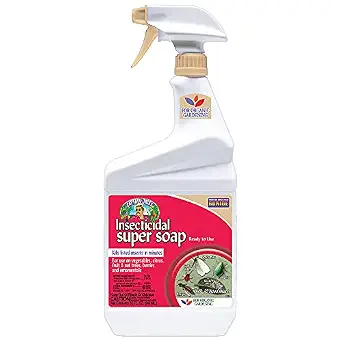 |
Safer Insect Killing Soap II Concentrate, 16 oz

| Model Name | Safer Insect Killing Soap II Conc. 16 oz |
|---|---|
| Target Species | Insects |
| Included Components | Safer Insect Killing Soap II Conc. 16 oz |
Safer Insect Killing Soap II is a concentrated soap formulation meant to be mixed with water and sprayed on infested plants to control soft-bodied pests such as aphids, whiteflies and spider mites. In practice you dilute the concentrate according to label directions, apply it directly to foliage where pests and eggs hide, and repeat treatments on a schedule until pressure subsides. The product’s concentrated format makes it economical for regular use on multiple ornamental and edible plants, and the simple soap active is low-residue compared with many synthetic insecticides. Limitations to expect are that contact is required for control so complete coverage is necessary, and it may be less effective under heavy infestations or when pests are well protected in dense foliage. Also users should test on a small area first because some sensitive plants can show leaf burn, especially in hot sun. For a gardener seeking a straightforward, plant-friendly option for routine mite management, this concentrate is a practical tool when used with care and good spray technique.
Best for: Gardeners who want a straightforward, low-residue option to manage spider mites and other soft-bodied pests across ornamentals and edibles and who are willing to spray carefully and reapply as needed.
Less Ideal for: People needing a quick knockdown for very heavy or systemic infestations or those who cannot apply repeat foliar sprays; large-scale commercial growers should consider professional alternatives.
- Concentrated formula for economical dilution and multiple tank mixes
- Effective contact action against soft-bodied pests including spider mites when sprayed directly
- Low-residue soap active that is generally safer around beneficial insects than many broad-spectrum insecticides
- Simple liquid makes it easy to mix into standard handheld or pump sprayers
- Requires thorough coverage and repeat applications because it only works on contact
- Can cause leaf sensitivity on some plants, especially in hot or sunny conditions
Verdict: A cost-effective, low-residue concentrated insecticidal soap that is a practical choice for home gardeners managing spider mites with repeated, thorough foliar sprays.
Safer 5118-6 Insect Killing Soap Concentrate (16 fl oz)

| Unit Count | 16 Fluid Ounces |
|---|---|
| Item Form | Spray concentrate |
| Target Species | Insects (aphids, whiteflies, thrips, spider mites, mealybugs) |
| Active Ingredients | Potassium Salts of Fatty Acids |
Safer 5118-6 is a concentrated insecticidal soap formulated from potassium salts of fatty acids to kill soft-bodied pests like aphids, whiteflies, mealybugs, spider mites, and thrips on contact. You mix the concentrate with water to make spray solution and apply thoroughly to plant surfaces, repeating every 7 to 10 days or sooner while pests are active. Because it works by breaking down the insect outer coating, it provides quick knockdown of visible infestations and is safe to use up until harvest when used as directed. Notable features include OMRI listing for organic gardening and the ability of a single 16 oz bottle to produce several gallons of spray for garden-scale use. Important limitations are that it is a contact killer so multiple applications and good coverage are required for full control, and it should not be applied in the heat of the day or above 90 degrees F to avoid leaf damage on sensitive plants.
Best for: Gardeners who prioritize organic-compliant pest control and want a proven, broad-spectrum contact spray for regular treatment of ornamental and edible plants, including focused control of thrips.
Less Ideal for: People who need a systemic or long-residual insecticide or who want one-application control for heavy infestations should consider other options.
- OMRI listed formula suitable for organic gardens
- Concentrated 16 fl oz bottle produces several gallons of spray for multiple applications
- Effective contact killer for a broad list of soft-bodied pests including thrips and spider mites
- Breaks down naturally within about a week so it does not linger in the environment
- Only kills on contact so thorough coverage and repeat treatments are required
- Can cause leaf damage if applied during hot conditions or above 90 degrees F
Verdict: Buy this if you want an organic-compliant, contact spray concentrate that quickly knocks down thrips and other soft-bodied pests when used with thorough coverage and repeat applications.
Bonide Insecticidal Soap 32 oz Ready-to-Use Spray, Pack of 2

| Item Form | Spray |
|---|---|
| Liquid Volume | 64 fluid ounces |
| Brand | Bonide |
This Bonide insecticidal soap arrives as two 32 oz ready-to-use sprayers designed to kill soft-bodied pests on contact. It is typically used by spraying affected foliage and insects directly in home gardens, ornamentals, greenhouses and on edibles up to the day of harvest. The formula uses potassium salts of fatty acids, which provide quick knockdown of aphids, mites, whiteflies, caterpillars and similar pests while being acceptable for organic production. The spray nozzle and ready-to-use packaging make application simple and consistent without mixing. Because it works by contact, thorough coverage is essential and it will not control pests hidden inside plant tissue or in the soil. Also, repeated applications may be needed for heavy infestations and it can be less effective against hard-bodied insects. For gardeners who prioritize a dependable, low-residue option that is safe around edible plants when used as directed, this product is a practical choice.
Best for: Gardeners who want a reliable, easy-to-use contact insecticide for routine control of soft-bodied pests on vegetables, ornamentals and houseplants and who prioritize organic-approved options.
Less Ideal for: People dealing with soil-borne pests or heavy infestations of hard-shelled insects should consider systemic or targeted alternatives instead.
- Ready-to-use spray requires no dilution and is simple to apply
- Approved for organic gardening and may be used up to the day of harvest
- Effective on a wide range of soft-bodied pests through contact action
- Pack of two provides extended coverage for multiple applications
- Works only by contact so thorough coverage and repeat treatments are often required
- Less effective against hard-bodied or concealed pests
Verdict: Choose this ready-to-use, organic-approved insecticidal soap when you want a straightforward, dependable contact spray for controlling common soft-bodied garden pests.
Garden Safe Insecticidal Soap Ready-to-Use Spray, 32 oz

| Item Form | Spray |
|---|---|
| Target Species | Insects |
| Liquid Volume | 32 fluid ounces |
| Active Ingredients | Potassium Salts Of Fatty Acids |
Garden Safe Insecticidal Soap is a ready-to-use contact spray formulated with potassium salts of fatty acids to control aphids, mealybugs, mites, whiteflies and similar soft-bodied pests. You use it like a normal garden spray: thoroughly coat insects and all plant surfaces including undersides of leaves, ideally in calm weather and not in full sun. It is safe for use on vegetables, fruit trees, ornamentals, shrubs, flowers and in greenhouses and may be applied to edibles up to the day of harvest, which simplifies timing for vegetable growers. The spray works on direct contact so thorough coverage is essential and multiple applications may be needed for heavy infestations. The product is convenient because no mixing is required, but it can be washed off by rain and is hazardous to aquatic invertebrates so care is needed to avoid runoff into water. For routine control of common garden pests this soap is a practical, low-toxicity option when used as part of an integrated pest management approach.
Best for: Gardeners who prioritize practical, low-toxicity pest control and want a ready-made spray that can be used on edible crops without pre-harvest delays.
Less Ideal for: People needing a long-residual or systemic pesticide for heavy infestations or for pests hidden inside plant tissues should consider other control methods.
- Ready-to-use formula requires no mixing for quick spot treatments
- Labeled for use on vegetables and may be applied up to the day of harvest
- Controls a broad list of soft-bodied pests including aphids, mites and whiteflies
- Plant-safe when used as directed and usable indoors, outdoors and in greenhouses
- Only kills pests by direct contact so it has limited residual or systemic activity
- Can be washed off by rain and must be reapplied after watering or heavy rainfall
- Harmful to aquatic invertebrates so it requires careful application near water
Verdict: A convenient, low-toxicity ready-to-use soap spray that gives effective contact control of common soft-bodied garden pests and is safe to use up to harvest.
NatureStop Insecticidal Soap (16 oz)

| Item Form | Liquid |
|---|---|
| Target Species | All |
| Liquid Volume | 16 fluid ounces |
| Brand | NatureStop |
NatureStop Insecticidal Soap is a ready-to-use liquid spray aimed at controlling soft-bodied pests such as aphids, whiteflies, mealybugs, and spider mites on houseplants and garden ornamentals. You apply it directly to affected foliage and stems; the soap-based formula works on contact to break down pests and leave cleaner leaves when used as part of a regular care routine. The product emphasizes a natural oil approach, listing peppermint oil as an ingredient, which can be appealing if you prefer alternatives to synthetic pesticides. Practical benefits include suitability for routine use on a range of indoor plants and a straightforward spray application that is easy to integrate into watering and maintenance. Limitations to note are that contact sprays only affect pests they reach so thorough coverage is needed and multiple applications are typically required to suppress infestations. As with all soaps, test on a small area first and avoid applying in hot sun to prevent leaf damage.
Best for: Plant owners who prioritize dependable, low-toxicity pest control and want a straightforward spray they can use regularly to manage aphids, mites, and similar pests on houseplants.
Less Ideal for: People seeking a one-time systemic cure for large or established infestations or those who need an all-in-one broad-spectrum insecticide for outdoor landscape pests.
- Formulated to target common soft-bodied plant pests on contact
- Contains natural oil ingredient (peppermint oil) as an alternative to synthetic chemicals
- Clear liquid spray that is easy to apply directly to leaves and stems
- Suitable for routine use on both houseplants and outdoor ornamentals
- Works only on pests it contacts so complete coverage and repeat applications are required
- May cause leaf sensitivity if applied in direct sun or on already stressed plants
Verdict: A reliable, low-toxicity contact spray that fits into routine care for houseplants and helps suppress common soft-bodied pests.
Bonide Insecticidal Soap Ready-to-Use Spray, 32 oz

| Unit Count | 32 Ounce |
|---|---|
| Item Form | Spray |
| Target Species | Insects |
| Active Ingredients | Potassium salt of fatty acids |
This ready-to-use insecticidal soap spray kills soft-bodied insects on contact using potassium salts of fatty acids derived from plants, making it suitable for organic vegetable beds and container vegetables. It is applied with the built-in spray nozzle directly to affected foliage to control aphids, mites, caterpillars, whiteflies and other listed pests; the label allows use up to the day of harvest on many food crops. Practical benefits include an easy spray application with no mixing, low residual toxicity compared with conventional insecticides, and a broad list of target species for small-scale home gardens and greenhouses. Important limitations are that it works by contact so complete coverage is required and it will not control pests hidden inside fruit or stems; repeated applications may be necessary for heavy infestations. Users should follow label safety directions and test on a few plants first since some sensitive foliage can show damage under hot conditions.
Best for: Gardeners who prioritize simple, low-residue organic solutions for vegetables and want a no-mix spray they can use quickly on affected plants.
Less Ideal for: Large-scale growers who need systemic or long‑residual control or anyone needing a product to reach pests hidden inside fruit or stems.
- Ready-to-use spray with an easy nozzle for immediate application
- Active ingredient is a plant-derived potassium salt suitable for organic gardening
- Labeled for use on a wide range of vegetables, herbs, ornamentals and houseplants
- Low residual toxicity compared with synthetic insecticides
- Kills only on contact so full coverage and repeat treatments are often required
- May cause phytotoxicity on some sensitive plants or under high heat if not spot-tested
Verdict: A convenient, ready-to-use organic spray that gives practical contact control of common vegetable garden pests with minimal residual impact.
Bonide Captain Jack's Insecticidal Super Soap Ready-to-Use, 32 oz

| Unit Count | 32 Ounce |
|---|---|
| Liquid Volume | 32 fluid ounces |
| Item Form | Spray |
| Active Ingredients | Potassium Salts of Fatty Acids, Spinosad |
| Specification Met | USDA |
Bonide Captain Jack's Insecticidal Super Soap is a ready-to-use spray that controls more than 30 common garden pests including aphids, caterpillars, mites, and whiteflies while also addressing powdery mildew. It is typically applied directly to infested foliage with the built-in spray nozzle, giving fast contact and ingestion-based kill for soft-bodied insects and leaf-feeding pests. Notable features are its USDA specification and active ingredients of potassium salts of fatty acids plus spinosad, which combine a soap-based knockdown with a biologically derived insecticide for broader effectiveness. Practical benefits include easy deployment without mixing, suitability for organic gardening, and use across vegetables, herbs, fruit, ornamentals, containers, and greenhouses. Important limitations are that it requires direct contact or ingestion so thorough coverage is necessary and results may be reduced against heavy or hard-shelled pests; repeated applications may be needed for full control and care should be taken around beneficial insects. For gardeners who prioritize reliable, ready-to-use performance on a wide range of outdoor plants this product offers a practical, effective option.
Best for: Gardeners who want a performance-focused, ready-to-use insect control for edible and ornamental outdoor plants and who value organic-approved options that work quickly on common soft-bodied pests.
Less Ideal for: People who require systemic long-term control of soil-borne pests or need a single-application solution for armored insects should consider alternative chemistries or integrated approaches.
- Ready-to-use spray with built-in nozzle for immediate application
- Active ingredients include potassium salts of fatty acids and spinosad for both contact and ingestion kill
- Approved for organic gardening and labeled for vegetables, fruits, herbs, ornamentals, and greenhouses
- Fast acting formula that also addresses powdery mildew
- Requires complete coverage and direct contact or ingestion, so thorough spraying is necessary
- Less effective against hard-shelled or heavily protected pests and may need repeat applications
Verdict: Choose this ready-to-use, organic-approved spray when you need fast, broad-spectrum control of soft-bodied garden pests across edible and ornamental plants.
Choosing the Right Insecticidal Soap for Spider Mites: Key Factors to Consider
Spray Coverage and Droplet Reach
Spider mites hide on leaf undersides and in tight crevices, so a product that produces fine, uniform droplets and can be applied with thorough coverage is essential. Look for soaps that mix to a sprayable consistency and that work well through handheld sprayers, pump sprayers, or misting systems. Application technique matters: a product that wets and clings to the lower leaf surface without excessive runoff will contact more mites.
Poor coverage is the most common reason treatments fail, so factor in nozzle compatibility, recommended spray pressure, and whether the label suggests surfactants or spreaders to improve coverage.
Plant Safety and Phytotoxicity
Insecticidal soaps can injure tender foliage if used at too-strong a concentration, during high heat, or on sensitive species. Check guidance on maximum dilution rates and avoid treating plants in midday sun or when temperatures exceed label limits. Some ornamentals and certain varieties of annuals, succulents, and seedlings are more prone to leaf burn.
Choosing a formulation with clear plant-safety testing across common garden and greenhouse species reduces the risk of damaging desirable plants. When in doubt, test on a small area before full-plant application and wait 24 to 48 hours to inspect for phytotoxic response.
Dilution Flexibility and Mixing Ease
A good insecticidal soap should be easy to measure and mix to label concentrations. Gardeners often need to adjust tank volumes for a single pot or a larger bed; products with clear dosing instructions and measuring caps simplify this process. Concentrates that require exact measuring tools rather than imprecise guessing help maintain safe, effective strengths.
Mixing instructions that explain sequence, agitation, and compatibility with other foliar treatments prevent mistakes. If you plan to tank-mix with a wetting agent or a compatible miticide, verify the label first to avoid reducing efficacy or increasing leaf burn.
Residue, Rainfastness, and Reapplication Interval
Insecticidal soaps act on contact and offer little systemic protection, so knowing how long a product remains effective and when to reapply is important for scheduling treatments. Labels usually specify reapplication intervals based on population pressure; shorter intervals may be needed for heavy infestations. Consider how rain or overhead irrigation affects residue and whether the soap rinses off easily.
A product that leaves minimal residue reduces risk to beneficial insects and lowers the chance of buildup on foliage, but it may require more frequent applications. Balance persistence against safety for your plants and beneficials.
Compatibility With Beneficial Insects and IPM
Because soaps kill by contact, they can also harm soft-bodied beneficials if directly sprayed. For growers using biological controls, choose products that are least disruptive to predators and pollinators, and apply treatments selectively at times when beneficials are less active. Labels that mention compatibility with integrated pest management practices or provide guidance on timing and selective application are valuable.
Consider application timing such as early morning or late evening, spot treatments instead of blanket sprays, and combining cultural controls so chemical interventions are minimized.
Application Equipment and Scale
The right soap is one that suits the scale of your operation and the equipment you already own. Small-scale indoor growers may prefer formulations that work well with a fine-mist spray bottle for potted plants, while greenhouse or outdoor growers might need products compatible with larger pump or backpack sprayers. Viscosity and foaming characteristics can affect sprayer clogging and maintenance.
Also account for storage stability and whether the product separates in concentrated form. Concentrates that stay mixed and flow well through nozzles reduce downtime and frustration during repeated treatments.
When to Treat for Spider Mites
Treat early when you first see webbing, stippling, or tiny moving dots on leaves. Early intervention is more effective because soap sprays only treat contact-stage mites and will not remove eggs.
Inspect high-risk plants like dry, dusty houseplants, greenhouse seedlings, and heavily stressed ornamentals more frequently. Treatments are more successful when applied regularly during active mite outbreaks and when combined with improved cultural conditions such as increased humidity and regular leaf cleaning.
- Target undersides of leaves and new growth where mites congregate
- Avoid treatment during hottest part of day to reduce leaf burn risk
- Combine with mechanical measures like hosing plants to lower populations before spraying
Application Timing and Methods
Apply insecticidal soap in the morning or evening when temperatures are cooler and beneficial insects are less active. Use multiple short, thorough sprays to wet the undersides of leaves and the full plant canopy without causing runoff.
For heavy infestations, a sequence of treatments spaced according to label reapplication intervals is usually necessary. Rotate spray direction and angle to reach crevices and cluster points where mites shelter.
- Use fine nozzles for better coverage on small leaves
- Test a small area 24 to 48 hours before full application if plants are sensitive
- Wear protective gloves and avoid contact with eyes and skin
Integrating Soaps Into an IPM Plan
Insecticidal soaps are one component of an integrated pest management approach. Start with cultural practices like reducing dust, maintaining adequate watering, and increasing humidity for susceptible plants. Monitor with sticky cards or leaf checks to time interventions.
When chemical control is needed, prioritize spot treatments and avoid broad blanket sprays to conserve predators. Record treatments and observations to evaluate whether soap applications are reducing populations or if additional control methods are required.
- Use nonchemical controls first when possible
- Apply soaps selectively to affected plants
- Follow up with augmentative biological controls if compatible
Safety Precautions and Environmental Considerations
Follow label directions for protective equipment, dwell times, and disposal. Keep sprays away from bodies of water and avoid drift onto non-target plants. Because soaps can affect aquatic invertebrates, avoid runoff into ponds or streams.
Store concentrates out of reach of children and pets and do not mix with products that the label warns against. Rinse sprayers and equipment thoroughly after use to prevent unintended plant damage in subsequent applications.
- Avoid treating during pollinator activity peaks
- Rinse equipment outdoors on a non-sensitive surface or container
- Dispose of unused concentrate according to local regulations
Preparing Plants Before Treatment
Clean leaves of dust and debris before spraying to improve contact between soap solution and mites. Wiping or gently hosing plants reduces surface barriers and increases treatment effectiveness. Remove heavily infested leaves or plants when possible to reduce overall pressure.
Quarantine newly infested plants to limit spread. Regularly inspect neighboring plants for signs of mites for at least two weeks after treatment because reintroduction from close contact is common.
- Wipe or hose plants one day before treatment
- Isolate newly treated plants for observation
- Prune out the worst-infested foliage to reduce population
How We Chose the Best Insecticidal Soap for Spider Mites
We focused on attributes that directly affect success against spider mites and safety for cultivated plants. Primary evaluation criteria included spray coverage and droplet quality for reaching mite hiding spots, dilution flexibility and application convenience, and the soap formulation's plant-safety profile across common garden species. Residue and reapplication intervals were considered because repeated use is often needed against mite populations, and ease of rinsing or compatibility with beneficial insects was assessed for integrated pest management. We also checked label directions for contact timing and any specific temperature or light restrictions that increase phytotoxicity risk. Products were excluded if labels lacked clear dilution instructions, if they were formulated for non-garden uses only, or if they relied on unverified active ingredients. The shortlist prioritizes reliable contact efficacy, clear usage guidance, and formulations that minimize leaf burn on ornamentals, edibles, and container plants.
FAQ
How often should I spray insecticidal soap for spider mites?
Frequency depends on infestation severity and label directions, but treatments are commonly repeated every 5 to 7 days until populations are under control. Heavy outbreaks may need closer intervals, while light infestations can respond to fewer treatments.
Will insecticidal soap kill spider mite eggs?
Soaps are contact killers and do not reliably affect eggs. That is why repeated applications timed to hit newly hatched mites are necessary to break the life cycle.
Can I use insecticidal soap on edible plants?
Many insecticidal soaps are labeled for use on edibles, but always check the label for crop-specific guidance and preharvest intervals. Rinse produce before eating if the label advises, and avoid spraying close to harvest.
Will insecticidal soap harm beneficial insects?
Soaps can harm soft-bodied beneficials that are directly sprayed. To protect predators and pollinators, apply in early morning or late evening and use spot treatments rather than broad applications.
What should I do if my plants show leaf burn after spraying?
Stop further treatments and rinse foliage with water to remove residual product. Evaluate whether weather conditions, concentration, or plant sensitivity caused the damage and wait until plants recover before reapplying at a lower concentration or different timing.
Can I mix insecticidal soap with other garden sprays?
Compatibility varies by product. Many labels caution against mixing with certain oils, miticides, or surfactants. Always read the label for tank-mix guidance and conduct a small compatibility test before broad application.
Final Verdict
Choose an insecticidal soap that matches how you grow and the plants you protect. Prioritize a formulation that provides good spray coverage and clear dilution guidance while minimizing phytotoxic risk for your ornamentals and edibles. Expect to repeat treatments and combine cultural controls for best results. With careful application timing and attention to plant sensitivity, soap treatments can quickly reduce spider mite populations without long-term residues.
