

Note: This article contains affiliate links. If you click on these links and make a purchase, I may earn a small commission at no extra cost to you. This helps support my research and content. Read my full affiliate disclosure here.
If you use a propane fogger to manage mosquitoes, biting flies, or nuisance pests around yards and large outdoor spaces, picking the right insecticide matters. The wrong formulation can clog equipment, burn off too quickly, or leave insufficient residual protection. This guide covers the top shortlisted insecticides for propane fogger use and explains the application traits that matter in real garden and landscape conditions. We evaluate products for sprayability through thermal fog equipment, target pest efficacy, safety precautions, and residual control so you can choose an option that matches your fogging schedule and site restrictions.
Top Picks at a Glance
| Best Quality Built to a higher standard if you want something more solid | MGK ULD BP-100 Fogging Concentrate, 1 Gallon |  |
| Best Budget The cheapest option that still gets the job done reliably | The Fountainhead Group Fogger Insecticide, 64 oz (3-Pack) |  |
| Highest Rated A top-rated pick with lots of positive feedback | Black Flag Thermal Mosquito Fogging Liquid, 64 oz (Pack of 2) |  |
| Most Popular A crowd favorite that many people choose with confidence | Black Flag 32 oz. Thermal Mosquito Fogging Liquid |  |
| Best Seller A high-volume bestseller chosen again and again | Black Flag Outdoor Fogging Insecticide, 64 oz (Pack of 3) |  |
MGK ULD BP-100 Fogging Concentrate, 1 Gallon

| Item Form | Oil |
|---|---|
| Target Species | Insects |
| Liquid Volume | 1 gallons |
| Specification Met | Ulv |
The MGK ULD BP-100 is a professional-grade fogging concentrate designed for use in ULV, thermal and propane foggers to knock down flying and crawling insects in commercial and large residential spaces. It contains 1% pyrethrins and 2% piperonyl butoxide and can be used undiluted or diluted to reduce active ingredient concentration. Typical use is direct fogging of warehouses, food-service areas, hotels and outdoor perimeter treatments where rapid broad-spectrum control is needed. The oil formulation and ULV specification mean it produces fine droplets for good coverage and penetration into hiding spots. Practical benefits include a ready-to-use 1-gallon supply for multiple fogging cycles and compatibility with common fogging equipment. Important limitations are that it is an insecticide concentrate requiring appropriate respirators and protective equipment during application and that it is not a residual synthetic like some longer-lasting pyrethroids, so follow-up treatments may be needed for ongoing control.
Best for: Technicians and property managers who need a powerful, fogger-compatible concentrate for rapid knockdown in commercial or large residential settings and prioritize immediate control and equipment flexibility.
Less Ideal for: Casual homeowners seeking long-term residual products or those unwilling to follow professional safety precautions should consider ready-to-use or residual alternatives.
- Formulated for ULV and thermal/propane foggers for broad equipment compatibility
- Contains pyrethrins plus piperonyl butoxide for improved knockdown
- 1-gallon concentrate provides multiple treatment cycles without frequent repurchasing
- Oil-based ULV formulation produces fine droplets for good coverage and penetration
- Contains natural pyrethrins which provide quick knockdown but limited long-term residual control
- Requires proper personal protective equipment and trained handling as a concentrated insecticide
Verdict: Buy this concentrate if you need a professional ULV/propane-fogger compatible formula for fast, broad-spectrum insect knockdown.
The Fountainhead Group Fogger Insecticide, 64 oz (3-Pack)

| Brand | The Fountainhead Group |
|---|---|
| UPC | 841688001756 |
| Manufacturer | FOUNTAINHEAD GROUP THE |
This fogger insecticide is formulated for use with common fogger sprayer machines, including propane and cold foggers, and ships as a three-bottle pack that extends treatment coverage. It is typically used to treat patios, gardens, and enclosed indoor spaces where mosquitoes, flies, and other nuisance insects are present. The product is easy to pour into compatible fogger tanks and produces a fog designed to spread active ingredients through open areas and into hiding spots where pests rest. Practical benefits include the convenience of multiple bottles for repeated or multi-zone treatments and broad applicability to both indoor and outdoor pest problems. Limitations are that you must follow machine compatibility and label directions closely for safe indoor use, and fogging is a temporary control method that works best as part of an integrated pest plan rather than a one-time cure. Expect effective short-term reduction of flying insects when applied correctly, but plan repeat treatments for longer seasons or heavy infestations.
Best for: Buyers who need an affordable, ready-to-use supply of fogger insecticide for routine area treatments and who plan to operate a propane or cold fogger themselves.
Less Ideal for: People seeking a permanent or long-term exclusion solution for heavy infestations or those unwilling to follow fogger safety procedures should consider alternative control methods.
- Sold as a three-bottle pack for multiple treatments or covering several areas
- Compatible with common fogger machines including propane and cold foggers
- Designed to target both flying and crawling insects for versatile use
- Suitable for indoor and outdoor applications when label directions are followed
- Provides temporary control and typically requires repeat applications for season-long protection
- Requires careful adherence to safety and ventilation guidelines for indoor use
Verdict: A budget-friendly three-pack of fogger insecticide that gives homeowners multiple, machine-compatible treatments for quick reduction of flying and crawling pests.
Black Flag Thermal Mosquito Fogging Liquid, 64 oz (Pack of 2)

| Unit Count | 2 Count |
|---|---|
| Target Species | Insects |
| Liquid Volume | 64 fluid ounces |
This Black Flag thermal fogging liquid is a no-mix, ready-to-use formulation made to run in propane and electric foggers for quick backyard treatments. You pour the liquid into a compatible fogger and treat lawns, shrubs, patios and poolside areas; the fog penetrates dense foliage where mosquitoes rest and dissipates in minutes so people and pets can re-enter the area shortly after application. The product lists d-Phenothrin (Sumithrin) and piperonyl butoxide as active ingredients and is EPA-registered, which supports consistent insect control for mosquitoes, biting flies, gnats and similar pests. Its nearly odorless formula and the fast-dissipating fog make it practical for use before gatherings or evening outdoor time. Limitations are that it targets flying and surface-resting insects so it will not replace larval control or indoor treatments, and you must follow label rates and safety instructions for safe application and re-entry times.
Best for: Gardeners and homeowners who want a reliable, quick method to knock down mosquitoes and biting flies before outdoor events and who prioritize straightforward, EPA-registered treatments.
Less Ideal for: People seeking long-term mosquito control through source reduction or indoor insect management should consider larvicide programs or perimeter sprays instead.
- Ready-to-use formula for propane and electric foggers reduces prep time
- EPA-registered active ingredients (d-Phenothrin with piperonyl butoxide) for proven knockdown of flying pests
- Fast-dissipating, low-odor fog so treated areas are usable soon after application
- Designed to penetrate dense foliage and treat mosquito resting sites
- Meant for outdoor use only and does not address larval habitats or breeding sources
- Single application gives temporary protection so repeat treatments are needed for ongoing pressure
Verdict: Use this ready-to-use Black Flag thermal fogging liquid when you need a fast, EPA-registered fogger treatment to reliably clear flying pests from an outdoor area before guests arrive.
Black Flag 32 oz. Thermal Mosquito Fogging Liquid

| Unit Count | 1 Count |
|---|---|
| Included Components | Insecticide |
| Item Form | Spray |
| Target Species | Insects |
| Liquid Volume | 32 fluid ounces |
This ready-to-use thermal fogging liquid is formulated for use with common thermal foggers to treat yards quickly and deeply into foliage where mosquitoes rest. You pour the liquid into a compatible fogger and apply a drifting fog around shrubs, groundcover, and dense plantings; one application is intended to protect an average backyard and the fog dissipates in minutes so people and pets can re-enter the area soon after treatment. Notable features include a nearly odorless formulation, EPA specification compliance, and compatibility with multiple fogger brands. Practically, the product is fast and effective for short-term knockdown of adult mosquitoes and biting flies and is useful before outdoor gatherings or at dusk when mosquitoes become active. Important limitations are that it targets adult insects only and provides short-term protection rather than long-term population control, and it must be used with a thermal fogger and according to label safety instructions.
Best for: Buyers who prioritize a fast, reliable way to clear adult mosquitoes before outdoor events and who want a low-odor, regulatorily compliant solution they can apply themselves.
Less Ideal for: Gardeners seeking long-term mosquito prevention or non-chemical control methods should consider larval treatments, habitat modification, or traps instead.
- Ready-to-use formula requires no mixing for quick application
- Works with common thermal foggers from several brands
- Nearly odorless fog that dissipates within minutes so treated areas can be reoccupied quickly
- EPA specification met, indicating it conforms to regulatory standards
- Provides short-term adult mosquito knockdown rather than ongoing larval control
- Requires a compatible thermal fogger to apply, so an additional device is necessary
Verdict: A quick, nearly odorless thermal fogging liquid that delivers fast adult mosquito and biting fly knockdown for short-term backyard protection.
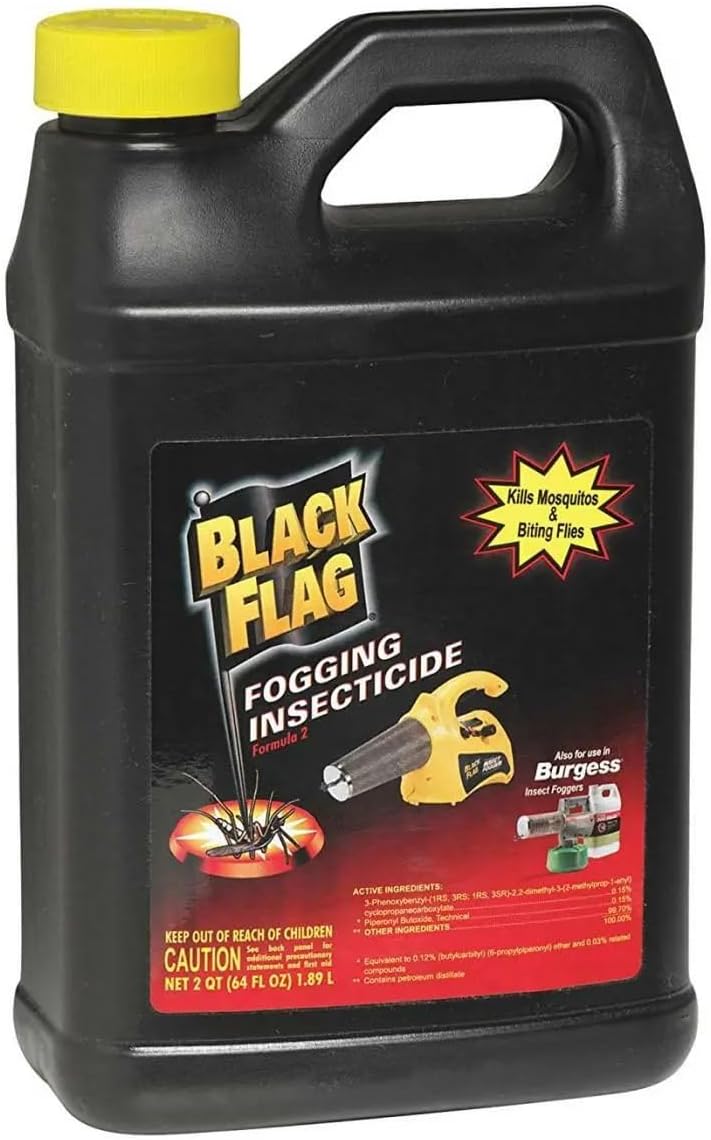
Black Flag Outdoor Fogging Insecticide, 64 oz (Pack of 3)
| Item Form | Spray |
|---|---|
| Target Species | Insects |
| Liquid Volume | 64 fluid ounces |
This Black Flag product is a concentrated outdoor fogging insecticide packaged as three 64-ounce spray bottles intended for use with propane or similar thermal foggers. In practice it is poured into a fogger reservoir and dispersed as a fine mist to treat yards, patios, and other outdoor spaces where mosquitoes and other insects congregate. The spray formulation and large volume mean fewer refills during a single treatment, and the product targets a broad range of insects. For a risk-averse buyer it offers straightforward, familiar chemistry from a long-standing brand and clear labeling of item form and target species. Important limitations are that it is formulated for outdoor use only and requires following safety directions for wind, people, and pets; it will not provide long-term residual control and must be reapplied for ongoing protection. Also, because the listing does not show active ingredient percentages, users who need specific chemical profiles for resistance management or sensitive landscapes may need to confirm that information elsewhere.
Best for: Buyers who prioritize a no-frills, proven outdoor fogging solution for occasional backyard treatments and who value a familiar brand and straightforward application.
Less Ideal for: Users needing documented active ingredient percentages for integrated pest management, those wanting long-lasting residual control, or people looking for indoor-safe options should consider alternatives.
- Large 64 fl oz bottle size reduces the need for frequent refills during a single treatment
- Pack of three supplies multiple treatments for typical yard sizes
- Spray/liquid form is compatible with propane thermal foggers and produces a fine mist for broad coverage
- Listing does not display active ingredient concentrations or full ingredient statement
- Not designed for indoor use and offers limited residual control after application
Verdict: A simple, high-volume outdoor fogging insecticide that lets cautious homeowners treat yards efficiently with fewer refills.
Choosing the Right Insecticide for Propane Fogger: Key Factors to Consider
Formulation and Fogger Compatibility
The chemical formulation directly affects how well an insecticide atomizes in a propane thermal fogger. Oil-based and solvent-based formulations behave differently when heated; some create fine, consistent droplets while others break into larger particles that settle quickly. Proper atomization matters because droplet size determines how deeply the fog penetrates vegetation and how long it stays airborne to contact flying insects.
If a product does not list thermal fogger or fogging as an approved application method, it may clog nozzles or degrade under heat. Consider manufacturer directions and whether the concentrate is designed to be diluted for fogging to avoid equipment damage and uneven coverage.
Target Pest Spectrum and Efficacy
Different active ingredients have varying effectiveness against mosquitoes, biting flies, gnats, and resting pests. Choose an insecticide with label claims that match the species you regularly encounter. For example, products with rapid knockdown act quickly on flying pests but may offer limited residual control on resting surfaces.
Check whether the label specifies control of both adult and immature stages when that is important for long-term suppression. Knowing which pests are primary targets helps you pick a chemistry that delivers measurable results in outdoor settings.
Residual Activity and Persistence
Residual control indicates how long treated areas remain hostile to returning or resting insects after fogging. Some chemistries provide only very short-term repellency or knockdown, while others leave effective residues on foliage and hard surfaces for days or weeks. Residual performance is influenced by UV exposure, rainfall, and the type of surface treated.
For large outdoor areas where repeated fogging is impractical, choose options with documented residual activity. If you need only immediate knockdown for an event, short-residual formulations may be acceptable.
Operator Safety and Non‑Target Considerations
Propane fogging disperses insecticide widely, so operator protection and minimizing harm to pollinators, pets, and beneficial insects are key. Look for clear label instructions on personal protective equipment, reentry intervals, and application timing to avoid pollinator foraging windows.
Consider drift and off-target movement, especially near water bodies or vegetable gardens. Products with lower toxicity to non-target organisms and specific restrictions around sensitive sites reduce environmental risk when applied correctly.
Mixing, Dilution, and Application Practicality
Ease of mixing affects how quickly you can prepare and deploy a fogger for routine treatments. Some concentrates pour and mix cleanly with water or approved carriers, while others require solvents or agitation. Check label dilution rates and whether specialized carriers are needed for thermal fogging.
Also consider storage stability and whether the prepared tank mix can sit between uses. Simple, clearly labeled mixing instructions reduce mistakes and downtime in the field.
When To Use Thermal Fogging In Landscapes
Thermal fogging is most useful when you need broad, rapid knockdown of flying pests or when treating hard-to-reach sheltered resting areas in dense vegetation. It is effective for perimeter treatments, around event sites, or to suppress adult mosquito populations quickly after emergence. Fogging works best under calm conditions so the fog moves slowly through vegetation and contacts insects.
bullets:[
- Use fogging during low wind and low pollinator activity times such as early morning or dusk.
- Avoid fogging during rain or immediately before irrigation to preserve efficacy.
Minimizing Drift and Protecting Pollinators
Because thermal fog produces small droplets that can travel, plan applications to avoid flowering plants and apiaries. Time treatments for when pollinators are not actively foraging and follow label reentry intervals for treated areas. Position yourself upwind of sensitive sites and consider physical barriers or temporary screening when treating near gardens with beneficial insects.
- Check weather forecasts and avoid applications if wind exceeds label-recommended limits.
- Keep people and pets away from treated areas until the fog has settled and label reentry times have passed.
Preparing Your Site and Equipment
Before fogging, remove or cover exposed food, open water containers, and delicate potted plants if they are within the application zone. Inspect the fogger for worn seals or clogged nozzles, and only use fuels and carriers recommended by the fogger manufacturer. Wear appropriate protective gear and have spill containment materials available.
bullets:[
- Clean the fogger according to the equipment manual after each use to prevent buildup and cross-contamination.
- Label and store concentrates in original containers and keep them in a locked, ventilated area away from children and pets.
Timing and Frequency of Treatments
Establish a treatment schedule based on pest pressure, seasonal activity, and rainfall. Some situations require weekly or biweekly applications during peak mosquito season, while others need only occasional spot treatments. Monitor pest populations and adjust frequency to avoid unnecessary applications.
bullets:[
- Increase frequency after heavy rains that create new breeding sites.
- Combine fogging with source reduction for long-term control rather than relying on fogging alone.
How We Chose the Best Insecticide for Propane Fogger
We selected insecticides that perform reliably with propane thermal foggers and have formulations compatible with atomizing heat-based equipment. Key evaluation criteria included droplet formation and atomization compatibility, efficacy against common outdoor pests such as mosquitoes and biting flies, persistence or residual activity on vegetation and resting surfaces, and the safety profile for operators and non-targets when used according to label directions. We prioritized products that are formulated for outdoor space treatments and that list fogging or thermal fogger application on the label to reduce the risk of equipment damage and ineffective dispersal. Exclusions: products that are labeled only for indoor use, misting systems incompatible with thermal heat, or concentrates requiring extensive reformulation were excluded. We also filtered out formulations that are known to rapidly volatilize or that leave heavy oily residues likely to foul fogger nozzles. The final list balances efficacy, safe handling, and practical in-field use for gardeners and landscape operators.
FAQ
Can I use any insecticide concentrate in a propane fogger?
Not all concentrates are suitable. Only use formulations that list thermal fogger or thermal fogging on the label. Using incompatible products can damage nozzles, produce incorrect droplet sizes, or create dangerous fumes.
How long should I wait before reentering a treated area?
Reentry intervals vary by product and are specified on the label. Usually you should wait until fog has settled and any specified reentry time has passed, which can range from a few minutes to several hours depending on the formulation and application rate.
Will fogging harm pollinators in my garden?
Fogging can affect pollinators if applied when they are active or if flowering plants are directly treated. Timing applications for periods of low pollinator activity and avoiding blooms reduces risk. Refer to the product label for pollinator precautions.
Can fogging replace habitat management or source control?
Fogging provides short-term adult suppression but does not eliminate breeding sites. Integrating source reduction, draining standing water, and habitat modification is necessary for sustained control.
Is protective equipment required during fogging?
Yes. Labels typically require respirators, eye protection, gloves, and protective clothing during mixing and application. Follow label PPE instructions to reduce inhalation and dermal exposure.
Final Verdict
Choose an insecticide for propane fogger use based on compatibility with thermal equipment, the pests you need to control, and the balance between immediate knockdown and residual protection. Prioritize products with clear fogging directions, manageable mixing procedures, and label precautions that protect operators and non-target organisms. By matching formulation and application timing to your site needs, you can achieve effective suppression while limiting environmental impact.
