

Note: This article contains affiliate links. If you click on these links and make a purchase, I may earn a small commission at no extra cost to you. This helps support my research and content. Read my full affiliate disclosure here.
If you grow raspberries, choosing the right insecticide matters for fruit yield and cane health. Raspberry plants are attacked by a range of insects at different stages of growth, and using treatments that match the pest, growth stage, and harvest interval helps maintain productivity without stressing the plants. This guide shortlists seven top insecticide options for raspberries and explains the criteria used to assess them. Expect practical notes on effectiveness, crop safety, and application timing to help you pick the right product for your patch. Read on for what we tested and why each factor matters.
Top Picks at a Glance
| Best Overall The best all-around choice for most situations | BioAdvanced 3-in-1 Insect, Disease & Mite Control Spray, 32 fl oz |  |
| Best Quality Built to a higher standard if you want something more solid | ferti-lome Spinosad Insecticide Concentrate (16 fl. oz.) |  |
| Best Value The sweet spot between price and what you get | Bonide Captain Jack's Bt Thuricide Ready-to-Use Spray, 32 oz |  |
| Best Budget The cheapest option that still gets the job done reliably | BioAdvanced Organics Neem Oil Spray, Ready-to-Use, 24 fl oz |  |
| Highest Rated A top-rated pick with lots of positive feedback | Monterey Spinosad Insecticide, 32 oz (concentrate) |  |
| Most Popular A crowd favorite that many people choose with confidence | Bonide Captain Jack's Deadbug Brew Ready-to-Use Spray, 32 oz |  |
| Best Seller A high-volume bestseller chosen again and again | BioAdvanced 3-in-1 Insect, Disease & Mite Control Spray, 24 fl oz |  |
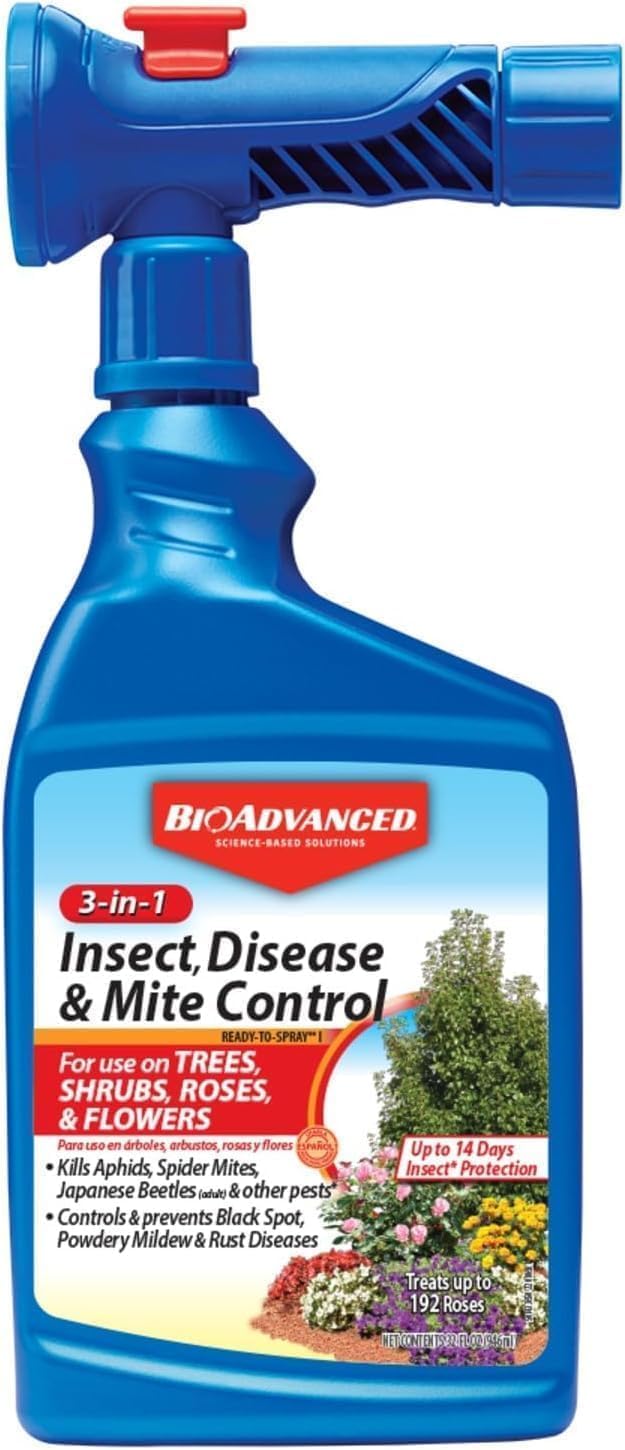
BioAdvanced 3-in-1 Insect, Disease & Mite Control Spray, 32 fl oz
| Unit Count | 32 Fluid Ounces |
|---|---|
| Item Form | Spray |
| Target Species | Aphids, caterpillars, leafminers, whiteflies and other listed pests |
| Active Ingredients | Tau-fluvalinate 0.61%, Tebuconazole 0.65% |
This BioAdvanced 3-in-1 spray is a performance-focused ready-to-use treatment that kills common pests on contact while also preventing and curing listed fungal diseases and controlling spider mites. It attaches to a garden hose for broad, even coverage and is labeled to treat up to 192 rose bushes, making it practical for medium to large beds and multiple shrubs. Key features include systemic ingredients plus contact control, rainproof protection lasting up to 14 to 30 days depending on labeled claims, and active ingredients targeting aphids, caterpillars, whiteflies, and mites. In use you spray foliage including undersides, and the product provides both immediate knockdown of insects and longer residual control so follow-up applications are less frequent. Limitations: it is a chemical treatment so users must follow safety directions and keep children and pets away until treated areas have dried, and it is not sold for use in New York. For someone prioritizing reliable, one-step control of aphids and associated fungal problems on roses and ornamentals, this bottle delivers convenient, broad-spectrum protection.
Best for: Gardeners who want a fast, high-performance one-step solution to control aphids and related pests while also preventing common fungal diseases on roses and ornamental plants.
Less Ideal for: Organic gardeners or those seeking nonchemical options should look for botanical or soap-based aphid controls instead.
- Combines insecticide, fungicide, and miticide in one ready-to-use formula for streamlined treatment
- Attaches to a garden hose for fast coverage of many plants including up to 192 roses
- Provides knockdown on contact and residual protection between labeled reapplications
- Controls a wide list of pests including aphids, spider mites, whiteflies, and caterpillars
- Contains chemical active ingredients that require careful handling and adherence to safety directions
- Not approved for sale in all states which limits availability for some users
Verdict: For gardeners focused on performance, this ready-to-spray 3-in-1 formula delivers fast aphid knockdown plus disease prevention in one convenient application.
ferti-lome Spinosad Insecticide Concentrate (16 fl. oz.)

| Unit Count | 16 Fluid Ounces |
|---|---|
| Item Form | Oil |
| Target Species | Foliage feeding worms, thrips and other listed pests |
| Specification Met | OMRI |
| Active Ingredients | Spinosad |
This ferti-lome spinosad concentrate is a water-soluble, OMRI-listed insecticide formulated to control bagworms, tent caterpillars, armyworms and a wide range of foliage-feeding pests on vegetables, trees, shrubs, flowers and fruit. You dilute the concentrate (label recommends about 4 tablespoons per gallon) and apply it as a spray to affected foliage, which makes it convenient for spot treatments or whole-plant coverage. The active ingredient spinosad is effective against chewing insects while being approved for organic gardening, so it fits into integrated pest management plans. Practical benefits include broad-spectrum control of caterpillars and similar pests, compatibility with many outdoor uses, and a concentrate format that stretches farther than ready-to-spray alternatives. Important limitations are that it targets primarily chewing and foliage-feeding insects rather than sap-sucking pests, and label directions and safety precautions must be followed for timing and application to protect pollinators and beneficial insects.
Best for: Gardeners who prioritize practical, cost-effective pest control for outdoor plants and want an organic-approved concentrate to treat bagworms and other caterpillars across trees, shrubs and edibles.
Less Ideal for: People seeking an all-in-one product for sucking pests or those who want a pre-mixed spray with no measuring and mixing steps.
- OMRI listed so suitable for organic gardening and certified operations
- Concentrate form lets you dilute for multiple applications and spot treatments
- Effective against bagworms, tent caterpillars and a broad range of chewing foliage pests
- Water-soluble formulation is easy to mix into spray equipment
- Targets primarily chewing insects and is not intended for sap-sucking pests like aphids
- Requires mixing and correct dilution which adds preparation time compared with ready-to-spray products
Verdict: A concentrated, OMRI-listed spinosad solution that gives practical, organic-approved control of bagworms and other chewing caterpillars across outdoor plants.
Bonide Captain Jack's Bt Thuricide Ready-to-Use Spray, 32 oz

| Unit Count | 32 Ounce |
|---|---|
| Item Form | Spray |
| Target Species | Insects |
| Active Ingredients | Bacillus Thuringiensi,Lapidapteran Active Toxins |
Bonide Captain Jack's Bt Thuricide is a ready-to-use biological spray that delivers Bacillus thuringiensis (Bt) to control caterpillars and worm-stage insects. You apply it with the trigger sprayer directly to the tops and undersides of leaves when you first see feeding damage; it is labeled for use on vegetables, fruit, shade trees and ornamentals and can be used up to the day of harvest on edibles. Because it kills by ingestion, treated pests stop feeding within a couple of days while birds, earthworms and many beneficial insects are largely unharmed. The product is convenient for small-to-medium infestations since it needs thorough coverage and repeat applications for new larvae. It is approved for organic gardening and comes in a 32-ounce bottle that is easier to use than concentrates for spot treatments, but using a ready-to-use bottle across a large property can become time consuming compared with hose-end or pressurized sprayers.
Best for: Gardeners who prioritize proven, low-risk biological control and want an easy spray for spot treating caterpillars on edible and ornamental plants; ideal for those who value safety around beneficials and pets.
Less Ideal for: People needing fast-contact knockdown for a large-scale outbreak or who must treat many acres quickly should consider concentrates or professional application methods instead.
- Targets caterpillars and worm-stage pests with a proven Bt active ingredient
- Safe for use on edible plants up to day of harvest when label directions are followed
- Ready-to-use trigger bottle requires no mixing for quick spot treatments
- Labeled for a wide range of plants including vegetables, ornamentals and shade trees
- Requires insects to ingest product so results are not immediate and depend on good spray coverage
- Ready-to-use bottle is less efficient for treating large areas compared with concentrates or hose-end applicators
Verdict: A convenient, organic-ready Bt spray that reliably controls caterpillars and worm pests while protecting beneficials, ideal for careful gardeners treating spot infestations.
BioAdvanced Organics Neem Oil Spray, Ready-to-Use, 24 fl oz

| Unit Count | 24 Fluid Ounces |
|---|---|
| Item Form | Oil |
| Target Species | Spider |
| Specification Met | OMRI |
| Active Ingredients | Clarified Hydrophobic Extract of Neem Oil 0.9% |
This BioAdvanced Organics Neem Oil spray is a ready-to-use 3-in-1 treatment for home gardeners who need broad protection from both pests and common fungal diseases. The trigger bottle applies neem oil in a clarified hydrophobic extract formulation that kills eggs, larvae, and adults of listed insects such as aphids, whiteflies, and spider mites on contact while also helping prevent and control fungal problems like black spot, powdery mildew, and rust when used on a 7 to 14 day schedule. It is labeled for roses, flowers, vegetables, fruits and shrubs and can be used up to the day of harvest, making it suitable for edible gardens. Practical benefits include convenience of a pre-mixed spray, multi-target control in one treatment, and OMRI recognition for organic gardening. Limits to expect are that it is a contact-based product so full coverage is required for effectiveness and repeated applications are needed for prevention, and results can be slower than synthetic pesticides for heavy infestations. The bottle is best for small to medium gardens and spot treatments rather than large-scale applications.
Best for: Gardeners who want a single, organic-friendly spray to manage common insects and fungal issues on roses, ornamentals, and edible plants without mixing concentrates.
Less Ideal for: Those managing very large beds or commercial plantings who need high-volume coverage or fast knockdown from systemic synthetic products should consider concentrate or professional options.
- Ready-to-use trigger spray for easy application
- Combines insecticide, miticide, and fungicide action in one product
- Labeled for use on edible plants and permitted up to day of harvest
- OMRI listed formulation suitable for organic gardening
- Effectiveness depends on thorough coverage because it works primarily on contact
- Requires repeated applications on a regular schedule for disease prevention
Verdict: A convenient ready-to-use organic neem spray that gives home gardeners broad, multi-purpose protection against common insects and fungal diseases.
Monterey Spinosad Insecticide, 32 oz (concentrate)

| Unit Count | 32 Fluid Ounces |
|---|---|
| Item Form | Oil |
| Target Species | Insects |
Monterey Spinosad is a concentrated, spinosad‑based insecticide designed for home garden use to control caterpillars, leafminers, borers, thrips and many other chewing and crawling pests. Mixed into a trigger, backpack, or hose‑end sprayer, it can be applied to ornamentals, vegetables, lawns, citrus and fruit trees; the concentrate format makes it easy to cover larger areas on a schedule. The product is OMRI listed, fast acting, and practically odorless since spinosad is derived from naturally occurring bacteria. Safety directions on the label are clear and recommend protective clothing and thorough washing after handling. Limitations are that it is a broad contact toxin so beneficial insects like bees and predatory insects can be affected if applied during bloom or while pollinators are active, and you must follow label rates and reentry intervals for edible crops. For gardeners who prioritize reliable, organic‑approved control of chewing insects, this concentrate is a practical tool; those wanting an ant‑specific baiting strategy or systemic option will need a different product.
Best for: Gardeners who want a reliable, organic‑approved concentrate to quickly reduce chewing and boring insect populations across vegetables, ornamentals and fruit trees and who are comfortable following label safety and mixing instructions.
Less Ideal for: People seeking a targeted ant bait or a systemic insecticide for soilborne pests or those who need a product safe to spray during active bloom are better off with specialist ant baits or systemic products.
- OMRI listed for use in organic gardening
- Effective against a wide range of chewing and boring insects including caterpillars and leafminers
- Concentrate format works with trigger, backpack, or hose‑end sprayers for flexible coverage
- Fast acting and essentially odorless when applied properly
- Contact action can harm beneficial insects if applied when pollinators are active
- Requires mixing and careful adherence to label instructions for safe use
Verdict: Choose this OMRI‑listed spinosad concentrate when you need dependable, fast control of chewing garden pests across vegetables, ornamentals and fruit trees.
Bonide Captain Jack's Deadbug Brew Ready-to-Use Spray, 32 oz

| Item Form | Spray |
|---|---|
| Target Species | Insects |
| Liquid Volume | 32 fluid ounces |
| Active Ingredients | Spinosad 0.5% |
Bonide Captain Jack's Deadbug Brew is a 32 oz ready-to-use spinosad spray formulated for organic gardening and aimed at controlling chewing and some leaf-feeding insects. You use it like a typical foliar spray, shaking the bottle and applying thoroughly to the tops and undersides of leaves on vegetables, fruit trees, and ornamentals. The active ingredient spinosad is effective against caterpillars, beetles, loopers, thrips, and similar pests and is labeled to spare many predatory beneficial insects when used as directed, which helps maintain biological control in the garden. The built-in spray nozzle makes application quick for small to medium beds and container crops. Limitations are that it is a contact and stomach poison so thorough coverage is required and repeat applications may be necessary for heavy infestations; it is not systemic and will not protect new growth after application. Also users must follow safety directions and avoid use when pollinators are active.
Best for: Gardeners who prioritize practical, low-fuss pest control for vegetables and fruit and who want an organic-approved spray they can apply quickly without mixing.
Less Ideal for: Large acreage growers or those who need long-lasting systemic protection should look for professional or systemic options instead.
- Contains spinosad, an approved active ingredient for organic gardening that targets many chewing pests
- Ready-to-use spray with integrated nozzle for simple, no-mixing application
- Label supports use on a wide variety of vegetables and fruit crops
- Designed to have limited impact on many predatory beneficial insects when used properly
- Works by contact and ingestion so thorough coverage and repeat applications are necessary
- Not systemic, so new growth after treatment is unprotected
Verdict: A convenient, organic-approved spinosad spray that delivers effective contact control of common foliage-feeding pests on cucurbits and other garden crops.
BioAdvanced 3-in-1 Insect, Disease & Mite Control Spray, 24 fl oz

| Unit Count | 24 Fluid Ounces |
|---|---|
| Item Form | Spray |
| Liquid Volume | 24 fluid ounces |
| Active Ingredients | 0.012% Imidacloprid, 0.014% Tau-fluvalinate, 0.015% Tebuconazole |
| Specification Met | EPA |
This ready-to-use BioAdvanced 3-in-1 spray combines an insecticide, miticide, and fungicide for broad protection on ornamental plants, including orchids listed among similar use sites. It is applied with a trigger sprayer to foliage and blooms, killing aphids, caterpillars, Japanese beetles and controlling spider mites on contact while the systemic components provide rainproof protection for up to 30 days. The inclusion of a fungicide helps manage common diseases such as powdery mildew and black spot, which can benefit orchids prone to fungal problems in humid conditions. Practical benefits are ease of use, multi-target control in one bottle, and coverage for dozens of plants per container. Important limitations are that the formula contains systemic insecticides so it must be used according to label directions and is not allowed for sale in several states, and specific orchid suitability is not detailed on the label so spot-testing on a few plants is prudent before wide application. Expect good short-term control but follow safety and timing guidance for flowering plants.
Best for: Home gardeners who want a single, easy-to-use product to manage common insect pests, mites, and fungal issues on ornamental plants and potted specimens while minimizing application time.
Less Ideal for: Specialist growers who require orchid-specific products or organic/chemical-free controls should consider targeted or softer alternatives tailored to sensitive species.
- Combines insect, mite, and fungal control in one ready-to-use spray for simplified treatment.
- Trigger-spray applicator makes spot and foliar application easy for container and potted plants.
- Systemic, rainproof protection that can last up to 30 days reduces reapplication frequency.
- Covers many common pests on ornamentals including aphids, caterpillars, Japanese beetles, and spider mites.
- Label does not list detailed directions specific to orchids so compatibility with sensitive species is not guaranteed.
- Not available for sale in several states which limits access depending on location.
- Contains multiple active ingredients so users must follow safety precautions and withholding periods for bloom treatments.
Verdict: A convenient all-in-one ready-to-use spray for casual orchid and ornamental growers who want combined insect, mite, and disease control with minimal fuss.
Choosing the Right Insecticide for Raspberries: Key Factors to Consider
Target Pest Spectrum
Raspberries are vulnerable to a range of insects including sap feeders, foliage chewers, cane borers, and scale insects. Choosing an insecticide that targets the specific pest you are seeing is critical because broad-spectrum products can harm beneficials and may be unnecessary for localized problems.
Inspect plants to identify whether damage is caused by chewing, sap-sucking, or boring insects. Match the active ingredient to the pest type and life stage. For example, some actives are systemic and control sap feeders, while contact materials are effective only against exposed chewing larvae. Knowing the pest spectrum reduces repeat sprays and preserves beneficial insect populations.
Crop Safety and Phytotoxicity
Raspberries can show sensitivitiy to certain chemistries, especially during hot weather or when plants are stressed by drought. Always check the label for explicit raspberry or cane-fruit allowances and any temperature or growth-stage cautions.
Phytotoxic reactions appear as leaf burn, tip dieback, or fruit spotting. Avoid applying products with known burn risk during hot midday hours, and do not mix incompatible products without label guidance. When in doubt, test a small area and observe plants for several days before treating the whole patch.
Timing and Preharvest Interval (PHI)
Timing treatments to pest life cycles and the harvest schedule is essential. The PHI determines how close to harvest an insecticide can be applied and directly affects whether a product is acceptable for raspberries destined for fresh eating.
For recurring pests, plan applications earlier in the season or use materials with short PHIs to protect fruit while meeting safety windows. Longer PHI products may be fine for nonbearing canes or when you are growing for processing with different residue tolerances. Always follow label PHI instructions to avoid unsafe residues.
Effect on Pollinators and Beneficials
Raspberries rely heavily on pollinators for good fruit set, and many beneficial predators and parasitoids help keep pest populations in check. Choose products and application timings that minimize exposure to bees and natural enemies.
Avoid spraying during bloom and prefer targeted applications, spot treatments, or systemic options with lower contact risk when pollinators are active. Consider nonchemical controls first for minor infestations and integrate insecticides only when thresholds are exceeded to protect beneficial insect communities.
Application Method and Equipment Needs
Different insecticides require different application methods: foliar spray, soil drench, systemic trunk injection, or baiting. The equipment you have-handheld pump sprayer, hose-end sprayer, or backpack sprayer-affects coverage and efficacy.
Spray droplet size, thoroughness of coverage, and nozzle choice influence control of pests on the undersides of leaves or inside cane axils. Products labeled for broadcast versus spot treatment also dictate how much product and time you will need. Choose an option compatible with your typical application routine to ensure proper coverage and reduce wasted product.
Residues and Food Safety Considerations
Because raspberries are frequently eaten fresh, residue considerations matter. Look for products with clear residue and PHI guidance and choose actives with rapid dissipation when you plan frequent harvests.
If you are selling or gifting fruit, follow the label for any maximum residue limits and recommended preharvest intervals. Organic-approved materials or physical controls can reduce chemical residue concerns but may require more frequent applications or different timing to be effective.
Common Raspberry Pests and How They Behave
Understanding the biology of common pests makes it easier to select the right control. Sap feeders such as aphids and scale feed on plant juices and can spread viruses; they are often found on new growth and undersides of leaves. Chewing insects like cane borers and certain caterpillars feed on foliage and fruit, and their damage is visible as holes or ragged edges. Cane-boring insects attack stems and can weaken or kill canes from the inside, so looking for frass or swellings is important for diagnosis.
- Inspect new shoots and the undersides of leaves weekly during the growing season.
- Note timing: many pests have distinct seasonal peaks, and early detection lets you target vulnerable life stages.
- Look for indirect signs like sticky honeydew, sooty mold, or wilting canes that may indicate concealed pests.
Nonchemical and Cultural Controls to Try First
Good cultural practices reduce pest pressure and can minimize the need for insecticides. Regular pruning opens the canopy, improves spray penetration, and reduces overwintering sites for pests. Remove and destroy infested canes promptly to limit population buildup. Maintaining plant vigor through proper irrigation and balanced fertilization reduces susceptibility to many insects.
- Encourage beneficial insects by planting companion flowers and avoiding broad-spectrum sprays during bloom.
- Use physical barriers such as row covers for short-lived infestations when pollination is not needed.
- Sanitation: remove fallen fruit and debris that can harbor pests and disease.
Safe Application Timing to Protect Pollinators
Plan sprays outside of bloom and during times when pollinators are least active. Early morning or late evening applications reduce direct exposure to bees and other foragers. When a spray is necessary during bloom, choose products labeled as lower risk to pollinators and apply in targeted ways to avoid contacting flowers.
- Check weather: avoid spraying before rain that could wash treatments onto flowers or into waterways.
- If a product requires multiple applications, space them according to label instructions and monitor pest levels between treatments.
Monitoring and Thresholds for Treatment
Routine scouting is the backbone of timely, effective control. Establish a simple monitoring routine: inspect a set number of canes or leaves each week and record pest counts or visible damage. Action thresholds depend on the pest and whether you are growing for fresh market, processing, or home use, but treat when pest numbers or damage threaten yield or plant health.
- Keep a seasonal log to track pest peaks and treatment effectiveness.
- Use sticky traps or pheromone traps for some pests to help with early detection and timing.
Mixing and Compatibility Basics
Follow label directions for mixing rates, order of addition, and compatible tankmates. Incompatible combinations can reduce efficacy or cause phytotoxicity on raspberries. If combining products, test on a small section first and observe for adverse reactions over several days.
- Avoid adjuvants or wetters that the label does not explicitly allow for raspberries.
- Rinse sprayers thoroughly between different chemistries to prevent cross-contamination.
How We Chose the Best Insecticide for Raspberries
We focused on products that are commonly used in small-scale and hobby raspberry plantings and that offer clear instructions for timing and rate on cane fruit. Evaluation criteria emphasized measurable, garden-relevant dimensions: pest spectrum and documented efficacy, crop safety and phytotoxicity risk on raspberries, preharvest interval and re-entry limits, user application methods and equipment compatibility, and environmental impact including pollinator exposure and persistence. To generate the shortlist we required clear labeling for cane fruit, accessible application guidance for home gardeners, and evidence of effectiveness against the primary raspberry pests. Products lacking explicit instructions for raspberries or with unclear harvest intervals were excluded. We did not consider cost or brand reputation in the selection; instead we prioritized garden-safe directions and transparent performance claims applicable to raspberry culture.
FAQ
Can I spray insecticide while raspberries are in bloom?
Spraying during bloom is risky for pollinators. It is usually advisable to avoid broad-spectrum contact insecticides when flowers are open. If control during bloom is unavoidable, select products with low pollinator toxicity and apply in the early morning or late evening when bees are less active.
How soon before harvest can I apply treatments?
That depends on the product and its labeled preharvest interval. Some materials have short PHIs measured in days, while others require longer intervals. Always follow the label to ensure residue limits are met and fruit is safe for consumption.
Are there organic options that work on raspberries?
Yes, several organic-approved materials can reduce certain pests, particularly sap feeders and some larvae. Organic options may require more frequent applications and careful timing, but they are often favored for minimal residue and pollinator safety.
Will spraying harm beneficial insects in my raspberry patch?
Some insecticides will harm beneficials, especially broad-spectrum contact sprays. Targeted application, selective actives, and timing outside of predator activity and bloom can reduce harm. Integrating nonchemical practices also helps preserve beneficial populations.
How often should I reapply an insecticide?
Reapplication intervals depend on the active ingredient, pest pressure, and label instructions. Some products require treatments every 7 to 14 days under high pressure, while systemic or longer-lasting materials may need less frequent applications. Monitor pest levels to guide timing.
Final Verdict
Choose an insecticide for raspberries based on the specific pests present, crop-safety notes for cane fruit, and the timing relative to bloom and harvest. Prioritize materials with explicit raspberry labeling, short or appropriate PHIs for your harvest schedule, and lower risk to pollinators when fruit set is important. Balanced decisions blend scouting, cultural controls, and selective chemical use. When you match control method to pest biology and application timing, you protect both yield and beneficial insects while keeping your raspberry patch productive and safe.
