

Note: This article contains affiliate links. If you click on these links and make a purchase, I may earn a small commission at no extra cost to you. This helps support my research and content. Read my full affiliate disclosure here.
Choosing the right mulch for berry plantings changes how your patch performs through the season. The wrong material can hold too much water, raise soil pH, or encourage pests. The shortlist below focuses on mulches suited to common berry types and growing situations, including established beds and new plantings. This guide covers six top options selected for their moisture management, soil chemistry effects, and ease of application. You will also find the decision factors we used to evaluate each material, plus practical tips for laying and maintaining mulch in berry beds.
Top Picks at a Glance
| Best Overall The best all-around choice for most situations | EZ Straw Seeding Mulch with Tackifier, 1 cu. ft. Bale |  |
| Best Quality Built to a higher standard if you want something more solid | Plantonix Coco Chips Mulch Brick (10 lb) – Compressed Coconut Husk Chips |  |
| Best Value The sweet spot between price and what you get | USA PINESTRAW Long Needle Pine Straw Mulch, Square Bale |  |
| Best Budget The cheapest option that still gets the job done reliably | Legigo Coco Coir Chips, 2-Pack Organic Coconut Husk Potting Mix |  |
| Most Popular A crowd favorite that many people choose with confidence | HealthiStraw GardenStraw Premium Garden Mulch, 3 cu ft |  |
| Best Seller A high-volume bestseller chosen again and again | Hull Farm Cocoa Bean Shell Mulch, 2 Cubic Feet |  |
EZ Straw Seeding Mulch with Tackifier, 1 cu. ft. Bale

| Indoor Outdoor Usage | Outdoor |
|---|---|
| Other Special Features of the Product | Organic |
| Moisture Needs | Moderate Watering |
| Material Features | Natural |
| Unit Count | 1 Count |
EZ Straw Seeding Mulch is a processed straw product blended with a natural tackifier that makes the straw cling together and form a protective mat over newly sown grass seed. You use it by spreading the straw lightly over seeded areas to protect seeds from wind, heavy washout, and birds while retaining moisture to promote faster germination. Notable features include the biodegradable natural material, an all‑natural tackifier that breaks down and feeds soil, and convenient UV‑protected bagging for storage. In practice it reduces the need for frequent watering, helps seed stay put on slopes and bare patches, and decomposes cleanly into the lawn as seedlings establish. Limitations are that it covers visually until the seed grows in so it is not decorative, and it does not replace soil preparation or starter fertilizer when those are needed for poor soils.
Best for: Buyers looking for a proven, low‑risk way to protect and speed lawn seed germination who value natural materials and social proof from other gardeners.
Less Ideal for: Homeowners who need an instant finished look or who require soil amendments and fertilizers in addition to surface protection should consider other products.
- Natural biodegradable straw that decomposes and feeds soil
- Tackifier binds straw to protect seed from wind, washout, and birds
- Helps retain moisture for faster germination and less frequent watering
- Packaged in a UV protected bag with handle for convenient storage
- Visible until grass establishes, so not a finished landscaping look
Verdict: Use this natural tackified straw mulch when you want a reliable, biodegradable way to protect seed and speed lawn germination.
Plantonix Coco Chips Mulch Brick (10 lb) – Compressed Coconut Husk Chips

| Unit Count | 160 Ounce |
|---|---|
| Item Type Name | Soil and Soil Amendments |
| Brand Name | plantonix |
| Volume | 15 gallons |
Plantonix Coco Chips arrive as a compact 10 pound brick that hydrates and expands into lightweight coconut husk chips for use as mulch, soil amendment, or terrarium bedding. You soak or wet the block to break it apart, then spread the chips over garden beds, containers, orchid pots, or raised beds to reduce evaporation and moderate soil temperature. The product is pre-screened, washed, and aged to remove dirt and rocks, and the low electrical conductivity and near-neutral pH make it safe to mix with potting mixes. Practical benefits include improved drainage and aeration compared with heavy wood mulches, long-lasting moisture retention that can reduce watering frequency, and an attractive tropical look. Important limitations are that you must rehydrate and break up the compressed brick before use which adds prep time, and coco chips do not supply nutrients so you will still need to fertilize regularly. Also note the safety warning about dust and keeping it away from children and pets during handling.
Best for: Buyers who prioritize reliable, consistent mulch performance and want a sustainable, low-maintenance material that retains moisture and improves soil structure for beds and containers.
Less Ideal for: Gardeners who need a nutrient-rich soil amendment or who prefer a no-prep, ready-to-spread loose mulch should consider alternatives.
- Made from 100% recycled coconut husks, a renewable alternative to peat and wood mulches
- Pre-screened and washed to remove dirt, rocks, and excess fiber
- Excellent at retaining moisture while maintaining airflow and drainage
- Lightweight and long-lasting so it does not compact like some organic mulches
- Requires soaking and manual breakup of the compressed brick before use
- Does not provide plant nutrients and should be used with a fertilizer plan
Verdict: A dependable, renewable mulch solution that holds moisture and improves aeration without compacting, ideal for gardeners who want consistent performance.
USA PINESTRAW Long Needle Pine Straw Mulch, Square Bale

| Material Type | Pine |
|---|---|
| Other Special Features of the Product | Organic |
| Package Size Name | Square Bale |
| Unit Count | 1 Count |
This product is a single premium square bale of long-needle pine straw intended for use as organic mulch around beds and shrubs. It is typically spread 2 to 4 inches deep around plants, pathways, and trees to suppress weeds, retain soil moisture, and protect roots from temperature swings. Because it is long-needle pine straw, it interlocks well and resists blowing away better than chopped mulches, and it decomposes slowly to add organic matter without dramatically altering soil texture. Practical benefits for blueberry plantings include good acidifying potential over time and excellent moisture retention, both helpful for blueberry health. Limitations are that you will need multiple bales for larger beds and periodic top-ups each season as the straw settles and decomposes. Also pine straw can be bulky to handle compared with bagged compost or wood chips, and it does not provide immediate nutrient boosts the way composted mulches do.
Best for: Gardeners seeking a low-maintenance, organic mulch for acid-loving shrubs who want better moisture retention and natural weed suppression in small to medium beds.
Less Ideal for: People who need a sterile, compacted mulch for container-grown blueberries or those wanting immediate nutrient-rich soil amendments rather than a slow-decomposing cover.
- Organic long-needle pine straw that naturally suppresses weeds
- Good moisture retention that reduces watering frequency
- Interlocking needles resist wind displacement better than loose shredded mulches
- Slow decomposition adds organic matter over time without rapid nutrient release
- Sold as single square bale so multiple purchases needed for larger beds
- Bulky to handle and store compared with bagged options
Verdict: Choose this long-needle pine straw bale if you want an organic, moisture-retaining mulch that stays put and supports acid-loving plants like blueberries.
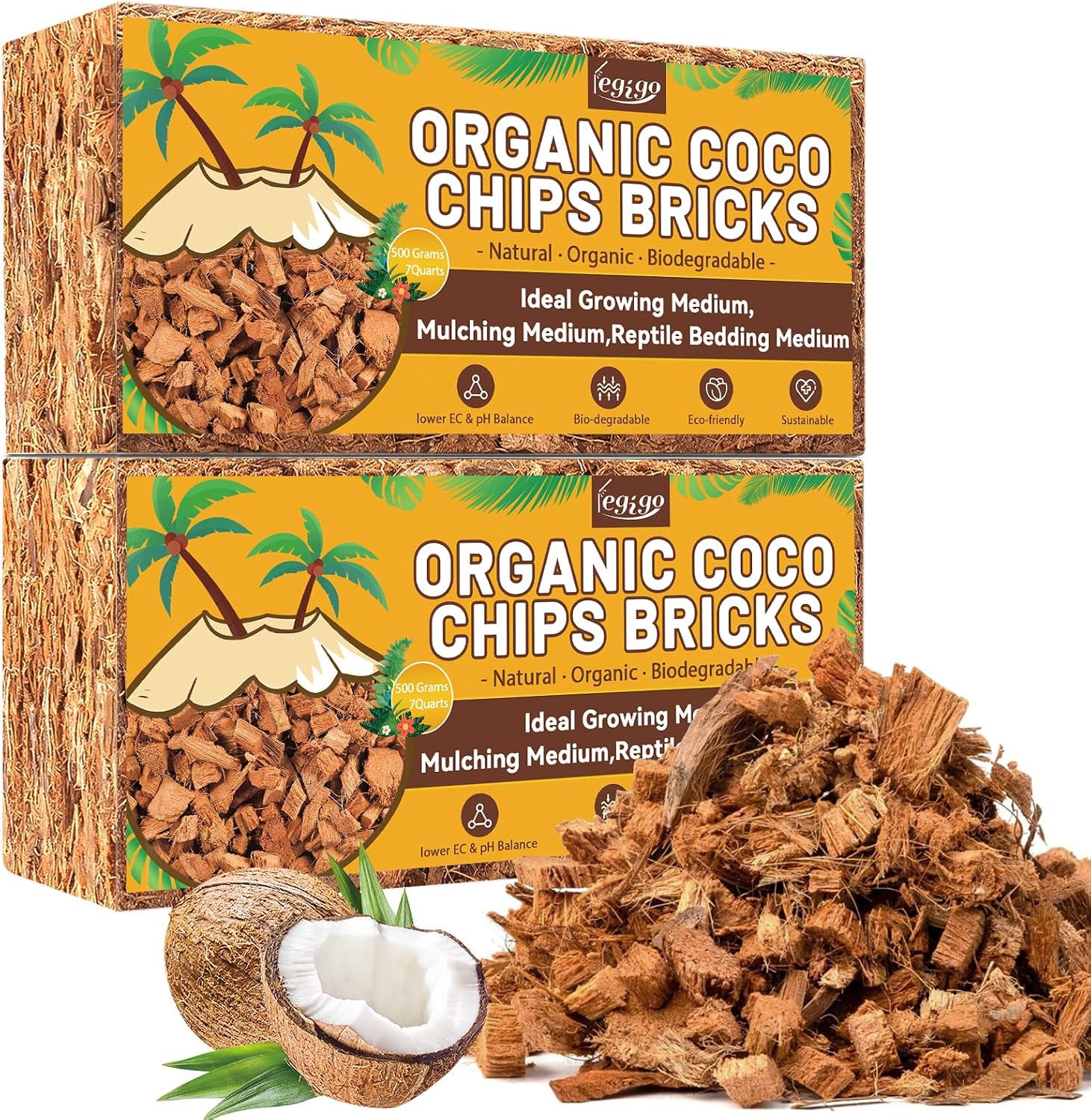
Legigo Coco Coir Chips, 2-Pack Organic Coconut Husk Potting Mix
| Brand | Legigo |
|---|---|
| Material | Coconut Coir |
| Number of Packs | 2 |
| Volume | 7 quarts |
These Legigo coco coir chips come as two compressed bricks that soak and expand into a chunky coconut-husk substrate useful as a soil amendment, orchid mix, or mulch. Use them by rehydrating the bricks with water, then mixing the expanded chips into potting soil or applying a layer as mulch around plants. The material holds 4–6 times its weight in water while maintaining porosity, so it helps retain moisture for berries without compacting and also improves drainage to reduce root rot risk. Low electrical conductivity and a near-neutral pH make it safe to mix with fertilizers and other media. Because the chips are chunky and fibrous they are long lasting as a mulch and suppress weeds while letting oxygen reach roots. The product is lightweight and compact to store when dry, but you do need to plan for soaking and expansion and buy enough volume for larger beds since two bricks expand to a limited amount. For heavy-feeding or high-nutrient crops you will still want to blend with compost or fertilizer rather than rely on coir for fertility.
Best for: Gardeners looking for an affordable, easy-to-store soil amendment or mulch that improves moisture retention and drainage for small berry patches or container berries.
Less Ideal for: Large-scale plantings or growers who need a complete, nutrient-rich growing medium rather than a moisture-retentive amendment.
- High water retention while remaining porous, so it supplies steady moisture without waterlogging
- Low EC and mildly acidic pH suitable for most plants and safe to mix with fertilizers
- Chunky fibrous texture improves drainage and aeration when mixed into potting media
- Compressed bricks store compactly and expand 5–7× after soaking for easy handling
- No inherent nutrients so it must be combined with compost or fertilizer for fruiting plants
- Two bricks expand to a limited volume, requiring additional purchases for larger beds
Verdict: A budget-friendly, long‑lasting coco coir mulch and soil amendment that holds moisture and improves aeration for small berry plantings when mixed with compost or fertilizer.
HealthiStraw GardenStraw Premium Garden Mulch, 3 cu ft

| Net volume | 3 cu ft |
|---|---|
| Intended use | Garden mulch, lawn seeding, compost-friendly |
| Material | 100% wheat straw |
| Source | Sustainably sourced, non-GMO |
HealthiStraw GardenStraw is a 3 cubic foot compressed bale of cleaned wheat straw formulated for use as garden mulch and seed protection. It is designed for vegetable, herb, flower and shrub beds where you want a lightweight, compostable mulch that retains soil moisture and suppresses weeds. The straw is processed to reduce dust and stray seeds and the short, specially cut fibers interlock when watered so the mulch stays in place without chemical tackifiers. For bushes you can apply a 2 to 3 inch layer around the drip line to cut evaporation, reduce compaction and gradually add organic matter as it breaks down. Practical benefits include easy spreading from a compressed bale, fast composting into the soil, and reduced watering needs. Limitations are that straw is less decorative than bark or wood chips and will decompose faster, so it requires periodic replenishing; it also provides less long-term weed barrier than heavier mulches. For gardeners focused on soil health and moisture conservation, it is a straightforward, low-risk choice.
Best for: Gardeners who prioritize soil health and want an easy-to-apply, compostable mulch for shrubs and mixed beds that reduces watering and improves organic matter over time.
Less Ideal for: People seeking a long-lasting, decorative mulch or a heavy-duty weed barrier for high-traffic beds should consider wood chips or stone instead.
- Cleaned, non-GMO wheat straw with reduced dust and seeds
- Fibers interlock when wetted so the mulch stays in place without binders
- Helps retain soil moisture and can reduce watering needs substantially
- Composts quickly and adds organic carbon to improve soil structure
- Decomposes faster than wood mulches so it needs topping up more often
- Less decorative and provides a lighter-duty weed barrier compared with heavier bark or rock mulches
Verdict: A clean, fast-composting straw mulch that conserves moisture and improves soil health, making it a safe, practical choice for mulching bushes.
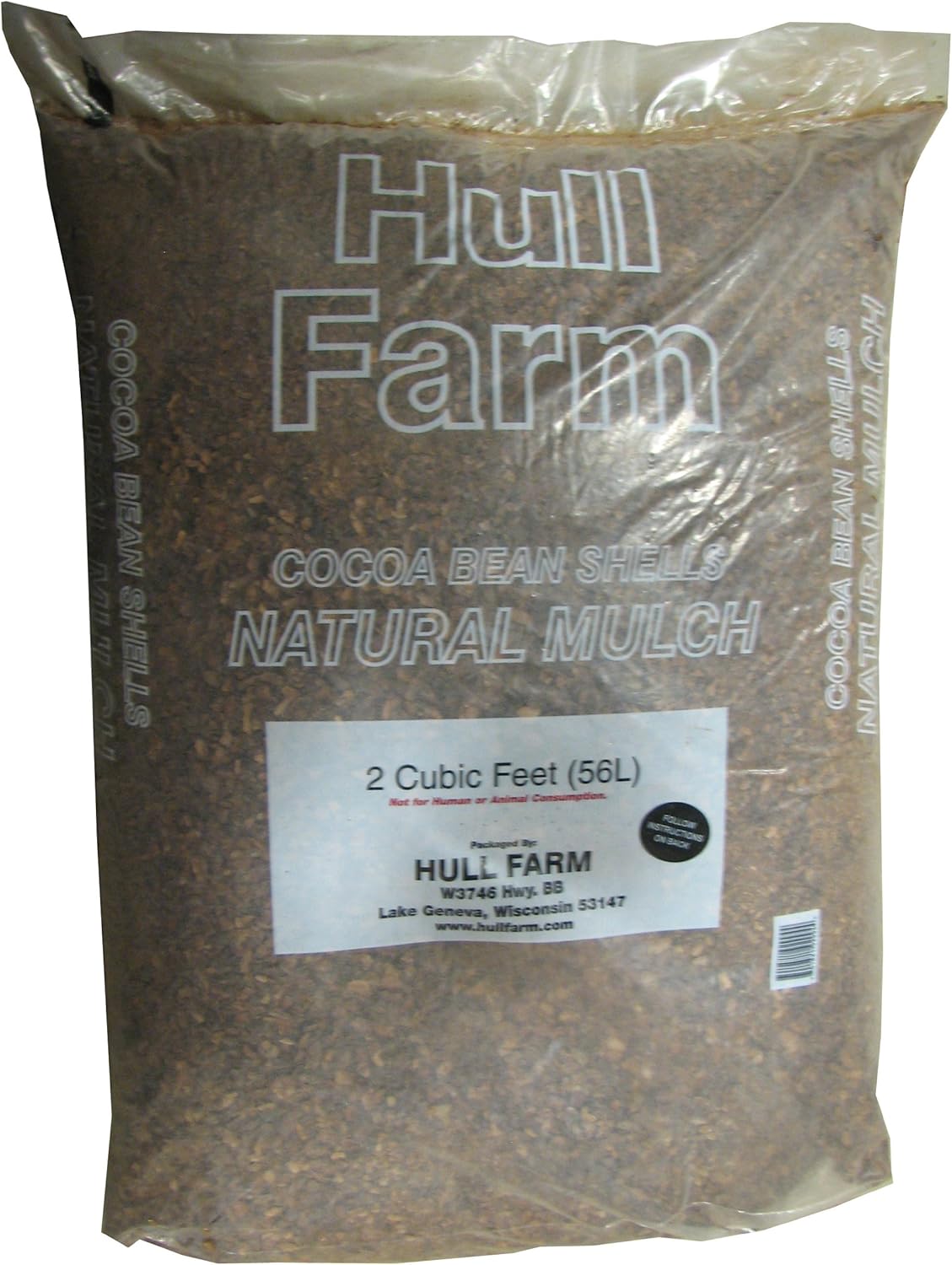
Hull Farm Cocoa Bean Shell Mulch, 2 Cubic Feet
| Brand Name | Hull Farm |
|---|---|
| Model Name | 50150 |
| Material | Plastic |
| Package Weight | 12.72 kg |
Hull Farm Cocoa Bean Shell Mulch is a bagged organic mulch made from cocoa bean shells marketed for landscape beds. It is typically applied as a 1 to 3 inch layer around ornamentals or edibles to suppress weeds, conserve soil moisture, and improve appearance; the shells also slowly break down and provide a small nutrient contribution with an approximate analysis near 2.5-1-3. The product is easy to spread from the 2 cubic foot bag and leaves a fine, attractive textured surface that is less likely to mat than some other fine mulches. Because it is organic it will decompose over time, so plan to replenish annually or as needed. Note that cocoa shell mulch can attract pets if they are tempted to eat it and should be used with care around animals and children; also its small particle size means it can compact in heavy rain and may require light fluffing. For gardeners looking for an attractive, nutrient-contributing mulch that supports moisture retention and weed suppression, this is a practical option for tomato beds when used correctly.
Best for: Gardeners who prioritize plant performance and want a decorative organic mulch that also contributes modest nutrients and conserves moisture for productive beds such as tomatoes.
Less Ideal for: Those with pets that scavenge mulch or gardeners who prefer an inert, longlasting inorganic mulch that will not decompose over a season.
- Adds a mild, slow-release nutrient contribution (approx. 2.5-1-3) as it breaks down
- Fine, attractive texture that spreads evenly and helps retain soil moisture
- Sold in a manageable 2 cubic foot bag for easy handling and targeted application
- Less likely to mat compared with very fine composts, maintaining surface airflow
- Can attract pets or wildlife that may chew or eat the shells
- Small particles can compact after heavy rain and may need occasional fluffing
Verdict: Choose this cocoa shell mulch when you want an attractive organic mulch that helps retain moisture and gives tomatoes a light nutrient boost as it decomposes.
Choosing the Right Mulch for Berries: Key Factors to Consider
Moisture Management and Drainage
Mulch controls the balance between conserving soil moisture and allowing excess water to drain away. For berries, which dislike both persistent waterlogging and repeated drying, choose a mulch that evens out soil moisture across weather extremes.
A material that holds too much water can trigger root rot and fungal issues, especially in heavy clay soils. Conversely, an overly light, fast-draining mulch will not protect new roots during hot, dry spells. Consider how local rainfall patterns and your soil texture affect the mulch's behavior.
Effect on Soil Acidity and Nutrient Release
Different mulches change soil chemistry as they break down or leach compounds. Many berry types prefer slightly acidic soils, so select mulches that either maintain acidity or at least do not push pH upward.
Organic mulches release nutrients as they decompose, which can be beneficial but may temporarily immobilize nitrogen as microbes digest high-carbon materials. Know whether your mulch will add or remove acidity over time, and plan soil tests and fertilizer timing accordingly.
Weed Suppression Effectiveness
Mulch reduces light reaching weed seeds and makes hand-weeding easier, but not all mulches form an equal barrier. Dense, closely packed mulches and materials applied at adequate depth prevent common row weeds more effectively than very coarse or patchy coverings.
Weed control affects fruit quality because less competition means more available water and nutrients for the canes or bushes. Consider how often you can reapply or top-dress the mulch when assessing long-term weed suppression.
Decomposition Rate and Maintenance Frequency
How quickly a mulch breaks down determines how often you need to add more and whether it will become part of the soil organic matter. Fast-decomposing mulches feed the soil but require more frequent top-ups and can interfere with spring soil work.
Slow-decomposing materials reduce maintenance but may be harder to incorporate into soil when preparing new plantings. Match decomposition rate with how much annual labor you want to commit and whether you prefer to build soil organically over several seasons.
Pest and Disease Considerations
Some mulches attract rodents, slugs, or other pests that can damage crowns and roots, while others can harbor fungal spores if kept too wet. Materials placed directly against canes or trunks can create damp microclimates that encourage disease.
Select mulch types and application methods that minimize contact with stems and allow air movement. Monitor mulched beds for signs of pests and adjust material or depth if problems emerge.
Handling, Availability, and Cost of Replacement
Practical aspects like how easy a mulch is to transport, spread, and source locally matter for backyard gardeners. Bulky, heavy materials are harder to move and may require more effort or a helper. Some mulches are seasonal and harder to find at certain times of year.
Also consider how often you will need to replace or top-dress the material, which affects long-term cost and labor even if the upfront purchase seems inexpensive.
Mulch Depth and Timing for Berry Plantings
Proper depth and timing determine whether mulch helps or harms berry plants. A typical target depth is enough to suppress weeds and conserve moisture while still allowing water to reach roots readily.
Apply fresh mulch after soil has warmed in spring for new plantings, and top-dress again in late fall to protect roots over winter. Avoid piling material against canes and stems; leave a small exposed collar to reduce rot risk.
- Spring application after soil warms reduces slug activity
- Maintain a 2 to 4 inch layer for most berry types depending on material
- Leave a 1 to 2 inch gap at stem bases to improve air circulation
Mulching in Containers and Raised Beds
Container-grown berries and raised beds dry more quickly than in-ground plantings and may benefit from slightly more frequent mulching. Use lighter-weight or finer-textured mulches to avoid compacting the medium.
Because potting mixes already contain nutrients and often have controlled pH, choose mulches that will not drastically change that balance. Refreshing thin layers each season is often enough in containers.
- Use 1 to 2 inches in containers to avoid root suffocation
- Monitor moisture more closely in pots after mulching
Seasonal Care and Winter Protection
Mulch serves both as a moisture regulator and as insulation against winter temperature swings. In colder climates, a slightly thicker winter layer reduces freeze-thaw heaving and root exposure, while in milder climates, moderate coverage prevents winter wetness problems.
Remove or thin mulch in early spring to allow soil to warm and reduce disease pressure as conditions become favorable for fungal growth.
- Add an insulating layer before the first hard freeze in cold regions
- Thin mulch in spring to encourage soil warming and early root activity
Preventing Common Problems with Mulched Berry Beds
Common issues include slug and vole activity, stem rot from piled mulch, and nutrient tie-up from high-carbon materials. Good placement and material choice minimize these risks.
Create a maintenance routine: inspect for pests, fluff compacted mulch, and replace degraded material annually as needed. Keeping paths clean and avoiding dense piles near crowns reduces pest harborage.
- Avoid excessive mulch depth around crowns to reduce stem rot
- Use physical barriers or traps where vole activity is high
- Choose balanced mulches to reduce nitrogen tie-up
Companion Practices That Improve Mulch Performance
Mulch works best combined with proper irrigation, soil testing, and pruning. Adjust watering after applying mulch because reduced evaporation often means less frequent irrigation is needed.
A soil test will tell you whether a mulch might exacerbate pH or nutrient imbalances. Prune for airflow and sunlight so canes dry more quickly after rain and are less disease-prone.
- Reduce irrigation frequency but monitor moisture to avoid underwatering
- Test soil pH annually to track changes from mulch decomposition
How We Chose the Best Mulch for Berries
We prioritized factors that directly affect berry health and gardener effort. Key evaluation criteria included moisture retention and drainage behavior to avoid root rot or drought stress; influence on soil pH and nutrient release because many berries prefer slightly acidic conditions; weed suppression effectiveness to reduce competition and maintenance; longevity and breakdown rate so you know how often to refresh mulch; pest and disease risk related to material choice and placement; and ease of sourcing and handling for typical home gardeners. Products and materials that dramatically altered soil chemistry in an unsuitable direction or that were widely reported to harbor pests or disease were excluded. We also filtered out mulches that are impractical for small-scale berry rows or container-grown berries due to weight or application difficulties. The final picks are materials and mixes that balance seasonal performance with gardener management needs.
FAQ
How deep should I mulch berry plants?
Aim for about 2 to 4 inches for most in-ground berry beds. Lighter materials may require a slightly thicker layer to be effective, while containers usually need only 1 to 2 inches.
Will mulch change the soil pH for my berries?
Some mulches influence soil acidity as they break down. Acidic-friendly materials tend to support berries that prefer lower pH, while alkaline-raising mulches should be avoided if your soil is already neutral or high.
When is the best time to apply mulch around berry plants?
Apply mulch in late spring after soil has warmed to reduce excess moisture in cool weather, and add an insulating top-up in late fall in colder regions to protect roots over winter.
Can mulch increase pest problems in berry beds?
Certain mulches can attract slugs, voles, or other pests if kept too deep or placed against stems. Keeping mulch slightly away from crowns and monitoring for pests reduces the risk.
How often should I replace or top-dress mulch for berries?
Frequency depends on the material's decomposition rate. Fast-breaking materials often need annual topping, while woody or slow-decomposing mulches may last several seasons before replenishment.
Is it OK to use grass clippings around berry plants?
Fresh grass clippings can be used in thin layers if dried first to avoid matting and heat. Thick, wet clippings can compact, create odor issues, and potentially tie up nitrogen until they decompose.
Final Verdict
Choose a mulch that balances moisture control, pH compatibility, and maintenance needs for your berry type and site. Accept tradeoffs: faster-decomposing mulches build soil quickly but need more frequent replenishment, while slower materials lower maintenance but change the soil more slowly. Prioritize moisture management and weed suppression first, then match decomposition rate and pest risk to your gardening routine. With the right material and proper application, mulch will reduce labor and support healthier, more productive berry plants.
