

Note: This article contains affiliate links. If you click on these links and make a purchase, I may earn a small commission at no extra cost to you. This helps support my research and content. Read my full affiliate disclosure here.
Pruning and removing palm fronds or slender trunks requires a chainsaw built to deliver reach, control, and safe starts in warm, dusty environments. You need a tool that cuts through fibrous, often abrasive palm tissue without kicking or bogging down and that is manageable from a ladder or pole extension. This guide shortlists the top picks for chainsaws for palm tree work and explains the tradeoffs between power source, bar length, and handling. We evaluated options across practical garden criteria including cutting reach, user safety features, and duty-cycle suitability so you can match a chainsaw to how often and how high you will be working. Read on for the buying factors and gardener-focused guidance before the product list.
Top Picks at a Glance
| Best Quality Built to a higher standard if you want something more solid | WORX 20V 10" Cordless 2-in-1 Pole Saw and Chainsaw (WG323) |  |
| Best Value The sweet spot between price and what you get | J-KU 2-in-1 Pole Saw with 6" Mini Chainsaw and Two 4.0Ah Batteries |  |
| Highest Rated A top-rated pick with lots of positive feedback | EIDOWA 48cc Gas Pole Saw with 16 ft Reach and 11.8" Bar |  |
| Most Popular A crowd favorite that many people choose with confidence | SEESII 2-in-1 Electric Pole Saw with Brushless Motor and 6" Mini Chainsaw | 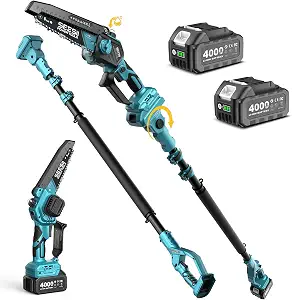 |
| Best Seller A high-volume bestseller chosen again and again | SEESII P6 Plus 2-in-1 Cordless Pole Saw and Mini Chainsaw (6" Bar) |  |
WORX 20V 10" Cordless 2-in-1 Pole Saw and Chainsaw (WG323)

| Power Source | Battery Powered |
|---|---|
| Horsepower | 1 hp |
| Chain Speed | 12.5FT/S |
| Chain Length | 10 inches |
| Included Components | Pole Saw, Chain Saw, 20V Battery, Charger |
The WORX WG323 combines a compact 10" chainsaw with a detachable pole to give roughly 10 to 12 feet of reach for pruning higher branches while keeping you on the ground. You can use it as a pole saw for trimming limbs and as a standalone chainsaw for cutting up fallen branches. Key features that make it practical are the tool-free pole attachment, auto-chain tension and auto-lubrication systems, and an on-pole trigger so you can start and stop without lowering the tool. The included 20V 2.0Ah PowerShare battery powers other WORX tools and is adequate for light- to medium-duty pruning tasks. At about 10 pounds assembled, it is relatively easy to maneuver overhead for moderate periods. Limits to expect: the 10" bar is best for small to medium limbs typical of yard maintenance and palm fronds rather than thick structural limbs, and battery runtime will constrain long sessions without spare batteries. For palm tree work it handles frond trimming and smaller cross limbs well but is not intended for heavy trunk cutting.
Best for: Buyers who need a nimble, performance-focused tool for regular yard pruning and palm frond trimming and who value quick tool conversion and low-maintenance chain systems.
Less Ideal for: Not the best choice for cutting large-diameter trunks or commercial tree removal where a longer bar, extended runtime, and more torque are required.
- Two-in-one design converts quickly between pole saw and handheld chainsaw for versatility
- Auto-chain tension and auto-lubrication reduce maintenance and keep cutting performance consistent
- Cordless 20V PowerShare battery is compatible with other WORX tools for asset sharing
- Lightweight and ergonomically balanced for easier overhead work
- On-pole trigger lets you control the saw without lowering it, improving safety and efficiency
- 10" bar limits the maximum limb diameter it can cut cleanly compared with larger saws
- Runtime depends on the included 2.0Ah battery so long jobs require spare batteries
Verdict: A lightweight, low-maintenance 2-in-1 pole saw that delivers convenient reach and solid performance for trimming palms and routine yard pruning.
J-KU 2-in-1 Pole Saw with 6" Mini Chainsaw and Two 4.0Ah Batteries

| Power Source | Battery Powered |
|---|---|
| Horsepower | 800 watts |
| Chain Speed | 26.2 ft/s |
| Chain Length | 6 inches |
The J-KU 2-in-1 pole saw is a battery-powered pole trimmer that converts quickly into a compact handheld 6 inch chainsaw, letting you handle low bushes and reach high limbs without a ladder. Typical use is pruning small to medium branches, storm cleanup, and routine palm frond removal where precision and reach matter. The kit includes two 21V 4.0Ah batteries and a charger so you can swap batteries for longer sessions and avoid frequent interruptions. A brushless motor and automatic chain oiler keep cuts smooth and reduce maintenance, while the telescopic pole and multi-angle cutting head help you position the blade around trunks and fronds with less awkward twisting. It is lightweight for overhead work and comes with an extra guide bar and basic protective tools. Limitations are the 6 inch bar, which is sized for smaller branches rather than thick trunks, and the electric power makes it better suited to repeated pruning than heavy-duty removals. Users should plan battery rotation or breaks for longer jobs and expect the saw to perform best on palms and small limbs rather than large hardwood branches.
Best for: Home gardeners and property owners who want a practical, ladder-free solution for routine palm trimming and light branch work and who prioritize convenience and lower maintenance.
Less Ideal for: Landscapers or users who need to fell large limbs or perform heavy-duty cutting should choose a larger bar chainsaw with higher continuous power and longer runtime.
- Converts between pole saw and handheld chainsaw for flexible trimming tasks
- Includes two 4.0Ah batteries and charger to extend run time during yard work
- Brushless motor and automatic chain oiling reduce maintenance and improve cutting consistency
- Telescopic pole and multi-angle head provide up to 15 ft reach and easier access around palm fronds
- 6 inch chain is best for small to medium branches and not suited for large-diameter cuts
- Battery-powered runtime may require swaps or breaks for extended heavy pruning
Verdict: A versatile, ladder-free pole saw that pairs a handheld 6 inch chainsaw with two batteries to make routine palm trimming safer and more efficient.
EIDOWA 48cc Gas Pole Saw with 16 ft Reach and 11.8" Bar

| Power Source | Gas Powered |
|---|---|
| Horsepower | 3.5 hp |
This EIDOWA gas pole saw is built to handle routine pruning and storm cleanup on taller trees without the need for ladders. It uses a 48cc, 3.5 hp two-stroke engine capable of up to 9000 RPM, which provides sustained cutting power across large yards where cords or batteries would limit range. The 11.8-inch guide bar lets you cut through real branches rather than just small twigs, and the automatic chain oiler helps keep the chain lubricated during extended runs. A padded shoulder strap and anti-slip handle reduce arm fatigue and improve control when working at full extension. In practical use you can reach up to 16 feet from the ground, making crown thinning and deadwood removal safer and faster. Expect typical gas-tool maintenance such as fuel mixing, periodic spark plug and air filter checks, and routine chain sharpening. It is a capable option for homeowners who want dependable, continuous power for large or remote properties but who are comfortable with the upkeep that gas engines require.
Best for: Homeowners with large yards or remote trees who need reliable, continuous cutting power for frequent pruning and storm cleanup and who accept routine gas-engine upkeep.
Less Ideal for: Small-plot gardeners, casual users, or anyone who prefers low-maintenance battery or corded tools for occasional light trimming.
- Gas-powered 3.5 hp engine delivers continuous high RPM performance for large yards
- 16 foot reach allows trimming high branches from the ground without a ladder
- 11.8-inch guide bar can handle thicker branches than small pruning bars
- Automatic chain oiling reduces manual lubrication needs during use
- Padded shoulder strap and anti-slip handle improve comfort and control
- Requires regular gas-engine maintenance and fuel mixing
- Heavier than battery models which can increase user fatigue over very long sessions
Verdict: Choose this gas pole saw when you need dependable, ladder-free reach and continuous power for heavy-duty trimming across large properties.
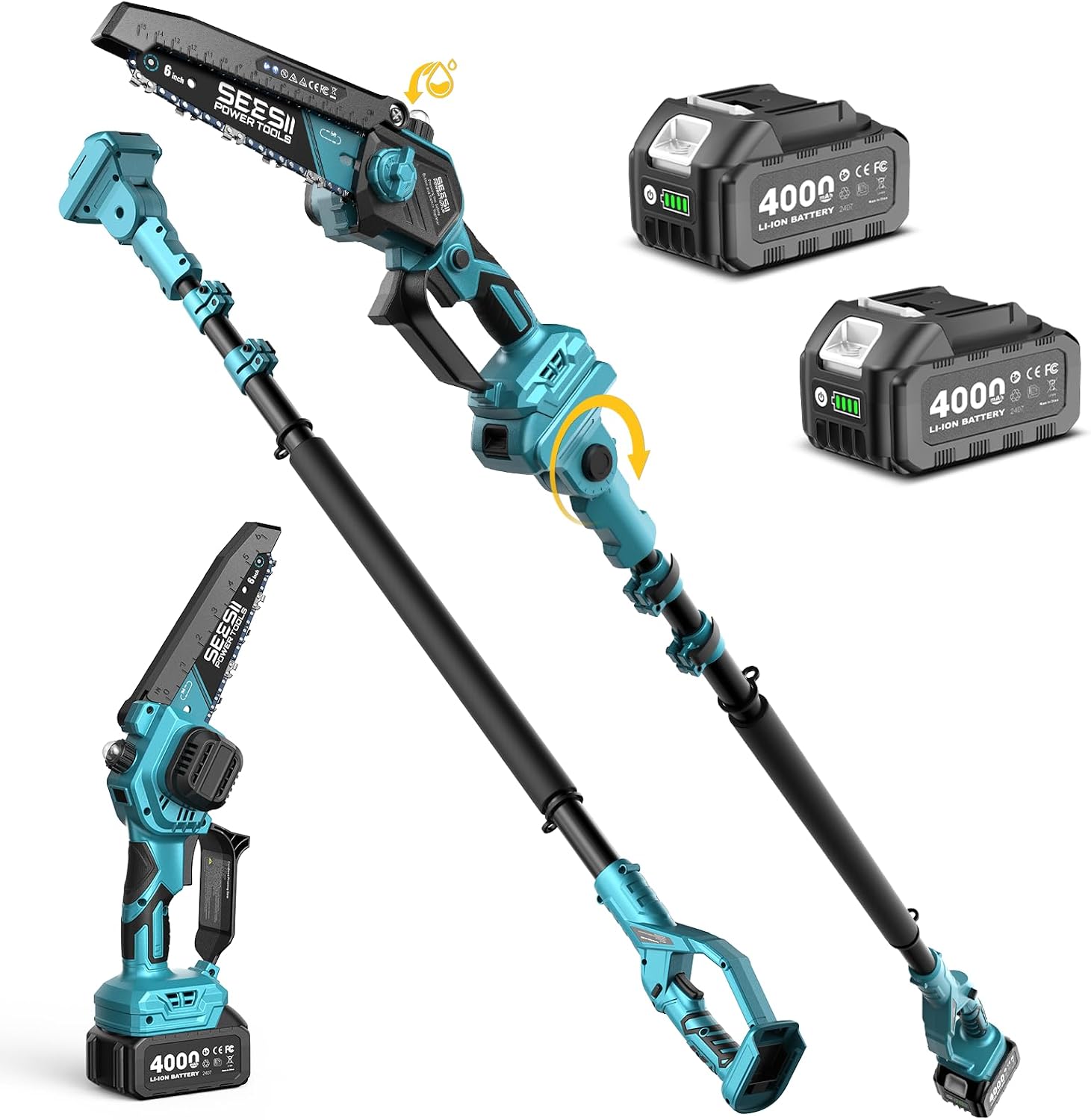
SEESII 2-in-1 Electric Pole Saw with Brushless Motor and 6" Mini Chainsaw
| Power Source | Battery Powered |
|---|---|
| Horsepower | 600 watts |
| Chain Speed | 26ft/S |
| Batteries Included | 2 × 4000mAh |
| Chain Length | 6 inches |
The SEESII 2-in-1 electric pole saw combines a 6-inch mini chainsaw and a telescoping pole saw into one cordless kit designed for routine yard maintenance. It is used either as a compact handheld saw for near-ground cuts or extended up to about 15.5–16 feet total reach to trim high limbs without a ladder. Notable features include a brushless motor for quieter, cooler operation, two 4000mAh batteries that claim up to 120 minutes of run time, quick tool-free chain tensioning and automatic lubrication for smoother cutting, and an adjustable-angle head for getting at awkward branches. Practical benefits are easy maintenance, included safety accessories, and the convenience of switching between handheld and pole modes for most pruning tasks. Limitations to expect are a 6-inch chain that restricts single-pass cuts to modest branch diameters despite the product claiming up to 6 inches, and the pole saw weight is heavier when assembled which can fatigue users during long jobs. For reliability-focused buyers this model offers durable brushless drive and redundant battery power, but heavy professional workloads may demand a larger saw.
Best for: Homeowners who want a dependable, low-maintenance electric pole saw for regular pruning and medium-duty limb trimming and who value quieter brushless performance and battery redundancy.
Less Ideal for: People who need a professional-grade saw for frequent heavy cutting or contractors who require larger bar lengths and higher continuous power.
- Brushless motor for more efficient, quieter operation and longer motor life
- Includes two 4000mAh batteries and fast charger for extended uninterrupted runtime
- Telescoping pole with adjustable head lets you trim high branches from the ground
- Tool-free chain tensioning and easy oil refill simplify maintenance
- Comes with replacement chain and basic safety accessories for immediate use
- 6-inch chain limits the maximum single-cut thickness and heavy-duty cutting
- Assembled pole saw is noticeably heavier than the handheld mode and can cause fatigue
Verdict: A reliable, easy-to-maintain cordless pole saw with brushless motor and dual batteries that makes routine pruning and reaching high limbs safe and fuss-free.
SEESII P6 Plus 2-in-1 Cordless Pole Saw and Mini Chainsaw (6" Bar)

| Power Source | Battery Powered |
|---|---|
| Horsepower | 600 watts |
| Chain Speed | 26.2ft/s |
| Chain Length | 6 inches |
The SEESII P6 Plus is a 2-in-1 cordless tool that works as a handheld 6-inch mini chainsaw and quickly converts to an extension pole saw for trimming overhead branches. It is typically used for routine pruning, storm cleanup, and shaping small to medium trees without climbing. Notable features include a tool-free snap-and-lock pole attachment, a 120 degree adjustable cutting head for awkward angles, automatic chain oiling, and two 21V 2000mAh batteries that provide roughly 40 to 60 minutes of combined runtime. In practice the brush motor and 26.2 ft/s chain speed handle branches in the advertised 3/4 inch to 6 inch range cleanly, and the lightweight, ergonomic body helps reduce fatigue during extended sessions. Important limitations are that the kit is intended for residential pruning rather than heavy-duty felling and each battery run time is modest if you face many thick cuts. Buyers should also follow basic chainsaw safety and expect periodic chain maintenance despite the oiler system.
Best for: Homeowners and DIY gardeners who want a single, easy-to-use tool to handle routine pruning and reach low-to-mid height branches from the ground without using a ladder.
Less Ideal for: Professional arborists or anyone needing a high-capacity saw for frequent heavy felling or very large diameter trunks should look for a more powerful, commercial-grade option.
- 2-in-1 design converts quickly between handheld mini chainsaw and pole saw without tools
- 120° adjustable head improves access to awkward or overhead branches
- Automatic chain oiler reduces manual lubrication and wear
- Includes two batteries for immediate swap-and-go runtime
- Lightweight, ergonomic build reduces user fatigue during extended pruning
- Battery capacity (2×2000mAh) gives limited single-battery runtime for large jobs
- Designed for pruning and small branches rather than heavy tree felling
Verdict: An adaptable, homeowner-friendly cordless pole saw that turns a compact 6-inch chainsaw into a 10-foot reach pruning tool for most residential trimming tasks.
Choosing the Right Chainsaw for Palm Tree: Key Factors to Consider
Cutting Reach and Bar Length
Bar length determines how thick a palm trunk or large frond base you can cut in a single pass. Longer bars let you tackle larger cuts and reduce the need for multiple passes, but they add weight and change balance. For most palm pruning tasks, a moderate bar length gives a good balance between reach and control. Consider whether you will use the saw on a pole or from a ladder; if so, factor in how the bar length affects handling when extended overhead.
Also think about chain gauge and pitch as they affect cutting efficiency and the types of chains available for replacement. A chain suited to cutting fibrous, abrasive palm tissue will stay sharp longer and demand fewer resharpenings.
Power Source and Cutting Performance
Gas engines provide continuous torque and are familiar for heavy backyard tasks, but modern battery systems can deliver comparable power for routine palm pruning with less vibration and simpler starting. Electric models are quieter and low maintenance but may limit runtime on repeated cuts. Evaluate torque and low-end power more than peak RPMs, because slicing fibrous palm material benefits from steady pulling power rather than only high speed.
Also consider duty cycle: if you prune a few palms seasonally, a lighter battery or small gas unit may be fine. For frequent, repeated jobs, a more robust powertrain will maintain cutting performance under heat and dust.
Weight, Balance, and Overhead Handling
Working above shoulder height amplifies weight and balance issues. A saw that feels balanced with the bar installed will reduce wrist strain and make precise cuts easier from a ladder or pole. Lighter saws reduce fatigue but sometimes sacrifice cutting capability. Check how the center of gravity shifts when the bar and chain are added, because poor balance increases the chance of miscuts when reaching.
If you plan to use a pole attachment, confirm the saw's mounting and whether the unit remains manageable when attached to an extension. Also factor in vibration damping; lower vibration helps maintain control during extended overhead work.
Safety Features and Ease of Control
Effective safety systems reduce the risk associated with overhead cutting. Look for reliable chain brakes, an accessible on-off switch, and low-kickback chain options. A good handguard and ergonomic handles improve grip when working from unstable positions. Anti-vibration systems matter because they let you keep a steady hold for precise cuts.
Consider how quickly the chain can be stopped and whether the saw has tool-free chain tensioning for safe adjustments on-site. For ladder work, easy-to-reach controls and clear sightlines to the cut are essential.
Starting Reliability and Serviceability
A chainsaw that starts reliably will save time and reduce dangerous attempts to get cutting done. Gas units should have easy choke and primer systems; battery units should use robust connectors and predictable runtime reporting. Reliability also covers air filter access, chain sharpening or replacement, and availability of basic service parts.
In hot, dusty palm environments, filters clog faster and chains dull sooner. Prefer units with straightforward maintenance access so you can clean, tension, or service them quickly between jobs.
Safe Techniques for Pruning Palms
Pruning palms requires different cutting angles than broadleaf trees. Fronds are fibrous and can snag or tear if cut incorrectly. Make shallow initial cuts to relieve tension and then finish the cut with a clean final pass to avoid ripping the remaining tissue.
Always work from a stable position. If using a ladder, position it so you cut at shoulder to chest height when possible rather than directly overhead. When cutting from a pole or extended reach, maintain a controlled, steady motion and avoid twist cuts that can bind the chain.
- Inspect the cut area for seed pods or fruit clusters that add thickness.
- Allow the chain to do the work; forceful pushing can cause kickback.
- Plan your cuts so fronds fall away from the person on the ladder.
Using Pole Extensions Versus Ladders
Pole extensions reduce the need to climb but change how the saw feels in your hands. A lighter, well-balanced saw pairs better with a pole. You lose some tactile feedback through the shaft, so slower, deliberate cuts are safer.
Ladders give better control and sightlines but increase fall risk. When using a ladder, secure it and have a ground assistant if possible. Choose a saw with easy-to-operate controls for quick shutoff if you need to pause the job.
- Test the saw on a short cut at ground level to feel balance before moving up.
- Limit extended cutting runs from pole attachments to avoid overheating small motors.
Chain Choice and Sharpening Tips
Chains for palm work need to hold an edge against silica-rich fibers. Use a chain pitch and gauge compatible with your saw that also offers lower kickback profiles. Regular sharpening with the correct round file size preserves cutting efficiency and reduces stress on the motor.
Keep a sharpening routine: dress the chain after several moderate cuts rather than waiting until it is blunt. A slightly dull chain forces you to apply extra pressure, which increases the risk of binding or losing control.
- Carry a small file and depth gauge guide for field touch-ups.
- Replace chains when cutters are damaged, not just dull.
Maintaining Your Saw in Hot, Dusty Conditions
Palm environments can be dusty and produce fibrous debris that clogs air intakes and accelerates wear. Clean air filters more often and check the bar groove for fiber buildup. For gas saws, ensure fuel mixtures are fresh and cooling fins are clear.
Battery saws suffer from thermal throttling if pushed hard in high ambient temperatures. Watch runtime and allow cooling periods to preserve motor life. Routine maintenance helps keep a saw reliable when you need it most.
- Wipe down the saw after each session to remove sap and dust.
- Store chains dry and lightly oiled to prevent corrosion.
How We Chose the Best Chainsaw for Palm Tree
We evaluated chainsaws for palm tree work using criteria that matter for routine pruning, frond removal, and small trunk cutting around homes and landscapes. Key evaluation points included cutting reach and bar length to safely access fronds, power delivery and torque for slicing fibrous palm material, and user safety systems such as chain brakes and anti-vibration features that reduce fatigue when working on ladders or poles. We also considered tool weight and balance because good handling reduces the chance of slips or awkward cuts when reaching overhead. Starting reliability and serviceability were checked to favor tools that behave predictably in hot, dusty conditions common around palms. Noise and exhaust characteristics were noted for homeowner use, especially in neighborhoods. We excluded equipment intended for heavy timber felling or commercial arborist rigging because palm removal usually involves different cutting patterns and access methods. We did not include specialized pole-saw heads that are only compatible with a single proprietary shaft system. Final selections favored machines that combine safe overhead usability with enough cutting capacity for typical palm fronds and small trunk sections.
FAQ
What bar length is best for pruning palm fronds?
For most residential palms, a moderate bar length offers the best balance of reach and control. Too long a bar adds weight and makes overhead cutting harder, while too short a bar forces multiple cuts. Consider the typical frond size and whether you will use a pole attachment when choosing length.
Is a battery chainsaw powerful enough for palm trunk work?
Battery chainsaws can handle light to moderate palm trunk cuts, especially newer high-capacity systems. They are quieter and easier to start than gas models, but their runtime and sustained torque on repeated large cuts may be limited compared with larger gas engines.
How often should I sharpen the chain when working on palms?
Sharpen the chain after several moderate cuts or as soon as you notice slower cutting or increased vibration. Fibrous palm material dulls chains faster, so more frequent touch-ups preserve safety and reduce stress on the saw.
Can I safely use a chainsaw from a ladder to prune a palm?
Yes, but it increases risk. Use a stable ladder, keep cuts within comfortable reach, and avoid overhead twisting motions. Whenever possible, have an assistant steady the ladder and use a saw with accessible controls and good balance.
What safety features should I prioritize for palm pruning?
Prioritize a reliable chain brake, low-kickback chain options, anti-vibration systems, and an easily reachable emergency stop. Good ergonomic handles and clear sightlines to the cut are also important for safe overhead work.
Final Verdict
Choosing a chainsaw for palm tree work comes down to matching reach, control, and reliability to how you will use it. Prioritize a balanced bar length and a power system that supplies steady torque for fibrous cuts, then layer on safety features and a weight that you can manage from ladders or pole attachments. Maintain the chain and air intakes more frequently in palm environments to protect performance. Focus on the tradeoffs between cutting capacity and handling: heavier, more powerful saws cut larger material but demand better overhead control, while lighter options are easier to maneuver but may require more passes. Use the criteria discussed here to select the tool that fits your pruning frequency and working height so you can prune efficiently and safely.
