

Note: This article contains affiliate links. If you click on these links and make a purchase, I may earn a small commission at no extra cost to you. This helps support my research and content. Read my full affiliate disclosure here.
When you need to fell trees or remove large limbs, a purpose-built chainsaw for tree removal changes the job from risky to manageable. The right saw delivers enough cutting power to handle trunk diameter, reliable chain and bar durability for long cuts, and safety features that protect you while working overhead or on uneven ground. This guide covers our seven shortlisted chainsaws for tree removal, each chosen for real-world garden and yard performance. We evaluated them on cutting capability, ease of handling, and safety features so you can pick the tool that fits the size of trees you tackle and the work conditions you face.
Top Picks at a Glance
| Best Overall The best all-around choice for most situations | Husqvarna 450 Rancher 20" Gas Chainsaw (50.2 cc, 3.2 HP) |  |
| Best Quality Built to a higher standard if you want something more solid | Husqvarna 460 Rancher 24-Inch Gas Chainsaw |  |
| Best Value The sweet spot between price and what you get | Supstable S16 Pro 16-Inch 40V Brushless Cordless Chainsaw with 4.0Ah Battery |  |
| Best Budget The cheapest option that still gets the job done reliably | GARWINNER 62cc Gas-Powered Chainsaw with 20-Inch Bar |  |
| Highest Rated A top-rated pick with lots of positive feedback | NEO-TEC NCS6200 62cc Gas Chainsaw (20/22 inch) |  |
| Most Popular A crowd favorite that many people choose with confidence | Greenworks 40V 16" Brushless Cordless Chainsaw with 4.0Ah Battery and Charger |  |
| Best Seller A high-volume bestseller chosen again and again | Milwaukee M18 FUEL 16 in. Cordless Chainsaw (Tool Only) |  |
Husqvarna 450 Rancher 20" Gas Chainsaw (50.2 cc, 3.2 HP)

| Power Source | Gas Powered |
|---|---|
| Horsepower | 3.2 hp |
| Chain Length | 20 inches |
The Husqvarna 450 Rancher is a workhorse gas chainsaw aimed at users who need reliable power for pruning, yard cleanup, and firewood cutting. It pairs a 50.2-cc X-Torq two-stroke engine with a 20-inch bar to deliver strong cutting performance and steady torque under load. Practical features include Smart Start and an air purge for easier, quicker startups and an Air Injection centrifugal pre-cleaning system that reduces debris reaching the air filter to help engine longevity. LowVib technology, an ergonomic rear handle and soft inlay improve comfort during extended use, and an inertia-activated chain brake adds a safety layer against kickback. Expect robust power and professional handling, but also the usual maintenance needs of a gas saw such as fuel mixing, routine filter and spark plug service, and higher noise and emissions compared with battery models. For buyers wanting consistent heavy-duty cutting and proven engine performance, this model is a solid choice; for very light occasional jobs, it may be more saw than necessary.
Best for: Experienced homeowners and semi-pro users who prioritize sustained cutting power and durability for frequent tree work, firewood cutting, and heavy yard cleanup.
Less Ideal for: Casual users with only occasional light trimming needs or those who prefer low-noise, low-maintenance battery tools.
- Powerful 50.2-cc X-Torq engine delivers strong cutting performance for heavy tasks
- Smart Start and air purge make starting quicker and less finicky
- Air Injection centrifugal system reduces debris in the air filter for longer service intervals
- Ergonomic design with LowVib and soft inlay improves comfort during extended use
- Requires regular gas and two-stroke oil mixing and routine maintenance inherent to gas engines
- Heavier and louder than cordless electric alternatives
Verdict: Choose the Husqvarna 450 Rancher when you need a durable, high‑power gas chainsaw for frequent heavy cutting tasks.
Husqvarna 460 Rancher 24-Inch Gas Chainsaw

| Power Source | Gas Powered |
|---|---|
| Horsepower | 3.6 |
| Chain Length | 24 inches |
The Husqvarna 460 Rancher is a workhorse 24-inch gas chainsaw designed for heavy cutting jobs like felling medium to large trees and preparing firewood on acreage. It uses a 60.3-cc, 3.6-HP X-Torq two-stroke engine with Smart Start for easier ignition and an Air Injection centrifugal system that helps keep the air filter cleaner for longer service intervals. Ergonomic touches such as LowVib anti-vibration, a 7-degree offset front handle, side-mounted chain tensioning and an inertia-activated chain brake make long sessions more manageable and adjustments quicker in the field. Practical benefits include strong cutting power at low RPM, replaceable bar and chain, and an adjustable oil pump for proper lubrication during heavy use. Expect typical gas-saw care needs such as fuel mixing, periodic filter and spark plug maintenance, and the added noise and emissions of a gas engine. This is a substantial saw that performs well for owners who need sustained power and durability rather than a lightweight occasional-use option.
Best for: Landowners, small farm operators, and homeowners with extensive woodcutting needs who want a durable, high‑power saw for sustained felling and firewood preparation.
Less Ideal for: Casual users with light pruning or occasional cutting needs and those who prefer low-noise, low-maintenance electric or battery options.
- High power 60.3-cc X-Torq engine delivers strong cutting performance for large logs
- Smart Start and combined choke/stop control make starting quicker and reduce flooding
- Air Injection centrifugal system helps extend air filter life under dusty conditions
- Ergonomic design with LowVib technology and offset front handle reduces user fatigue
- Gas engine requires fuel mixing and regular maintenance compared with battery models
- Large 24-inch bar makes the saw heavier and less maneuverable for tight or overhead work
Verdict: Choose the 460 Rancher if you need a powerful, durable gas chainsaw built to handle large logs and sustained heavy-duty cutting.
Supstable S16 Pro 16-Inch 40V Brushless Cordless Chainsaw with 4.0Ah Battery

| Power Source | Battery Powered |
|---|---|
| Horsepower | 2000 watts |
| Chain Speed | 35ft/s |
| Chain Length | 16 inches |
The Supstable S16 Pro is a battery-powered 16-inch chainsaw aimed at homeowners who need gas-like cutting power without the fuss of fuel. It pairs a 2000W brushless motor with a 40V 4.0Ah battery to deliver up to 35 ft/s chain speed and work sessions the manufacturer says can run up to about 50 minutes per charge. Notable features include an automatic chain oiler, tool-free side tensioning for quick chain adjustments, a rapid-response chain brake, and included safety gloves and goggles. In practice this makes the saw well suited to cutting medium logs, pruning large branches, and storm cleanup around the yard while avoiding fumes and cold starts. The cordless design improves maneuverability but runtime is limited by a single battery and additional batteries will be needed for extended professional use. The kit is ready to run out of the box, but buyers should be aware the battery system is 40V only and accessory compatibility is restricted to the same voltage family.
Best for: Homeowners and careful DIYers who want near-gas power without fuel maintenance and who value ready-to-use safety features for routine tree trimming, firewood cutting, and storm cleanup.
Less Ideal for: Professional arborists or users who need uninterrupted all-day runtime and rely on interchangeable batteries across different voltage platforms.
- High-power 2000W brushless motor delivers strong, gas-like cutting performance
- Automatic chain lubrication reduces wear and produces smoother cuts
- Tool-free chain tensioning allows fast on-the-job adjustments
- Comes as a complete kit with battery, fast charger, safety goggles, and gloves
- Single included 4.0Ah battery limits continuous runtime for long jobs
- Battery system is 40V only so it is not compatible with 20V tools
Verdict: Buy this if you want a ready-to-run 16-inch cordless chainsaw that delivers strong, gas-like cutting performance with convenient safety and maintenance features.
GARWINNER 62cc Gas-Powered Chainsaw with 20-Inch Bar

| Power Source | Gas Powered |
|---|---|
| Horsepower | 3.26 |
| Model Number | 6220G |
The GARWINNER 62cc gas chainsaw is a budget-focused saw built for felling medium trees and cutting firewood around the yard. It uses a two-stroke 3.26 horsepower engine and a 20-inch bar and chain, with an automatic oil-injection system to keep the chain lubricated during use. Safety features include dual throttle switches to reduce accidental starts and a quick-acting brake baffle for emergency stops. In practice this saw performs like a heavier-duty homeowner model: the high-torque engine and sharp chain make through-cuts quicker than small electric models, and the included tool kit helps with basic maintenance in the field. Expect typical gas-saw maintenance such as mixing fuel, periodic chain sharpening or replacement, and attention to oil residue from the automatic oiler. Parts availability and long-term dealer support may be limited compared with major-brand pro saws, so buyers should be prepared to do routine service themselves. For budget buyers who need real cutting power for tree removal and firewood rather than occasional limb trimming, this unit offers strong value.
Best for: Practical owners who need affordable, gas-powered cutting power for felling medium trees and producing firewood and prefer a lower upfront cost over brand-name dealer support.
Less Ideal for: Casual users who want near-zero maintenance electric options or professionals who need factory service networks and extended parts support.
- High 62cc two-stroke engine provides strong cutting power suitable for medium tree felling
- Automatic oil-injection keeps the chain lubricated during use for smoother cuts and reduced wear
- Dual throttle safety switches and a brake baffle reduce accidental starts and improve operator safety
- Includes a basic tool kit for on-site maintenance and chain adjustments
- Manufacturer and aftersales support may be limited compared with established pro brands
- Gas engines require regular fuel mixing, tuning, and more maintenance than electric alternatives
Verdict: A cost-conscious buyer looking for genuine gas-powered cutting power for tree removal will get strong performance and essential safety features for the price.
NEO-TEC NCS6200 62cc Gas Chainsaw (20/22 inch)

| Power Source | Gas Powered |
|---|---|
| Horsepower | 3.5 hp |
| Chain Length | 22 inches |
The NEO-TEC NCS6200 is a gas-powered chainsaw built for demanding cutting tasks like limbing, bucking, pruning, and small-to-medium tree removal. It uses a 62cc two-cycle engine rated at 3.5 HP and claims up to 8500 RPM, which translates to strong cutting performance for hardwood and larger-diameter trunks. The saw ships with 20- and 22-inch guide bar options, a wrap-around handle for control, and safety items such as a chain brake and trigger lockout. Practical benefits include an easy-start system with choke and a precision carburetor aimed at better fuel efficiency and fewer starting hassles. At the same time the unit is described as pre-inspected for immediate use and backed by post-purchase customer support. Important limitations are that it is a gas saw, so expect regular fuel, oil mix, and maintenance cycles, plus typical noise and vibration compared with battery models, and it is heavier than lightweight consumer saws which can increase fatigue on long jobs.
Best for: Best for homeowners or pros who need a reliable, powerful gas saw for routine tree removal and heavy cutting and who prioritize consistent performance over lower-noise or cordless convenience.
Less Ideal for: Not a good choice for users who need a lightweight, low-noise saw for small yard tasks or who prefer battery models to avoid fuel and two-stroke maintenance.
- High power output from a 62cc, 3.5 HP engine suitable for tough cutting tasks
- Includes 20- and 22-inch bar options for versatility on different tree sizes
- Easy-start system and choke reduce frustrating pull starts
- Safety-focused controls including chain brake and trigger lockout
- Designed for fuel efficiency with a precision carburetor to lower running time between fills
- Requires regular gas/oil mixing and routine maintenance inherent to two-stroke engines
- Heavier and louder than battery or compact consumer saws, which can increase operator fatigue
Verdict: Choose this NEO-TEC if you want a dependable, high-powered gas chainsaw built to handle routine tree removal and heavy cutting tasks.
Greenworks 40V 16" Brushless Cordless Chainsaw with 4.0Ah Battery and Charger
| Power Source | Battery Powered |
|---|---|
| Horsepower | 160 |
| Chain Length | 16 inches |
| Included Components | Chainsaw, Battery, Charger, Manual |
| Manufacturer Warranty Description | 3 Year |
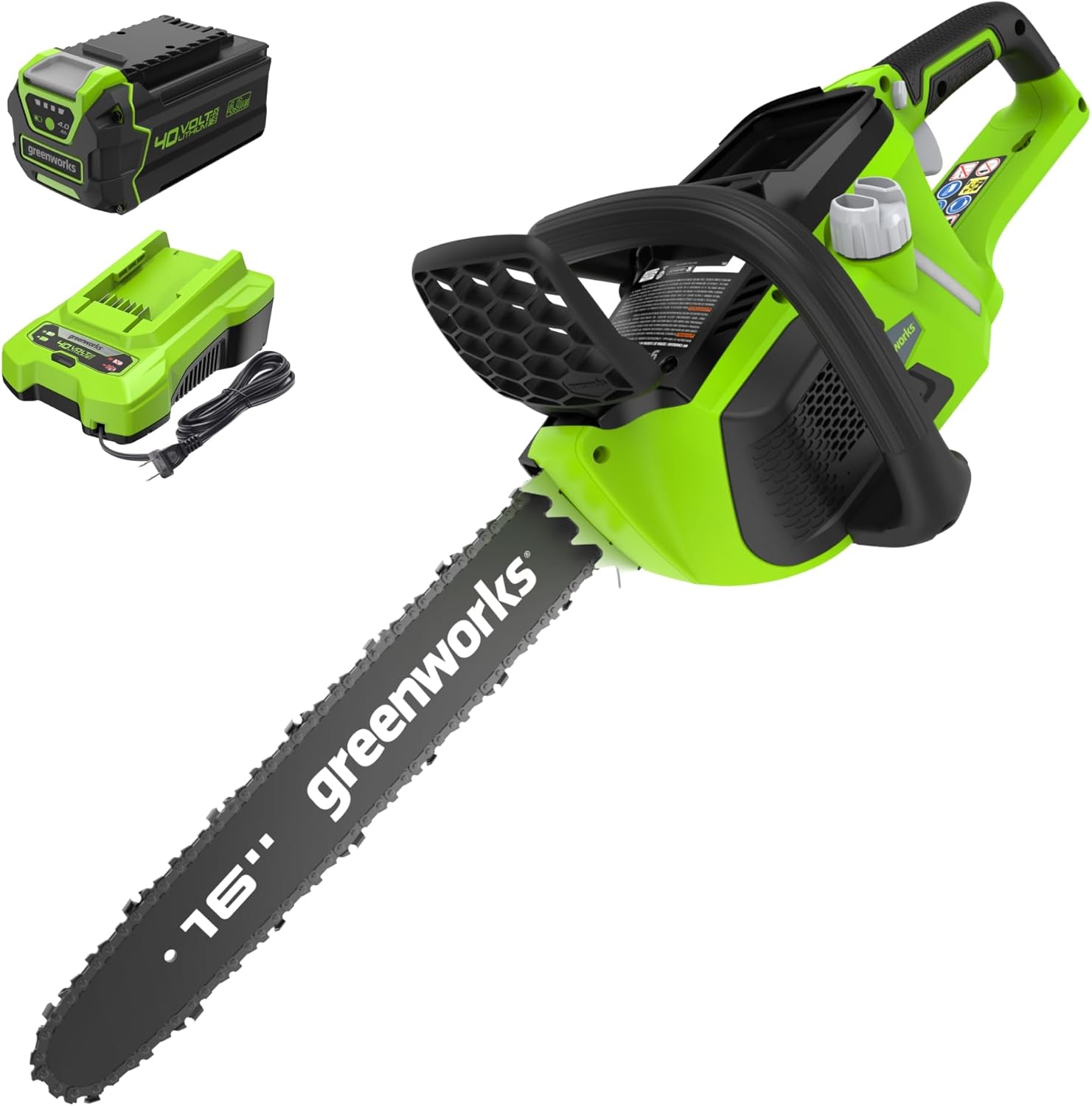
The Greenworks 40V 16" brushless chainsaw is a cordless, gas-free saw built for heavy yard tasks such as tree felling, limb removal, firewood cutting, and storm cleanup. It pairs a brushless 1.5 kW/160 horsepower-equivalent motor with a 16" Oregon bar and chain to cut sizable limbs and small trunks and includes a 4.0Ah battery and charger for immediate use. Notable features that aid real-world use are tool-free chain tensioning for quick adjustments, an automatic oiler with a visible reservoir, a safety chain brake and low-kickback chain, and an overmolded grip for comfort. Because it is battery powered it starts instantly with no pull cord, runs quieter than gas saws, and avoids mixing fuel and oil. Limitations to expect are run time tied to the included 4.0Ah battery on larger jobs, and some users report mixed results with the auto-oiler under heavy continuous use. For homeowners who want gas-comparable cutting without fumes or extra maintenance this model covers most tree removal and storm cleanup tasks, while those needing long continuous runtime for commercial logging will need larger battery capacity or a gas saw.
Best for: Buyers who want a user-friendly, lower-maintenance alternative to gas for removing trees, pruning large branches, and post-storm cleanup around a home or small property.
Less Ideal for: Professional arborists or users who need extended continuous runtime for large-scale logging should consider higher-capacity battery systems or a gas-powered chainsaw.
- Brushless motor delivers gas-comparable torque with lower vibration and longer motor life
- 16" Oregon bar and chain suitable for tree felling, limbing, and firewood cutting
- Includes 4.0Ah battery and charger so the saw is ready to use out of the box
- Tool-free chain tensioning and visible auto-oiler reduce maintenance time
- Safety chain brake and low-kickback chain improve user safety during aggressive cuts
- Runtime depends on the single included 4.0Ah battery for large or continuous jobs
- Some customer reports note inconsistent auto-oiler performance under heavy use
Verdict: A ready-to-use cordless 16" chainsaw that gives homeowners gas-like cutting power with simpler starts, less noise, and lower maintenance.
Milwaukee M18 FUEL 16 in. Cordless Chainsaw (Tool Only)
| Power Source | Battery Powered |
|---|---|
| Horsepower | 5.3 hp |
| Chain Length | 16 inches |
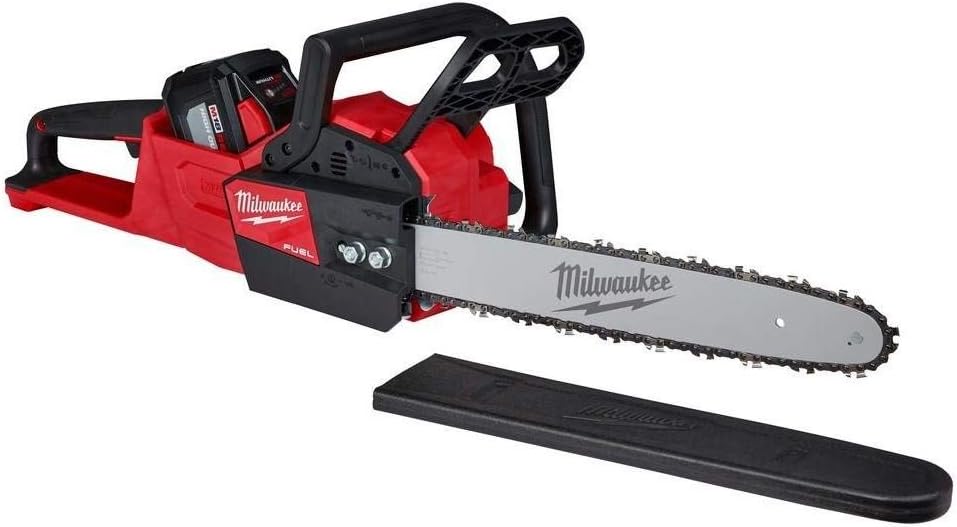
The Milwaukee M18 FUEL 16 in. cordless chainsaw is a tool-focused model that brings high power and convenient cordless operation to homeowner cutting tasks. It uses the M18 battery platform (battery and charger sold separately) and is built around a 16-inch Oregon bar and chain with an automatic oiler and variable speed trigger so you can control cut speed for different wood types. In practice this saw handles hardwood and mid-size logs quickly and is reported to deliver many cuts per charge with higher-capacity M18 packs. Notable features include the brushless FUEL motor for stronger acceleration and reduced maintenance compared with brushed motors, and a compact build that makes limbing and pruning easier in tight spaces. Important limitations are that the battery and charger are not included so you must already own or purchase compatible M18 batteries to realize the reliability benefits, and run time depends heavily on battery capacity. For homeowners who want near-professional cutting performance without gas fuss, this is a dependable cordless option when paired with a robust M18 battery.
Best for: Homeowners who prioritize a reliable, high-performance cordless saw and either already own M18 batteries or are prepared to invest in them for consistent, gas-free cutting around the yard.
Less Ideal for: Casual users who want an all-in-one package with battery and charger included or people needing very long continuous cutting sessions without spare batteries.
- Powerful brushless motor claims faster cuts than gas models for efficient work
- Automatic oiler maintains chain lubrication for consistent cutting performance
- Variable speed trigger gives precise control for pruning or larger cuts
- Compatible with the M18 battery ecosystem so higher-capacity packs boost runtime
- Battery and charger are not included so additional purchase is required
- Run time and cutting output depend on which M18 battery you use
Verdict: Choose this Milwaukee M18 FUEL 16 in. cordless chainsaw if you want near-professional cordless cutting performance and already use or plan to buy M18 batteries for dependable, gas-free operation.
Choosing the Right Chainsaw for Tree Removal: Key Factors to Consider
Engine or Motor Type and Power
The saw's engine or motor determines how easily it maintains chain speed under load. Gas engines typically deliver higher peak torque for felling larger trunks, while electric and battery models can offer instant throttle response and lower vibration. Consider the largest diameter you expect to cut and choose a powertrain with enough continuous power to avoid bogging during long cuts.
Power also affects fuel or battery consumption and cooling needs. For frequent or extended tree removal sessions, prioritize machines with proven cooling and easy access to service points so the saw keeps running reliably throughout the job.
Bar Length and Cutting Capacity
Bar length sets the maximum single-pass cut diameter. Longer bars allow you to cut larger trunks without multiple passes, but they increase weight and make handling harder, especially overhead. Match bar length to typical tree sizes you will remove: short bars for small ornamental trees, medium bars for common yard trees, and long bars if you plan to fell large trunks.
Also think about bar and chain replacement simplicity. A design that accepts common chain sizes and has accessible tensioning reduces downtime and simplifies field repairs when you are dealing with a full day of tree removal.
Safety Systems and Kickback Protection
Tree removal often involves awkward cuts and working near the canopy, which increases the risk of kickback and loss of control. Look for robust chain brake systems, low-kickback chain geometry, and responsive throttle interlocks. Physical features like handguards, good spatial separation between front and rear handles, and clear sightlines to the cutting zone further reduce the chance of accidents.
Anti-vibration features and a well-damped rear handle help you maintain a firm grip when cutting long or heavy limbs. Prioritize safety features that engage quickly and are simple to operate while wearing gloves.
Weight, Balance, and Handling
A chainsaw that is heavy in the front or poorly balanced will tire you quickly and make precise cuts difficult, especially when limbing or felling from a ladder. Balance influences how steady the saw feels during plunge cuts and when sawing through the top of a trunk. Consider both the absolute weight and how that weight is distributed between the motor, fuel or battery, and the bar.
Ergonomic handle shapes, reachable controls, and a comfortable center of gravity matter more in the field than on paper. Try to prioritize a saw that lets you control the chain for long cuts without excessive arm strain.
Starting Reliability and Ease of Maintenance
Time spent pulling cords or troubleshooting a stubborn starter reduces productive cutting time and can be hazardous when working alone. For gas models, features like easy-choke systems and reliable ignition reduce hassles. For battery saws, quick-change battery systems and clear charge indicators matter.
Maintenance accessibility is also critical: tool-free chain tensioning, straightforward spark plug access, and easy air filter changes let you perform routine checks quickly between cuts. In a tree removal scenario, these small conveniences add up to safer, faster work.
Chain Quality and Sharpening Options
A sharp, well-configured chain cuts faster, produces more predictable chips, and reduces the chance of binding. Chains designed for reduced kickback and efficient chip removal will make long felling cuts easier. Consider how easy it is to resharpen the chain in the field and whether common round files or powered sharpeners fit the chain's specifications.
Also evaluate tooth pitch and gauge relative to the bar size and the trees you cut. A chain that wears quickly or requires frequent replacement will increase downtime and material costs over a season of tree removal work.
Matching Saw Choice to Tree Size and Job Type
Choose a saw based on the largest single cut you expect to make without relying on ripping or repeated passes. For routine small-tree removal and limbing, lighter, shorter-bar saws offer faster handling. For falling medium to large trees, choose a saw with higher sustained torque and longer bar length to avoid binding and multiple cuts.
Also consider job type: repeated limbing and drop-crotch cuts demand nimble handling, while felling larger trunks benefits from saws with higher inertia and heat-management features.
- Short jobs and tight spaces favor compact, well-balanced saws.
- Extended felling sessions need reliable cooling and easy maintenance access.
- If you cut varied sizes, a mid-length bar with a robust chain is the most versatile option.
Personal Protective Equipment and Safe Workflow
Selecting the right saw goes hand in hand with PPE and a disciplined workflow. Use a certified helmet with face and hearing protection, chainsaw-rated gloves, cut-resistant chaps, and sturdy boots. These choices reduce the severity of injuries and let you work with more confidence when making complex cuts.
Adopt a clear workflow: plan escape routes, clear the work area of bystanders, and cut in stages that preserve control of the falling tree. Good PPE and planning reduce risk regardless of which saw you choose.
- Helmet with visor and earmuffs improves visibility and communication on noisy cuts.
- Cut-resistant chaps are essential when felling or limbing near the ground.
- Keep first aid and a charging option accessible if using battery saws on longer jobs.
Maintenance Routines for Field Reliability
A brief maintenance routine before and after each use preserves performance. Check chain tension, bar condition, chain lubrication, and fuel or battery state. Small issues detected early are easier to fix and prevent larger failures mid-job.
Carry basic tools and spares like an extra chain, files, a spark plug, and a compact bottle of chain oil. For battery models, bring swapped batteries and a charger if you expect extended use away from power.
- Inspect the bar groove and drive sprocket for wear before long cutting sessions.
- Keep chain oil topped up and use the correct viscosity for your climate.
- Sharpen chains regularly rather than pushing a dull chain through tough cuts.
Working Overhead and From Ladders
When removing limbs overhead or working from a ladder, choose a saw with predictable balance and accessible controls so you can keep a secure stance. Shorter bars and reduced vibration systems make one-handed guiding motions safer, but never attempt unsupported two-handed cuts above shoulder height without proper rigging or fall protection.
If you frequently work aloft, consider alternative approaches like roping the branch to control its fall or using specialized pruning saws to reduce reliance on heavy chainsaws in awkward positions.
- Avoid long-bar saws for frequent overhead limbing when possible.
- Ensure the chain brake and throttle kill switch are reachable while maintaining a safe grip.
- Use ropes or drop lines to control falling branches and reduce unexpected movement.
Battery Vs Gas: Field Considerations
Battery saws offer quieter operation, lower vibration, and simpler starting, which can be beneficial in suburban settings or for lighter felling tasks. Their runtime depends on battery capacity and the intensity of cuts. Gas saws generally provide longer continuous runtime and higher peak torque needed for large trunks, but they add weight and require fuel handling and more maintenance.
Match the power source to your job profile: occasional small removals and limbing in noise-sensitive areas favor battery models, while frequent large-tree removal and remote jobs without power access often favor gas-powered options.
- Bring spare batteries for long jobs with battery saws.
- For gas saws, practice fuel mixing and carry a funnel and spare fuel in approved containers.
- Consider hybrid approaches if you need the benefits of both power types across different tasks.
How We Chose the Best Chainsaw for Tree Removal
We focused selection on practical, measurable traits that matter when removing trees in a home or small-acreage setting. Primary evaluation criteria included cutting power and torque, because removing trunks and large limbs requires sustained saw speed under load. We checked bar and chain durability and replacement ease, since maintenance frequency affects real-world uptime. Operator safety features were another core filter, assessing chain brakes, inertia systems, low-kickback chain options, and effective anti-vibration design. Handling and balance under load were measured by reachability, weight distribution, and throttle control, which matter when making long cuts or working from ladders. Finally, starting reliability and maintenance simplicity were scored to reflect how quickly a saw returns to service after use. We excluded lightweight trimming-only models and specialty pole saws that lack the power to fell medium or large trees. Tools designed solely for professional timber operations were also set aside when they did not offer practical value for typical home or small-farm tree removal tasks. The remaining saws all meet minimum thresholds across the listed criteria and represent a range of powerplants and bar lengths suited to common removal scenarios.
FAQ
What bar length do I need to fell a typical yard tree?
Bar length depends on trunk diameter. For most yard trees, a mid-length bar lets you cut through in a single pass for trunks up to its cutting capacity. If trunks are frequently larger than a mid-length bar, consider a longer bar or plan for multiple cuts and proper felling techniques.
How do I reduce kickback risk when cutting large limbs?
Use a low-kickback chain, maintain sharp cutting teeth, and avoid the upper quadrant of the bar tip where most kickbacks originate. Engage the chain brake when repositioning and use controlled, steady feed pressure rather than forcing the saw.
Can battery chainsaws handle multiple tree removals in one day?
It depends on battery capacity and battery count. High-capacity batteries or additional spares can let battery saws handle several removals, especially for small to medium trees. For repeated large-trunk felling, gas models typically offer longer continuous cutting without battery swaps.
How often should I sharpen the chain during a tree removal job?
Sharpen whenever you notice the saw producing fine dust instead of chips, or when you need to apply extra pressure to cut. Frequent touch-ups with a round file between jobs keeps cutting efficient and reduces strain on the motor or engine.
Is anti-vibration important for long days of tree removal?
Yes. Anti-vibration features reduce operator fatigue and help maintain control during long cuts. Less fatigue improves cut accuracy and reduces the risk of errors during felling and limbing tasks.
Final Verdict
Choose a chainsaw for tree removal by matching power and bar length to the largest cuts you expect to make, and prioritize safety systems that reduce kickback and improve operator control. Balance and ergonomics matter as much as raw power when you are making long felling cuts or working aloft. Weigh the tradeoffs between runtime and maintenance: battery models simplify starting and reduce vibration, while gas models commonly offer greater continuous torque for large trunks. Focus on the cutting capacity, safety features, and ease of maintenance that best match your worksite and you will select the most practical tool for safe, efficient tree removal.
