

Note: This article contains affiliate links. If you click on these links and make a purchase, I may earn a small commission at no extra cost to you. This helps support my research and content. Read my full affiliate disclosure here.
Roses respond to soil that holds moisture without staying waterlogged and that supplies steady nutrients through the growing season. Picking the right compost for planting roses affects root establishment, flowering intensity, and how often you need to feed. This guide covers six top shortlisted composts tailored for roses, with attention to nutrient balance, texture, and drainage. Below we explain the practical differences that matter in a garden setting and summarize the criteria we used to choose these options before you dive into the individual product summaries.
Top Picks at a Glance
| Best Overall The best all-around choice for most situations | Coast of Maine Roses & Flowers Planting Soil, 20 qt |  |
| Best Quality Built to a higher standard if you want something more solid | Coast of Maine Roses & Flowers Planting Soil, 20 qt (2-Pack) |  |
| Best Value The sweet spot between price and what you get | Heirloom Roses Mint Compost & Aged Cow Manure Bundle |  |
| Best Budget The cheapest option that still gets the job done reliably | Gantessa Stone Premium Organic Compost, 2 lb |  |
| Highest Rated A top-rated pick with lots of positive feedback | Coast of Maine Penobscot Blend Complete Planting Mix, 1 cu ft |  |
| Most Popular A crowd favorite that many people choose with confidence | Espoma Organic Land and Sea Gourmet Compost with Lobster & Crab Meal, 1 cu ft |  |
Coast of Maine Roses & Flowers Planting Soil, 20 qt

| Unit Count | 740 Ounce |
|---|---|
| Volume | 20 quarts |
| OMRI Listed | Yes |
Coast of Maine Roses & Flowers planting soil is an organic 20 quart blend designed to refresh beds and containers for roses, annuals, and perennials. It mixes composted manure, sphagnum peat moss, and aged bark with ocean-sourced amendments such as kelp and lobster meal to add slow-release nutrients and microbial activity. In practice this soil improves structure and moisture retention while keeping drainage and aeration reasonable, so newly planted roses establish roots more quickly and potted flowers stay evenly moist. The OMRI listing and focus on regenerative ingredients make it a strong option for gardeners who prefer organic inputs and want to support soil life. Because the bag is a moderate 20 qt size it is convenient for targeted top-dressing, container repotting, or small bed refreshes but not intended as bulk in-ground soil replacement for large beds. Expect noticeably healthier blooms over time rather than instant chemical feeding effects.
Best for: Gardeners who want an organic, ready-to-use planting soil to improve roses and flowering plants in containers or for spot improvements in beds and who value soil biology and sustainable ingredients.
Less Ideal for: People needing large volumes of in-ground topsoil or landscapers who prefer bulk mixes and rapid chemical feeding solutions should look elsewhere.
- OMRI-listed organic formula supports biological soil life
- Includes composted manure and kelp/lobster meal for slow-release nutrients
- Improves moisture retention while maintaining drainage and aeration
- Handy 20 qt bag size for container repotting and spot soil improvement
- 20 quart bag is small for large garden beds and not economical for full bed replacement
- Contains sphagnum peat moss which some gardeners avoid for sustainability reasons
Verdict: A compact OMRI-listed planting soil that improves structure and supports healthier roses and flowers without synthetic inputs.
Coast of Maine Roses & Flowers Planting Soil, 20 qt (2-Pack)
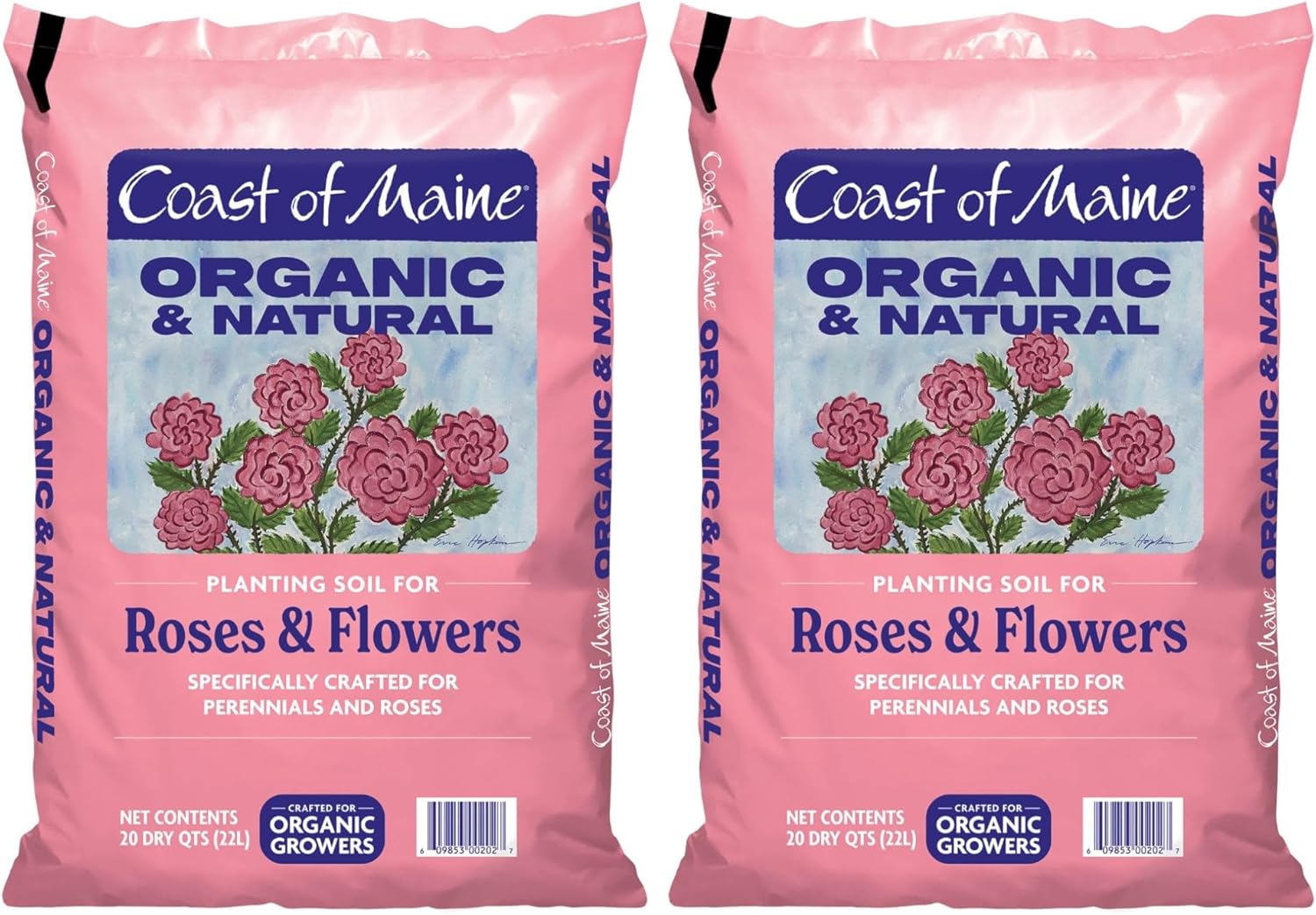
| Unit Count | 2 Count |
|---|---|
| Volume | 20 quarts |
| Brand Name | Coast of Maine |
This Coast of Maine Roses & Flowers planting soil is an organic compost blend designed to revive planting mixes for roses, annuals, and perennials. Gardeners typically use it as a top dressing, a soil amendment mixed into existing bed soil, or straight into containers when repotting roses and flowering plants. Notable features include OMRI listing for organic use and a formula that uses seaweed, lobster meal, and composted materials to boost microbial life and supply slow-release nutrients. In practice the mix improves moisture retention while offering adequate drainage, which helps reduce watering frequency without waterlogging root crowns in containers. The product supports soil biodiversity and is safe around children and pets when used as directed. Important limitations are that this is a 20 quart bag sold in a two pack so it is best for small-scale container work or targeted amendments rather than large landscaping projects, and heavier organic mixes like this can compact over time compared with lightweight potting mixes formulated solely for container aeration.
Best for: Buyers who want an organic, nutrient-rich amendment for container roses and flowering pots and who value soil health and sustainable ingredients.
Less Ideal for: Anyone needing a lightweight commercial potting mix optimized only for maximum aeration or gardeners tackling large in-ground areas who need bulk volume.
- OMRI listed organic formula made from seaweed, lobster meal, and compost
- Balanced moisture retention and drainage suitable for container roses
- Supports soil microbiology and biodiversity for healthier root systems
- Safe for use around kids and pets when handled per instructions
- 20 quart bags are small for large projects so multiple bags are needed for beds
- Denser compost-rich mix can compact in containers over time compared with lighter potting-only mixes
Verdict: A small-batch organic soil blend that revitalizes container roses and flower pots by adding slow-release nutrients and supporting soil life.
Heirloom Roses Mint Compost & Aged Cow Manure Bundle

| Item Form | Granules |
|---|---|
| Specific Uses For Product | Gardening |
| Coverage | Medium |
| Target Species | roses |
| Liquid Volume | 1.5 quarts |
This bundle pairs a mint compost with fully composted aged cow manure to prepare beds and support new rose plantings. The mint compost helps retain moisture in sandy soils and adds humus to loosen clay while also acting as a mild repellent for common pests around roses. The aged cow manure supplies stable organic nitrogen and micronutrients to encourage root development and seasonal blooms. Typical use is to mix or top-dress around roses at planting and reapply every 2 to 3 months; the product includes a 1:1 mixing ratio guideline and a 1.5 quart unit count note for practical measuring. Benefits are tangible for gardeners who want a natural, low-tech soil improvement method that improves water-holding capacity and feed the soil biology over time. Expect modest, gradual results rather than an immediate synthetic fertilizer response, and keep in mind handling precautions such as gloves and keeping it away from children and pets. For container use, measure carefully since concentrated organic amendments can temporarily tie up nitrogen if overapplied.
Best for: Gardeners who prioritize natural, practical soil improvement for rose planting and want easy-to-use amendments to build healthier beds over seasons.
Less Ideal for: Those who need rapid, high-feeding results for established, bloom-hungry roses or who manage very large landscapes where bulk commercial amendments are more efficient.
- Contains two complementary amendments for both moisture retention and nutrient build-up
- Mint compost helps break up clay and improves water holding in sandy soils
- Aged cow manure provides stabilized organic nitrogen and micronutrients
- Simple 1:1 mixing guidance and directions for seasonal reapplication
- Provides gradual, soil-building benefits rather than fast-acting synthetic nutrients
- Unit count is modest so multiple boxes may be needed for larger beds
Verdict: Choose this bundle if you want a simple, natural pair of amendments to improve soil structure and feed newly planted roses over time.
Gantessa Stone Premium Organic Compost, 2 lb

| Item Form | Solid |
|---|---|
| Application Method | Soil Amendment, Top Dressing, Compost Tea |
| Coverage | Medium |
| Target Species | flowers, vegetables, herbs, and more |
| Unit Count | 32 Ounce |
This 2 lb bag of Gantessa Stone premium organic compost is a screened, manure-based amendment meant to boost soil structure and moisture retention in small vegetable garden beds or containers. Typical uses are mixing into potting mixes at the recommended 1:2 ratio, top-dressing established beds, or brewing compost tea. The product emphasizes improved porosity and water holding capacity and supplies a range of organic nutrients and beneficial microbes rather than concentrated NPK values. Because it is screened and sold in a compact unit, it is handy for hobby gardeners, balcony growers, and patch repairs where hauling large bags is impractical. Limitations are the small unit size and lack of guaranteed nutrient analysis, so it is best used to build organic matter rather than as a primary fertilizer for heavy-feeding crops. For larger beds you will need multiple bags or a bulk compost source, but for spot applications and seedling mixes this is a convenient, low-effort option.
Best for: Gardeners working on small vegetable beds, containers, or seedlings who want an easy-to-use organic amendment without hauling bulk compost.
Less Ideal for: Large-scale vegetable gardeners or those who need a measured fertilizer program for heavy-feeding crops should choose bulk compost or a product with a guaranteed nutrient analysis.
- Screened organic compost improves soil structure and water retention
- Suitable for multiple application methods: soil amendment, top dressing, or compost tea
- Compact 2 lb bag is convenient for container gardeners and small repairs
- Small 2 lb unit requires buying multiple bags for larger vegetable beds
- No detailed NPK or guaranteed nutrient analysis provided
Verdict: A handy screened organic compost for small vegetable gardens and containers when you want to quickly add organic matter without buying bulk.
Coast of Maine Penobscot Blend Complete Planting Mix, 1 cu ft

| Brand Name | Coast of Maine |
|---|---|
| Item Type Name | Soil Mix |
| Volume | 1 cubic feet |
| UPC | 609853000030 |
This Coast of Maine Penobscot Blend is a compost-heavy planting mix designed to boost root growth and long-term soil health for roses and other ornamentals. It is typically used as a top dressing, amendment when planting, or to refresh beds before planting season. The product’s composted Atlantic salmon and wild blueberry litter supply organic matter and slow-release nutrients while mussel shell fragments improve aeration and drainage. pH has been adjusted and the mix is approved for organic gardeners, which helps reduce the need for additional fertilizers for established roses. Because it is concentrated and sold in 1 cubic foot bags, it is easy to work into planting holes or spread over beds, but you will need multiple bags for a full rose bed or large shrub planting. The mix does not list N-P-K values or application rates, so gardeners who want precise feeding schedules may need to supplement with a known fertilizer regimen. For someone who prioritizes reliable, organic soil improvement, this blend offers a straightforward way to improve planting outcomes for roses.
Best for: Gardeners who want a dependable, organic soil amendment to improve root growth and long-term bed health for roses and perennials without relying on synthetic inputs.
Less Ideal for: People seeking a precise, measured fertilizer program or those who need a large volume soil at once should consider bulk compost or a product with a complete nutrient label.
- High organic content from composted Atlantic salmon and wild blueberry litter supports soil biology and slow-release nutrients
- Mussel shell fragments improve aeration and texture to encourage healthy root development
- pH adjusted and approved for organic gardening so it fits organic rose care
- Versatile 1 cu ft bag useful for planting holes, topdressing, and bed refreshes
- No specific N-P-K or detailed nutrient analysis provided for exact feeding planning
- Sold in relatively small 1 cubic foot bags which can require many bags for large plantings
Verdict: Choose this organic, compost-rich planting mix when you want a reliable soil amendment that improves root health and soil structure for roses and ornamentals.
Espoma Organic Land and Sea Gourmet Compost with Lobster & Crab Meal, 1 cu ft

| Item Form | Granules |
|---|---|
| Specific Uses For Product | Soil Conditioning, Plant Growth, Seed Development, Root Development |
| Included Components | Lobster and crab meal |
| Ingredients | Aged forest products, sphagnum peat moss, humus, limestone, lobster meal & crab meal |
Espoma Organic Land and Sea is a premium, ready-to-use compost intended for amending garden beds, planters, and transplant holes. The mix combines aged forest products, sphagnum peat moss, humus, limestone for pH adjustment, and lobster and crab meal to deliver organic nutrients and slow-release nitrogen. It also includes a mycorrhizae blend to help root establishment and nutrient uptake. In practice this product is mixed into native soil when planting or used to refresh container mixes, and it noticeably improves moisture retention and soil texture while adding a food source for vegetables, flowers, trees, and shrubs. Because it is a finished compost you do not need to wait for further decomposition before planting. Limitations are typical of peat-containing mixes: it is somewhat bulky to handle and not a concentrated fertilizer for rapid greening, so heavy feeders may still need supplemental feedings during the season. Overall it is a convenient, performance-focused soil amendment for gardeners who want an organic, biologically active boost at planting time.
Best for: Gardeners who prioritize reliable, organic soil improvement at planting time and want a biologically active amendment that supports root development and steady plant performance.
Less Ideal for: Buyers seeking an instant, high-nitrogen fertilizer or those who strictly avoid peat-based products should consider alternatives.
- Finished, ready-to-use compost suitable for immediate planting
- Contains lobster and crab meal for slow-release organic nutrients
- Includes endo and ecto mycorrhizae to support root growth and nutrient uptake
- Improves soil texture and moisture retention for containers and beds
- Contains peat moss which some gardeners avoid for sustainability reasons
- Not formulated as a high-concentration fertilizer for rapid greening
Verdict: A ready-to-use organic compost that boosts soil biology and root performance at planting for gardeners focused on steady, long-term results.
Choosing the Right Compost for Planting Roses: Key Factors to Consider
Nutrient Balance and Release Pattern
Roses need a steady supply of primary nutrients during establishment and bloom. Compost varies widely in nitrogen, phosphorus, and potassium content and in how quickly those nutrients become available. A well-balanced compost provides baseline fertility so roses can develop a strong root system and produce abundant flowering without needing immediate, heavy fertilizer inputs.
Look for composts whose nutrient release is gradual rather than a quick flush. Fast-releasing, high-nitrogen materials can push leafy growth at the expense of blooms and increase watering needs. Conversely, compost that is too low in nutrients leaves young plants stunted and slow to bloom. Consider how the compost will interact with your regular feeding schedule and whether it can serve as a long-term soil improver.
Drainage and Moisture Retention
Roses prefer soil that holds moisture accessible to roots but drains freely to avoid waterlogging. Compost affects both because of its particle makeup and organic matter. A compost that is overly fine or prone to compaction will hold water at the root zone and reduce oxygen, increasing risk of crown rot or root decline. One that is too coarse or low in organic matter will not retain enough moisture, forcing more frequent irrigation and stress during heat.
Assess the compost's texture and any stated drainage qualities for the intended planting situation. In containers or heavy clay soils, mixes with higher coarse components or added grit improve drainage while still providing organic content. In sandy soils, richer, more moisture-retentive compost can help hold nutrients and water.
Organic Matter Content and Soil Building
High organic matter content improves soil structure over time, supporting beneficial microbes and improving both water retention and drainage depending on the native soil. For roses, compost that contributes stable organic matter will gradually increase the bed's fertility and tilth, reducing the need for continual amendments.
However, not all organic matter is equal. Well-rotted, stable compost integrates into the soil and feeds microbes rather than tying up nitrogen. Fresh or immature material can temporarily immobilize nutrients and should be avoided around new plantings. Choose composts labeled as fully matured or verified as stable for best long-term results.
Particle Texture and Handling
Particle size influences how a compost behaves in the planting hole and in the root zone. Medium-coarse textures create air pockets that encourage root growth and water movement. Very fine textures pack down, especially when wet, reducing aeration and increasing compaction risk.
Consider how easy the compost is to work with. Composts that are dusty or powdery can be harder to mix into native soils and may blow away in windy conditions. Conversely, very coarse chunks or woody pieces may take longer to break down and limit immediate nutrient availability. Match particle texture to whether you are backfilling a planting hole, top-dressing established beds, or filling containers.
Weed Seed Content and Salt Levels
Introducing weed seeds or high salt levels with compost can create ongoing maintenance problems for roses. Compost derived from poorly managed feedstocks sometimes contains viable weed seeds that germinate in a rose bed and compete for moisture and nutrients. High soluble salts, often from some manures or concentrated amendments, will stress young roots and reduce growth.
Check product information for indications of pasteurization, screening, or salt testing. In practical garden terms, look for composts described as screened and matured. Where salt or seed concerns are unknown, plan to monitor the first flush of seedlings after application and avoid mixing suspicious compost directly against crown tissues.
Suitability for Container Versus In-Ground Planting
Compost that performs well in a garden bed may behave differently in a container. Containers require mixes that drain readily while retaining enough moisture between waterings. A garden-oriented heavy compost can stay too wet in pots, increasing disease risk. Conversely, a light potting mix with minimal organic content will dry quickly when used in ground.
Decide where you will plant most roses and choose compost accordingly. For containers, blend compost with coarse drainage components such as grit or chunky bark. For in-ground beds, prioritize compost that improves structure and adds stable organic matter without causing compaction.
Preparing the Planting Hole for Roses
Dig a planting hole at least twice the width of the root ball to allow roots to move into loosened soil. Loosen the surrounding soil to a depth similar to the root system so roots can penetrate the native soil without encountering a hard pan.
Mix the excavated soil with a modest proportion of compost rather than filling the hole entirely with amended media. This avoids creating a pocket of dramatically different texture that can trap water or impede root transition. Aim for an amended blend that improves structure but still encourages roots to move into the surrounding soil.
When backfilling, position the crown slightly above final soil level if your site receives heavy rainfall to reduce the chance of crown rot. Firm the soil gently to remove large air pockets but do not compact the root zone tightly.
- Avoid burying the graft union on grafted roses; keep it just at or slightly above soil level depending on climate.
- Mix compost with native soil at roughly a 1:3 or 1:4 ratio for most in-ground plantings.
- Add coarse grit or horticultural sand if your soil is heavy clay to improve drainage.
Using Compost as a Top-Dressing
Top-dressing established rose beds with a thin layer of mature compost refreshes nutrients without disturbing roots. Apply a 1 to 2 inch layer over the root zone, keeping compost away from direct contact with the crown to prevent moisture buildup against woody tissue.
Top-dressing also feeds soil organisms and gradually improves soil structure. Over time, the organic matter works downward and increases the root-friendly qualities of the bed.
- Reapply top-dressing in early spring and again in late summer after pruning for sustained fertility.
- Use compost as part of a mulching strategy with coarse organic mulch on top to reduce evaporation and moderate soil temperature.
Adjusting Compost Use for Different Soil Types
Sandy soils benefit from compost that improves moisture retention and nutrient-holding capacity. In these soils, prioritize richer, well-matured compost that adds stable organic matter without creating drainage problems.
Clay soils need composts that increase aggregation and porosity. Mix coarse-textured compost with the native clay to break up heavy structure and promote oxygen flow. Avoid extremely fine composts that could worsen compaction when wet.
- Test your soil texture before large-scale amendments to tailor compost selection.
- For mixed gardens, keep a supply of both moisture-retentive and drainage-improving compost blends.
Compost and Rose Fertilization Timing
Think of compost as the baseline soil builder rather than a quick-release bloom booster. Apply compost at planting and as an annual top-dressing to maintain soil health. For bloom stimulation, plan targeted fertilizer applications in early spring and after the first flush of flowers according to plant response.
Avoid heavy fresh organic amendments right at planting time that could tie up nitrogen. If you use a higher-fiber compost that looks immature, allow it to age in a covered pile or bin before using around roses.
- Combine annual compost top-dressing with periodic balanced feeding rather than relying solely on compost for seasonal bloom spikes.
- Observe plant performance the first season to adjust supplemental feeding schedules.
Safe Storage and Handling of Compost
Store compost in a covered, dry location to prevent nutrient leaching and weed seed germination. If compost becomes waterlogged in storage, its quality can decline and odors may develop.
When handling compost, wear gloves and a dust mask if the material is dusty. Keep compost away from edible vegetable beds unless it is certified safe for food gardens, and wash hands after use.
- Buy or obtain compost in amounts you can use within a season or two to preserve quality.
- Cover piles with breathable fabric rather than plastic to maintain aerobic conditions.
How We Chose the Best Compost for Planting Roses
We selected composts that match the needs of roses in garden beds and containers by focusing on the attributes that most influence establishment and flowering. Primary evaluation criteria included nutrient profile and slow-release feeding potential, because roses need steady supplies of nitrogen, phosphorus, and potassium without sudden nutrient spikes. Texture and drainage were tested conceptually: compost must retain enough moisture for root uptake while letting excess water pass so crowns and roots do not sit in saturated media. We also weighed organic matter content and its ability to improve long-term soil structure and microbial life. Particle size and stability were considered because very fine or unstable compost compacts and harms aeration. Finally, practical factors such as weed seed content and salt levels were screened to avoid introducing problems to a rose bed. Exclusions: we excluded any composts aimed solely at lawn topdressing or that rely primarily on high-salt synthetic additives. We also excluded mixes clearly unsuited to ornamental shrubs, such as heavy, uncomposted manures that can burn new roots. The scoring and shortlist reflect those real-garden priorities.
FAQ
How much compost should I add when planting a new rose?
Mix a moderate amount into the backfill rather than filling the hole entirely with compost. A typical guideline is one part compost to three or four parts native soil so roots are encouraged to grow outward while benefiting from the improved texture and nutrients.
Can I use any garden compost for roses?
Often garden composts are suitable, but you should check that the material is fully matured, low in soluble salts, and screened for weed seeds. Immature or high-salt composts can stress roots and reduce bloom potential.
Is compost enough fertilizer for roses?
Compost supplies baseline fertility and builds soil structure but may not provide the bloom-targeted nutrients roses need during peak season. Many gardeners use compost with scheduled balanced fertilization in spring and after the first bloom cycle.
Should I use different compost in containers versus garden beds?
Yes. Containers need mixes that drain well and retain moisture between waterings. Blend compost with coarse components in pots. In beds, prioritize compost that improves long-term structure and organic matter.
When is the best time to apply compost around roses?
Apply compost at planting and use a light top-dressing in early spring. A second application or refresh after pruning in midsummer can help sustain nutrients through the flowering season.
Final Verdict
Choose compost for planting roses with priorities based on your soil and planting situation. Look for mature, stable compost that contributes organic matter without excessive salts or weed seeds, and match particle texture to your soil type or container use. Balance compost use with targeted feeding during the bloom season. Focusing on nutrient balance, drainage, and organic matter will usually give the best results. By prioritizing those tradeoffs you can pick a compost that supports strong roots and abundant, healthy blooms.
