

Note: This article contains affiliate links. If you click on these links and make a purchase, I may earn a small commission at no extra cost to you. This helps support my research and content. Read my full affiliate disclosure here.
If you grow peas, the trellis you choose changes how easily vines climb, how much sunlight foliage gets, and how tidy your harvest is. A good trellis keeps vines off the ground to reduce rot, makes pod-picking faster, and can improve air circulation to limit disease. This guide covers six top trellises for peas selected for their strength, climbing support, and gardener-friendly setup. Below you will find shortlisted options that suit different garden sizes and installation styles, plus the criteria we used to evaluate them and advice on choosing the best fit for your patch.
Top Picks at a Glance
| Best Overall The best all-around choice for most situations | MQHUAYU Adjustable Heavy-Duty A‑Frame Trellis, 50 x 17 inches |  |
| Best Quality Built to a higher standard if you want something more solid | Gardener's Supply Company Extra-Tall Expandable Pea Trellis | 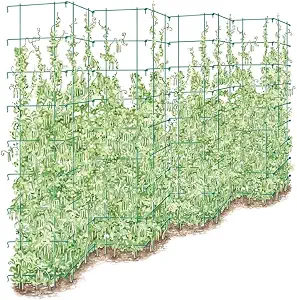 |
| Best Value The sweet spot between price and what you get | Generic A‑Frame PVC-Coated Steel Trellis, 2-Pack |  |
| Highest Rated A top-rated pick with lots of positive feedback | Gardener's Supply Company Expandable Pea Trellis (Powder-Coated Steel) |  |
| Most Popular A crowd favorite that many people choose with confidence | VIVOSUN Trellis Netting Heavy-Duty Polyester 5 x 30 ft |  |
| Best Seller A high-volume bestseller chosen again and again | Generic Heavy-Duty A-Frame Cucumber Trellis, 2-Pack (Galvanized Steel) |  |
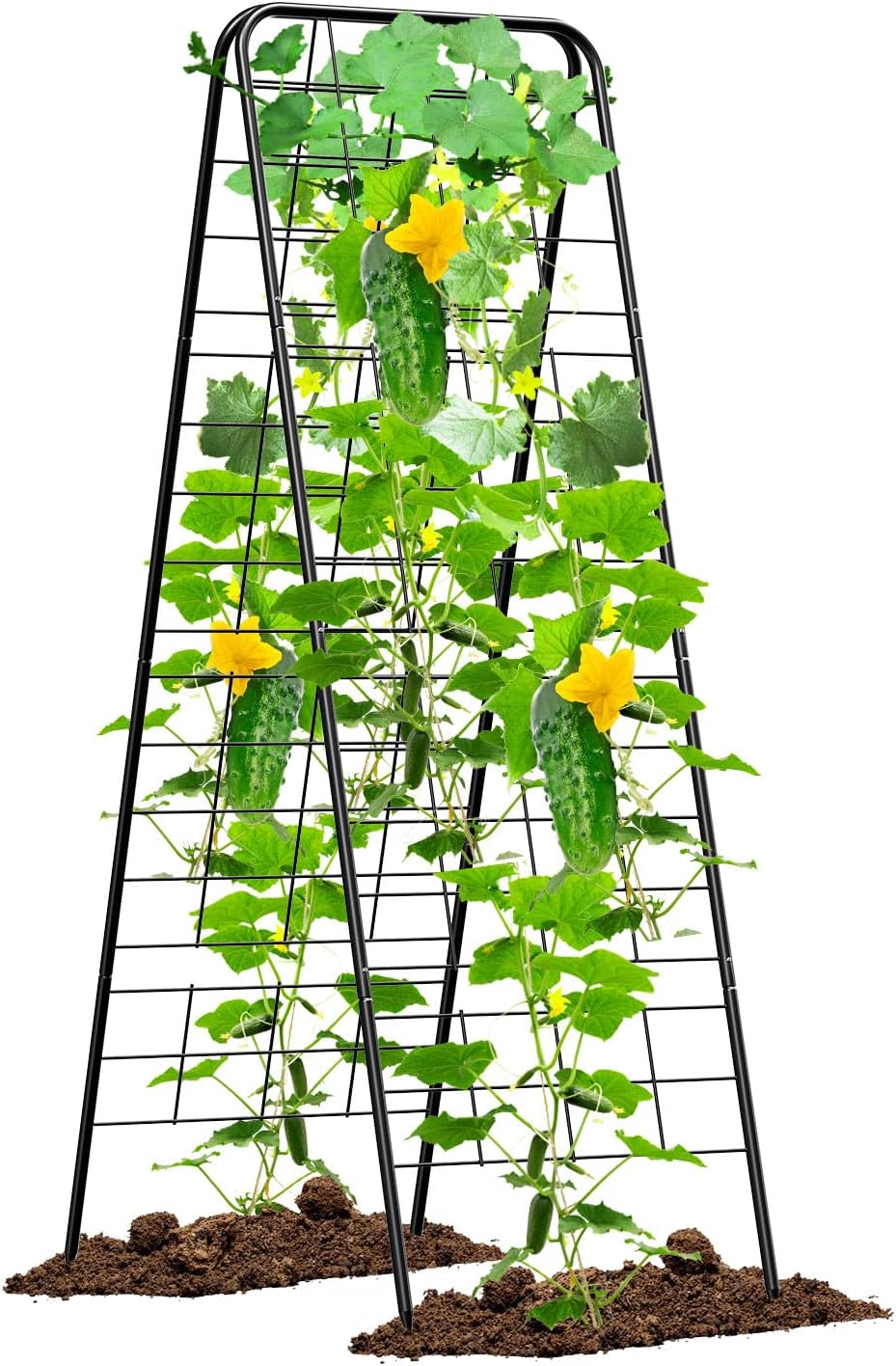
MQHUAYU Adjustable Heavy-Duty A‑Frame Trellis, 50 x 17 inches
| Material Type | Galvanized Metal, Steel |
|---|---|
| Finish Type | Powder Coated |
| Adjustable Height | 17" to 50" |
| Style | Heavy Duty |
This MQHUAYU A-frame trellis is a sturdy, tool-free support for peas and other vining crops in raised beds or containers. The preassembled panels unfold and hand-tighten in minutes, letting you set the trellis anywhere without digging or complicated assembly. Its dense galvanized steel mesh and a 1cm thickened frame create a rigid grid that resists sagging under heavy yields and holds vines upright as they climb. The factory-fused hinge and included ground stakes improve wind stability, while the powder-coated, rust-resistant finish lets it stay outdoors across seasons. The trellis adjusts from 17 to 50 inches tall, so it works for early seedlings and mature pea plants; when the season ends the panels fold flat for compact storage. Limitations to note: the 17-inch width is narrow, so it is best for single-row beds or narrow planters rather than wide double-rows, and it is a fixed A-frame rather than a free-standing tall obelisk for very large trellis layouts.
Best for: Gardeners who want a reliable, low-maintenance trellis that installs fast and holds heavy pea crops in raised beds or narrow containers.
Less Ideal for: Growers planning wide double-row plantings or large-span trellis systems who need broader or taller single-plane supports.
- Tool-free, quick assembly with hand-tighten bolts for fast seasonal setup
- Dense galvanized steel mesh and thick frame reduce sagging under heavy vine loads
- Factory-fused hinge and ground stakes improve wind resistance and overall stability
- Powder-coated, rust-resistant finish suitable for multi-season outdoor use
- Narrow 17" width limits coverage per unit, requiring multiple trellises for wider rows
- A-frame shape is not ideal for creating very tall single-plane trellis runs
Verdict: If you need a compact, no-tools trellis that keeps pea vines upright and resists sagging, this heavy-duty adjustable A-frame is a dependable choice.
Gardener's Supply Company Extra-Tall Expandable Pea Trellis

| Material Type | steel |
|---|---|
| Finish Type | Powder Coated |
| Item Highlight | 9'-3" L x 64" H Installed for Outdoor Plants |
This expandable pea trellis is a practical solution for growers who need a sturdy, long support for vining crops. It consists of eight hinged steel panels with large 8-inch grids that zig-zag along a row and push into the soil, giving a nearly 9.5-foot run at about 64 inches high when deployed. The powder-coated steel frame holds heavy vines upright better than flimsy netting or twine, and the hinged design lets you extend or fold it for storage without tools. Typical use is running the trellis along a planting row for peas, beans, cucumbers, or climbing tomatoes and adding end stakes in windy sites. Benefits include durability for multiple seasons, easy no-tool setup, and large grid openings that let vines thread naturally. Limitations to consider are its fixed height and grid spacing, which may be taller or wider than needed for very compact varieties, and the need to push the panels into soil or anchor them securely in soft or rocky ground.
Best for: Growers who prioritize reliable, reusable plant support and need a long, sturdy trellis to maximize yield from row-planted peas and other vining vegetables.
Less Ideal for: Those with very small raised beds, container growers with limited vertical space, or gardeners wanting adjustable-height or fine-mesh support for delicate seedlings should consider other options.
- Powder-coated steel construction for season-to-season durability
- Expandable hinged panels create a continuous 9'-8" run for long rows
- Large 8-inch grid openings let vines climb without extra twine
- Folds flat for compact off-season storage and requires no tools to set up
- Fixed height and grid spacing may not suit very compact pea varieties
- Requires pushing panels into the ground or adding end stakes for secure anchoring
Verdict: Choose this trellis when you need a durable, expandable steel support that gives a long, high-running structure for productive pea rows.
Generic A‑Frame PVC-Coated Steel Trellis, 2-Pack

| Number of Packs | 2 |
|---|---|
| Finish Type | PVC Coated |
| Shape | Rectangular |
This two-pack of A-frame trellises is a no-assembly solution for training peas, cucumbers, squash and other vining vegetables in beds or directly in the soil. Each panel is a PVC-coated steel grid with an open rectangular pattern that lets vines climb and improves air circulation to reduce disease. The triangular A-frame gives inherent stability and two planting faces so you can plant on both sides or use paired panels to create a wider support. Weather-resistant coating helps the frames hold up outside without frequent maintenance. Because they arrive ready to use you can set them into a raised bed or the ground quickly, which is handy for seasonal planting. Limitations are the modest height and narrow single-panel width per unit, so taller crops or very heavy fruit loads may require pairing panels, closer spacing, or supplementary anchoring for extra strength.
Best for: Gardeners who prioritize easy, low-effort solutions for training peas and other small climbers and want a quick setup that improves air flow and plant health.
Less Ideal for: Growers planning to support very heavy or high-yield crops that need tall continuous trellising or for those wanting decorative lattice rather than purely functional support.
- Ready to use out of the box with no assembly required
- PVC-coated steel grid resists weathering and reduces corrosion
- A-frame design provides two planting faces and inherent stability
- Open grid improves air circulation and makes vine training easy
- Relatively short height for very tall vining varieties
- Single panel width is narrow unless two units are combined
Verdict: A fast, no‑fuss A-frame trellis pack that gets peas trained and airflow improved with minimal setup.
Gardener's Supply Company Expandable Pea Trellis (Powder-Coated Steel)

| Material Type | Powder-coated steel |
|---|---|
| Size | 9'-8" length by 37" high |
| Panels | Eight hinged panels |
| Grid opening | 8" |
This expandable pea trellis is built from powder-coated steel and designed to give dependable support for peas and other vining vegetables. The trellis unfolds into eight hinged panels with large 8" grid openings, so you can zig-zag it through a planted row, push the legs into the soil and add end stakes in windy sites. Its rigid steel frame keeps vines off the ground, which helps reduce pest contact and rot and makes harvesting easier through the big openings. Because it folds flat for storage and is reusable season after season, it is practical for gardeners who rotate crops or need seasonal supports. The unit does require some manual installation in the bed and is best used in prepared rows rather than for ad-hoc freestanding supports; very loose or rocky soil may need extra anchoring. Overall it performs as a straightforward, durable solution when you want low-maintenance, long-lasting pea support that stores compactly between seasons.
Best for: Gardeners who prioritize a dependable, low-maintenance support system for a dedicated pea row and want a durable product that stores easily between seasons.
Less Ideal for: People needing a portable freestanding tower or those planting single isolated hills rather than long rows should consider other support styles.
- Durable powder-coated steel construction for season-to-season use
- Large 8-inch grid openings make training and harvesting vines easy
- Expandable hinged panels cover a long row while folding flat for compact storage
- Keeps plants off the ground to reduce pest damage and rot
- Requires pushing panels into soil and occasional end stakes for stability in windy or loose conditions
Verdict: Choose this trellis if you want a sturdy, reusable steel support that reliably keeps pea vines off the ground along a long row.
VIVOSUN Trellis Netting Heavy-Duty Polyester 5 x 30 ft

| Material Type | Polyester |
|---|---|
| Size | 5'x30' – 6''square mesh |
| Unit Count | 1 Count |
This VIVOSUN trellis netting is a simple, no-frills support system for peas and other vining crops. Made from braided polyester, the 5 x 30 foot sheet can be cut to length, tied or wrapped around posts, and stretched taut to create a vertical or horizontal trellis. The 6-inch square mesh is large enough to pass hands through for pruning and harvesting while still guiding vines upward, and the material is lightweight and foldable for easy storage between seasons. In practice it works well where you need a quick, customizable trellis over a long run of beds or along a fence. It will support moderate fruit loads but is not a rigid frame, so heavier squash or cantaloupes will need additional anchoring. Installation is straightforward but you should inspect ties and anchor points periodically since the product can sag if not kept tight. For gardeners who want an inexpensive, reusable support that adapts to different layouts, this netting is an efficient option.
Best for: Gardeners who want an affordable, adaptable trellis for peas and other light to moderate vining crops and prefer a solution that can be quickly installed and reused each season.
Less Ideal for: Growers seeking a permanent, rigid trellis for heavy-fruiting vines or those who need very fine-mesh support for delicate seedlings should consider sturdier frames or finer netting.
- Reusable, foldable polyester construction for season-to-season use
- Large 6-inch square mesh allows easy access for pruning and harvesting
- Can be cut to length and attached to posts or frames for flexible installation
- Lightweight and easy to store when not in use
- Mesh size may be too large for very small-seeded vining varieties that need finer support
- Not a rigid structure so heavy fruits require extra anchoring or a stronger frame
Verdict: A practical, reusable trellis net that gives pea growers an easy, customizable way to train vines and speed harvests.
Generic Heavy-Duty A-Frame Cucumber Trellis, 2-Pack (Galvanized Steel)

| Material Type | Metal |
|---|---|
| Finish Type | galvanized steel |
| Number of Packs | 2 |
| Shape | A-shape, Rectangular |
This two-pack of galvanized-steel A-frame trellises is designed to give quick, sturdy vertical support for cucumbers, peas, beans and similar vining vegetables. The panels arrive ready to use with no assembly required and connect together with supplied springs and twist ties so you can make a wider span by pairing units. The metal grid and galvanized finish resist rust for outdoor use and the A-frame shape provides stable support for fruiting vines while allowing airflow and easier harvesting. Practical benefits include quick setup straight out of the box, compact folding for off-season storage, and compatibility with raised beds or small plots. Important limitations are the modest height and single-panel width per unit, which means very heavy gourds or large pumpkins may need additional bracing or multiple units chained together; the panels also have sharp edges so careful handling and secure anchoring in windy sites are necessary. If you want a simple, low-maintenance way to add vertical space for common garden vines, these trellises do the job with minimal fuss.
Best for: For gardeners who prefer low-effort, reliable support for common climbing vegetables and want something ready to install without tools or complex setup.
Less Ideal for: Not the best choice for growers of very large melons or pumpkins who need extra height and heavy-duty bracing, or for landscapers seeking decorative trellis styles.
- No assembly required so units are usable straight from the box
- Galvanized steel grid offers rust resistance for outdoor seasons
- A-frame design gives stable, breathable support for climbing vegetables
- Includes connectors and ties to join panels for wider coverage
- Folds flat for compact storage when not in use
- Height and single-panel width limit support for very large or heavy fruiting vines
- Edges can be sharp and require careful handling during installation
Verdict: A simple, no-assembly galvanized-steel trellis pair that quickly adds durable vertical support for everyday vining vegetables.
Choosing the Right Trellis for Peas: Key Factors to Consider
Material and Durability
Material determines how long a trellis will last and how it behaves in weather. Metal frames offer high strength but need coatings or rust-resistant alloys to avoid corrosion over seasons. Wooden trellises give a natural look and can be sturdy but may require preservative treatment or periodic replacement if left in contact with moist soil.
Plastic and synthetic netting resist rot and rust and are lightweight, but low-quality plastics can sag under the weight of heavy vine growth. Consider the expected lifespan relative to the effort and cost of installation; a longer-lasting material often pays back in less annual maintenance.
Climbing Surface and Mesh Spacing
Pea tendrils need places to grab; the climbing surface matters more than raw height. Mesh, horizontal slats, or twine netting each give different grab points and spacing. Openings that are too large can let vines slip, while very tight meshes can restrict growth or block airflow.
Aim for openings large enough that vines can weave through or curl around individual strands, typically a few inches across. The surface texture also helps: rougher fibers or thin wire give better purchase than smooth plastic sheeting.
Height and Width Relative to Planting Layout
Peas benefit from vertical space but rarely need extreme heights. Choosing a trellis height that matches your planting depth and harvest comfort makes picking easier. Taller trellises increase yield potential but may require stronger anchoring and more robust materials.
Width matters when planning rows or single supports. A narrow tall trellis suits limited-space containers and small beds; a wider panel or netting along a fence creates a long run for multiple plants. Think about how the trellis fits with row spacing and paths in your garden.
Stability and Anchoring Options
As vines grow heavy and wind moves foliage, a trellis must stay upright. Ground anchoring options include stakes driven deep into soil, base plates bolted to decking, or tie-downs for netting systems. Lightweight trellises need additional anchoring to prevent lean or collapse.
Consider seasonal winds in your area and whether snow or heavy rain might add weight. Choose systems with straightforward anchoring that match your soil type; soft raised beds need longer stakes than compacted garden soil.
Ease of Installation and Seasonal Storage
Gardeners often prefer trellises that are easy to erect and remove. Quick-assemble frames or roll-up netting reduce the time from planting to training. Ease of dismantling matters if you rotate crops or store trellises between seasons.
Compact storage and low-maintenance finishes make winter care simpler. Systems that come in two or three pieces are easier to handle for one person, and ones that fold or roll will occupy less shed space.
Maintenance and Repairability
All trellises require occasional attention. Materials that can be spot-repaired or have replaceable netting are more sustainable over time. Simple repairs like replacing a broken twine strand or tightening a loose joint should be possible with basic tools.
Consider whether spare parts or compatible twine are readily available, and whether the trellis design allows partial replacement rather than full disposal when one section fails.
Ideal Trellis Shapes for Pea Vines
Peas climb most readily on vertical or slightly angled surfaces that present multiple thin strands or edges for tendrils to curl around. A-frame designs provide dual growing faces and are self-supporting, which works well in small beds where anchoring is limited. Flat panels or netting fixed to a fence or posts create long runs that are easy to sow in a single row.
- A-frame: self-supporting, good for narrow beds
- Flat panel or fence netting: long runs, easy to harvest from one side
- Arch or tunnel: increases air flow and can be decorative in a walkway
Training and Early Support Techniques
Start training peas when vines are a few inches tall so tendrils find the support early. For netting, gently weave young shoots into openings rather than forcing mature stems. For twine or horizontal slats, loosely wrap guide stems to prevent rubbing and stem damage.
Most gardeners use clothespins or soft ties in the first weeks to anchor delicate stems to a support; remove ties after stems develop natural grip. Regularly check new growth to guide lateral shoots back onto the trellis rather than letting them flail across the soil.
- Begin training when vines are 3-6 inches tall
- Use soft ties or clips sparingly to avoid girdling
- Guide shoots weekly during rapid growth
Container and Small Space Considerations
When growing peas in containers or on a patio, choose lightweight trellises or portable netting that can be anchored to the pot rim or placed behind container runs. Stability is the biggest concern: heavy pots can shift under vine weight unless a secure anchor is used.
Vertical supports that clip to a railing or fit a container's center work well for dwarf or semi-dwarf pea varieties. Removable systems allow you to store the trellis when not in use, freeing space for seasonal changes.
- Use narrow, tall trellises for compact footprints
- Anchor to pot rims or use heavy pot bases to counterbalance wind
- Portable netting can be rolled up for storage
Seasonal Care and Off-Season Storage
At season end, remove plant debris from the trellis to reduce overwintering pests and diseases. For wooden or metal frames, inspect for rot or corrosion and perform light repairs before storage. For netting or twine, wash off dirt and let materials dry completely to avoid mold.
Store components in a dry, protected space out of direct sunlight. Foldable or rollable trellises should be bound to prevent tangling and kept away from rodents that may chew natural fibers.
- Clean off plant material and soil before storage
- Dry netting thoroughly to prevent mildew
- Inspect and repair joints or replace worn ties
How We Chose the Best Trellis for Peas
We shortlisted trellises that deliver reliable vertical support for vining peas and practical use in typical home gardens. Our selection filtered for structural strength, climbing surface, weather resistance, and ease of installation and removal. We prioritized trellises that create an appropriate climb angle and spacing for pea tendrils to grasp without excessive training. Evaluation emphasized materials and build quality because flimsy frames fail once vines mature. We also scored ease of setup and footprint since many gardeners need quick assembly and modest ground disturbance. Maintenance and seasonal storage were considered so a trellis that resists corrosion or UV damage lasts several seasons. Stability in wind and ability to be anchored were tested conceptually through specifications and gardener reports. Excluded from the list were decorative-only screens that lack climbing texture and overly complex systems that require specialized fittings. We focused on straightforward, repeatable designs that suit most backyard and allotment situations.
FAQ
How tall should a trellis be for peas?
Most peas do well on trellises 4 to 6 feet tall. Shorter trellises suit dwarf varieties and container gardening, while taller frames increase yield potential for vining varieties but require stronger anchoring.
Can peas climb netting or do they need twine?
Peas will climb either netting or twine as long as the support has thin strands or openings to grip. Netting provides many contact points and is quick to install, while twine offers a more traditional setup that can be adjusted for spacing.
Is it better to use an A-frame or a flat trellis?
A-frames are self-supporting and work well where ground anchoring is limited. Flat trellises or panels create longer linear runs and are easier to harvest from one side. Choose based on garden layout and how you prefer to pick pods.
How do I anchor a trellis in windy locations?
Drive deeper stakes or use ground anchors and tie-downs to resist wind. Secure connections between trellis panels and anchors, and consider windbreaks or temporary ties during storms for lighter systems.
When should I remove the trellis after harvest?
Remove a trellis after you have cleared all plant material and allowed the structure to dry. Early removal may make space for fall crops, while leaving a cleaned, sturdy trellis in place can be fine if it does not shade other plants.
Final Verdict
Pick a trellis that matches your garden layout, local weather, and how you harvest. Prioritize a climbing surface with appropriate spacing, sturdy materials that resist seasonal wear, and anchoring that suits your soil or container type. Tradeoffs are unavoidable: lighter systems are easier to store but need extra anchoring, while heavier frames last longer but require more effort to install. Decide which factors matter most for your patch and choose accordingly. With the right trellis for peas, you will see tidier vines, fewer ground problems, and faster, more comfortable harvesting.
