

Note: This article contains affiliate links. If you click on these links and make a purchase, I may earn a small commission at no extra cost to you. This helps support my research and content. Read my full affiliate disclosure here.
Growing butternut squash on a trellis saves space, reduces disease pressure, and keeps fruit cleaner for easier harvest. The right trellis must handle long, heavy vines and the weight of developing squash without collapsing or damaging plants. This guide shortlists the top trellis options for butternut squash, explaining how each type supports vines, accommodates fruit, and fits different garden layouts. We evaluated structural strength, attachment methods for fruit, and ease of setup and maintenance to surface the most practical choices. Read on to see the focused criteria we used and the factors that matter when selecting a trellis for a vigorous winter squash variety.
Top Picks at a Glance
| Best Quality Built to a higher standard if you want something more solid | Anleolife 4×6 ft Heavy-Duty Double-Arch Garden Trellis |  |
| Best Value The sweet spot between price and what you get | Growia 48 x 48 in U-Shaped Vegetable Trellis |  |
| Best Budget The cheapest option that still gets the job done reliably | K-Brands 50 x 50" A‑Frame Vegetable Trellis with Netting |  |
| Highest Rated A top-rated pick with lots of positive feedback | Gardener's Supply Company Wire A‑Frame Garden Trellis |  |
| Most Popular A crowd favorite that many people choose with confidence | Gardener’s Supply Titan Extra-Tall Garden Arch (Squash Tunnel) |  |
Anleolife 4×6 ft Heavy-Duty Double-Arch Garden Trellis

| Finish Type | Galvanized |
|---|---|
| Item Highlight | 5FT Wide Growing Tunnel; Swaged Joints; Raised-Bed or In-Ground; Deep-Insert Stability |
| Model Number | ANT001 |
| Size | 4x6ft |
This Anleolife double-arch trellis is built to carry heavy vines and large fruits, making it a practical choice for growers who want to train butternut squash and other vigorous climbers off the ground. The galvanized square-steel frame uses swaged joints for tighter fits and reduced wobble, and the structure includes 17 crossbars plus jute rope for many secure tie points. It is configured as a deep, walk-through tunnel so you can access plants beneath for pruning and harvest without disturbing vines. Installation is flexible: pointed legs insert into soil or attach to compatible raised-bed frames for stability. In use it provides dependable overhead and lateral support that helps fruit mature without sitting on soil, which can reduce rot and pest contact. Limitations are that it requires firm, level soil or compatible raised-bed mounts for full stability and assembly may need two people to align the swaged joints. Also the metal finish is galvanized but long-term outdoor exposure will still need routine inspection for wear in harsh climates.
Best for: Gardeners growing large, heavy vining crops who prioritize strong, stable support and easy access for pruning and harvesting.
Less Ideal for: Small-space gardeners or those wanting a decorative, lightweight trellis for flowering vines should consider simpler or more compact options.
- Heavy-duty galvanized steel frame with swaged joints for improved stability under load
- Walk-through tunnel design gives easy access for training, pruning and harvest
- 17 crossbars plus included jute rope provide many tie points for supporting large fruits
- Can be installed in-ground or mounted to compatible raised beds for flexible placement
- Requires firm, level soil or a compatible raised-bed mount for best stability
- May need two people to assemble and align the steel sections comfortably
Verdict: Choose this heavy-duty double-arch tunnel if you need a sturdy, walk-through support that will carry the weight of butternut squash and other large vining crops.
Growia 48 x 48 in U-Shaped Vegetable Trellis

| Material Type | Metal, Plastic |
|---|---|
| Finish Type | Powder Coated |
| Item Highlight | U-Shaped Garden trellis for climbing plants |
| Includes | Netting, twist ties, cable ties |
This Growia U-shaped trellis is a straightforward support system for vining vegetables and heavier gourds like butternut squash when grown vertically. It uses powder-coated metal rods and easy-connect joints that snap together without tools, so assembly is quick and simple. The semicircular 48 x 48 design fits over a raised bed or large planter and includes netting, plant twist ties, and cable ties so you can train vines and secure fruit as it develops. The powder coating helps resist rust in outdoor conditions, and the 11 mm rod thickness provides noticeably more stiffness than thin garden netting alone. Expect better airflow, easier harvesting, and saved ground space compared with sprawling vines. Limits to expect are modest overall height and span compared with heavy-duty farm trellises, so very large single fruits or intensely vigorous squash varieties may need additional reinforcement and regular tie support to prevent sagging.
Best for: Gardeners who prioritize efficient use of raised beds and want a ready-to-use support that installs quickly and reduces ground-spreading vines.
Less Ideal for: Growers planning to support giant or extremely heavy single fruits or those wanting a permanent, heavy-duty farm-style trellis should consider more robust metal or timber frameworks instead.
- Tool-free, quick assembly with easy-connect joints
- Powder-coated steel frame resists rust for season-to-season use
- Includes netting, 20 m of twist ties, and 50 cable ties for immediate setup
- U-shaped design fits over raised beds and large containers to save ground space
- Overall height and span are limited compared with heavy-duty trellises for very large gourds
- May require extra reinforcement and frequent tying for very vigorous or heavy fruit
Verdict: A fast-assembling, powder-coated U-frame trellis that makes vertical growing in raised beds practical for butternut squash and other vining vegetables.
K-Brands 50 x 50" A‑Frame Vegetable Trellis with Netting
| Material Type | Metal, Plastic |
|---|---|
| Finish Type | Powder Coated |
| Product Style | Classic |
| Shape | A-Shape |
| Unit Count | 1 Count |
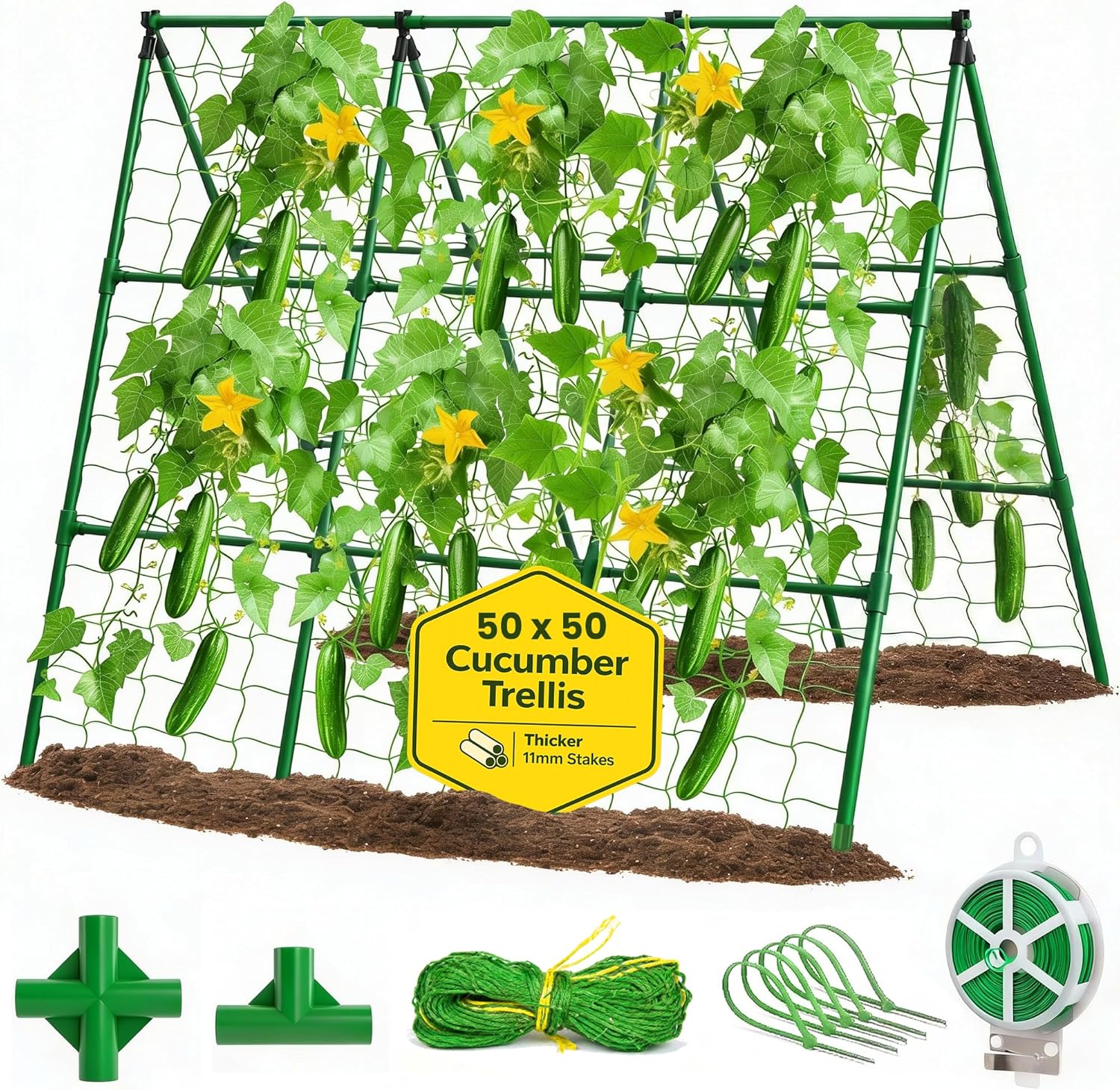
This A-frame trellis provides a quick way to add vertical support to a raised bed or large container. The kit snaps together without tools using easy-connect joints and includes heavy-duty netting, twist ties and zip ties so you can install it and train vines the same day. Powder-coated steel tubing resists rust and the A-frame shape gives a stable two-sided support that works well for pole beans and lighter vining crops. The trellis is compact enough to fit inside raised beds while still offering generous vertical area for multiple plants. Because it is relatively lightweight, it can be moved or repositioned during the season but should be secured in windy locations. The included netting and ties simplify setup, though very heavy fruiting vines may need additional anchoring or stronger supports as they mature. Sharp edges are noted in the safety info, so handle assembly with care.
Best for: Gardeners who want a practical, no‑fuss trellis to maximize vertical space in raised beds or containers and prefer ready-to-use kits that minimize extra purchases and setup time.
Less Ideal for: Growers planning to support very heavy fruiting vines or large pumpkins who need heavier, permanent structures should consider sturdier, anchored supports.
- Tool-free, quick assembly with easy-connect joints
- Powder-coated steel frame for rust resistance
- Includes netting and multiple ties so no extra purchases are required
- A-frame design offers two-sided support and fits well inside raised beds
- Lightweight frame may need extra anchoring for very heavy or mature vines
- Sharp edges reported so careful handling during assembly is required
Verdict: A fast, ready-to-use A-frame trellis that saves bed space and gets beans and other vining vegetables up and off the soil with minimal fuss.
Gardener's Supply Company Wire A‑Frame Garden Trellis
| Material Type | Steel |
|---|---|
| Finish Type | Steel |
| Grid Size | Approx. 6" x 8" |
| Size | 17.75 x 58 inches |
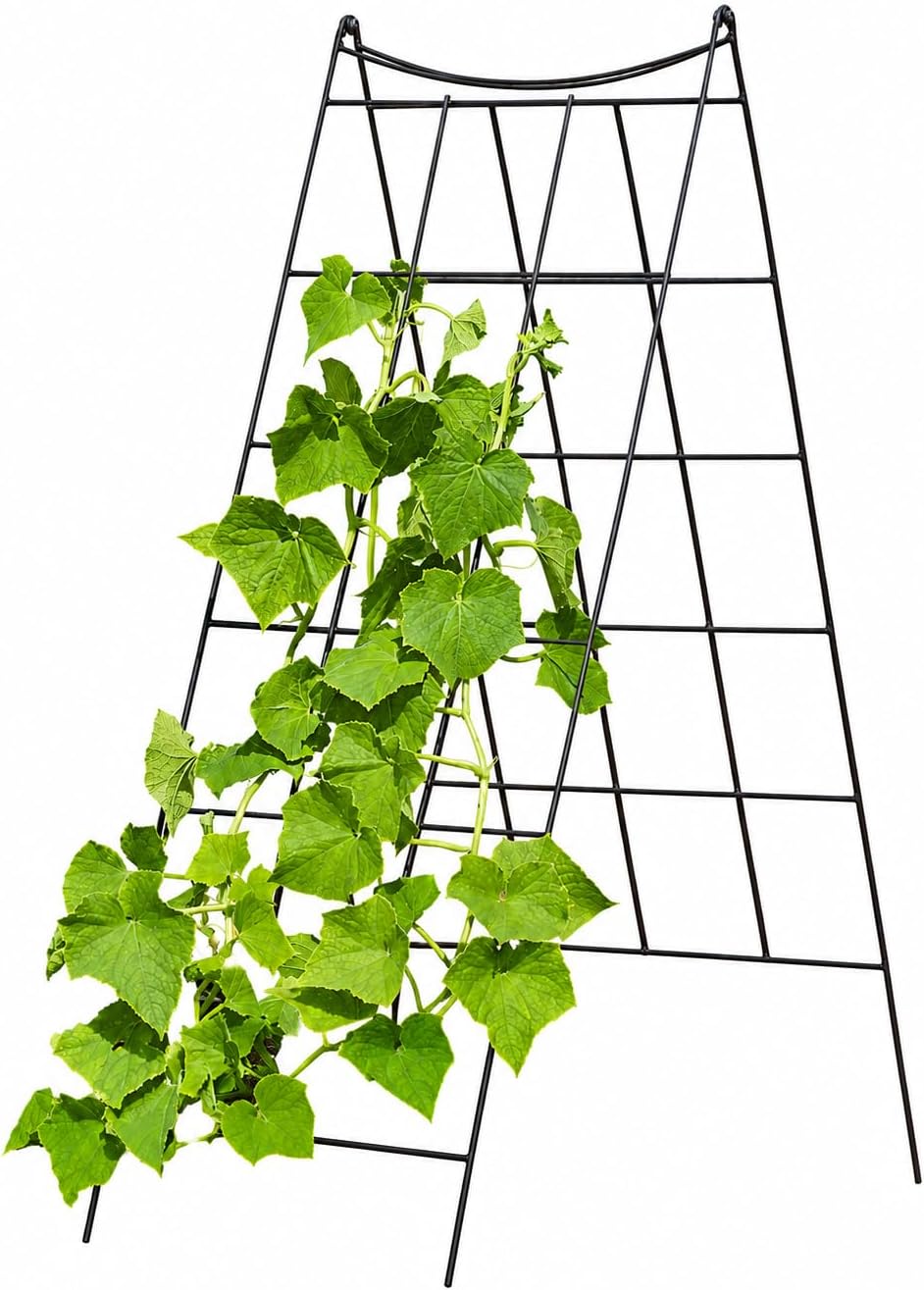
This wire A‑frame trellis is a straightforward, sturdy support for vining vegetables like butternut squash, cucumbers, and peas. Its powder‑coated steel frame forms two angled panels that stand in a raised bed or in‑ground and create a tunnel of support where vines can climb on both sides. The roughly 6×8 inch grid spacing keeps fruit from slipping through while giving good air circulation and sunlight exposure, and the open grid makes checking and harvesting fruit easy. Assembly is simple and tool‑free so you can set multiple units up side‑by‑side to support larger plants or form longer runs. Because the frame is steel and described as heavy‑duty, it handles the weight of sizable squash better than flimsy plastic trellises, though very large, overburdened vines may still require strategic training or additional anchoring. The trellis also disassembles flat for offseason storage, which is convenient for gardeners who rotate supports seasonally.
Best for: Gardeners who prioritize a reliable, long‑lasting support for heavy vining crops and want a no‑fuss trellis that stands up season after season in a vegetable garden.
Less Ideal for: People who grow only compact or non‑vining plants or those who need a decorative trellis for ornamental gardens rather than practical vegetable support.
- Powder‑coated steel construction provides robust, long‑lasting support for heavy vines.
- 6×8 inch grid spacing balances fruit containment with easy access for harvesting.
- A‑frame design supports plants on both sides to maximize vertical growing in small spaces.
- Tool‑free assembly and flat disassembly simplify setup and offseason storage.
- Grid openings may still allow very large fruits to protrude and require tying or repositioning.
- Does not include ground anchors; may need extra stabilization for wind or extremely heavy loads.
Verdict: Choose this steel A‑frame trellis when you need a dependable, heavy‑duty support that makes training and harvesting large vining squash easier.
Gardener’s Supply Titan Extra-Tall Garden Arch (Squash Tunnel)

| Material Type | Metal |
|---|---|
| Frame Material | Polyethylene-coated steel tubing |
| Netting | Nylon netting |
| Size | 80 inches (height) |
The Titan Extra-Tall Garden Arch is a heavy-duty arch-shaped trellis built from polyethylene-coated steel tubing with nylon netting to support sprawling vines and large fruit. It is used by placing it over rows or planting beds and training squash, melons, zucchini or butternut vines onto the netting so fruit hangs clear of the soil. The weatherproof coating resists rust and the steel core provides rigidity so the structure stays upright under load; the manufacturer rates its weight limit at 70 pounds. Assembly is straightforward and tool-free for most gardeners, and the tunnel disassembles for compact off-season storage. Practical benefits include improved airflow and cleaner fruit from keeping vines elevated, easier harvesting, and better use of limited garden space. Limitations are the fixed arch shape which suits long, linear runs or entryways better than small raised beds, and the 70 lb limit which may require additional support if many heavy fruits are hanging in one spot.
Best for: Gardeners who want a durable, long-lasting support to train butternut squash and other heavy vines vertically to protect fruit and save horizontal space.
Less Ideal for: Growers with very small container or raised-bed plots where an arched tunnel will not fit, or those needing modular cages for individual plants rather than an overhead tunnel.
- Durable polyethylene-coated steel frame resists rust and provides strong structural support.
- Nylon netting offers many tie-in points to train and support large vines and hanging fruit.
- Easy to assemble and disassemble for seasonal storage.
- Elevates fruit off the ground to reduce rot and make harvesting cleaner and easier.
- Weight limit of 70 lbs could be limiting for very heavy fruit loads concentrated on a single section of netting.
- Arch shape is less space-efficient in very small raised beds or square plots.
Verdict: If you want a sturdy, weatherproof arch to train butternut squash and keep heavy fruit off the ground, this Titan squash tunnel is a reliable, long-lasting choice.
Choosing the Right Trellis for Butternut Squash: Key Factors to Consider
Load Capacity and Structural Stability
Butternut squash vines can carry multiple heavy fruits at once, so the trellis must remain rigid under sustained downward force. Look for designs with reinforced verticals, cross-bracing, or deep ground anchors. Structures that wobble or lean will strain stems and can snap vines when fruit weight shifts.
Anchoring matters as much as material. A well-anchored trellis transfers load into soil or a fixed support, reducing the chance of tipping. For portable or freestanding units, extra grounding stakes, guy lines, or burying the base slightly can improve stability without permanent installation.
Fruit Support and Attachment Methods
Unlike light-fruiting climbers, butternut squash needs interim fruit cradles or slings to prevent stem breakage and reduce rubbing. Trellises that allow easy attachment of soft slings or nets make a big difference in fruit health and shape. Look for open grids or frames where a grower can loop a fabric cradle under maturing fruit.
Attachment systems should avoid constricting growth. Wide straps, soft netting, or adjustable slings distribute weight and prevent pressure points. Also consider how easy it is to add or remove slings as fruit grows; fiddly fastenings discourage timely adjustments and can lead to losses.
Vine Training and Access
A trellis must let you guide long, flexible vines without excessive tying that can injure stems. Gentle clips, wide ties, or the ability to weave vines through a coarse grid simplifies training. Designs with generous vertical height give vines space to climb and delay fruiting at lower, more vulnerable levels.
Access for pruning, inspection, and harvest is important. Open-frame trellises or those with removable panels let you reach interior foliage and fruit easily. If training requires frequent attention, choose a trellis that minimizes repetitive handling.
Durability and Weather Resistance
Trellises for butternut squash sit outdoors for months and face sun, rain, wind, and sometimes snow. Materials like galvanized steel, rot-resistant wood, or UV-stable plastics hold up longer than untreated metal or thin plastic mesh. Corrosion and material fatigue compromise strength and create failure points when vines are heavy.
Consider finish and fasteners too. Powder-coated surfaces, stainless connectors, and weather-rated coatings reduce maintenance. If you live in a windy or coastal area, prioritize corrosion resistance and stronger anchoring methods to avoid repeated replacements.
Ease of Assembly, Adjustment, and Storage
Gardeners prefer trellises that go together without specialty tools and can be adjusted through the season. Snap-fit frames, modular panels, or foldable supports simplify setup and allow reuse in other parts of the garden. Ease of taking the trellis down at season end also matters for storage and winter protection.
Lightweight does not always mean flimsy, but very light materials often lack the reserve strength for heavy squash. Balance portability with structural heft. Assess whether components can be tightened or re-anchored mid-season if the structure begins to lean under load.
Compatibility With Garden Layouts
Where you grow determines what trellis will work. Narrow raised beds, wide rows, container plantings, and fence lines all demand different dimensions and anchoring approaches. A tall, narrow trellis fits compact beds, while a broad A-frame or arch benefits rows and espalier setups.
Also check whether the trellis disrupts other crops or pathways. Choose a shape and footprint that lets you access the base for watering and allows companion planting beneath without shading out smaller vegetables.
Trellis Shapes That Work Well for Heavy Squash
Different trellis geometries distribute fruit load in distinct ways. A sturdy A-frame spreads weight across two legs and is inherently stable, making it a common choice for heavy vine crops. Vertical panel or fence-style trellises place all load on a single plane, which can be fine when well-anchored but may need extra bracing for larger fruit.
Arches and tunnels let vines grow up and over, keeping fruit suspended and off the ground while offering good access underneath. For growers with limited horizontal space, tall single-plane trellises maximize vertical real estate and are easiest to retrofit against a wall or fence.
- A-frame: stable footprint and accessible both sides
- Panel/fence: good for tight spaces when anchored securely
- Arches/tunnels: suspend fruit while providing clear ground space
- Tall single-plane: best for narrow beds and against walls
How to Use Slings and Cradles Safely
Soft fabric slings, mesh nets, or padded nursery ties prevent fruit from cutting into stems and stop bruising from movement. Place slings under fruit before it reaches full size, then adjust as it grows. Use breathable materials so moisture does not build up and cause rot.
Make slings wide enough to spread weight. Avoid knots that create pressure points. Periodically check straps for wear and shift slings slightly to accommodate changing fruit positions and vine growth.
- Pre-position slings under young fruit early
- Use wide, soft materials that breathe
- Inspect and adjust slings weekly during rapid growth
Anchoring Techniques for Different Soils
Sandy, loamy, and clay soils all hold anchors differently. In sandy soil, use longer stakes or screw-in anchors to reach firmer layers. In heavy clay, you can often rely on shorter anchors but should avoid shallow postholes that can heave in frost. If soil is rocky, widen the base footprint and add guy lines to nearby fixed points.
For container-grown squash, secure the trellis to the pot or use weighted bases to prevent tipping. Wherever anchors are driven, allow for occasional retightening during the season as soil settles or freezes and thaws.
- Sandy soil: deeper screw-in anchors
- Clay soil: stable short anchors and attention to frost heave
- Rocky soil: broaden footprint and use guy lines
- Containers: tie to pot rim or use heavy planters for ballast
Seasonal Care and Off-Season Storage
Inspect fasteners and joints at the start and end of the season. Tighten bolts and replace any corroded components to retain structural integrity. Remove slings and netting when harvest finishes to dry components and reduce pest hiding spots.
Many trellises disassemble for compact winter storage. Store metal pieces in a dry place to avoid corrosion and keep fabric slings clean and dry. If you leave a permanent trellis in place, reinforce anchors before winter storms to prevent failure.
- Check and tighten fasteners at season start
- Clean and dry slings before storage
- Disassemble lightweight units for compact winter storage
- Reinforce permanent anchors before heavy weather
Adapting Trellises to Small or Urban Gardens
Butternut squash can be grown in tighter spaces when you choose a slim-profile trellis and use vertical training. Use narrow panels, wall-mounted supports, or tiered cages that fit against a fence to keep pathways clear. Pair trellises with companion plants that tolerate partial shade under the vines.
In containers or raised beds, shorter trellises with strong anchoring give you control without overwhelming the footprint. Consider rotating crops so the trellis can be reused for other vining plants when squash is out of season.
- Choose narrow profiles for tight beds
- Mount to existing fences or walls where possible
- Use strong anchoring for container setups
- Plan crop rotation to maximize trellis utility
How We Chose the Best Trellis for Butternut Squash
We shortlisted trellis designs that meet the unusual demands of heavy, pendulous winter squash vines. Selection focused on structural strength, long-term durability outdoors, and practical ways to support fruit without girdling stems. We also prioritized systems that make harvesting and inspection easier and those that integrate with common garden spaces such as beds, fences, and containers. Concrete evaluation criteria included load capacity and structural stability, fruit-support options, vine training and attachment flexibility, weather durability and material quality, and ease of assembly and seasonal storage. We excluded lightweight decorative screens and trellises sized only for vining salad greens, since they cannot reliably carry butternut fruit. Also omitted were complex permanent structures that require professional installation; we focused on options a typical gardener can reasonably install and maintain.
FAQ
How tall should a trellis be for butternut squash?
Aim for at least 6 to 8 feet of vertical height so vines can climb before fruit sets. Taller trellises provide more space to suspend fruit and reduce crowding at the base, but height should match your ability to safely add slings and harvest.
Can butternut squash be grown on a freestanding trellis?
Yes, if the freestanding trellis has a broad, stable footprint and secure anchors. Freestanding units often need extra grounding or guying to resist tipping under the weight of fruit.
When should I add slings under developing squash?
Add slings as soon as fruit is about the size of a small fist or when you first notice a heavy bend in the vine. Early placement prevents strain and is easier than retrofitting a sling onto larger, heavier fruit.
What materials work best for slings?
Soft, breathable fabrics like old pantyhose, horticultural mesh, or padded nursery cloth are effective because they support weight without trapping moisture. Avoid narrow cords that can cut into stems.
Will trellising reduce disease in butternut squash?
Trellising lifts foliage and fruit off the ground, improving air circulation and reducing soil contact that spreads rot and some fungal diseases. It helps but does not eliminate the need for good sanitation and spacing practices.
Final Verdict
Choosing a trellis for butternut squash means prioritizing strength, anchoring, and easy fruit support. Expect tradeoffs between portability and raw load capacity; the most practical solutions balance a sturdy frame with accessible attachment points for slings. Consider how the trellis fits your garden layout and how simple it will be to adjust supports as fruit grows. Prioritize a design that lets you cradle fruit safely, anchor reliably for your soil type, and access plants for pruning and harvest. With those priorities in mind, you can confidently pick a trellis that protects fruit, saves space, and makes growing butternut squash more manageable.
