

Note: This article contains affiliate links. If you click on these links and make a purchase, I may earn a small commission at no extra cost to you. This helps support my research and content. Read my full affiliate disclosure here.
Growing sweet peas is rewarding but the plants rely on a good support structure to scramble upward and bloom profusely. The right trellis controls vine direction, reduces stem breakage, and makes harvesting and deadheading easier. This guide covers five carefully shortlisted trellises for sweet peas suited to gardens, patios, and containers. We evaluated each option on strength, climbability, and ease of setup so you can pick the structure that matches your space and growing style. Read on for practical notes to pair trellis style with planting technique.
Top Picks at a Glance
| Best Overall The best all-around choice for most situations | MQUPIN Tower Obelisk Garden Trellis, Adjustable 6.2 ft Metal Plant Support |  |
| Best Quality Built to a higher standard if you want something more solid | MQHUAYU Adjustable Heavy-Duty A‑Frame Trellis, 50 x 17 inches |  |
| Best Budget The cheapest option that still gets the job done reliably | Miuezuth Heavy-Duty Trellis Netting for Climbing Plants (8.2' x 6.6') |  |
| Highest Rated A top-rated pick with lots of positive feedback | Gardener's Supply Company Expandable Tall Pea Trellis (Powder-Coated Steel) |  |
| Most Popular A crowd favorite that many people choose with confidence | VIVOSUN Trellis Netting Heavy-Duty Polyester, 5 ft x 30 ft |  |
MQUPIN Tower Obelisk Garden Trellis, Adjustable 6.2 ft Metal Plant Support

| Material Type | Metal |
|---|---|
| Finish Type | Powder Coated |
| Adjustable Height | 6.2 ft / 74.4" |
| Number of Packs | 1 |
This MQUPIN tower obelisk trellis provides a vertical framework for training climbing plants such as sweet peas, clematis, and morning glories. It assembles top to bottom with interlocking sections and connecting rings so you can shorten or lengthen the height to suit young plants or mature vines. The powder-coated metal poles are covered in a plastic casing intended to resist rust and reduce abrasion on stems, and the base stakes are sealed to make the unit easier to drive into garden soil or container mix after pre-drilling. Ribbed surfaces on the sides help keep plant ties in place and the four-stake design gives decent stability; the manufacturer recommends tying the trellis to a fixed structure in very windy locations. This trellis is lightweight and unobtrusive, works well as a decorative focal point, and is simple to move or store when not in use. It is not a heavy-duty industrial support, so very large or fruit-heavy vines will need stronger, more rigid framing or additional anchoring for long-term support.
Best for: Gardeners who want a tidy, adjustable vertical support for ornamental climbers and light vegetable vines and who value easy assembly and a decorative look.
Less Ideal for: Growers needing a heavy-duty support for large, fruit-heavy plants or commercial production should choose a sturdier, welded frame or reinforced trellis system.
- Adjustable height lets you match support to plant growth stage
- Plastic-coated metal resists rust and is gentler on plant stems
- Ribbed sides help keep ties and twine in place for training vines
- Four-stake base provides reasonable stability in normal conditions
- Lightweight and easy to assemble without tools
- Not built for very heavy or fruit-laden vines without extra anchoring or reinforcement
- Requires pre-drilling and occasional tie-downs in windy sites
Verdict: A lightweight, rust-resistant obelisk that gives balanced, adjustable support and a neat focal point for sweet peas and other light climbers.
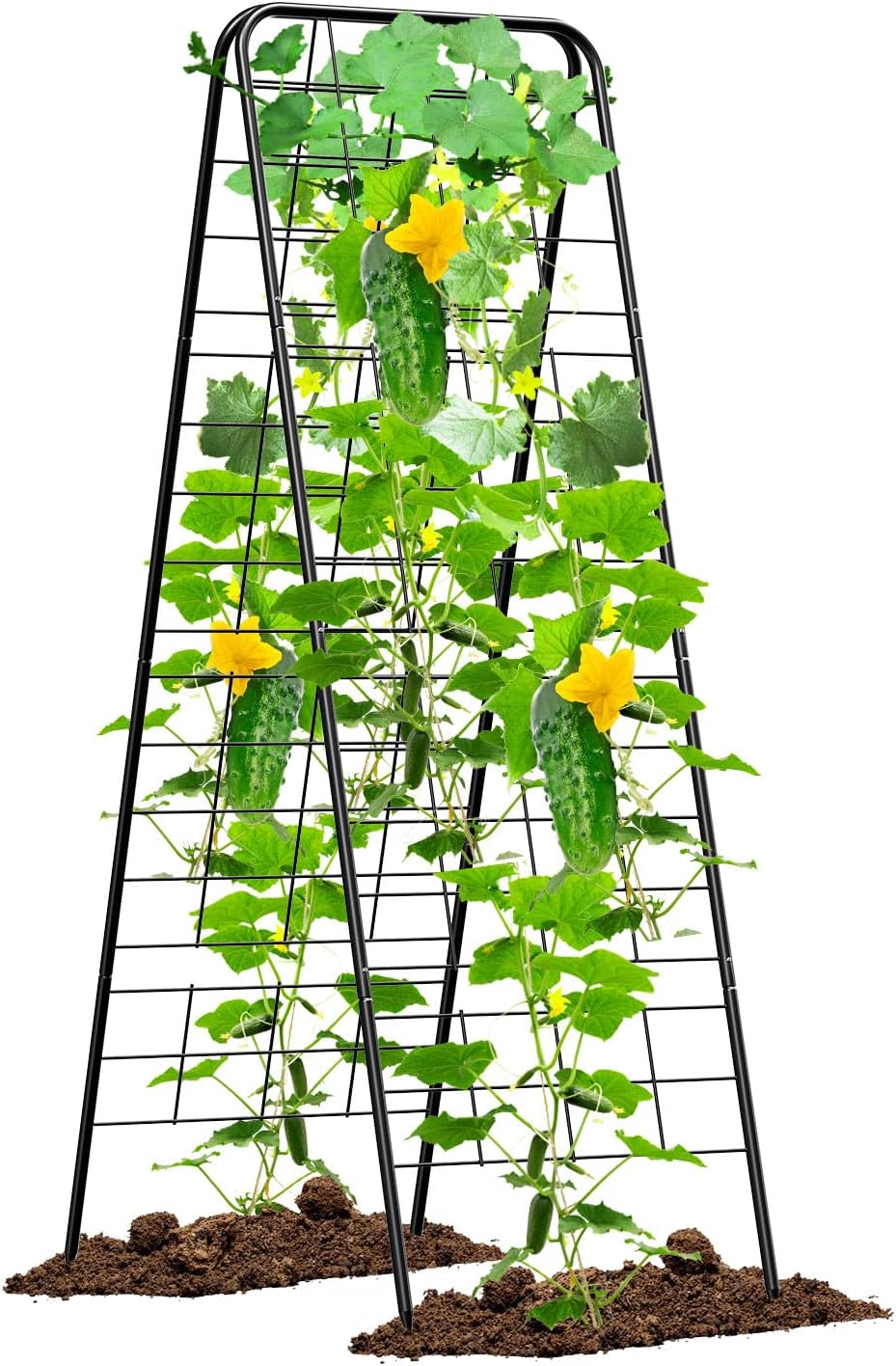
MQHUAYU Adjustable Heavy-Duty A‑Frame Trellis, 50 x 17 inches
| Material Type | Galvanized Metal, Steel |
|---|---|
| Finish Type | Powder Coated |
| Adjustable Height | 17" to 50" |
| Style | Heavy Duty |
This MQHUAYU A-frame trellis is a sturdy, tool-free support for peas and other vining crops in raised beds or containers. The preassembled panels unfold and hand-tighten in minutes, letting you set the trellis anywhere without digging or complicated assembly. Its dense galvanized steel mesh and a 1cm thickened frame create a rigid grid that resists sagging under heavy yields and holds vines upright as they climb. The factory-fused hinge and included ground stakes improve wind stability, while the powder-coated, rust-resistant finish lets it stay outdoors across seasons. The trellis adjusts from 17 to 50 inches tall, so it works for early seedlings and mature pea plants; when the season ends the panels fold flat for compact storage. Limitations to note: the 17-inch width is narrow, so it is best for single-row beds or narrow planters rather than wide double-rows, and it is a fixed A-frame rather than a free-standing tall obelisk for very large trellis layouts.
Best for: Gardeners who want a reliable, low-maintenance trellis that installs fast and holds heavy pea crops in raised beds or narrow containers.
Less Ideal for: Growers planning wide double-row plantings or large-span trellis systems who need broader or taller single-plane supports.
- Tool-free, quick assembly with hand-tighten bolts for fast seasonal setup
- Dense galvanized steel mesh and thick frame reduce sagging under heavy vine loads
- Factory-fused hinge and ground stakes improve wind resistance and overall stability
- Powder-coated, rust-resistant finish suitable for multi-season outdoor use
- Narrow 17" width limits coverage per unit, requiring multiple trellises for wider rows
- A-frame shape is not ideal for creating very tall single-plane trellis runs
Verdict: If you need a compact, no-tools trellis that keeps pea vines upright and resists sagging, this heavy-duty adjustable A-frame is a dependable choice.
Miuezuth Heavy-Duty Trellis Netting for Climbing Plants (8.2' x 6.6')

| Material Type | Nylon, Plastic, Polypropylene (PP) |
|---|---|
| Mesh diameter | 4" x 4" |
| Size | 8.2' x 6.6'Ft |
This Miuezuth trellis netting is a straightforward, budget-friendly way to give sweet peas and other climbers vertical support. The 4-inch by 4-inch mesh is easy to cut to size with scissors and can be hung vertically or laid horizontally, so you can tailor it to a fence, frame, or temporary stakes. Made from nylon, polypropylene and plastic with UV stabilization, the netting balances softness for delicate stems and enough strength to carry moderate loads. It improves air circulation and sun exposure by keeping plants off the ground and helps reduce rot and pest contact. Setup is quick and does not require special hardware, and the net is reusable from season to season. Limitations to note are the relatively large mesh for very thin tendrils when used alone and that heavier crops will still need closer tying or more rigid support at points of high load.
Best for: Gardeners who want an inexpensive, easy-to-install support for sweet peas and other vining ornamentals and vegetables and prefer a reusable, adaptable solution over rigid structures.
Less Ideal for: Growers who need a permanent, heavy-duty trellis for large fruits or who prefer decorative lattice work as a garden feature.
- UV-stabilized nylon/PP construction resists sun damage and outdoor chemicals
- 4" x 4" mesh is simple to cut and shape for vertical or horizontal use
- Lightweight and reusable for multiple seasons
- Keeps plants off the ground to improve air flow and reduce rot
- 4" mesh spacing may be too large to reliably catch very fine tendrils without additional ties
- Not rigid enough on its own for very heavy fruits without supplemental anchoring
Verdict: An affordable, reusable trellis net that gives sweet peas quick vertical support and better air circulation without a big investment.
Gardener's Supply Company Expandable Tall Pea Trellis (Powder-Coated Steel)

| Material Type | Powder-coated steel |
|---|---|
| Item Highlight | Multi-Use Heavy Duty Outdoor Garden Support for climing plants & vegetables |
| Number of Items | 1 |
| Unit Count | 1 Count |
This Gardener's Supply expandable pea trellis is a sturdy, no-fuss support for sweet peas and other vining crops. It consists of eight hinged panels that zig-zag through a row to create a continuous 9 foot 8 inch long by 37 inch high support with large 8 inch grid openings. Made from powder-coated steel, the frame resists rust and folds flat for off-season storage, so it is built for repeated seasonal use. Installation is simple: push the panels into the soil along your planting row and add end stakes in exposed, windy locations. The large grid size makes harvesting and training vines straightforward, and the trellis can double for tomatoes, cucumbers, or other climbers. Trade-offs to consider are its fixed height and the need to push the steel into the ground rather than use freestanding feet, which can be awkward in very compact or raised-bed plantings. For gardeners wanting a long-lasting, reusable support that keeps pea vines off the ground, this trellis delivers reliable performance year after year.
Best for: Gardeners who prioritize a durable, long-lasting support for sweet peas and other vining vegetables and who prefer a low-maintenance, reusable solution for in-ground rows.
Less Ideal for: People growing exclusively in shallow raised beds or containers where pushing the frame into the soil is impractical, or gardeners who need a freestanding or height-adjustable trellis.
- Powder-coated steel construction resists rust for multi-season durability
- Expandable eight-panel design creates a continuous 9'8" support for long rows
- Large 8 inch grid openings make harvesting and training vines easier
- Folds flat for compact off-season storage
- Must be pushed into soil for installation which can be difficult in rocky ground
- Fixed height may not suit taller vining varieties or gardeners who want adjustable support
Verdict: Buy this if you want a rugged, reusable in-ground trellis that keeps sweet peas off the ground and performs reliably season after season.
VIVOSUN Trellis Netting Heavy-Duty Polyester, 5 ft x 30 ft

| Material Type | Polyester |
|---|---|
| Size | 5'x30' – 6'' square mesh |
| Unit Count | 1 Count |
| Number of Items | 1 |
This VIVOSUN trellis netting is a flexible, heavy-duty polyester mesh that gardeners use to guide and support climbing and vining plants. The 5 x 30 foot sheet with 6-inch square openings can be cut to size, wrapped around frames, or tied to posts to create vertical trellises, A-frames, or horizontal supports across beds. Its braided polyester construction feels durable and resists unraveling, so it holds fruit and foliage weight when pulled taut. The larger 6-inch mesh makes it easy to prune and harvest through the netting, and the net folds up compactly for storage when not in use. Important limitations are the relatively large mesh spacing, which may not suit very small seedlings or lightweight vines that need finer support, and the product requires a sturdy underlying frame or posts to carry heavier loads. Also, because it is polyester, prolonged direct sun and heat exposure can accelerate wear, so periodic inspection is wise. For gardeners who want a simple, reusable way to add structure to a small plot or patio, this netting is practical and low-effort.
Best for: Practical home gardeners who value proven, well-reviewed gear and need a low-maintenance way to train and support medium to large vining vegetables or ornamentals in raised beds, balconies, or small plots.
Less Ideal for: People growing dense plantings of small seedlings, very lightweight vines that need fine mesh support, or those who prefer an all-in-one rigid trellis system.
- Durable braided polyester construction that resists unraveling and folds for storage
- Large 6-inch square mesh allows easy pruning and harvesting through the net
- Can be cut to size and configured for vertical, horizontal, or A-frame trellises
- 6-inch mesh may be too large for small seedlings or thin-stemmed climbers
- Requires a separate sturdy frame or posts to bear heavier fruit loads
Verdict: A durable, easy-to-use trellis net that delivers reliable support for medium to large vining plants and stores compactly when not in use.
Choosing the Right Trellis for Sweet Peas: Key Factors to Consider
Trellis Height and Orientation
Height matters because sweet peas are vining plants that can easily reach several feet in a single season. Choose a trellis tall enough to allow the plants to climb without crowding the top. Taller structures also let lower stems develop more flowers before shading occurs.
Orientation influences sun exposure and wind loading. A trellis placed perpendicular to prevailing winds will experience greater stress and needs stronger anchoring. For container-grown sweet peas, a vertical trellis saves floor space, while an angled or fan-shaped support can give vines room to spread for more blooms.
Mesh Size and Rung Spacing
Sweet pea tendrils are relatively fine and need openings they can wrap around. Mesh or rung spacing that is too large leaves vines without footholds; spacing that is too small can tangle stems and reduce airflow. Aim for medium-sized openings that let stems weave naturally while maintaining airflow around foliage to discourage disease.
The pattern of the mesh matters too. Square or diamond lattices and closely spaced horizontal rungs all provide different grip points. Think about how easy it will be for young shoots to find purchase and for the plants to attach as they grow.
Material and Weather Resistance
Materials affect longevity and maintenance. Wooden trellises have a classic look but can rot in wet climates unless pressure-treated or sealed annually. Metal options can be very strong but may rust if not galvanized or powder-coated. Synthetic materials such as UV-stable plastics resist rot and corrosion but can sag over time under heavy vine loads.
Consider the local climate and how much seasonal exposure the trellis will face. A durable finish reduces the need for seasonal repairs and ensures the trellis still supports heavy, flowering vines at peak season.
Anchoring and Stability
A trellis that shifts or tilts under wind or the plant weight will break stems and frustrate maintenance. Look at how a trellis anchors: ground stakes, in-ground posts, or weighted bases each suit different garden contexts. For in-ground beds, long buried posts are most stable. Containers require a design that ties into the pot or uses a wide, heavy base to resist tipping.
Anchoring also affects how permanent the installation is. If you plan to move containers or change bed layouts, choose a trellis that can be removed and reinstalled without damaging soil structure or roots.
Accessibility for Pruning and Harvesting
Good trellis design makes routine tasks simple. If stems weave too tightly through a complex lattice, pruning, deadheading, and harvesting become fiddly and risk tearing stems. Open designs and staggered rungs let you reach into the canopy to remove spent flowers and encourage more blooms.
Think about how you will perform summer maintenance. A trellis that allows access from multiple sides or curls away slightly at reachable heights can speed up care and reduce damage to the plant when you need to manage growth.
Popular Trellis Styles and How They Behave
Different trellis shapes influence how sweet peas climb and how the canopy develops. Flat lattice panels create a wall of support that works well against fences and provides a tidy backdrop for cut flowers. A-frame and tepee styles concentrate growth upward and can be easier to anchor in a small bed.
Freestanding ladder or frame trellises suit containers and allow vines to drape on both sides for a fuller look. Netting or mesh stretched between posts gives an airy climb with many grip points, but it needs sturdy anchors to avoid sagging under vine weight.
- Flat panel: Good for backing beds and training upright growth.
- A-frame/tepee: Stable and space-efficient for compact plots.
- Freestanding ladder: Accessible and good for container use.
- Stretched netting: Lightweight, flexible climb surface for multiple plants.
Pairing Trellis Type With Planting Technique
Match the trellis to how you plant sweet peas. If sowing in rows, long vertical panels or netting give continuous support as plants spread. For individual clumps or window boxes, use smaller frames or small tepees that let each clump climb without competing for space.
Training young shoots early gives them purchase and prevents tangling. Planting close to the base of the trellis and guiding the first few tendrils onto the support encourages strong attachment and a more orderly canopy later in the season.
- Row planting: continuous panels or netting.
- Clump or container planting: compact frames or tepees.
- Early training: tie or guide first tendrils gently to the support.
Container Considerations for Balcony and Patio Growers
When growing sweet peas in containers you must think about root volume, weight, and wind exposure. Tall trellises on small pots can act as sails in windy conditions, so use wide, heavy pots or secure the trellis into a hidden stake in the potting mix.
Choose trellises designed for containers or those with detachable bases so you can move plants for light and weather. Lightweight netting is easy to outfit to a balcony railing, but ensure the anchoring points handle the combined load of wind and vines.
- Use heavy or wide pots to resist tipping.
- Consider detachable or modular trellises for mobility.
- Anchor netting securely to railings or frames.
Seasonal Care and Storage
Trellises often only need seasonal attention. Wooden supports benefit from a winter sealant in wet climates. Metal trellises may need a quick check for rust and a light repaint or touch-up, especially at connection points. Synthetic options usually store easily, but check for UV degradation before reusing.
If you remove trellises at season end, clean them of plant material and allow them to dry to reduce disease spread. Foldable or modular trellises are easier to store and re-deploy, which is useful if you rotate bed layouts or switch crops.
- Inspect and repair before replanting each season.
- Clean off plant debris to limit overwintering pests.
- Store collapsible trellises in a dry place to extend life.
Designing for Aesthetics and Cut-Flower Use
Sweet peas are prized for their fragrance and vase life. If you grow primarily for cutting, select a trellis that promotes long, straight stems without excessive twisting or crowding. Structures that encourage vertical growth make harvesting longer stems easier.
Consider how the trellis will look in the garden. Natural-finish wood or discreet metal trellises blend into cottage-style beds, while colored or decorative frames can highlight blooms but may require more maintenance to remain attractive.
- Vertical supports produce longer stems for vases.
- Open designs reduce stem twisting and overcrowding.
- Match material finish to garden style and maintenance willingness.
How We Chose the Best Trellis for Sweet Peas
We focused on attributes that directly influence sweet pea health and flowering. Primary evaluation criteria included structural strength under wind and rain, climber-friendly mesh or rung spacing that sweet pea tendrils can easily grab, ease of installation and anchoring for both in-ground beds and containers, and material durability against rot or rust in outdoor conditions. We also considered maintenance needs such as repainting or seasonal storage and whether the design allows routine tasks like harvesting and deadheading without damaging vines. Exclusions included decorative-only screens that lack adequate support for climbing plants and heavy permanent structures unsuitable for common garden beds or balcony planters. Our shortlist reflects trellises that balance support with access, work for multiple planting situations, and have straightforward setup and upkeep requirements.
FAQ
How tall should a trellis be for sweet peas?
Usually choose a trellis at least 4 to 6 feet tall for most sweet pea varieties, since plants can climb quickly in a single season. For dwarf varieties or containers, 3 to 4 feet can be sufficient. Taller supports let stems flower along more of their length.
Can I train sweet peas on netting instead of a rigid trellis?
Yes. Netting provides lots of footholds and is lightweight, which helps young tendrils attach. Ensure the netting is tightly secured to strong posts to avoid sagging as vines mature and become heavier.
What is the best material for outdoor trellises in wet climates?
Rot-resistant treated wood or powder-coated metal tends to perform better in wet climates. Synthetic materials that are UV-stable are also low maintenance. Avoid untreated softwoods unless you plan to reseal them regularly.
Do trellises need seasonal removal or can they stay in place year-round?
You can leave sturdy trellises in place year-round, but inspect them seasonally for damage and clean off plant debris to prevent disease. Lighter or temporary supports may be taken down for storage to prolong life and protect them from winter storms.
How far from the trellis should I plant sweet peas?
Plant seeds or seedlings close to the base of the trellis so young shoots can reach it quickly, usually within 1 to 3 inches of the support. In containers, plant centrally to ensure even access to the trellis from all stems.
Final Verdict
Prioritize a trellis that matches how and where you grow sweet peas. Focus on adequate height, climber-friendly spacing, and secure anchoring to support heavy flowering vines. Balance material durability with the maintenance you are willing to do and pick a design that allows easy access for deadheading and harvesting. With the right support you get straighter stems, fuller displays, and less breakage, so choose the trellis that fits your garden layout and seasonal routines.
