

Note: This article contains affiliate links. If you click on these links and make a purchase, I may earn a small commission at no extra cost to you. This helps support my research and content. Read my full affiliate disclosure here.
Container tomatoes need steady, balanced nutrition to set fruit and avoid blossom drop. Pots limit root volume and soil reserves, so the right natural fertilizer can prevent common problems like legginess, yellowing leaves, and poor yields. This guide covers five top natural fertilizers that suit tomato plants in pots. We evaluated options that feed consistently, are easy to apply in small containers, and support fruit development without chemical salts. Below you will find practical notes on how these fertilizers behave in a real patio or balcony setup and the criteria used to choose them.
Top Picks at a Glance
| Best Overall The best all-around choice for most situations | Burpee Organic Tomato & Vegetable Granular Plant Food, 4 lb |  |
| Best Quality Built to a higher standard if you want something more solid | FoxFarm Happy Frog Tomato & Vegetable Fertilizer, 5-7-3 Blend, 4 lb |  |
| Best Value The sweet spot between price and what you get | Down To Earth Organic All-Purpose Tomato & Vegetable Mix 4-6-2, 1 lb |  |
| Best Budget The cheapest option that still gets the job done reliably | Jobe's Tomato Fertilizer Spikes, 18 Count |  |
| Highest Rated A top-rated pick with lots of positive feedback | Pegmapri Organic Liquid Plant Food, 8.45 fl oz Concentrated |  |
Burpee Organic Tomato & Vegetable Granular Plant Food, 4 lb

| Item Form | Granules |
|---|---|
| Specific Uses For Product | Gardening,Plant Growth,Root Development |
| Application Method | Sprinkle |
| Coverage | 160 Square Feet |
| Mixing Ratio | 3-6-4 |
This Burpee organic granular plant food is an all-purpose, OMRI-listed fertilizer designed for vegetable gardens, containers, and seed starting. You apply it by sprinkling the granules around the base of plants and watering in; the formula provides an initial boost of nutrients and a slow release that the manufacturer says lasts up to three months. The product lists a 3-6-4 mixing ratio and a coverage of about 160 square feet for the 4 lb bag, making it easy to estimate how much to use across beds or several containers. Practical benefits include simple dry application with no measuring or mixing required for spot feeding, organic certification for gardeners who prefer low-chemical inputs, and a nutrient blend that supports root development and steady growth through the season. Limitations are the fixed bag size and coverage, which may require multiple bags for larger plots, and the granular form means you must distribute it evenly and water thoroughly to activate nutrients. For cautious gardeners wanting organic, low-effort feeding for vegetables, this is a straightforward option.
Best for: Practical home gardeners who prioritize organic, low-chemical inputs and want a simple, no-fuss fertilizer to feed tomatoes and other vegetables through the season.
Less Ideal for: Gardeners managing large-scale vegetable beds who need higher-volume or custom nutrient programs should consider bulk or concentrated alternatives.
- OMRI-listed organic formula suitable for organic vegetable production
- Granular form is easy to apply by sprinkling around plants with no mixing
- Provides both immediate nutrients and slow release feeding for up to three months
- Clear application method and coverage guidance simplify use for new gardeners
- 4 lb bag covers a limited area and may not be economical for large vegetable plots
- Granules require even distribution and consistent watering to be effective
Verdict: A simple OMRI-listed granular fertilizer that gives organic gardeners an easy, season-long feed for tomatoes and vegetables.
FoxFarm Happy Frog Tomato & Vegetable Fertilizer, 5-7-3 Blend, 4 lb

| Item Form | Granules |
|---|---|
| Specific Uses For Product | Vegetables, Tomatoes, Soft Fruits, and Berries |
| Unit Count | 64 Ounce |
| Mixing Ratio | 5:7:3 |
| Target Species | Vegetables |
This granular FoxFarm Happy Frog fertilizer supplies a balanced 5-7-3 N-P-K blend designed to support leafy growth and plentiful fruit set, plus added calcium and mycorrhizal fungi to improve root uptake and reduce blossom end rot. It is applied to in-ground beds and containers following the package directions and is suitable across vegetable plantings. The OMRI listing means it fits organic-minded plots, and the inclusion of mycorrhizae can help young roots access nutrients and moisture more efficiently. For root crops such as turnips the moderate nitrogen level encourages healthy foliage without overly stimulating excessive top growth that can reduce root development when used at recommended rates. Practical limits are that it is a general vegetable formula rather than a turnip-specific mix, so tight control of nitrogen and timing is still needed for optimal root size, and application rates must be followed to avoid uneven root formation. The dry granules are easy to store and apply but require incorporation or watering in to activate nutrients.
Best for: Gardeners focused on reliable, performance-oriented nutrition for a variety of vegetable crops who want an organic-certified, all-purpose fertilizer that supports both roots and fruiting.
Less Ideal for: Growers seeking a specialized low-nitrogen or root-maximizing formula specifically for large-scale root vegetable production should consider a product formulated expressly for root crops.
- Balanced 5-7-3 N-P-K suited to vegetables that need both foliage and root development
- Contains calcium to help prevent blossom end rot and related fruiting issues
- Includes mycorrhizal fungi to improve root nutrient and water uptake
- OMRI listed, making it acceptable for organic gardens
- Granular form is simple to store, measure, and apply to containers or beds
- Not tailored specifically to root crops so growers may need to adjust application timing or rates for turnips
- Sold in a single size that may require multiple purchases for larger plots
Verdict: Choose this OMRI-listed 5-7-3 granular if you want a performance-oriented, organic-friendly fertilizer that supports healthy roots and reliable vegetable yields.
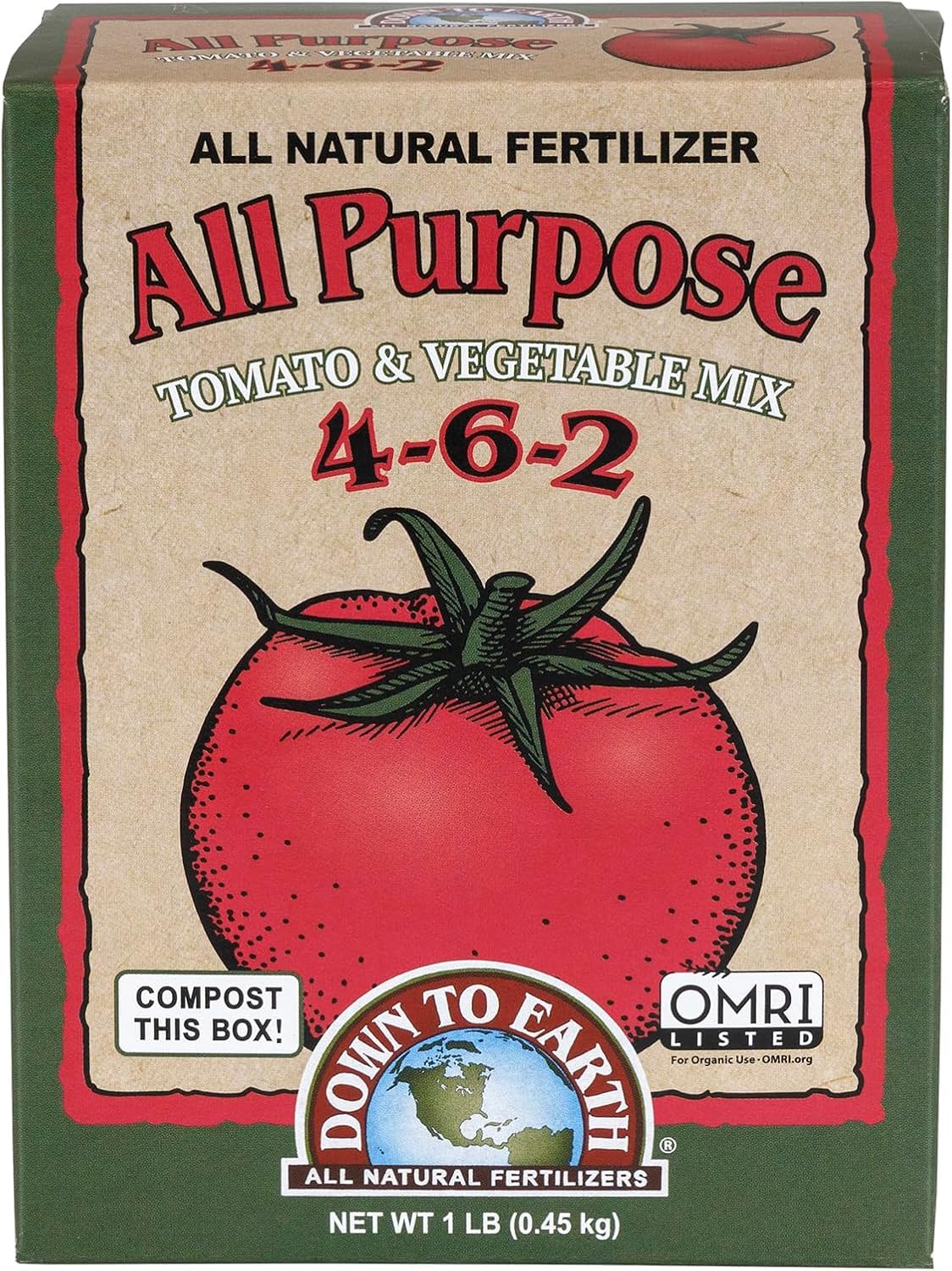
Down To Earth Organic All-Purpose Tomato & Vegetable Mix 4-6-2, 1 lb
| Item Form | Granules |
|---|---|
| Specific Uses For Product | Plant Growth |
| Coverage | Medium |
| Target Species | Vegetables |
| Mixing Ratio | 4-6-2 |
This granular organic fertilizer is designed to feed soil and support tomato and vegetable growth in garden beds, raised beds and containers. With a 4-6-2 N-P-K mix it emphasizes phosphorus for root and fruit development while still supplying nitrogen and potassium. Apply by broadcasting or sprinkling around plants and lightly mixing into the topsoil, then water in; because it is a slow-acting, microbially broken-down formula it works best when used as part of a regular feeding schedule rather than for immediate greening. The product is OMRI-listed and made from natural inputs such as fish bone meal, which helps build long-term soil fertility and flavor in harvests. For potted tomatoes it is easy to dose and safe when kept out of reach of children and pets, though you will need to monitor feeding frequency since soluble quick-release nutrients are not the primary mechanism. It is shelf-stable and suitable for organic growers who prefer natural amendments over synthetic feeds.
Best for: Gardeners who want an organic, soil-building fertilizer for potted tomatoes and vegetables and prefer predictable, steady feeding rather than instant results.
Less Ideal for: People who need rapid, soluble nutrient boosts or want a single large container-season supply for many pots should consider soluble or bulk alternatives.
- OMRI-listed formulation suitable for certified organic gardening
- 4-6-2 N-P-K tailored to encourage root and fruit development
- Granular form that is easy to apply and mix into potting soil
- Made from natural ingredients like fish bone meal that build soil fertility over time
- Not water soluble so nutrients depend on soil microbial activity and act slowly
- Small 1 lb unit may require multiple purchases for several containers or a season
Verdict: A dependable OMRI-listed granular 4-6-2 fertilizer that builds soil health and supports stronger roots and better tomato fruiting in pots.
Jobe's Tomato Fertilizer Spikes, 18 Count

| Unit Count | 18 Count |
|---|---|
| NPK | 6-18-6 |
| Application Method | Insert spikes around the plants |
| Target Species | Tomato |
Jobe's Tomato Fertilizer Spikes are simple root-feeding sticks designed to deliver balanced nutrients directly to tomato roots over several weeks. Use one or more spikes inserted into the soil around each plant at planting or early in the season and the slow-release formula releases phosphate-heavy nutrition aimed at supporting flowering and fruit set. The pre-measured spikes eliminate guesswork and reduce mess compared with granular or liquid feeds, and the waterproof pouch helps keep leftovers dry. Practical benefits include targeted feeding that is less likely to wash away and an easy schedule—reapply roughly every eight weeks during the growing season. Limitations are that spikes provide a fixed NPK (6-18-6) so you cannot fine-tune ratios mid-season, and the fixed dose may not match very large or very small plants exactly. Also phosphorus-containing fertilizers are regulated in some areas, so check local guidance before use.
Best for: Gardeners who want a low-effort, no-mess way to support tomato flowering and fruiting and who prefer simple, periodic feeding over frequent applications.
Less Ideal for: Growers who need precise control over nutrient ratios, those managing large-scale production, or gardeners in jurisdictions restricting phosphorus use.
- Slow-release spikes deliver nutrients directly to the root zone for up to eight weeks
- Pre-measured sticks remove mixing and measuring errors and reduce mess
- High phosphorus (18) supports flower development and fruit set
- Waterproof resealable packaging keeps unused spikes dry
- Fixed 6-18-6 formula does not allow adjusting nutrient ratios for specific plant needs
- Single-dose spikes may be too strong or too weak for unusually large or small plants
Verdict: An easy, budget-friendly root-feeding option that reliably boosts tomato flowering and fruit set with pre-measured slow-release spikes.
Pegmapri Organic Liquid Plant Food, 8.45 fl oz Concentrated

| Item Form | Liquid |
|---|---|
| Specific Uses For Product | Plant Growth, Root Development, Seed Development, Soil Conditioning |
| Application Method | Watering can, Drip irrigation, Soil drenching |
| Target Species | Houseplants |
| Liquid Volume | 8.45 fluid ounces |
This Pegmapri liquid plant food is a small, concentrated bottle designed to stretch into multiple gallons of ready-to-use nutrient solution for houseplants, herbs, vegetables, and flowers. You use it by diluting the concentrate in water for routine watering, soil drenching, drip irrigation, or hydroponic feedings. Notable features include an all-purpose organic nutrient blend, fast root uptake compared with granular slow-release feeds, and a low-residue formula meant to avoid clogging pumps and lines. In practice it provides quick, visible green-up and supports root and stem development when applied at regular intervals. The compact, leak-resistant bottle is convenient for storage and precise pouring. Limitations are that the product listing does not show an NPK breakdown or specific dosing chart on the product page, so users should follow included directions carefully or start at reduced strength to avoid overfeeding sensitive plants.
Best for: Buyers who prioritize a dependable, easy-to-use feed for routine indoor container gardening and want a concentrated organic option that works across watering and hydroponic systems.
Less Ideal for: Growers who require exact nutrient formulations for advanced fertilization schedules or commercial-scale nutrient management should consider products with full lab-verified analyses and detailed dosing charts.
- Concentrated formula that dilutes to feed multiple gallons, saving shelf space
- Organic nutrient blend suitable for indoor and outdoor container plants
- Water-soluble and low-residue so it works with watering cans, drip systems, and hydroponics
- Fast root uptake to encourage quicker green-up and root development
- No explicit NPK ratio or full ingredient breakdown provided in the product details
Verdict: A compact, concentrated organic liquid fertilizer that reliably feeds indoor container plants and hydroponic setups for steady growth and stronger roots.
Choosing the Right Natural Fertilizer for Tomato Plants in Pots: Key Factors to Consider
Nutrient Balance and NPK Ratios
Tomatoes need a steady supply of nitrogen for foliage early on, then more phosphorus and potassium for flowering and fruiting. In pots the media volume is small, so a fertilizer with a balanced NPK or one that shifts toward bloom support at the right time reduces the risk of excessive vegetative growth or poor fruit set.
Check labels for usable forms of nutrients and whether the formula lists micronutrients. In containers, overly high nitrogen relative to phosphorus can produce lots of leafy growth and few tomatoes. A predictable ratio helps you match feeding to the plant growth stage.
Release Pattern and Salt Risk
How the fertilizer releases nutrients makes a major difference in pots. Slow-release organics and controlled-release formulas feed over weeks and lower the chance of root burn. Water-soluble feeds give quick correction but can concentrate salts in the root zone if overapplied.
Consider the container watering schedule and rainfall exposure. If you water frequently or use small pots, choose formulas that disperse nutrients gradually or apply diluted liquid feeds to avoid salt buildup that stunts roots and reduces uptake.
Compatibility With Potting Mixes and Soil Biology
Container potting mixes rely on lightweight components such as peat, coconut coir, and perlite that hold fewer nutrients than garden soil. Fertilizers that support microbial life or include organic matter help sustain nutrient exchange in that limited medium.
Products that encourage beneficial microbes can improve nutrient availability and reduce the need for constant feeding. Also check whether the fertilizer will alter pH or interact with common potting mix amendments, because those changes affect nutrient uptake in tomatoes.
Ease of Application for Small Containers
Gardeners using pots need simple, accurate dosing. Granular fertilizers intended for broadcast application are harder to meter in small 1 to 5 gallon containers, while concentrated liquids or measured spikes can be easier to manage.
Look for clear instructions with tablespoon or milliliter doses per pot size and guidance on frequency. Convenience matters when you have many containers or limited storage space, and straightforward application reduces the risk of feeding mistakes.
Effects on Fruit Quality and Yield
Beyond leafy growth, the goal is flavor, firmness, and quantity of tomatoes. Fertilizers that provide potassium and calcium in usable forms help fruit development and reduce blossom end rot risk when other cultural factors are correct.
Also consider whether the product includes micronutrients that prevent subtle deficiencies appearing as pale leaves or poor fruit set. In containers, feeding choices directly influence fruit size and ripening timing because plants cannot mine additional nutrients from surrounding soil.
Environmental Impact and Safety
Natural fertilizers vary in their sourcing and downstream effects. Compost-based or mineral-derived fertilizers tend to support soil biology and have lower runoff risk than concentrated synthetics. For balcony or rooftop growers, low-odor, low-dust options are often preferable.
Check whether application produces strong smells, attracts pests, or requires special handling. If you reuse potting mix season to season, choose fertilizers that improve organic matter and microbial activity rather than formulas that leave residues.
Feeding Schedule for Container Tomatoes
Establish a feeding schedule that follows tomato growth stages: higher nitrogen while plants build foliage, then a switch to bloom and fruit-supporting feeds once flowers form. In pots, start with a gentle feeding two weeks after transplanting into the final container to avoid shocking young roots.
For slow-release granular organics, a single application at planting often lasts several weeks. Liquids are best for quick corrections and during peak fruiting when plants benefit from more frequent, dilute feeds. Keep a simple calendar and note how your particular pots respond so you can adjust timing.
- Seedling to early growth: low-strength nitrogen to encourage root development.
- Flowering and fruiting: higher phosphorus and potassium emphasis.
- Late season: taper feeding as harvest winds down to reduce late vegetative flush.
Application Tips to Avoid Root Burn
Root burn is a common container problem caused by overconcentration of soluble salts. To avoid it, always measure doses carefully and consider diluting liquid feeds from the manufacturer's suggested strength for in-ground gardens.
Flush pots with plain water occasionally if salt accumulation is suspected. Repotting into fresh mix midseason is an option for long-growing determinate or indeterminate tomato varieties to refresh the root zone.
- Apply fertilizers after watering when the soil is moist, not when it is bone dry.
- Space granular feeds away from the stem and lightly mix into the top inch of soil.
- Use regular, light feedings rather than large, rare doses.
Addressing Common Nutrient Deficiencies
Yellowing lower leaves often indicate nitrogen shortage, while interveinal yellowing can point to magnesium or iron issues. Blossom end rot is typically calcium-related but often caused by inconsistent watering more than lack of calcium in the media.
When correcting deficiencies in pots, use targeted amendments rather than blanket heavy feeding. For example, a soluble calcium source applied as a foliar spray or soil drench can help with blossom end rot, while magnesium deficiencies respond to Epsom salt treatments in dilute doses.
- Nitrogen deficiency: pale, older leaves; use a balanced liquid feed.
- Calcium deficiency: blossom end rot; maintain even moisture and consider a calcium supplement.
- Magnesium or iron issues: patchy interveinal chlorosis; apply appropriate micronutrient amendments carefully.
Choosing Between Granular, Liquid, and Organic Amendments
Granular slow-release products reduce application frequency and are convenient if you prefer a set-and-forget approach. Liquids offer quick, controllable nutrient delivery and are useful during fruiting spikes. Organic amendments like compost or worm castings improve soil life but release nutrients more slowly.
Many gardeners combine approaches: a base of organic matter in the potting mix plus periodic liquid feeding during the season. Match the form to your maintenance style and the pot size to avoid overconcentration.
- Small pots generally do better with dilute liquid feeds due to easier dose control.
- Large containers can accommodate measured granular applications at planting.
- Organic amendments improve long-term soil health but require patience for results.
Practical Dosage and Measuring Tips
Use measuring spoons or a small graduated syringe to get consistent doses for each pot. Convert manufacturer instructions to per-gallon or per-liter rates so you can scale feeding for different container sizes.
Label your pots with the last feed date and the strength used. Consistency matters in pots because variability quickly shows up as stress symptoms.
- Translate feeding rates into teaspoons per quart or tablespoons per gallon for easy repetition.
- Start with 75 percent of recommended strength for small containers and adjust.
- Record observations on plant vigor and fruit set after feeding changes.
How We Chose the Best Natural Fertilizer for Tomato Plants in Pots
We shortlisted natural fertilizers that perform reliably for tomato plants grown in containers. Our selection prioritized products and formulations that supply the nutrients tomatoes need without excessive salt buildup, and that work well in limited potting media. Evaluation criteria included nutrient balance and release pattern, application simplicity for container growers, impact on fruit set and flower retention, compatibility with common potting mixes, and environmental or soil-health benefits. We excluded fertilizers formulated exclusively for in-ground landscapes or that depend on large soil volumes to dilute salts. We also left out synthetic or high-salt, quick-burn formulas that can harm container roots. The final picks are those that match container use patterns: measurable nutrient content, predictable release or feeding schedule, low risk of root burn, and clear instructions for small-batch application. Customer feedback and practical gardener guidance on typical dosages for pots were also considered when ranking.
FAQ
How often should I fertilize tomato plants in pots?
Frequency depends on the fertilizer form. Slow-release organics can feed for several weeks after a single application, while liquid feeds are typically applied every 1 to 2 weeks at a dilute strength. Monitor plant vigor and adjust; frequent light feeds are safer in small pots than large doses.
Can I use compost alone to feed potted tomatoes?
Compost adds organic matter and some nutrients but releases them slowly and may not meet peak fruiting demands on its own. For best results, combine compost with periodic liquid feeds or an organic fertilizer formulated to boost bloom and fruit set.
What signs indicate my potted tomatoes need more potassium or calcium?
Calcium issues often show as blossom end rot on developing fruit. Low potassium can lead to poor fruit size and uneven ripening. Both problems can be influenced by inconsistent watering, so correct irrigation practices before assuming a nutrient deficiency.
Is it safe to use fish-based fertilizers on balcony tomatoes?
Fish-based fertilizers are effective and supply a range of nutrients, but some formulas are odorous. Choose low-odor or well-processed versions for small-space gardening, and apply diluted doses to avoid attracting pests or creating strong smells.
How do I prevent salt buildup in container soil?
Flush containers with thorough watering every few weeks to leach excess salts, especially if using soluble feeds. Repot into fresh mix when salt damage appears or at season end, and prefer slow-release or organic fertilizers that reduce soluble salt accumulation.
Final Verdict
For tomato plants in pots prioritize fertilizers that match container constraints: steady nutrient delivery, clear dosing instructions for small volumes, and formulas that support fruiting without raising salt levels. Decide between a base organic amendment for soil health and periodic liquid feeding during peak fruit set. Balance is the guiding principle. Favor products that supply phosphorus and potassium for blooms and fruit while keeping nitrogen moderate once flowering begins. With consistent watering and the right feeding rhythm, you can maximize flavor and yield from container-grown tomatoes.
