

Note: This article contains affiliate links. If you click on these links and make a purchase, I may earn a small commission at no extra cost to you. This helps support my research and content. Read my full affiliate disclosure here.
Phosphorus is the nutrient that encourages strong root systems, earlier blooms, and better fruit set in many garden plants. Choosing the right natural phosphorus fertilizer matters because source, release rate, and how it interacts with your soil determine whether plants get phosphorus when they actually need it. This guide focuses on the top natural phosphorus fertilizers suitable for home gardens, patios, and small-scale vegetable plots. We shortlisted six options that represent different source types and release characteristics and evaluated them using clear gardener-focused criteria like nutrient availability and soil compatibility. Read on to understand which source fits your soil, planting schedule, and application style.
Top Picks at a Glance
| Best Overall The best all-around choice for most situations | Down To Earth Organic Bone Meal 3-15-0, 5 lb |  |
| Best Quality Built to a higher standard if you want something more solid | Down To Earth Organic Bone Meal Fertilizer 3-15-0, 25 lb |  |
| Best Budget The cheapest option that still gets the job done reliably | RAW Phosphorus Fertilizer — Water-Soluble High-Phosphate Powder, 2 oz |  |
| Highest Rated A top-rated pick with lots of positive feedback | Espoma Rock Phosphate Organic Fertilizer (7.25 lb) |  |
| Most Popular A crowd favorite that many people choose with confidence | Burpee Bone Meal Fertilizer, 3 lb |  |
| Best Seller A high-volume bestseller chosen again and again | Farmer's Secret Fruit & Bloom Booster Liquid Fertilizer (16 oz) |  |
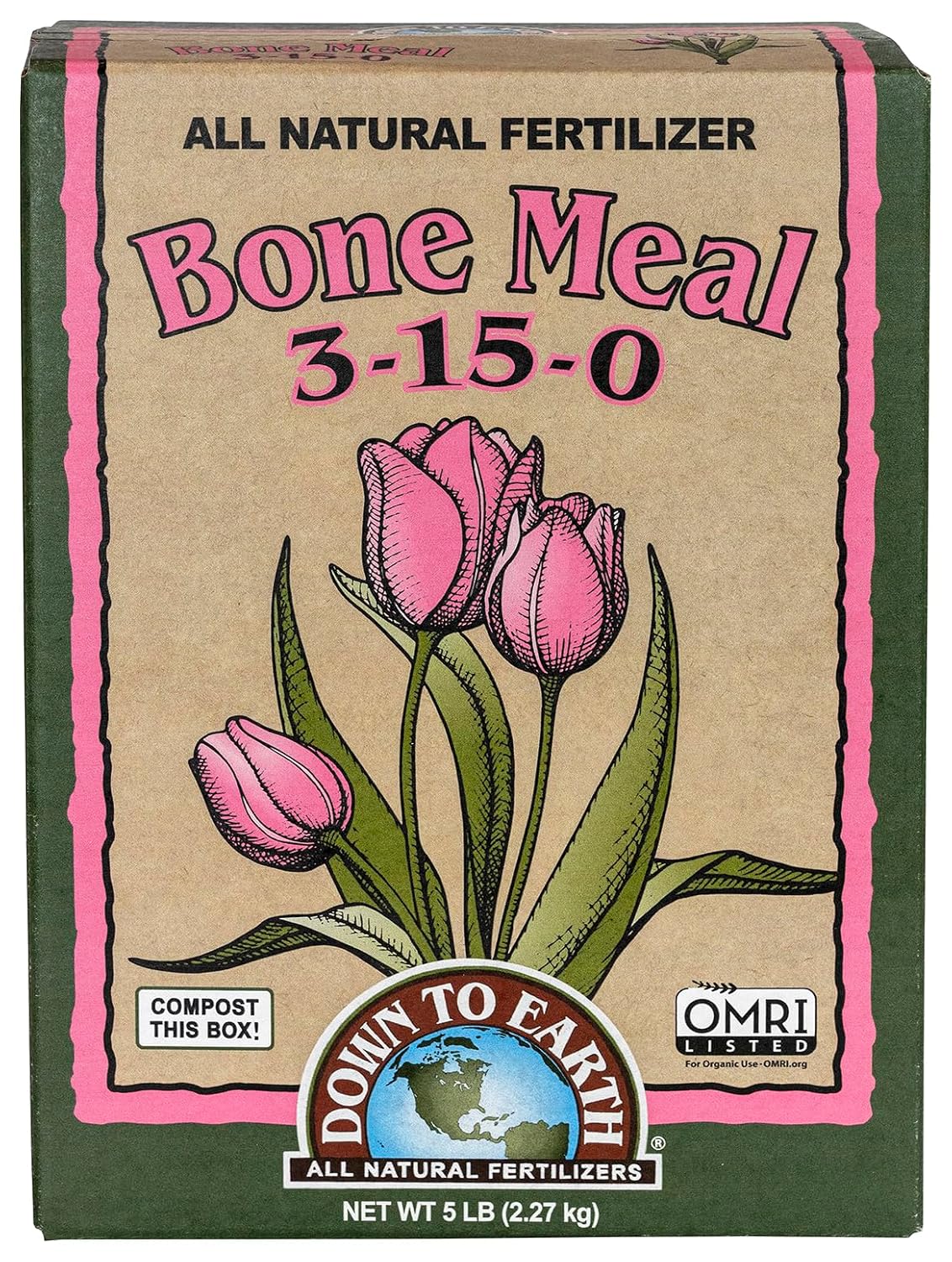
Down To Earth Organic Bone Meal 3-15-0, 5 lb
| Item Form | Granules |
|---|---|
| Specific Uses For Product | Plant Growth, Soil Conditioning |
| Coverage | Medium |
| Target Species | flowering plants, trees, ornamentals, bulbs |
| Mixing Ratio | 3:15:0 |
Down To Earth Organic Bone Meal is a straightforward, traditional organic phosphorus source sold as granules in a 5 pound box with an N-P-K of 3-15-0. It is typically worked into soil at planting or applied as a side dressing every 4 to 6 weeks to promote early root growth, stronger establishment, and better flowering, making it particularly useful when planting bulbs or transplanting perennials. The product is OMRI-listed for organic use and contains bone meal as the single ingredient, so it supplies readily available phosphorus and calcium without synthetic additives. Practical benefits include improved root development that helps plants access water and nutrients and a focused phosphorus boost that supports blooms and fruit set. Limitations are that it does not provide nitrogen or potassium, so it works best as part of a broader feeding plan, and it is a slow to moderate release amendment so results are not instant. Protective handling is recommended during application and it should be stored away from children and pets.
Best for: Gardeners who want an organic, single-ingredient phosphorus boost for bulbs, flowering plants, and new transplants and who plan feeding as part of a balanced fertility program.
Less Ideal for: People seeking an all-in-one or fast-acting complete fertilizer or those who want soluble synthetic phosphorus for immediate uptake.
- High phosphorus content (3-15-0) tailored for root and bloom development
- OMRI-listed and made from bone meal for use in organic gardens
- Simple single-ingredient formulation with added calcium
- Works well as a planting amendment or periodic side dressing
- No nitrogen or potassium so it must be combined with other fertilizers for balanced feeding
- Slower acting than some soluble phosphorus sources
Verdict: A reliable organic bone meal that delivers a focused phosphorus and calcium boost to establish roots and improve blooms in flowering plants and bulbs.
Down To Earth Organic Bone Meal Fertilizer 3-15-0, 25 lb

| Item Form | Granules |
|---|---|
| Specific Uses For Product | Organic,Potting,Root |
| Coverage | Medium |
| Target Species | flowering plants, trees, ornamentals, bulbs |
| Mixing Ratio | 3:15:0 |
This 25 lb bag of Down To Earth organic bone meal is a straightforward, single-ingredient source of phosphorus and calcium for planting bulbs and strengthening early root growth. Gardeners typically sprinkle or mix the granules into planting holes or around established bulbs, garlic, and onions to encourage strong root establishment and better bloom and bulb formation. The 3-15-0 analysis means it delivers a strong phosphorus boost with negligible nitrogen, so it is best used at planting or when you want to promote roots and flowers rather than leafy growth. Being OMRI-listed makes it suitable for organic gardens, and the granular form is easy to handle and apply with a scoop. Important limitations are that it does not feed for nitrogen or potassium needs, so you will need a complementary fertilizer for balanced nutrition, and phosphorus-containing fertilizers are restricted in some areas because of runoff concerns, so check local guidance before use.
Best for: Gardeners focused on establishing strong roots and improving bulb and bloom set for crops like garlic and onions who prioritize organic, single-ingredient amendments.
Less Ideal for: Gardeners seeking an all-in-one fertilizer or those who need to correct nitrogen or potassium deficiencies without combining products.
- High phosphorus to promote root development and bulb formation
- OMRI-listed for organic production
- Granular form is easy to apply at planting or around established plants
- Includes calcium which supports bulb and flower quality
- Provides little to no nitrogen so it does not support leafy growth
- Not a complete fertilizer so another product is needed for balanced feeding
Verdict: A reliable organic phosphorus and calcium boost to establish strong roots and improve bulb and bloom development for garlic, onions, and other bulbs.
RAW Phosphorus Fertilizer — Water-Soluble High-Phosphate Powder, 2 oz

| Item Form | Powder |
|---|---|
| Specific Uses For Product | Gardening |
| Coverage | Medium |
| Unit Count | 2 Ounce |
RAW Phosphorus is a compact, water-soluble powder that supplies a high phosphate dose (61% P2O5) with a small amount of ammonium nitrogen for bloom and fruit-stage feeding. Gardeners typically dissolve the measured powder in water and apply it as a drench, foliar spray, or in hydroponic systems; the product is suitable for seedlings, transplants, vegetables, flowers, and ornamental plants. The main benefit is quick availability of phosphorus during early root establishment and bloom when plants need a surge of energy for flowering and fruit set. The powder format makes it easy to store and mix for precise, small-batch applications, which is convenient for hobbyists and container growers. Important limitations are the small unit size and the concentration note: a 2-ounce bottle treats only a limited number of applications for larger gardens and requires careful measuring to avoid overapplication. Also follow local regulations about phosphorus use to prevent runoff into waterways.
Best for: Gardeners who want a targeted, easy-to-mix phosphorus boost for flowering plants, container gardens, or small hydroponic setups and who prioritize getting concentrated nutrient performance from a small package.
Less Ideal for: Large-scale vegetable beds or landscapers who need bulk quantities and fewer refill cycles should choose larger, economy-sized phosphorus fertilizers instead.
- Very high water-soluble phosphate (61% P2O5) for rapid uptake during bloom and root development
- Water-soluble powder mixes easily for use in soil, coco, hydroponics, or foliar feeding
- Compact 2 oz size is easy to store and allows precise, small-quantity dosing
- Includes some ammonium nitrogen to support early growth alongside phosphorus
- Small 2 oz unit provides limited total applications for medium to large gardens
- Highly concentrated formula requires careful measuring to avoid overfeeding
Verdict: Pick this if you need a compact, high-concentration phosphorus booster for bloom and root development in small gardens or hydroponic systems.
Espoma Rock Phosphate Organic Fertilizer (7.25 lb)

| Item Form | Granules |
|---|---|
| Specific Uses For Product | Organic |
| Application Method | Pelletized |
| Target Species | Flowers |
| Liquid Volume | 7.25 liters |
Espoma Rock Phosphate is a pelletized, organic phosphorus fertilizer intended for outdoor flower and vegetable gardens. It supplies a natural, slow-release source of phosphorus derived from phosphate rock, so you typically broadcast it into the soil or work it into planting beds before planting. The pelletized form reduces dust and makes application neater than powdered alternatives. Because it is high in phosphorus and designed for steady release, it is best used to correct phosphorus-deficient soils and to support root growth and blooming over several months rather than deliver a quick nutrient spike. It contains no synthetic additives and pairs well with routine soil amendments and organic feeding programs. Limitations are that it acts slowly and is not a complete NPK feed, so gardeners needing rapid correction or balanced, immediate fertility will want to combine it with a nitrogen source or choose a different product for fast results.
Best for: Gardeners who prioritize consistent, natural soil improvement and want a low-maintenance, slow-release phosphorus source to support roots and blooms in outdoor beds.
Less Ideal for: Growers who need fast corrective feeding or a single, balanced all-in-one fertilizer solution should look elsewhere.
- Organic, natural source of phosphorus from phosphate rock
- Pelletized form reduces dust and eases application
- Slow-release action supports long-term root development and flowering
- Suitable for use on flowers and vegetable garden beds
- Not a balanced fertilizer so it will not supply nitrogen or potassium
- Slow-acting so it is not ideal when quick phosphorus correction is needed
Verdict: Buy this if you want a dependable, organic slow-release phosphorus source to improve root growth and flowering in outdoor gardens.
Burpee Bone Meal Fertilizer, 3 lb

| Item Form | Powder |
|---|---|
| Specific Uses For Product | Plant Growth, Root Development |
| Coverage | 240 Sqaure Feet |
| Target Species | tomatoes, peppers, and bulbs |
Burpee Bone Meal is a slow-release granular fertilizer designed to boost early root development and flowering in root and bulb crops. Gardeners typically work it into planting holes for bulbs or mix it into soil and potting media when starting seeds or transplanting vegetables like carrots, beets, and onions. The product is OMRI listed for organic gardening and provides phosphorus and calcium that support stronger root systems and better early-season growth. Its fine granular texture makes it easy to apply evenly, and because it breaks down slowly it feeds plants over the season without burning them. Practical benefits include targeted support for root vegetables and an easy application method for beds and containers. Limitations are that it supplies mainly phosphorus and calcium rather than a balanced NPK profile, so it is best used alongside a nitrogen source if foliage development is needed, and results are gradual rather than immediate because of the slow-release nature.
Best for: Gardeners focused on improving root development and bulb planting who prefer organic inputs and want a simple amendment to add at planting or during bed preparation.
Less Ideal for: Growers seeking an all-in-one balanced fertilizer for both foliage and root development or those who need fast-acting, soluble nutrients for immediate correction.
- OMRI listed for organic gardening, suitable for certified organic beds
- Fine granular form that is easy to spread and incorporate
- Provides phosphorus and calcium to encourage strong root and bulb development
- Slow-release action reduces risk of burning plants and supplies season-long support
- Not a complete fertilizer profile so additional nitrogen may be needed for leafy growth
Verdict: A reliable organic bone meal to strengthen roots and jump-start bulbs and root vegetables when added at planting.
Farmer's Secret Fruit & Bloom Booster Liquid Fertilizer (16 oz)

| Item Form | Liquid |
|---|---|
| Specific Uses For Product | Organic |
| Application Method | pour or spray |
| Liquid Volume | 16 fluid ounces |
| Mixing Ratio | 1 teaspoon per 2 gallons of water |
Farmer’s Secret Fruit & Bloom Booster is a super‑concentrated liquid fertilizer designed to encourage blooms, stronger roots, and higher yields when applied as a foliar spray or soil drench. It is mixed at 1 teaspoon per 2 gallons of water and is intended for mid‑to‑late growth stages, applied every 1–2 weeks. The formula emphasizes phosphorus and potassium to support flowering and fruit set while supplying nitrogen and trace minerals to maintain overall plant health. Practical benefits include quick availability to plants compared with granular feeds, flexible application with a watering can, sprayer, or irrigation system, and a long shelf life. Limitations are that exact N‑P‑K percentages are not listed on the product page and dosing relies on the single recommended dilution, so careful measuring is needed to avoid overfeeding. For watermelons, using this during bloom and fruit set should promote stronger root systems and better fruit development, but pair it with a balanced program that meets seedlings' earlier nitrogen needs and with appropriate soil moisture management.
Best for: Gardeners who prioritize efficient, results‑driven feeding during bloom and fruit set and who want a concentrated liquid they can apply selectively to maximize yield.
Less Ideal for: Growers looking for detailed N‑P‑K labels or those who prefer slow‑release granular fertilizers for steady early‑season nitrogen feeding.
- Highly concentrated so a small amount treats a large area
- Formulated to boost flowering and fruit set with elevated phosphorus and potassium
- Can be applied as a soil drench, foliar spray, or through irrigation for flexible use
- Contains trace minerals in addition to primary macronutrients
- Long practical shelf life when stored properly
- No explicit N‑P‑K ratio printed in the provided product details
- Requires accurate dilution to avoid overapplication
Verdict: A concentrated, bloom‑focused liquid fertilizer that is ideal for gardeners wanting a targeted, easy‑to‑apply boost during watermelon bloom and fruit set.
Choosing the Right Natural Phosphorus Fertilizer: Key Factors to Consider
Phosphorus Availability And Solubility
Not all phosphorus in a natural source is immediately available to plants. Some materials contain phosphate locked in forms that dissolve slowly or require microbial activity to free the nutrient. Availability matters because annual vegetables and flowering plants need accessible phosphorus during defined growth stages. A high total phosphate number is reassuring, but you should check how much of that phosphate is water-soluble or citrate-soluble to estimate short-term benefit.
Gardeners should also consider that very insoluble sources are useful for long-term soil building but will not correct an immediate deficiency. Matching the source solubility to your planting timeline reduces wasted inputs and prevents the temptation to overapply.
Release Rate And Timing
Different natural phosphorus sources release at different speeds. Readily soluble options feed quickly and are useful at planting or when flowers and fruits are forming. Slower-release materials rely on soil microbes and weather to convert bound phosphate into plant-available forms, making them better as a seasonal or multi-year soil amendment.
Think about when your crop needs phosphorus. For rapid root development at transplanting, choose a faster-release source. For perennial beds or no-till plots where steady availability matters, a slower-release mineral or rock-derived source can supply phosphorus over multiple seasons.
Soil pH And Chemistry Effects
Soil pH strongly influences phosphorus availability. In acidic soils, phosphorus can be more mobile but may bind to iron and aluminum; in alkaline soils, it can precipitate with calcium and become unavailable. The best natural source for you depends on your soil test results and the pH buffering capacity of your garden.
Gardeners with very acidic or alkaline soils should select a phosphorus source known to perform under those conditions or plan to correct pH alongside phosphorus management. Incorporating organic matter improves microbial activity that helps free bound phosphate across a range of pH values.
Application Method And Labor
Application style affects both results and the time you invest. Granular materials broadcast and worked into soil give broad coverage and are easy for large beds. Concentrated powders or starter mixes are convenient for transplant holes and banding but require more precise placement. Liquid extracts and compost teas give quick surface availability but may need repeated applications to match uptake.
Consider how much physical effort you want to spend, whether you need targeted placement around root zones, and whether your planting schedule requires one-time amendment or repeat feeds. Tools and irrigation practices also influence how well the applied phosphorus becomes accessible to roots.
Edible Garden Safety And Contaminant Risk
Natural phosphorus sources vary in purity. Some contain trace heavy metals or other contaminants depending on their origin and processing. When you are growing vegetables or herbs, safety is a primary concern. Choose sources with documented low contaminant levels and those tested for heavy metals when available.
Composts and well-sourced organic amendments often present the lowest contaminant risk, while some mined phosphates require scrutiny. If sourcing materials independently, ask for lab analyses or use vetted commercial products designed for food crops.
Compatibility With Fertility Plan And Crop Stage
Phosphorus management should fit into an overall fertility plan that includes nitrogen and potassium. Too much phosphorus can interfere with other nutrients, and timing matters because plants need phosphorus most during root establishment and reproductive stages. Align your phosphorus application with transplanting, early growth, or pre-bloom depending on crop needs.
For long-term soil building, incorporate a natural phosphorus source into fall or off-season amendments so microbes can process it ahead of the next planting. For fast-acting needs, apply nearer to planting or at first bloom while avoiding excess that could stunt uptake of other elements.
Types Of Natural Phosphorus Sources
Gardeners can choose from rock-derived phosphates, bone meal, certain composts, and some alkaline plant-derived materials. Each source behaves differently in the soil, offering tradeoffs between speed of release, concentration, and safety profile.
- Rock phosphates are slow-release and useful for long-term soil building.
- Bone-derived materials typically provide moderate phosphorus with a variable release profile.
- Composts supply lower concentrations but add microbial life that helps free bound phosphate.
- Plant-based amendments can contribute phosphorus while improving soil organic matter.
When To Apply Phosphorus In Garden Beds
Apply phosphorus at planting for annuals that need strong root growth, and consider a follow-up at early bloom for fruiting plants. For perennials and lawns, fall or late-season applications give microbes time to convert bound phosphate before spring growth. Avoid heavy surface-only broadcasts on compacted soils where roots cannot access the nutrient.
- Band phosphorus near seed or transplant roots for efficient uptake.
- Incorporate amendments into the topsoil for better root contact.
- Consider fall application for slow-release sources to allow microbial processing.
Testing Soil And Interpreting Results
A soil test is the single best tool for deciding whether your garden needs phosphorus and how much. Tests report available phosphate and often give a sufficiency interpretation for common crops. Compare test values to recommended ranges for your intended plants and adjust amendments accordingly.
- Use a calibrated local extension or commercial lab for reliable results.
- Check soil pH alongside phosphate numbers to understand availability.
- Repeat testing every 2 to 3 years after major amendments to track changes.
Incorporating Phosphorus Into Vegetable Gardens Safely
For edible beds, prioritize amendments with low contaminant risk and clear nutrient labeling. Spread organic sources evenly, mix them into the root zone at planting, and avoid overapplication that can lead to imbalances. When using composts, ensure they are fully matured to prevent nitrogen tie-up and uneven release.
- Place higher-concentration materials in the planting hole or banded near roots.
- Avoid raw manures or untreated byproducts that can carry pathogens.
- Combine phosphorus amendments with plenty of organic matter to encourage microbial release.
Working Phosphorus Into Container And Patio Plantings
Containers have limited soil volume, so use lower-concentration or controlled-application sources. A single heavy dose can create excess that remains unavailable or harms root systems. Slow-release granules formulated for containers or dilute liquid feeds timed with growth stages are both valid strategies for pots and raised planters.
- Use measured, small doses tailored to container volume.
- Top-dress and lightly scratch in rather than deep incorporation in pots.
- Monitor plant response and flush containers occasionally to avoid salt buildup.
How We Chose the Best Natural Phosphorus Fertilizer
We assembled a shortlist of products that represent the practical options gardeners rely on when they prefer naturally derived phosphorus. Our editorial process prioritized sources with documented phosphate content, predictable release behavior in garden soils, and materials that are appropriate for edible gardens. We evaluated each contender on a set of concrete, repeatable dimensions relevant to everyday garden use. The evaluation criteria included nutrient concentration and available phosphate, the release profile in common garden soils, ease and safety of application, compatibility with typical soil pH ranges, and whether the material is suitable for vegetable or ornamental use. We excluded any synthetic or chemically processed phosphate fertilizers and products lacking transparent nutrient information. We also filtered out sources that require industrial treatment before use or present notable contamination concerns. The result is a selection that balances efficacy, gardener safety, and real-world usability.
FAQ
How quickly will a natural phosphorus source start feeding my plants?
It depends on the source. Water-soluble or finely ground materials can provide usable phosphorus within days to weeks. Coarser rock-derived sources and some bone meals rely on soil microbes and weather and may take months or a full season to release significant amounts.
Can I apply phosphorus at the same time as nitrogen?
Often yes, but timing can differ by crop. Nitrogen is mobile and used throughout vegetative growth while phosphorus is most important at root establishment and reproduction. Splitting applications to match each nutrient's role usually gives the best results.
Will adding phosphorus change my soil pH?
Most natural phosphorus materials have minimal direct effect on pH. However, materials that also contain lime or sulfur will alter pH. Always check product composition and consider pH adjustment separately when needed.
Is bone meal safe for vegetable gardens?
Bone meal can be used in vegetable gardens if it comes from a reputable source with low contaminant risk. It is best applied at planting or as a banded amendment and not left in large surface piles where pets may access it.
How much phosphorus should I add if my soil test shows deficiency?
Follow the soil test lab's recommended application rates for the specific crop. Recommendations are based on available phosphate and the crop's expected removal. If in doubt, apply moderate amounts and retest after a season rather than overapplying.
Can compost supply enough phosphorus for heavy feeders like tomatoes?
Compost adds phosphorus but usually at lower concentrations than concentrated amendments. For heavy-feeding crops you may need a supplemental natural phosphorus source in addition to compost, timed to match transplanting and fruit set.
Final Verdict
Prioritize a natural phosphorus source that matches your soil test results, planting timeline, and safety needs. Fast-release materials are useful at planting and for quick corrections, while slower-release sources are better for long-term soil building and low-maintenance beds. Always consider soil pH, application method, and contaminant risk when choosing an amendment. Balance phosphorus applications with other fertility practices and organic matter additions to improve availability and plant response. With the factors above in mind, you can pick the natural phosphorus approach that delivers stronger roots and better blooms without unnecessary inputs.
