

Note: This article contains affiliate links. If you click on these links and make a purchase, I may earn a small commission at no extra cost to you. This helps support my research and content. Read my full affiliate disclosure here.
If you spend time clearing small trees, pruning large limbs, or working trails, a lighter gas chainsaw reduces fatigue and makes repetitive cutting less punishing. The right lightweight gas chainsaw still needs enough engine torque to bite through green and dry wood reliably while offering vibration control and easy starting for yard work and remote jobs. This guide covers seven shortlisted lightweight gas chainsaws vetted for real garden and property use. We assess how they perform on handling, engine responsiveness, durability, and serviceability so you can pick the saw that matches the work you do most often.
Top Picks at a Glance
| Best Overall The best all-around choice for most situations | PROYAMA 26cc Top-Handle Gas Chainsaw, 12-inch |  |
| Best Quality Built to a higher standard if you want something more solid | WORKIT 25.4CC 12" Top-Handle Gas Chainsaw (WX112) |  |
| Best Value The sweet spot between price and what you get | JPNTECH 12" Top-Handle Gas Chainsaw (25.4cc, 2-Cycle) |  |
| Best Budget The cheapest option that still gets the job done reliably | JAYGOVAN 12" Top-Handle Gas Chainsaw, 25.4CC |  |
| Highest Rated A top-rated pick with lots of positive feedback | NEO-TEC 25cc 12" Top-Handle Small Gas Chainsaw |  |
| Most Popular A crowd favorite that many people choose with confidence | VEVOR 25.4cc Top-Handle Gas Chainsaw, 12-Inch Bar |  |
| Best Seller A high-volume bestseller chosen again and again | NEO-TEC NCS2500 12" Top-Handle Gas Chainsaw, 25.4cc |  |
PROYAMA 26cc Top-Handle Gas Chainsaw, 12-inch

| Power Source | Gas Powered |
|---|---|
| Horsepower | 1.1 hp |
| Chain Length | 12 inches |
The PROYAMA 26cc top-handle chainsaw is a lightweight gas-powered saw intended for pruning, tree trimming, and working in tight or elevated spots. Its 1.1 hp 26cc engine revs up quickly and the spring-assisted pull cord and easy-start features make getting going straightforward. The compact top-handle layout and wrap-around grip let you maneuver the saw with one hand when climbing or reaching into the canopy, and the included spare chains reduce downtime. Practical touches such as a quick-release air filter and an adjustable oil pump let you service the saw on the job and control bar lubrication for different cutting tasks. Expect adequate cutting power for branches, small logs, and routine yard work but not for heavy felling or continuous professional logging. The saw is relatively light for a gas model, yet it still requires regular fuel and oil maintenance and the usual safety precautions for top-handle units. For homeowners and climbers who want a portable gas option, this model balances portability and decent cutting performance.
Best for: Buyers who want a portable gas chainsaw for regular yard maintenance, pruning, and occasional climbing work and who value maneuverability and quick starts over industrial power.
Less Ideal for: People who need a chainsaw for large-scale felling, long commercial shifts, or those who prefer low-maintenance electric battery models.
- Lightweight top-handle design aids one-handed use and maneuverability when pruning or climbing
- 26cc engine with 1.1 hp gives strong enough power for trimming, pruning, and small firewood
- Includes two 12-inch chains so you can swap a fresh chain without delay
- Quick-release air filter and adjustable oil pump simplify routine maintenance and tuning
- Not intended for heavy felling or continuous commercial cutting
- As a gas model it requires fuel mixing, storage, and more maintenance than electric alternatives
Verdict: A portable, easy-start gas chainsaw that delivers practical cutting power and maneuverability for homeowners and climbers who need a lightweight gas option.
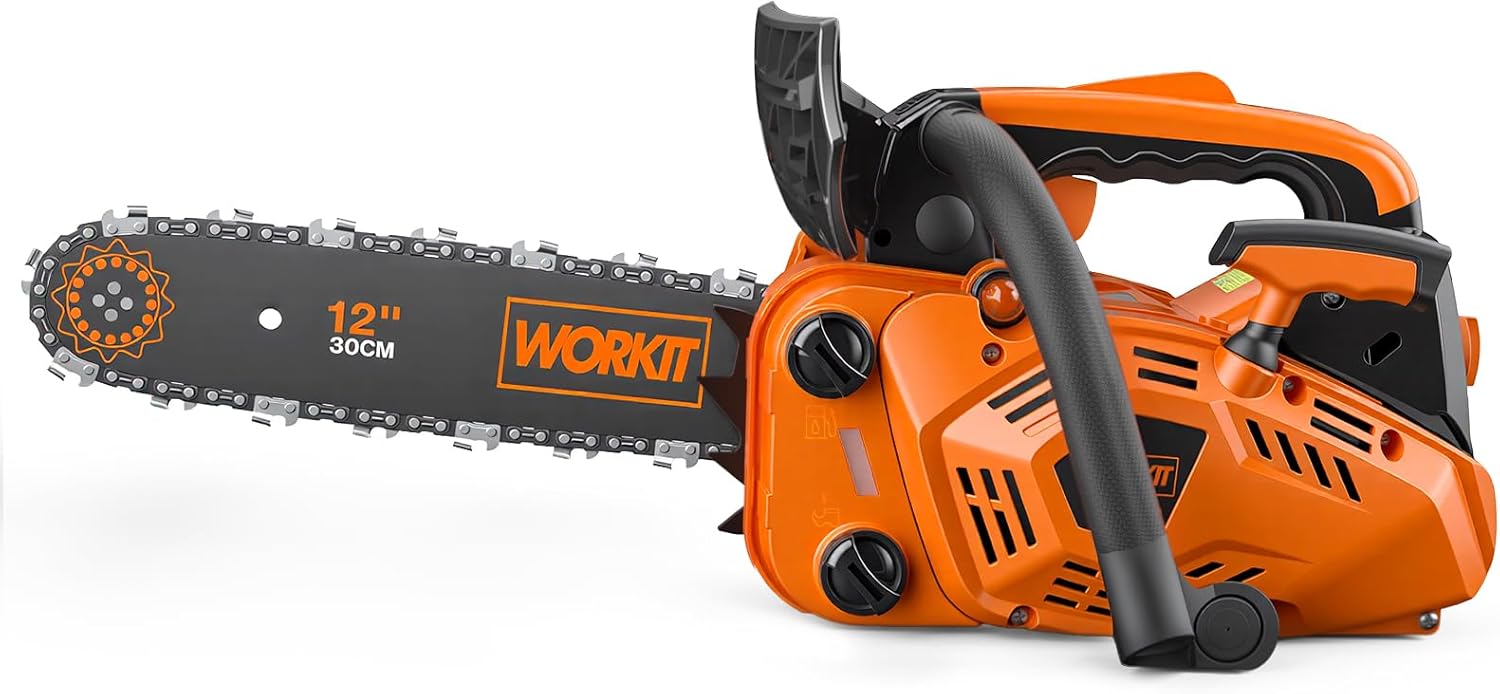
WORKIT 25.4CC 12" Top-Handle Gas Chainsaw (WX112)
| Power Source | Gas Powered |
|---|---|
| Horsepower | 1.2 hp |
| Chain Length | 12 inches |
The WORKIT WX112 is a lightweight top-handle gas chainsaw built for precision work in tight spaces. Its 25.4CC Xtreme two-cycle engine and 12-inch guide bar give it enough punch to cut hardwood, prune limbs, and handle routine storm cleanup while remaining nimble for high work or nursery tasks. Practical features include an OptiSpark ignition and an easy-start system to reduce pull-start frustration, an automatic stop switch to help avoid engine flooding, and an automatic oiler to keep the chain lubricated during extended runs. The reinforced body, heavy-duty bearings, and upgraded clutch aim to improve durability compared with entry-level units. Safety touches such as a chain brake, protective baffle, dual safety locks, and a one-stop engine switch make it suitable for pros who need a compact tool and for homeowners who value built-in protections. Expect some noise and the usual maintenance for a gas engine like fuel mixing and periodic spark plug/chain tuneups, and its 12-inch bar limits it to smaller-diameter cutting rather than full-size felling or large logs.
Best for: Buyers who need a compact, commercially styled top-handle saw for pruning, high work, and cleanup where maneuverability and dependable starts matter most.
Less Ideal for: Not a good choice for users who need a full-size felling saw or those who prefer low-maintenance electric or battery chainsaws for quiet, occasional yard chores.
- Compact, lightweight design for easy maneuvering in tight or overhead work
- 25.4CC Xtreme engine provides enough power for pruning, storm cleanup, and cutting hardwood up to small diameters
- Easy-start OptiSpark ignition and engine stop switch reduce starting problems and flooding
- Reinforced body, heavy-duty bearings, and improved clutch target better durability under heavier use
- Includes safety gear and protective features such as chain brake, dual safety locks, and protective baffle
- 12-inch bar restricts use to smaller limbs and logs rather than large-tree felling
- Being gas-powered requires routine maintenance, fuel mixing, and generates more noise and emissions than electric alternatives
Verdict: If you want a nimble, commercially oriented top-handle chainsaw for pruning and tight-space cutting, the WORKIT 25.4CC delivers dependable starts and durability in a compact package.
JPNTECH 12" Top-Handle Gas Chainsaw (25.4cc, 2-Cycle)

| Power Source | Gas Powered |
|---|---|
| Horsepower | 1.2 hp |
| Chain Speed | 11000 Rpm/Min |
| Chain Length | 12 inches |
The JPNTECH 12-inch top-handle gas chainsaw is a small, petrol-powered saw built for portability and quick woodwork tasks. With a 25.4cc 2-cycle engine producing about 1.2 hp and a chain that runs up to 11,000 rpm, it is suited to pruning, limbing, and cutting smaller logs where a full-size chainsaw is overkill. The wrap-around ergonomic handle and relatively low weight make one-handed use and maneuvering in tight spots much easier, and the included toolkit, spark plug, and fuel-mixing bottle simplify setup and maintenance. It starts with a spring-assisted pull cord and choke controls that follow standard small-engine operation, so expect a brief learning curve if you are new to gas saws. Because it is a compact top-handle model with a 12-inch bar, it is not intended for heavy felling or continuous professional use, and users should follow recommended safety practices for single-handed operation. For homeowners and light-duty users who need a portable gas option, this saw balances power and size effectively.
Best for: Buyers who prioritize a lightweight, portable gas saw for pruning, limb work, and occasional cutting around the yard and need a compact tool that is easy to carry and maneuver.
Less Ideal for: Landscapers or users who need a saw for continuous heavy-duty felling, milling, or large-diameter tree work should choose a full-size rear-handle professional chainsaw instead.
- Compact 12-inch bar and low weight for easier one-handed handling and transport
- 25.4cc engine with about 1.2 hp and up to 11,000 rpm for adequate cutting of small-diameter wood
- Ergonomic wrap-around top handle reduces user fatigue during trimming and pruning
- Includes useful accessories such as toolkit, spark plug, and fuel-mixing bottle for setup
- Top-handle, small-bar design is not suitable for heavy felling or extended professional use
- Requires fuel mixing and small-engine maintenance which adds ongoing upkeep
Verdict: Choose this JPNTECH 12-inch top-handle chainsaw if you want a genuinely lightweight, portable gas saw for pruning and light yard work.
JAYGOVAN 12" Top-Handle Gas Chainsaw, 25.4CC

| Power Source | Gas Powered |
|---|---|
| Horsepower | 1.22 hp |
| Item Type Name | Top Handle Chainsaw |
This JAYGOVAN 12-inch top-handle gas chainsaw is a lightweight, budget-oriented tool for pruning, orchard work, and small firewood tasks. Its 25.4CC two-stroke engine produces about 1.22 hp and high RPM for quick cuts, while the roughly 11.8-inch guide bar handles single cuts near a foot in diameter. The saw is built for portability and maneuvering aloft thanks to its top handle and 9 to 9.4 pound reported weight, which reduces fatigue when working overhead. Practical features include an auto oiler, primer bulb and easy-start pull system, a safety lock to prevent accidental starts, and a supplied mixing bottle to simplify the 25:1 fuel mix. Limitations to keep in mind are its modest bar length and lower displacement compared with full-size chainsaws, so it is not suited to heavy logging, prolonged stump work, or large-diameter hardwoods. Buyers should also plan for routine two-stroke maintenance such as mixing fuel, chain tensioning, and filter care. For the price and intended light-duty tasks this saw offers strong cutting performance and straightforward controls.
Best for: A practical buyer who wants an affordable, portable gas saw for routine pruning, orchard tasks, and light property maintenance and values maneuverability over heavy cutting power.
Less Ideal for: Not a good choice for professional loggers or anyone who needs sustained cutting of large-diameter hardwoods or frequent heavy-duty timber work.
- Lightweight top-handle design eases overhead pruning and reduces operator fatigue
- 25.4CC 2-stroke engine with high RPM offers quick cutting for small logs and branches
- Auto oiler and included mixing bottle simplify chain lubrication and fuel prep
- Safety lock and easy-start components improve control during use
- Short guide bar and lower displacement limit use to light-duty pruning and small logs
- Requires regular two-stroke maintenance and manual fuel mixing
Verdict: A lightweight, no-frills gas top-handle chainsaw that delivers capable pruning and light cutting performance for budget-conscious owners.
NEO-TEC 25cc 12" Top-Handle Small Gas Chainsaw

| Power Source | Gas Powered |
|---|---|
| Horsepower | 1.2 hp |
| Chain Length | 12 inches |
The NEO-TEC 25cc top-handle chainsaw is a compact gas-powered saw built for pruning, limbing, and light felling where portability and quick starts matter. It pairs a 1.2 hp 2-stroke engine with a 12-inch bar to deliver high-revving performance up to 12,000 RPM, while a spring-assisted ignition and quick-start system make it easy to get running in the field. The wrap-around ergonomic handle and low vibration design support comfortable single-handed operation for tree climbing and tight cuts, and a metal lanyard ring improves safety when working at height. The carburetor tuning and claimed fuel-efficiency mean longer run times between refills compared with less refined small saws. Important limitations are its small bar length and top-handle layout, which restrict it to lighter-duty work and users comfortable operating a saw with one hand; heavier cutting or prolonged felling of large trees will require a full-size rear-handle saw. Routine 2-stroke maintenance and correct fuel mix are necessary to keep the engine reliable over time.
Best for: Buyers who prioritize a reliable, easy-to-start small gas saw for pruning, limbing, and climbing tasks and who value portability and consistent field performance.
Less Ideal for: Do not choose this if you need a saw for heavy felling, prolonged multi-day lumber work, or prefer a two-handed rear-handle saw for maximum control.
- Compact, lightweight top-handle design for easy single-handed use and climbing
- Spring-assisted ignition provides fast, consistent one-pull starts in the field
- 1.2 hp 2-stroke engine with high RPM delivers strong cutting power for a small saw
- Ergonomic wrap-around handle and reduced vibration for more comfortable extended use
- Precision carburetor and tuned combustion for improved fuel efficiency
- 12-inch bar limits capacity for large-diameter felling and deep cuts
- Top-handle configuration is less stable for two-handed heavy cutting and better suited to experienced climbers
Verdict: Choose this compact top-handle chainsaw when you need a dependable, easy-starting gas saw for pruning, limbing, and climbing jobs.
VEVOR 25.4cc Top-Handle Gas Chainsaw, 12-Inch Bar

| Power Source | Gas Powered |
|---|---|
| Horsepower | 1.2 hp |
| Chain Length | 12 inches |
| Model Number | CN-25 |
The VEVOR 25.4cc top-handle gas chainsaw is a compact, handheld saw built for pruning, light felling and general property maintenance. It uses a 2-cycle 25.4cc engine rated at about 1.2 hp and drives a 12-inch bar and high-strength steel chain that handles branches and small logs up to roughly 9.8 inches in diameter. Practical features include an easy-start system, a tool-free chain tension knob, a protective guard to reduce sawdust spray and onboard tanks for fuel and chain oil to limit downtime. At roughly 9 to 10 pounds the saw is relatively nimble for one-handed trimming and working in trees when combined with proper climbing gear. Important limitations are its modest power and short bar, which make it unsuitable for heavy felling or cutting large logs, and the usual maintenance needs of a 2-cycle gas engine such as mixing fuel and regular spark plug and carburetor care. For users who need a portable, serviceable saw for routine yard and tree work, it delivers sensible capability for its class.
Best for: Buyers who want a portable, serviceable gas saw for regular pruning, tree trimming and light felling and who value straightforward features and ease of use over maximum cutting power.
Less Ideal for: Not a good fit for landowners who need a saw for heavy timber work, milling logs, or frequent long-duration cutting where a larger bar and higher horsepower are required.
- Compact and lightweight for easier handling during pruning and above-ground work
- 12-inch steel bar and chain suited to trimming, limb work and small log cutting
- Tool-free chain tensioning for quick adjustments in the field
- Easy-start system and included maintenance kit simplify setup and upkeep
- 12-inch bar and 1.2 hp output limit use to light-duty cutting and small trees
- Requires routine 2-stroke engine maintenance and fuel mixing
Verdict: A lightweight, easy-to-use top-handle gas chainsaw that reliably handles pruning and light felling for homeowners and tree care hobbyists.
NEO-TEC NCS2500 12" Top-Handle Gas Chainsaw, 25.4cc

| Power Source | Gas Powered |
|---|---|
| Horsepower | 1.2 hp |
| Chain Length | 12 inches |
The NEO-TEC NCS2500 is a small, top-handle gas chainsaw built for pruning, limb work, and cutting small logs where portability matters. It uses a 25.4cc two-stroke engine rated at about 1.2 hp and a 12-inch bar that keeps overall weight low so the saw is comfortable for one-handed climbing and overhead pruning. Notable features include a wrap-around ergonomic handle to reduce vibration, a spring-assisted quick-start system for easier pull starts, and a precision carburetor designed to improve fuel efficiency. In practice this makes the saw handy for arborists, tree climbers, and homeowners who need a nimble tool for regular maintenance rather than heavy felling. Expect straightforward setup and decent run time between refills, but keep in mind the small bar and engine limit it to light to moderate tasks and frequent sharpening or chain changes if used heavily. Maintenance and safe handling are important because top-handle saws require more skill to operate than standard rear-handle models.
Best for: Buyers who prioritize a lightweight, portable gas saw for pruning, climbing, and routine yard maintenance and who prefer proven, easy-to-start gas power over battery alternatives.
Less Ideal for: People who need a chainsaw for frequent heavy felling, large firewood cutting, or who want the added stability of a rear-handle two-handed saw should consider larger models.
- Lightweight, compact design suitable for one-handed climbing and overhead pruning
- 12-inch bar and 25.4cc engine balance portability with useful cutting capacity for small trees and firewood preparation
- Spring-assisted quick-start system simplifies starting in the field
- Ergonomic wrap-around handle reduces vibration for longer comfortable use
- Designed carburetor and combustion tuning for improved fuel efficiency
- 12-inch bar and 1.2 hp engine are not suitable for heavy felling or large-diameter logs
- Top-handle configuration requires more experienced handling and is less stable for two-handed cutting
Verdict: Choose this saw when you need a lightweight, easy-start gas chainsaw for climbing and precision pruning where portability is the priority.
Choosing the Right Lightweight Gas Chainsaw: Key Factors to Consider
Weight and Balance
How heavy the saw feels and where that mass sits affects how long you can work without fatigue. Lighter dry weight helps for one-handed pruning and overhead cutting, but front-heavy balance can make a small saw feel tiring quickly.
Consider both the published dry weight and reported user handling. A saw that lists low weight but concentrates mass toward the bar is harder to control in tight cuts. Look for ergonomic front and rear handles and thoughtful component placement to keep the center of gravity close to the operator's hands.
Engine Torque at Low RPM
For pruning, limbing, and felling small trees, torque at low engine speeds matters more than peak horsepower. Good low-RPM torque keeps the chain moving cleanly through wet or knotty wood without bogging down.
Check spec sheets for displacement and torque curves if available, and favor engines designed to deliver steady pulling power rather than only high top-end revs. A lightweight saw with decent low-speed torque will make repetitive cuts faster and reduce clutch and chain wear.
Vibration and Comfort
Vibration affects both comfort and safety. High vibration accelerates fatigue and can make precise cuts harder to control. Effective anti-vibration mounts, rubber isolators on the handles, and a balanced bar and chain reduce transmitted shock.
Also consider handle shape and wrap. Padded or ergonomically shaped handles help on long jobs. If you plan on frequent or extended use, prioritize models with proven vibration damping.
Starting System and Cold-Weather Reliability
A chainsaw that is hard to start wastes time and can be dangerous when you need a quick cut. Look for easy-pull recoil systems, decompression valves, or convenient choke/primer arrangements that simplify cold starts.
Cold-weather reliability matters if you work outdoors seasonally. Carburetor adjustments and a serviceable primer system help prevent flooding and make restarts in the field more predictable.
Serviceability and Parts Access
Routine maintenance keeps a gas saw running safely. Easy access to the air filter, spark plug, chain tensioner, and fuel filter makes field service straightforward and reduces downtime.
Consider whether common wear parts are user-replaceable without specialized tools. Models with tool-less chain tensioning or captive fasteners speed maintenance between jobs. Availability of replacement bars, chains, and filters in common sizes is also important for long-term ownership.
Bar and Chain Compatibility
The ability to fit different bar lengths and common chain types increases the saw's versatility. Short bars improve control and are lighter, while slightly longer bars let you tackle thicker pieces without changing tools.
Ensure the chain pitch and gauge follow common standards so you can source replacements easily. A saw that accepts a range of bar lengths gives you flexibility for pruning, firewood cutting, and limbing without moving to a bigger machine.
When a Lightweight Gas Chainsaw Is the Right Choice
Choose a lightweight gas chainsaw when mobility and range matter more than continuous heavy cutting. They are ideal for property owners who need to prune, limb, or fell small trees across scattered sites where battery charging or corded power is impractical.
Lightweight gas saws also suit trail crews, remote cabin users, and anyone who needs easy transport in a truck or on a pack. If your work is mainly long continuous cuts on large-diameter timber, a mid- or full-weight saw may be a better fit.
- Best for short to medium-duration tasks and scattered job sites
- Easier to carry between cuts and less tiring overhead
- Not optimized for extended heavy-duty felling of large trees
Practical Tips for Safe Handling
Lightweight does not mean low risk. Always use appropriate PPE including chainsaw chaps, hearing protection, eye protection, and gloves. Maintain a firm two-handed grip and be aware of kickback zones near the tip of the bar.
Position your body so you have stable footing and can step away from a falling limb or tree. Keep the chain sharp and properly tensioned; a dull or loose chain increases the chance of snagging and unpredictable movement.
- Inspect chain tension before each run
- Avoid cutting above shoulder height when possible
- Plan escape routes when felling or cutting large limbs
Maintenance Routine for Long-Term Reliability
Regular maintenance extends the life of a lightweight gas chainsaw and keeps it performing efficiently. Clean the air filter after dusty jobs, check the chain oil reservoir frequently, and inspect the bar for burrs or uneven wear.
Sharpen the chain as soon as performance drops and follow the manufacturer torque specs for fasteners when reassembling service panels. Lubrication of the clutch drum and sprocket area can prevent premature wear if you do a lot of limbing work.
- Clean or replace the air filter regularly
- Keep chain sharp and correctly tensioned
- Check fuel lines and primer bulbs for cracking
Transporting and Storing Lightweight Saws
When transporting a gas saw, secure it in a case or tie-down to prevent accidental starting and protect the bar and chain. Drain fuel for long-term storage or add a stabilizer and run the saw briefly to clear the carburetor.
Store in a dry location off the ground to avoid moisture and rodent damage. Periodically fog the cylinder with a light oil if you expect months of inactivity to prevent corrosion.
- Secure in a case or with a blade guard during transport
- Use fuel stabilizer for seasonal storage
- Store disconnected from power and out of reach of children
Bar Lengths and Job Suitability
Short bars, typically 12 to 14 inches, are common on lightweight gas chainsaws because they reduce weight and improve maneuverability for limbing and pruning. If you occasionally need to cut larger diameter wood, consider a saw that can accept slightly longer bars without adding excessive weight.
Matching bar length to the majority of your work saves time and effort. For mixed tasks, a middle-ground bar length preserves portability while increasing capability for occasional larger cuts.
- 12 to 14 inches for pruning and limbing
- 16 inches for mixed yard work and small firewood
- Avoid overbaring a lightweight saw beyond recommended limits
How We Chose the Best Lightweight Gas Chainsaw
We focused on machines that deliver the portability advantages of a lighter-weight build while preserving the core cutting capabilities gardeners and land managers expect. Selection began with models that meet a clear maximum weight target for one-person handling and progress to options offering stronger low-end torque for cutting stubborn limbs. We excluded specialty competition saws and ultra-high-displacement units that sacrifice the portability gardeners need. Evaluation prioritized concrete, measurable dimensions: dry weight and balance for handling, engine displacement and low-end torque for cutting power, bar and chain compatibility for real-world cuts, vibration levels and anti-vibration mounts for operator comfort, and access to routine service points like spark plug and air filter for field maintenance. We also considered starting system reliability and build materials where those affected longevity in a typical yard or trail setting. Units lacking common replacement parts or with poor serviceability were removed from consideration.
FAQ
How much should a lightweight gas chainsaw weigh for comfortable pruning?
Many gardeners find saws in the 8 to 12 pound dry-weight range comfortable for prolonged pruning and overhead work. The perceived comfort also depends on balance and handle ergonomics, so weight alone is not the only factor.
Can a lightweight gas chainsaw handle wet or knotty wood?
A saw with good low-end torque and a sharp chain can cut wet or knotty wood effectively. If you frequently encounter heavy knotting, prioritize engine torque and chain maintenance to avoid bogging and increased wear.
Is fuel mixing complicated for these saws?
Most small two-stroke gas chainsaws use a standard fuel-oil mix ratio specified by the manufacturer. Mixing is straightforward when you measure carefully; using a clean container and fresh two-stroke oil helps prevent carburetor problems.
How often should I sharpen the chain during regular yard work?
Sharpen the chain whenever cutting becomes slower, the saw produces fine sawdust instead of chips, or you need to apply more force. For typical yard use this can be every few hours of active cutting, but frequency varies by wood type and soil contamination.
Are lightweight gas chainsaws harder to maintain than battery models?
They require more routine maintenance because of two-stroke engines and carburetors, including fuel system checks and spark plug changes. However, they are simpler to refuel in the field and can run longer between refuels than many battery packs last between charges.
Final Verdict
Prioritize the handling characteristics that match how you work. If you do a lot of overhead pruning or trail clearing, choose a saw with low dry weight and balanced ergonomics. If you need to cut through denser or knotty wood, pick a lightweight unit with stronger low-end torque and easy service access. Tradeoffs are inevitable: the lightest saws may sacrifice some sustained power and the most powerful lightweight engines add a bit of mass. Focus on balance, vibration control, and serviceability to get a dependable saw that feels easier to use day after day.
