

Note: This article contains affiliate links. If you click on these links and make a purchase, I may earn a small commission at no extra cost to you. This helps support my research and content. Read my full affiliate disclosure here.
Picking a ground cover that blooms for months changes how a border, slope, or patio edge looks through the season. You want plants that provide continuous flowers while filling gaps, suppressing weeds, and surviving local site conditions. This guide covers five shortlisted longest blooming ground covers chosen for extended bloom time, hardiness, and predictable spread. We evaluate each option on flowering duration, cultural needs, and how well it fits common garden situations so you can match a plant to light, soil, and maintenance preferences.
Top Picks at a Glance
| Best Overall The best all-around choice for most situations | SVI Moss Rose (Portulaca grandiflora) Double Flower Seed Pack — 5,500 Count |  |
| Best Value The sweet spot between price and what you get | PLANTMEW Lemon Thyme Seeds (10,000+) |  |
| Best Budget The cheapest option that still gets the job done reliably | Carpet Creeping Verbena Seeds — 300 Count |  |
| Highest Rated A top-rated pick with lots of positive feedback | Isotoma fluviatilis (Blue Star Creeper) Groundcover, 1 Quart |  |
| Most Popular A crowd favorite that many people choose with confidence | HOME GROWN Verbena Moss Seeds (6,000 Seeds) |  |
SVI Moss Rose (Portulaca grandiflora) Double Flower Seed Pack — 5,500 Count

| Sunlight Exposure | Full Sun |
|---|---|
| Expected Blooming Period | Summer to Fall |
| USDA Hardiness Zone | 2-11 |
| Moisture Needs | Little To No Watering |
| Unit Count | 5500 Count |
These SVI moss rose seeds supply 5,500 Portulaca grandiflora seeds intended for quick, continuous summer-to-fall color in full sun locations. The seeds germinate in roughly 10–14 days and grow into compact, creeping succulents with double 2-inch blooms that work well as ground cover, in borders, containers, hanging baskets, or rock gardens. Key features are drought tolerance and low maintenance thanks to a preference for sandy, well-drained soil and minimal watering needs, making them a good fit for xeriscapes and poor soils. The packet is heirloom and GMO-free and includes straightforward planting guidance on each seed packet, which helps first-time growers get spacing and timing right. Limitations are that plants need consistent full sun to perform and may require deadheading to maintain peak flowering; they are short-lived perennials/annuals in many climates so you may need to reseed for following seasons. Also, the very large unit count suits wide planting areas but is more than a small container gardener will need.
Best for: Gardeners who want an easy, low-water ground cover or mass-flowering edge for sunny beds and xeriscapes and value a large seed supply to fill wide areas quickly.
Less Ideal for: If you only need a small number of plants for a single container or shaded site, this bulk packet is excessive and other shade-tolerant species would be a better choice.
- Very large 5,500-count packet suitable for covering wide beds or creating mass color
- Drought tolerant and low maintenance, thriving in sandy, poor soils with full sun
- Heirloom non-GMO seeds with clear planting guidance included to simplify sowing
- Produces compact, double 2-inch blooms that make an effective long-blooming ground cover
- Performs poorly in shade and requires full sun for continuous flowering
- Plants are short-lived in some regions so repeat sowing may be necessary to maintain coverage
Verdict: Choose this pack when you need a large, drought-tolerant seed supply to create long-lasting, colorful ground cover in full-sun areas.
PLANTMEW Lemon Thyme Seeds (10,000+)

| Unit Count | 1.05 Ounce |
|---|---|
| Sunlight Exposure | Full Sun |
| USDA Hardiness Zone | 4-11 |
| Expected Blooming Period | Summer to Fall |
| Moisture Needs | Moderate Watering |
These PLANTMEW lemon thyme seeds provide a large quantity of creeping thyme suitable for creating fragrant, pollinator-friendly ground cover in sunny, well-drained spots. Typically sown in summer into sandy or well-draining soil, the seedlings form low mats about 3 inches tall that tolerate drought once established and release a lemony aroma when crushed. The listing highlights high germination, perennial habit in USDA zones 4 to 11, and summer to fall bloom that attracts bees and butterflies, which makes it useful for pathways, rock gardens, borders, and containers. Practical benefits include low ongoing maintenance, resistance to hot dry conditions, and multiuse landscaping value as both an herb and a groundcover. Limitations to plan for are the slow, creeping spread compared with aggressive groundcovers and the need for full sun and good drainage to avoid rot in heavy soils. If you want quick instant cover you will need to combine seeding with plugs or mats, but for a budget-friendly, long-term full-sun groundcover this seed packet is a sensible choice.
Best for: Gardeners who want an economical, low-maintenance perennial ground cover for sunny, well-drained beds or paths and who are prepared to seed and wait for plants to establish.
Less Ideal for: People needing immediate, dense coverage or working with heavy, poorly drained soils should consider plugs, mats, or different species better suited to shade or wet conditions.
- Large seed quantity (over 10,000) suitable for seeding sizable areas
- Tolerates full sun and drought once established, reducing watering needs
- Attracts pollinators with summer to fall flowers, supporting garden ecology
- Heirloom seed variety with reportedly high germination rate
- Requires well-drained, sandy soil and full sun to perform well
- Spreads slowly compared with faster-establishing groundcovers
Verdict: A cost-effective seed option for establishing fragrant, drought-tolerant ground cover in full-sun, well-drained areas.
Carpet Creeping Verbena Seeds — 300 Count

| Indoor Outdoor Usage | Indoor, Outdoor |
|---|---|
| Expected Blooming Period | Summer |
| Sunlight Exposure | Full Sun |
| Soil Type | Loam/Sandy Soil |
| Moisture Needs | Moderate Watering |
These Carpet Creeping verbena seeds provide a large quantity of seed for filling hanging baskets, containers, borders, or for use as low ground cover. Planted in spring and given full sun and well-drained loam or sandy soil, the seeds produce trailing plants that bloom from late spring through summer and often until frost in warm areas. The package highlights drought tolerance and low maintenance once established, and the nectar-rich flowers attract pollinators, which is useful for wildlife-friendly displays in hanging baskets. Practical benefits for budget gardeners include the high seed count and suitability for multiple containers or baskets from one packet. Limitations are typical of seed packets: germination and bloom timing depend on seed quality, sowing technique, and local conditions, and grown as a perennial only in warmer zones; in cooler climates you will treat it as an annual. For hanging baskets expect plants that trail 6 to 18 inches and need regular watering until established.
Best for: Gardeners looking to fill several hanging baskets or containers on a tight budget who want long-blooming, pollinator-friendly plants for sunny sites.
Less Ideal for: Buyers who prefer guaranteed mature plants or need immediate, uniform basket-ready specimens rather than starting from seed.
- Large 300-count packet allows seeding multiple hanging baskets or containers
- Trailing habit and long bloom period provide continuous color in full sun
- Drought tolerant once established, reducing watering needs
- Attracts pollinators like bees and butterflies for wildlife-friendly displays
- Seed packet performance can vary and germination is not guaranteed
- Perennial habit is limited to warmer zones so colder regions must replant annually
Verdict: If you want an inexpensive way to produce trailing, long-blooming baskets and containers for sunny spots, this 300-count verbena seed packet stretches your budget and plantings.
Isotoma fluviatilis (Blue Star Creeper) Groundcover, 1 Quart
| Manufacturer | Perennial Farm Marketplace |
|---|---|
| Plant type | Isotoma fluviatilis (Blue Star Creeper) |
| Pot size | 1 Quart |
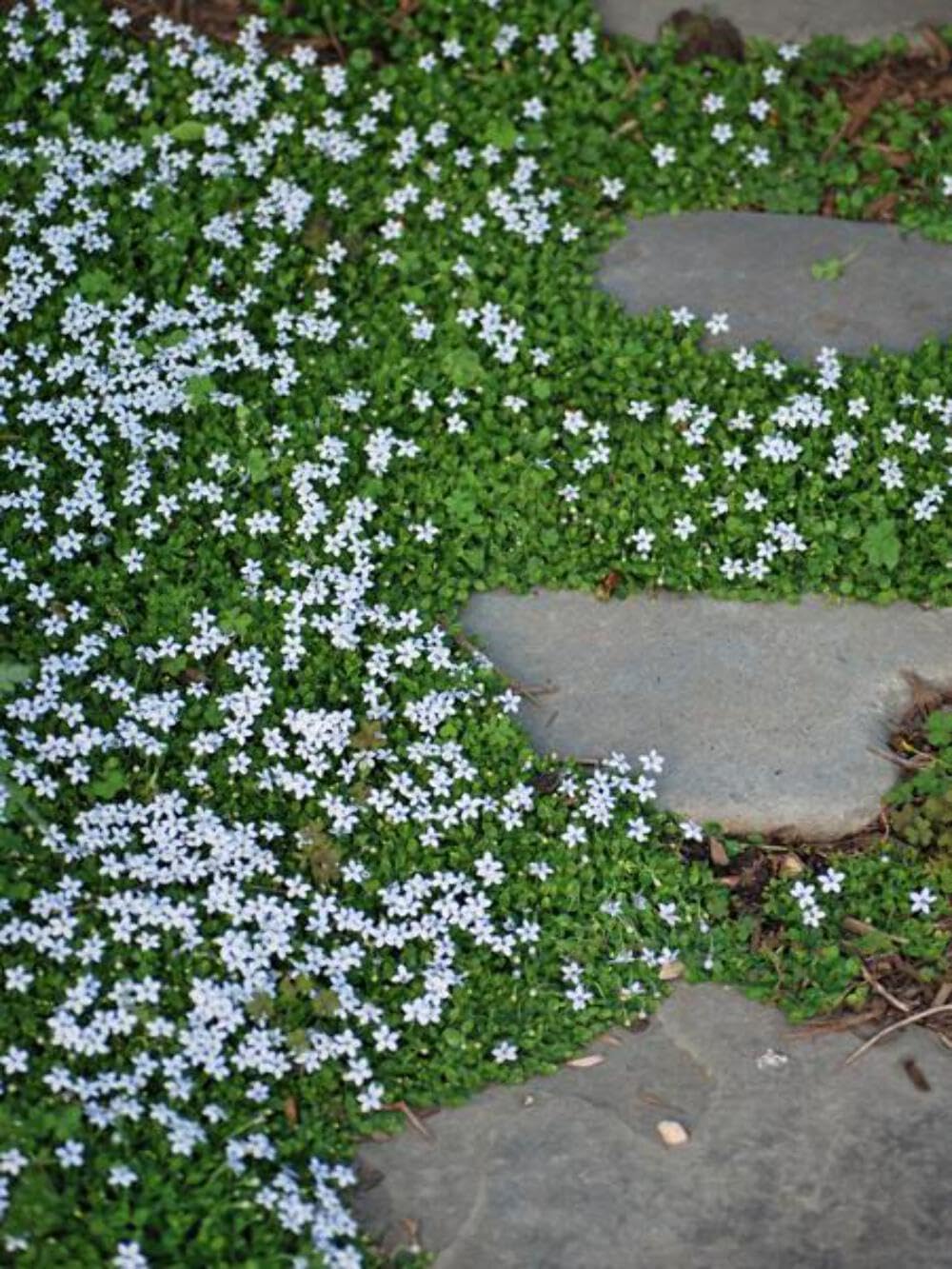
This 1-quart Isotoma fluviatilis (Blue Star Creeper) is a reliable, low-growing groundcover that produces sky-blue, star-shaped flowers from late spring through summer and forms a dense 2–3 inch mat. It is typically planted between stepping stones, along garden paths, or as a small-area lawn replacement where a soft, flowering carpet is desired. Notable features include tolerance of a range of moisture levels and soil types and the ability to withstand heavy foot traffic, which makes it practical for high-use walkways. The plant arrives rooted in a pot ready for immediate planting and will be dormant and trimmed if shipped in colder months. Expect quick coverage in suitable conditions but plan for regular trimming along edges to keep it contained; it is not a tall or structural groundcover so it will not mask large bare patches quickly. For gardeners seeking dependable seasonal blooms and a traffic-tolerant living mulch, this is an easy-to-manage option that performs well in small-scale installations.
Best for: Gardeners who want a dependable, low-maintenance flowering groundcover for small areas, paths, or between pavers and prioritize consistent seasonal blooms and durability under light to moderate foot traffic.
Less Ideal for: Those needing rapid full-coverage for large erosion-prone slopes or a tall, structural groundcover should consider alternatives better suited to heavy erosion control or taller screening.
- Produces sky-blue star-shaped flowers from late spring through summer for extended seasonal interest
- Forms a dense 2–3 inch mat that fills gaps and creeps between stepping stones
- Tolerant of heavy foot traffic, suitable for paths and small lawn replacements
- Adaptable to a variety of soil moisture levels and soil types
- Low height means it will not conceal large bare ground or taller weeds quickly
- May require regular edge trimming to prevent spreading into adjacent plantings
Verdict: Choose this Blue Star Creeper when you want a traffic-tolerant, long-blooming groundcover for small areas and between stepping stones.
HOME GROWN Verbena Moss Seeds (6,000 Seeds)

| Expected Blooming Period | Spring to Fall |
|---|---|
| Sunlight Exposure | Full Sun |
| USDA Hardiness Zone | 2, 3, 4, 5, 6, 7, 8, 9, 10, 11 |
| Number of Pieces | 6000 |
| Moisture Needs | Moderate Watering |
These HOME GROWN Verbena Moss seeds provide a high-count mix (6,000 seeds) of Verbena tenuisecta designed for mass planting as a colorful ground cover. Intended for full‑sun sites, the seeds produce compact, feathery foliage topped by rounded clusters of tiny star-shaped flowers in shades from white to purple, blooming from spring through fall. The packet is marketed as heirloom and non-GMO and comes with an online grow guide, which helps with sowing, establishing, and basic care. In practice this mix is useful for filling borders, rock gardens, slopes, or bare patches to create a continuous floral carpet and to attract pollinators. Strengths are the very high seed count for wide coverage, long blooming season, and low maintenance once established. Expect moderate watering and loam soil for best results, and treat it as a perennial only where frost is mild; in colder zones it behaves more like an annual. Buyers should allow time for germination and establishment before judging density, and plan for deadheading or light pinching to keep plants tidy and encourage reblooming.
Best for: Gardeners who want an easy, showy ground cover for sunny beds and borders and who value social proof and guidance when trying a larger scale planting.
Less Ideal for: Shade gardeners or those needing an immediate, fully established lawn‑like cover; also unsuitable for planting sites where winter survival is critical and perennial habit is mandatory.
- Very high seed count suitable for large beds or mass plantings
- Heirloom non-GMO seed mix with an included online grow guide to support success
- Long bloom window from spring to fall for sustained garden color
- Low maintenance once established and attractive to pollinators
- Suitable for poor soils and erosion control on slopes
- Perennial performance depends on local winter hardiness so may behave as an annual in cold climates
- Requires full sun and moderate watering so not suited to shade or very dry xeric sites
Verdict: Choose this large non‑GMO seed pack when you want an affordable, pollinator‑friendly ground cover that delivers long, low‑maintenance color across large sunny areas.
Choosing the Right Longest Blooming Ground Cover: Key Factors to Consider
Bloom Duration and Repeat Flowering
How long a ground cover blooms is the central reason to choose one labeled for long flowering. Some species flower in a single concentrated flush, while others rebloom or hold many open flowers over months. Longer bloom duration means more visual impact and less need to replace or supplement with seasonal annuals.
Consider whether the plant blooms continuously or in waves, and whether horticultural practices like light pruning or deadheading extend flowering. In many garden situations a repeat-flowering ground cover reduces maintenance because you are not constantly replanting or replacing spent displays.
Light and Site Requirements
Ground covers adapted to broad light ranges are more useful across the garden. Some long-blooming options prefer full sun and produce the best flower show there. Others maintain long flowering in partial shade or dappled light, which matters for underplanting trees or covering north-facing slopes.
Evaluate how much direct sun the planting site gets, soil drainage, and seasonal moisture. Choosing a cultivar that tolerates your exact light and moisture pattern helps preserve bloom length and prevents stress that shortens flowering.
Spread Habit and Control
A ground cover that blooms for a long time is only helpful if it occupies the right footprint. Some plants spread slowly and clump, others spread by stolons or suckers. Consider how aggressively the species spreads and whether it can be contained with edging, root barriers, or regular division.
For borders and tight beds, choose less aggressive forms to avoid crowding other plants. On slopes and erosion-prone areas, more vigorous spreaders can stabilize soil but may require occasional thinning to prevent monocultures.
Hardiness and Climate Fit
A long bloom season in one climate may be short in another. Check the plant's hardiness range relative to your local winter lows and summer heat. Some ground covers maintain long flowering only within narrower temperature bands or at particular elevations.
Also think about seasonal timing. In cooler regions a plant may bloom later and for a shorter period, while in milder climates the same species can produce flowers for much longer. Matching hardiness and climate expectations preserves bloom performance and plant longevity.
Soil and Moisture Needs
Soil type and moisture regime directly affect flowering. Many long-blooming ground covers prefer well-drained soils and moderate fertility. Heavy clay or waterlogged sites can stress plants, reducing bloom duration and increasing disease issues.
Amending the planting area, improving drainage, or selecting a cultivar tolerant of your soil texture helps keep flowers abundant. Mulch practices that conserve moisture without smothering crowns also support longer bloom periods.
Maintenance and Cultural Practices
Maintenance determines how long a planting continues to look its best. Some long-blooming ground covers do well with nearly no care, while others need annual trimming, division, or targeted deadheading to sustain repeat flowering.
Plan for realistic upkeep: pick a lower-maintenance form for large areas or a slightly higher-care cultivar for focal spots where extended color is essential. Consider winter cleanup needs and how pruning affects spring flowering.
Best Sites and Uses for Long-Blooming Ground Cover
Long-blooming ground covers are versatile. Use them to soften hard edges, underplant shrubs, cover erosion-prone slopes, or add continuous low-color between perennials. Their extended flowering makes them especially valuable where seasonal interest is needed for months with minimal replanting.
Match the ground cover to the use. For erosion control choose vigorous spreaders with deep root systems. For narrow borders and patio edges prefer low-growing, tidy forms. Under trees seek shade-tolerant selections that hold flowers despite reduced light.
- Slope stabilization: choose aggressive but controllable spreaders.
- Under trees: pick shade-tolerant, low-competition species.
- Between pavers and walkways: use compact, durable forms.
Planting Best Practices
Prepare the bed by improving soil structure and drainage. Remove perennial weeds and incorporate organic matter for lighter soils. For heavy clay, raise the bed or add grit to improve root zone drainage.
Space plants according to mature spread to avoid early overcrowding. A good initial spacing reduces early thinning and helps each plant establish a robust root system, which supports longer flowering over the season.
- Plant in spring or fall when temperatures are moderate.
- Water deeply at planting and taper to established schedules.
- Mulch to conserve moisture but keep mulch away from crown tissue.
Seasonal Care to Extend Blooming
Simple seasonal care can noticeably extend flowering. Light deadheading of spent blooms encourages some species to rebloom. For those that respond poorly to deadheading, removing faded flower stalks at the base helps tidy the planting without stressing foliage.
Fertilize sparingly in spring with a balanced, slow-release formula to support flowering. Overfertilizing often favors foliage at the expense of blooms. Monitor for pests and diseases regularly and address issues early to prevent bloom loss.
- Deadhead selectively to stimulate repeat blooms where applicable.
- Divide overcrowded patches in spring or fall to rejuvenate flowering.
- Adjust irrigation in heat waves to prevent stress-related bloom drop.
Combining Ground Cover With Other Plants
Consider complementary bloom times and foliage textures when mixing ground covers with perennials and shrubs. A long-blooming ground cover can bridge gaps between shorter-lived perennials, carrying color through late season lulls.
Low-growing edible herbs, ornamental grasses, or small bulbs can fit between ground cover plugs, but ensure they are compatible in light and moisture. Avoid pairing with deeply competitive plants that will outcompete the ground cover for light and space.
- Stagger bloom seasons for continuous color.
- Use foliage contrast to keep texture interesting when flowers fade.
- Ensure companion plants share similar soil and moisture needs.
Controlling Spread Without Killing Plants
Containment is a common concern. Install shallow edging to slow runners or use periodic trimming to keep plants within bounds. Division every few years reduces vigor and keeps colonies healthy while preventing unwanted spread.
For slope plantings, heavier spreaders may be acceptable because root mass helps with erosion control. In beds near other ornamentals, use regular maintenance, root pruning, or physical barriers to protect neighboring plants.
- Edge with metal or plastic barriers where runners are a problem.
- Clip encroaching stems back to the desired line rather than removing entire patches.
- Divide and transplant surplus pieces to other areas of the garden.
How We Chose the Best Longest Blooming Ground Cover
We focused on plants and cultivated ground covers that reliably produce long bloom periods under typical garden conditions. Selection criteria prioritized measurable, gardener-relevant traits: seasonal bloom length measured in weeks, tolerance for different light levels, resistance to common pests and diseases, and vigor of spread so plants fill gaps without becoming invasive. We also considered maintenance needs such as pruning or division frequency, and cold- or heat-hardiness ranges appropriate to many regions. Excluded items included annual-only bloomers and species that commonly escape cultivation or require specialized care. The shortlist emphasizes durable, repeat-flowering ground covers and cultivars known for extended color. Editorial filters removed plants that demand frequent feeding, constant deadheading, or precise greenhouse conditions. Final picks reflect durable flowering performance, adaptability to soil and light, manageable spreading habit, and straightforward maintenance expectations.
FAQ
How much sun do long-blooming ground covers need to flower well?
It depends on the species. Many long-blooming ground covers perform best in full sun to part sun. Some cultivars will still bloom reliably in partial shade but may have fewer flowers. Check the light tolerance and expect reduced bloom density in deep shade.
Will a long-blooming ground cover become invasive?
Some vigorous spreaders can spread beyond their intended area if not managed. Look for forms described as clumping or slow-spreading for confined beds. Regular maintenance such as edging, pruning, or division keeps vigorous types under control.
Can I plant long-blooming ground covers under trees?
Yes, but choose shade-tolerant selections and consider root competition. Prepare soil with organic matter and water until established. Expect somewhat reduced flowering compared with open sunny sites.
When is the best time to plant ground covers for long flowering seasons?
Plant in spring or early fall when temperatures are moderate and rainfall helps establishment. This timing gives roots time to develop before heat stress or winter cold impacts flowering the following season.
How often should I fertilize long-blooming ground covers?
Most benefit from a light spring feeding with a balanced, slow-release fertilizer. Avoid heavy feeding, which can encourage lush foliage at the expense of flowers. Repeat applications are usually unnecessary unless soil tests indicate deficiency.
Do I need to deadhead ground covers to maintain blooms?
Some species respond to deadheading with extended flowering, while others do not. Deadheading is useful where it encourages rebloom or improves appearance. For types that do not rebloom, tidy removal of spent flower stalks keeps the planting looking neat.
Final Verdict
Choose a long-blooming ground cover by prioritizing bloom duration, light fit, and a spread habit that matches the planting area. Balance low-maintenance preferences against the need for occasional pruning or division to sustain flowering. For high-visibility areas favor plants with predictable, repeat flowering; for functional uses like erosion control accept more vigorous spreaders and plan containment measures. With the right match of site and cultivar, you can enjoy extended seasonal color with modest upkeep.
