

Note: This article contains affiliate links. If you click on these links and make a purchase, I may earn a small commission at no extra cost to you. This helps support my research and content. Read my full affiliate disclosure here.
If you face recurring wasp activity around eaves, shrubs, or patio lights, choosing the right insecticide for wasps matters for safety and lasting control. The wrong product can leave you exposed or require repeated treatments, while the right choice reduces sting risk and keeps nesting sites suppressed. This guide covers seven top-rated insecticides for wasps shortlisted for real garden use. We evaluate each option for spray reach, residual duration, and ease of application so you can pick the product that matches your treatment style and the nest location. Read on to understand which features matter for different situations before you inspect or treat a nest.
Top Picks at a Glance
| Best Overall The best all-around choice for most situations | Spectracide Wasp and Hornet Killer Aerosol, 20‑Ounce (3-Pack) |  |
| Best Quality Built to a higher standard if you want something more solid | Atticus Talak 7.9% Indoor/Outdoor Bifenthrin Insecticide Concentrate (1 gal) |  |
| Best Value The sweet spot between price and what you get | Raid MAX Foaming Wasp & Hornet Killer, 16.5 oz |  |
| Best Budget The cheapest option that still gets the job done reliably | Spectracide PRO Wasp & Hornet Killer Spray, 18 oz |  |
| Highest Rated A top-rated pick with lots of positive feedback | Envu Tempo 1% Dust Insecticide (Ready-to-Use) |  |
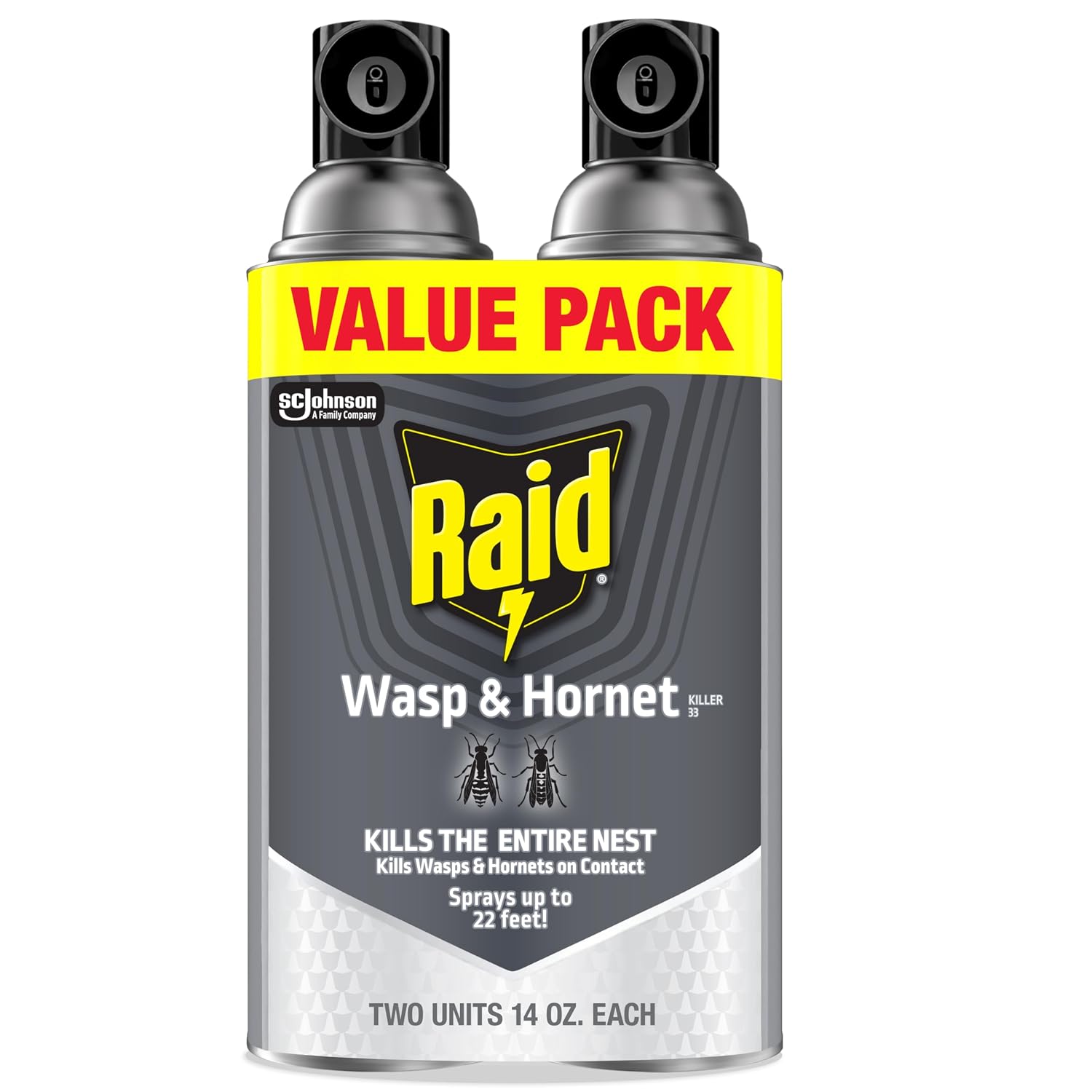
| Most Popular A crowd favorite that many people choose with confidence | Raid Wasp & Hornet Killer Spray, 14 oz, 2‑Pack |  |
| Best Seller A high-volume bestseller chosen again and again | Atticus Talak 7.9% Bifenthrin Indoor/Outdoor Insecticide Concentrate, 32 oz |  |
Spectracide Wasp and Hornet Killer Aerosol, 20‑Ounce (3-Pack)

| Item Form | Spray |
|---|
Spectracide Wasp and Hornet Killer is an aerosol insecticide designed to eliminate wasp and hornet nests by spraying insects and nests from a safe distance. It delivers a focused jet spray that the maker says can reach up to 27 feet, so you can treat hanging nests or nest entrances without getting too close. Typical use is aimed at evening or early morning when insects are less active: aim at the nest entrance and apply short bursts until activity stops, then retreat and monitor. The product kills on contact and is sold in a three‑can pack that keeps extra cans on hand for repeat problems. Practical benefits include long‑reach spraying for safer application and a fast knockdown of visible insects. Important limitations are that aerosols require careful handling, protective clothing and eye protection, and they do not provide long‑term residual control of new nests forming later in the season. Avoid using around open food, pets, or in windy conditions that can blow spray off target.
Best for: Buyers who prioritize safety and quick results and want a straightforward, no‑frills aerosol to remove active wasp or hornet nests from a distance.
Less Ideal for: People seeking a long‑term preventative treatment or non‑chemical methods should look at traps, dusts, or professional removal services instead.
- Powerful jet spray that allows you to treat nests from a distance
- Kills wasps and hornets on contact for rapid knockdown
- Three cans included so you have spares for follow‑up treatments
- Provides no lasting barrier or residual protection against new nests
- Requires careful personal protective measures and cautious application
Verdict: Choose this aerosol when you want a reliable, long‑reach spray to quickly knock down and eliminate active wasp or hornet nests.
Atticus Talak 7.9% Indoor/Outdoor Bifenthrin Insecticide Concentrate (1 gal)

| Active Ingredients | Bifenthrin |
|---|---|
| Formulation | Suspension Concentrate |
| Unit Count | 128 Fluid Ounces |
| Specification Met | EPA |
Talak 7.9% is a water-based bifenthrin concentrate meant as a flexible indoor and outdoor insect control product. You dilute the concentrate with water and apply it as a spray for perimeter barrier treatments, to turf, to ornamentals, or to interior baseboards and other problem areas. The label lists control of more than 75 pests including mosquitoes and ticks, and the formula is designed to kill on contact and provide residual control for up to three months. Practical benefits include a clear, odor-free spray that dries without staining and a bottle that allows easier small pours for accurate mixing. Important limitations are that mixed solutions should be used the same day and it is not approved for fogger use, so it is best for targeted spray applications rather than broadcast fogging. As with any bifenthrin product, users should follow label directions closely and consider nonchemical options for integrated mosquito management.
Best for: Buyers who want a single, versatile insecticide to treat both perimeter and landscape mosquito problems and prefer a product that delivers residual control without odors or visible residue.
Less Ideal for: People seeking a ready-to-use fogging or misting solution or those who need an insecticide they can pre-mix and store for later use.
- Broad-spectrum control listing more than 75 indoor and outdoor pests including mosquitoes and ticks.
- Water-based formula that dries clear, leaves no residue, and is odor-free for use around living areas.
- Long residual effect with label claim of up to three months of control per application.
- Mixes with water for adjustable application rates across lawns, landscapes, and surfaces.
- Bottle design supports easier small pours to reduce mess when measuring concentrate.
- Mixed spray cannot be stored and must be used the same day.
- Not approved for use in foggers, limiting application methods to direct sprays.
Verdict: A versatile, long-lasting bifenthrin concentrate that provides broad-spectrum mosquito and perimeter control for users who want one product for indoor and outdoor applications.
Raid MAX Foaming Wasp & Hornet Killer, 16.5 oz

| Item model number | 395917 |
|---|---|
| Manufacturer | SC Johnson |
| Date First Available | November 28, 2023 |
| Active Ingredients | Prallethrin 0.05%, Cypermethrin 0.10% |
Raid MAX Foaming Wasp & Hornet Killer is an outdoor aerosol that dispenses a thick foam to saturate nests and deliver insecticide directly where wasps and hornets live. You use it from a safe distance, aiming at the nest opening in the early morning or evening when activity is lowest, then wait at least 24 hours before removing the nest. The foaming formula helps the product cling to nest surfaces and target insects inside, which is useful for paper wasps and bald-faced hornets. The label lists active ingredients and clear safety directions so you can minimize drift and keep people, pets, and water away from treated areas. Because the can is pressurized it must be stored and handled carefully and should only be used outdoors; it is toxic to aquatic life and not suitable for edible plants. For gardeners or homeowners who want a quick, targeted way to eliminate visible nests, the product is effective, simple to use, and reduces the need for repeat spot treatments, but it is not a preventive perimeter treatment and requires following safety precautions when applying.
Best for: Homeowners and practical gardeners who want an effective, targeted way to eliminate visible wasp or hornet nests quickly while minimizing repeat treatments.
Less Ideal for: People needing ongoing perimeter protection or safe use near ponds and other water features should choose a different approach.
- Foaming formula clings to nests for better contact with insects inside
- Designed for outdoor use specifically against wasps and hornets and their nests
- Clear usage directions for reducing drift and targeting nests during low activity times
- Kills on contact so a single thorough application can remove a nest population
- Contains pressurized aerosol ingredients that require careful storage and handling
- Extremely toxic to fish and aquatic invertebrates so cannot be used near water
Verdict: A practical, no-nonsense foaming spray that quickly kills wasps and hornets at the nest for homeowners who want a single, effective treatment.
Spectracide PRO Wasp & Hornet Killer Spray, 18 oz

| Liquid Volume | 18 fluid ounces |
|---|---|
| Item Form | Spray |
| Target Species | Insects |
| Specification Met | EPA |
Spectracide PRO Wasp & Hornet Killer is an 18-ounce aerosol designed to stop aggressive stinging insects from a safe distance. The product shoots a focused jet spray that the manufacturer says can reach nests up to 20 feet away, which makes it useful for treating nests high under eaves or in trees without close approach. It is formulated to kill the entire nest and claims residual control that deters returning wasps and hornets for up to four weeks. Typical use is at sunrise or sunset and involves soaking the nest while standing well back, then waiting at least 24 hours before removing the nest. Notable features include the long spray reach and an EPA specification listed on the label. Limitations are that it is for outdoor use only and requires careful handling and adherence to label directions; its aerosol format means it is a single-use canister sized for spot treatments rather than large-scale infestations.
Best for: Buyers who want an inexpensive, ready-to-use spray to quickly eliminate a single nest or occasional wasp problems around a yard or patio.
Less Ideal for: Homeowners facing multiple large nests, commercial pest controllers, or anyone wanting a non-chemical or long-term integrated control solution should consider alternatives.
- Long jet spray that can reach nests up to 20 feet away
- Claims residual activity that reduces returning wasps and hornets for up to four weeks
- Aerosol format allows quick spot treatment without mixing or equipment
- Intended for outdoor, spot use only so not suitable for indoor infestations
- Single 18 oz can is limited for large or multiple nests
- Requires careful handling and timing (apply at dawn or dusk) due to active ingredients
Verdict: A low-cost, ready-to-use aerosol that lets you spray nests from a safe distance for fast, targeted wasp and hornet control.
Envu Tempo 1% Dust Insecticide (Ready-to-Use)

| Item Form | Powder |
|---|---|
| Target Species | Insects |
| Specification Met | EPA |
| Unit Count | 1 Count |
Tempo 1% Dust is a dust-formulated insecticide intended for professional-style targeted treatments in cracks, crevices, wall voids, and nests where sprays cannot reach. Applied with a hand duster or power duster, the dry powder penetrates hidden harborages and stays in place when undisturbed, giving long residual control against ants, cockroaches, spiders and especially stinging insects such as bees, wasps, hornets and yellow jackets. The 1% cyfluthrin formulation provides quick knockdown and persistent activity, and the product is labeled for both indoor and outdoor void applications. Notable practical benefits are its odorless, non-staining formula and strong penetration into voids, which makes it a reliable option when precise, long-lasting control is needed. Important limitations are that it requires a duster for effective placement and is not for broadcast surface use; users must follow label directions and safety precautions when treating nests or enclosed spaces.
Best for: Buyers who prioritize dependable, long-lasting control of wasps and other nesting or void-dwelling pests and who plan to apply treatment precisely using a duster or similar tool.
Less Ideal for: Casual users who need simple spray-on, wide-area treatments or those unwilling to follow label safety steps for insecticide dust applications.
- Ready-to-use powder for precise application into cracks, crevices, voids and nests
- 1% cyfluthrin provides rapid knockdown and extended residual control
- Odorless and non-staining formulation suitable for indoor and outdoor void treatments
- Good penetration into wall voids and hidden harborages when applied with a duster
- Requires a hand or power duster for proper placement rather than simple spray application
- Not intended for broadcast surface treatments so coverage depends on accurate targeting
- Contains a pyrethroid active ingredient so label safety precautions are necessary during application
Verdict: Choose Tempo 1% Dust when you need a reliable, long-residual dust that penetrates voids and nests for effective wasp and stinging insect control.
Raid Wasp & Hornet Killer Spray, 14 oz, 2‑Pack
| Unit Count | 28 Ounce |
|---|---|
| Included Components | Two 14 oz cans |
| Item Form | Spray |
| Active Ingredients | Prallethrin, Cypermethrin |
Raid Wasp & Hornet Killer is a straightforward outdoor aerosol for quickly dealing with stinging flying insects and nests. Each 14 oz canister sprays up to about 22 feet so you can treat nests from a safe distance, and the formula is designed to kill paper wasps, yellow jackets, mud daubers and bald‑face hornets on contact. It is electrically non‑conducting up to 32,500 volts, which can be helpful if nests are near electrical equipment. Typical use is to spray a saturated stream at the nest in early morning or evening when insects are less active, then wait 24 hours before removing the nest. The product includes common active ingredients (prallethrin and cypermethrin) and comes as a two‑pack so you have a backup or enough coverage for multiple nests. Important limitations are that it is for outdoor use only, is extremely flammable and toxic to aquatic life, and requires careful handling to avoid exposure to people and pets. Follow label directions closely and avoid spraying vegetation or water sources.
Best for: Buyers who prioritize a reliable, no‑nonsense solution to quickly eliminate outdoor wasp and hornet nests and who follow label safety instructions.
Less Ideal for: People looking for non‑chemical, pet‑safe, or aquatic‑safe options or those who need an indoor insecticide should consider alternative approaches.
- Sprays up to 22 feet to allow treatment from a safer distance
- Kills common stinging wasps and hornets on contact for fast results
- Two 14 oz cans provide extra coverage or a spare for larger problems
- Non‑conducting formulation reduces electrical hazard when treating nests near power equipment
- Contains flammable propellants and petroleum distillates so it must be stored and used with caution
- Extremely toxic to fish and aquatic invertebrates so not safe near water
- Intended for outdoor use only and not for use on edible crops or around pets
Verdict: Choose this if you want a proven, distance‑spraying aerosol that quickly kills wasps and hornets so you can remove nests with confidence.
Atticus Talak 7.9% Bifenthrin Indoor/Outdoor Insecticide Concentrate, 32 oz

| Active Ingredient | Bifenthrin |
|---|---|
| Formulation | Suspension Concentrate |
| Liquid Volume | 32 fluid ounces |
| Length of Control | Up to three months |
| Target Species | Insects |
Talak 7.9% is a liquid concentrate for treating lawns, landscaping, outdoor living areas and indoor perimeter spots like baseboards and cabinets. You dilute the concentrate with water to create a spray for barrier treatments, spot applications or lawn mixes; label rates explain how much to mix per gallon depending on the use. The product uses bifenthrin, a proven broad-spectrum active ingredient, and the manufacturer states it controls over 75 species and can give residual control for as long as three months. Its water-based formula dries clear, leaves no odor or visible residue, and is not phytotoxic on plants when used per label. Practical benefits include flexible indoor and outdoor use, clear drying, and a bottle designed for easier pouring. Important limitations are that solutions should be mixed only for same-day use, it is not registered for sale in a few states, and it is not approved for fogger application, so professional-style misting methods are not appropriate.
Best for: Buyers who want a single, reliable product to protect yards, patios and building perimeters from a wide range of common pests and prefer conservative, label-driven application practices.
Less Ideal for: People seeking ready-to-use sprays or fogger-compatible products or those in states where this formulation is not registered should look at alternatives.
- Broad-spectrum control listed for 75+ indoor and outdoor pest species
- Water-based formula that dries clear and leaves no odor or residue
- Flexible label directions for lawns, landscapes, hardscapes and indoor perimeter treatments
- Long residual activity up to three months when applied at recommended rates
- Mixed spray solutions cannot be stored and must be used the same day
- Not approved for fogger application and not available for sale in some states
Verdict: A versatile, water-based bifenthrin concentrate that delivers long-lasting, broad-spectrum outdoor (and perimeter indoor) control when used according to the label.
Choosing the Right Insecticide for Wasps: Key Factors to Consider
Knockdown Speed
How quickly an insecticide incapacitates or kills wasps affects safety during treatment. Faster knockdown reduces the window of aggressive behavior and lowers sting risk when you are near a nest. Consider formulations labeled for rapid action if nests are accessible without extensive protective gear.
Remember that fast-acting products can leave moving insects that fall and revive if residual control is poor. Look for products that combine immediate knockdown with a follow-up residual to prevent survivors from returning.
Residual Duration
Residual duration is how long treated surfaces remain toxic to returning wasps. Longer residuals reduce the need for re-treatment and help suppress secondary nest-building activity in and around the original site. For nests in sheltered spots, a product with several weeks of residual can provide ongoing protection.
Residual performance varies with exposure to rain, sunlight, and routine cleaning. Expect shorter residuals on exposed surfaces and longer persistence in dry, shaded cavities.
Spray Reach and Delivery
Spray reach matters because many wasp nests sit in high, tight, or recessed locations. Aerosols or sprayers that produce a focused stream can let you treat nests from a safer distance, avoiding ladders or close contact. Check the effective spray distance listed on the label and whether the product maintains stream strength at that range.
Delivery also covers droplet size and dispersion. A direct, narrow stream concentrates the product on the nest while minimizing drift onto non-target plants, people, and pets.
Application Ease and Nozzle Options
How easy a product is to apply affects accuracy and safety. Long-reach spray wands, adjustable nozzles, and ergonomic triggers reduce the physical strain of treatment and improve aim. For gardeners treating multiple spots or awkward locations, an easy-to-handle applicator makes repeat treatments less frustrating.
Consider whether the product requires mixing, has a pre-mixed ready spray option, or needs a pump sprayer. Pre-mixed aerosols simplify use but may offer limited volume for multiple nests.
Label Safety and Environmental Guidance
The product label contains critical instructions about when and how to apply insecticide safely. Pay attention to directions about protective clothing, re-entry intervals, and distancing from pollinator-attractive plants. Products with clear, specific outdoor-use guidance make it easier to follow safe practices.
Environmental notes on the label also indicate restrictions near water, vegetable gardens, or areas where pets frequent. Choosing a product with explicit guidance for garden settings helps you protect beneficial insects and comply with local regulations.
Suitability for Nest Location
Different nest locations create distinct treatment challenges. Nests in ground cavities, wall voids, or eaves may require formulations able to penetrate gaps or cling to surfaces, while exposed nests hanging from branches might be treated with foaming or stream sprays.
Think about the usual nest sites in your yard and choose a product whose labeled use and delivery method match those locations. Some formulations are designed specifically for snug cavities and offer foaming action that improves contact with hidden wasps.
Preparing to Treat a Wasp Nest
Before applying any product, assess the nest location and the best time to treat. Early morning or late evening is when most wasps are less active and away from the nest, reducing the chance of defensive swarms. Wear protective clothing and keep children and pets well away from the treatment area.
Plan your escape route and avoid standing directly below the nest. Have a flashlight available for low-light treatments and use a long-reach applicator whenever possible to maintain distance.
- Treat when wasps are least active, typically dusk or dawn
- Keep a clear, unobstructed exit path
- Wear eye protection, long sleeves, and gloves
Application Techniques by Nest Type
Use a focused stream or foam for enclosed nests to push insecticide into cavities and minimize drift. For exposed aerial nests, a steady spray from a safe distance can quickly reduce activity while limiting overspray onto surrounding plants.
Ground nests require careful approach to avoid collapsing soil and releasing hidden wasps. Apply to the entrance and retreat, repeating if activity persists per label instructions.
- Aerosol stream for high, exposed nests
- Foam or fine spray for cavity or wall nests
- Directed application for ground nests
Protecting Pollinators and Beneficial Insects
Wasps can be predators of garden pests but social wasps near human activity often need control. To reduce non-target impacts, avoid spraying flowering plants and apply treatments in low-pollinator activity windows. Rinse equipment responsibly and follow label guidance about proximity to gardens.
If treating near ornamental beds, consider temporarily covering blooms or applying product only to the nest and immediate surrounding surface to limit exposure to beneficial insects.
- Avoid spraying open flowers
- Apply during low pollinator activity times
- Follow label restrictions near edible gardens
Post-Treatment Monitoring and Follow-Up
Check the treated area within a day to confirm reduced activity and again after a week to ensure the nest remains inactive. Some nests require a second application if activity continues and the label permits re-treatment. Dispose of a confirmed inactive nest carefully and follow local guidance for removal.
Keep a log of treatment dates and observations. Documenting what worked and where helps refine future product choice and timing.
- Inspect treated nests at 24 hours and one week
- Repeat application only if label allows
- Record treatment dates and nest locations
When to Call a Professional
Large colonies in walls, utility voids, or high rooflines may be beyond safe DIY treatment. Call a trained technician when nests are inside structural cavities, when there is an extreme allergy risk, or when access requires complex equipment.
Professionals can safely remove nests and treat hidden voids. Consider professional help if you encounter unusually aggressive behavior or if repeated DIY treatments fail to suppress activity.
- Seek professional help for nests inside structures
- Consider pros for very large or aggressive colonies
- Use professionals when ladder access is unsafe
How We Chose the Best Insecticide for Wasps
We shortlisted products that gardeners actually use for wasp control and applied practical filters to keep the list focused and useful. Key evaluation criteria included knockdown speed, residual effectiveness, spray delivery and reach, nozzle and application ease, safety guidance for outdoor use, and suitability for common nest locations such as eaves, shrubs, and ground cavities. We evaluated knockdown speed because immediate reduction in aggressive activity reduces sting risk during treatment. Residual effectiveness matters for how long a treated nest remains inactive and whether follow-up is needed. Spray delivery and reach determine whether you can treat nests from a safe distance or need a ladder. Nozzle and application ease affect accuracy when targeting nests tucked under soffits or dense foliage. Safety guidance and labeled outdoor use were required filters; products without clear outdoor or wasp-specific labeling were excluded. We also excluded products intended only for indoor pests or those that offered no residual control. The final list balances fast-acting formulations with options designed for longer-lasting suppression, matching a range of gardener preferences and nest situations.
FAQ
What is the safest time of day to treat a wasp nest?
Early morning or late evening is safest because most wasps are less active then. Lower activity reduces the chance of provoking a defensive response during treatment.
Can I treat a wasp nest without protective clothing?
You should not attempt treatment without protective clothing. Long sleeves, gloves, and eye protection reduce sting exposure, and a long-reach applicator helps maintain distance from the nest.
Will a single treatment eliminate a wasp nest?
Sometimes a single treatment is sufficient, especially with fast knockdown plus residual control. Often a follow-up inspection is needed because environmental factors or nest size can require additional treatment.
Are foam formulations better for hidden nests?
Foam formulations help force active ingredients into cavities and gaps, increasing contact with hiding wasps. They are often a better choice for wall voids, soffits, and other recessed locations.
How can I protect bees and other pollinators when treating wasps?
Avoid spraying flowers, treat during low pollinator activity times, and apply product only to the nest and immediate surfaces. Check label directions for any restrictions near blooming plants.
Is it safe to remove a nest immediately after treatment?
Wait until you confirm there is no activity, usually after a day or more depending on the product label. Removing a nest that still contains live wasps can provoke defensive behavior.
Final Verdict
Choosing the right insecticide for wasps depends on where nests form and how you plan to apply the product. Prioritize knockdown speed if you need immediate suppression and residual duration if you want longer-term prevention. Match spray reach and applicator features to the nest location to maintain distance and improve accuracy. Balance safety guidance and environmental restrictions with application ease. When in doubt about large or hidden nests, seek professional help. Use the evaluation criteria above to pick the option that fits your garden and treatment style so you can reduce risk and keep outdoor spaces usable.
