

Note: This article contains affiliate links. If you click on these links and make a purchase, I may earn a small commission at no extra cost to you. This helps support my research and content. Read my full affiliate disclosure here.
A clean edge makes a lawn look finished and requires far less maintenance than constant trimming. A walk behind lawn edger that guides steadily, keeps its blade sharp, and resists kickback will save you time and improve curb appeal. This guide covers seven shortlisted options chosen for real-world yard use, showing which tools suit compact urban plots, wide suburban lawns, or bumpy older turf. We evaluated practical factors like edging accuracy, build durability, user control, and serviceability to help you choose the right unit. Read on for concise guidance and the full list of top picks for common garden situations.
Top Picks at a Glance
| Best Overall The best all-around choice for most situations | CRAFTSMAN 30cc 4-Cycle Gas Lawn Edger |  |
| Best Quality Built to a higher standard if you want something more solid | Power Trim 308-H Commercial Gas Walk-Behind Edger |  |
| Best Value The sweet spot between price and what you get | Troy-Bilt TBE304 30cc 4-Cycle Gas Walk-Behind Edger |  |
| Best Budget The cheapest option that still gets the job done reliably | Wild Badger Power 31cc 4-Cycle Walk-Behind Lawn Edger, 9.5-inch Blade |  |
| Highest Rated A top-rated pick with lots of positive feedback | EARTHQUAKE 41273 79cc 4-Cycle Walk-Behind Edger |  |
| Most Popular A crowd favorite that many people choose with confidence | McLane 9-Inch Gas Walk-Behind Lawn Edger with Spring Steel Blade |  |
| Best Seller A high-volume bestseller chosen again and again | WORX WG896 7.5" 12-Amp Corded Electric Lawn Edger & Trencher |  |
CRAFTSMAN 30cc 4-Cycle Gas Lawn Edger

| Power Source | Gas Powered |
|---|---|
| Operation Mode | Manual |
| Number of Positions | 6 |
| Material Type | Alloy Steel |
The CRAFTSMAN 30cc 4-cycle gas lawn edger is a straightforward walk-behind tool for finishing lawn edges around driveways, sidewalks, and flower beds. Its 30cc four-cycle engine runs without mixing gas and oil and uses a 9-inch dual-tip steel blade that cuts up to about 1.75 inches deep. Height is adjustable through six positions so you can set blade depth for shallow trimming or a deeper cut. The unit mounts on a steel frame and rides on three transport wheels for stability while you steer it along hard edges. Controls are ergonomically placed on a molded handle and include throttle and idle adjustments; starting is simplified by a two-step prime-and-pull system and the design accepts an electric-start drill bit if you prefer a powered start. Practical benefits include robust cutting for most home lawns, reduced vibration from a full-crank engine, and no-fuss fueling with a four-cycle motor. Expect the usual gas-engine maintenance and noise versus cordless alternatives and note the electric-start requires an extra accessory.
Best for: Homeowners who want a capable, no-nonsense walk-behind edger for regular yard edge work and who prioritize cutting performance and simple fueling over battery convenience.
Less Ideal for: People who prefer low-noise, low-maintenance battery tools or those who need completely cordless operation for small yards and frequent short jobs.
- 30cc four-cycle engine requires no mixing of gas and oil for simpler fueling
- 9-inch dual-tip steel blade cuts up to 1.75 inches depth for clean, defined edges
- Six adjustable height positions let you control cutting depth for different tasks
- Molded ergonomic handle with throttle and idle controls improves operator comfort
- Three transport wheels and steel frame provide stability and easier steering
- Operates as a gas engine so it is noisier and requires regular maintenance compared with cordless models
- Electric start requires a separately purchased drill bit and drill
Verdict: A solid, performance-focused walk-behind edger that delivers reliable cutting power and easy fueling for homeowners who want a durable tool to create crisp lawn edges.
Power Trim 308-H Commercial Gas Walk-Behind Edger

| Power Source | Gas Powered |
|---|---|
| Cutting width | 10 inches |
| Wheel Size | 8 inches |
| Operation Mode | Manual |
The Power Trim 308-H is a commercial-style walk-behind edger designed for contractors and serious homeowners who need a durable tool for frequent edging. It uses a GX120-class gas engine and a 10-inch heavy-duty spring steel blade to cut clean edges and bevel up to 10 degrees left of vertical. The machine is built from heavy-gauge steel with full arc welds and a sealed, lifetime-lubricated cutter head bearing for long service life. Solid-rubber tires on 8-inch steel wheels reduce downtime from flats and make it stable when running along curbs or uneven ground. Typical use is straightforward: roll the unit to the work area, set the bevel or cut depth, and guide it along sidewalks, driveways, and beds for a consistent edge. Important limitations are its 75-pound weight and manual operation, which mean it requires physical handling and storage space and is best for users accustomed to gas equipment rather than battery or electric options.
Best for: Buyers who prioritize performance and durability for frequent edging tasks and who are comfortable using and maintaining gas-powered outdoor equipment.
Less Ideal for: Casual gardeners who want a lightweight, low-maintenance, or battery-powered edger and people with limited storage or who cannot lift heavier equipment.
- Commercial-grade heavy-gauge steel construction for durability under frequent use
- 10-inch spring-steel arbor blade capable of bevel cuts for clean edging
- Permanently sealed, lifetime-lubricated cutter head bearings reduce maintenance
- Solid rubber tires on 8-inch wheels prevent flats and improve stability
- At 75 pounds the unit is heavy to lift or store and may be tiring to maneuver for long periods
- Gas power requires routine fuel, oil, and engine maintenance
Verdict: Choose the Power Trim 308-H if you need a rugged, commercial-grade gas edger that delivers reliable 10-inch cutting performance for heavy use.
Troy-Bilt TBE304 30cc 4-Cycle Gas Walk-Behind Edger

| Power Source | Gas Powered |
|---|---|
| Engine | 30cc 4-cycle |
| Blade | 9-inch dual-tipped steel |
| Maximum Adjustable Cutting Height | 1.75 inches |
| Number of Positions | 5 |
The Troy-Bilt TBE304 is a straightforward gas walk-behind edger built for homeowners who want neat, durable edges without fuss. Its 30cc 4-cycle engine eliminates the need to mix gas and oil and runs quieter than comparable two-cycle units, while SpringAssist and the Prime & Go starting system make pulls easier and starting more reliable. The heavy-duty 9-inch dual-tipped steel blade cuts a 1.75-inch depth and the five-position height adjust helps dial in consistent edging along driveways, sidewalks, and garden beds. A v-style folding handle and three transport wheels improve maneuvering and tidy storage. Included oil and a 2-year limited warranty are practical touches for first-time edger owners. Expect a bit more vibration and maintenance than an electric model, and the unit is heavier to lift or move by hand, but for compact yards where a robust cut and longer run time matter, this gives predictable, professional-looking edges without mixing fuel.
Best for: Homeowners who want a reliable, gas-powered walk-behind edger to produce neat, consistent edges around driveways, sidewalks, and flower beds without dealing with gas-oil mixing.
Less Ideal for: Those with very small yards, frequent tight-space edging needs, or who prefer quieter, lower-maintenance electric or battery models should consider alternatives.
- 30cc 4-cycle engine avoids gas-oil mixing and runs cleaner than two-cycle engines
- SpringAssist and Prime & Go starting systems reduce effort and make starting more reliable
- 9-inch dual-tipped steel blade delivers a durable, clean cut to a 1.75-inch depth
- Five-position height adjustment and three transport wheels improve control and maneuverability
- Heavier and requires more routine maintenance than electric models
- Maximum cutting depth and width are modest compared with some commercial edgers
Verdict: Choose this Troy-Bilt if you want a dependable gas edger that starts easily and cuts consistently for tidy, long-lasting lawn edges.
Wild Badger Power 31cc 4-Cycle Walk-Behind Lawn Edger, 9.5-inch Blade

| Power Source | Gas Powered |
|---|---|
| Operation Mode | Manual |
| Maximum Adjustable Cutting Height | 10 centimeters |
| Minimum Adjustable Cutting Height | 5 centimeters |
| Material Type | Alloy Steel |
The Wild Badger Power walk-behind edger is designed to create clean, consistent edges along sidewalks, driveways, and long lawn borders. It uses a 31cc four-stroke engine, so you do not need to premix fuel and oil, and it is built to deliver high blade RPM for cutting through turf and light root material. The 9.5-inch two-tooth steel blade and five cutting-depth options let you do shallow touch-ups or deeper seasonal cuts, while a wheeled push design and three handle-height positions provide stable control and a more comfortable stance on long straights. Practical conveniences include a digital ignition for easier starts and tool-free air-filter access for routine maintenance. Expect solid edging performance for typical homeowner jobs, but note this is a manual push unit rather than self-propelled so it requires physical effort on tougher soils or slopes. Also the metal blade and gas engine need routine maintenance and basic mechanical familiarity to keep them running well.
Best for: A homeowner who values reliable, gas-powered cutting power and wants a stable walk-behind machine for trimming long sidewalks, driveways, and borders while prioritizing proven performance and straightforward maintenance.
Less Ideal for: Avoid this model if you need a lightweight handheld edger, frequent short bursts in tight beds, or a self-propelled machine for steep or very large properties.
- 31cc four-cycle engine eliminates fuel/oil mixing and delivers high blade RPM
- 9.5-inch two-tooth steel blade suitable for clean turf-to-hardscape separation
- Five cutting-depth settings for both light touch-ups and deeper edging
- Wheeled walk-behind design and three handle-height positions for stable control over long runs
- Digital ignition and tool-free air-filter access simplify starting and maintenance
- Manual push operation can be physically demanding on compacted soil or long runs
- Requires regular engine and blade maintenance typical of gas equipment
Verdict: Choose this walk-behind gas edger if you want dependable, high-RPM cutting and stable control for defined edges along sidewalks and driveways.
EARTHQUAKE 41273 79cc 4-Cycle Walk-Behind Edger

| Engine | 79cc 4-Cycle Viper engine |
|---|---|
| Blade speed | Spins at 3400 RPMs |
| Cutting angles | 5 positions up to 20 degrees each direction |
| Edging depth | Adjustable from 0.5 to 3.5 inches |
The Earthquake 41273 is a robust walk-behind edger designed to create crisp borders around lawns, sidewalks, driveways and flowerbeds. It uses a 79cc 4-cycle Viper engine so you do not need to mix gas and oil, and a variable-speed throttle helps you start cuts and slow down for corners. The tri-tip steel blade spins at high speed and the head pivots through multiple angles to do straight or beveled edges, while ten depth settings let you trim shallow touch-ups or cut deep into roots for cleaner regrowth control. The balanced four-wheel layout improves stability and handling compared with handheld units, and the built-in cup and tool holder is a practical convenience for short jobs. Because it is a gas machine it delivers power for longer runs and light trenching work such as burying cables, but it is heavier and needs fuel and basic engine maintenance compared with electric or battery models. Expect clearer, more professional-looking edges if you are comfortable storing and servicing a gas engine tool.
Best for: Buyers who prioritize efficient, professional-looking edging and need a durable gas tool for frequent or larger jobs around lawns, driveways and beds. Ideal for users who value cutting power and precise control over convenience of cordless options.
Less Ideal for: Not a good fit for small yards or users who prefer low-maintenance, quieter cordless or electric tools or who cannot accommodate gas engine upkeep.
- Powerful 79cc 4-cycle engine removes need to mix gas and oil and supplies sustained cutting power
- Variable-speed throttle for controlled starts and maneuvering around corners
- Tri-tip steel blade and multi-angle head produce cleaner, straighter and beveled edges
- Ten depth settings let you match shallow touch-ups or deeper cuts into roots
- Four-wheel design improves stability and handling versus three-wheel or handheld edgers
- Heavier and bulkier than electric or battery options so it requires more storage space and effort to move
- Requires regular engine maintenance and fuel unlike cordless electric alternatives
Verdict: Choose the Earthquake 41273 if you want a powerful, stable gas edger that delivers precise, professional borders and handles heavier edging and light trenching tasks.
McLane 9-Inch Gas Walk-Behind Lawn Edger with Spring Steel Blade

| Power Source | Gas Powered |
|---|---|
| Operation Mode | Automatic |
| Number of Positions | 7 |
| Material Type | Alloy Steel, Polyester, Rubber |
| Cutting width | 7 inches |
The McLane gas walk-behind edger is a straightforward power tool for homeowners who want clean, consistent edges around lawns, sidewalks, and curbs. It uses a small gas engine and a spring steel cutterhead with sealed precision ball bearings to deliver a controlled cut, and the blade tilts to nearly any angle so you can trim vertically or horizontally. Large rubber wheels with ball bearings make it ride smoothly along curbs and help keep the cutter steady, while single-lever blade clutch and depth control let you set cut depth quickly. Construction is heavy duty steel, which should hold up under regular use, and the unit is built for simple, manual operation rather than automation. Expect the usual gas-tool upkeep such as fuel, oil, spark plug checks, and occasional blade maintenance. The edger is best for homeowners with medium to large yards who want professional-looking edges without hiring a landscaper, but it may be more machine than needed for very small urban yards or for buyers who prefer electric or battery-powered quiet tools.
Best for: Homeowners who want a durable, gas-powered edger to create neat, professional edges around sidewalks, driveways, and larger lawns and who are comfortable with routine small-engine maintenance.
Less Ideal for: People with very small yards, noise-sensitive neighborhoods, or those who prefer lower-maintenance electric or battery-powered tools should consider other options.
- Tilting spring steel blade lets you cut vertically or horizontally for versatile edging
- Sealed precision ball bearings on cutterhead for smoother, more durable cutting
- Single-lever blade clutch and depth control for quick adjustments during use
- Wide rubber wheels with ball bearings provide stable tracking along curbs
- Gas engine requires routine maintenance and is louder than electric alternatives
- Cutting width is limited to 7 inches which may require multiple passes for wider edges
Verdict: A heavy-duty gas edger that delivers precise vertical and horizontal cuts for homeowners seeking professional-looking lawn edges.
WORX WG896 7.5" 12-Amp Corded Electric Lawn Edger & Trencher
| Power Source | Corded Electric |
|---|---|
| Cutting width | 7.5 inches |
| Motor | 12 Amps |
| Depth settings | 1", 1-1/4", 1-1/2" |
| Included components | 7.5" blade |
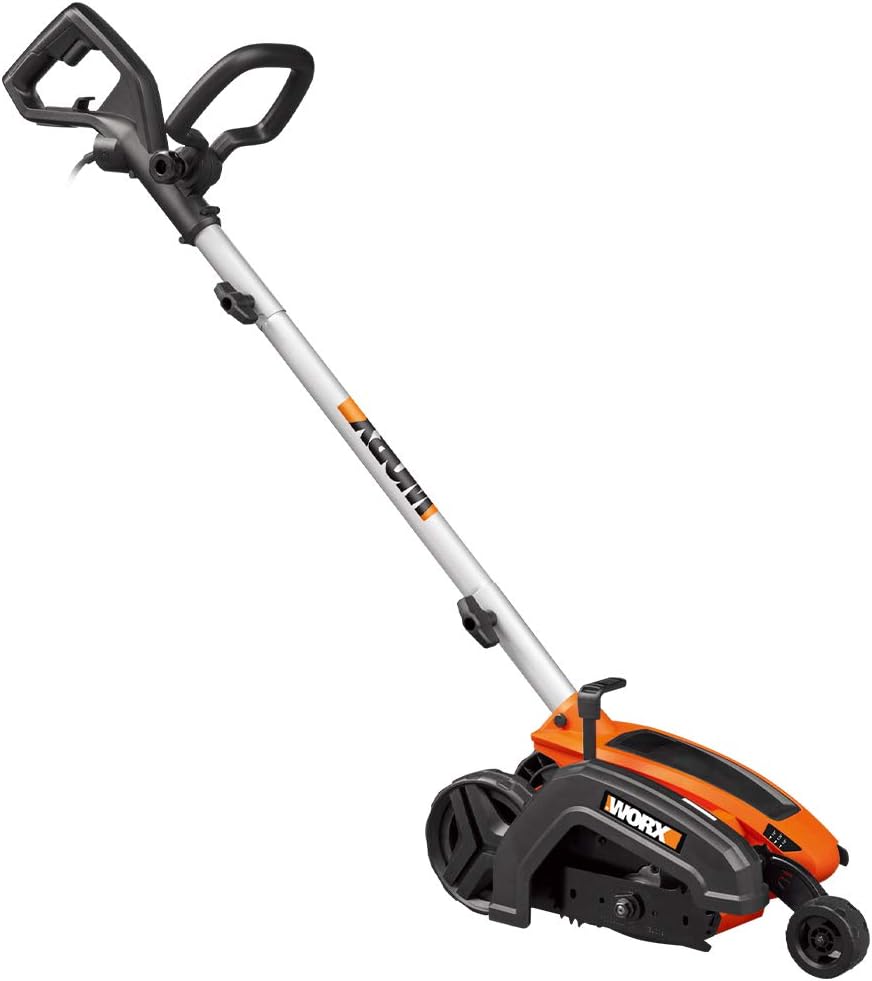
The WORX WG896 is a corded electric edger that uses a 7.5" serrated steel blade driven by a 12‑amp motor to cut clean, deep edges around sidewalks, driveways, and planting beds or to trench for low‑voltage wire. It is typically used by walking the unit along the lawn edge while aligning the cutting line indicator for straight results; a three‑position depth selector (1", 1‑1/4", 1‑1/2") and an adjustable shaft make it comfortable for most users. Notable features include a high‑speed blade (about 4700 rpm), a wear indicator on the blade, and a relatively lightweight 14 lb body that is easier to maneuver than heavier gas machines. Because it is corded, you get consistent power for extended jobs without battery swaps, but you must use a proper outdoor extension cord and avoid wet conditions. The serrated blade delivers more defined edges than string trimmers, yet it requires occasional blade replacement and cannot be used in saturated soil. For buyers who prefer straightforward, powerful electric equipment, this model balances performance and ease of use for tidy, professional‑looking edges.
Best for: Buyers who want reliable, no‑surprises electric power and a tool that makes crisp, professional lawn edges with minimal fuss and maintenance.
Less Ideal for: Those who need cordless portability for large properties away from outlets or who frequently work in very wet conditions should consider battery or gas alternatives.
- Powerful 12‑amp motor for consistent cutting performance
- Three adjustable cutting depths for edging and shallow trenching
- 7.5" serrated steel blade with wear indicator for defined, professional edges
- Lightweight design and adjustable shaft improve maneuverability and user comfort
- Corded power requires an outdoor extension cord and limits mobility
- Not suitable for use in wet or saturated ground
Verdict: A dependable, corded electric edger that delivers professional, deeply defined lawn edges with simple controls and low maintenance.
Choosing the Right Walk Behind Lawn Edger: Key Factors to Consider
Blade Material and Edge Retention
The blade is the single most important wear item on a walk-behind edger. Harder steels and heat-treated edges hold a cutting profile longer, which translates to fewer replacements and cleaner, straighter cuts. Softer or cheaper blades dull quickly, producing ragged edges that require follow-up trimming.
Consider the blade geometry as well. Thinner, sharper blades cut cleaner in turf but can chip on rock or concrete; thicker blades resist chipping but need more power to slice through dense soil. Also think about blade attachment style. Quick-change or bolted systems simplify replacement in the yard; welded or proprietary mounts can mean more downtime.
Frame Strength and Wheel Construction
Walk-behind edgers get banged against curbs, driveways, and exposed stone regularly, so a stiff, well-braced frame matters. Tubular steel frames with corrosion-resistant coatings resist bending and last longer when stored outdoors. Weak frames flex under torque, producing wandering cuts and added stress on the drivetrain.
Wheels influence both tracking and ride. Larger, pneumatic tires smooth bumps and improve straight-line accuracy over uneven turf. Solid wheels are less maintenance but transmit more vibration to the operator. Look at wheel mounting hardware and bearings: sealed bearings and replaceable axle components reduce long-term service needs.
Maneuverability and Operator Control
A walk-behind edger needs precise steering to follow planting beds, sidewalks, and curves cleanly. Handle geometry, steering linkage, and wheel placement determine how easily the unit follows a line. Narrower footprints help in tight areas while wider stances boost stability on slopes.
Control features such as adjustable handle height, positive drive engagement, and responsive throttle or clutch systems reduce operator fatigue and improve accuracy. Weight distribution matters too; too much front weight can dig in, while too little can cause the blade to skip or bounce.
Powertrain Type and Serviceability
Edgers are offered with different power sources and drive systems. Gas engines give torque for tough cuts and are easy to refuel in the yard, while electric options trade raw force for lower noise and simpler upkeep. Belt-driven systems are common; check for accessible belt guards and straightforward belt replacement. Gearboxes and shaft drives can be more durable but sometimes require periodic lubrication.
Serviceability affects long-term ownership cost. Units designed with accessible panels, common fastener sizes, and widely available replacement parts will save hours and frustration. Also note whether routine checks such as blade tension, belt wear, and air filters are achievable without special tools.
Vibration, Comfort, and Safety Features
Continuous vibration makes edging tedious and reduces cutting precision. Look for vibration-damping handles, rubber grips, and engine mounting that isolates shock. Comfortable grip position and reachable controls cut operator fatigue on longer projects.
Safety features such as blade guards, blade engagement levers that return to off, and protective skids for working near concrete reduce the chance of kickback or accidental contact. Reliable stopping mechanisms are important when moving across walkways or reversing direction near people or pets.
Adjustability and Cutting Depth Control
Being able to set consistent cutting depth makes repeatable, professional-looking edges. Depth adjustment systems that lock securely prevent the blade from changing depth mid-run, which can ruin a line. Simple, graduated depth stops or quick-adjust levers are preferable over fiddly threaded adjustments.
Also consider how the unit handles transitions between turf and hard surfaces. A well-designed skirt or guide helps the blade enter and exit cleanly without gouging. If you plan to alternate between shallow maintenance cuts and deeper scalloped edging, choose a model with a wide depth range and positive stops.
When a Walk-Behind Edger Beats a Hand Trimmer
Walk-behind edgers deliver straighter lines and more consistent depth than handheld tools, making them the right choice when you need tidy, repeatable edges around long driveways, sidewalks, and formal beds. They reduce the time you spend following up with shears and produce a cleaner presentation for photos, curb appeal, or formal landscaping.
They are most useful on yards where length of run or frequent maintenance makes handheld edging impractical. If you frequently edge long borders or have expansive turf-to-hard-surface transitions, a walk-behind unit saves effort and produces a uniform finish.
- Better straight-line control for long runs
- Less wrist and arm fatigue on large jobs
- Consistent cutting depth for repeatable results
Preparing Your Yard for Edging
Before edging, clear the work area of loose stones, toys, and debris that could damage the blade or kick up hazards. Mark shallow irrigation lines and avoid edging over visible utility covers. For the best finish, mow the lawn so blades meet a uniform grass height.
If the ground is very hard, slightly moistening soil a day before edging can make cuts cleaner and reduce blade wear. For new installations, mark curves and corners with a rope or garden hose to follow a smooth line.
- Remove debris and stones
- Mow to a uniform height
- Soften compacted soil with light watering
Basic Maintenance Tasks to Extend Service Life
Routine maintenance keeps an edger reliable and reduces downtime. After each use, brush off accumulated soil and grass clippings, check blade sharpness, and inspect belts and guard assemblies. Tighten fasteners and inspect the drive components for wear.
Store the unit in a dry spot and treat exposed metal with a light protective spray if it will sit for long periods. Replace worn blades promptly; running with a badly nicked blade puts extra stress on the engine or drive train and reduces cut quality.
- Clean debris after every use
- Inspect and replace blades when dull
- Check belts, bearings, and fasteners regularly
Edging Techniques for Clean Results
Walk at a steady pace and avoid forcing the blade through rock or concrete. Let the machine find the line while guiding it gently with the handles. For curves, use shallow, successive passes rather than a single deep cut to maintain control and avoid scalloped edges.
When edging adjacent to sidewalks or driveways, watch blade engagement and use protective skids or guards to prevent accidental concrete scoring. Use the depth adjuster to set the blade just deep enough to separate turf from the hard surface cleanly.
- Use multiple shallow passes for curves
- Guide gently; do not force the blade
- Protect hard surfaces with skids or guards
Electric Vs Gas Walk-Behind Edgers
Electric walk-behind edgers are quieter, produce less vibration in many cases, and require simpler routine care since they have no carburetors or oil changes. They are often lighter, making them easier to store and maneuver in smaller yards. However, they may deliver less torque for very dense soil or heavy-duty cuts.
Gas-powered units typically provide stronger, continuous power and longer run times between recharging, which makes them better suited to larger properties or frequent deep edging jobs. Consider access to power, noise tolerance, and how often you will be edging when choosing between these types.
- Electric units: quieter, lower maintenance, lighter
- Gas units: more torque, longer run time for large jobs
- Match power type to yard size and job frequency
How We Chose the Best Walk Behind Lawn Edger
We focused on attributes that matter for consistent, safe edging in real yards. Primary evaluation criteria included blade construction and edge retention, because a good blade keeps cuts clean and needs less frequent replacement. We assessed frame and wheel durability to judge how well each unit handles curbs, gravel, and compacted soils. Operator control and maneuverability were tested for steering precision and comfort during longer runs. Ease of maintenance and parts access was considered so owners can replace blades or belts without excessive shop time. Vibration and safety features were reviewed to ensure predictable handling and reduced kickback risk. Products were excluded if they were designed solely for light handheld trimming or if they lack a stable walk-behind configuration. Units that required specialized commercial-only power systems were also filtered out. The final selection favors machines that balance build quality, edging accuracy, and practical serviceability for typical homeowner and serious-enthusiast use.
FAQ
How deep should I set a walk-behind edger?
Most homeowners set the blade just deep enough to cut through the grass roots and separate turf from the hard surface, typically around 1 to 2 inches. For fresh installs or very overgrown edges, multiple shallow passes are preferable to a single deep cut.
Can a walk-behind edger damage irrigation lines?
It can if you are unaware of shallow irrigation. Locate and mark irrigation lines before edging, and avoid running the blade where lines are near the surface. If in doubt, use a shallower setting and make multiple passes.
How often do I need to replace the blade?
Replacement frequency depends on soil type and how often you edge. In rocky or sandy soils blades dull faster and may need changing every season; in softer, well-maintained turf they can last multiple seasons. Inspect for nicks and loss of sharpness and replace when performance drops.
Is a walk-behind edger suitable for small yards?
They can be useful in small yards if you have long border runs or prefer a precise finish, but lighter, more compact electric units are generally a better fit. For very tight spaces, a handheld trimmer may be more practical.
What safety gear should I use when edging?
Wear eye protection, sturdy closed-toe shoes, and long pants to block flying debris. Hearing protection is recommended with gas units, and gloves improve grip and reduce vibration exposure.
How do I prevent the blade from chipping on concrete edges?
Approach concrete edges at a shallow angle and avoid forcing the blade into the surface. Use the depth control to lift slightly when crossing hard surfaces and consider a protective skid or guard to reduce direct contact with concrete.
Final Verdict
Choose a walk-behind lawn edger that balances blade durability, frame strength, and operator control for the types of edges you manage most often. Prioritize blade material and ease of maintenance if you edge frequently, or favor lighter, quieter electric models for smaller yards and occasional use. Keep in mind the tradeoffs between torque and ease of upkeep so your choice aligns with yard size, soil conditions, and the finish you want.
